Tag Archives: wildlife

Beyond the Tiger: Listening to the Wild

Safari is an experience that unfolds differently for each person. For me, it is best savoured in silence, absorbing the sights and sounds of the jungle. My first safari in India, at Kaziranga National Park, had set that tone. I remember spending three hours with a pair of binoculars, watching wildlife and listening intently, barely taking any photographs. As I booked my safari at Ranthambore National Park, I hoped to recreate that experience—immersive, unhurried, and deeply personal.
The tiger sighting on the previous day had, of course, raised expectations.

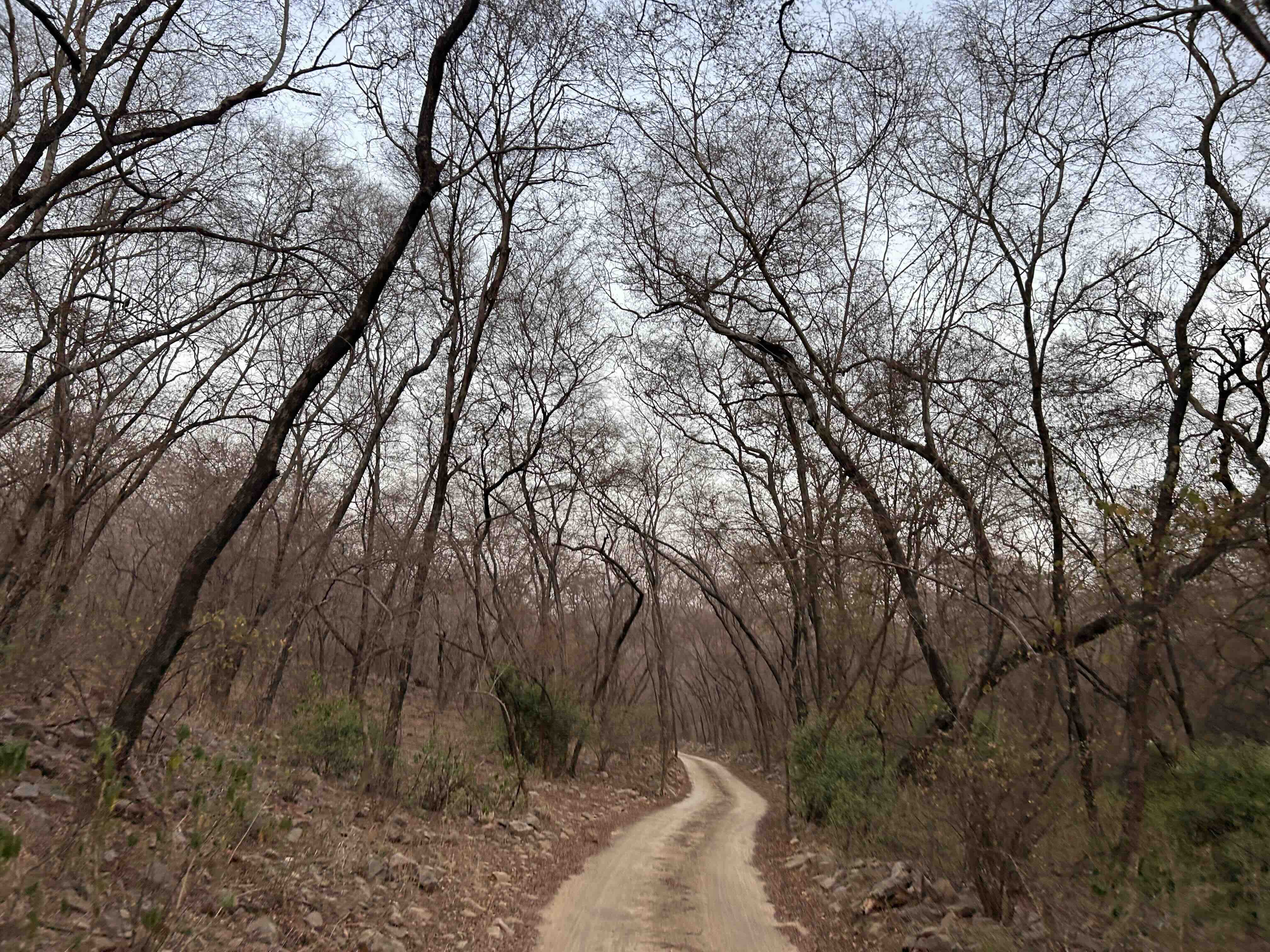
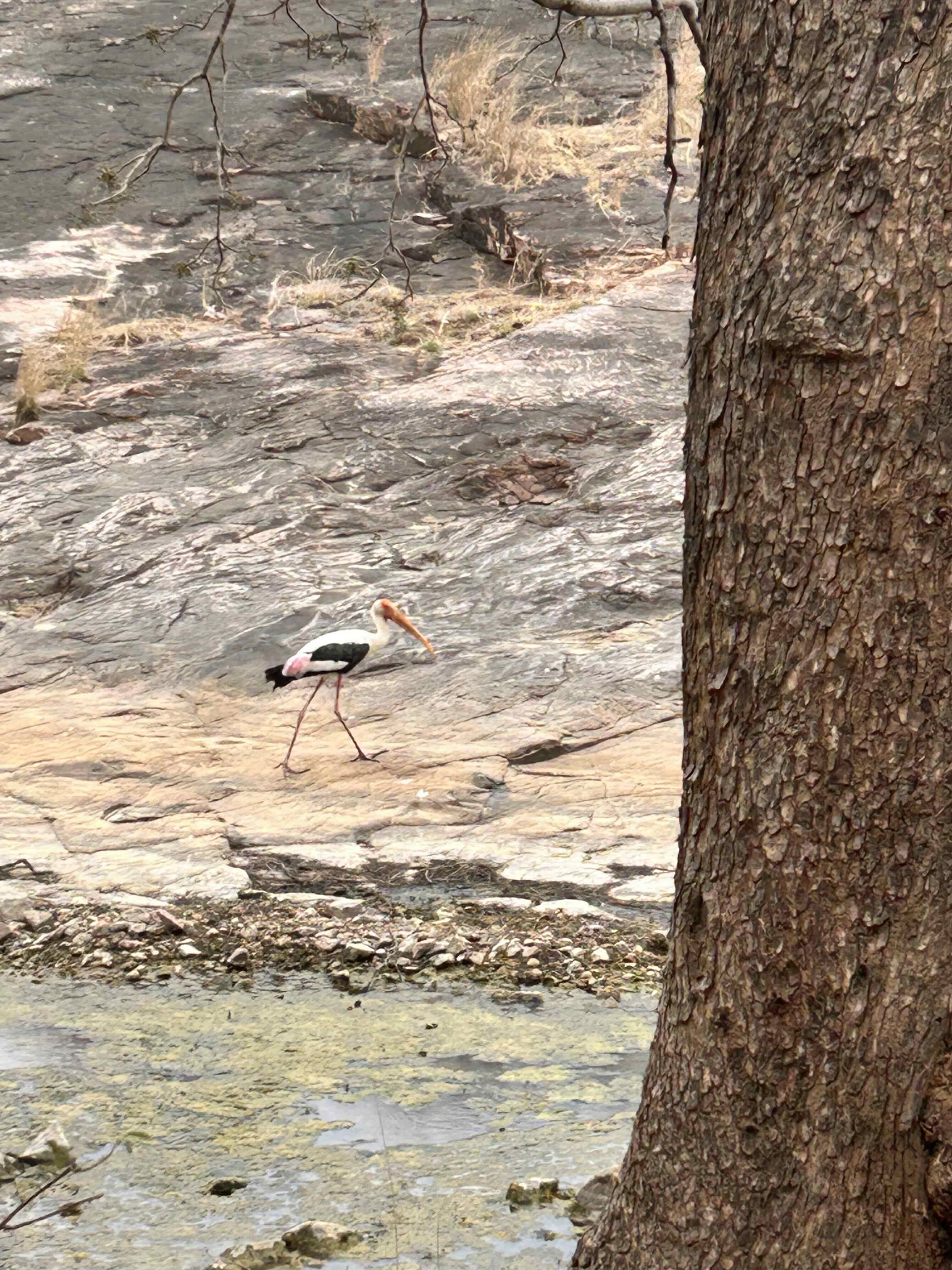
At 6:00 am, just as the first light softened the horizon, I entered Zone 1. The air was still cool, carrying a sense of anticipation. At the entrance stood a magnificent banyan tree—ancient, sprawling, almost ceremonial in its presence. As we moved ahead, a flock of painted storks broke the stillness, their movements graceful against the morning light.

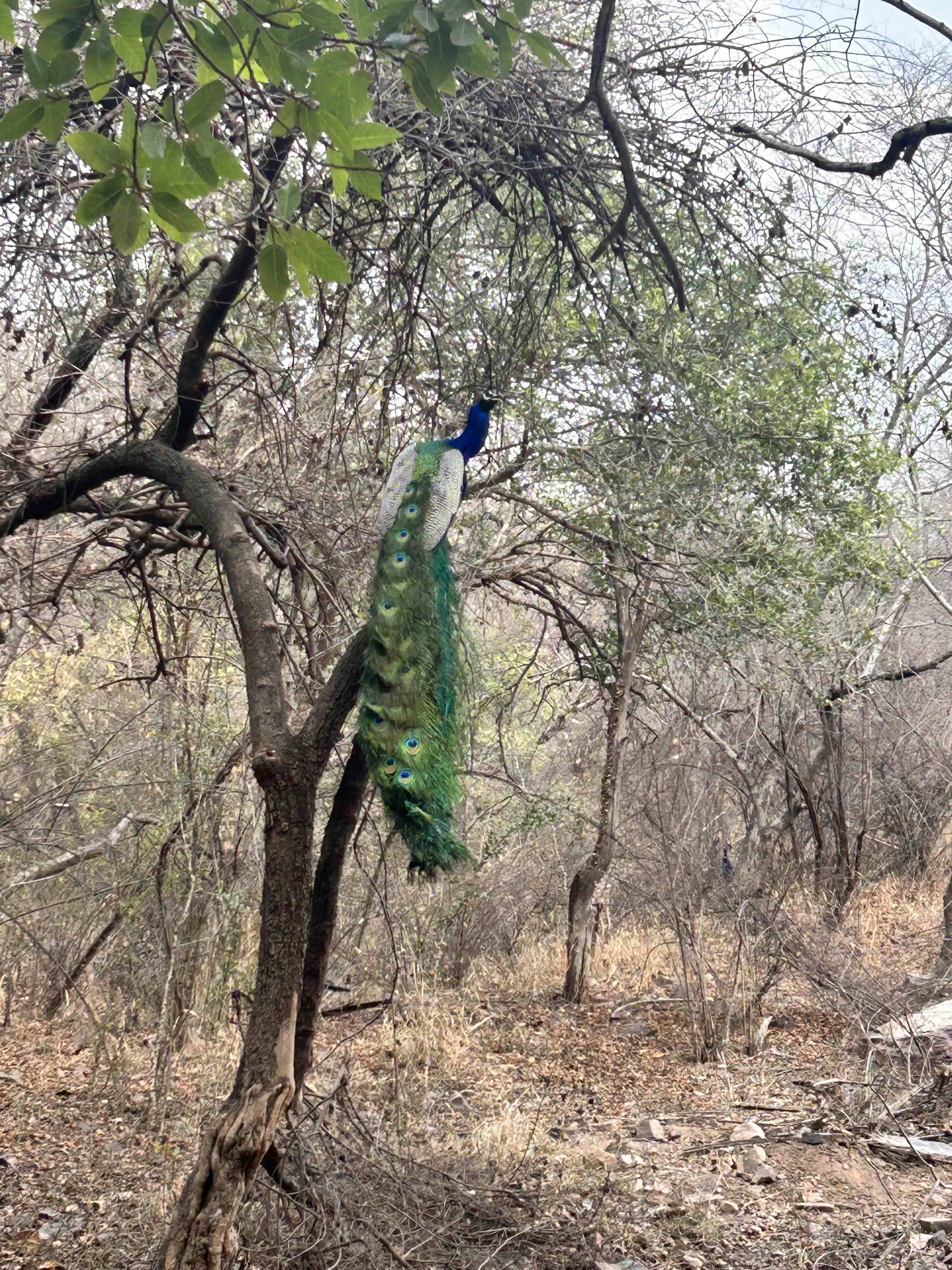
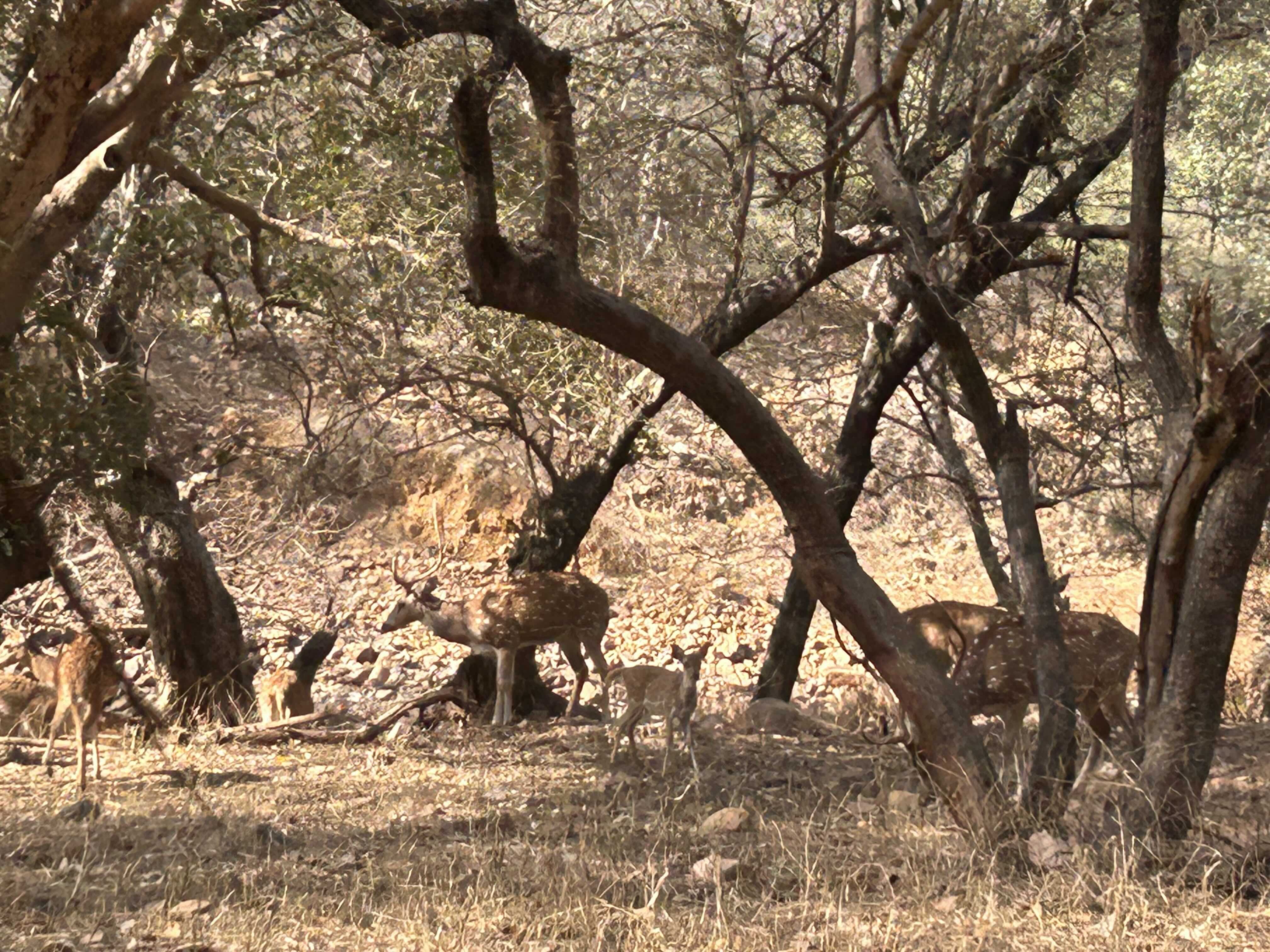
I told my guide that while I would like to see a tiger, I was equally keen to experience the jungle in its entirety. And so we moved, past spotted deer grazing cautiously, sambar standing alert, langurs observing from treetops, and peacocks adding fleeting bursts of colour. Yet, inevitably, the search for the tiger shaped our path. We paused at waterholes, scanned trails, and at one point even came across fresh pugmarks. The signs were there, but the tiger chose to remain unseen.
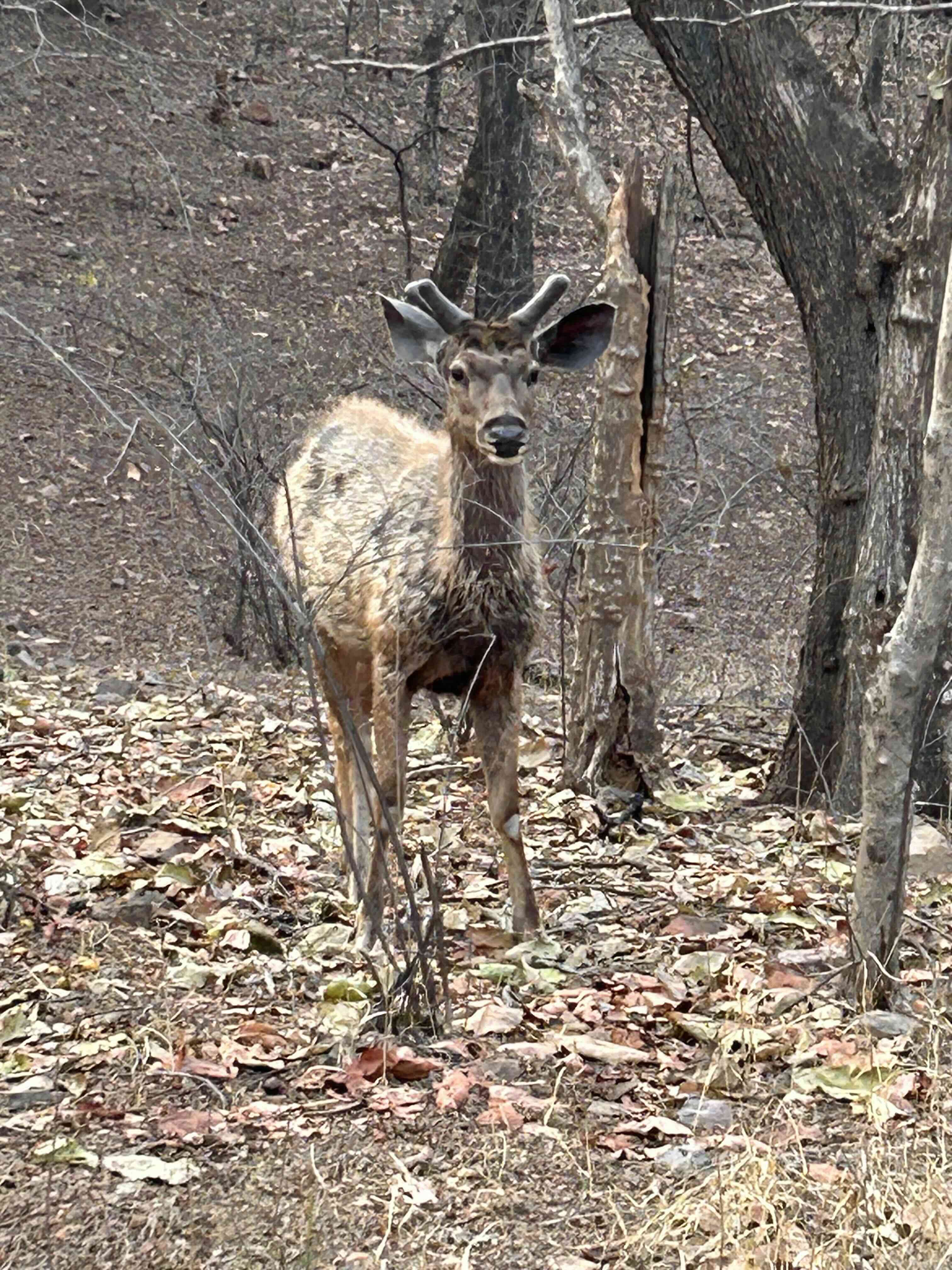
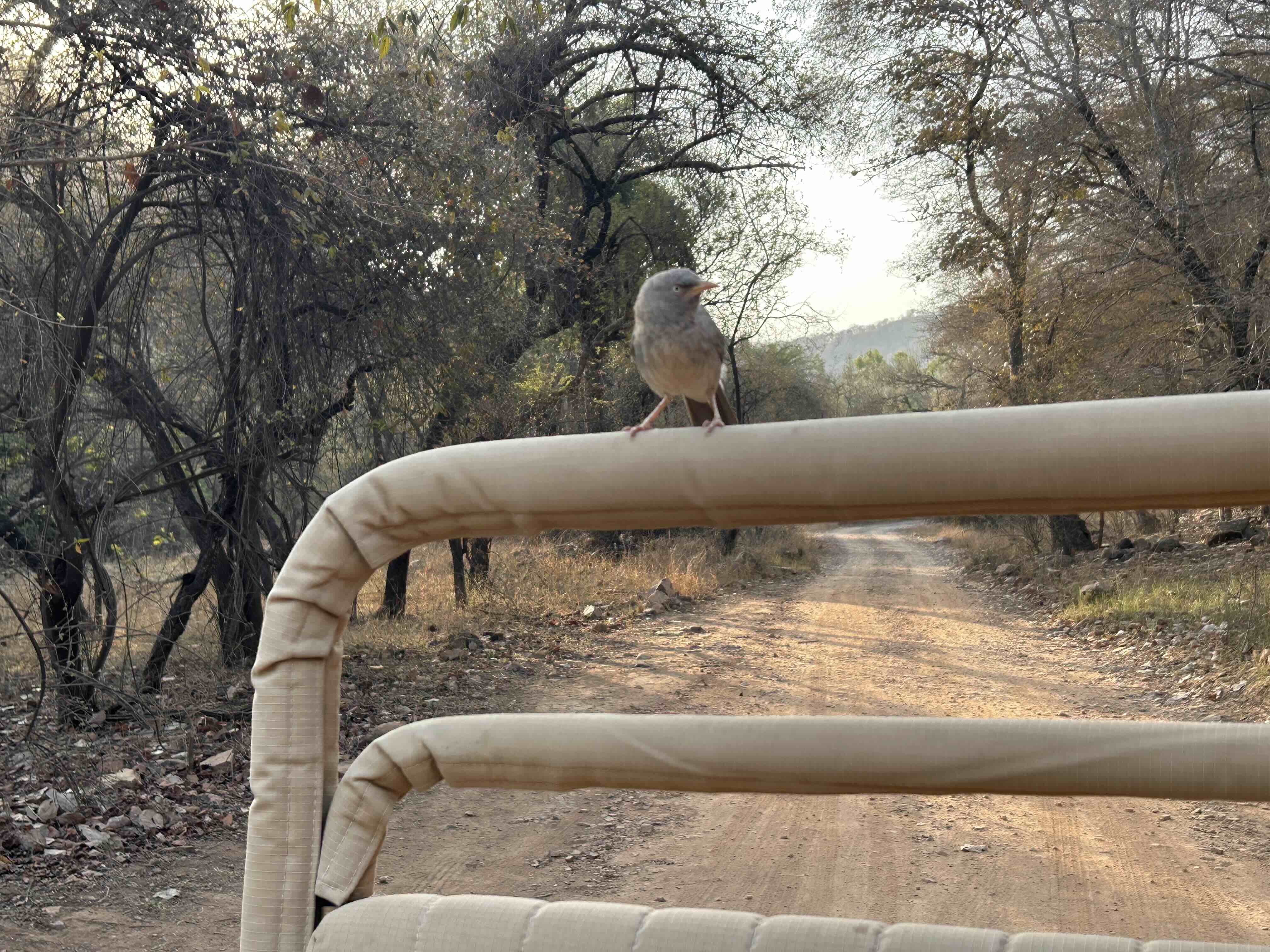
The jungle was calm. There were no alarm calls, no urgency in the air. As we covered the length and breadth of the zone, I found myself drawn to the smaller, quieter details. Common house sparrows, jungle babblers, surprisingly friendly, even perching briefly on the gypsy, kingfishers flashing their brilliance, yellow-footed green pigeons blending into foliage, black-winged stilts poised at water edges, drongos, bulbuls, mynas, and a fleeting glimpse of a golden oriole that refused to stay still long enough for a photograph. A cormorant stood with wings outstretched, drying itself in the morning sun.
As the safari drew to a close, we began our return. Just at the exit, word spread that a tiger had finally been spotted, at one of the very waterholes where we had waited. The jungle, it seemed, had made its point. It teaches patience, on its own terms.
Despite the rising heat, 42 degrees by afternoon, I decided to head out again. This time to Zone 2.

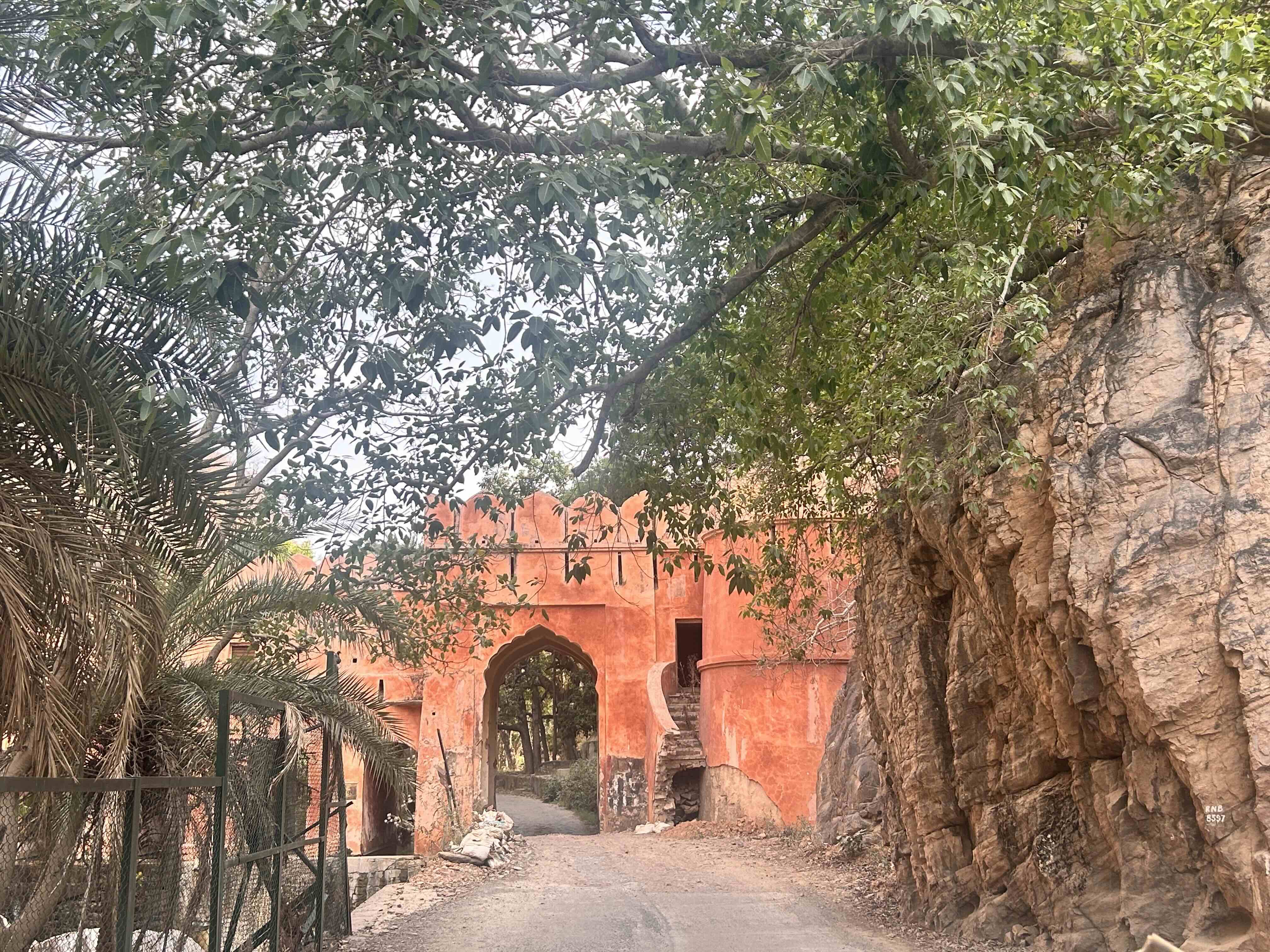
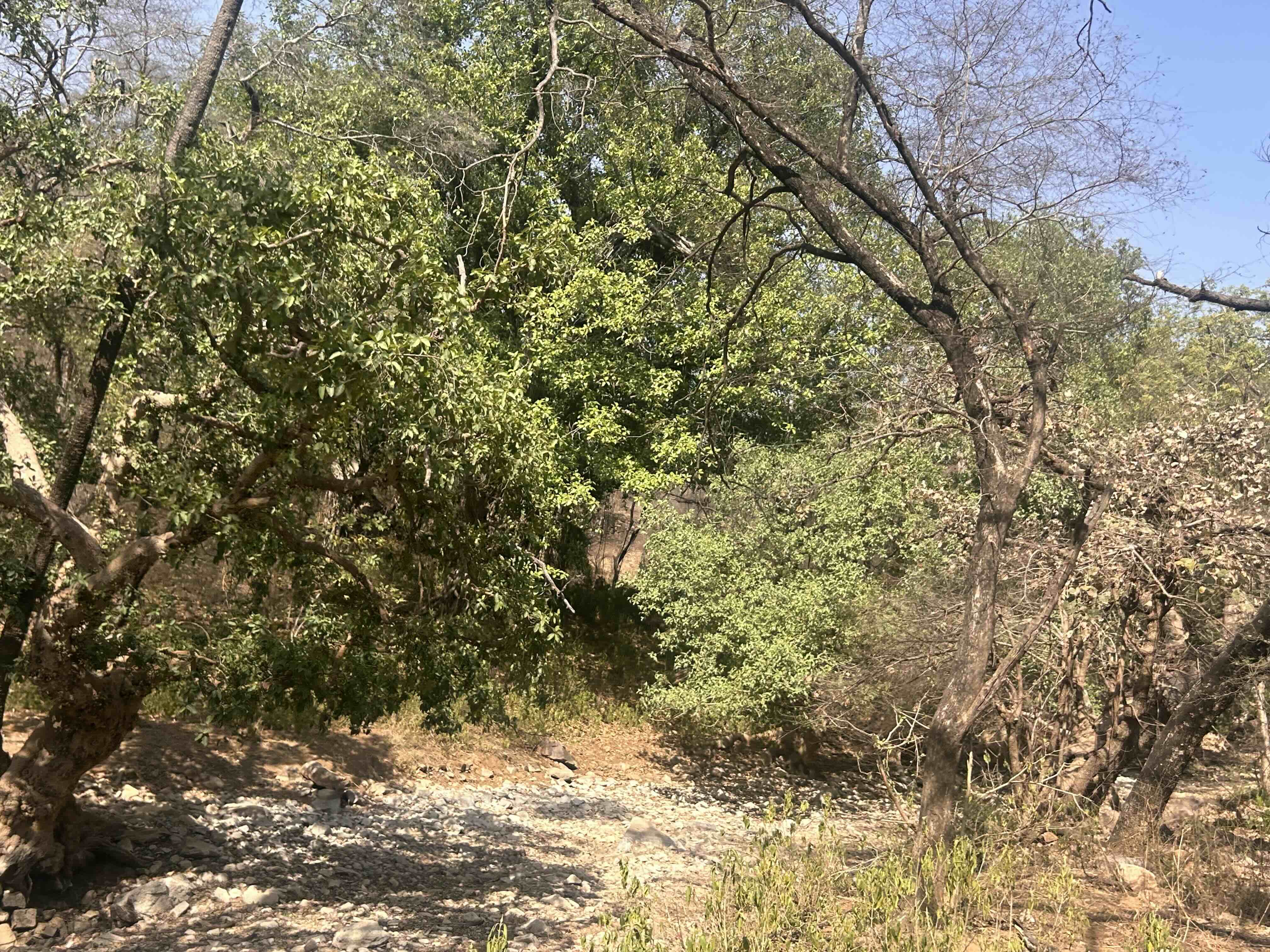
Ranthambore Fort looms quietly over the park, a reminder that these forests were once the hunting grounds of the Maharajas of Jaipur. Scattered across the landscape are remnants of that past, old stepwells, ruins, and silent structures reclaimed by nature.
As we moved through the dry terrain, we noticed a sambar suddenly turn alert. Moments later, the unmistakable alarm call echoed through the trees. We stopped under the shade of a mango tree, waiting, listening, hopeful. But the call faded, and the forest returned to its stillness.
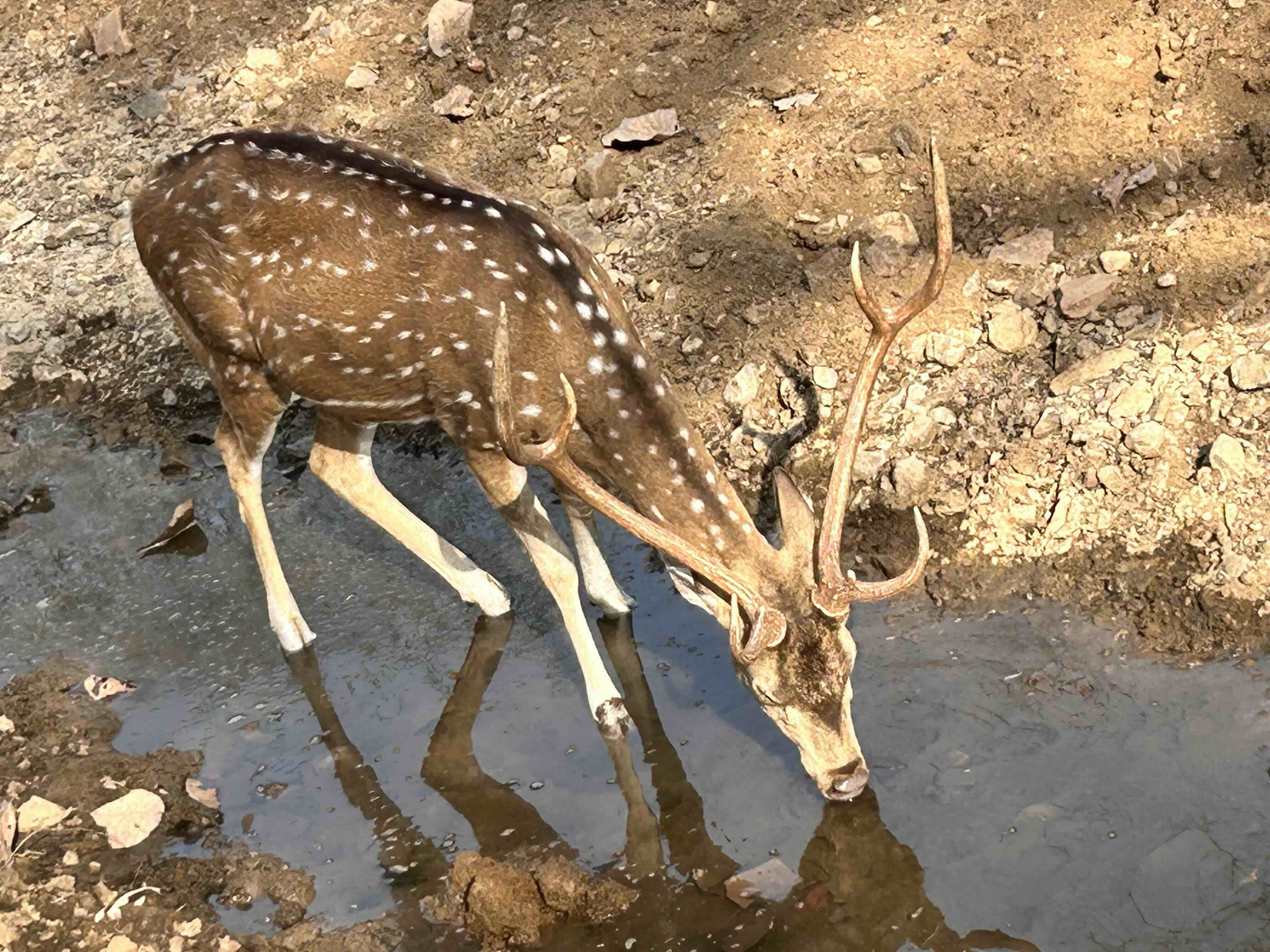
Once again, we traversed the zone with other vehicles, all asking the same question: “Have you seen the tiger?” We spotted a crocodile basking lazily, herds of deer, nilgai moving cautiously, and an array of birds, but the tiger remained elusive.
And yet, there was no disappointment.

There was, instead, a quiet sense of fulfilment. The rhythm of the jungle, the calls, the silences, the interplay of species, has a calming, almost meditative quality. Perhaps the absence of the tiger sharpened my awareness of everything else. The jungle revealed itself not through spectacle, but through subtlety.

Day two in Ranthambore, then, was not about the star attraction.
It was about the forest itself, unfiltered, unhurried, and complete in its own quiet way.
In the Heat of Chance: A First Day in Ranthambore.

There was no particular reason for this holiday, except that I seem to live from one break to the next. Ranthambore National Park had been on my radar ever since I moved to Delhi. In India, wildlife sightings are as much about luck as they are about patience, more so when it comes to the big cats. A few years ago, I visited Sundarbans; while I saw plenty of wildlife, the elusive Royal Bengal tiger remained just that, elusive.

I had initially planned to go to Ranthambore in March. A colleague, however, suggested summer, when the heat drives animals to water bodies, increasing the chances of sightings. It seemed like a fair trade-off: discomfort for possibility.

Ranthambore is a little over four hours from Delhi, and I chose to drive. Despite my best intentions to beat the morning rush, I was delayed. Perhaps when you’re driving yourself, a part of you resists urgency. After inching through traffic towards Gurugram, I finally found my rhythm on the Delhi–Mumbai Expressway. From there, the journey eased into a quiet, steady glide.
Bougainvillea bloomed along the highway in a riot of colour, pinks, purples, whites, making me wonder why the ones on my terrace never seem quite as exuberant. Beyond them, the landscape shifted. Denuded hills stretched along the horizon, stark and exposed, a quiet reminder that when nature is diminished, human lives are never untouched.

Though I had mapped out potential pit stops, I barely paused—just once, to stretch my legs. By lunchtime, I had reached Ranthambore.

It was only after booking my stay that I realised safaris need to be reserved separately. Fortunately, the Forest Department’s website made the process seamless, and I secured a seat on a canter for the afternoon safari in Zone 5.

At 3 pm, under a relentless sun, my first encounter with Ranthambore began.

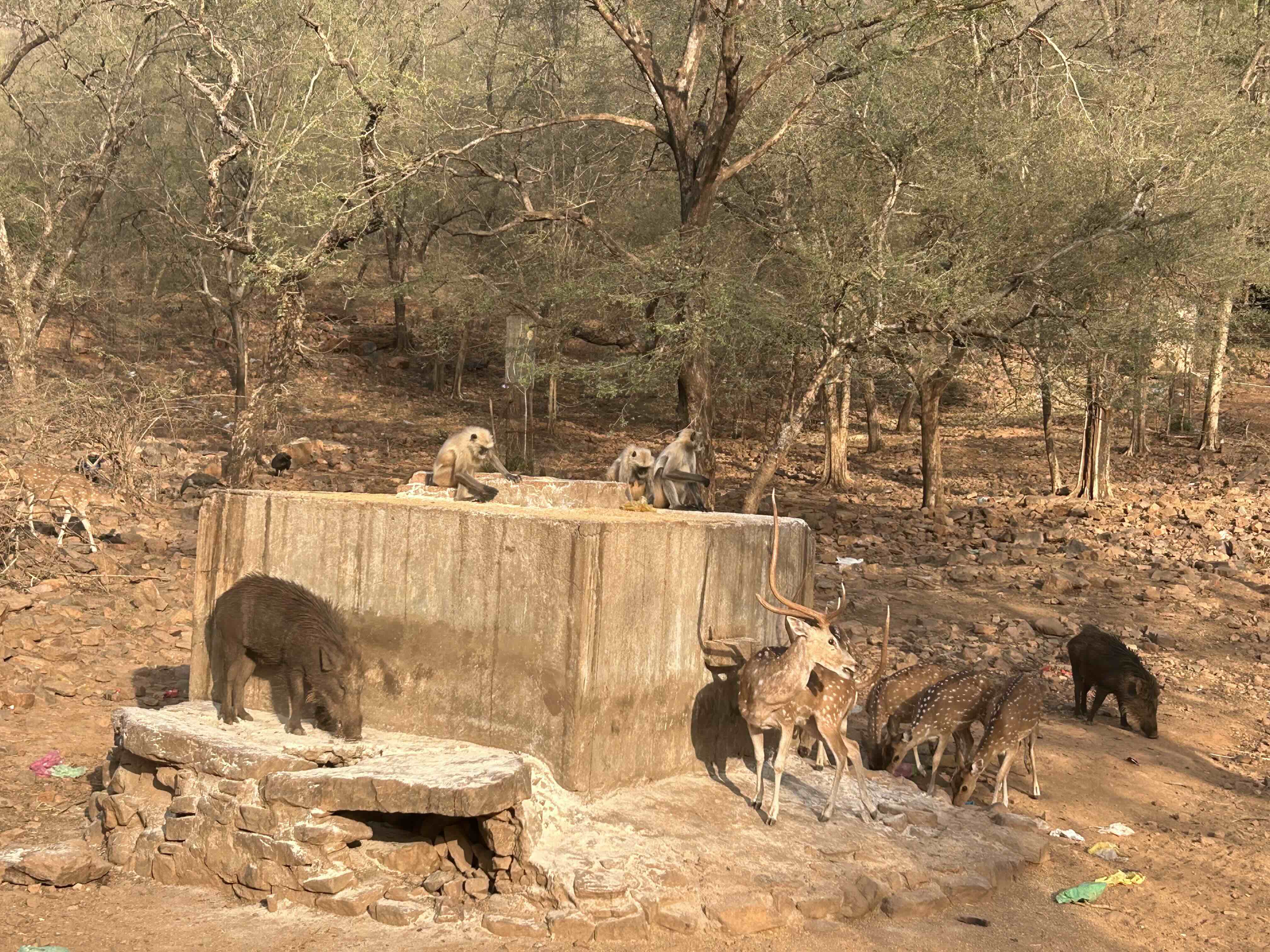
The jungle revealed itself gradually. A sambar here, a herd of spotted deer there. Langurs, ever-present, watched us with casual curiosity. Wild boars emerged briefly from the undergrowth. The driver, however, seemed in a hurry. When I asked him to pause, he assured me we would have time on the way back. Slightly disappointed at missing a few good frames, I leaned back and let the forest pass.

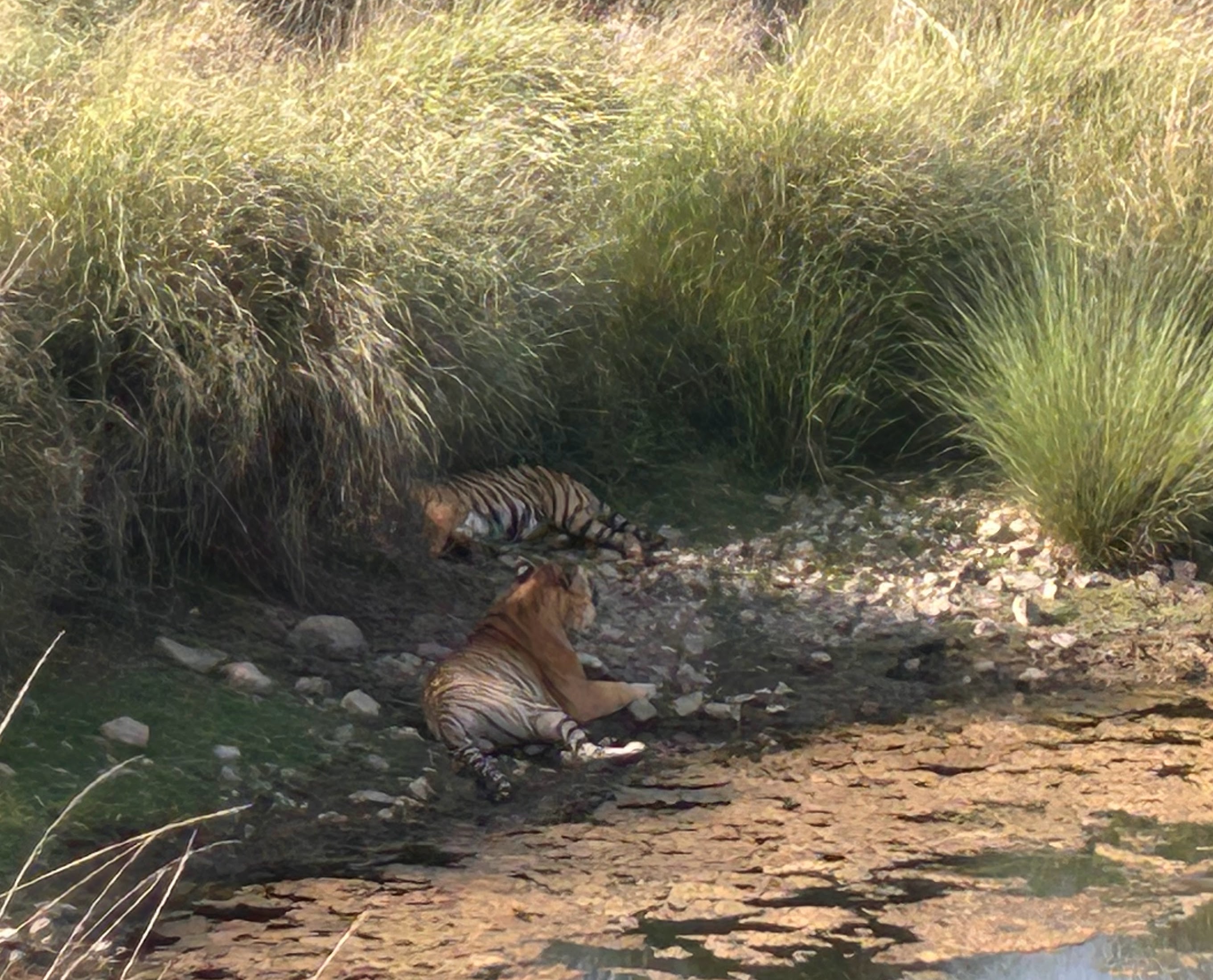
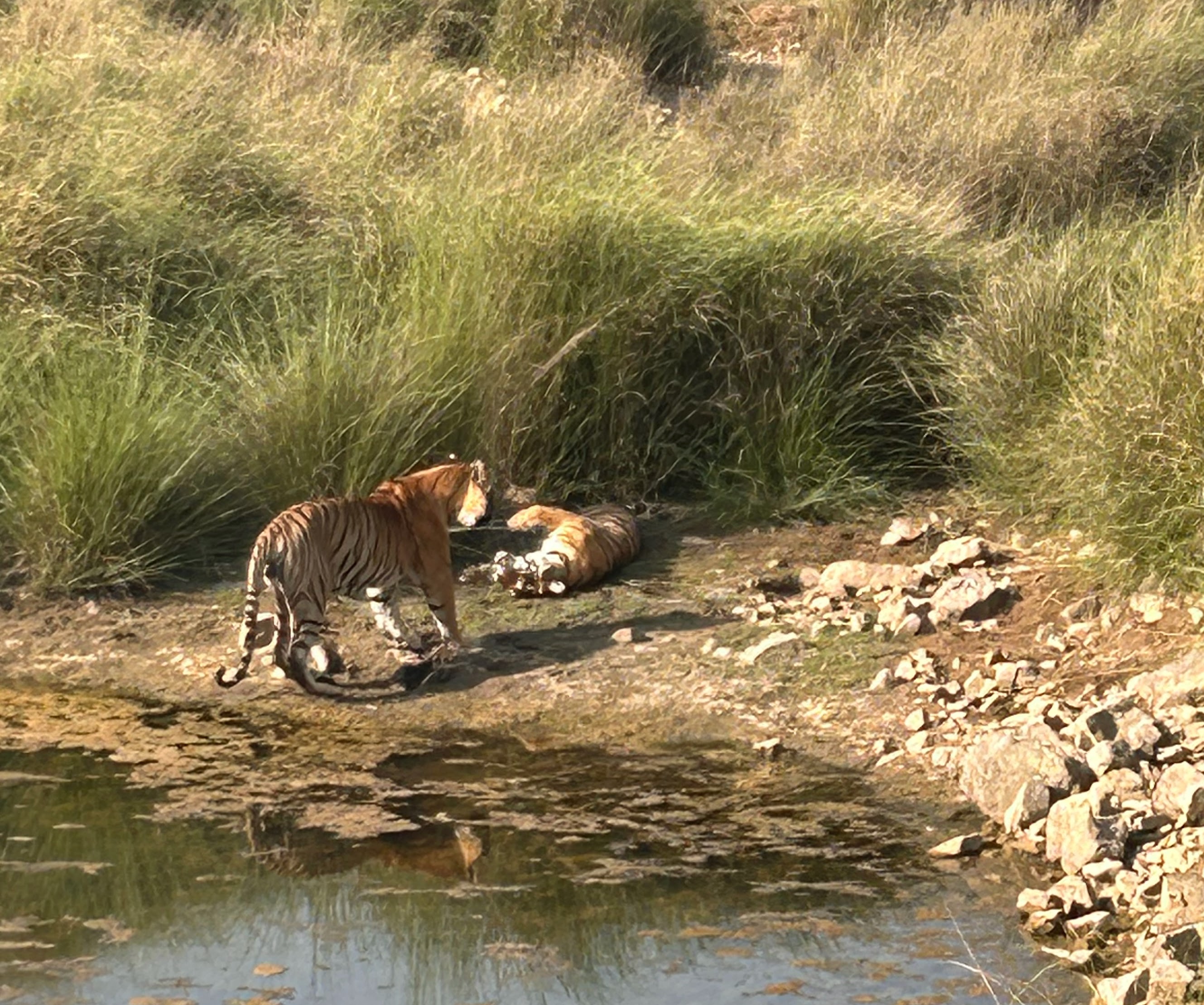
About an hour in, we spotted two gypsies ahead, their occupants gesturing urgently. Near a water body fringed with tall grass, we saw them, a pair of tigers, stretched out in the languid heat of the afternoon.

The urgency suddenly made sense.

A male, T2305, and a female, T125, had given us an extraordinary start. They played, mock-fought, and drifted in and out of stillness, commanding complete attention. Cameras clicked in a frenzy, but even that felt secondary to simply watching them, unbothered, magnificent, entirely in their element. It was only when more vehicles began to gather that we moved on.

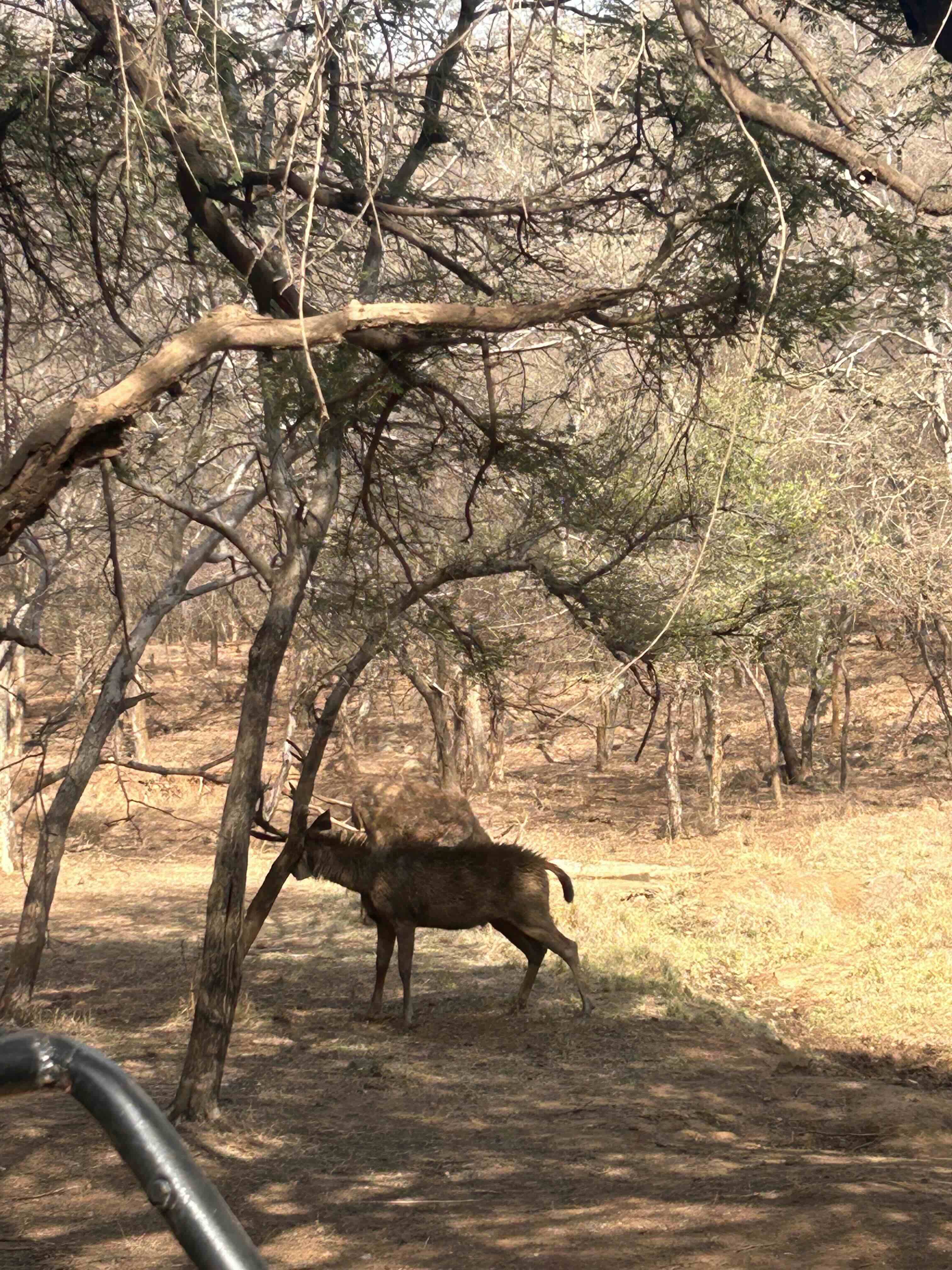
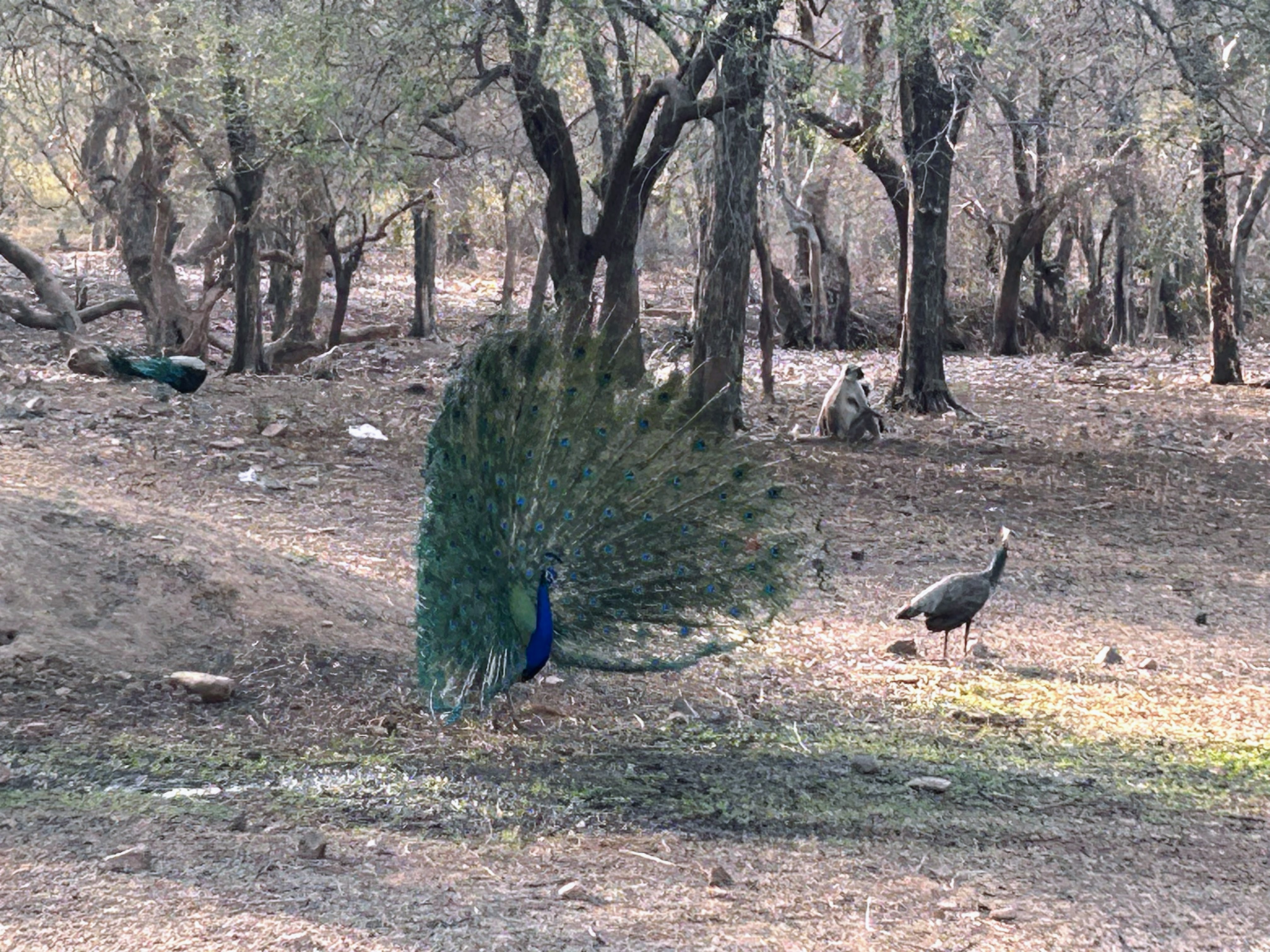
On the return, the driver kept his word. We paused often, taking in the quieter rhythms of the jungle. A male sambar rubbed his antlers against a tree. A herd of spotted deer grazed alongside a troop of langurs, an unspoken alliance of vigilance. Nearby, peacocks fanned out their iridescent plumage, performing earnest, hopeful dances for the peahens.

A jungle, I realised, is never about one animal. It is an intricate tapestry, each species playing its part, each moment layered with quiet significance.

As we approached the exit gate, the guide asked for tips. It reminded me of my visit to Maasai Mara, where tipping is seamlessly built into the safari culture. Perhaps we should adopt something similar here. After all, it is the skill and instinct of the guide and driver that shape the experience as much as the wilderness itself.

And just like that, the first day came to a close, a smooth drive, blooming bougainvillea, the rare privilege of a tiger sighting, and the quiet poetry of peacocks in dance.

Kenya Safari Diary – Day 6: Lessons in Stillness, Strength, and Goodbye

🌅 The Final Morning Begins

How do you begin to describe your last day in the Mara?

Perhaps with a question.

As we rolled out in the early morning, Denis—my ever-curious guide—asked,
“What would you like to see today?”
I smiled. “Whatever we can.”
No checklist. No expectations. Just openness. And somehow, that became the theme of the day.

🐃 Buffaloes, Tension, and the Echo of a Predator

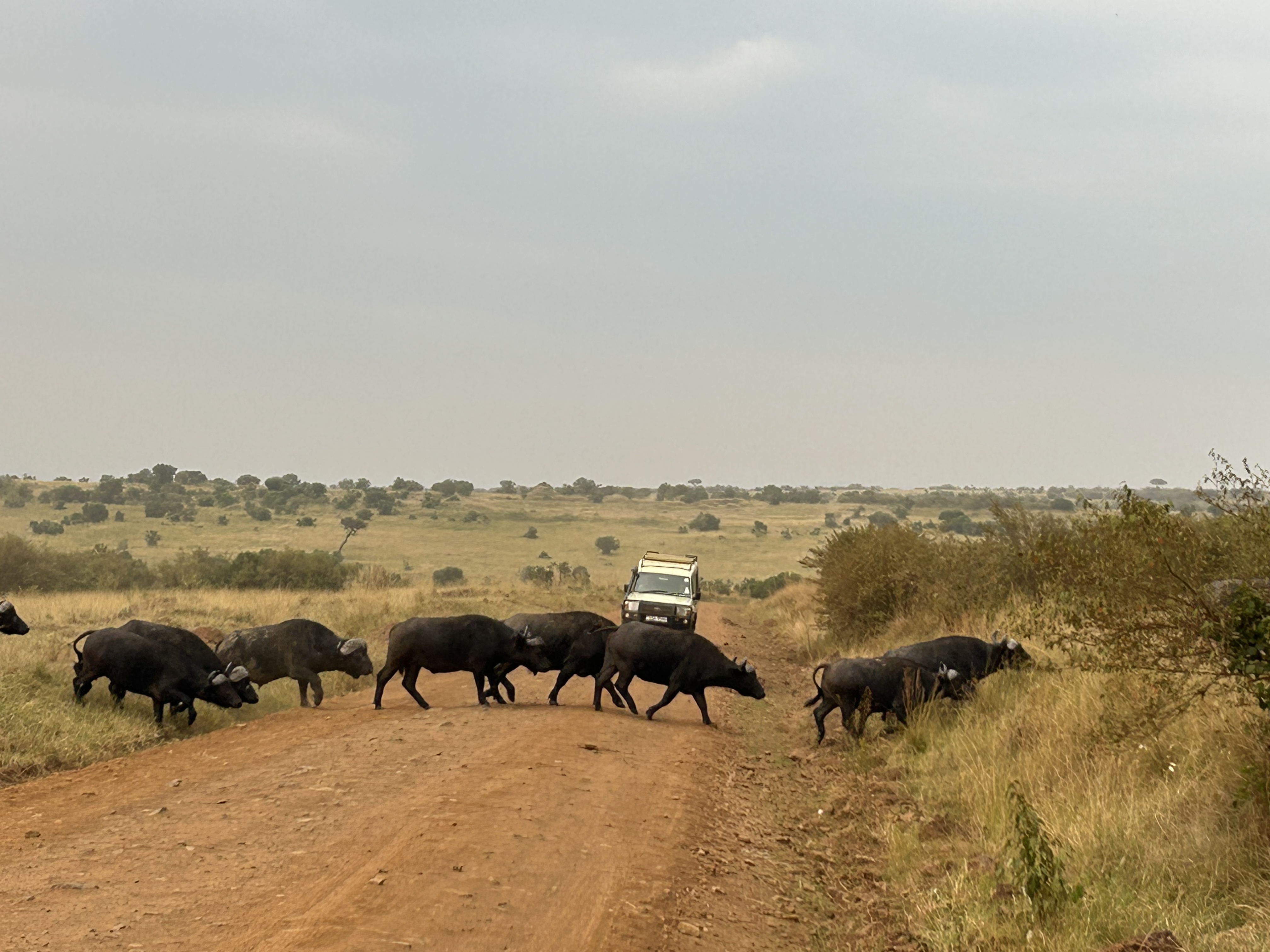
We headed into an area often frequented by rhinos and leopards, but it was a large herd of Cape buffalo that greeted us instead. Their energy was different—tense, alert. As our vehicle approached, a young male gave a warning grunt. We slowed down, gave them space, and eventually he returned to grazing.

Denis pointed to the pugmarks of a large cat in the dirt. The herd had calves—perhaps they were hunted during the night, and the trauma lingered. A little further, two adult males mock-charged us before fading into the grass.

We hadn’t seen a rhino or leopard, but the story told through behaviour and footprints was just as compelling.


🐘 Wandering Giants and Resting Lions

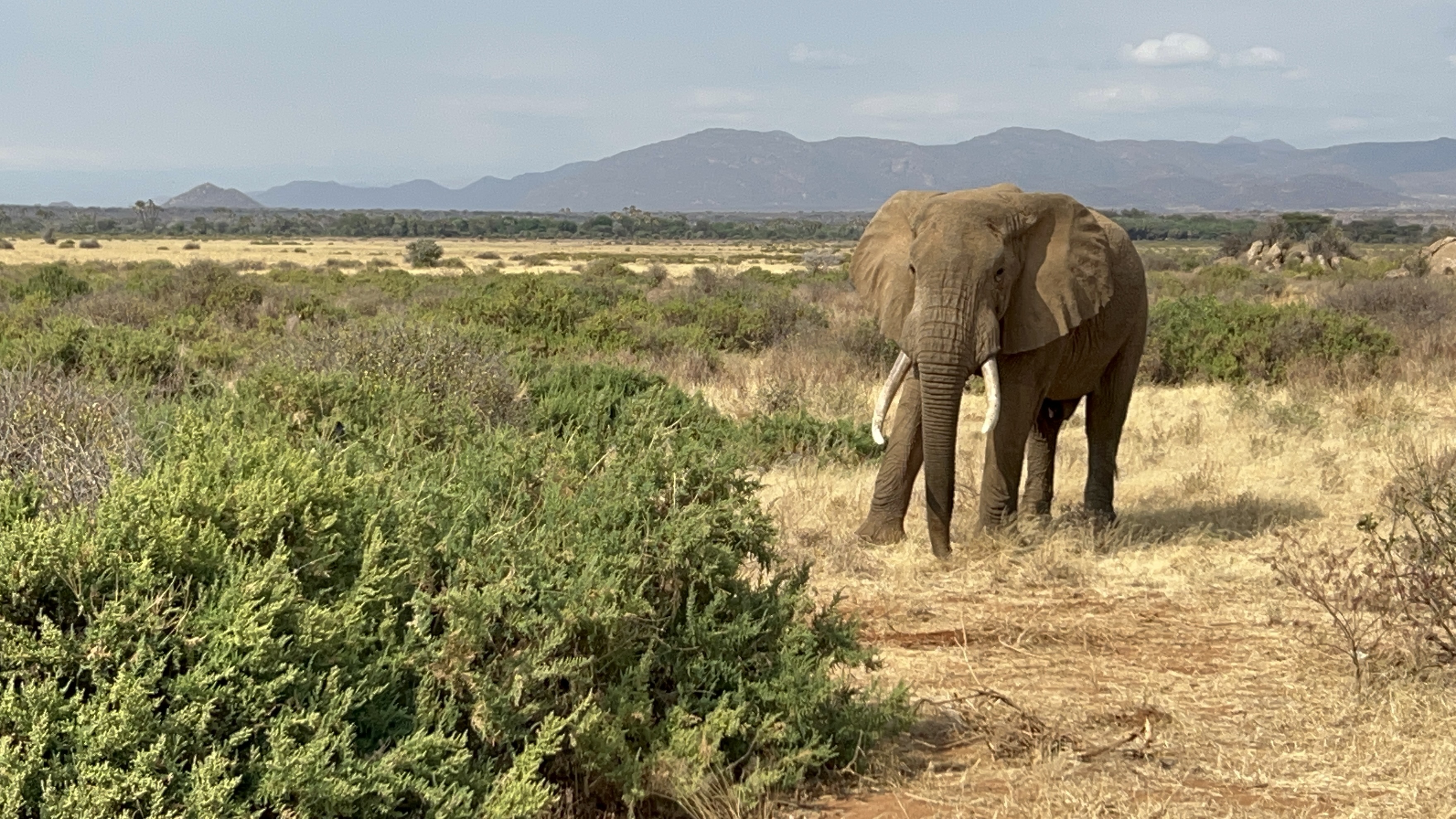
Further along, a lone male elephant, likely in search of a mate, walked across the plains. We waited patiently for him to move on before continuing.

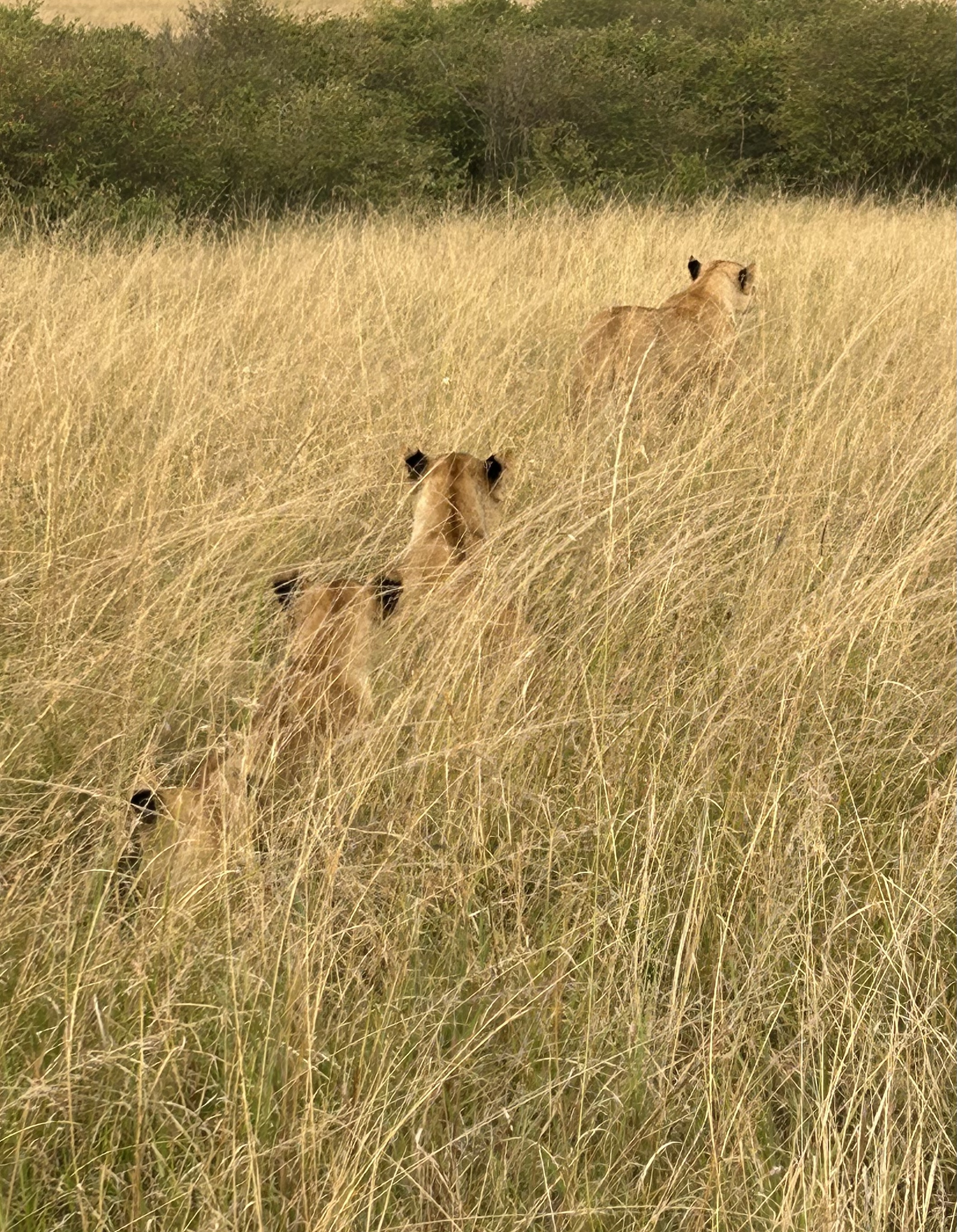
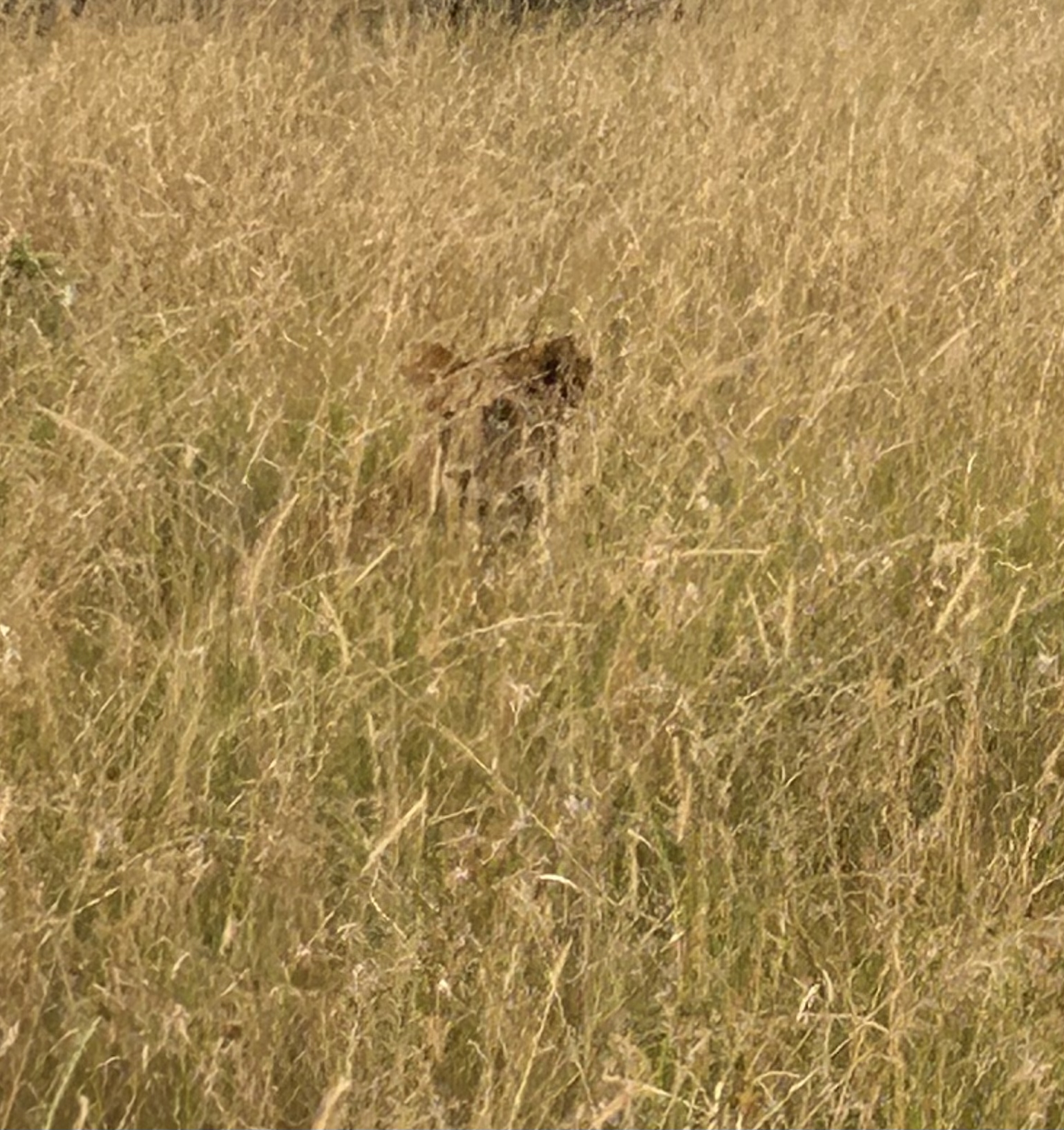
Among the tall grasses, we saw a lioness. The area was filled with antelope—potential prey. Soon, we spotted another lioness nearby. Would they hunt? We waited, watched.
But no. They stretched, yawned, and settled into the shade.
Nature’s quiet truth: even predators don’t kill without need.


🦓 Zebras, Hartebeest, and a Royal Blockade

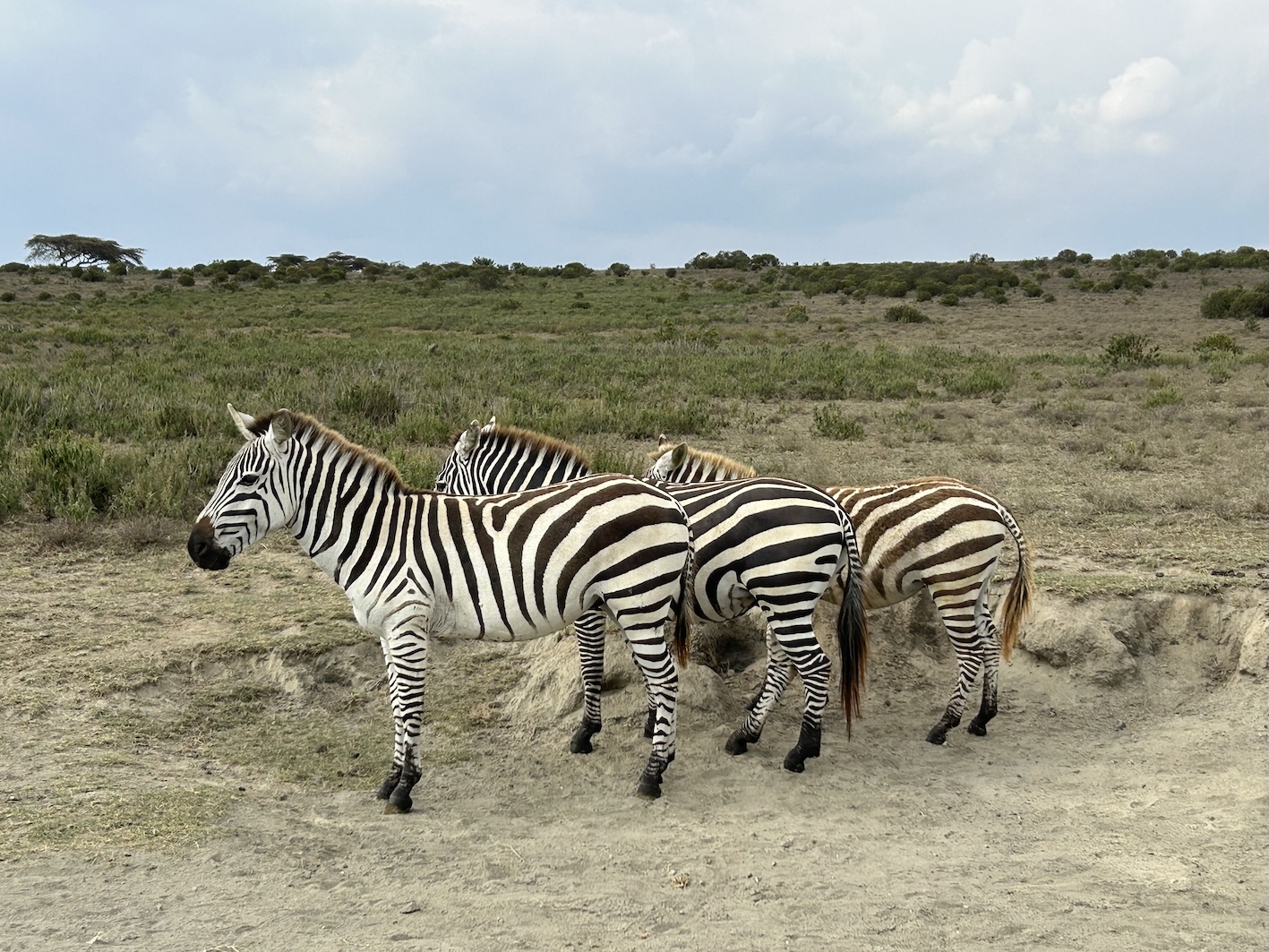
Our path was soon blocked by a herd of zebras, strutting confidently until they decided we were worth letting through. We passed them and found a lone hartebeest, calmly grazing.

The drama of the day had quieted. But the Mara is never still for long.


🛖 Meeting the Maasai: Culture, Community, and Resilience

No safari is truly complete without a visit to a Maasai village.

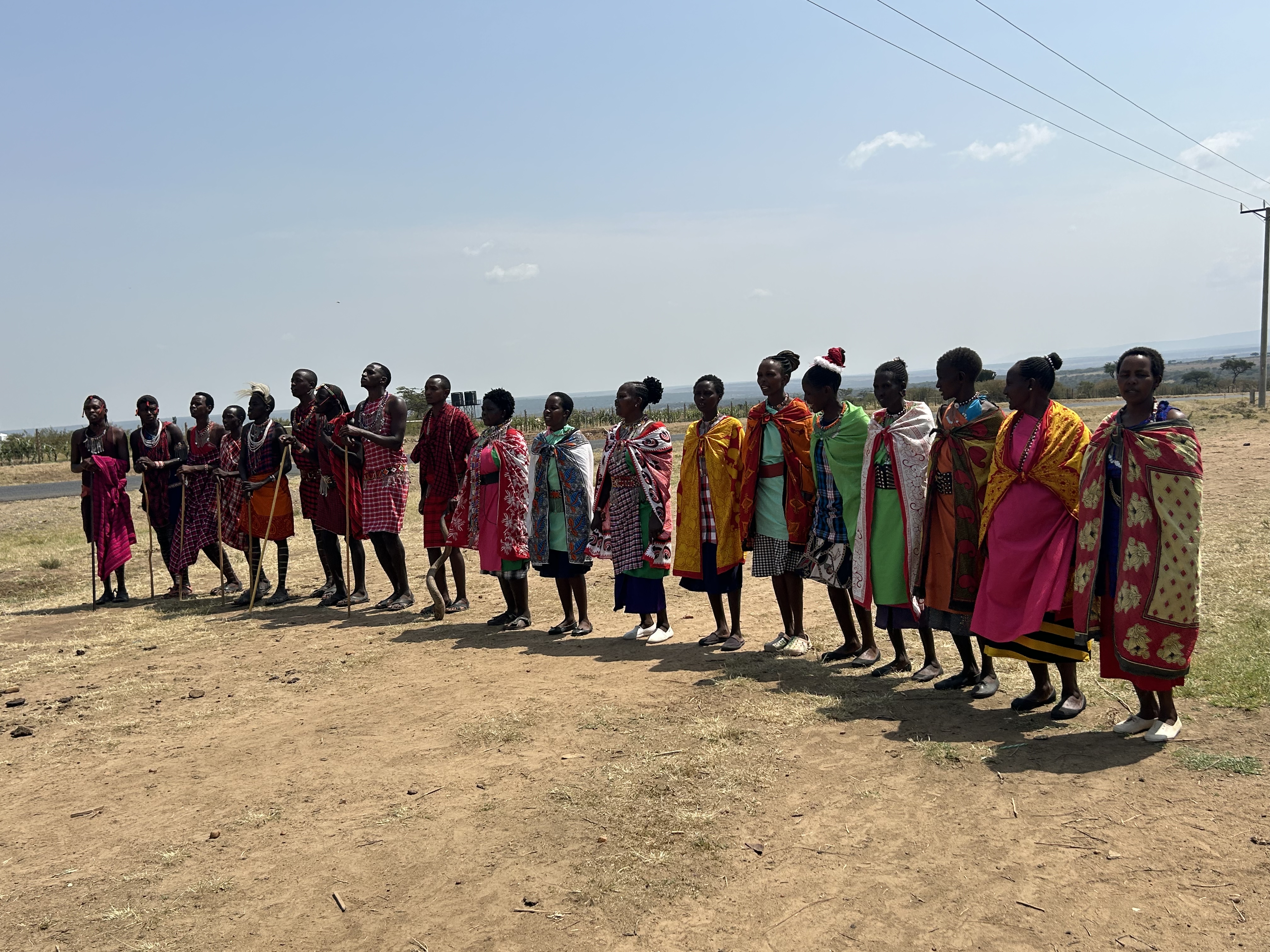
We arrived to warm smiles, a spirited traditional welcome dance, and an invitation into their world. The community, while rooted in its customs, has embraced modernity with measured grace. Many still wear their vibrant traditional shukas, and I had the privilege of visiting a typical Maasai hut, witnessing fire-making with ancestral techniques, and learning about their way of life.

The village had over 230 residents, all related. My guide was one of the first four people in the village to be educated. Since the 1990s, the community has prioritised education, opening a school on community land funded entirely through tourism.

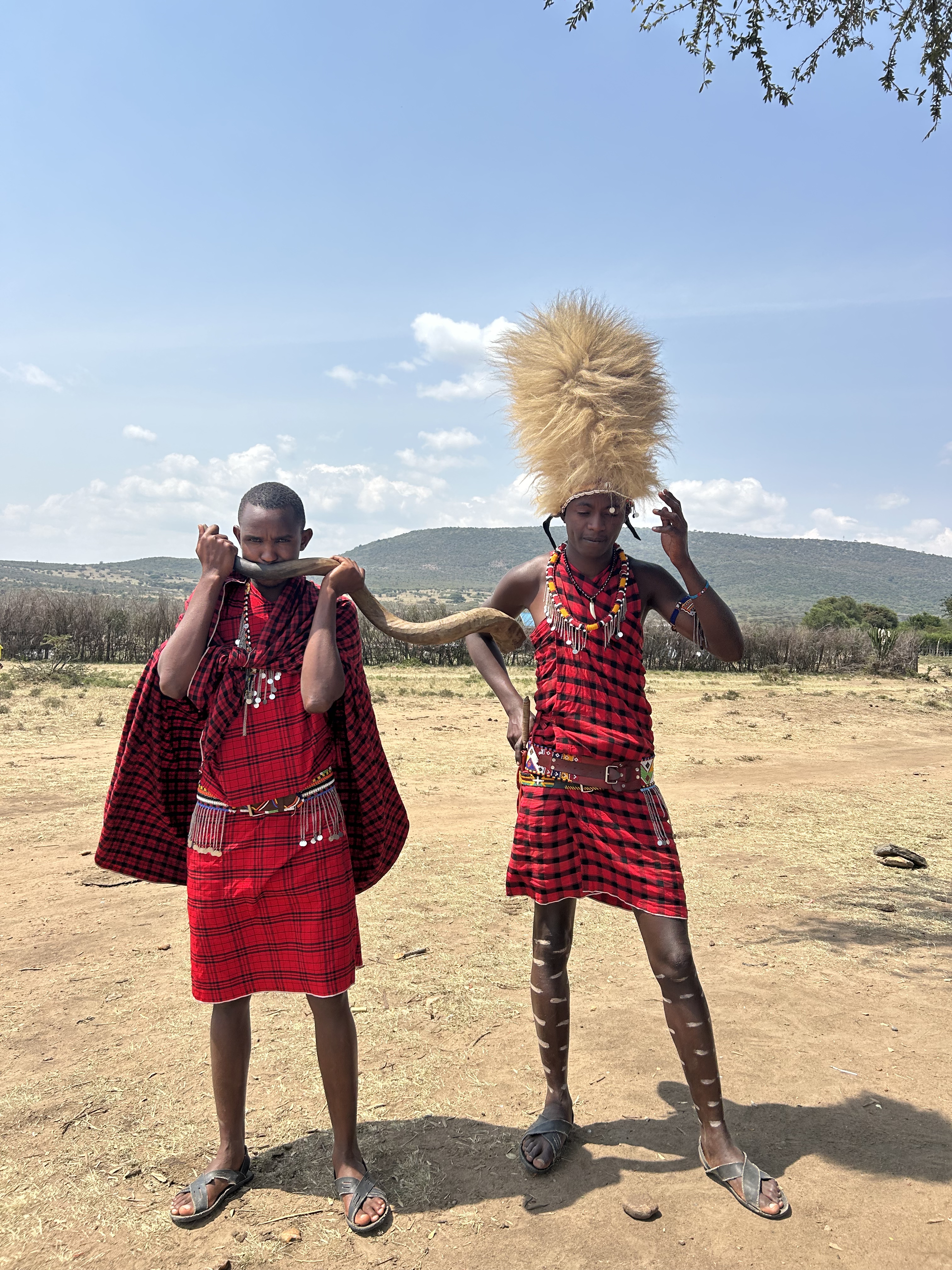
One unforgettable moment: being shown a ceremonial lion headgear, mane intact, used in rites of passage. A physical link to ancient tradition.


🐾 The Wild Continues: Hyenas, Cheetahs, and Vultures

Post-lunch, we returned to the reserve.

First came two hyenas, emerging from the swamp, rolling on dry earth like mischievous puppies. They paused long enough for a perfect photograph before melting into the tall grass.

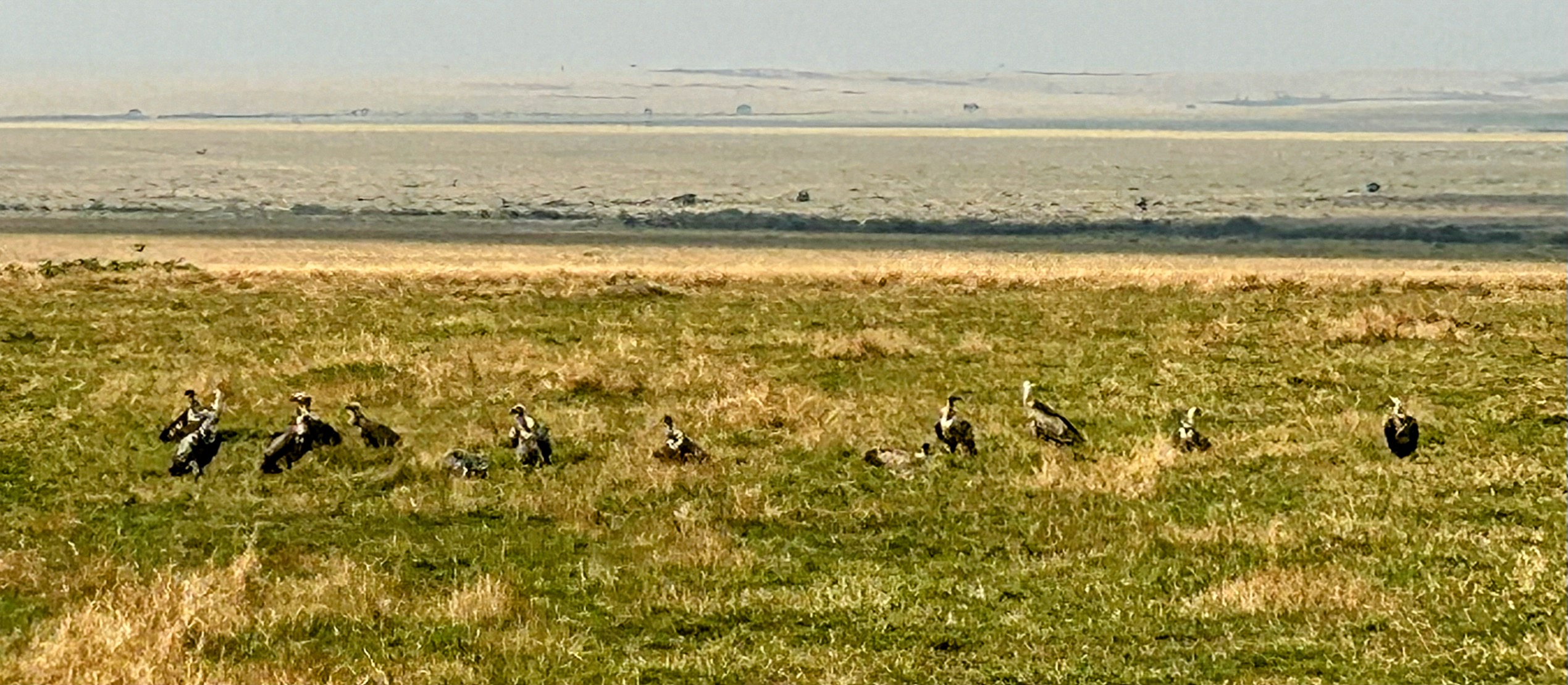
Next, a huddle of vehicles pointed to three cheetahs, napping under a bush—impervious to the click of cameras. Further along, we saw vultures on the ground, circling something.

We approached carefully.

A wounded male gazelle was lying on the earth, breathing heavily. A deep wound marked its flank. The vultures waited, patient and merciless.
Nature’s second lesson of the day: survival belongs to the fittest.

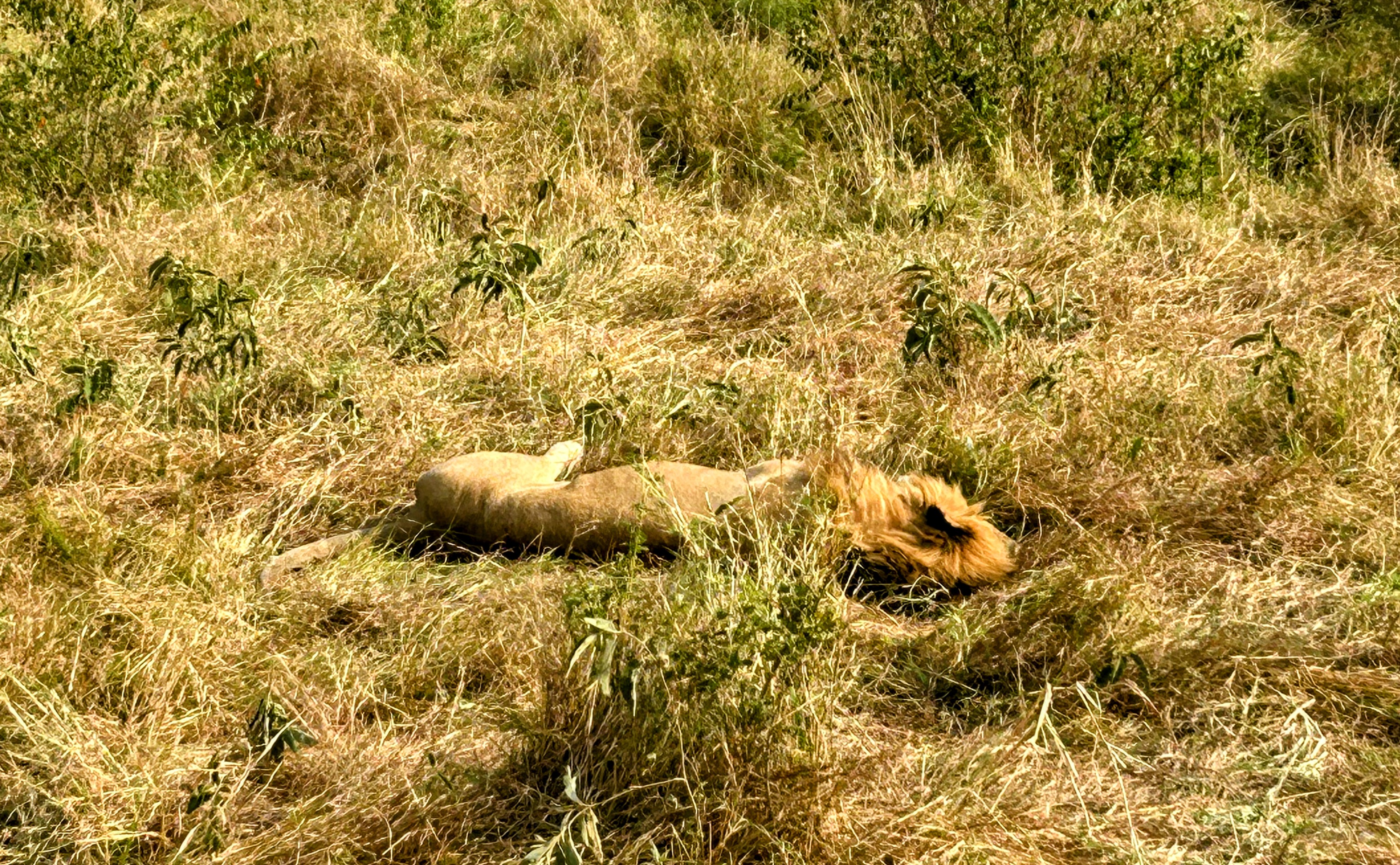
A little later, we joined another cluster of vehicles to find a lone lion, resting silently in the open field.


🪶 The Parting Gift

As the sun began to dip, we started the journey back. But the Mara wasn’t done yet.

An ostrich strutted into view—posing perfectly, as if it knew this was my last day.

And then, my final memory:
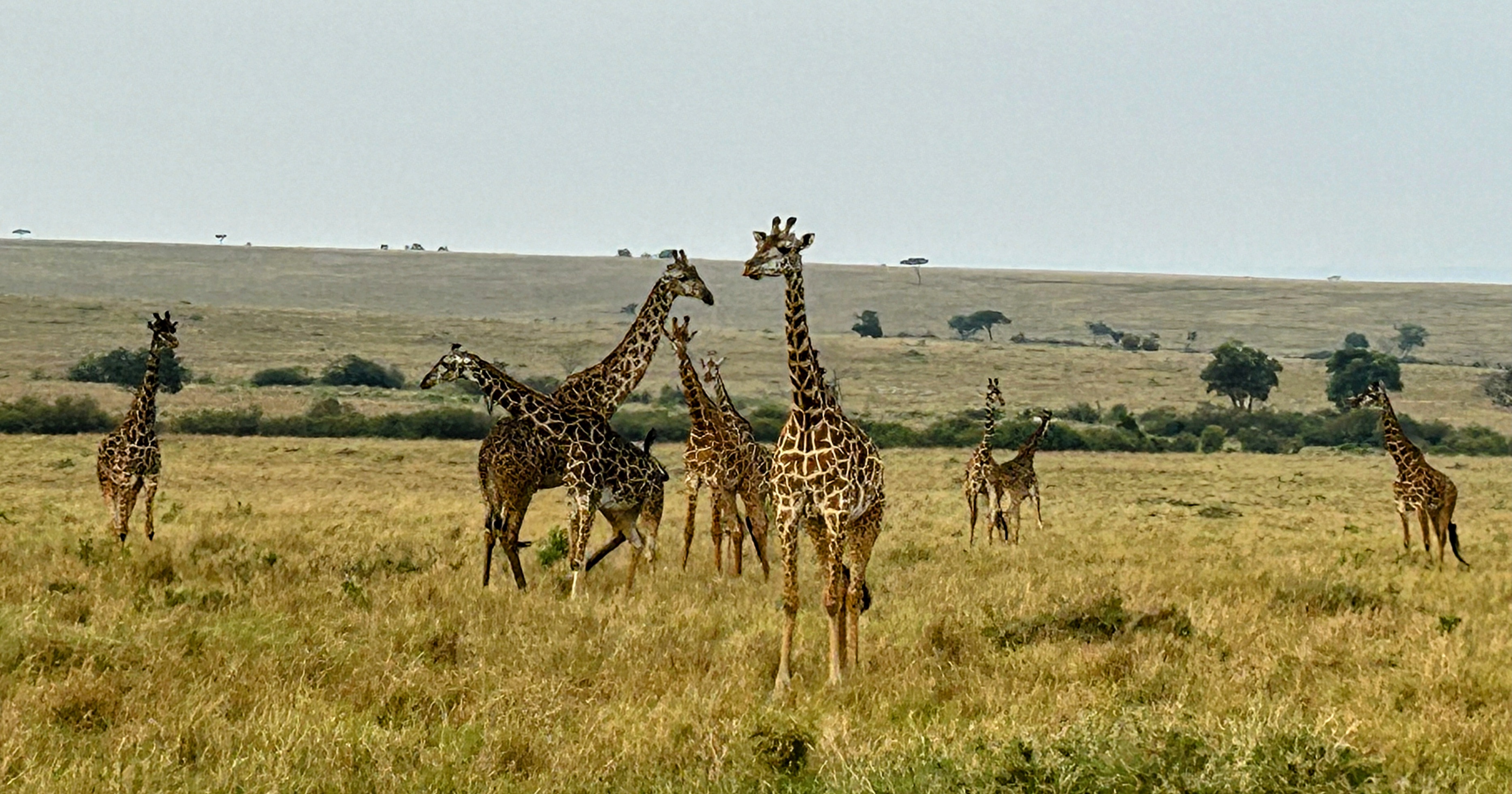
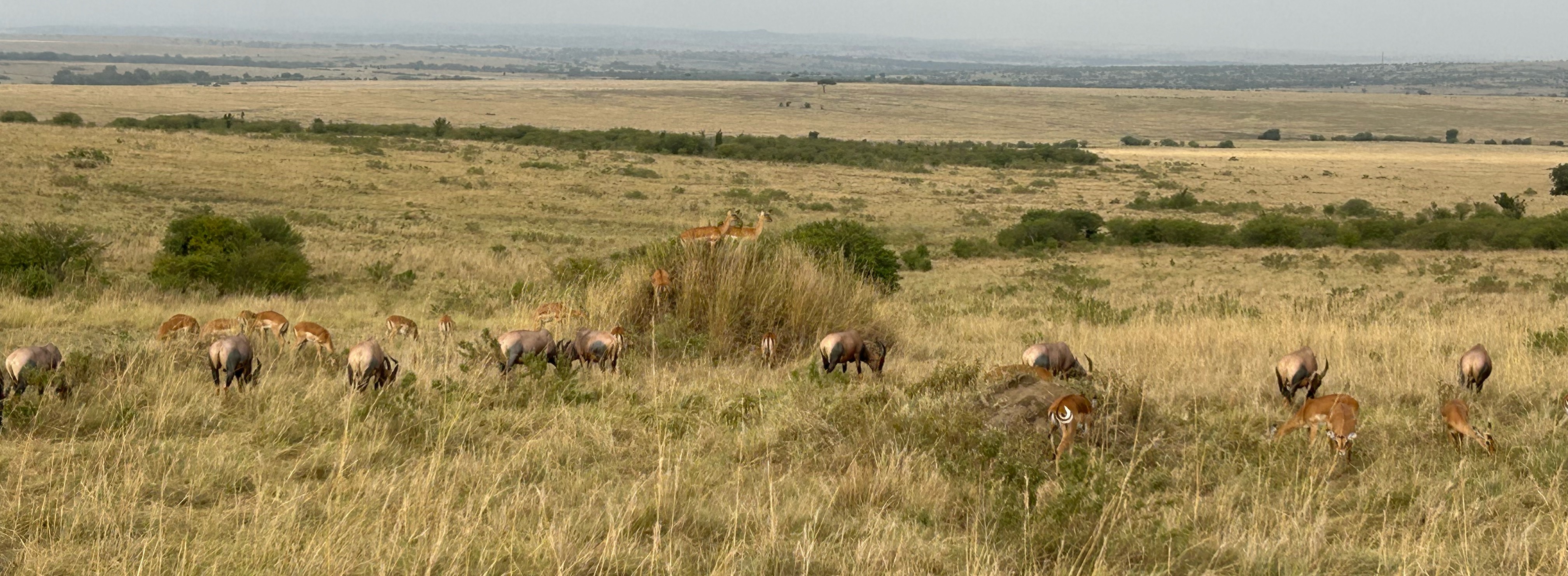
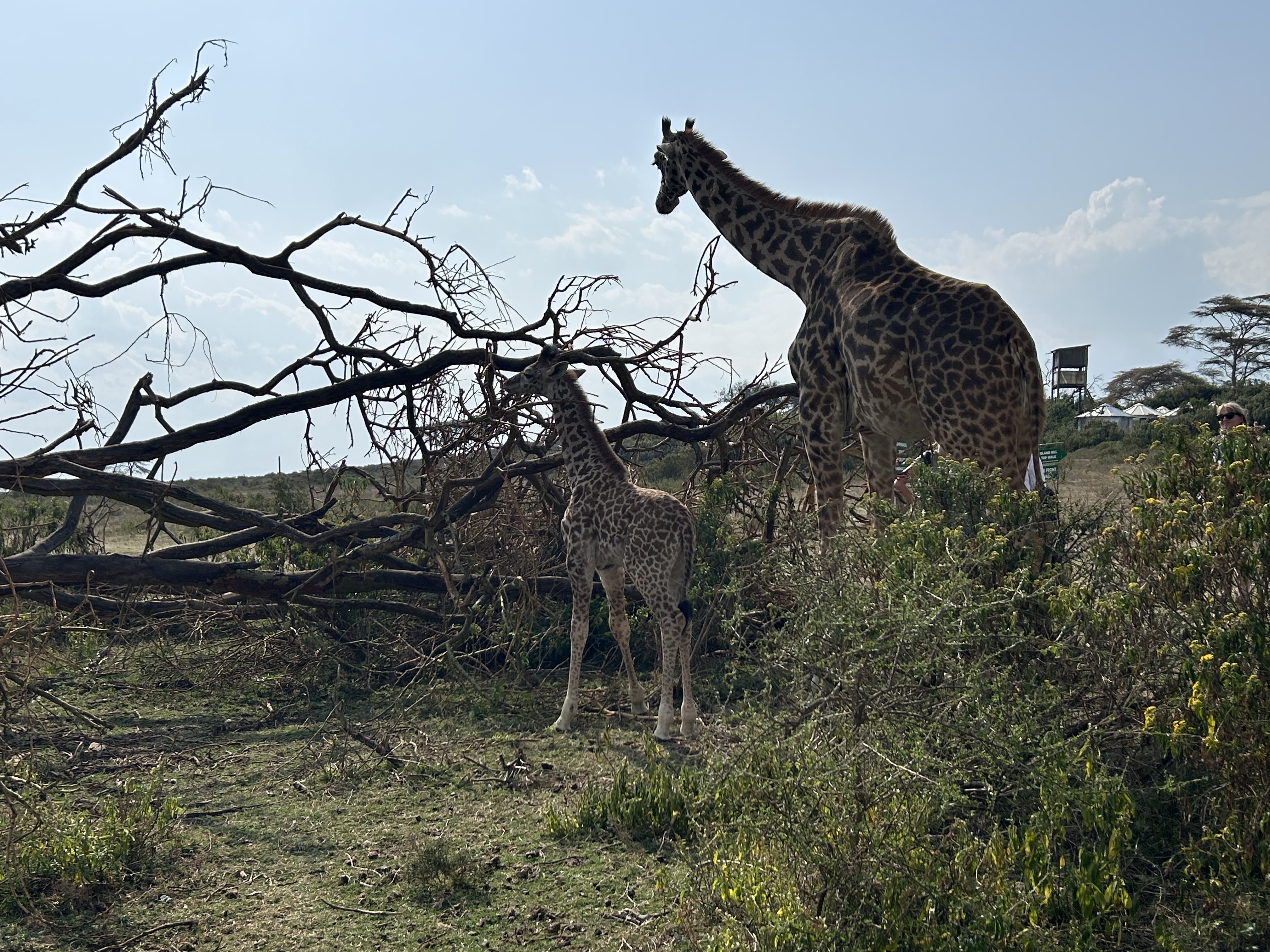
Grasslands dotted with zebras, wildebeest, elands, topis, gazelles—and just before the gate, a group of giraffes, statuesque and still, silhouetted against the amber light.


🧡 Goodbye, Mara

Six days.
Countless memories.
No two moments alike.

From the silence of stalking predators to the rustle of hoofbeats across the plains… the Mara gave me more than a safari. It gave me stories, stillness, and a deeper connection to the wild.

The savannah has a rhythm—and for six unforgettable days, I walked in time with it.


Kenya Safari Diary – Day 5: Balloons, Crossings & the Thrill of the Wild

🎈 A Postcard Comes Alive

A few years ago, I had come across a postcard that showed hot air balloons floating over the Maasai Mara at sunrise. That image stuck with me. So when I first planned this trip, the idea of a balloon safari was very much on my wishlist. But I was told all slots were full.

Then, two days ago—a surprise opening. No second thoughts. I booked it.


🌅 Sunrise in the Skies: The Balloon Safari Experience

Balloon safaris in Mara start before dawn. The early hours offer the best chance to watch the animals wake up with the sun. Each basket is divided into four sections, seating four people each.

As I waited with the group, I noticed two more women who, like me, weren’t particularly tall. The captain quickly grouped us together. That’s how I met Joyce and Jasmine, friendly fellow travellers from Singapore. Soon, we were chatting like old friends.

After a short safety briefing, we boarded. The balloon lifted slowly into the glowing sky—and below us, Mara came alive.

We floated above gazelles, foxes, and giraffes. Two lionesses strolled with majestic calm. A lone elephant, startled by the balloon’s hiss, scampered into the bush. Then, as we glided over the Talek River, we saw them—hundreds of wildebeest and zebras, grazing in massive herds. Further below, hippos wallowed in the water.

One magical hour passed in a heartbeat.


🥂 Bush Breakfast: A Meal to Remember

We landed softly on the plains and were greeted with a sumptuous bush breakfast—complete with an omelette station. Eating breakfast in the middle of the Mara, still buzzing from the flight, felt almost surreal.

After saying my goodbyes to Joyce and Jasmine and meeting up with Denis, it was time to chase another dream: witnessing the Great Migration river crossing.


🐃 The Waiting Game: Wildebeest at the Mara River

Our mission was clear: spot the wildebeest crossing the Mara River.

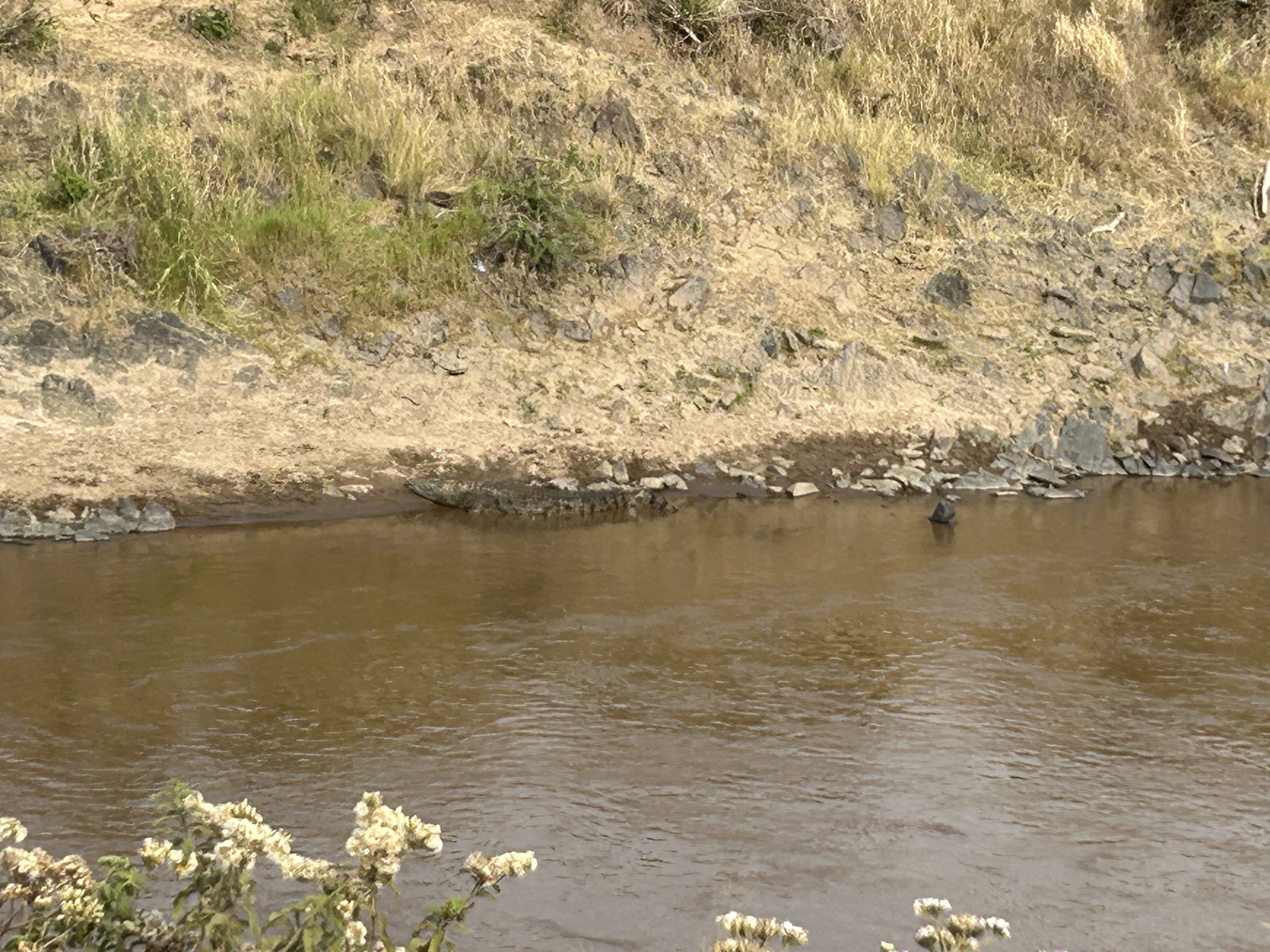
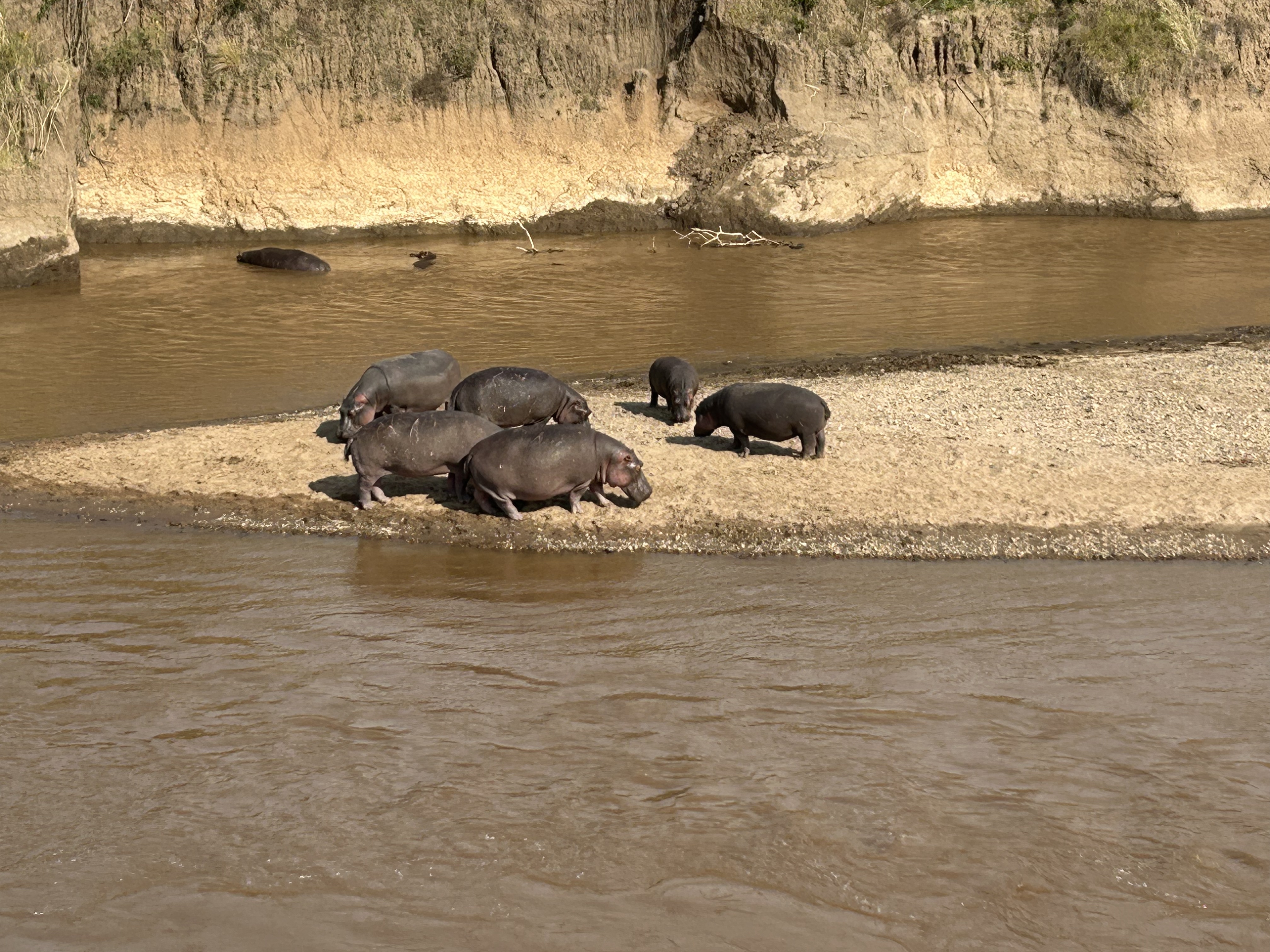
We began driving along the river’s edge. Crocodiles lay sunbathing on the banks. A family of hippos relaxed on a sandbar in the middle. And then—we saw a herd of wildebeest gathering at the edge.

Denis nodded. “They’re thinking about it.”

Soon, other vehicles joined us. Park rangers arrived and parked strategically, ensuring no game vehicles got too close and disturbed the herd. The waiting game began at 9:40 AM.

For hours, we watched the wildebeest inch toward the bank, only to retreat. Vehicles came and went. But I stayed—standing on the seat, glued to my binoculars. So did Denis.

And then, suddenly—movement.

Denis told me to sit. “It’s about to start. And when it starts, it gets wild—among the drivers.”

Engines roared. Vehicles surged toward the edge. The rangers were respectfully ignored. Denis, master of the moment, got us a perfect spot.

And then… it happened.

One wildebeest jumped into the river. The others followed. A chaos of hooves, splashes, dust, and instinct.

Years of watching this on screen didn’t dull the impact. Seeing it live, raw, unfiltered—was nothing short of breathtaking. The four-hour wait felt worth every second.


🧺 Lunch with a View (and a Baboon)

With my heart full, my stomach reminded me it was empty. Luckily, I had a picnic lunch packed for the full-day drive. We found a shaded spot, laid out a rug, and I tucked into my meal—under the close surveillance of a baboon and a marabou stork.


🦁 The Afternoon Watch: Lions, Cheetahs, and a Hyena

Post-lunch, we went in search of more wildlife—and Mara delivered.

We found four lions sleeping under a bush, unfazed by clicking cameras and murmurs. Park rangers arrived, gently dispersing the crowd to avoid stress on the animals. A little further, we saw a solitary lion lying in the grass. Again, as vehicles gathered, a ranger arrived to maintain the calm.

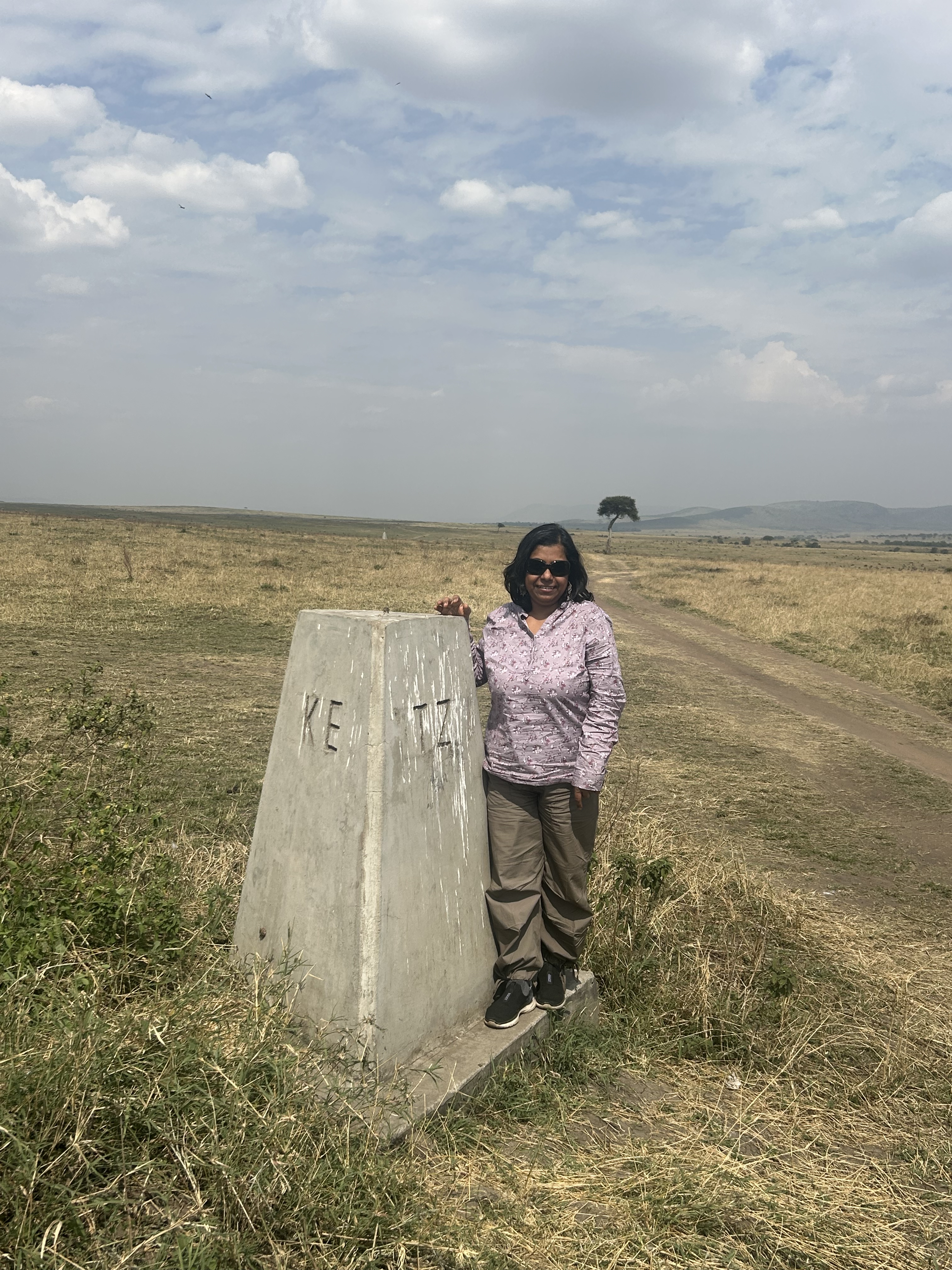
Later, we drove to the Kenya-Tanzania border for a quick photo-op, then spotted herds of Eland and Topi on the open plains.

Just as the afternoon light turned golden, the radio buzzed again—a cheetah had made a fresh kill. We rushed to the location. There she was, panting in the shade, having just taken down a gazelle.

As the day neared its end, I squinted at something in the distance.
“Is that an elephant?” I asked.
Denis laughed, “I think you’re just tired.”
Then, “Have you seen a hyena yet?”
We set off—and found a lone hyena resting in the shade, completing yet another chapter in this day’s wildlife drama.


🐘 One Last Surprise

As we made our way back to the lodge, the real elephants appeared—lumbering through the golden grass, just in time to remind me that in the Mara, the wild always has the last word.

Kenya Diary – Day 4: The Magic of Maasai Mara

After an unforgettable time in Samburu and Lake Naivasha, it was time to head to the crown jewel of Kenya’s wilderness—Maasai Mara. The drive from Naivasha was smooth, the scenery rolling and expansive. Somewhere along the highway, I was treated to a scene straight out of a nature documentary: giraffes casually crossing the road while long-haul trucks bound for Uganda came to a respectful stop. That moment said everything—Kenya, like India, is a land where humans and animals have coexisted for centuries. The roads might belong to us, but the land? It belongs to all.

An Influencer Moment… That Was Real

I arrived at my lodge in the Nashulai Maasai Conservancy, adjacent to the Mara Reserve. As I was being briefed, someone mentioned that wildlife often roams the property—zebras, giraffes, antelopes, the works. I smiled politely, silently filing it away under “influencer exaggeration.”

But as I walked into my tent, I stopped in my tracks. Two zebras were grazing calmly right outside. Unbothered by my presence. Completely at home. Apparently, those influencer videos were real after all.

Into the Mara

Post-lunch, I was itching to head into the Mara Game Reserve, but Denis—my guide and voice of reason—suggested we wait till 3:00 PM for better sightings. By 2:30, I was already in the vehicle.

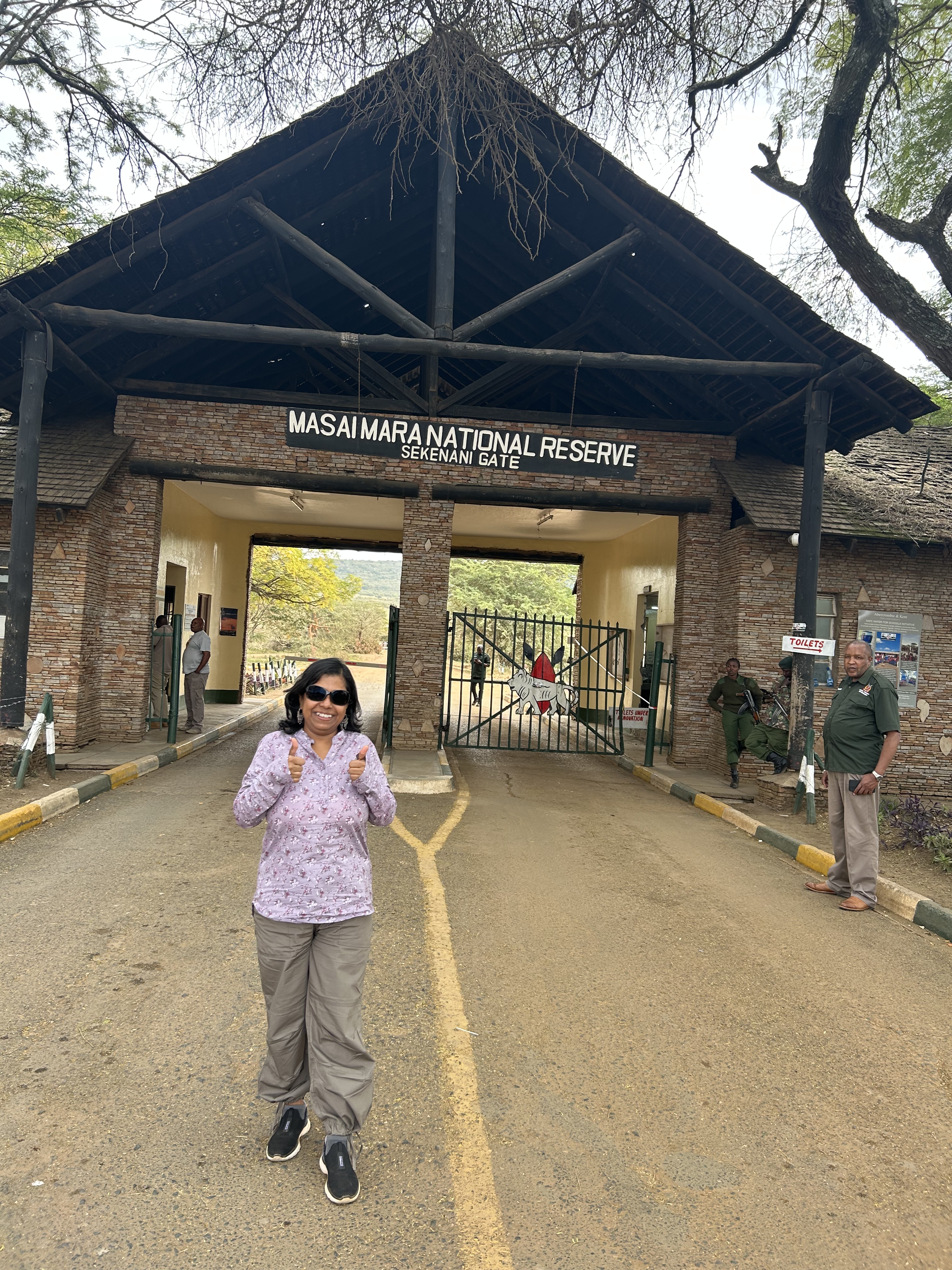
As soon as we entered the park, the Mara began to unfold its magic.

First, a lone elephant stood tall in the golden grass.
“In India, elephants are considered lucky,” I told Denis.
He smiled, “Then Mara is welcoming you.”

Next came herds of zebras, followed by wildebeest, impalas, and Thomson’s gazelles grazing together in peaceful coexistence. The giraffes soon followed—towering, gentle silhouettes against the sky. One of them turned ever so slightly, as if offering a perfect pose. I took the shot.

The Leopard in the Tree

Suddenly, the radio crackled with excitement. Denis stepped on the gas. We arrived at a clearing where at least 20 vehicles had gathered under a single tree. Up in its branches, a leopard, perfectly camouflaged, draped across the limbs with feline grace. Through the binoculars, I spotted its kill—an impala—tucked carefully into a crook of the tree.

And then, as if aware of all the attention, the leopard shifted. Slowly, dramatically, from one branch to another. And then descended—regal, deliberate, unhurried—before disappearing into the grass. A moment I will never forget.

More Elephants, Lion Cubs, and a Buffalo Parade

We continued, only to find a larger herd of elephants, slowly making their way to a lone tree. One stopped to scratch its back, reminding me once again how relatable elephants are—gentle giants with very human gestures.

Further along, two vehicles stood near a bush, cameras poised. We slowed down and waited. Soon, three lionesses emerged, followed by a tumble of cubs, rolling and pouncing on each other in playful chaos. For a few minutes, we all watched in reverent silence. But as more tourists gathered, the lions melted back into the bush.

As we turned to leave the park, thinking the day couldn’t offer more, a herd of Cape Buffaloes made their appearance—one of Africa’s Big Five. We waited as they crossed the road, closing the day with quiet power.

A Day of Living Documentaries

You can watch all the wildlife documentaries in the world, but nothing prepares you for the real thing—for the silence before a leopard moves, for the thunderous stillness of buffaloes, for the fluttering tails of lion cubs in grass.

The Mara doesn’t just show you wildlife—it welcomes you into its ancient rhythm. And on this day, it felt like it was opening its arms just for me.

Kenya Diary – Day Three: From Rift Valleys to Hippo Eyes

On the third day of my African safari, I bid farewell to Samburu, my heart still full from the wildlife encounters of the past two days. As the vehicle wound its way out of the park in the early morning, nature gifted me a parting glance—giraffes, impalas, gerenuks, and dik-diks crossing our path, calm and unhurried, as if they knew I needed one last look.

My next destination: Lake Naivasha, nestled within the legendary Great Rift Valley. After all those geography lessons in school, how could I possibly be in Africa and not stand somewhere within the mighty Rift?

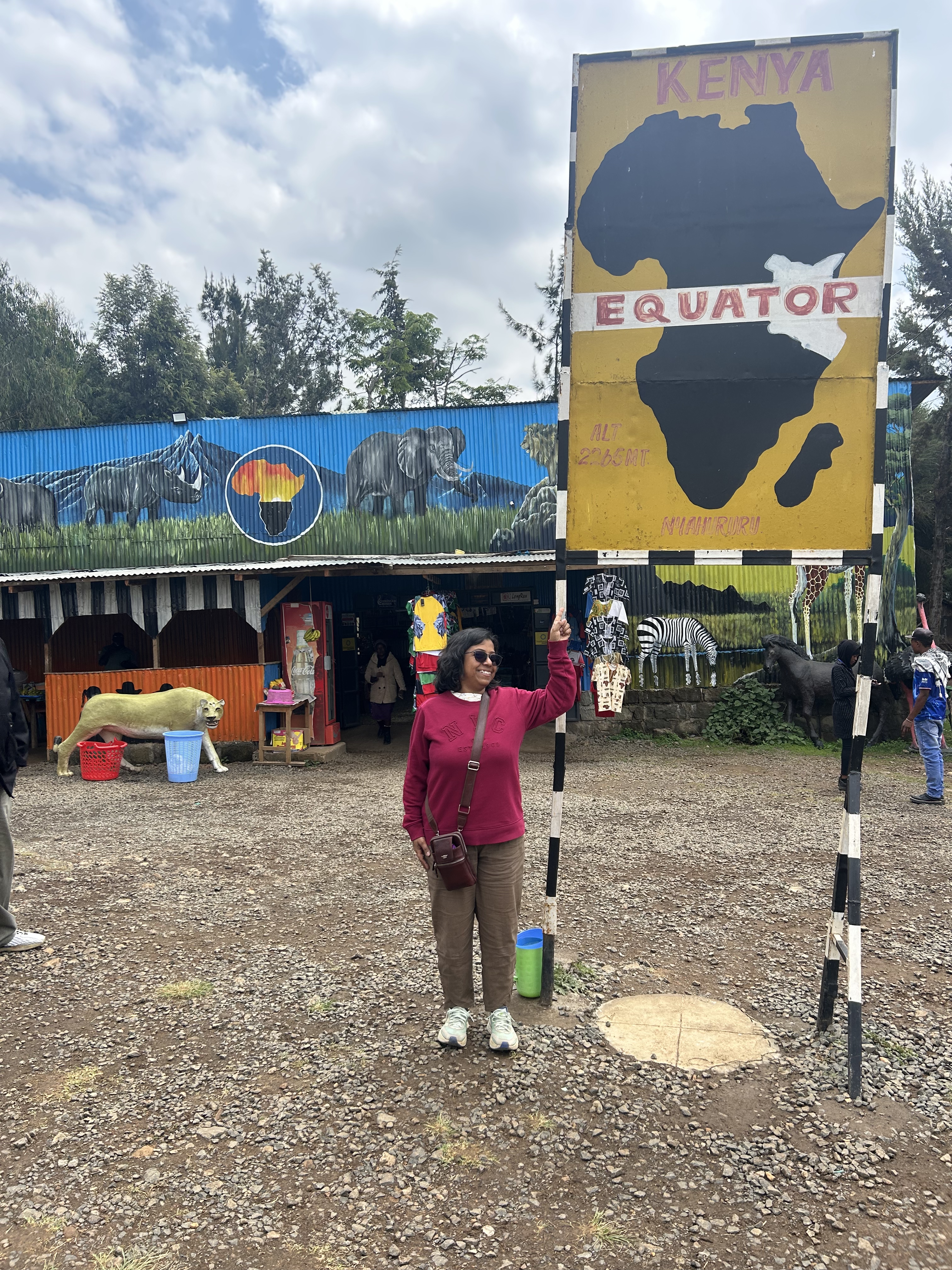
The drive was long, but it held one geographical delight—the Equator crossing. We stopped at a modest joint proudly announcing our latitude. I stepped out, stretched my legs (yes, even short ones need a break), and soaked in the moment. Just then, a young man offered to take my photo with the sign. We got chatting—and to my surprise, he turned out to be a three-time Chandigarh Marathon winner. Africa, always full of unexpected meetings.

We arrived at Lake Naivasha, a tranquil freshwater lake formed in a volcanic depression, fed by underground springs and the Malewa and Gilgil Rivers. It’s a haven for hippos and over 400 species of birds.

Out on a boat ride, the lake unfolded its quiet drama. Hippos peeked at us from beneath the water’s surface—eyes, ears, and a hint of a snout. Meanwhile, the skies and shores dazzled with avian beauty:
🦢 Great White Pelican
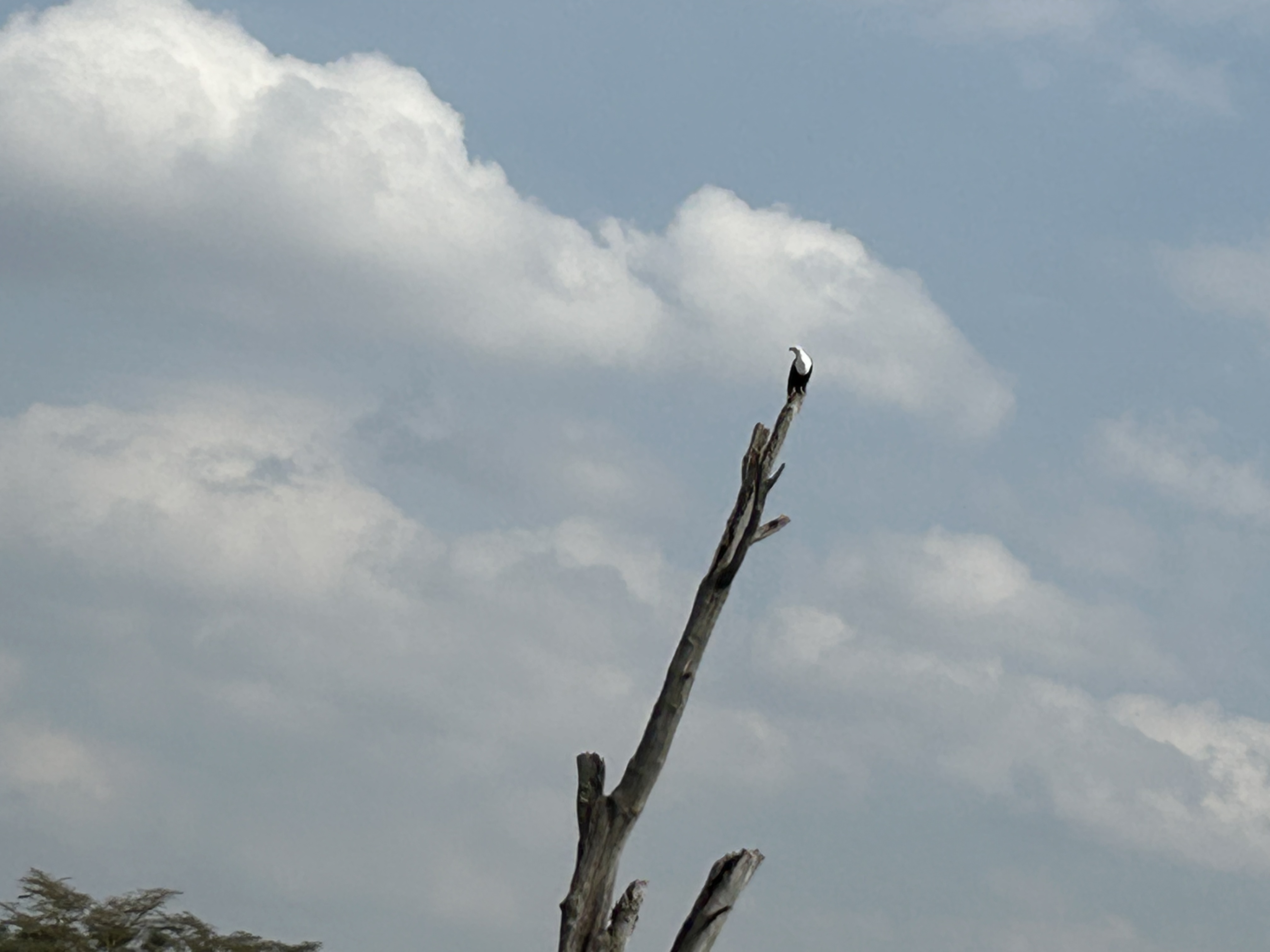
🦅 African Fish Eagle
🪶 Goliath Heron, African Spoonbill, Egyptian Goose, Cormorants, and Lapwings.

One pelican stood out—a veteran with part of its left wing missing. Boats usually toss it a fish, and it catches it mid-air, a little lakeside ritual. But when our guide tossed one, the pelican missed. Even the best have off days.

Next came a walk on Crescent Island, the exposed rim of an ancient volcanic crater. The island gained fame in the film Out of Africa—for which it was stocked with wildlife, including the Big Five. Post-production, the predators were removed, but herbivores like zebras, giraffes, impalas, and waterbucks wandered in during drier years, when a land corridor connected the island to the mainland. With the lake’s water levels now high, the animals are marooned—but serene and accustomed to visitors. They barely blinked as we walked past.

Still, I yearned for a closer view of the hippos. My guide steered the boat toward a quiet cove known for sightings. We waited. Eventually, a family of hippos emerged—but they were not thrilled to see us. One male even performed a mock charge to make his point. We backed off.

Rain clouds gathered, and a drizzle began to fall as we circled back to the landing point. That’s when we saw them again—the same hippo family, now on the shore. My guide began calling softly and tossing vegetables near an open patch. That was the cue.

Out came the giants, waddling forward like seasoned performers hitting their mark. Standing just a few feet away, I finally got the close-up I had been waiting for.

The day ended with a full heart and a camera roll full of hippos. This trip… it keeps unfolding in the most unexpected and beautiful ways.

Kenya Diary – Day Two: Of Giants, Hunters, and a Spoiled Romance

My second day on the African safari began with unexpected laughter. Denis, my ever-practical guide, had insisted we start early—6:30 a.m. sharp—to catch the best wildlife action. Dutifully ready, I arrived at the lodge reception, eager for another day in Samburu.

As Denis prepared the safari vehicle, he opened the hood—a typical practice to allow unobstructed viewing from the top. Then he turned to me, paused, and stated, quite matter-of-factly, “You are short.”

He wasn’t wrong. At barely five feet, the open-top vantage point posed a bit of a challenge. But Denis, quick with a solution, added, “I think you can remove your shoes and stand on the seat.”

And that’s how my morning began—shoeless, grinning, and standing on the seat, ready to meet the wild.

Samburu is known for its unique quintet of wildlife—The Samburu Special Five: the Reticulated Giraffe, Grevy’s Zebra, Beisa Oryx, Somali Ostrich, and Gerenuk. These arid-adapted species are rarely seen in other Kenyan parks, making sightings here all the more special.

Our day opened with a gentle procession of Reticulated Giraffes, their elegant frames swaying as they nibbled the treetops, impervious to our awestruck gazes. Shortly after, a herd of impalas darted past, as if to say, Welcome to Samburu.

Then came the buzz on the radio—a herd of elephants had been spotted. We raced over and found them, including three playful calves, feeding leisurely as they made their way toward the river. We waited for the herd to cross the road. Just when we thought the last elephant had passed, the matriarch emerged—large, composed, and watchful. She brought up the rear like a regal guardian.

Soon, another radio alert sent us speeding across the terrain again—lions had been seen. In the tall grass, barely visible, we found three lionesses and four cubs, perfectly camouflaged. I raised my binoculars and scanned the horizon—impalas, zebras, and oryx were alert, nervously watching. The lionesses, thin and determined, moved slowly but purposefully toward the prey. In the wild, even the top predator must earn every meal.

As I was still processing the sheer majesty of these moments, Denis pointed out a pair of Gerenuks, the long-necked antelopes that stand upright to feed. But they darted off before we could get close.

Further ahead, a female Somali ostrich and her two young paused mid-stride, stared at us with curious eyes, and then—deciding we were harmless—ambled away.

Yet again, the radio crackled—a cheetah had been sighted. We sped to the location and found her resting in the shade, catching her breath beside a fresh kill—a Kirk’s dik-dik. Denis maneuvered the vehicle for the perfect view. The cheetah, the fastest creature on earth, was now a picture of stillness, her sides heaving gently as she gnawed at the bones.

Next on our checklist: the remaining members of the Samburu Five. After scanning the reserve for a while, we found them at last—Grevy’s Zebra and Beisa Oryx, grazing side by side under the open sky. Sightings complete, we began our journey back to the lodge, satisfied.

But Samburu wasn’t done with me yet.

As we rolled along, I noticed two elephants, one on either side of the road. “They’re courting,” Denis explained. We paused, holding our breath. Slowly, the two approached each other and gently touched trunks—a moment so tender it felt almost sacred. But the female clearly didn’t appreciate our intrusion. With a swish of her tail, she turned and walked away. The male turned to us and lingered. In his eyes, I imagined a mildly annoyed question: Did you really have to ruin that?

By now, the sun was high and the air heavy with heat. Just then, the radio crackled again—another lion sighting. We drove to the spot to find several safari vehicles gathered. A lion and a lioness lay in the shade, seemingly unfazed by their human audience. But as more vehicles arrived, the lion gave an irritated grunt, stood up, and disappeared into the bush, his privacy duly invaded.

Thus ended my second day in Samburu—a symphony of sightings, from giraffes to courting elephants, lions on the hunt to the cheetah at rest. The bush, with all its drama and dignity, had begun to reveal its soul. And I knew—this safari was only getting better.