I usually take my last day in any place a little slow. My stay at Ranthambore National Park was no different. Before arriving, I knew there was a fort here, but what I hadn’t realized was that Ranthambore Fort is a UNESCO World Heritage Site. That, of course, made it unmissable.
Trying to stay ahead of the heat, I set out early. My first surprise, there was no entry fee. The fort houses three temples, and most visitors seemed to be heading there for prayers. As I stepped out of the vehicle, I noticed the absence of eager guides, a rarity at monuments. I’ve always been wary of half-baked historical narration, but as I approached the gate, my driver introduced me to Harphool Gurjar, who would be my guide for the morning.
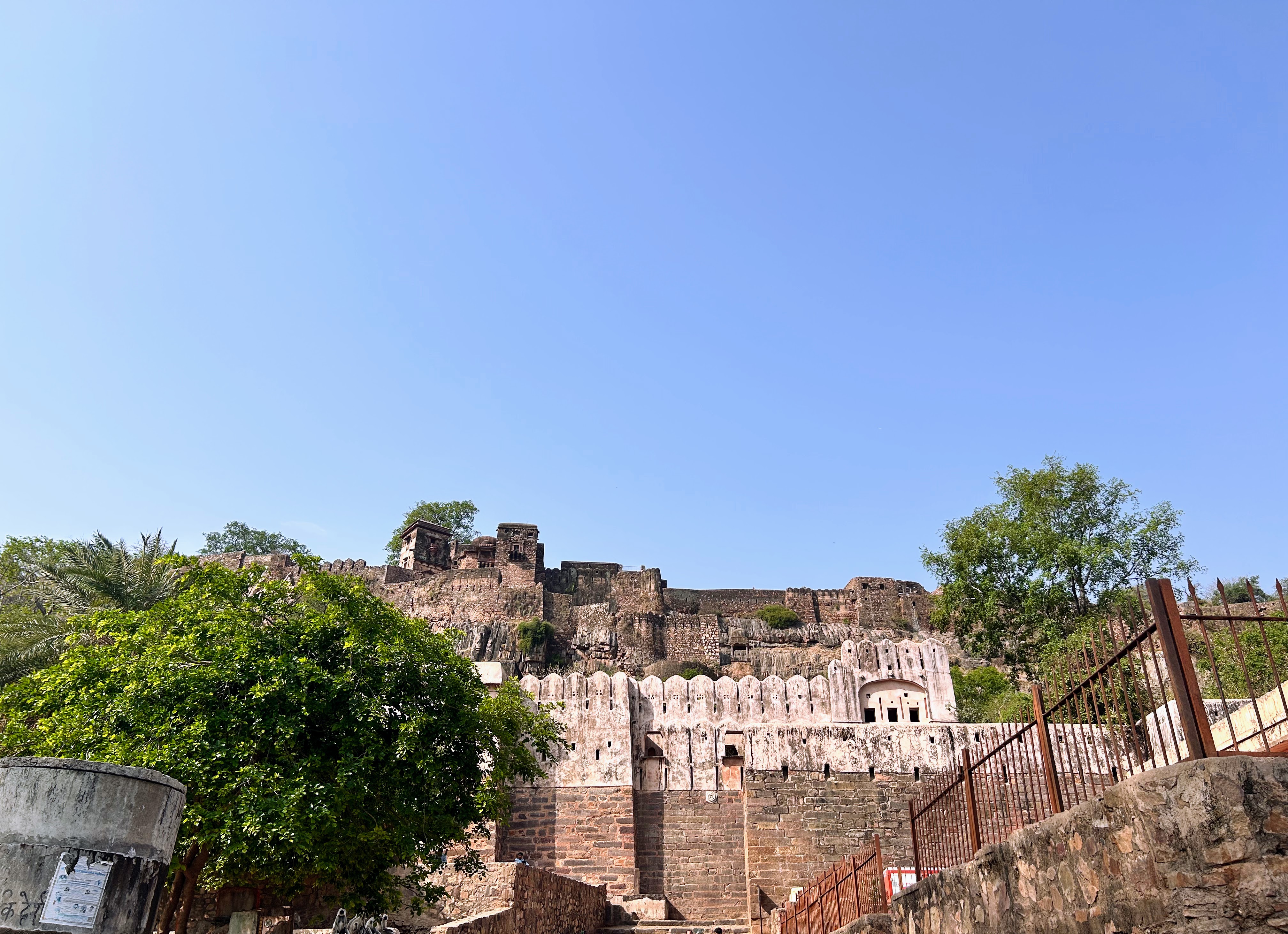
Before he could begin, I told him that while I would visit the temples, my interest lay in the fort and its history. The fort has seven gates, though only four, Navlakha Pol, Hathi Pol, Ganesh Pol, and Andheri Pol (or Toran Dwar), are accessible; the others lie within the core of the national park. Rising from the rugged folds of the Aravallis, the fort stretches across nearly seven kilometers of formidable walls.
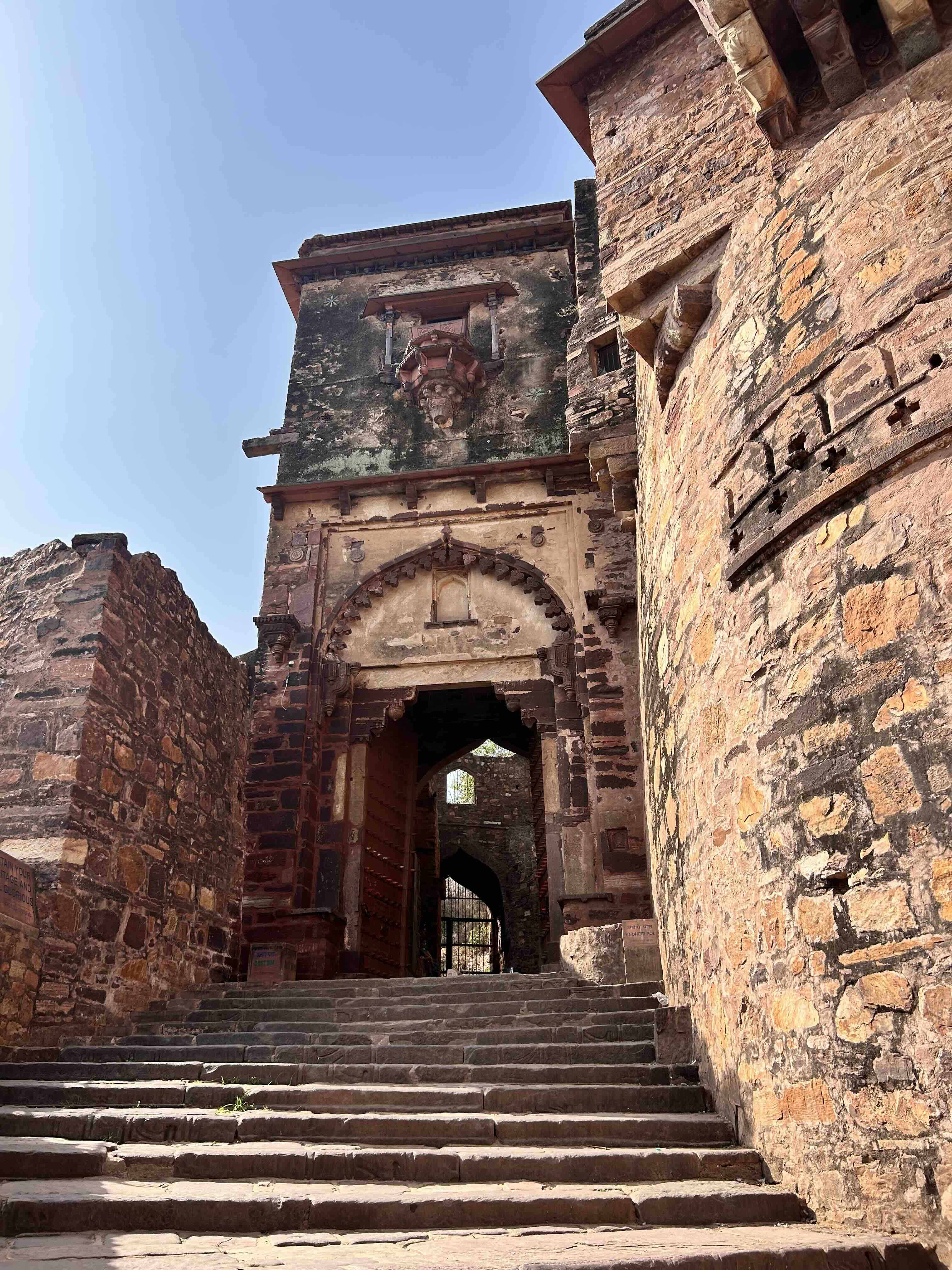
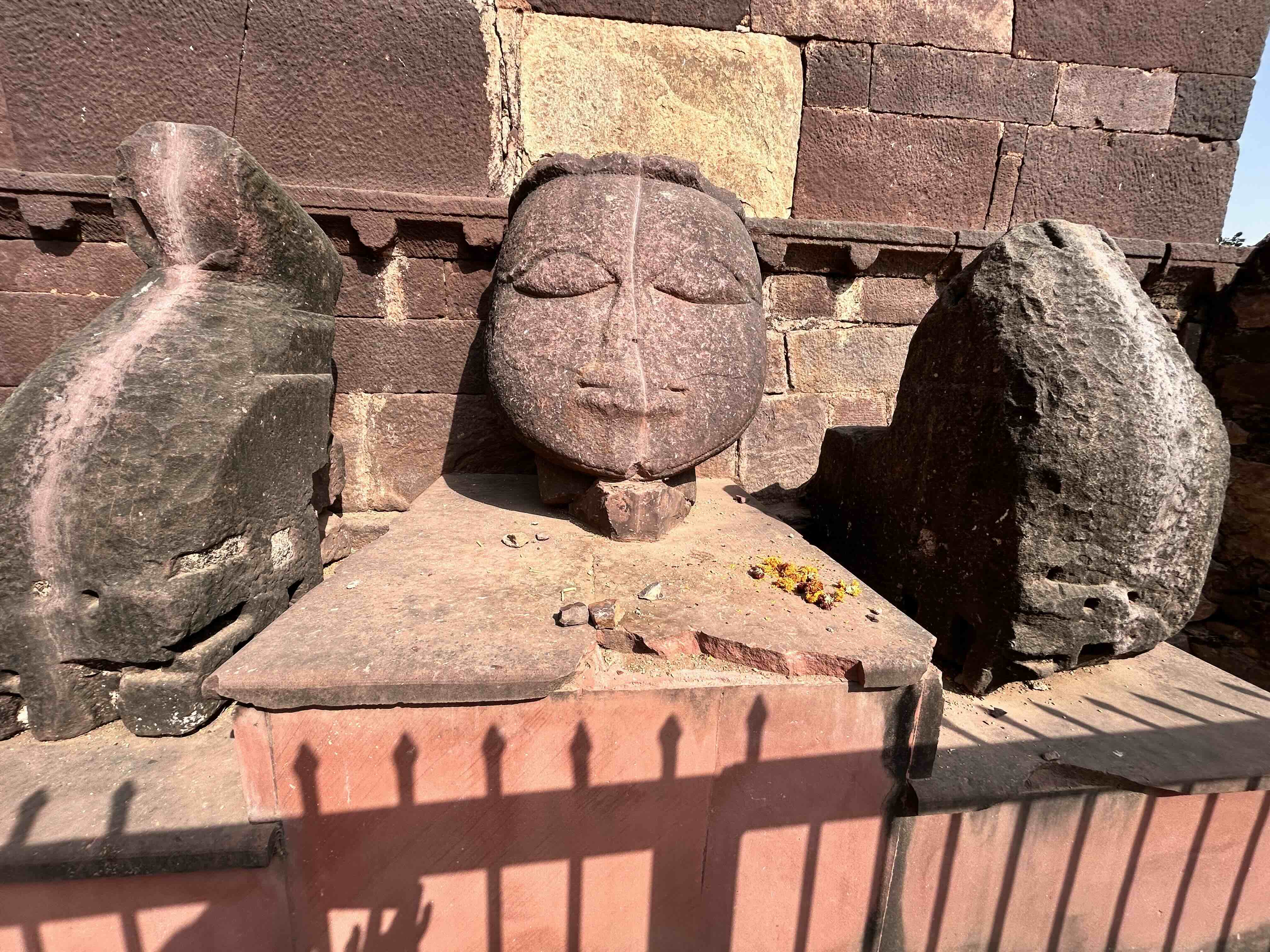
We began our ascent through Navlakha Pol towards Hathi Pol. There, I noticed a peculiar stone carving, a face, a torso, a hand. It represents Ranmal, a general who is believed to have betrayed King Hammir Dev Chauhan to Alauddin Khilji in 1301. Locals still throw stones at the carving, a symbolic act of contempt for betrayal.
At Ganesh Pol, my guide pointed out markings on the wall, said to be the hoof prints of the king’s horse. What followed was a story layered with drama. According to local lore, Hammir Dev Chauhan had, in fact, won the battle and sent his generals to inform the queen to stop the royal women from committing jauhar. The generals, however, conveyed false news. When the king realized, he rushed back, only to be blocked at Hathi Pol and Ganesh Pol. In desperation, he urged his horse up the steep walls, but it was too late. The women had already committed jauhar. His daughter, too, is said to have leaped into a kund. Overcome with grief, the king is believed to have taken his own life.
I could not say how much of this is historically accurate, but it certainly carried the weight of a cinematic narrative. The better-known jauhar of Rani Padmini at Chittorgarh Fort occurred in 1303, lending the tale a broader historical resonance.
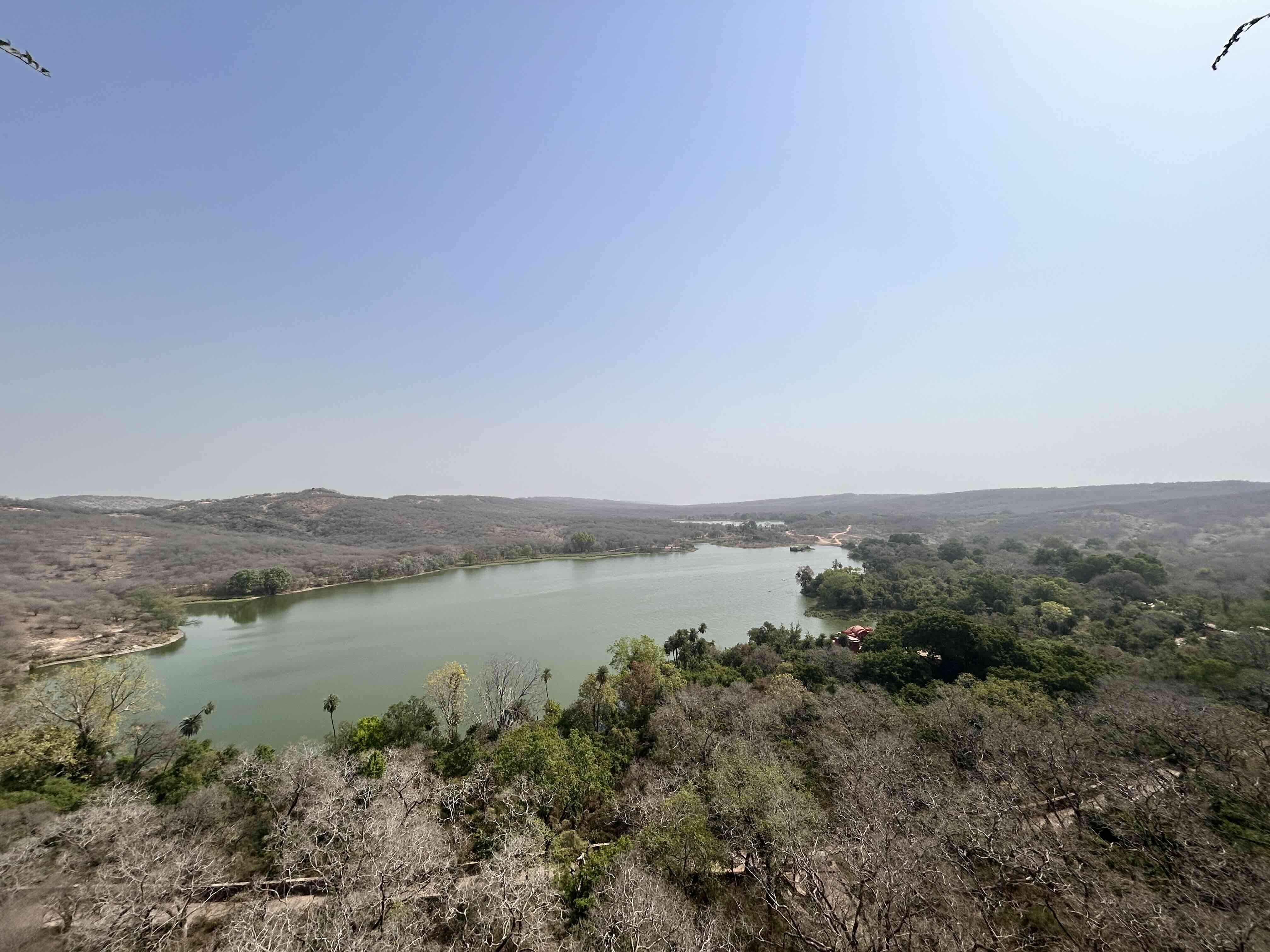
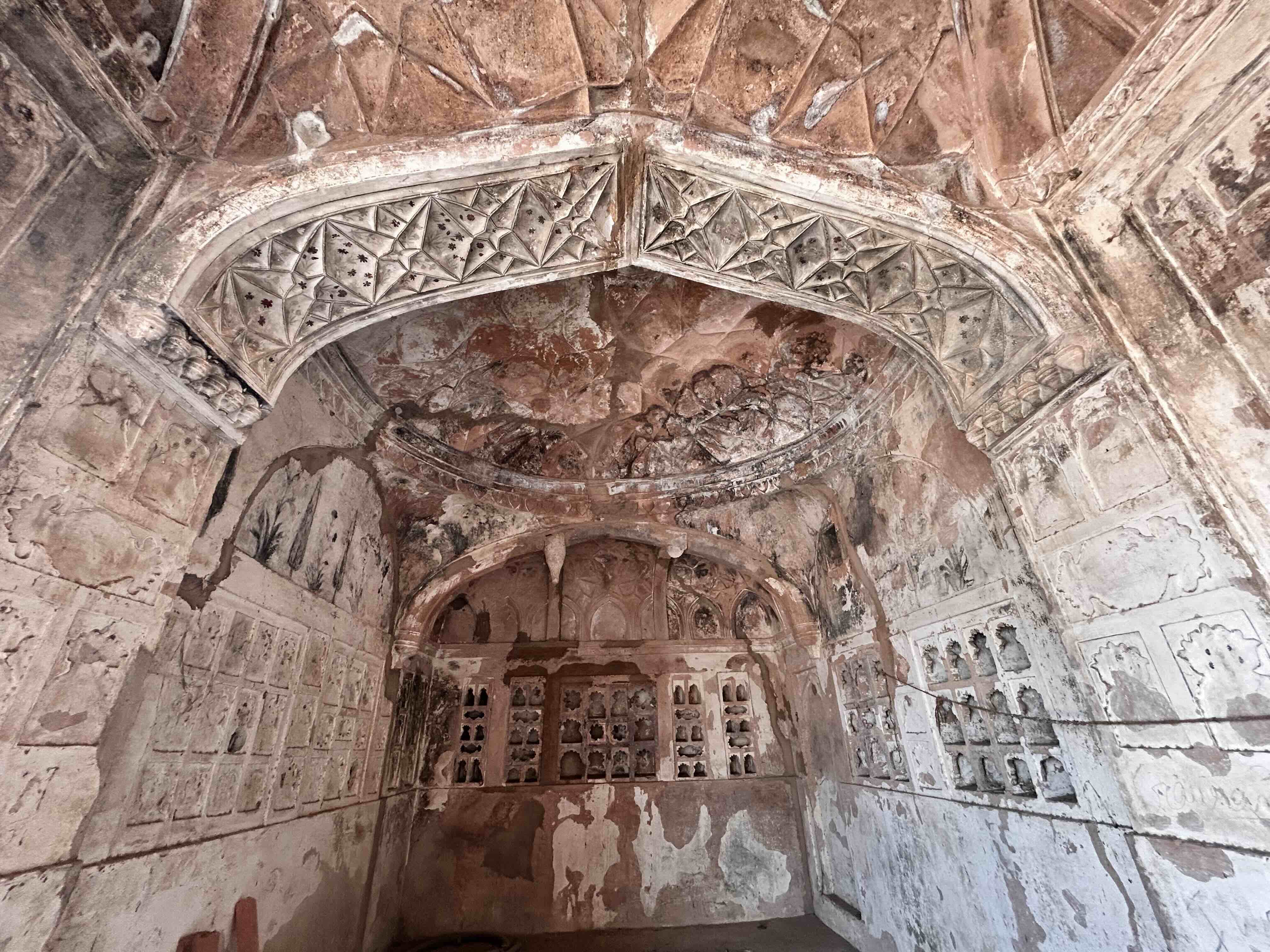
Taking a less-trodden path, we reached Badal Mahal. Before I could take in the view, my guide led me through a narrow passage that opened onto the rooftop. The reward was immediate, a sweeping panorama of Padam Talao and Zone 3 of the park below. Back inside, I paused in the cool interiors, imagining queens seated on swings that once hung from the hooks still visible on the ceilings, looking out over the same tranquil waters.
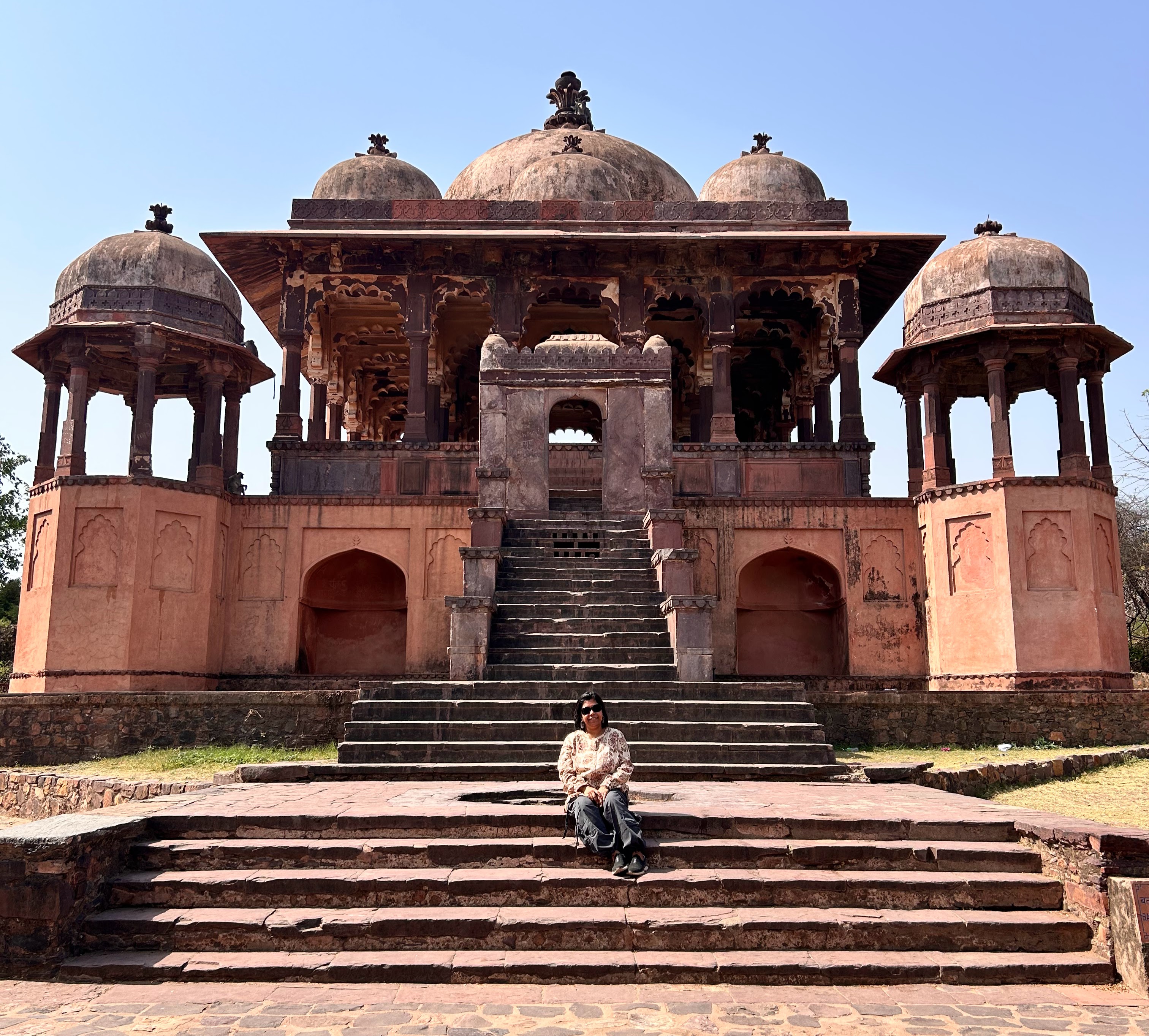
We moved next to the 32-pillared cenotaph, built by Hammir Dev Chauhan in honour of his father, Rao Jaitra Singh’s 32-year reign. Beneath it lies a Shiva temple. The steps are aligned so that the first rays of the sun fall directly on the shivling, a quiet interplay of architecture and devotion. Langurs had claimed the space as their own, but seemed entirely indifferent to our presence.
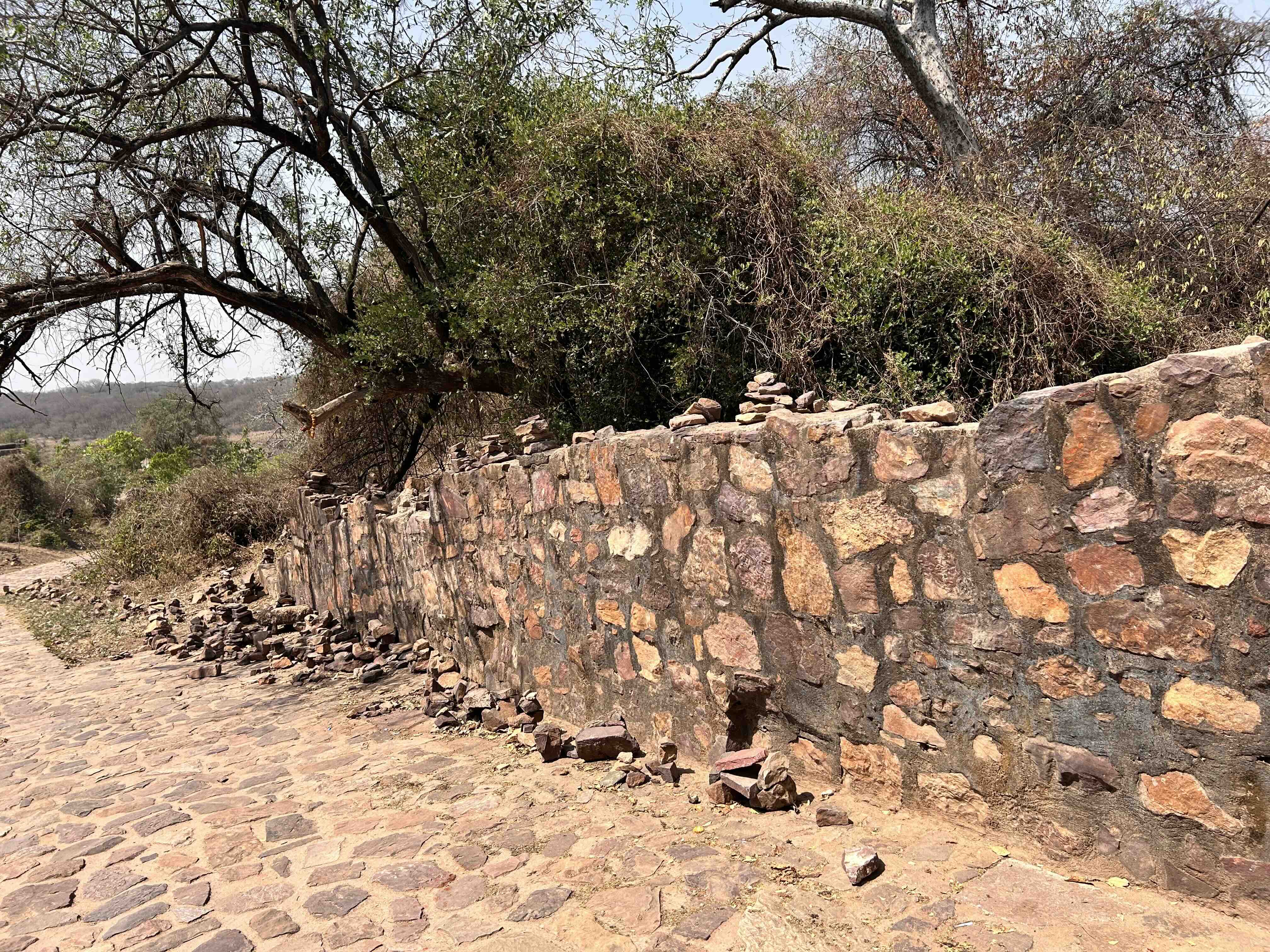
At the Trinetra Ganesh Temple, devotion took centre stage. Dedicated to Lord Ganesh, along with his consorts Riddhi and Siddhi and sons Shubh and Labh, it drew a steady stream of visitors. Further ahead, near the Laxmi Narayan and Jain temples, I noticed stacks of small stones. My guide explained that devotees build them as symbolic homes, praying for a house of their own. It reminded me of Mount Mary Church, where wishes take physical form in offerings.
After nearly two hours, I returned, saving some energy for my final safari.
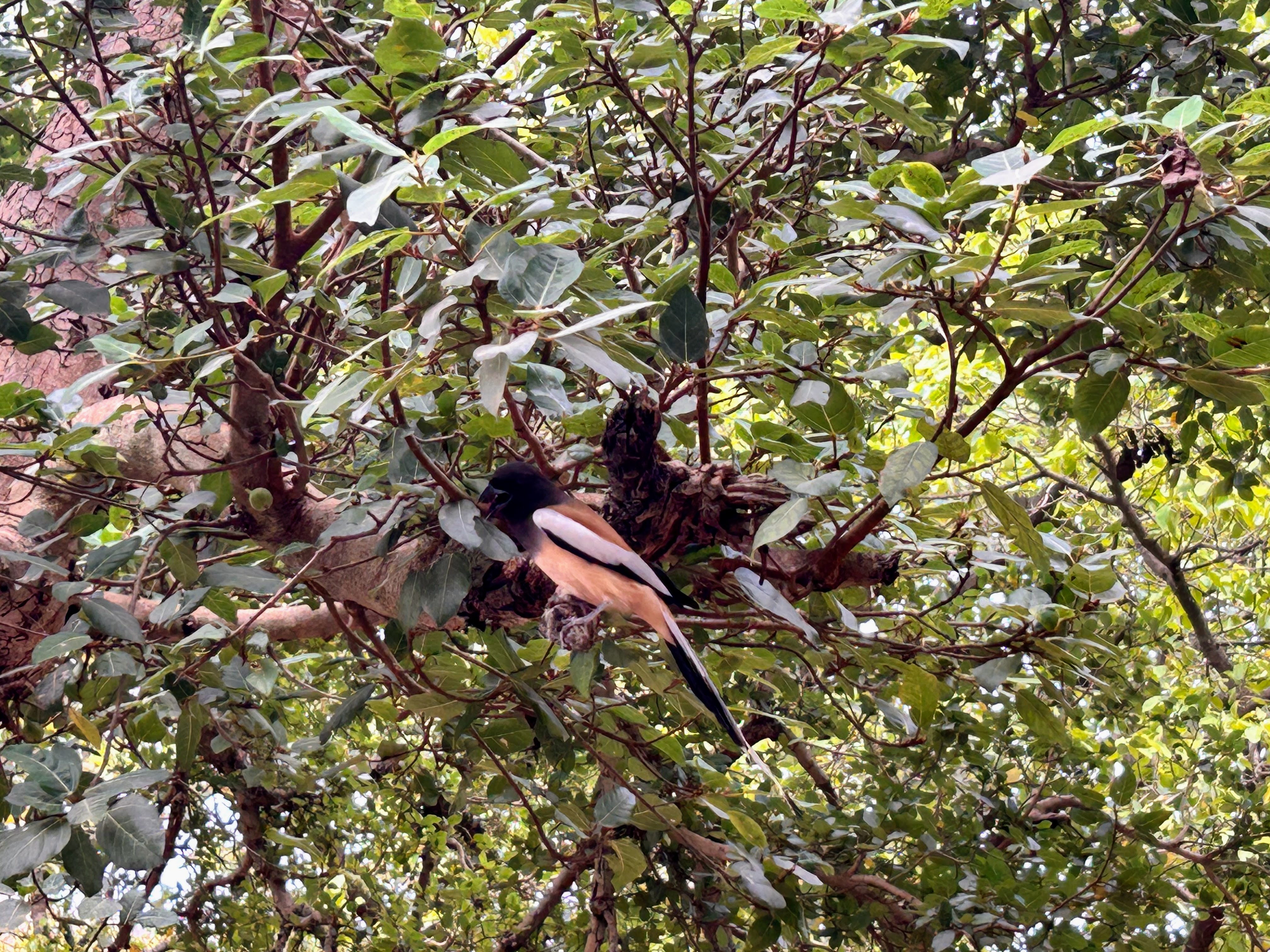
The afternoon was unforgiving, 42 degrees and rising. As we entered Zone 4, the guide mentioned it was known for good sightings. A Rufous Treepie greeted us at the Singh Dwar checkpost, as if curious about yet another hopeful entrant. Most animals had retreated into the shade. We saw the familiar spotted deer, sambar, and at one point, two stags locked in combat.
But the focus, inevitably, was the tiger.
A tigress had reportedly made a kill at Malik Talao earlier that morning, and vehicles were converging there. By the time we arrived, vultures had already taken over the carcass. The tigress was nowhere in sight.
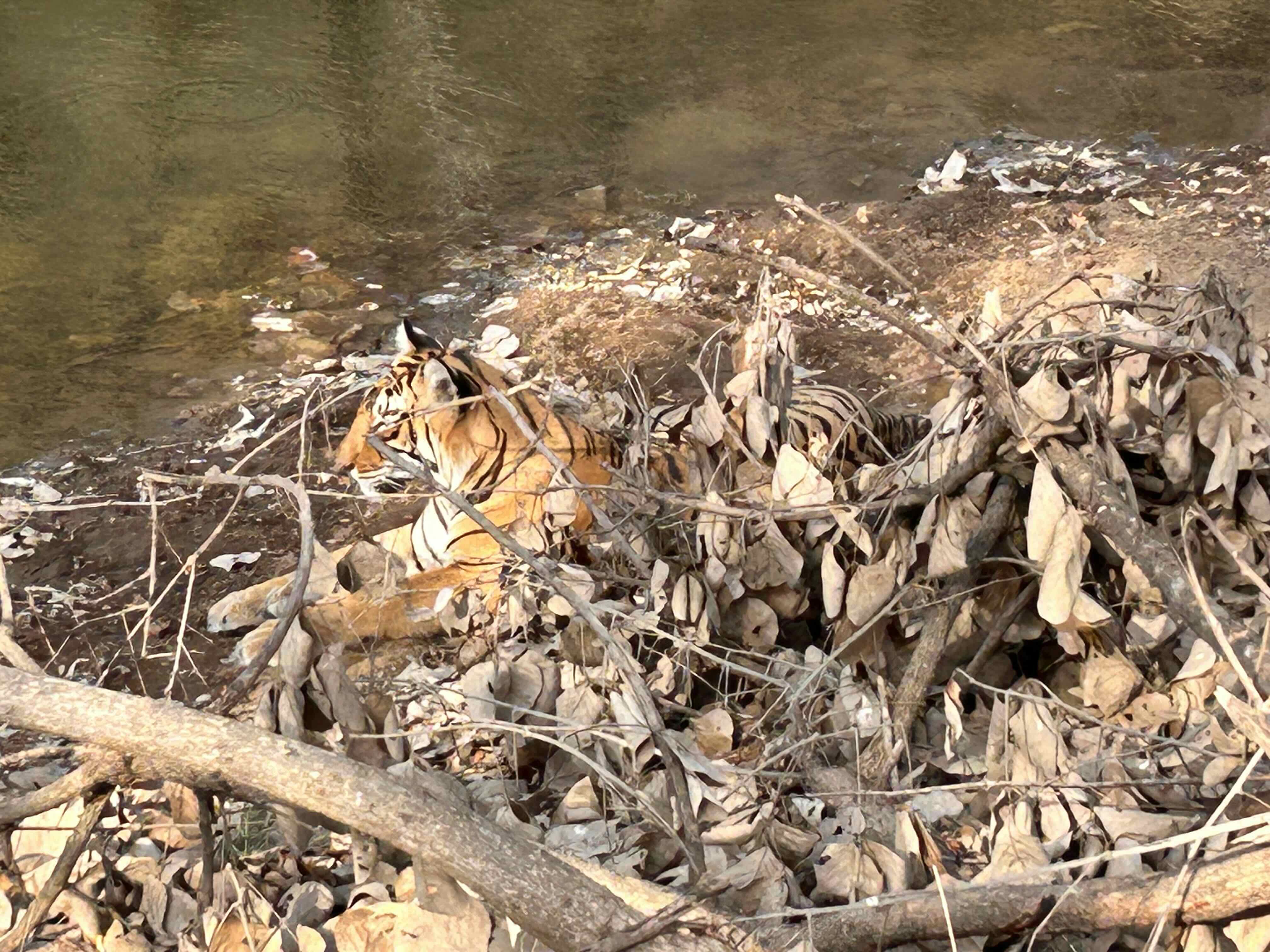
We turned back. Soon after, word came of a sighting of Durga, the tigress, near the Berda area. We reached just in time to see her resting in the shade by a body of water, composed and unhurried. After a while, we moved again, this time towards Jamun Deh, where cubs of tigress Shakti had been spotted.
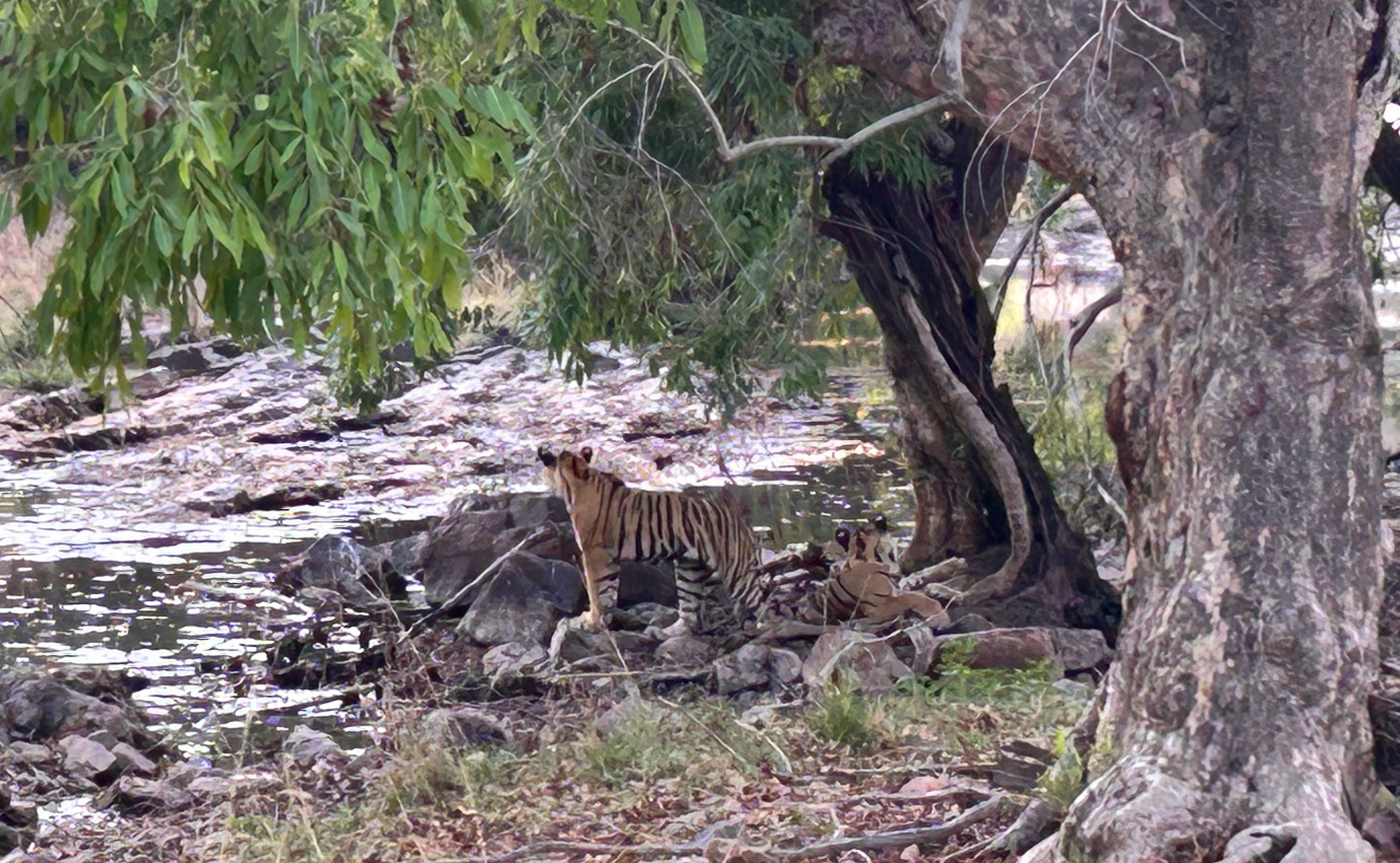
Two cubs lay quietly near the water. Cameras clicked in unison. One cub rose, took a few tentative steps, and settled under another tree. Almost immediately, a sambar’s alarm call rang out, sharp, insistent, continuing until the cub disappeared into stillness once more.
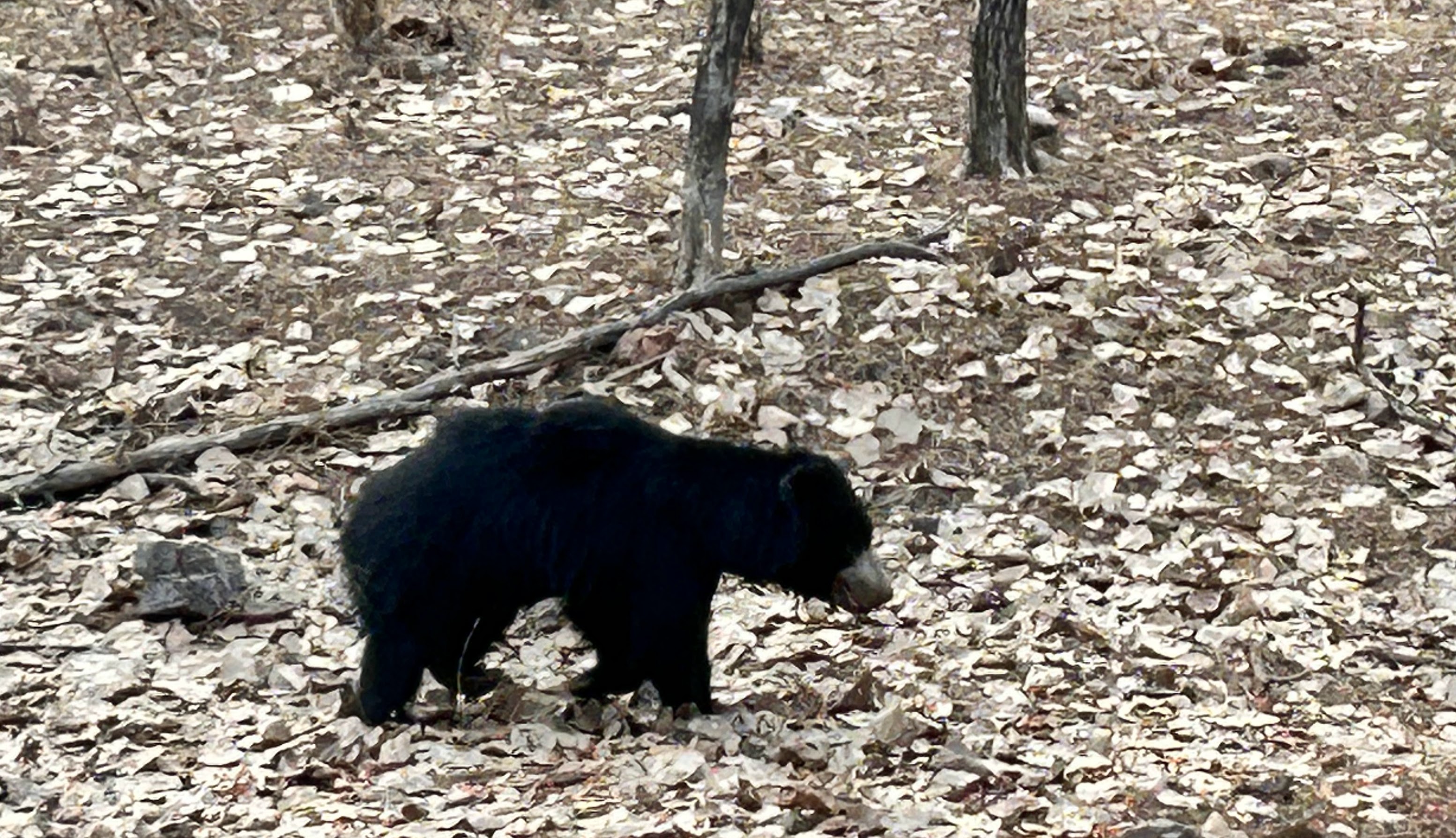
As the safari neared its end, we began heading back. Not far from the exit, a small crowd of vehicles had gathered. A sloth bear ambled across the track, indifferent to the attention, offering one final, unexpected sighting.
We exited the park, only to hear that a tiger had been spotted on the road just ahead. Curiosity led us there, where a crowd had already formed. In the midst of it all was Malang, the cub of tigress Sultana. Forest officials worked to clear a path as the young tiger walked calmly along the road before slipping back into the forest. My three days at Ranthambore could not have ended on a better note.
As I left, I realized that Ranthambore had offered more than sightings. It had revealed itself in layers, the stillness of the forest, the stories etched in stone, the quiet faith of those who visit, and the unpredictable rhythm of the wild. Not every moment was dramatic, not every search rewarded, but perhaps that is the essence of the jungle. It gives you just enough to return with wonder, and leaves just enough unseen to make you come back again.

