Kenya Diary – Day 4: The Magic of Maasai Mara

After an unforgettable time in Samburu and Lake Naivasha, it was time to head to the crown jewel of Kenya’s wilderness—Maasai Mara. The drive from Naivasha was smooth, the scenery rolling and expansive. Somewhere along the highway, I was treated to a scene straight out of a nature documentary: giraffes casually crossing the road while long-haul trucks bound for Uganda came to a respectful stop. That moment said everything—Kenya, like India, is a land where humans and animals have coexisted for centuries. The roads might belong to us, but the land? It belongs to all.

An Influencer Moment… That Was Real

I arrived at my lodge in the Nashulai Maasai Conservancy, adjacent to the Mara Reserve. As I was being briefed, someone mentioned that wildlife often roams the property—zebras, giraffes, antelopes, the works. I smiled politely, silently filing it away under “influencer exaggeration.”

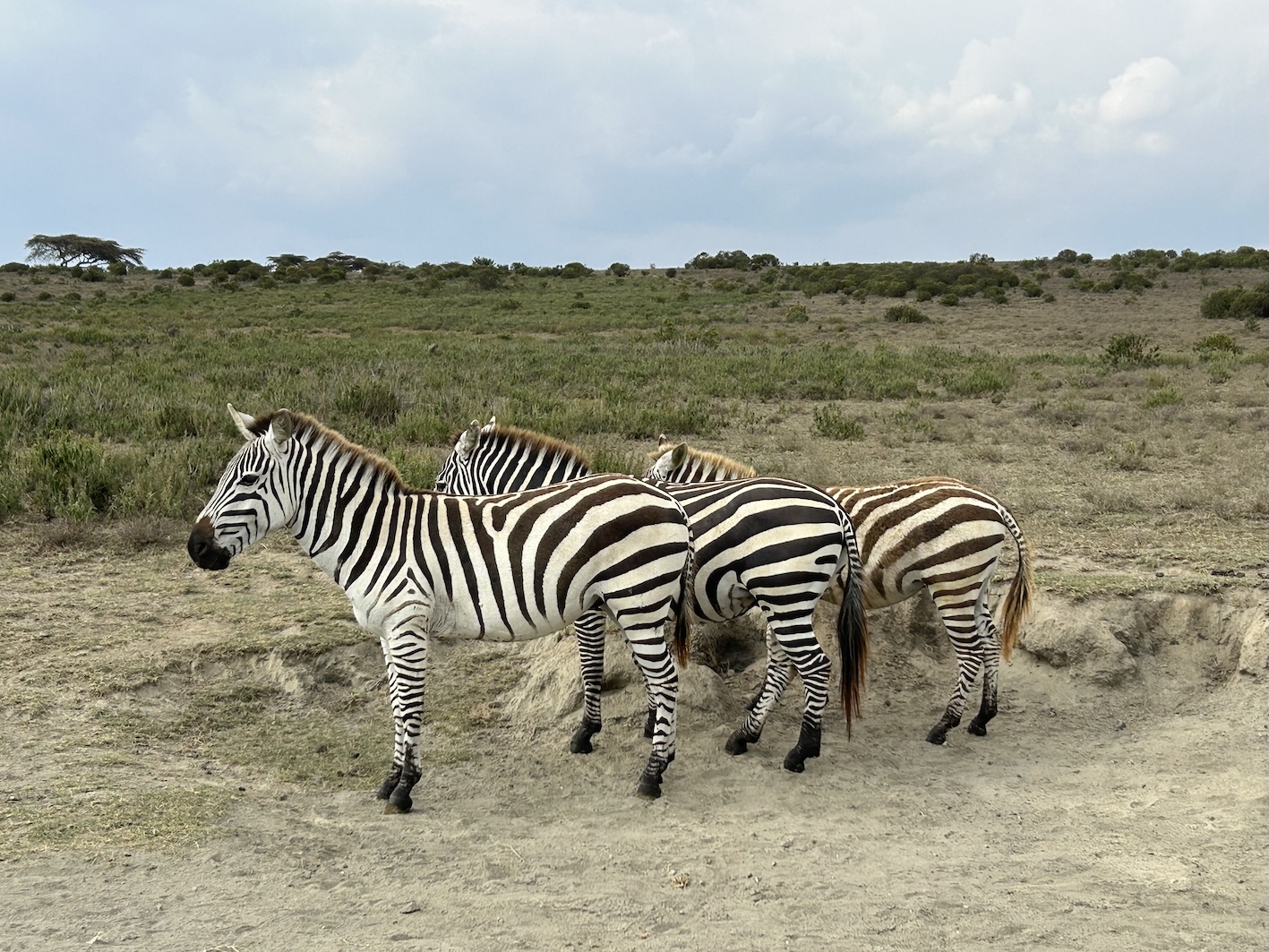
But as I walked into my tent, I stopped in my tracks. Two zebras were grazing calmly right outside. Unbothered by my presence. Completely at home. Apparently, those influencer videos were real after all.

Into the Mara

Post-lunch, I was itching to head into the Mara Game Reserve, but Denis—my guide and voice of reason—suggested we wait till 3:00 PM for better sightings. By 2:30, I was already in the vehicle.
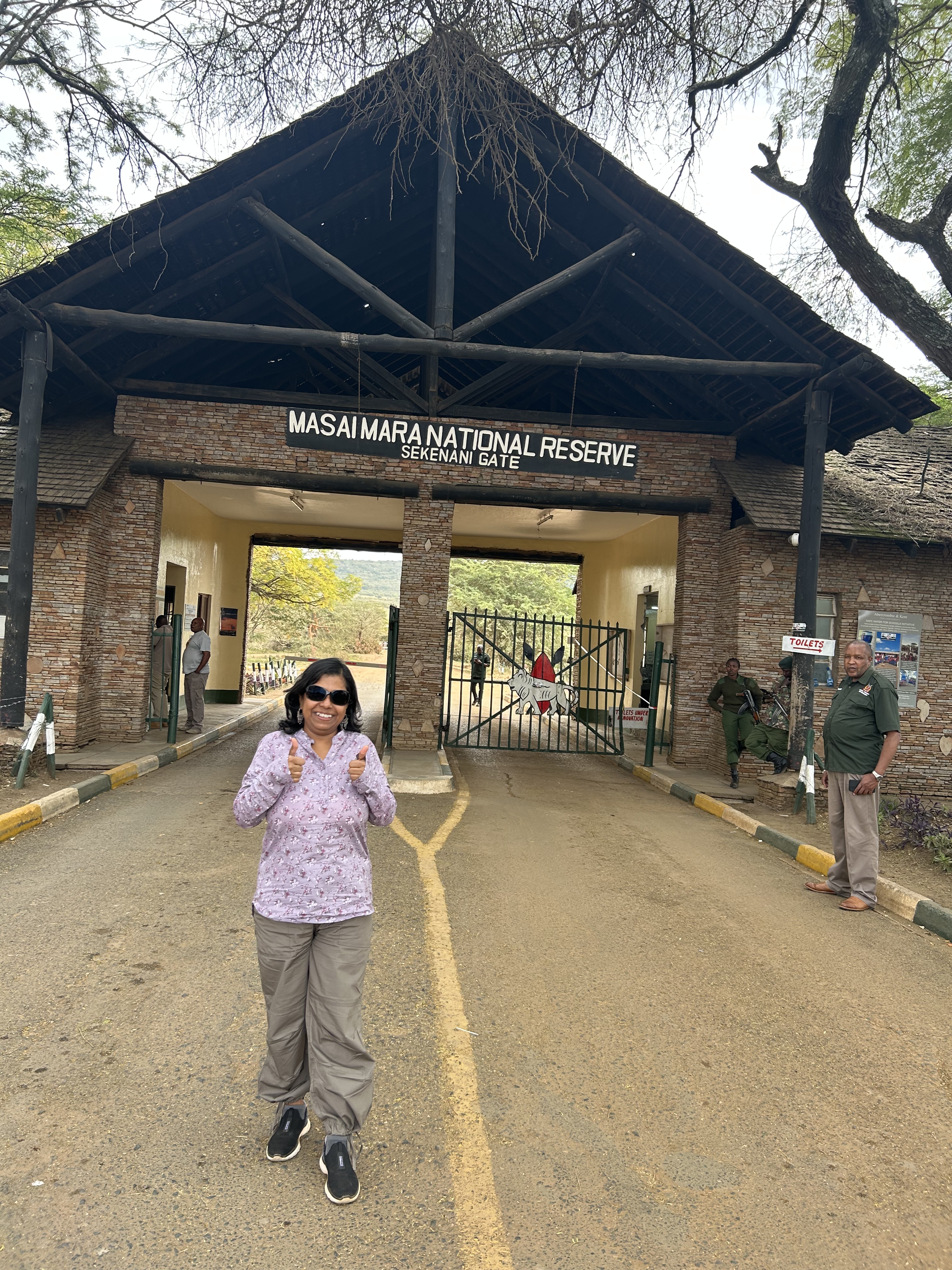
As soon as we entered the park, the Mara began to unfold its magic.

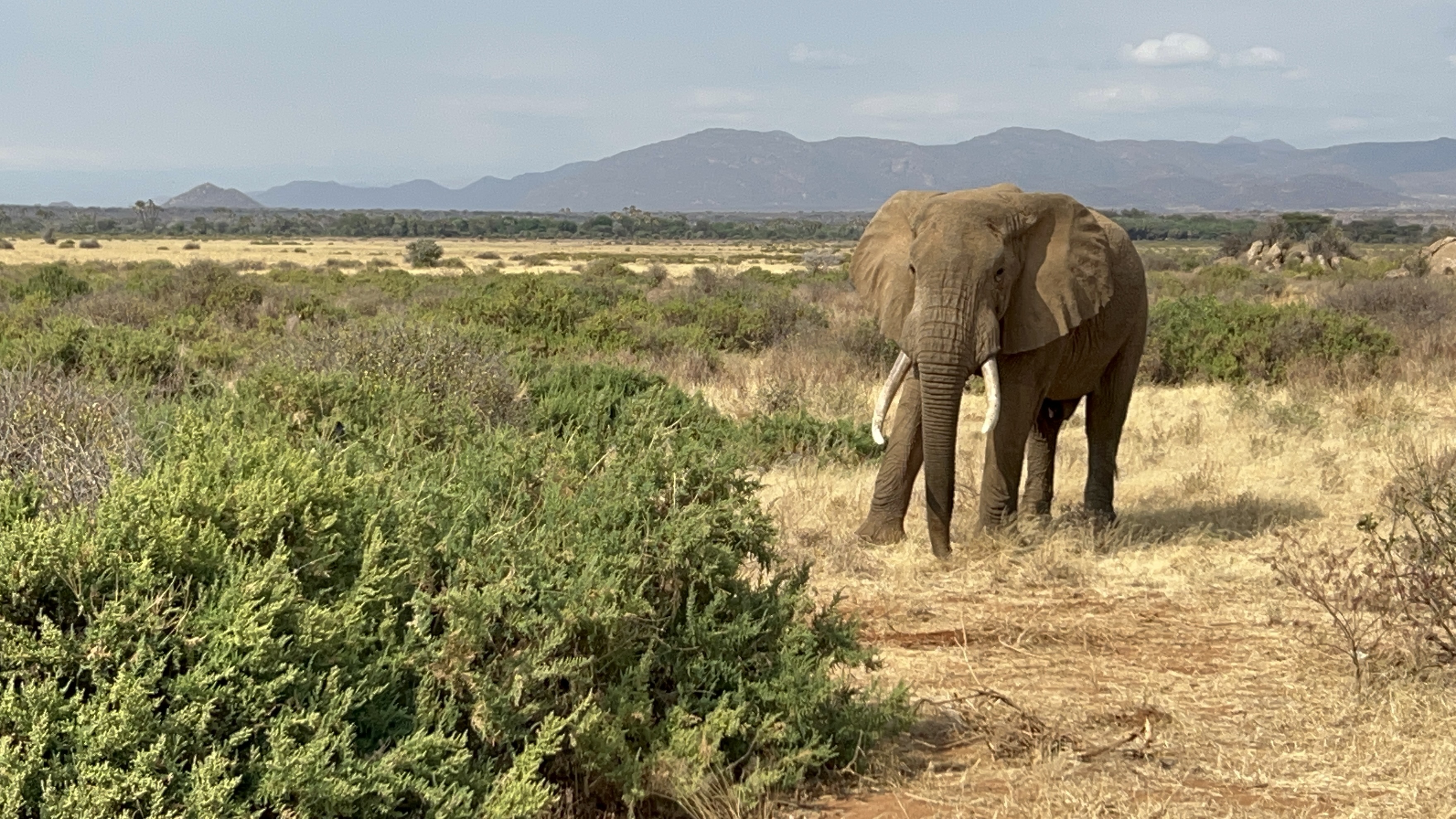
First, a lone elephant stood tall in the golden grass.
“In India, elephants are considered lucky,” I told Denis.
He smiled, “Then Mara is welcoming you.”

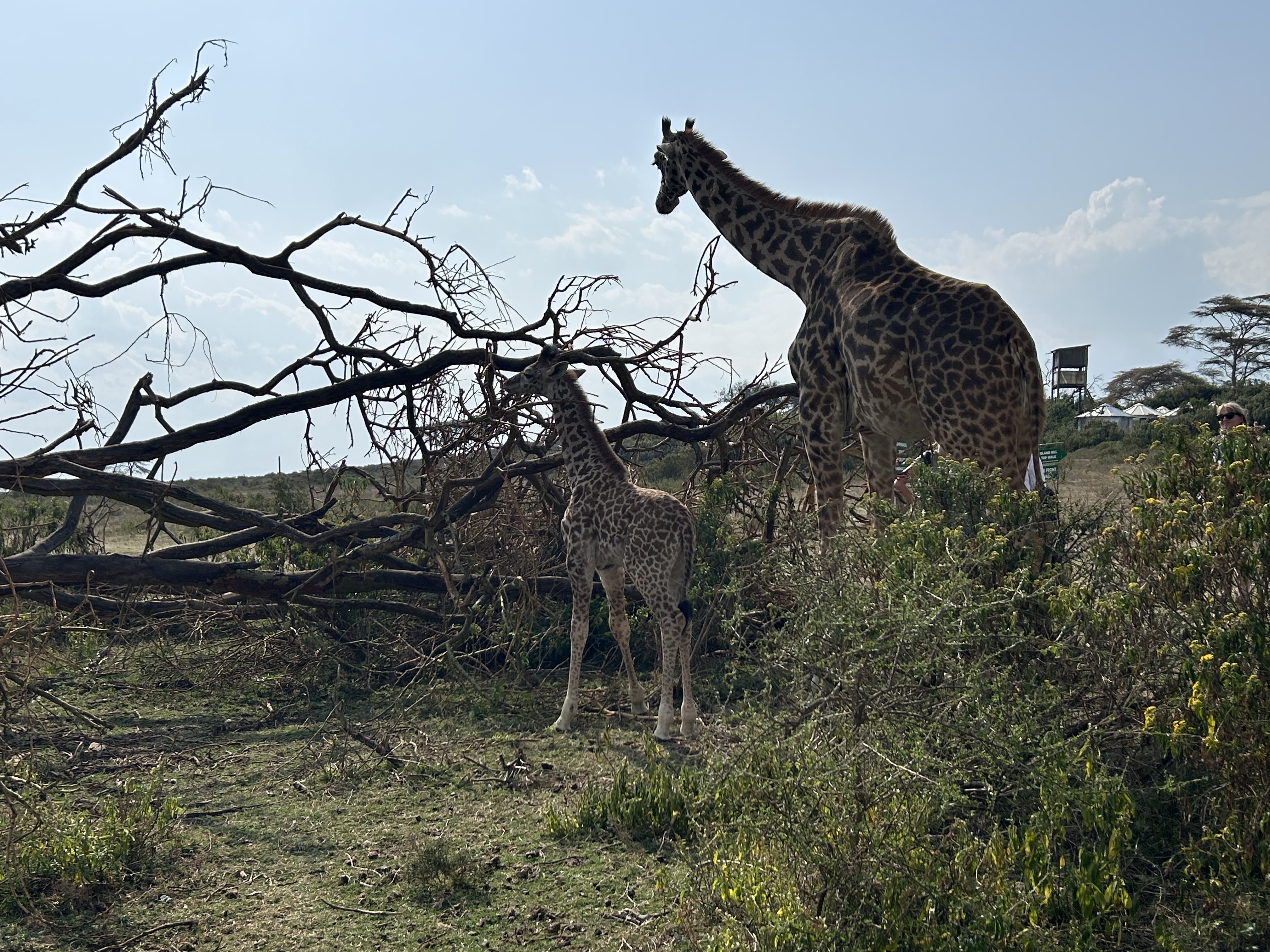
Next came herds of zebras, followed by wildebeest, impalas, and Thomson’s gazelles grazing together in peaceful coexistence. The giraffes soon followed—towering, gentle silhouettes against the sky. One of them turned ever so slightly, as if offering a perfect pose. I took the shot.

The Leopard in the Tree

Suddenly, the radio crackled with excitement. Denis stepped on the gas. We arrived at a clearing where at least 20 vehicles had gathered under a single tree. Up in its branches, a leopard, perfectly camouflaged, draped across the limbs with feline grace. Through the binoculars, I spotted its kill—an impala—tucked carefully into a crook of the tree.

And then, as if aware of all the attention, the leopard shifted. Slowly, dramatically, from one branch to another. And then descended—regal, deliberate, unhurried—before disappearing into the grass. A moment I will never forget.

More Elephants, Lion Cubs, and a Buffalo Parade

We continued, only to find a larger herd of elephants, slowly making their way to a lone tree. One stopped to scratch its back, reminding me once again how relatable elephants are—gentle giants with very human gestures.

Further along, two vehicles stood near a bush, cameras poised. We slowed down and waited. Soon, three lionesses emerged, followed by a tumble of cubs, rolling and pouncing on each other in playful chaos. For a few minutes, we all watched in reverent silence. But as more tourists gathered, the lions melted back into the bush.
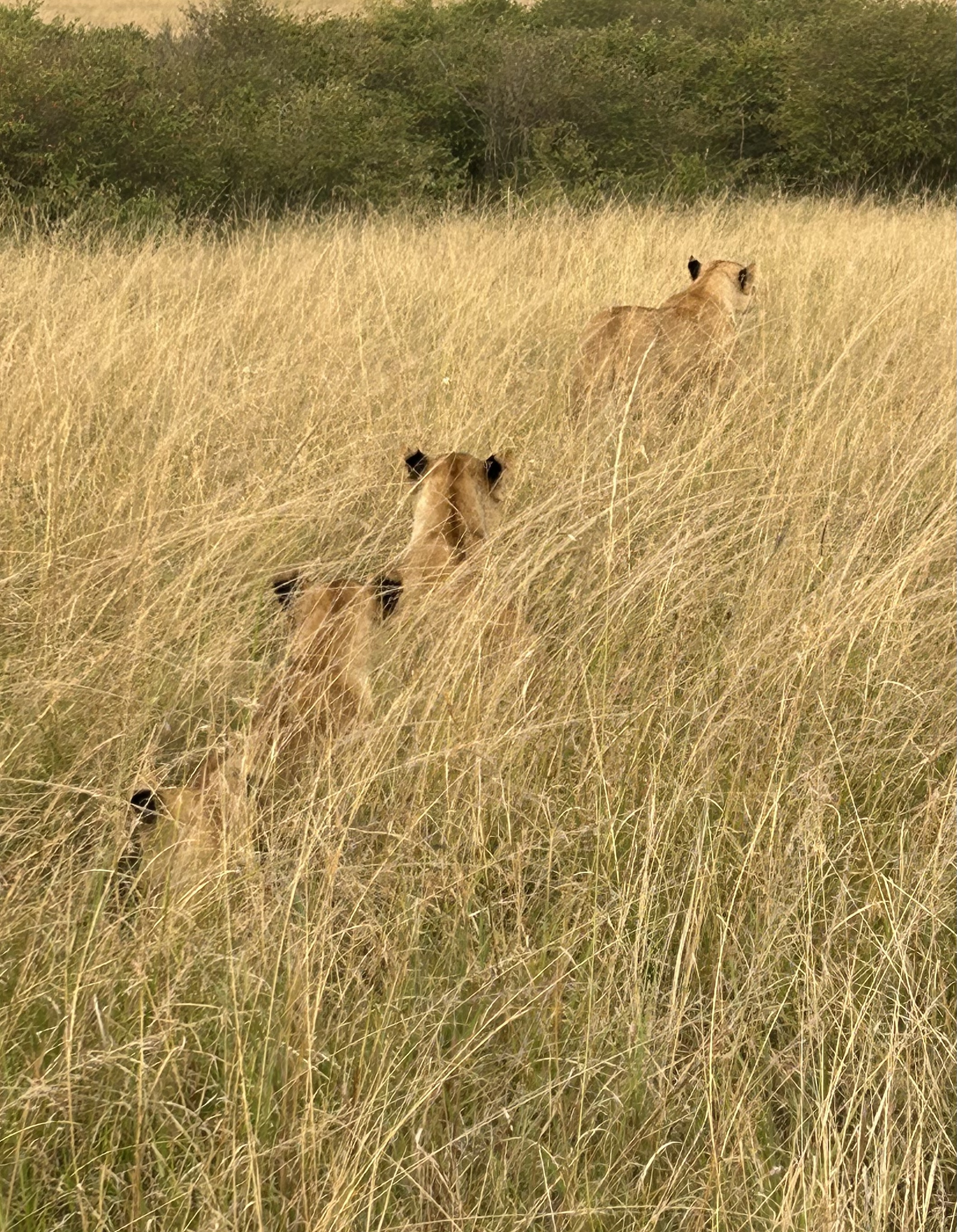
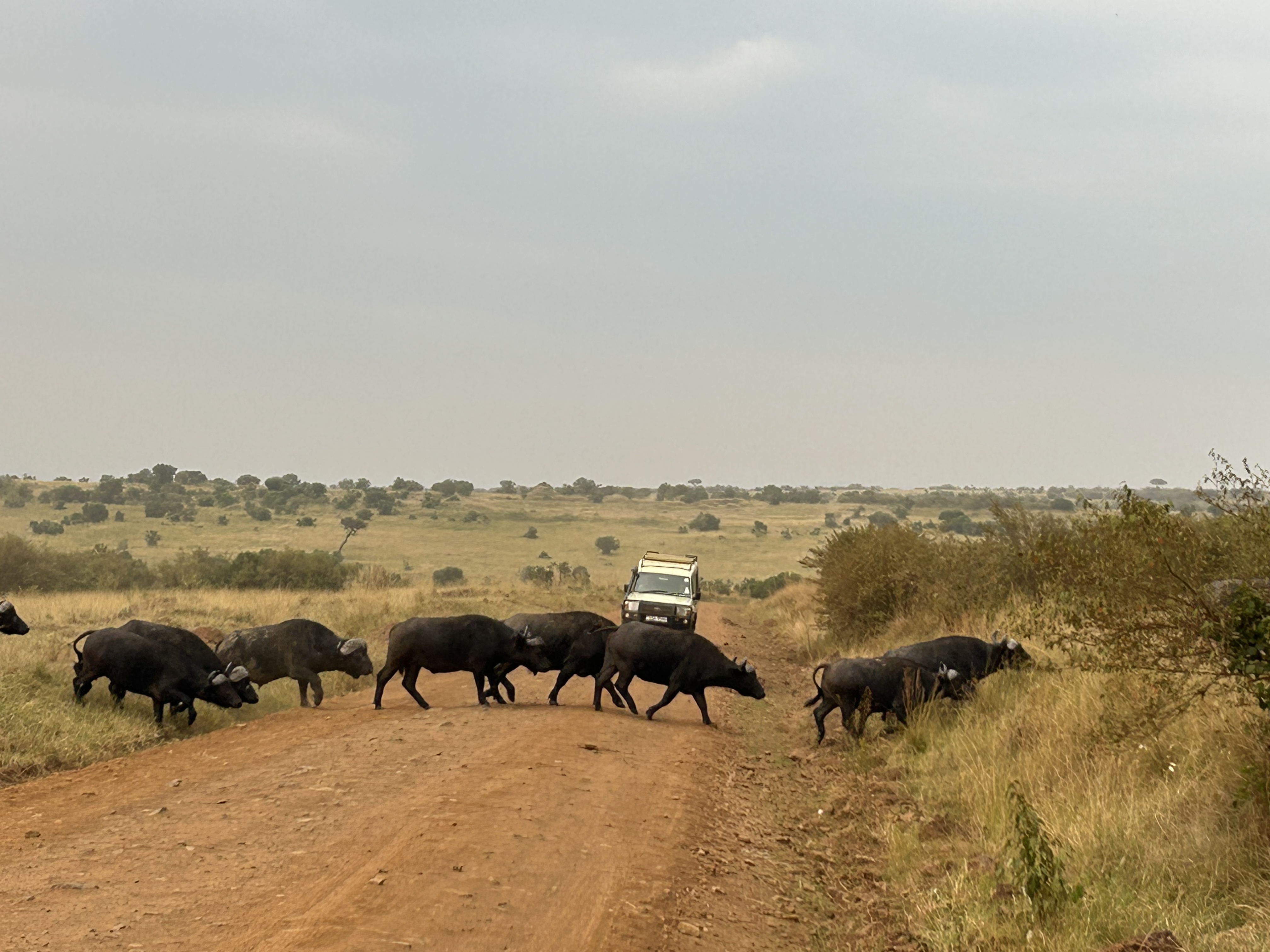
As we turned to leave the park, thinking the day couldn’t offer more, a herd of Cape Buffaloes made their appearance—one of Africa’s Big Five. We waited as they crossed the road, closing the day with quiet power.
A Day of Living Documentaries

You can watch all the wildlife documentaries in the world, but nothing prepares you for the real thing—for the silence before a leopard moves, for the thunderous stillness of buffaloes, for the fluttering tails of lion cubs in grass.

The Mara doesn’t just show you wildlife—it welcomes you into its ancient rhythm. And on this day, it felt like it was opening its arms just for me.
Kenya Diary – Day Three: From Rift Valleys to Hippo Eyes

On the third day of my African safari, I bid farewell to Samburu, my heart still full from the wildlife encounters of the past two days. As the vehicle wound its way out of the park in the early morning, nature gifted me a parting glance—giraffes, impalas, gerenuks, and dik-diks crossing our path, calm and unhurried, as if they knew I needed one last look.

My next destination: Lake Naivasha, nestled within the legendary Great Rift Valley. After all those geography lessons in school, how could I possibly be in Africa and not stand somewhere within the mighty Rift?

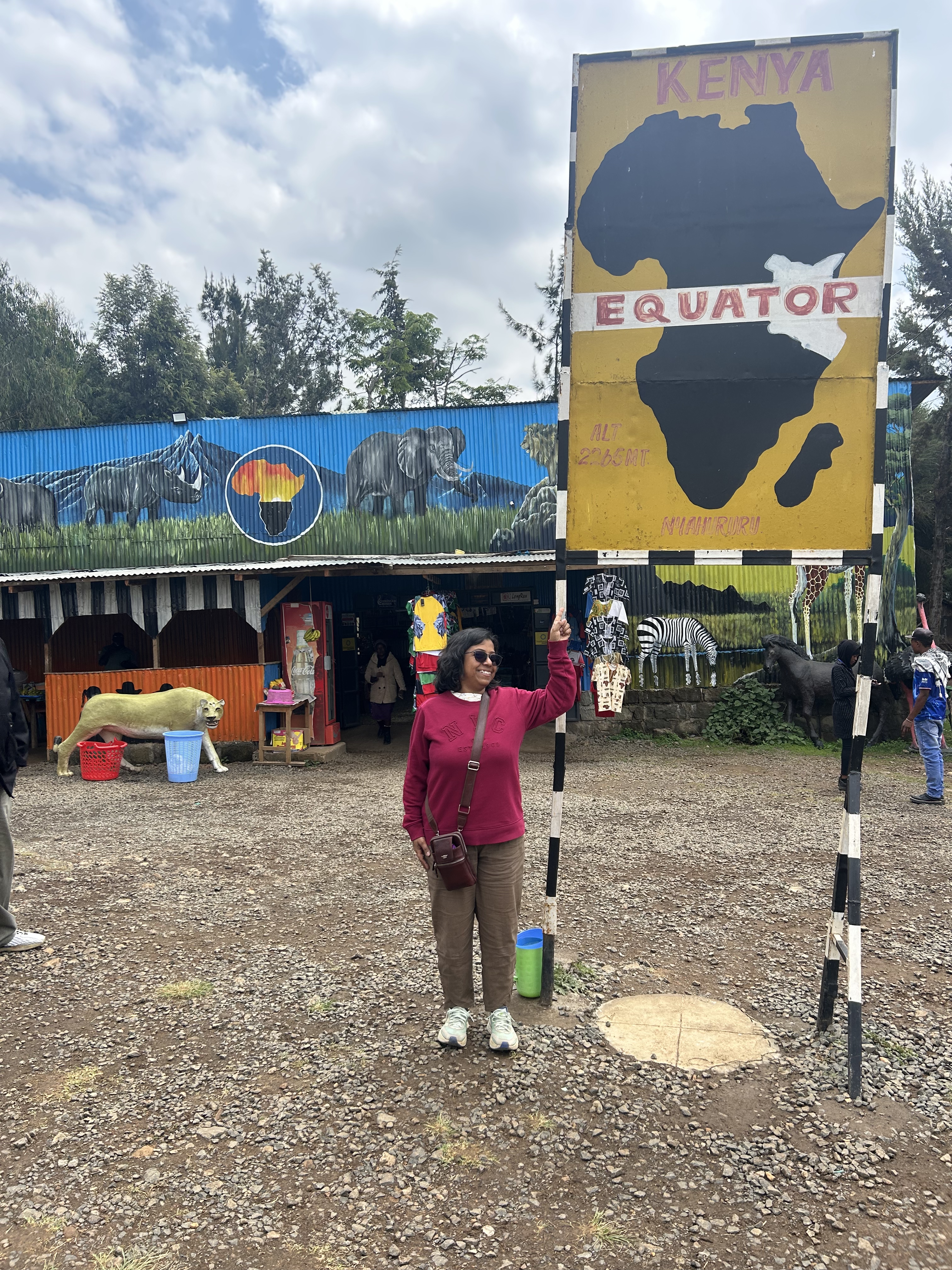
The drive was long, but it held one geographical delight—the Equator crossing. We stopped at a modest joint proudly announcing our latitude. I stepped out, stretched my legs (yes, even short ones need a break), and soaked in the moment. Just then, a young man offered to take my photo with the sign. We got chatting—and to my surprise, he turned out to be a three-time Chandigarh Marathon winner. Africa, always full of unexpected meetings.

We arrived at Lake Naivasha, a tranquil freshwater lake formed in a volcanic depression, fed by underground springs and the Malewa and Gilgil Rivers. It’s a haven for hippos and over 400 species of birds.

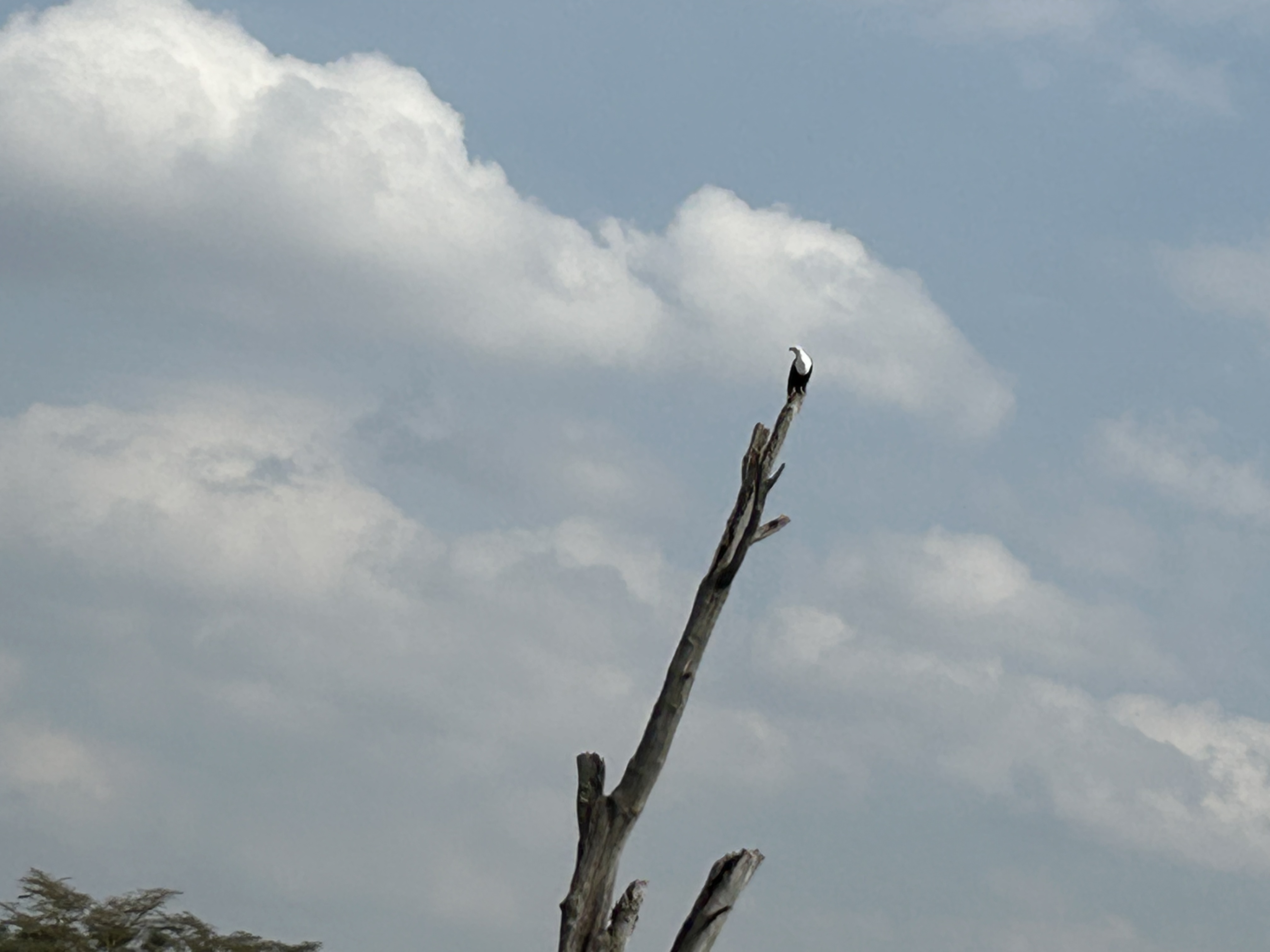
Out on a boat ride, the lake unfolded its quiet drama. Hippos peeked at us from beneath the water’s surface—eyes, ears, and a hint of a snout. Meanwhile, the skies and shores dazzled with avian beauty:
🦢 Great White Pelican
🦅 African Fish Eagle
🪶 Goliath Heron, African Spoonbill, Egyptian Goose, Cormorants, and Lapwings.

One pelican stood out—a veteran with part of its left wing missing. Boats usually toss it a fish, and it catches it mid-air, a little lakeside ritual. But when our guide tossed one, the pelican missed. Even the best have off days.

Next came a walk on Crescent Island, the exposed rim of an ancient volcanic crater. The island gained fame in the film Out of Africa—for which it was stocked with wildlife, including the Big Five. Post-production, the predators were removed, but herbivores like zebras, giraffes, impalas, and waterbucks wandered in during drier years, when a land corridor connected the island to the mainland. With the lake’s water levels now high, the animals are marooned—but serene and accustomed to visitors. They barely blinked as we walked past.

Still, I yearned for a closer view of the hippos. My guide steered the boat toward a quiet cove known for sightings. We waited. Eventually, a family of hippos emerged—but they were not thrilled to see us. One male even performed a mock charge to make his point. We backed off.

Rain clouds gathered, and a drizzle began to fall as we circled back to the landing point. That’s when we saw them again—the same hippo family, now on the shore. My guide began calling softly and tossing vegetables near an open patch. That was the cue.

Out came the giants, waddling forward like seasoned performers hitting their mark. Standing just a few feet away, I finally got the close-up I had been waiting for.

The day ended with a full heart and a camera roll full of hippos. This trip… it keeps unfolding in the most unexpected and beautiful ways.

Kenya Diary – Day Two: Of Giants, Hunters, and a Spoiled Romance

My second day on the African safari began with unexpected laughter. Denis, my ever-practical guide, had insisted we start early—6:30 a.m. sharp—to catch the best wildlife action. Dutifully ready, I arrived at the lodge reception, eager for another day in Samburu.

As Denis prepared the safari vehicle, he opened the hood—a typical practice to allow unobstructed viewing from the top. Then he turned to me, paused, and stated, quite matter-of-factly, “You are short.”

He wasn’t wrong. At barely five feet, the open-top vantage point posed a bit of a challenge. But Denis, quick with a solution, added, “I think you can remove your shoes and stand on the seat.”

And that’s how my morning began—shoeless, grinning, and standing on the seat, ready to meet the wild.

Samburu is known for its unique quintet of wildlife—The Samburu Special Five: the Reticulated Giraffe, Grevy’s Zebra, Beisa Oryx, Somali Ostrich, and Gerenuk. These arid-adapted species are rarely seen in other Kenyan parks, making sightings here all the more special.

Our day opened with a gentle procession of Reticulated Giraffes, their elegant frames swaying as they nibbled the treetops, impervious to our awestruck gazes. Shortly after, a herd of impalas darted past, as if to say, Welcome to Samburu.

Then came the buzz on the radio—a herd of elephants had been spotted. We raced over and found them, including three playful calves, feeding leisurely as they made their way toward the river. We waited for the herd to cross the road. Just when we thought the last elephant had passed, the matriarch emerged—large, composed, and watchful. She brought up the rear like a regal guardian.

Soon, another radio alert sent us speeding across the terrain again—lions had been seen. In the tall grass, barely visible, we found three lionesses and four cubs, perfectly camouflaged. I raised my binoculars and scanned the horizon—impalas, zebras, and oryx were alert, nervously watching. The lionesses, thin and determined, moved slowly but purposefully toward the prey. In the wild, even the top predator must earn every meal.

As I was still processing the sheer majesty of these moments, Denis pointed out a pair of Gerenuks, the long-necked antelopes that stand upright to feed. But they darted off before we could get close.

Further ahead, a female Somali ostrich and her two young paused mid-stride, stared at us with curious eyes, and then—deciding we were harmless—ambled away.

Yet again, the radio crackled—a cheetah had been sighted. We sped to the location and found her resting in the shade, catching her breath beside a fresh kill—a Kirk’s dik-dik. Denis maneuvered the vehicle for the perfect view. The cheetah, the fastest creature on earth, was now a picture of stillness, her sides heaving gently as she gnawed at the bones.

Next on our checklist: the remaining members of the Samburu Five. After scanning the reserve for a while, we found them at last—Grevy’s Zebra and Beisa Oryx, grazing side by side under the open sky. Sightings complete, we began our journey back to the lodge, satisfied.

But Samburu wasn’t done with me yet.

As we rolled along, I noticed two elephants, one on either side of the road. “They’re courting,” Denis explained. We paused, holding our breath. Slowly, the two approached each other and gently touched trunks—a moment so tender it felt almost sacred. But the female clearly didn’t appreciate our intrusion. With a swish of her tail, she turned and walked away. The male turned to us and lingered. In his eyes, I imagined a mildly annoyed question: Did you really have to ruin that?

By now, the sun was high and the air heavy with heat. Just then, the radio crackled again—another lion sighting. We drove to the spot to find several safari vehicles gathered. A lion and a lioness lay in the shade, seemingly unfazed by their human audience. But as more vehicles arrived, the lion gave an irritated grunt, stood up, and disappeared into the bush, his privacy duly invaded.

Thus ended my second day in Samburu—a symphony of sightings, from giraffes to courting elephants, lions on the hunt to the cheetah at rest. The bush, with all its drama and dignity, had begun to reveal its soul. And I knew—this safari was only getting better.


Waking Dreams: First Impressions of Kenya

African wildlife has held a magnetic pull on me for as long as I can remember—an affinity nurtured by countless hours spent watching Nat Geo and Discovery Channel documentaries. Over time, the dream of witnessing this raw, untamed wilderness evolved into a constant on my ever-expanding bucket list.

Lately, I’ve come to think of bucket lists not as final checklists but as wish wells—meant to be drawn from and replenished continually. The desire to visit Africa had been simmering quietly for years, but it was a chance encounter with an article on the Great Migration that finally tipped the balance. A flurry of research followed, and just like that, a trip to Kenya was set in motion.

The journey from New Delhi to Nairobi was long and tiring, but the moment I landed, a sense of quiet excitement took over. The true beginning of my Kenyan adventure, however, was the drive from Nairobi to Samburu. Samburu lies in northern Kenya, a rugged, remote stretch of land about five to six hours from the capital.

My driver and guide, Denis, was a revelation. Warm, curious, and deeply informed, he peppered our journey with questions—about Indian politics, elections, population, healthcare, and industry. It struck me how much Kenya and India, for all their geographic distance, shared in common: teeming populations, colonial histories, emerging economies, and an abiding concern for the future.

As we cruised down the highway, a lush green blur caught my eye. Denis noticed my curiosity and pointed out that the trees were mango orchards. “In February,” he said, “they’re filled with fruit, and people flock here from nearby villages.” To discover mangoes—India’s beloved king of fruits—thriving in a distant African land felt both surreal and oddly comforting.

A little later, we passed a village where two young girls were seated on the steps of a small shop. They waved enthusiastically at our vehicle. I smiled and waved back, instinctively transported to my childhood in Arunachal Pradesh, where I too would greet passing vehicles with the same innocent joy.

Denis chuckled, “Light-skinned people are rare in these parts—they’re happy you waved back.”
I was momentarily surprised. By Indian standards, I have a darker complexion, yet here, I was ‘light-skinned.’
When I told Denis this, he glanced at me through the rearview mirror and asked earnestly, “Is that good or bad?”

It was a simple question, but one loaded with cultural weight. How could I possibly explain the Indian obsession with fairness, the countless fairness creams, matrimonial filters, and coded compliments? I smiled, choosing instead to steer the conversation elsewhere.

Nearly six hours into our journey, we finally reached Samburu. My lodge was nestled inside the game reserve. As soon as we entered the park, I saw her—a lone giraffe standing tall, unbothered, majestic. Moments later, a zebra appeared. It felt as if the wildlife I’d spent decades admiring on screen had stepped forward to greet me in person.

My long-held wish was no longer just a dream. It was real, and it had only just begun.

Tracing Flowers, Faith, and Forgotten Thrones: A Walk Through Mehrauli’s Living History

Delhi doesn’t reveal itself all at once. It unspools in layers — a whisper here, a ruin there, a breeze carrying the scent of marigolds and memory. On a quiet Sunday morning, I joined a heritage walk curated by Enroute Indian History, tracing the sacred and ceremonial path of Phoolwalon ki Sair — the annual festival of flowers, peace, and communal harmony held in Mehrauli.

But what I encountered was far more than just a trail of rituals — it was a journey through the soul of Delhi.


Where the City Began: Yogmaya Temple

Our walk began at the Yogmaya Temple, one of the few surviving temples from ancient Delhi and possibly as old as the city itself. It stands tucked away in the heart of Mehrauli, quiet yet powerful, like the still eye of a storm that has raged for centuries around it.

Long before Mehrauli acquired its present name, the area was known as Yoginipur — the city of yoginis. The temple, dedicated to Goddess Yogmaya (a sister of Krishna in mythology), still plays a central role during Phoolwalon ki Sair, with floral offerings made here alongside those at the nearby Dargah. As we stood beneath the age-worn arches, time itself seemed to slow down.


A Tomb with a Curse: Adam Khan’s Memorial

Not far from the temple, we made a detour to the tomb of Adam Khan, a monument steeped in local lore. Adam Khan, the foster brother of Akbar, was executed for treason, flung twice from the ramparts of Agra Fort to ensure death.

His tomb stands out for its Indo-Islamic architecture, reminiscent of Delhi Sultanate-era design rather than typical Mughal grandeur. It is said that no local woman of Mehrauli visits the tomb, believing it to be cursed. The only women who do are usually tourists or history students, like us. The air around the tomb is oddly heavy — less reverence, more caution.


A Sacred Journey: Dargah of Khwaja Bakhtiyar Kaki

We then followed the festival’s spiritual trail to the Dargah of Khwaja Bakhtiyar Kaki, the 13th-century Sufi saint and disciple of Khwaja Moinuddin Chishti of Ajmer. A contemporary of Sultan Iltutmish, Kaki is revered as one of Delhi’s patron saints, and his shrine continues to draw pilgrims, politicians, and poets.

It is said that every ruler of Delhi sought the blessings of Sufi saints to gain legitimacy, and this Dargah, in particular, carries that aura of sanctified power.

As we stepped inside the whitewashed courtyard, a qawwal seated by the gateway began to sing. His voice, deep and raw, cut through the morning stillness, carrying the lyrics of Chaap Tilak. The Dargah came alive — not with grandeur, but with music, faith, and centuries of longing.


A Forgotten Well of Healing: Gandak ki Bawli

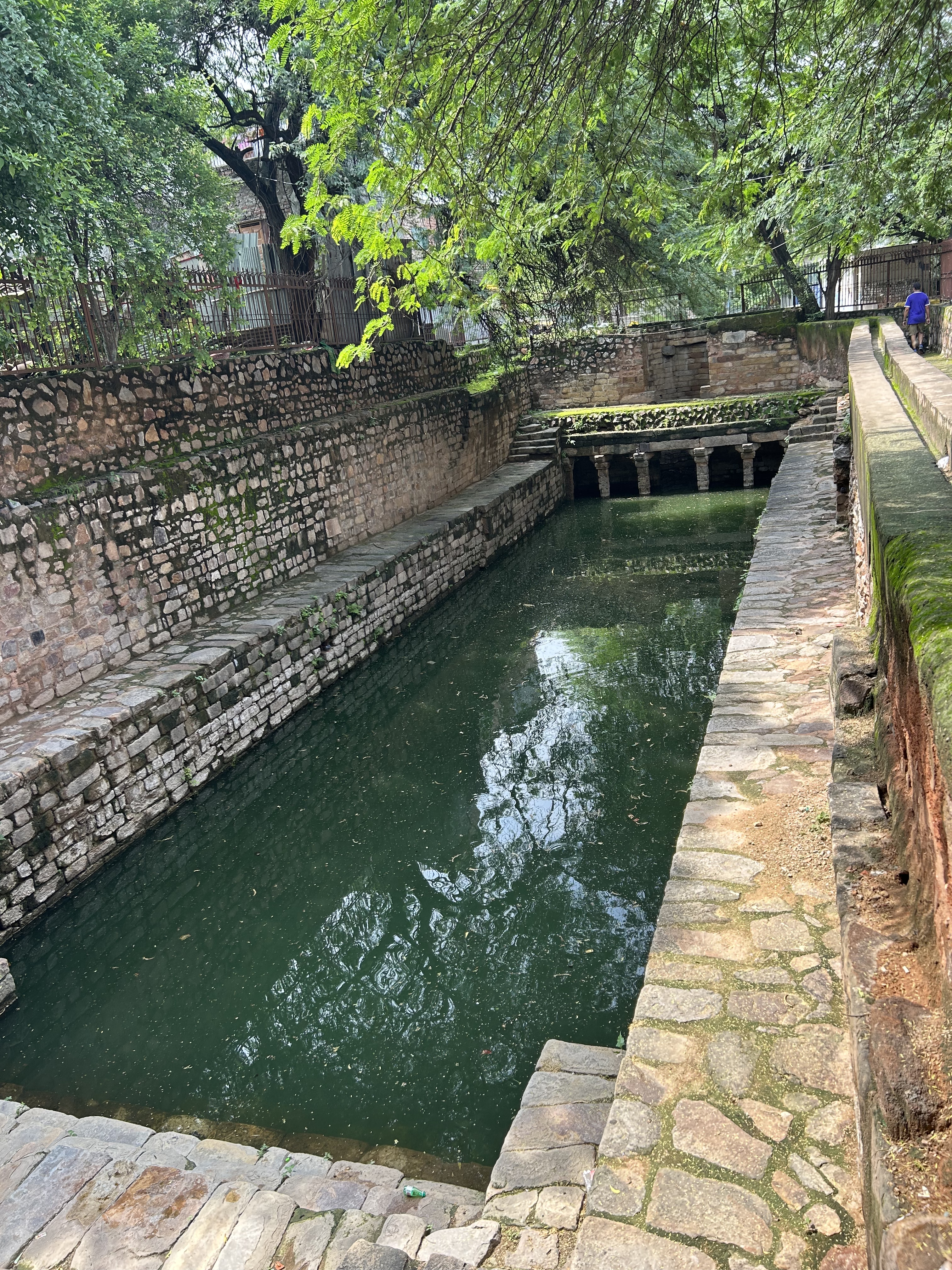
On the way to the Dargah, we stopped at the near-forgotten Gandak ki Bawli — a stepwell slowly sinking into neglect, yet once central to local life. Gifted by Iltutmish to the Dargah, the stepwell was believed to possess healing powers, and pilgrims would take a dip in its waters before offering prayers.

Later studies revealed the water had a high sulphur content, lending some scientific basis to the belief that it could cure skin ailments and other illnesses. Today, the water is stagnant, the steps cracked, but the legend still lingers — like a half-remembered dream.


Where the Empire Withered: Zafar Mahal

The final stop of our walk was the Zafar Mahal, the summer residence of Bahadur Shah Zafar, Delhi’s last Mughal emperor. Mehrauli, cooler than the rest of Delhi due to its elevation and greenery, became the seasonal retreat of the royal court. And this retreat wasn’t symbolic — the emperor moved with his whole retinue, even shifting the throne to Mehrauli for the duration.

Inside the Mahal is the Moti Masjid, a private prayer space built by Zafar himself. But the site is not just a reminder of royal solitude — it is also the stage for a powerful piece of local lore.

People in Mehrauli still say that the proximity of Zafar Mahal to the Dargah was a fateful misstep. “Sufi badshah se bada hota hai,” they say — a Sufi saint is greater than a king. Perhaps it was no coincidence, they whisper, that the Mughal Empire collapsed soon after. Bahadur Shah Zafar, the poet-emperor, would eventually die in exile, far from his beloved Delhi, and never be laid to rest in the tomb he had built for himself beside the Dargah.


A City of Shadows and Fragrance

As I walked back through Mehrauli’s bylanes, the scent of mogra, the hum of old qawwalis, and the echoes of royal processions accompanied me. Delhi, I realized, isn’t just a city of monuments — it is a city of memory, myth, and mood. Every stone here remembers. Every shrine still breathes.

Phoolwalon ki Sair may be celebrated once a year, but the path it takes is eternal — a living map of Delhi’s soul, etched in fragrance, footsteps, and faith.


Buddhist Trails in Tripura

It was a small news item, years ago, that first caught my attention — a report on an eighteen-armed sculpture of a mother goddess in a place called Pilak. The name lodged itself in my mind, stirring curiosity. I tried convincing colleagues at work to join me on a trip to see it, but the plan never took off. Worse, a few went on their own during a visit to South Tripura and returned claiming there was no such sculpture at all.

So Pilak had to wait.

Two years later, my mother came visiting. She, like me, has an appetite for history. Suddenly, I had the perfect travel companion. We decided to spend a Saturday exploring the Buddhist heritage of Tripura, sculpture or no sculpture.

First Stop: Maharani Pagoda

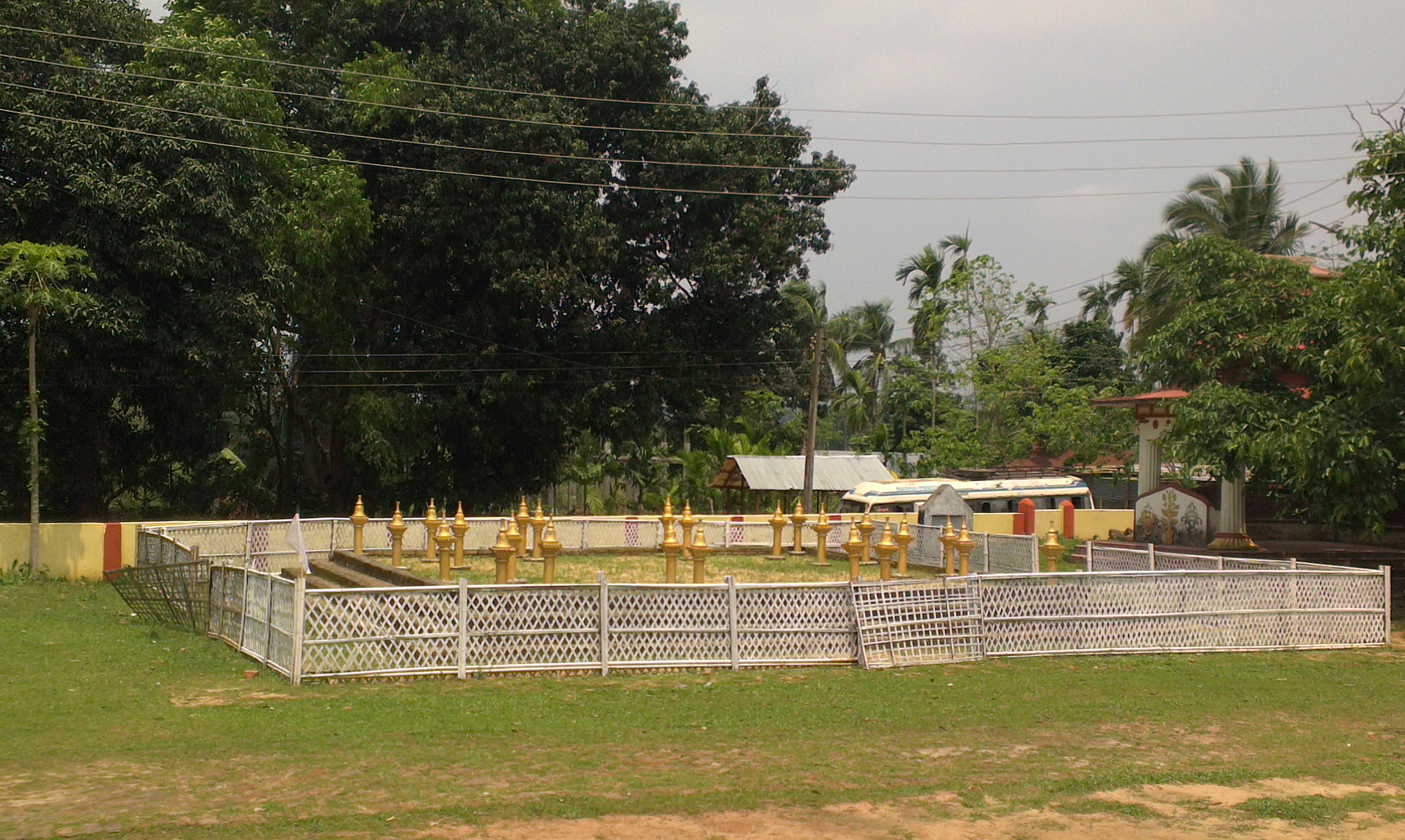
Flipping through the state tourism brochure, we decided to start from the far south — the Mahamuni Pagoda at Manubankul village in Sabroom subdivision, 134 km from Agartala. We had also read about an old monastery nearby, but despite asking locals, we couldn’t find it. The day was hot, humid, and off to a slow start.

The pagoda, when we finally stood before it, was less impressive than its photographs. I couldn’t help remembering my colleagues’ disappointment and wondered if our trip was ill-fated. But neither of us was ready to give up.

IMAG1425

The pagoda, which looks more beautiful in photographs

IMAG1433_BURST002

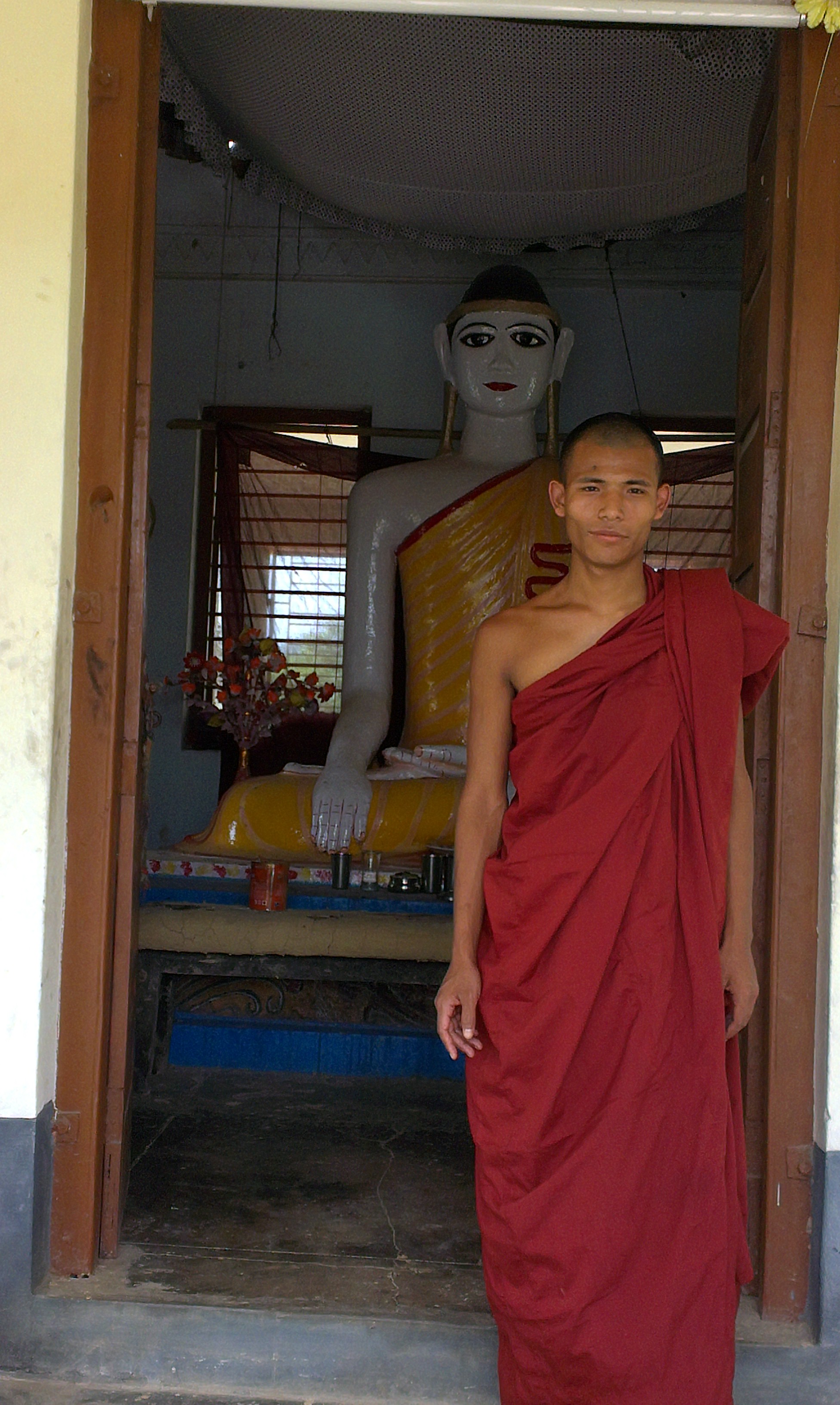
Monks take their vows here.

IMAG1432

Met this Chakma Monk from Bangladesh

Pilak — Where Faith Meets Preservation

Our driver, to my relief, knew exactly where Pilak was. This archaeological site in Belonia subdivision has been revealing treasures since 1927 — sculptures and structures tied to both Buddhism and Hinduism, dating back to the 8th–12th centuries.

Once part of the Samatata kingdom in historical Bengal, Pilak’s finds link it to other great Buddhist sites like Mainamati and Somapura Mahavihara in present-day Bangladesh. Its artifacts bear the marks of Bengal’s Palas and Guptas, the Arakan style of Myanmar, and indigenous craftsmanship.

Excavations by the Archaeological Survey of India in the 1960s uncovered brick stupas and large stone sculptures of Avalokiteśvara and Narasimha, as well as numerous Hindu deities like Shiva, Surya, and Vaishnavi. Pilak is remarkable for the diversity of Buddhist traditions it reflects — Hinayana, Mahayana, and Vajrayana.

Some finds are especially striking:

  • Avalokiteśvara — now at the Tripura Government Museum in Ujjayanta Palace.

  • Goddess Marichi — an 8th–9th century Mahayana-Vajrayana icon, now worshipped in a Hindu temple known as Vasudev-badi.

  • Chunda — an 18-armed figure from the 8th–9th century, now revered as Raja Rajeshwari.

  • A stupa from Sundari Tilla — dating to the 11th century, echoing the Pala style.

  • Sun God Surya — riding his chariot of seven horses, from the Sagardheba mound.

At Pilak, faith often redefines history. Sacred icons have been moved from excavation sites to local temples, where they are worshipped in forms quite different from their original context.

Some glimpses of Pilak

A ‘Seshnag’ sculpture, which is worshiped as Shiva in this temple, is almost next door to the above archaeological site

IMAG1456

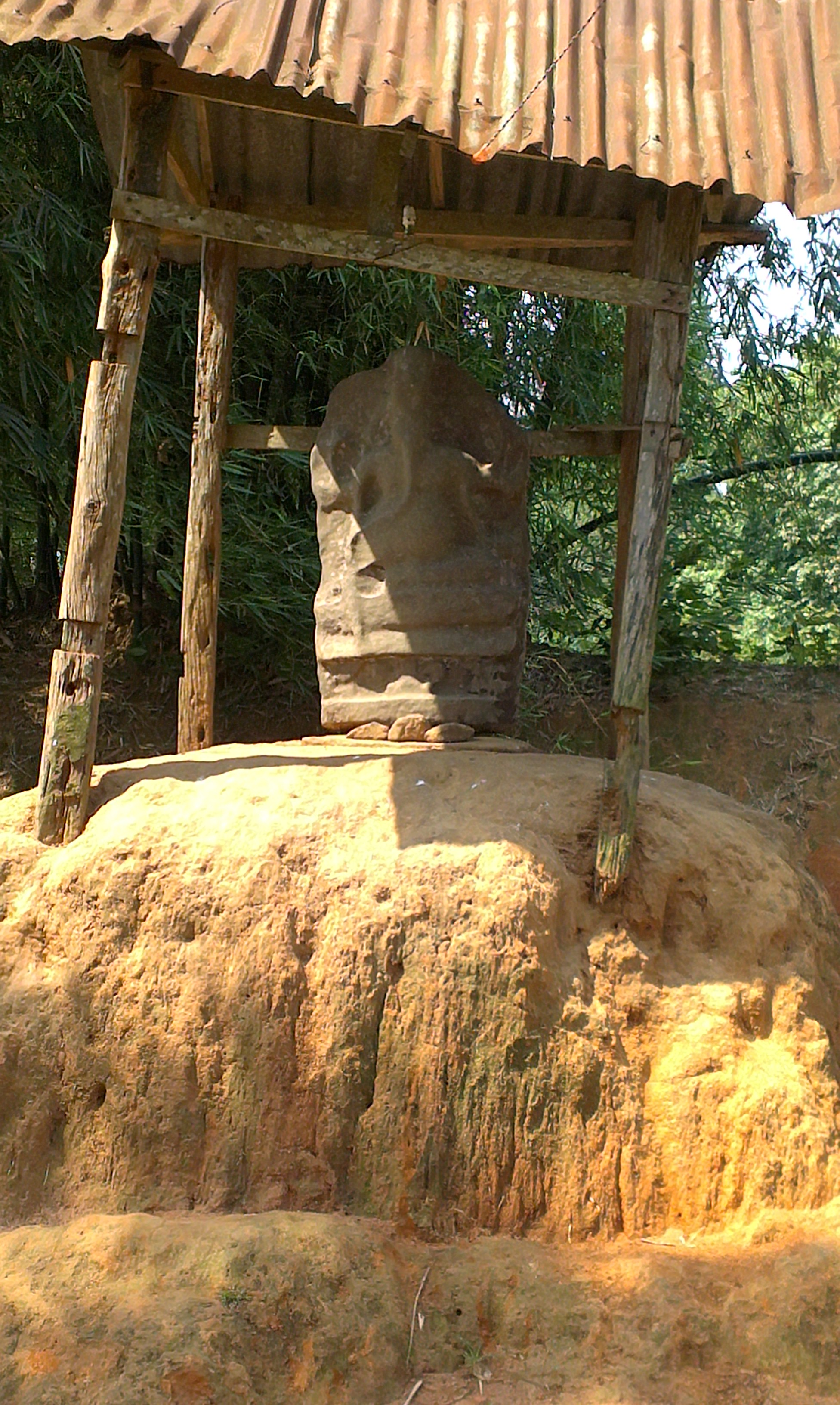
A Ganesha Sculpture kept almost open in the nearby village

The eighteen handed goddess Tara in Raja Rajeshwar Temple

Boxanagar — A Forest Yields a Secret

Our final stop was Boxanagar in Sonamura subdivision, West Tripura — a relatively recent discovery. Here, the ruins of a brick-built structure emerged after a patch of forest was cleared near the Bangladesh border. Locals thought it was a temple of Manasaa, the snake goddess.

In 1997, the ASI unearthed a Buddha sculpture, confirming the site was once a Buddhist temple, possibly active from the 8th to 12th centuries. Archaeologists believe it played a role in spreading Buddhism in the region.

A much better preserved site at Boxanagar

Home with History

By evening, we were back in Agartala, tired but satisfied. The day had been a journey not just through distance, but through centuries — an exploration of how faith, history, and heritage intertwine in the quiet corners of Tripura.

Sojourn to a Land of Mysterious Carvings — Chabimura, Tripura

It was a photograph in a Tripura tourism brochure that caught my eye years ago — a rock carving so striking that it seemed to hold a secret. There was something about its sheer size and quiet grandeur that stayed with me. I knew I had to see it.

But fate had other plans. Every time I made arrangements, the trip was mysteriously derailed. Plans got postponed, cancelled, and reimagined. And yet, with each failed attempt, my determination grew.

Finally, after almost a year of planning, cancelling, and planning again, I set out in January 2016 for Chabimura, also known as Devtamura — a secluded treasure 75 kilometres from Agartala.


A Hidden Heritage on the Gomti River

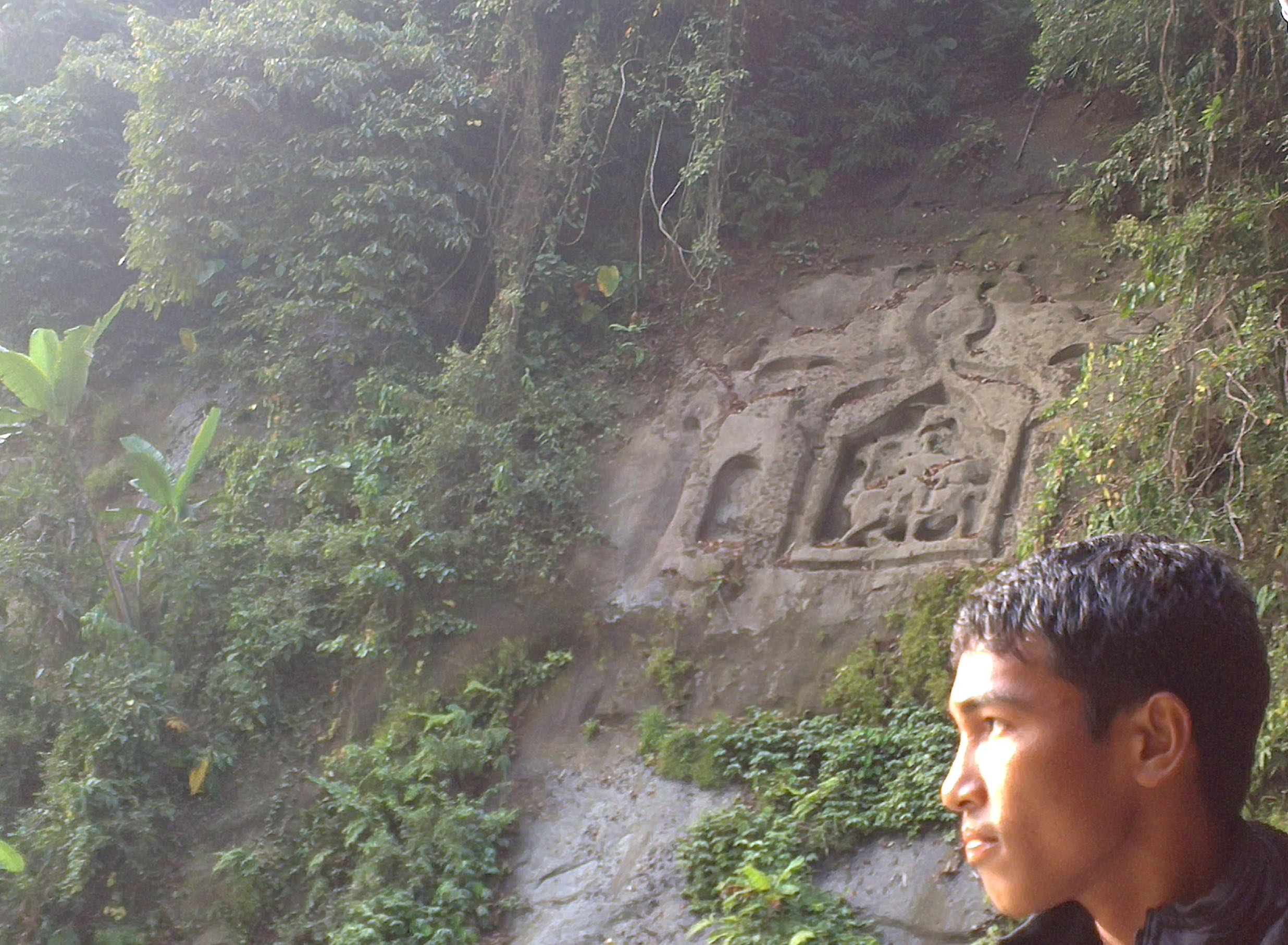
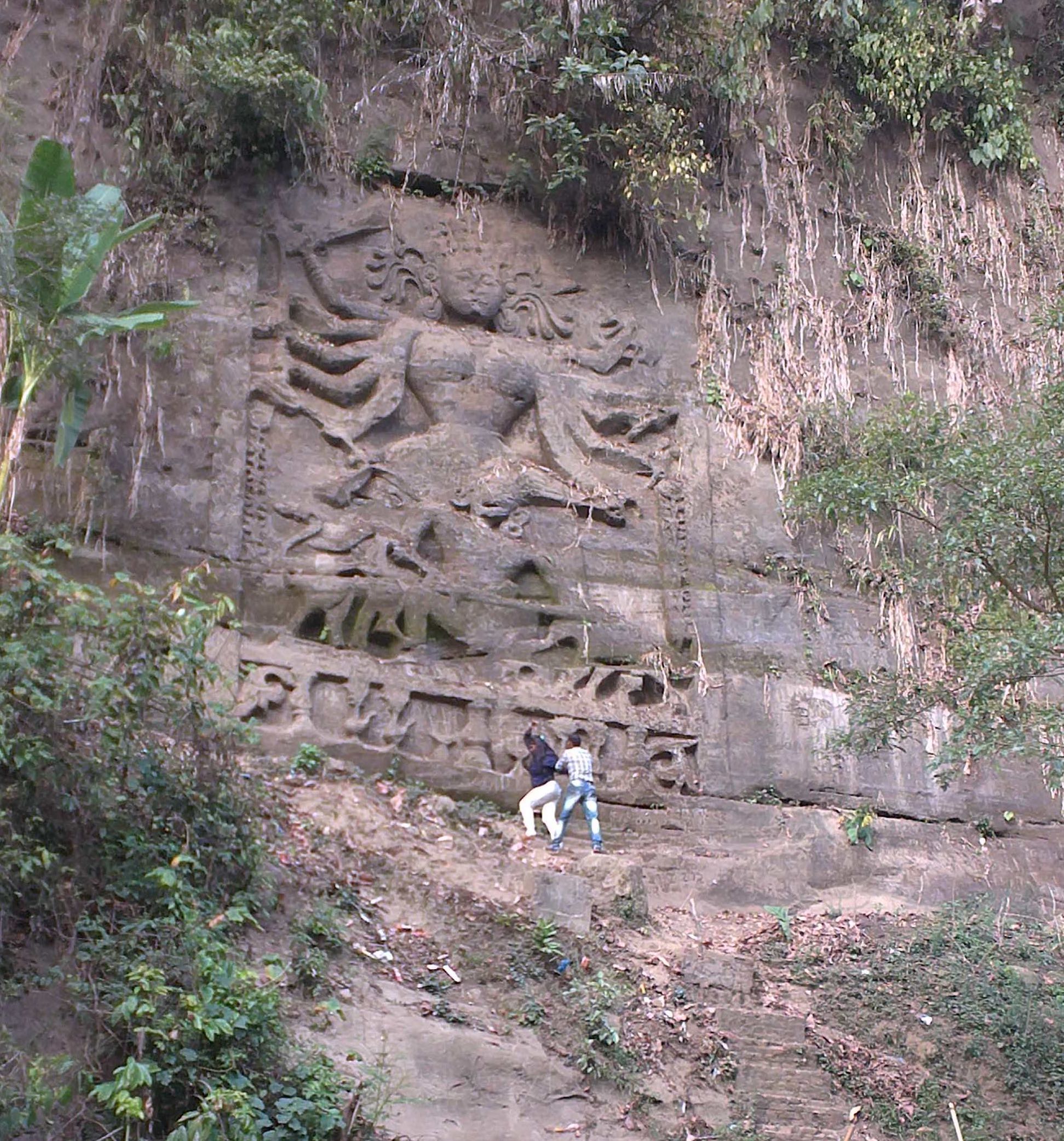
Chabimura’s rock carvings are accessible only by boat, which adds to their mystique. Their exact origins remain uncertain, but according to historical accounts, they may date back to the 15th–16th centuries, marking the revival of Brahmanism in the region as Buddhist influence waned in India.

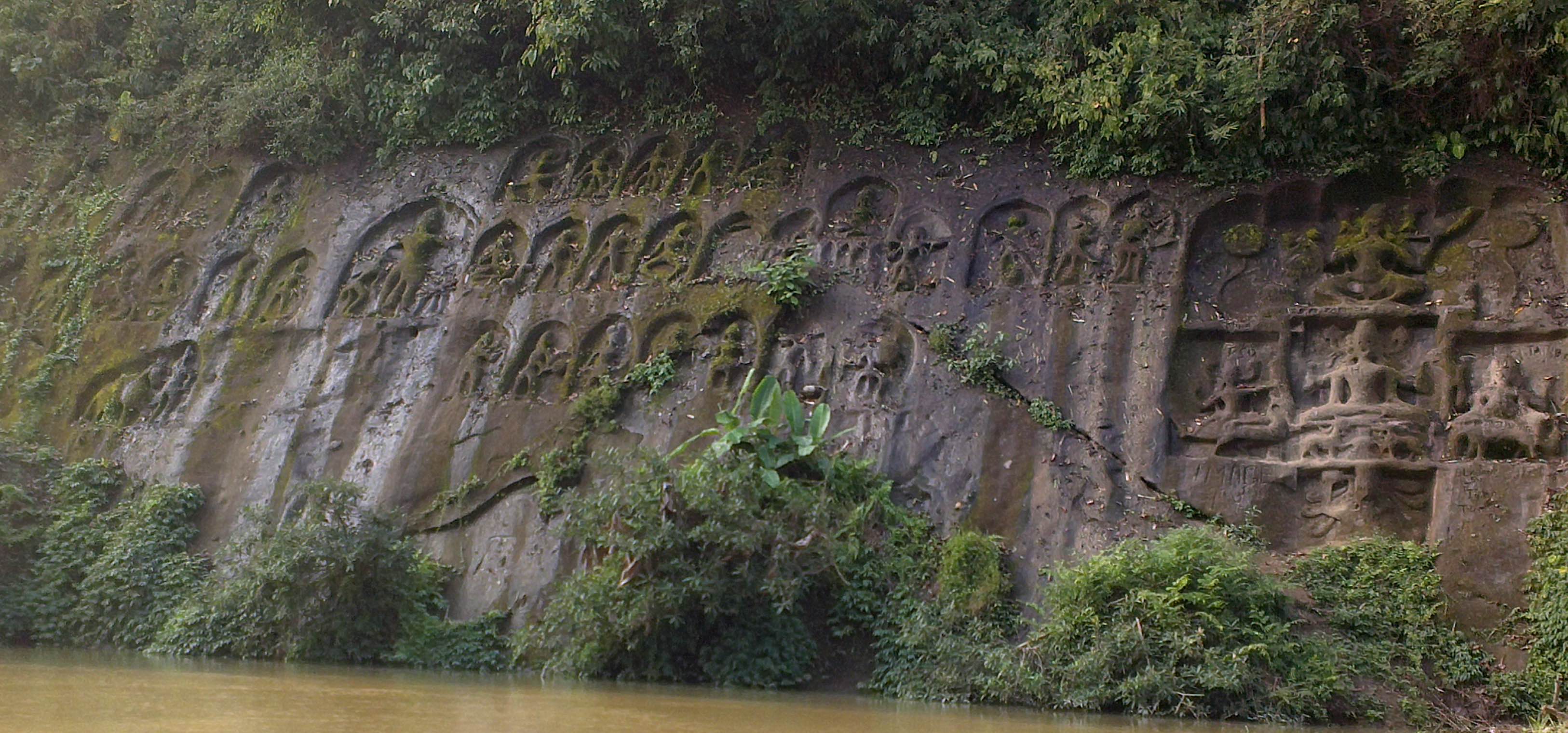
The site is home to 37 colossal carvings etched into the steep slopes of the Kalajhari Hills — including figures of Shiva, Parvati, Ganesha, Kartikeya, Mahishasuramardini, and Durga. The artists are unknown, as is the purpose behind these monumental works. What is certain is their scale and impact: each figure carved directly into rock faces that rise almost vertically above the Gomti River.


The Journey is Half the Wonder

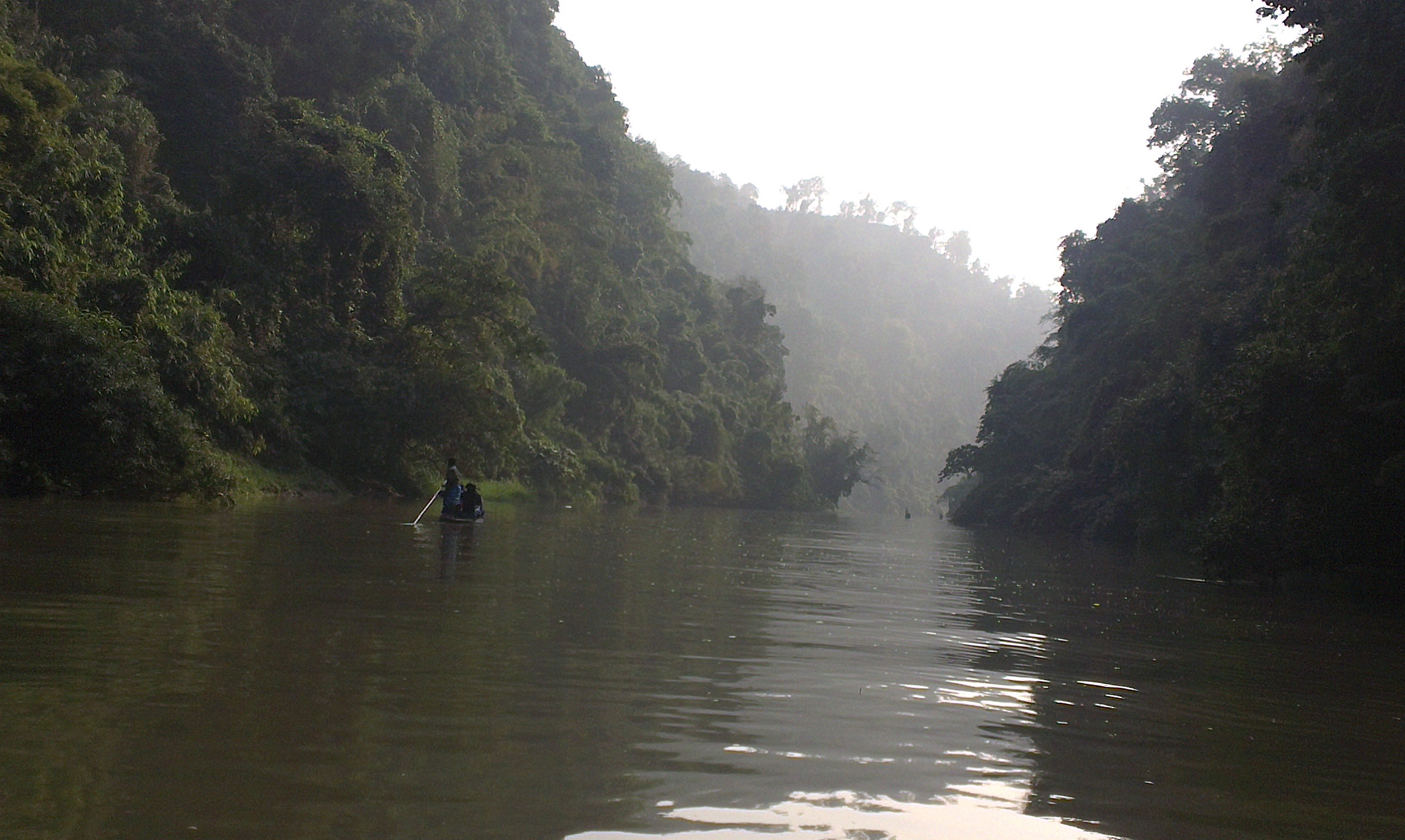
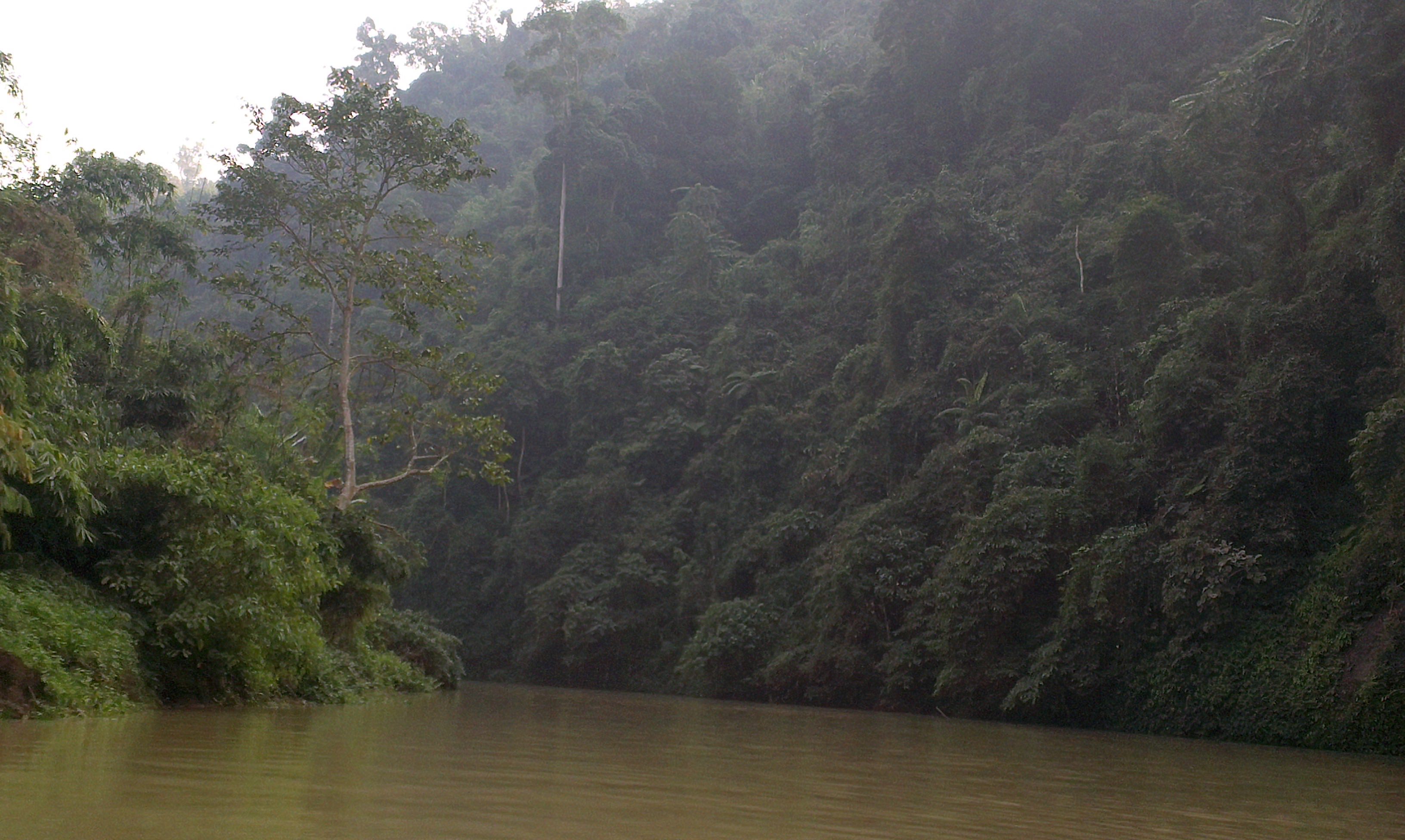
The magic begins the moment you step onto the boat. The Gomti flows gently, flanked on both sides by hills sloping at dramatic angles of 70–90 degrees. With each bend, the river seems to whisper of something just out of sight.

I remember wondering — how did anyone reach these heights centuries ago, let alone carve into them with such precision? And then, around a quiet bend, the first carving came into view: massive, commanding, and yet serene.

Before I could look away, someone on the boat called out, “Hey, one more!” Sure enough, the hills kept revealing carving after carving, each emerging from the rock like a guardian watching over the river.


Why Winter is the Best Season to Visit

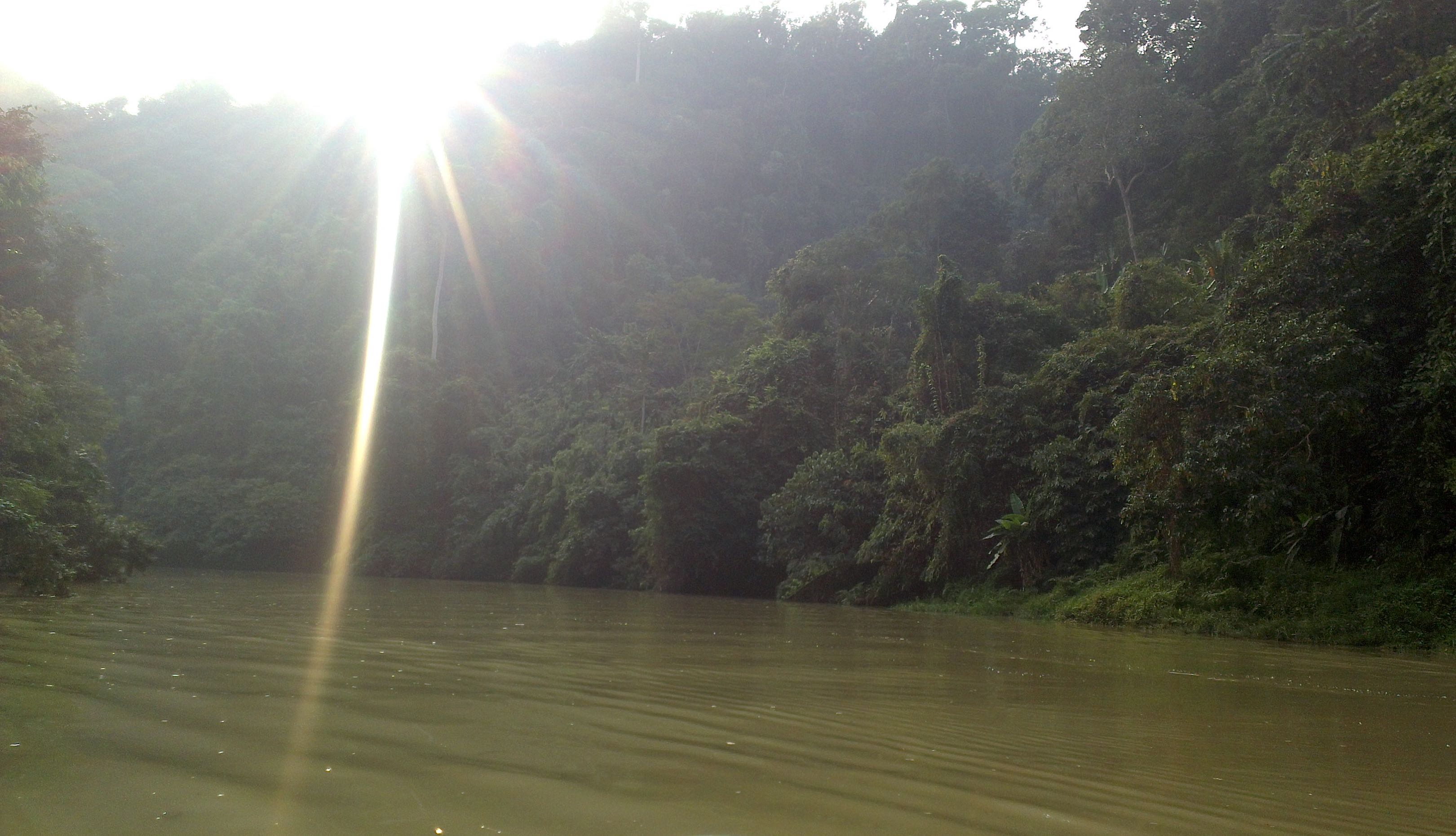
Chabimura is a year-round site, but winter transforms it entirely. The soft fog over the Gomti, the gentle mist rising from the water, and the crisp chill in the air turn the journey into something almost dreamlike.

I only had my mobile phone with me (yes, a bit of a sacrilege for a place like this), but that didn’t stop me from trying to capture its magic. Photographs may give you a glimpse, but being there — with the silence of the river, the looming cliffs, and the timeless carvings — is an experience that can’t be replicated.


Travel Notes

  • Getting There: Chabimura is about 75 km from Agartala. You’ll need to drive to the river point and then hire a boat.

  • Boat Ride: The journey to the carvings takes about 30–40 minutes each way.

  • Best Time to Visit: November to February, when the weather is cool and the river carries its winter mist.

  • Tip: Carry a camera — you’ll regret it if you don’t.


Chabimura is not just about history or archaeology. It’s about the journey — about gliding on a quiet river, turning a corner, and suddenly locking eyes with a 500-year-old carving that has been watching the world go by for centuries.

Sometimes, the road less travelled is a river.

1

The first set of rock carvings

2

The boatman who would point out the carvings

IMAG0980

Doesn’t it look Amazonian?

3

Lush green forest on either side, with winter sun spreading warmth

IMAG0992

The river slowly meanders its way

4

This was the picture that got me interested.

Temple Run in an old capital

A mid-week holiday is always a bonus. In Tripura, Garia Puja—a local festival—fell on April 21, 2015, giving us the rare joy of a Tuesday off. For once, Monday felt a little lighter.

By then, I had been in Tripura for almost a year. While the state is rich in history and heritage, I had noticed that many of its treasures remain under-publicised and, consequently, under-visited. Tripura, one of India’s Seven Sisters in the northeast, is a small, predominantly tribal state with a surprisingly rich royal past. The present-day capital, Agartala, is well-connected by air from major Indian cities, but it is the old capital—Udaipur—that holds some of the most intriguing historical gems.

The Search Begins

My late-blooming love for heritage sites meant that I now actively sought out every nugget of history I could find. One day, while browsing online, I stumbled upon a photograph of Bhubaneswari Temple in Udaipur. What piqued my interest further was the fact that Rabindranath Tagore had mentioned it in his novel Rajarshi.

Holiday in hand, I convinced two colleagues to join me. We hired a car, only to find that our driver had never heard of Bhubaneswari Temple. His explanation was simple: “No one goes there. People go to Udaipur to visit Tripura Sundari Temple—Mata Bari—one of the revered Shakti Peeths.”

Undeterred, we decided to head to Udaipur anyway, certain that locals there would know. Udaipur lies about 55 km from Agartala, and in just over an hour, we reached the town and began our search.

An Unexpected Find – The Chaturdas Devata Temple

Winding through Udaipur’s narrow lanes, we spotted a set of temples and stopped, thinking we had arrived. Instead, it turned out to be a Shiva temple. But nearby, two smaller temples preserved by the Archaeological Survey of India (ASI) caught our attention.

The signboard revealed that this was the Chaturdas Devata Temple—the Temple of Fourteen Gods. The fourteen deities include Shiva, Durga, Vishnu, Lakshmi, Saraswati, Kartikeya, Ganesha, Brahma, Prithvi, Samudra, Ganga, Agni, Kamadeva, and Himadri. These were the presiding deities of Tripura’s royal house, worshipped by special priests known as Cantais.

IMAG0562IMAG0566

Chaturdas Devata Temple

It was a reminder of Tripura’s glorious past. At its zenith in the 14th and 15th centuries, the Tripura kingdom stretched from the Brahmaputra in the north and west to the Bay of Bengal in the south, and as far as Myanmar in the east. Udaipur—then called Rangamati—was their capital, and home to temples honouring their royal patrons.

IMAG0563IMAG0564

These rock carvings stood at the entrance of the temple

The Gunabati Group of Temples

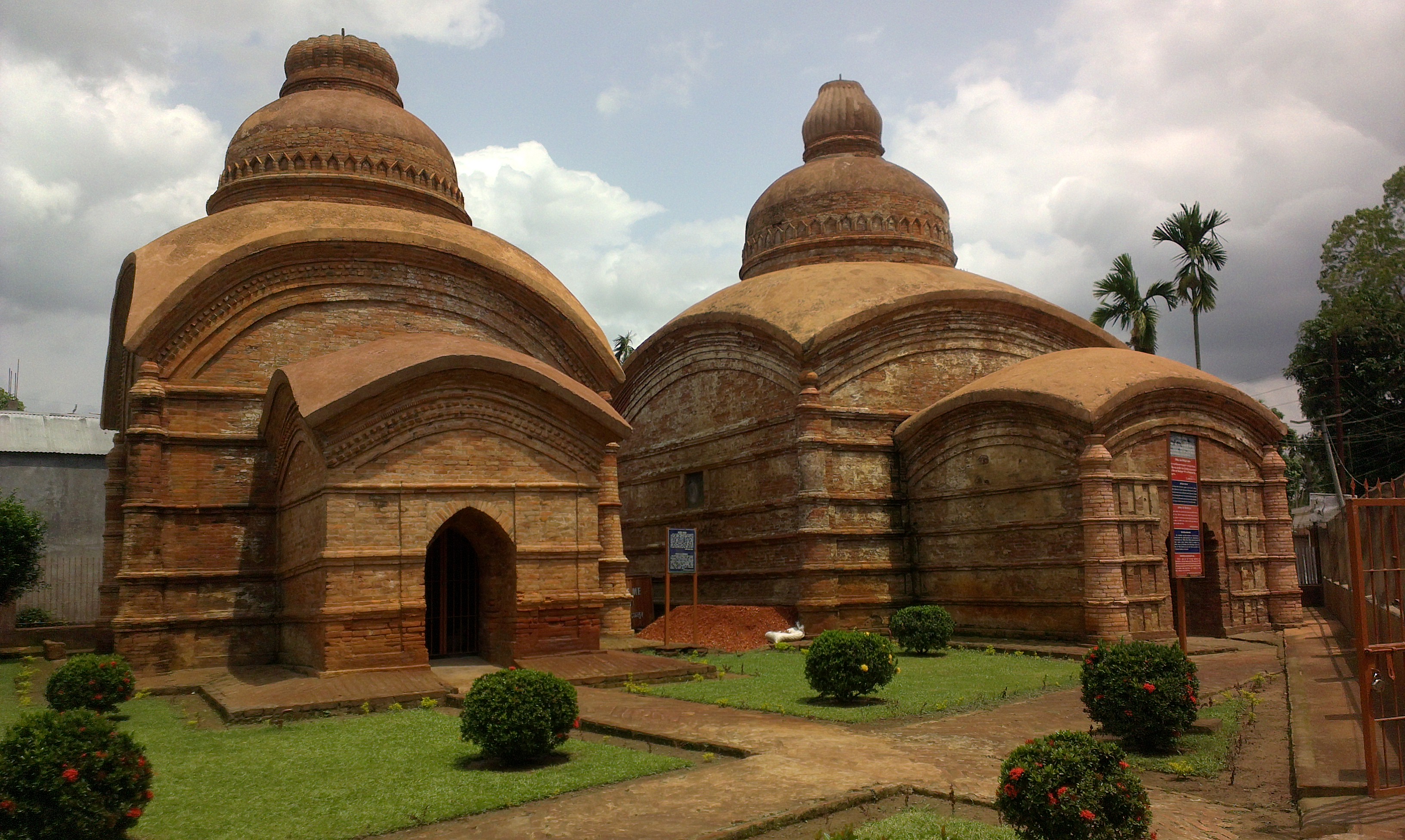
Our quest continued, and soon we stumbled upon another surprise: the Gunabati Group of Temples. Hidden in a residential area, these temples’ origins remain obscure. Only one stone inscription sheds light—it states that one was built in 1668 CE in the name of Maharani Gunabati, wife of Maharaja Govinda Manikya. The other two temples appear to be from the same era, but their stories remain untold.

I couldn’t help but wonder about the Queen herself. How remarkable must she have been to have temples dedicated to her?

IMAG0571

Gunabati Group of Temples

A Hilltop Gem – Bhubaneswari Temple

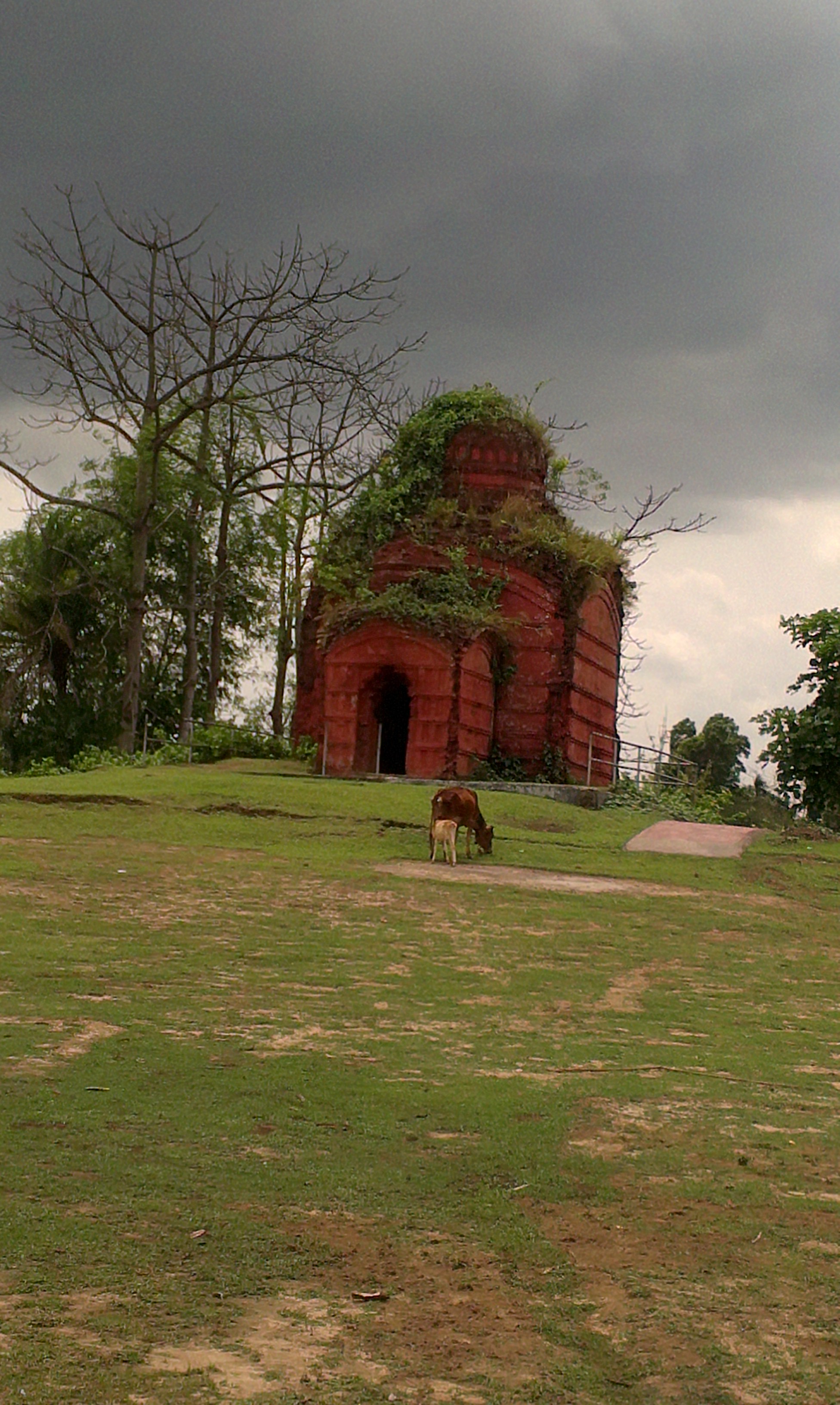
Just as our car began ascending another hill, we passed the ruins of a Laxmi-Narayan Temple—a silent witness to the passage of centuries. Finally, we reached our destination: Bhubaneswari Temple.

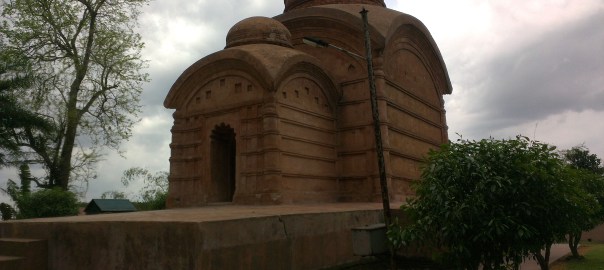
Built between 1667 and 1676 CE during Maharaja Govinda Manikya’s reign, the temple sits on a 3-foot-high terrace. Its roof follows the distinctive four-chaala style, with stupa-like crowns on both the vestibule and core chamber. The main stupa is adorned with floral motifs, adding a delicate charm to its regal presence.

With the River Gomti flowing nearby, the temple radiates a serene calm. The absence of crowds meant no noise, no clutter—just the quiet dignity of history.

IMAG0572

Even the ruins were so beautiful

IMAG0574

Bhubaneswari Temple

More Than a Trip, A Time Travel

Our “temple run” through Udaipur turned into a journey through Tripura’s layered history—from royal deities to queens, from ruined shrines to hilltop sanctuaries. It was a reminder that sometimes, the lesser-known sites tell the richest stories—if only we take the time to seek them out.