
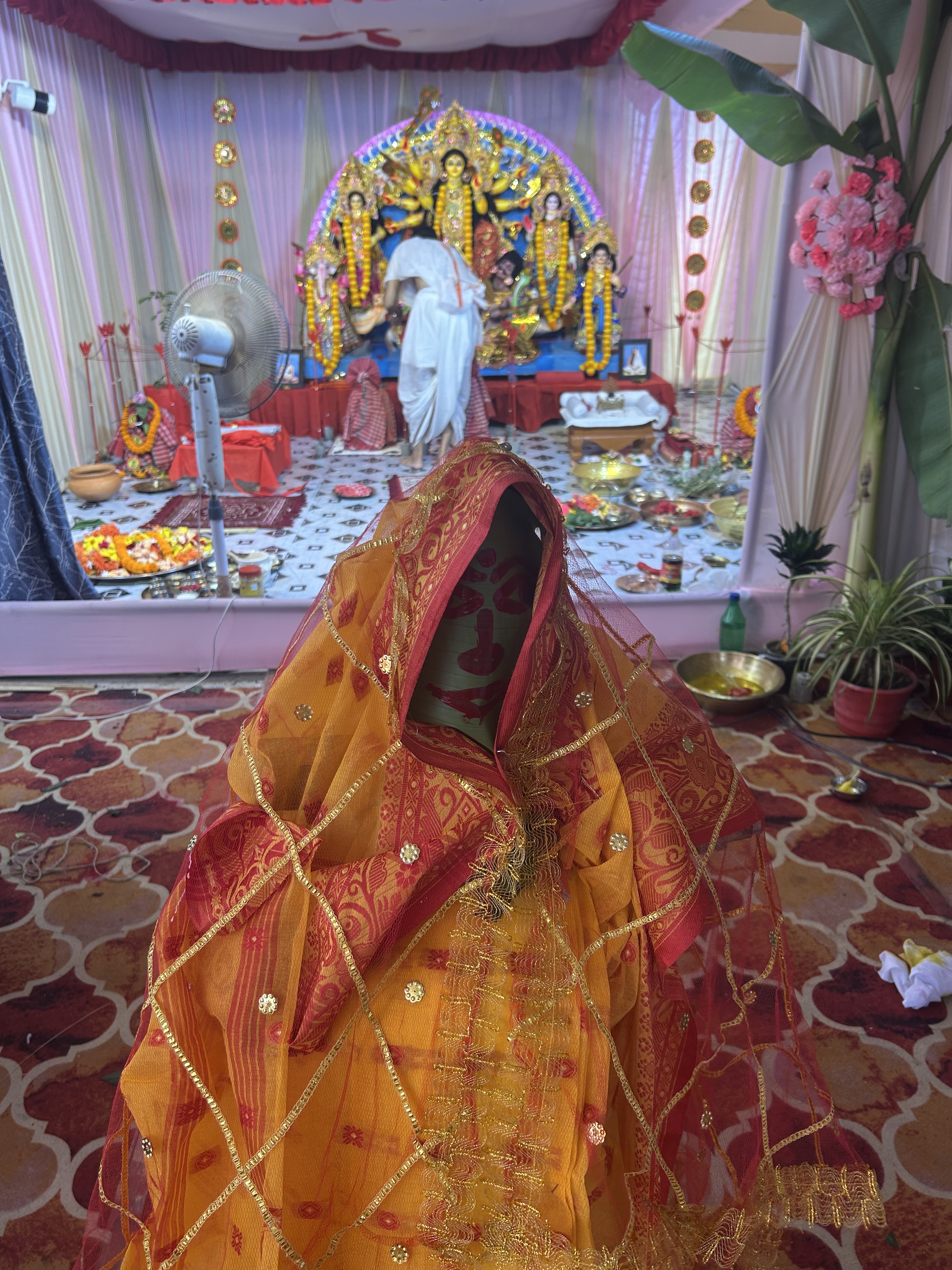
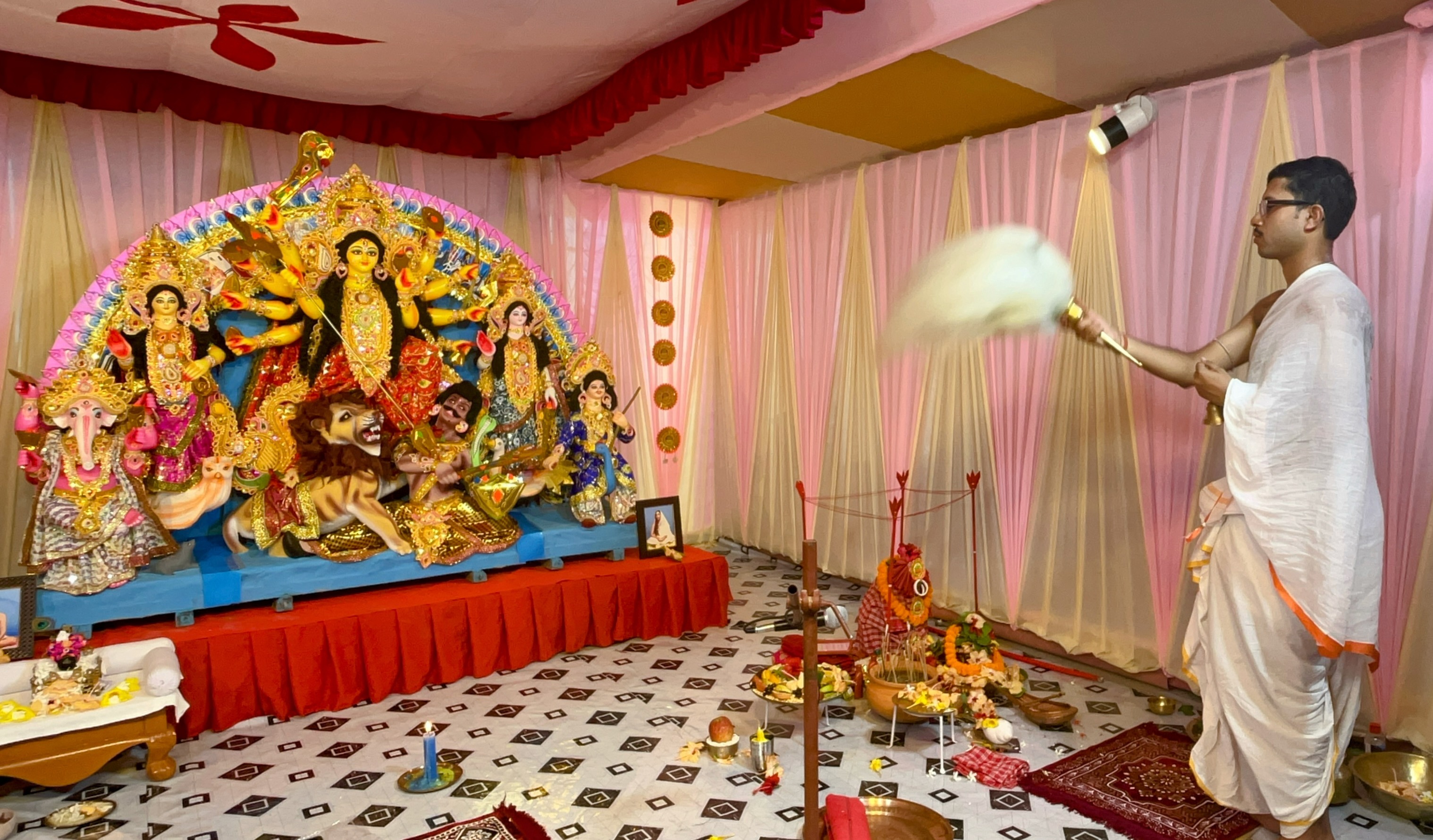
Navami dawned with a quiet urgency. It was the last full day Maa would be home with us, and I wanted to soak in every moment. So, dressed in my puja finery, I made my way to the mandap, where the goddess seemed to hold court amidst fragrance, light, and laughter.
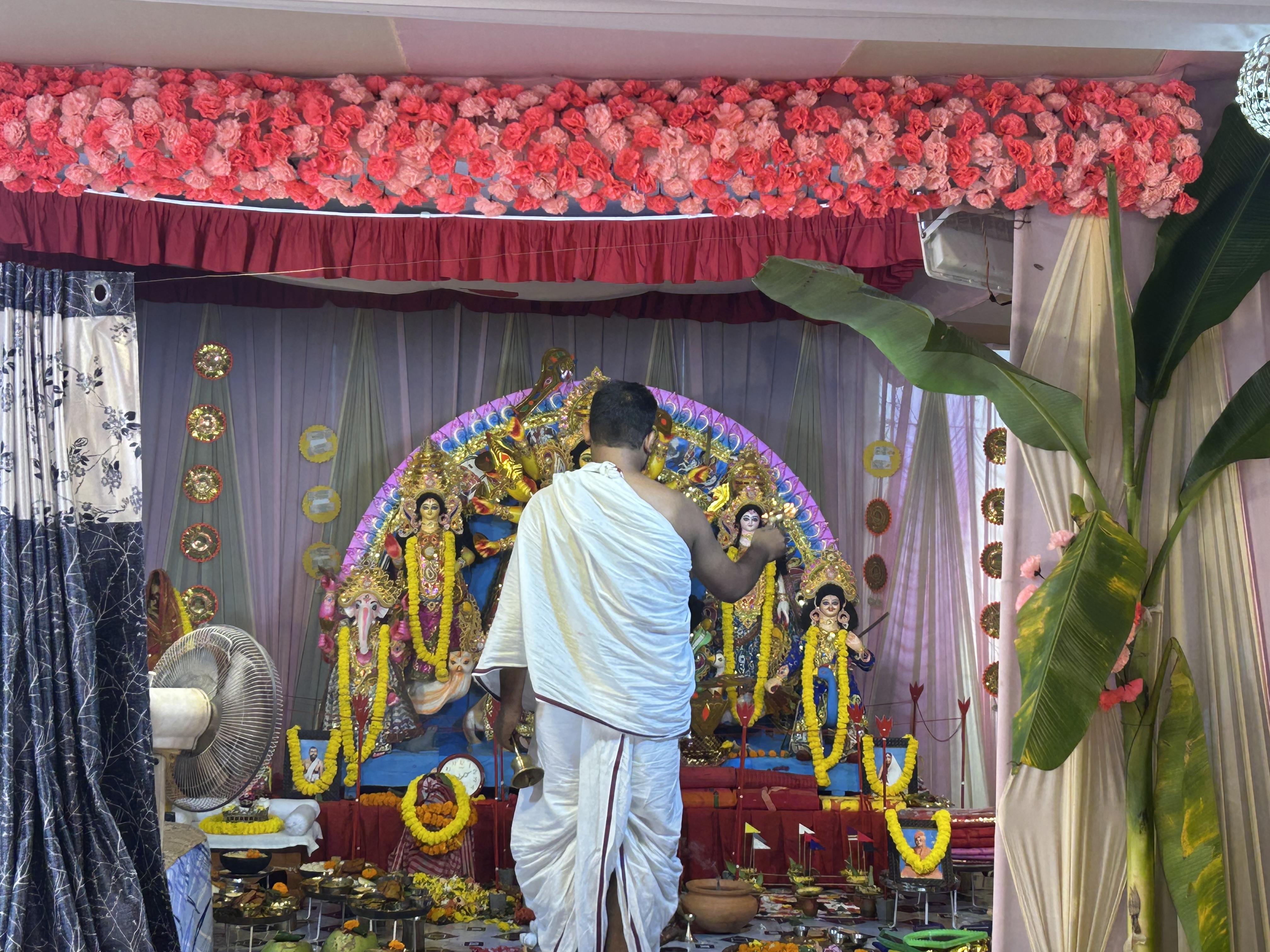
Durga Puja, for Bengalis, is more than a festival. It is the homecoming of a daughter. Every offering, every ritual, every sound and flavor carries the symbolism of how a daughter is pampered when she returns to her parental home. Navami, coming after the solemnity of Ashtami and the intensity of Sandhi Puja — when the goddess is believed to have slain Mahishasur — is lighter in mood, filled with a sense of celebration but also tinged with an approaching farewell.
Discoveries at the Mandap
As I entered, something unusual caught my eye — a neatly made bed placed at the mandap. Curious, I asked my sister-in-law, who explained it was an offering to the goddess. Like a daughter who has come home after a long time, she must be cared for, made comfortable, and indulged. Standing there, I realized how much one can learn by simply watching the rituals closely: the goddess is not distant; she is family.


The air vibrated with familiar sounds — the dhak, the clash of kasor, the rhythmic ululations, and the deep resonance of the shankh. Each day I had tried, and failed, to blow the conch shell. But on this morning, almost to my surprise, the sound emerged clearly. It was fleeting, for when I tried again, it eluded me. My aunt, of course, then stepped in to demonstrate her flawless skill, as if reminding us that these rituals are not just sacred — they are also playful, communal, full of laughter and learning.
The Sacred Fire
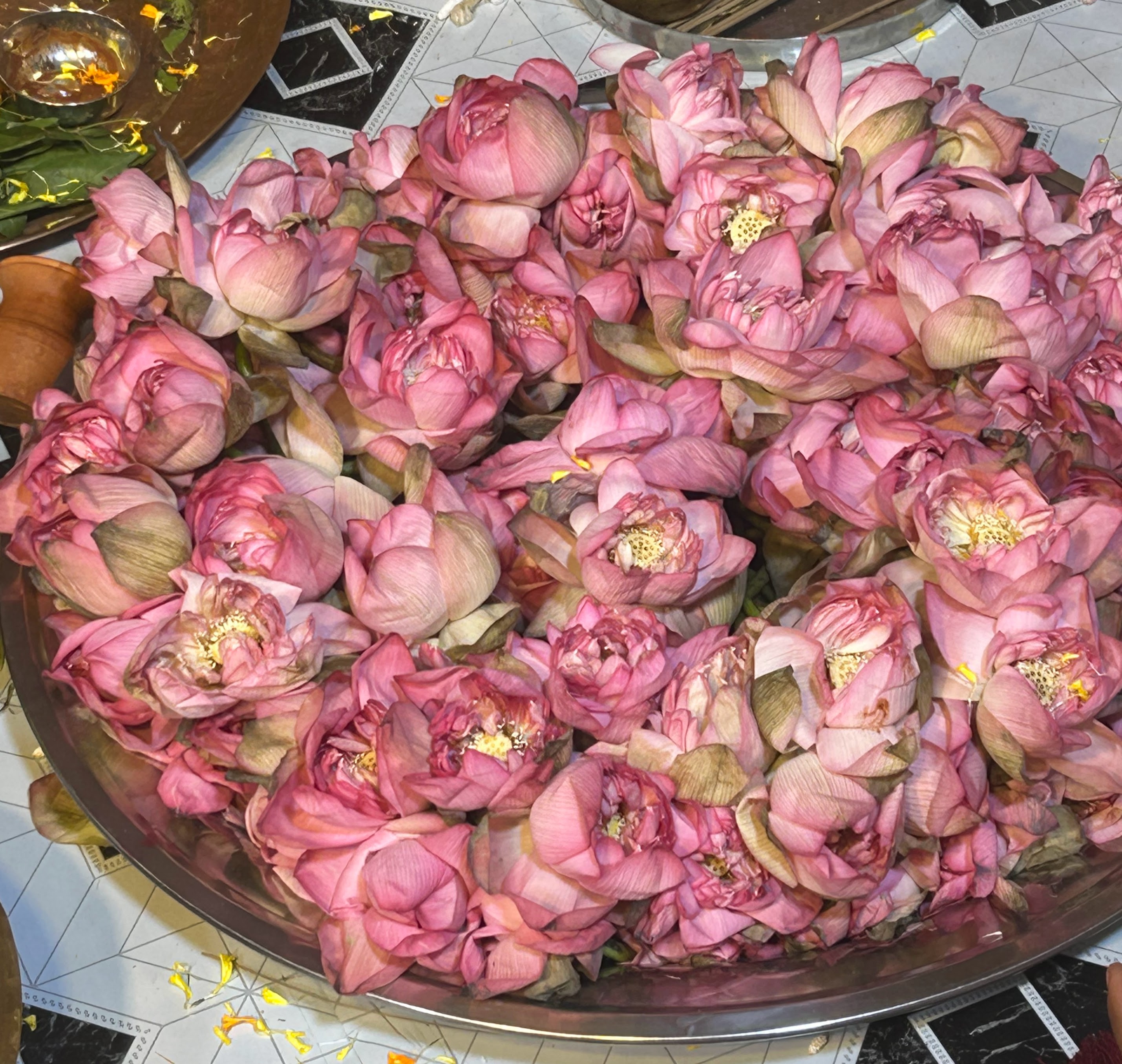
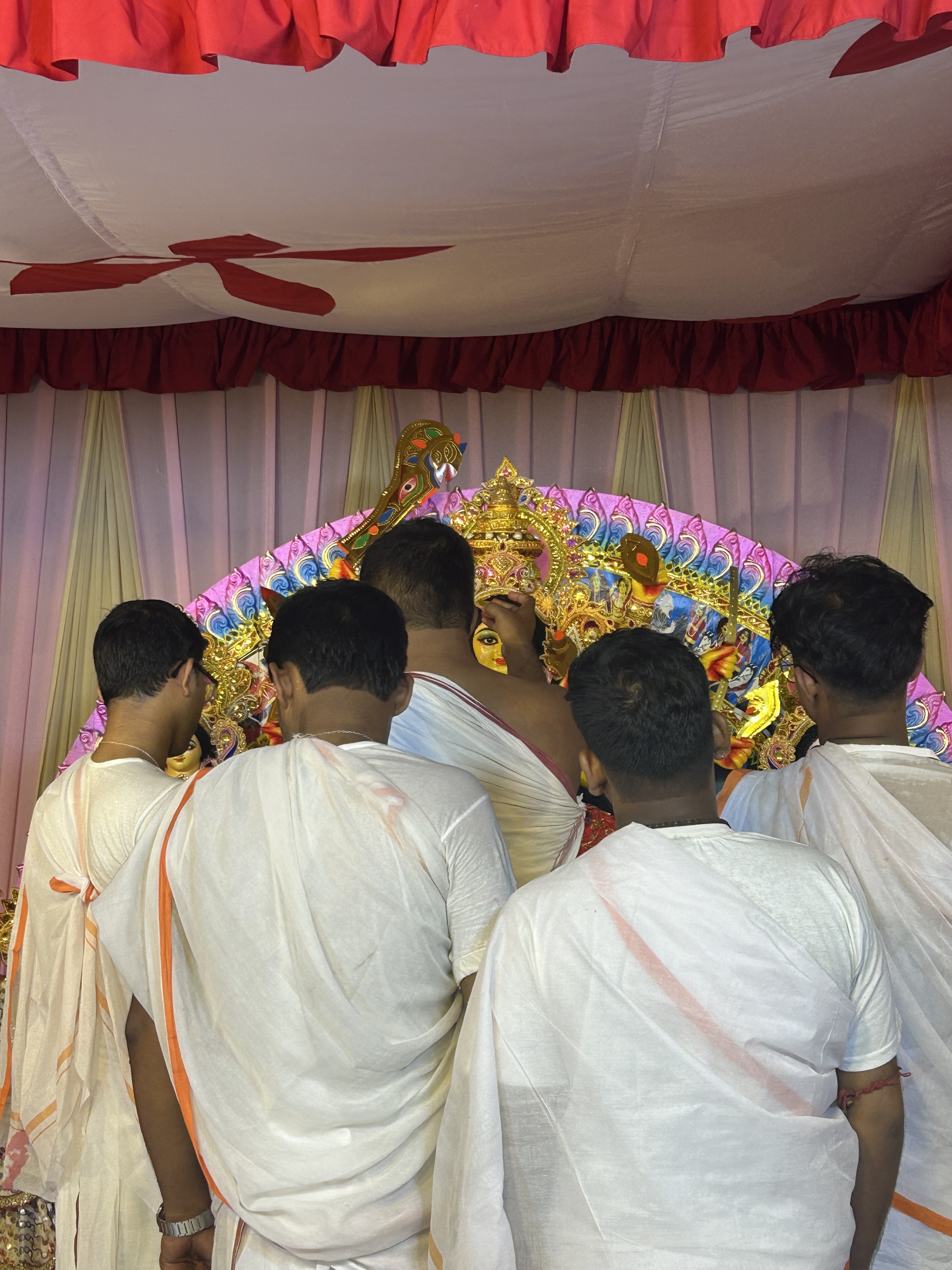
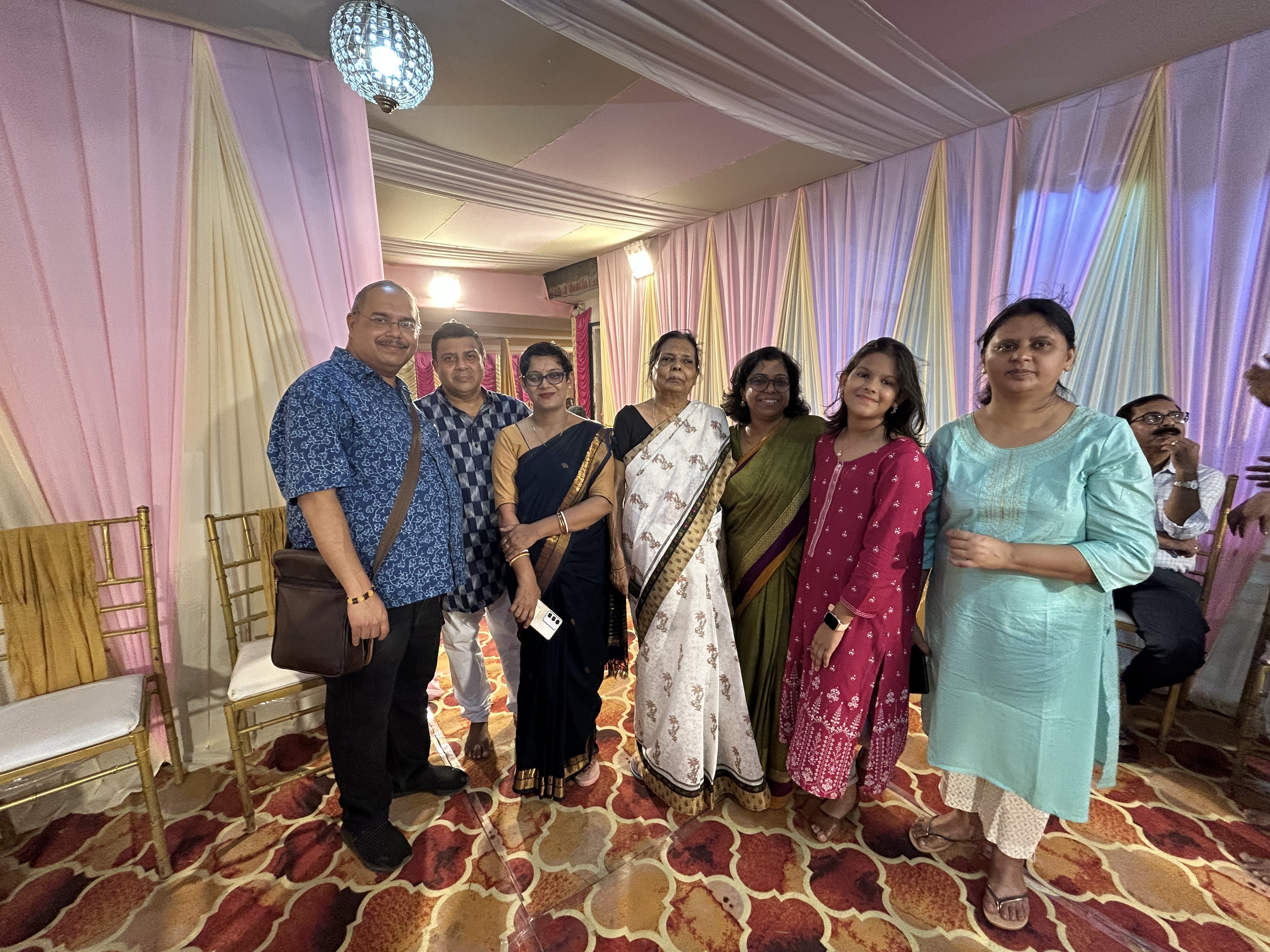
After the arati and pushpanjali, preparations began for the havan. A metal kund was filled with sand, rangoli patterns were drawn, and small wooden twigs were stacked carefully before being lit with the chanting of shlokas. Watching my family gather — the elders with folded hands, the younger ones capturing the moment on their phones, and children gazing on with wide-eyed curiosity — I felt how rituals create a tapestry of generations. Each of us participates differently, yet all are bound by the same flame, the same prayer.
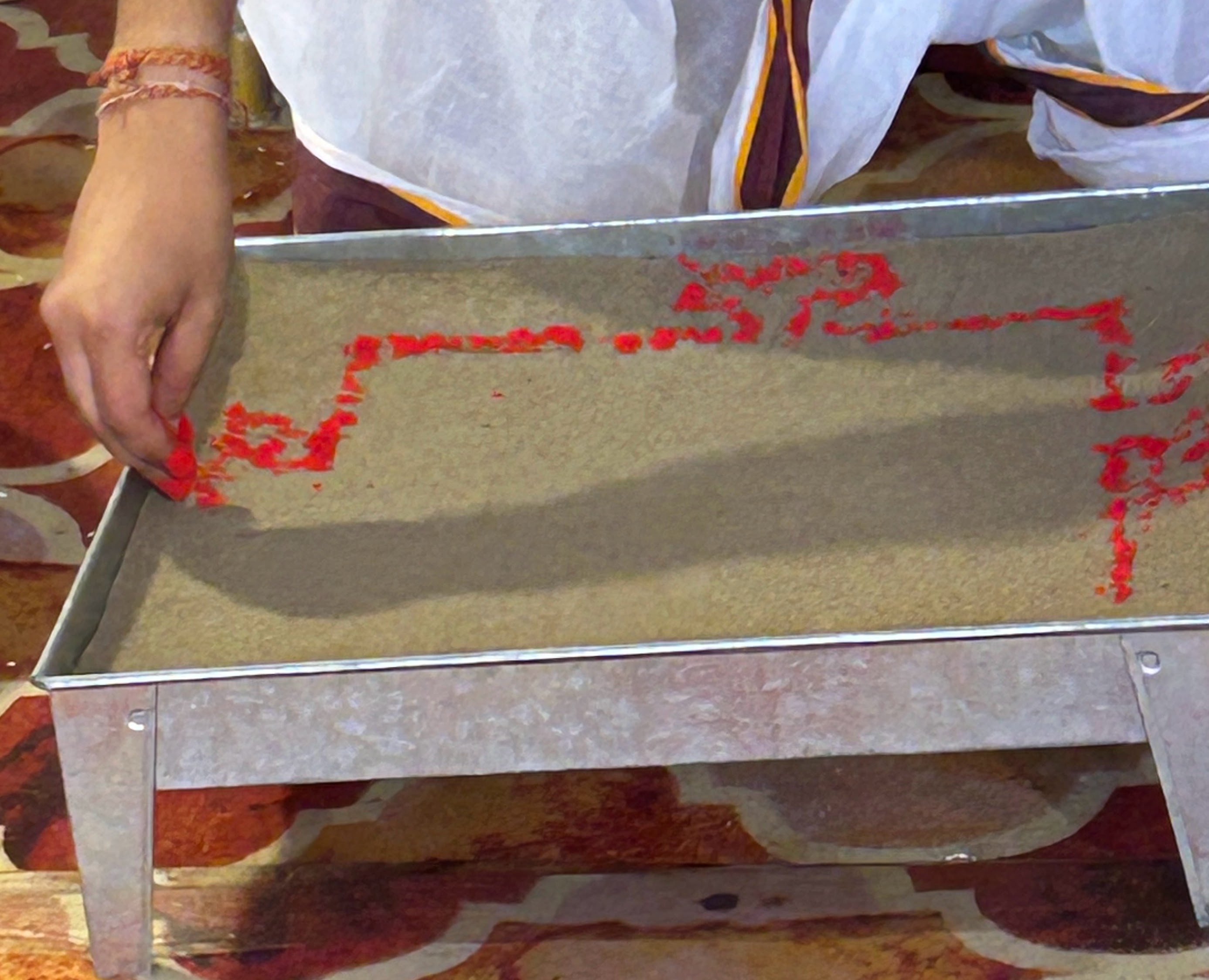
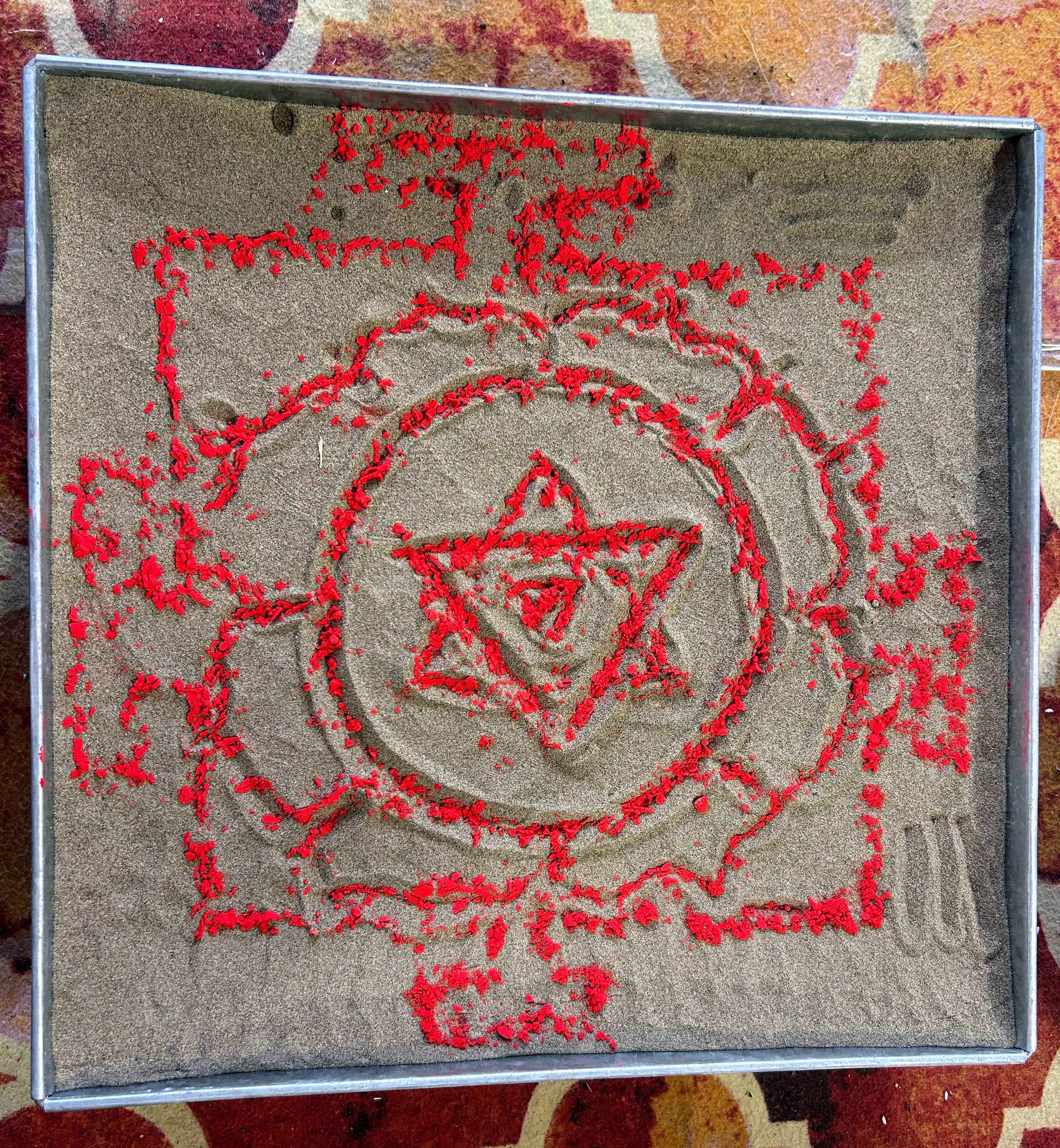


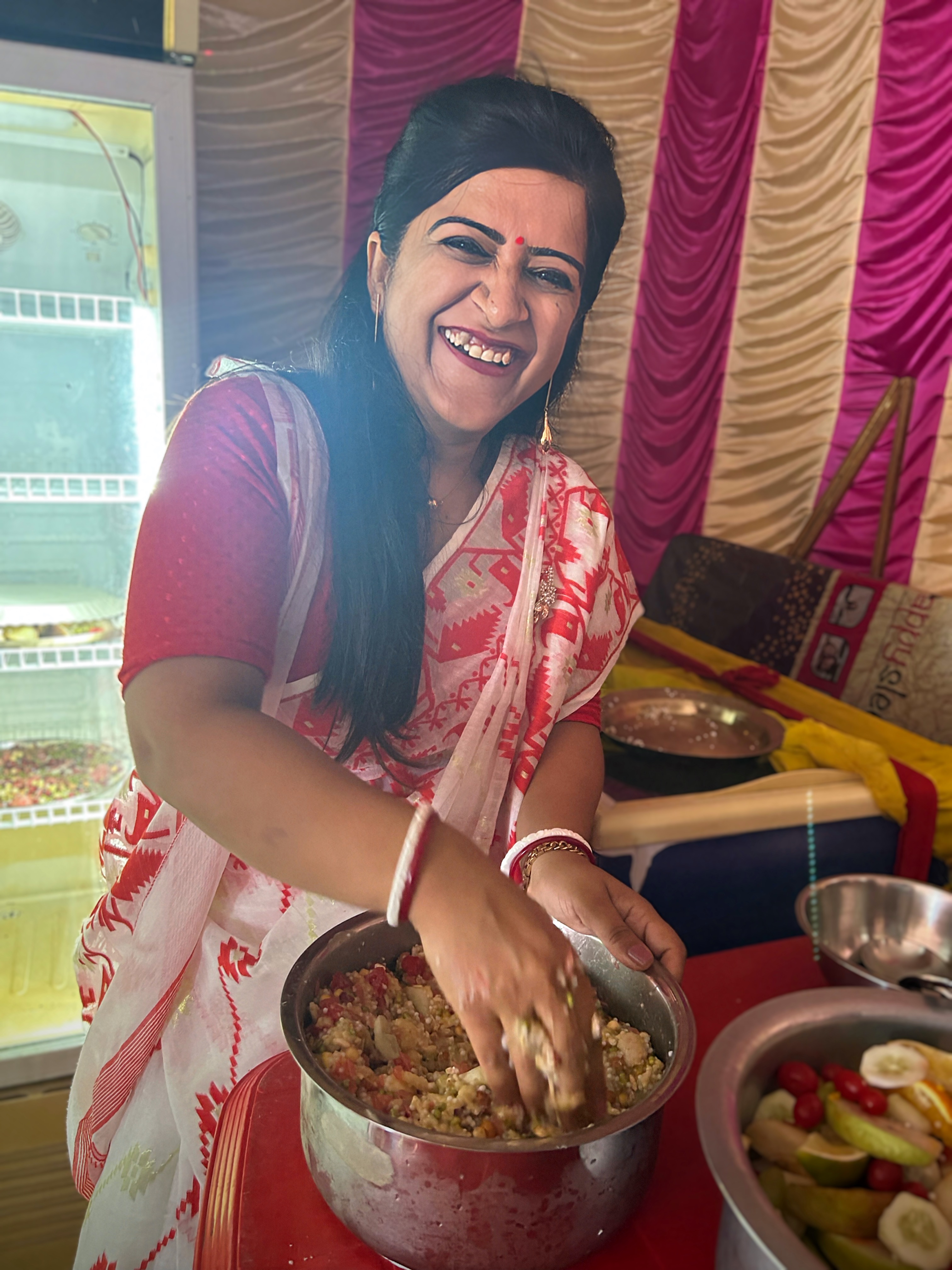
The havan stretched into the afternoon, its rhythm slow and meditative, until the sacred fire gave way to another ritual no less holy for Bengalis — the bhog. Plates of steaming prasad were served, and we descended with eagerness. With a puja at home, every meal was vegetarian, but the variety revealed the richness of Bengali vegetarian cuisine — a tradition often overshadowed by our famed fish and meat dishes. Each bite was a reminder that food, too, is devotion.
The Evening Glow
As twilight approached, the mood softened. Navami evenings are bittersweet. They are filled with joy, for Maa is still with us, but also with an unspoken sadness that the festival is nearing its end. The dhunuchi dance, the laughter, the casual adda — everything seemed brighter, livelier, because we knew it would soon be over.
Durga Puja is not just about rituals. It is about the coming together of family, the blending of the sacred and the everyday, the music and the meals, the stories and the silences. It is about homecoming — not just of the goddess, but of all of us, returning to roots, to belonging, to shared memories.
Carrying the Light Forward
When Maa comes home, everything brightens. And yet, as her departure nears, I realize that the beauty of Durga Puja lies not only in her presence but also in the light she leaves behind. The mandap, the dhak, the laughter of family, the taste of bhog — all of it becomes memory and meaning, carried within us until the next autumn when the daughter returns again.
Durga Puja, in its essence, teaches us that joy and impermanence walk hand in hand. That even departures are sacred, for they remind us to cherish the moments we have.
And so, on Navami, as Maa prepared to leave, I understood: she never truly goes away.



























 Jajabor