On the third day of my African safari, I bid farewell to Samburu, my heart still full from the wildlife encounters of the past two days. As the vehicle wound its way out of the park in the early morning, nature gifted me a parting glance—giraffes, impalas, gerenuks, and dik-diks crossing our path, calm and unhurried, as if they knew I needed one last look.
My next destination: Lake Naivasha, nestled within the legendary Great Rift Valley. After all those geography lessons in school, how could I possibly be in Africa and not stand somewhere within the mighty Rift?
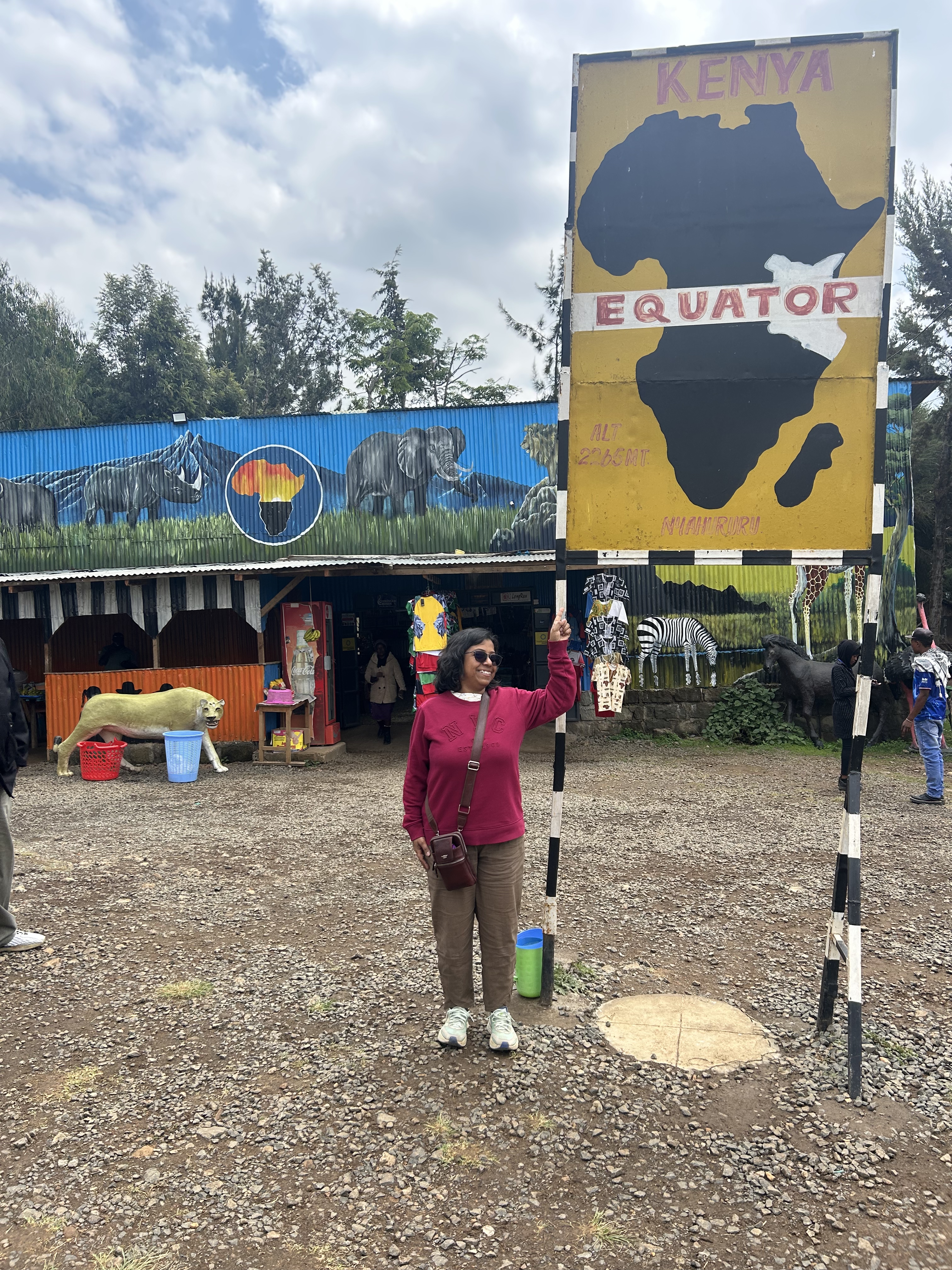
The drive was long, but it held one geographical delight—the Equator crossing. We stopped at a modest joint proudly announcing our latitude. I stepped out, stretched my legs (yes, even short ones need a break), and soaked in the moment. Just then, a young man offered to take my photo with the sign. We got chatting—and to my surprise, he turned out to be a three-time Chandigarh Marathon winner. Africa, always full of unexpected meetings.
We arrived at Lake Naivasha, a tranquil freshwater lake formed in a volcanic depression, fed by underground springs and the Malewa and Gilgil Rivers. It’s a haven for hippos and over 400 species of birds.
Out on a boat ride, the lake unfolded its quiet drama. Hippos peeked at us from beneath the water’s surface—eyes, ears, and a hint of a snout. Meanwhile, the skies and shores dazzled with avian beauty:
🦢 Great White Pelican
🦅 African Fish Eagle
🪶 Goliath Heron, African Spoonbill, Egyptian Goose, Cormorants, and Lapwings.
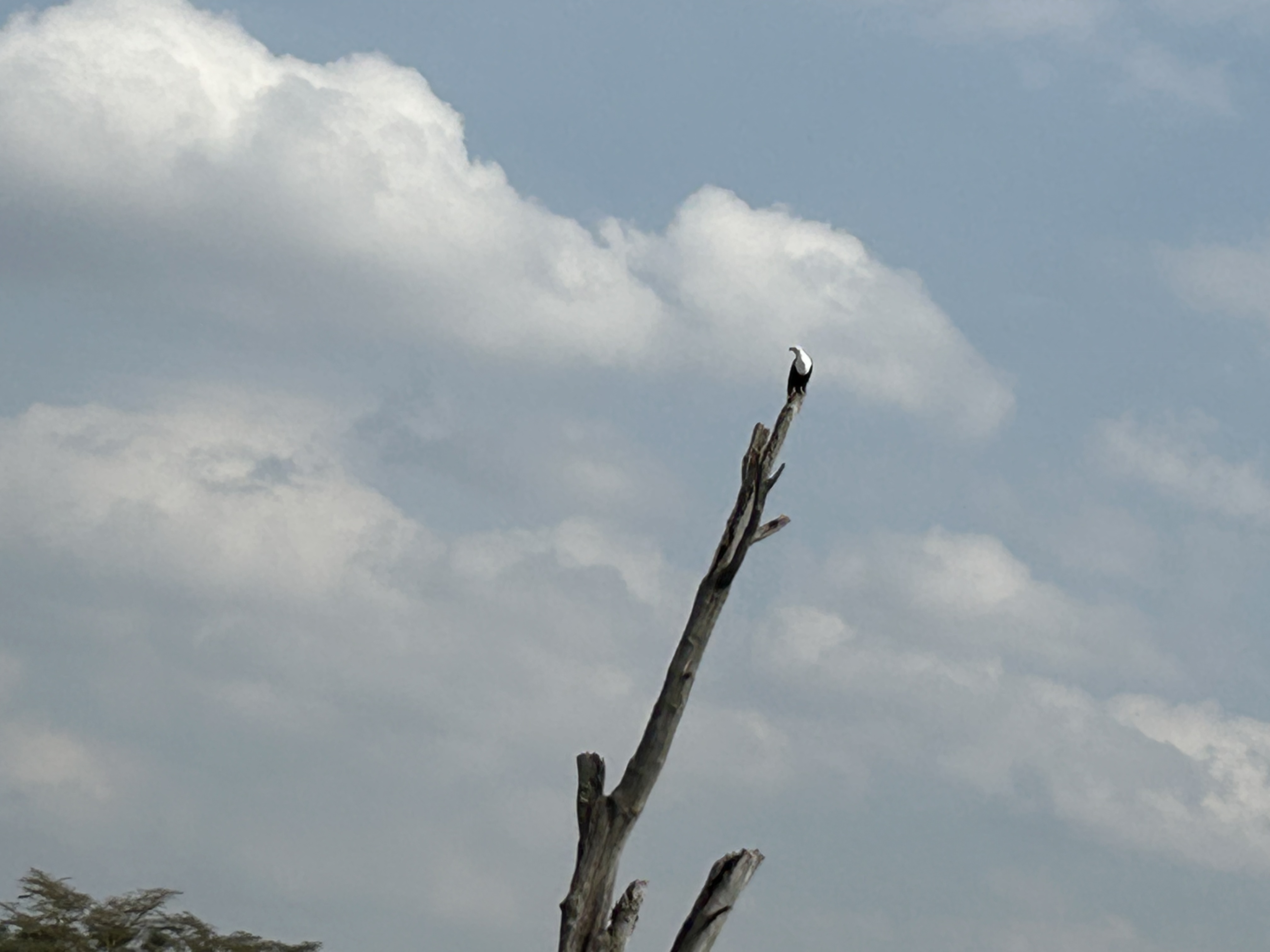


One pelican stood out—a veteran with part of its left wing missing. Boats usually toss it a fish, and it catches it mid-air, a little lakeside ritual. But when our guide tossed one, the pelican missed. Even the best have off days.
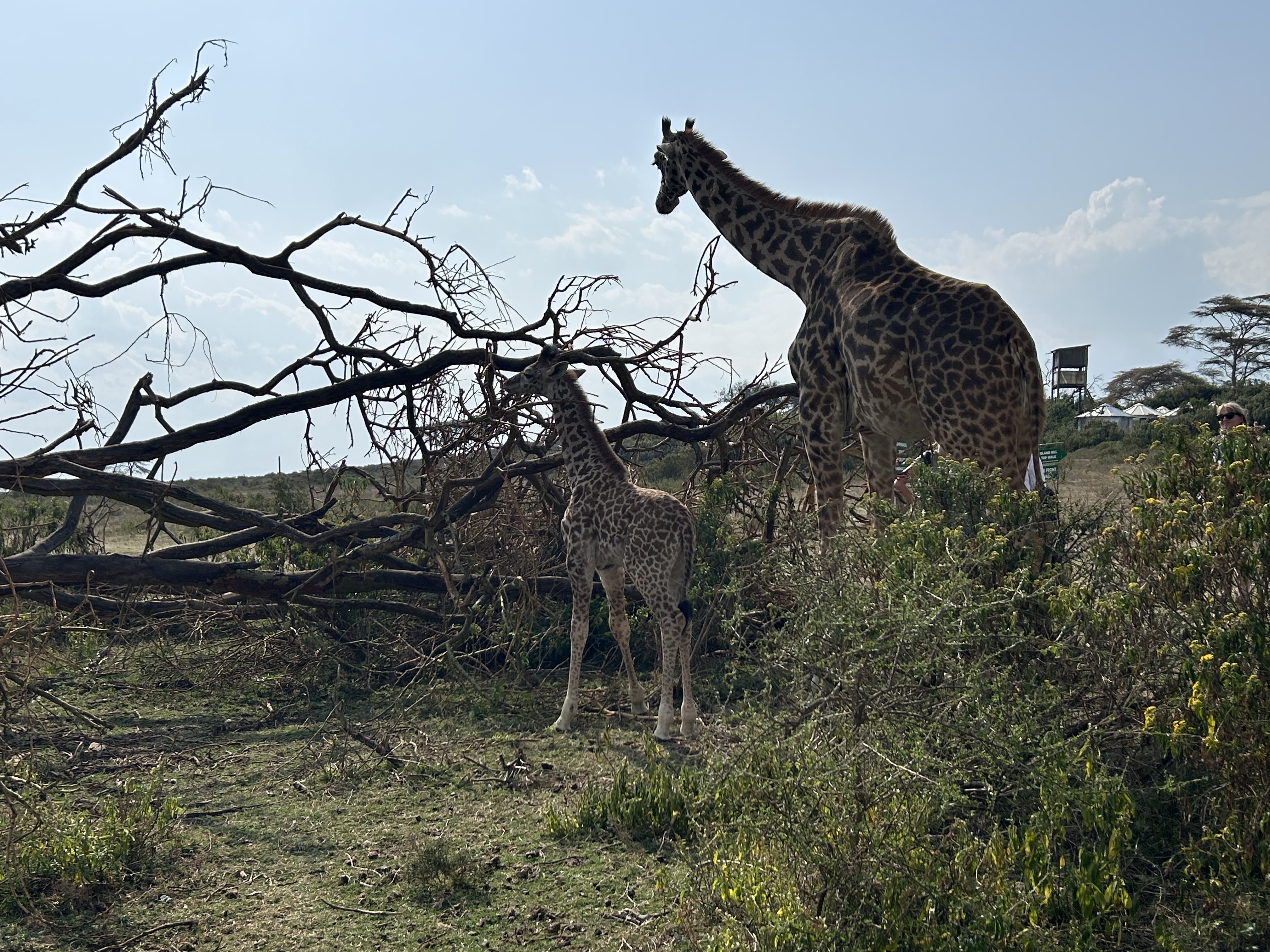
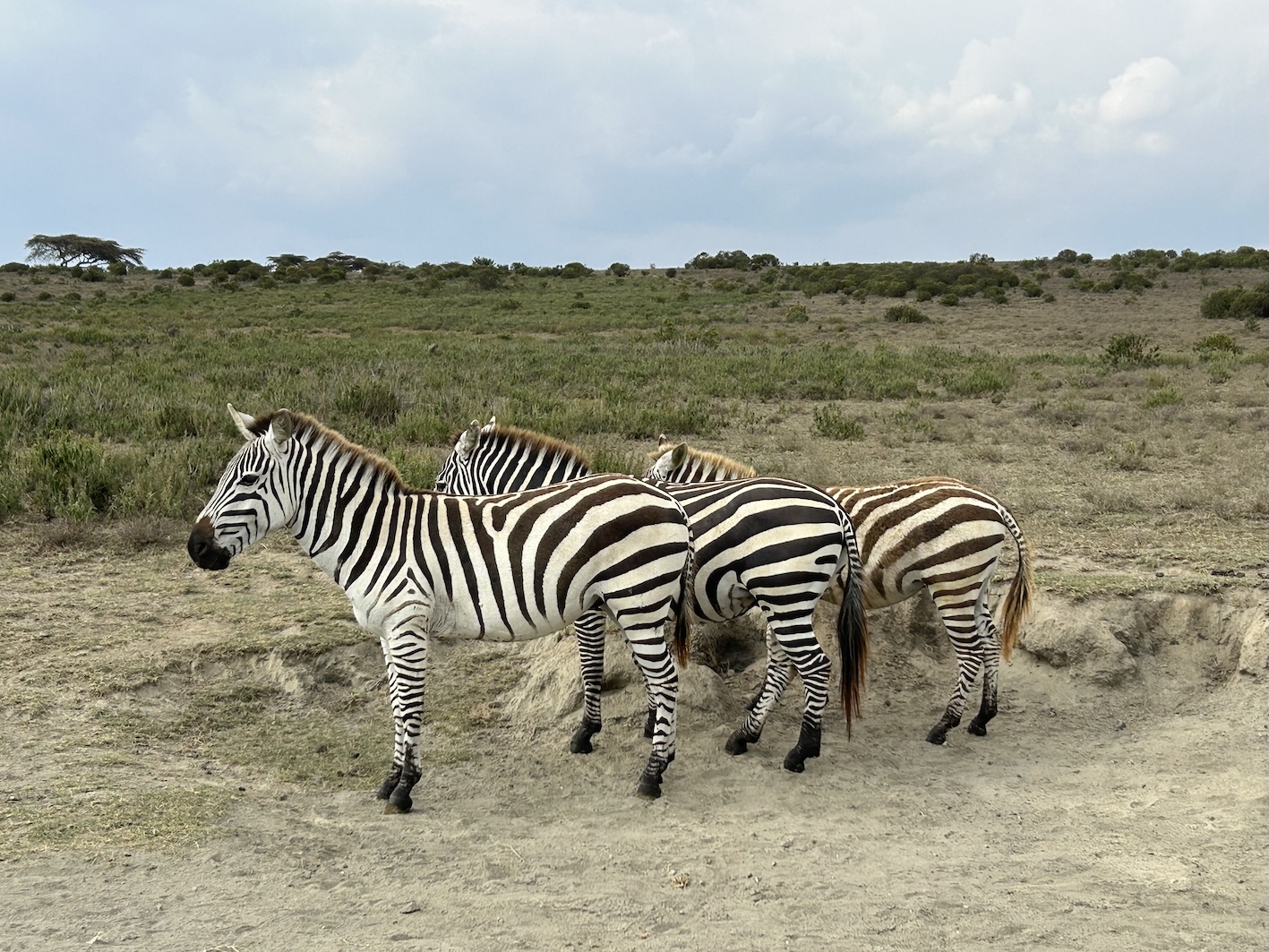
Next came a walk on Crescent Island, the exposed rim of an ancient volcanic crater. The island gained fame in the film Out of Africa—for which it was stocked with wildlife, including the Big Five. Post-production, the predators were removed, but herbivores like zebras, giraffes, impalas, and waterbucks wandered in during drier years, when a land corridor connected the island to the mainland. With the lake’s water levels now high, the animals are marooned—but serene and accustomed to visitors. They barely blinked as we walked past.
Still, I yearned for a closer view of the hippos. My guide steered the boat toward a quiet cove known for sightings. We waited. Eventually, a family of hippos emerged—but they were not thrilled to see us. One male even performed a mock charge to make his point. We backed off.

Rain clouds gathered, and a drizzle began to fall as we circled back to the landing point. That’s when we saw them again—the same hippo family, now on the shore. My guide began calling softly and tossing vegetables near an open patch. That was the cue.
Out came the giants, waddling forward like seasoned performers hitting their mark. Standing just a few feet away, I finally got the close-up I had been waiting for.

The day ended with a full heart and a camera roll full of hippos. This trip… it keeps unfolding in the most unexpected and beautiful ways.
 Jajabor
beautiful..
LikeLike