We think we know what 21 looks like—restless energy, unfinished dreams, a horizon stretching endlessly ahead. I certainly believed that. But this Saturday, as I listened to the story of Flying Officer Nirmal Jit Singh Sekhon, I found myself quietly shaken. What does courage look like at 21? What does duty feel like when the cost is everything?
INTACH Delhi had announced a heritage walk at the Indian Air Force Museum, led by Retired Group Captain (Dr) Shajahan Avadi. It was curiosity that took me there. Only later did I realise how rare the opportunity was—the museum isn’t part of the usual tourist trail, and this was its very first heritage walk.

At the entrance, two things stood out. A crowd of schoolchildren—wide-eyed, excited—and at the gate, a real aircraft, standing like a guardian of memory. The walk leader began with a question: Why is a Gnat placed right at the entrance? Before we could think, an officer injured in service rolled past us in a wheelchair. The answer, perhaps, lay in the silence he left behind.

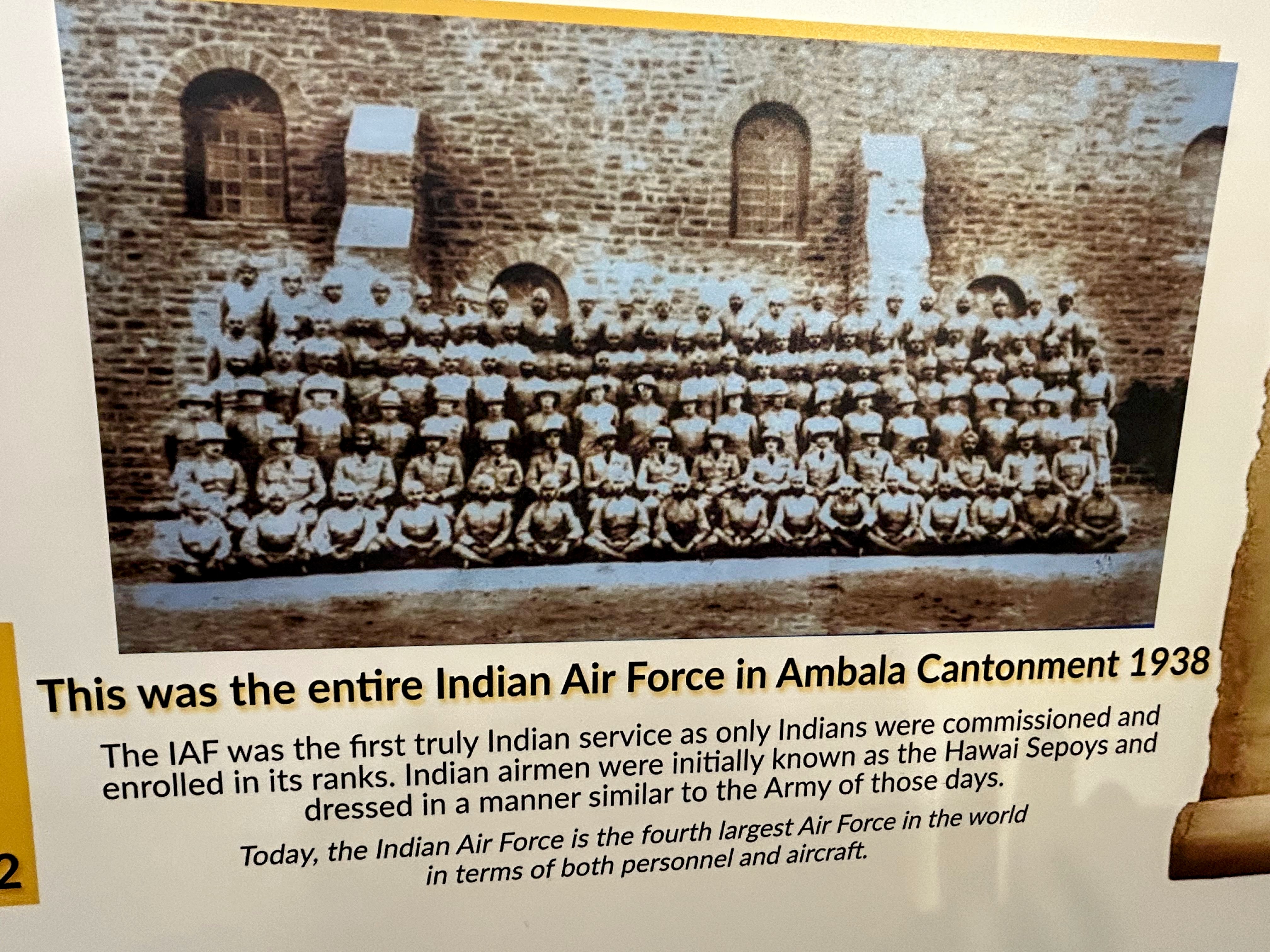
Inside, old photographs whispered forgotten stories. We heard of Indra Lal Roy, of “Jumbo” Mazumdar, of Sekhon—names that deserve far more space in our collective memory. The narrative unfolded like a tapestry: Dakotas landing in Srinagar in 1947, missions in 1965 and 1971, UN peacekeeping roles, and humanitarian operations during the Uttarakhand floods. These were not just stories of war—they were stories of service, endurance, and humanity.
Then came the aircraft displays. A Japanese kamikaze plane. A Pakistani Sabre shot down in 1971. And across from it, the small, almost fragile-looking Gnat. It was impossible not to imagine Sekhon climbing into it, fully aware that he may not return. The only Param Vir Chakra awardee of the Indian Air Force was just 21 years old.


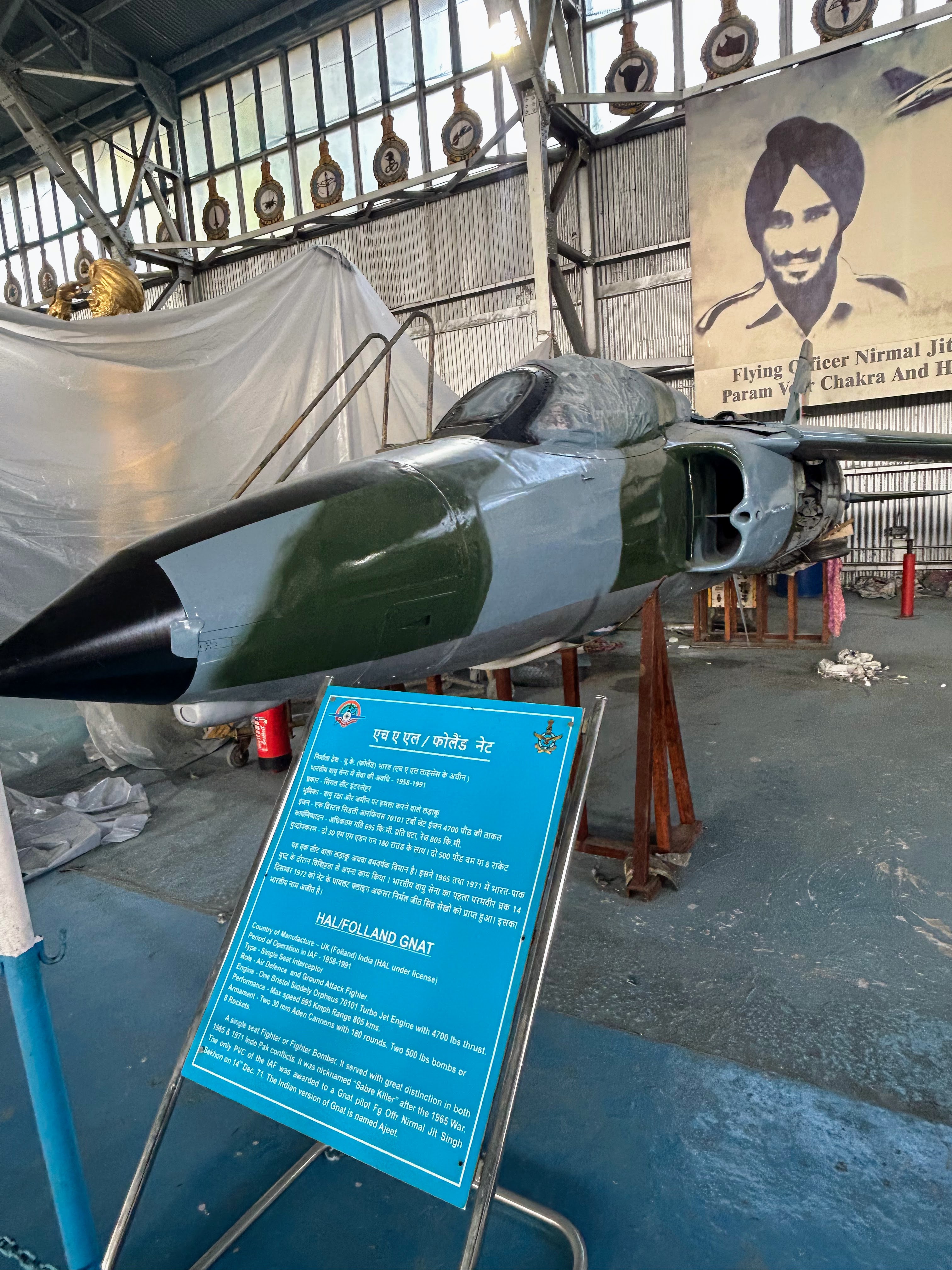


For two hours, we walked, listened, absorbed. But more than the exhibits, it was the weight of the stories—the quiet bravery, the unspoken sacrifices—that stayed with me.
As I stepped out of the museum, a thought lingered: Why don’t we tell these stories more often? Why aren’t they part of every Indian child’s growing-up years? It was heartening to learn that the museum was in the process of moving to a larger building with more exhibits.
Maybe that morning didn’t just teach me history. Maybe it deepened my gratitude for the freedom I live so casually, so comfortably—freedom that someone, somewhere, once guarded with their life.
 Jajabor