Day two of my sudden visit to Vrindavan began early. I wanted to make the most of the morning calm and planned to cover Mathura before the crowds swelled. The lanes grew narrower as I neared the Krishna Janmabhumi Temple — ancient walls closing in on centuries of devotion. A man pointed me toward a parking spot and casually suggested taking a guide who, he promised, would show me not just the temple but also Gokul. I agreed.
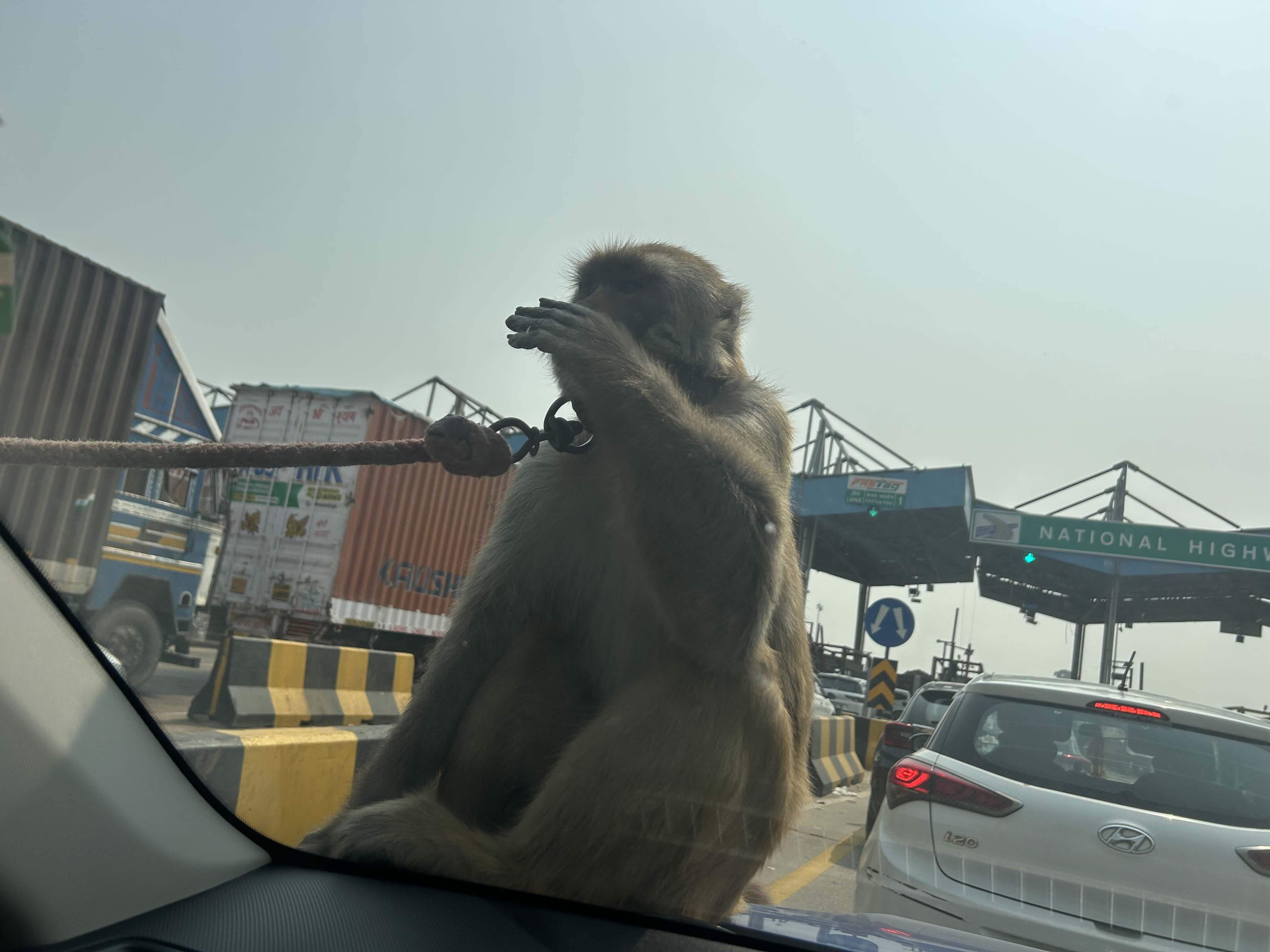
At the entrance, I had to surrender my bag and all electronic devices. The security rule was firm: no cameras, no phones — no distractions. As I stepped inside, I noticed the resident monkeys, confident and curious. I tightened my grip on my glasses, prompting my guide to chuckle, “Vrindavan ke bandar padhe likhe hain” — the monkeys of Vrindavan are educated; so they snatch glasses!
The temple complex opened into the garbha griha, the Yogmaya Mandir, and finally the Bhagvad Bhawan, where the main idols of Radha and Krishna are enshrined. My early start paid off — I reached just in time for the Mangal Aarti, the first offering of the day that wakes the deity. The chants, the incense, and flickering lamps created a rhythm that seemed to dissolve the boundary between ritual and reverence.
As I stepped out, the domes of the Shahi Idgah Mosque gleamed across the complex — a reminder that Mathura’s story, like India’s, is layered with shared histories.
Across the Yamuna: Gokul’s Cradle of Legends
Though my next stop was supposed to be the Dwarkadhish Temple, my guide gently reminded me of my promise to visit Gokul. We crossed the Yamuna — that mythical river Vasudev once forded on a stormy night carrying baby Krishna.
Gokul’s lanes were humble yet alive with myth. The centerpiece, Shri Nand Mahal, stood adorned with vibrant murals and a cradle for little Krishna. Watching people do so with gentle reverence made the mythology come alive in the most tender, human way.
Dwarkadhish Temple and the Call of Vishram Ghat
Back in Mathura, the Dwarkadhish Temple awaited at the end of another labyrinth of lanes. A rickshaw helped me glide through the festive chaos — Diwali shoppers, sweet sellers, and vendors adding color to the air. Inside the temple, serenity prevailed. I had a clear darshan of the idol and a brief, grounding silence amid the bustle.
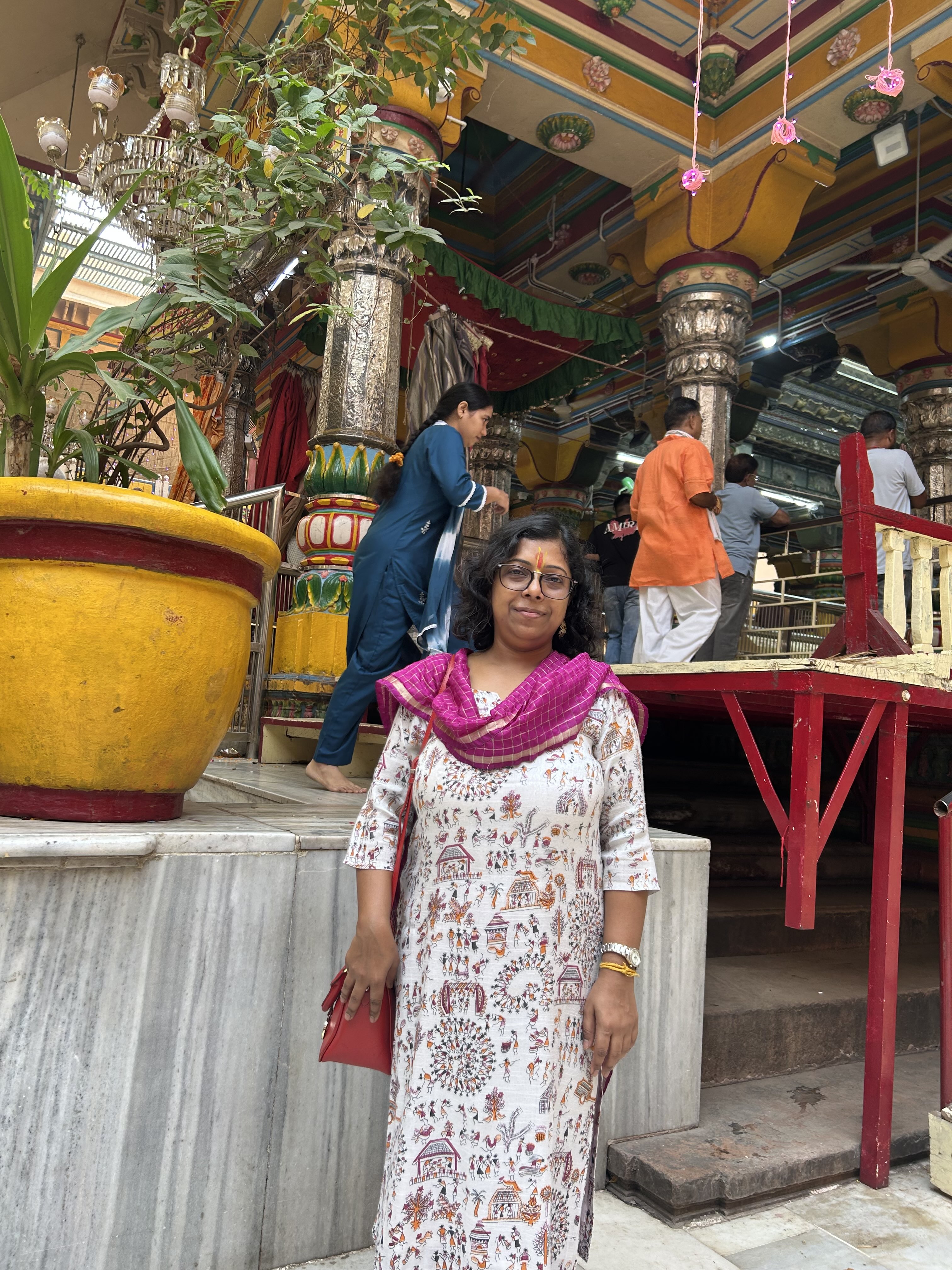
Just a few steps away lay Vishram Ghat, the sacred stretch where Krishna is believed to have rested after slaying Kansa. My guide seemed mildly disappointed when I declined a puja, preferring instead to watch life unfold — priests lighting lamps, pilgrims taking a dip in the Yamuna, and boats plying. When I pulled out my phone for a photo, he sighed, “Aajkal sab picnic ban gaya hai.” I smiled quietly and said nothing. Sometimes, observation is devotion too.

Vrindavan Again: The Marble Glow of Prem Mandir
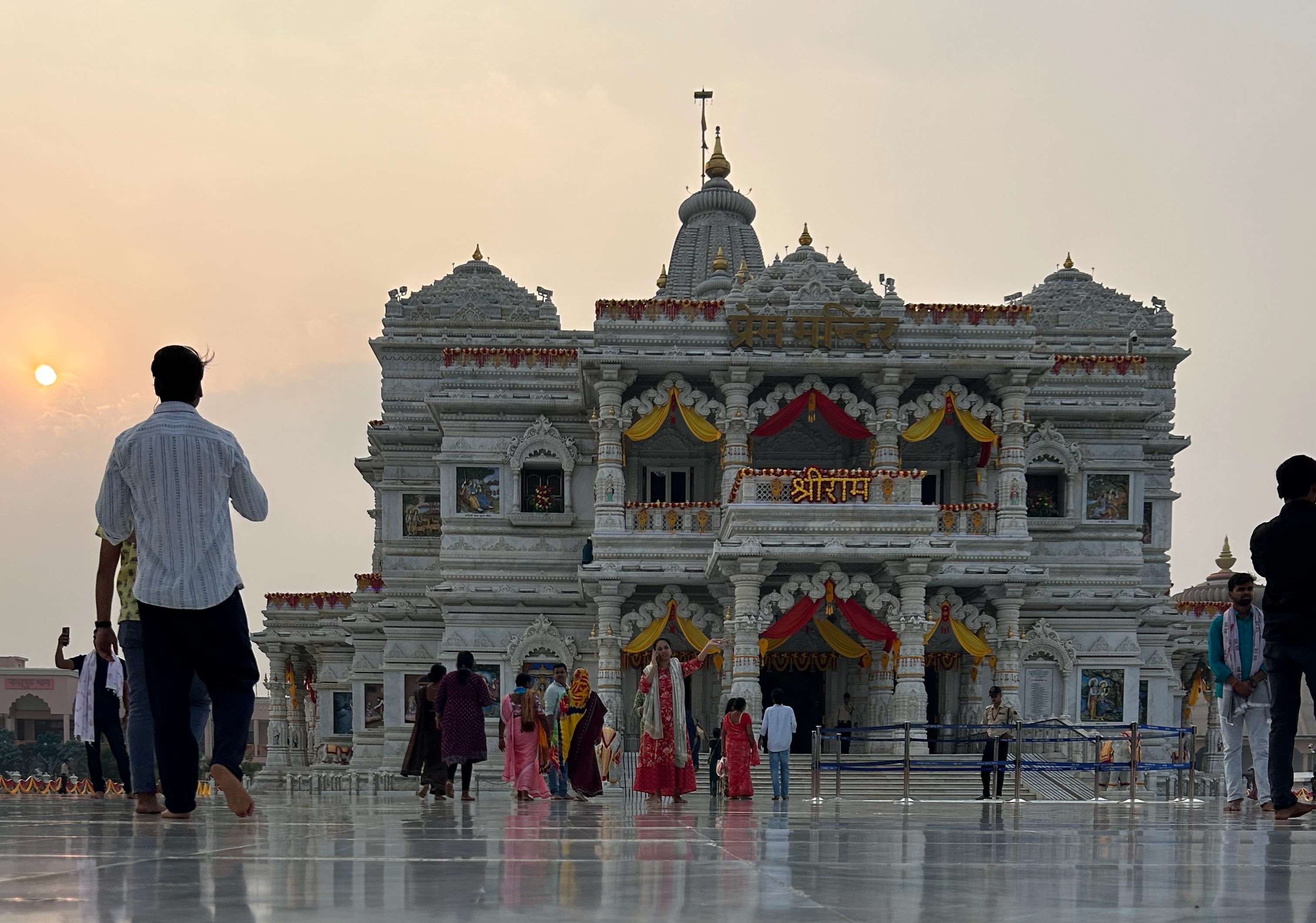
By afternoon, I was back in Vrindavan. The crowd at Prem Mandir looked overwhelming, but curiosity won. The line for women moved swiftly, and within minutes I stood inside a vast marble complex where devotion and architecture met in perfect harmony. Tableaux from Krishna’s life lined the approach to the temple — scenes from Govardhan, Rasleela, and Kaliya Mardan — each carved in intricate detail. The crowd no longer felt like a crowd; it felt like community.

The Curtain Falls at Banke Bihari Temple
My final stop was the Banke Bihari Temple, where the playful aspect of Krishna is worshipped. The idol, believed to have appeared in Nidhivan, is known to be so charming that the priests periodically draw a curtain — lest devotees lose themselves in his gaze.
Navigating the lanes took effort, and I nearly lost my way back, mistaking one identical shop for another while trying to retrieve my juttis. The small confusion felt fitting for Vrindavan — a town where divine playfulness extends even into mundane moments.
Evening Reflections: A City That Chooses You
As I walked back, the sound of kirtans filled the streets. Monks from ISKCON sang “Hare Krishna” in unison, their cymbals echoing through the festive air. Shops and homes glittered in Diwali lights, and everyone greeted one another with a gentle “Radhe Radhe.”
Some places you plan to visit; others seem to summon you. Vrindavan, I realised, had chosen me for this long weekend — to remind me that faith isn’t always about ritual. Sometimes, it’s about rhythm, stillness, and surrender in a place where every corner hums with devotion.


 Jajabor