It was a photograph in a Tripura tourism brochure that caught my eye years ago — a rock carving so striking that it seemed to hold a secret. There was something about its sheer size and quiet grandeur that stayed with me. I knew I had to see it.
But fate had other plans. Every time I made arrangements, the trip was mysteriously derailed. Plans got postponed, cancelled, and reimagined. And yet, with each failed attempt, my determination grew.
Finally, after almost a year of planning, cancelling, and planning again, I set out in January 2016 for Chabimura, also known as Devtamura — a secluded treasure 75 kilometres from Agartala.
A Hidden Heritage on the Gomti River
Chabimura’s rock carvings are accessible only by boat, which adds to their mystique. Their exact origins remain uncertain, but according to historical accounts, they may date back to the 15th–16th centuries, marking the revival of Brahmanism in the region as Buddhist influence waned in India.
The site is home to 37 colossal carvings etched into the steep slopes of the Kalajhari Hills — including figures of Shiva, Parvati, Ganesha, Kartikeya, Mahishasuramardini, and Durga. The artists are unknown, as is the purpose behind these monumental works. What is certain is their scale and impact: each figure carved directly into rock faces that rise almost vertically above the Gomti River.
The Journey is Half the Wonder
The magic begins the moment you step onto the boat. The Gomti flows gently, flanked on both sides by hills sloping at dramatic angles of 70–90 degrees. With each bend, the river seems to whisper of something just out of sight.
I remember wondering — how did anyone reach these heights centuries ago, let alone carve into them with such precision? And then, around a quiet bend, the first carving came into view: massive, commanding, and yet serene.
Before I could look away, someone on the boat called out, “Hey, one more!” Sure enough, the hills kept revealing carving after carving, each emerging from the rock like a guardian watching over the river.
Why Winter is the Best Season to Visit
Chabimura is a year-round site, but winter transforms it entirely. The soft fog over the Gomti, the gentle mist rising from the water, and the crisp chill in the air turn the journey into something almost dreamlike.
I only had my mobile phone with me (yes, a bit of a sacrilege for a place like this), but that didn’t stop me from trying to capture its magic. Photographs may give you a glimpse, but being there — with the silence of the river, the looming cliffs, and the timeless carvings — is an experience that can’t be replicated.
Travel Notes
-
Getting There: Chabimura is about 75 km from Agartala. You’ll need to drive to the river point and then hire a boat.
-
Boat Ride: The journey to the carvings takes about 30–40 minutes each way.
-
Best Time to Visit: November to February, when the weather is cool and the river carries its winter mist.
-
Tip: Carry a camera — you’ll regret it if you don’t.
Chabimura is not just about history or archaeology. It’s about the journey — about gliding on a quiet river, turning a corner, and suddenly locking eyes with a 500-year-old carving that has been watching the world go by for centuries.
Sometimes, the road less travelled is a river.

The first set of rock carvings
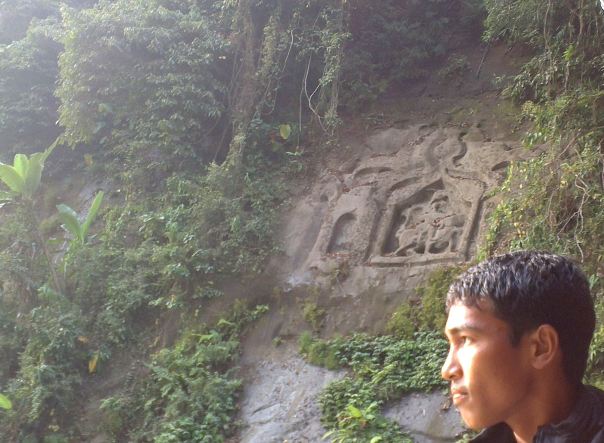
The boatman who would point out the carvings

Doesn’t it look Amazonian?

Lush green forest on either side, with winter sun spreading warmth
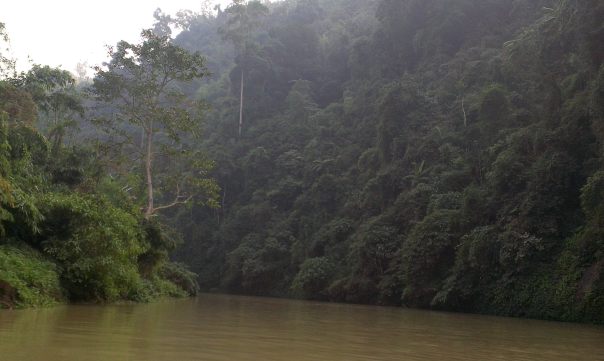
The river slowly meanders its way

This was the picture that got me interested.
 Jajabor