Tag Archives: travel

A Slow Farewell to Banaras

The last day of a journey is always different.


It carries neither the urgency of arrival nor the hunger of discovery that marks the first days. Instead, it moves with a quieter rhythm, leaving room for what was missed, what deserves repeating, and what one wishes to hold on to a little longer. My last day in Banaras, too, was meant to be like that, lightly planned, open-ended, leisurely. After two days of waking early, I allowed myself a slower start.

The first destination for the day was Sarnath.

The first thing I encountered there, however, was not silence or the weight of history, but a noisy Holi celebration spilling into one corner of the road. Almost immediately, someone tapped on the car window to ask if I needed a guide. I said no. He persisted, promising to tell me everything and show me the entire site. I refused again. There are some places where one does not want a hurried narration or a half-remembered script. Sarnath, one of the most significant Buddhist sites in the world, deserved better.


I chose to walk.
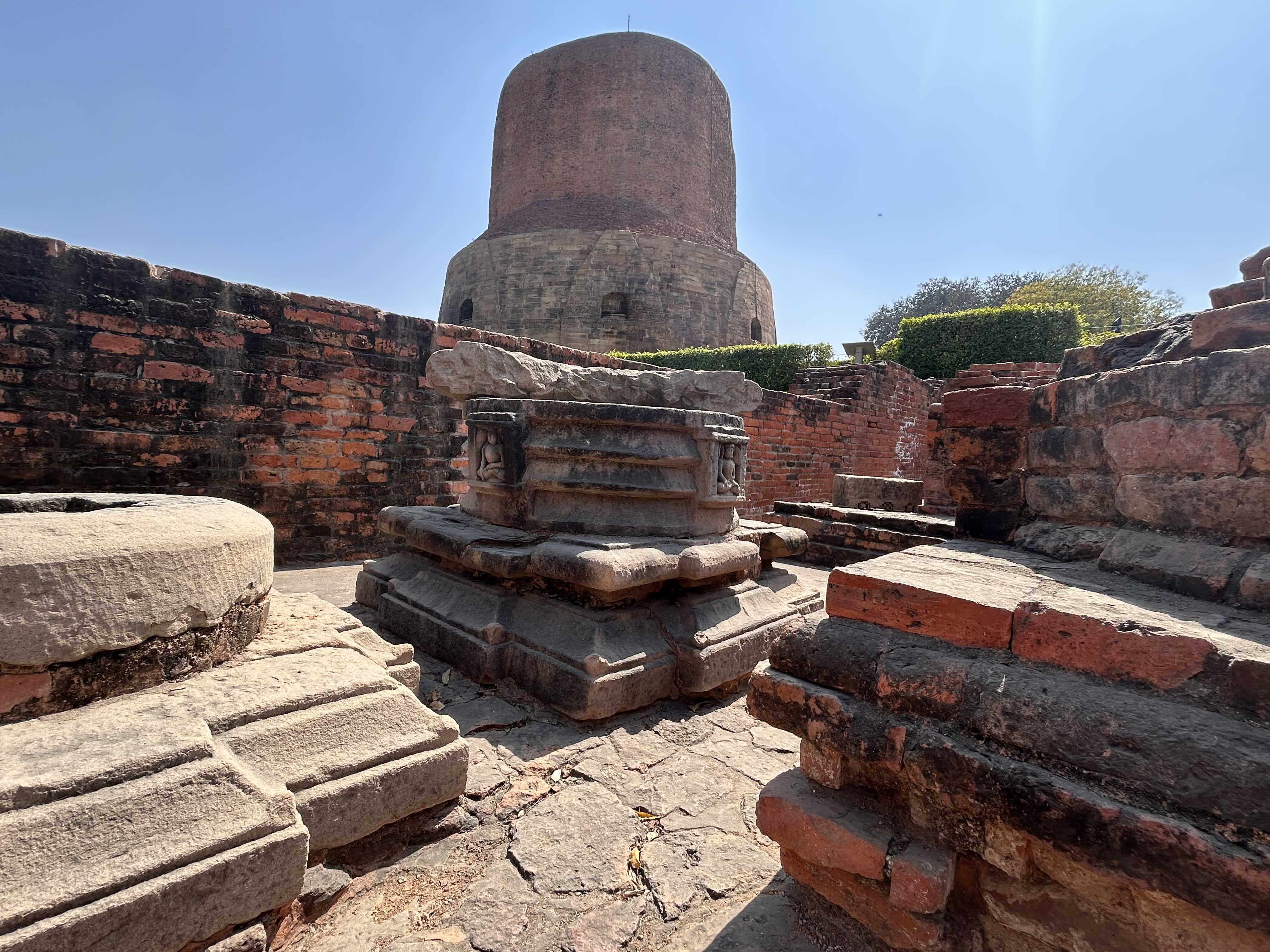

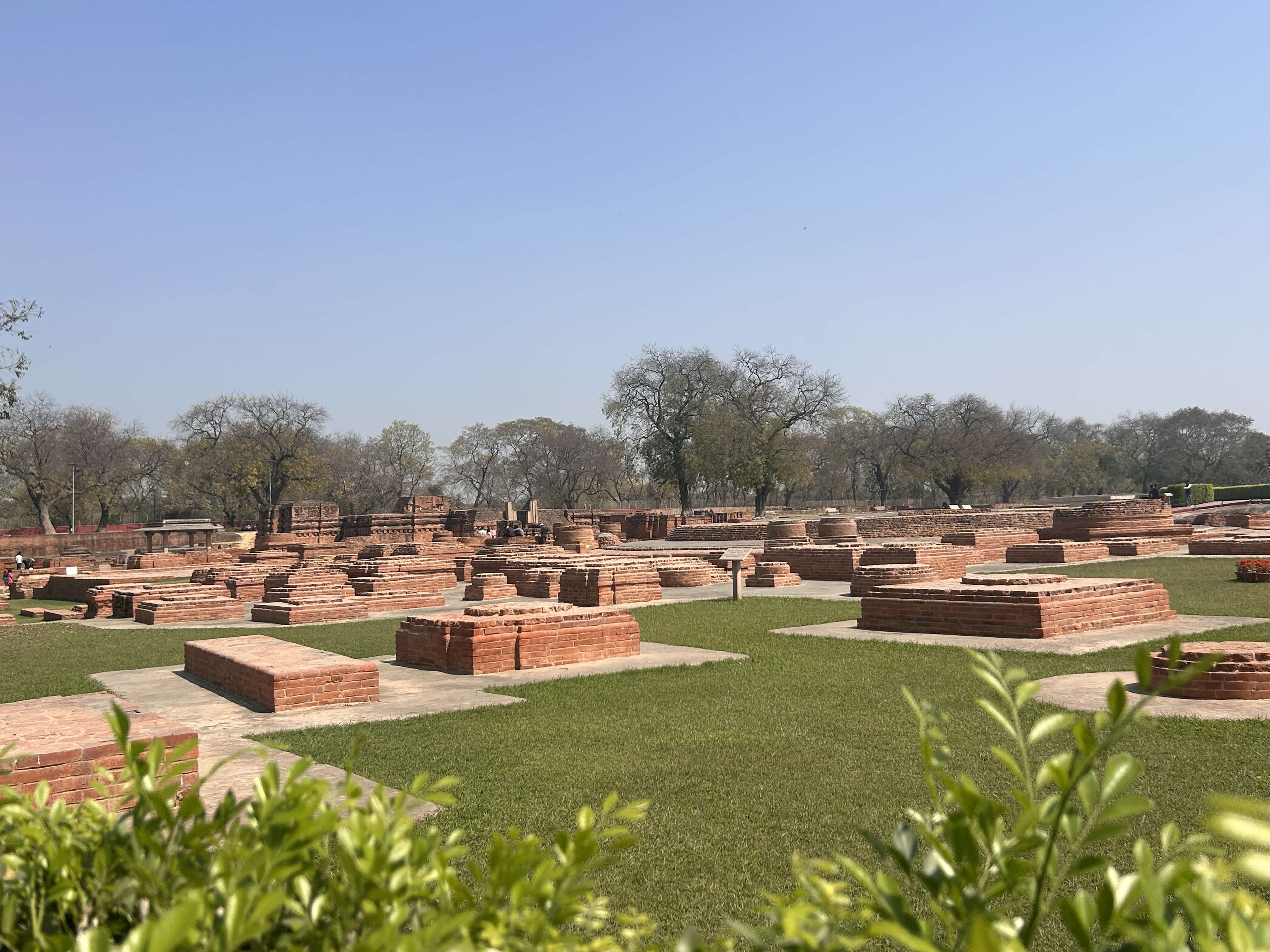
The path was clearly marked, though the sun had already begun asserting itself. As I entered the archaeological site, my first impression was of order and care. It was well maintained, and there was something reassuring in that. Around me, guides shepherded tourist groups in neat, linear movements, but I found myself grateful for solitude. Their routes appeared efficient, rehearsed, perhaps useful, but I wanted to wander, to pause, to look closely at fragments of stone and history without being hurried along.
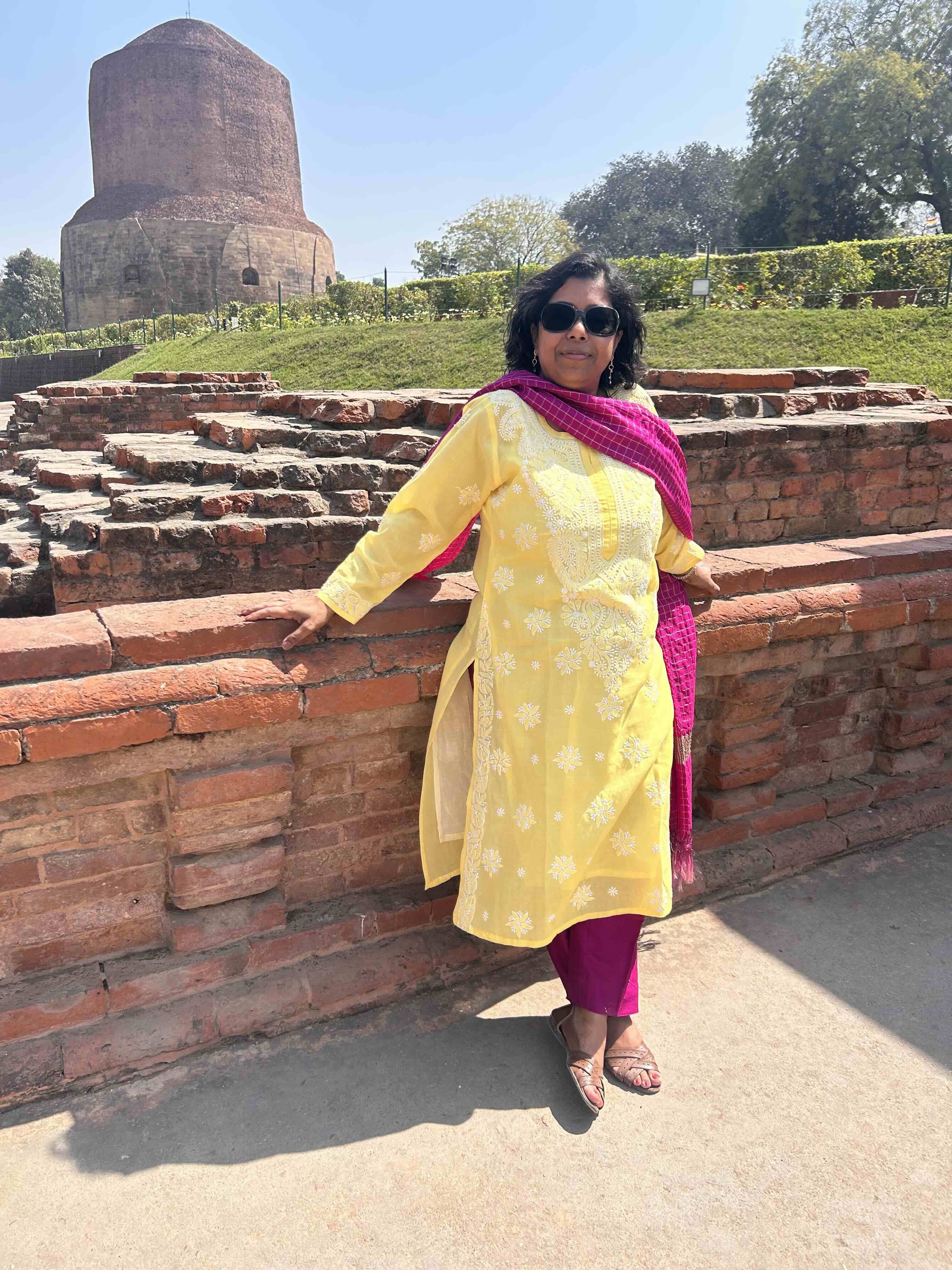

As I walked, memories of earlier visits to Buddhist sites in and around Mumbai returned to me. There is something about such places that alters one’s pace. One slows down instinctively. One begins to think not only of ruins, but of intention. I have always found it deeply ironic, and deeply human, that the Buddha, who is believed to have rejected the very idea of personal worship, became the centre of a sacred geography of stupas, relics, monasteries, and devotion. The viharas built over centuries, from the time of Ashoka in the third century BCE to those raised under later rulers, have not survived the violence of invasions and the slow erosion of time. Standing among their remains, I found myself seized by a familiar longing: the impossible wish to time travel, if only for a moment, to see these sites in their fullness, alive with monks, ritual, and learning.
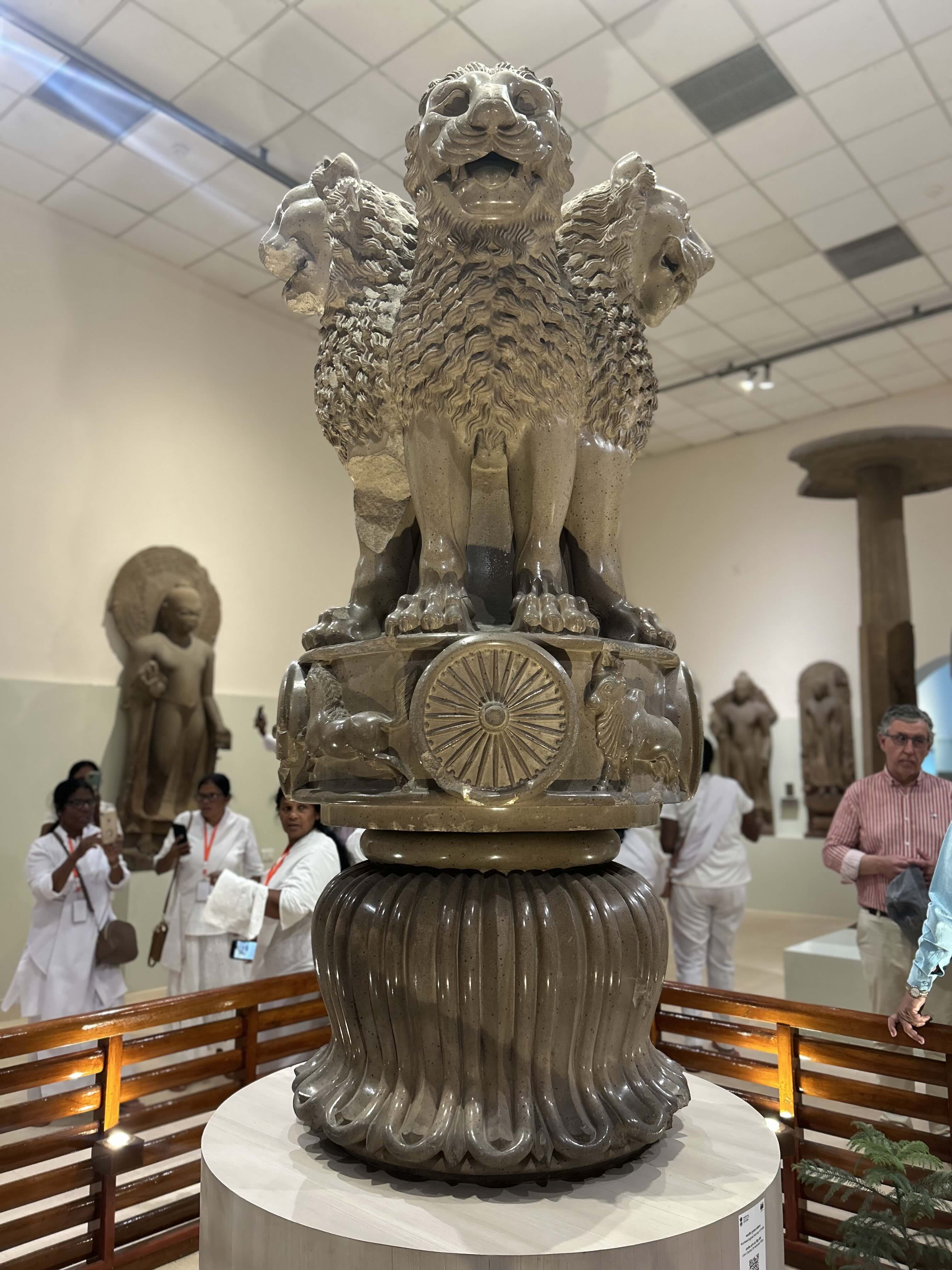

The Sarnath Museum was, as expected, indispensable. To stand before the Ashokan remains and other excavated finds is to understand how much of history survives in fragments, and yet how eloquent those fragments can be. Someone had told me that Sarnath is best experienced in the afternoon, when one can stay on till lamps are lit near the Dhamek Stupa. I, of course, could not do that. By then my visit was already drawing to a close. But perhaps every journey must leave something unfinished. It is the unchecked box, after all, that becomes an invitation to return.
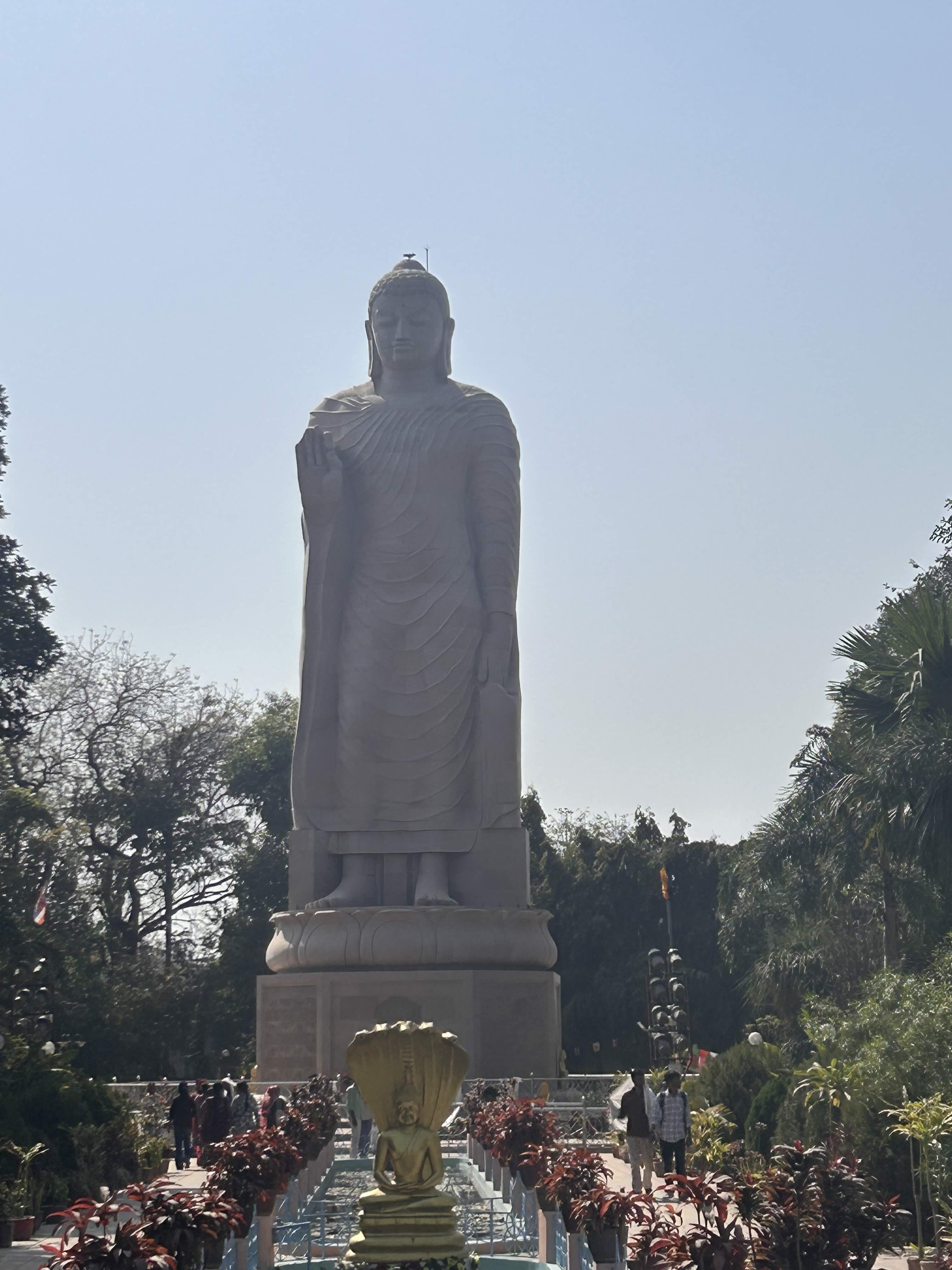
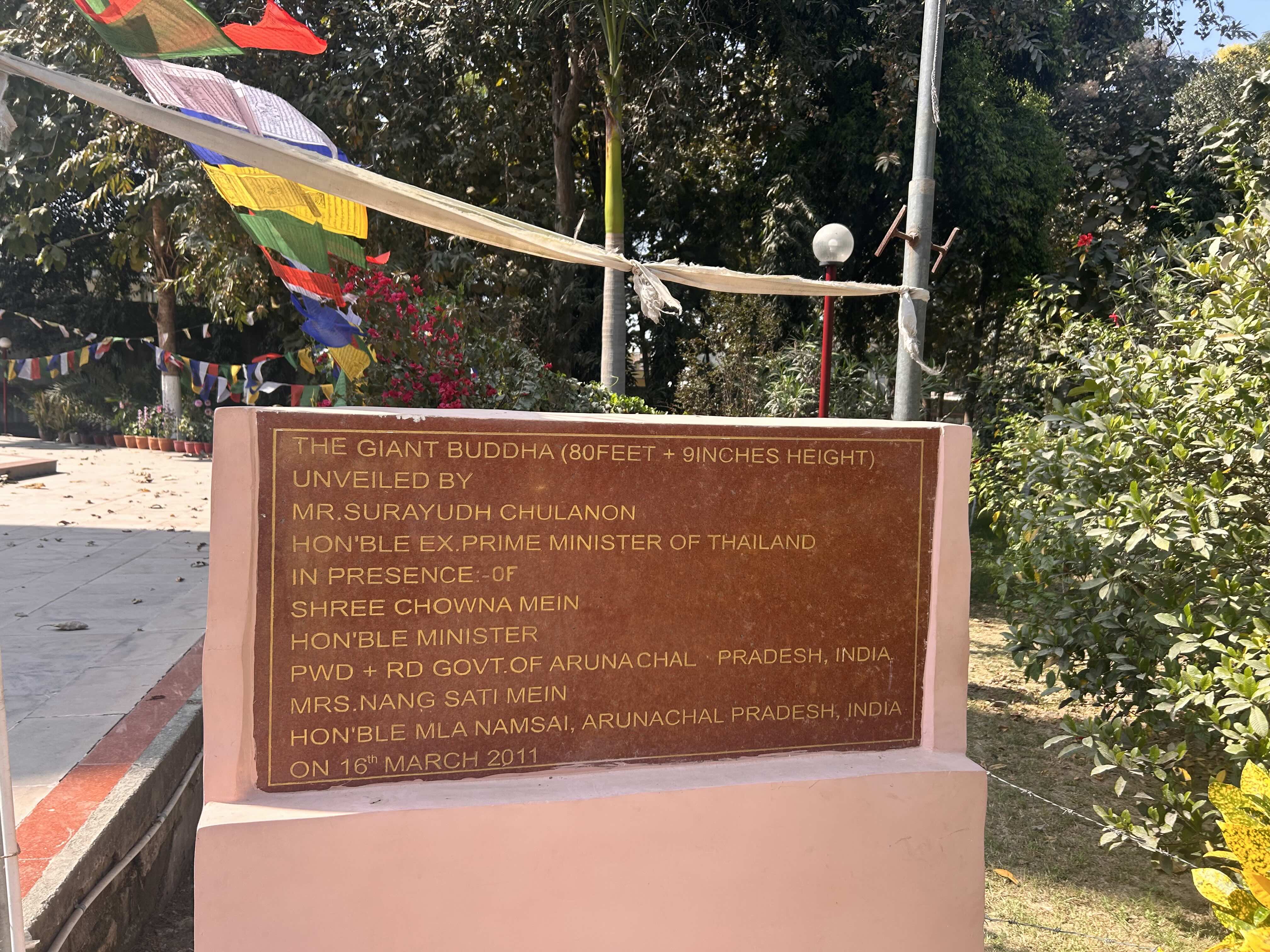
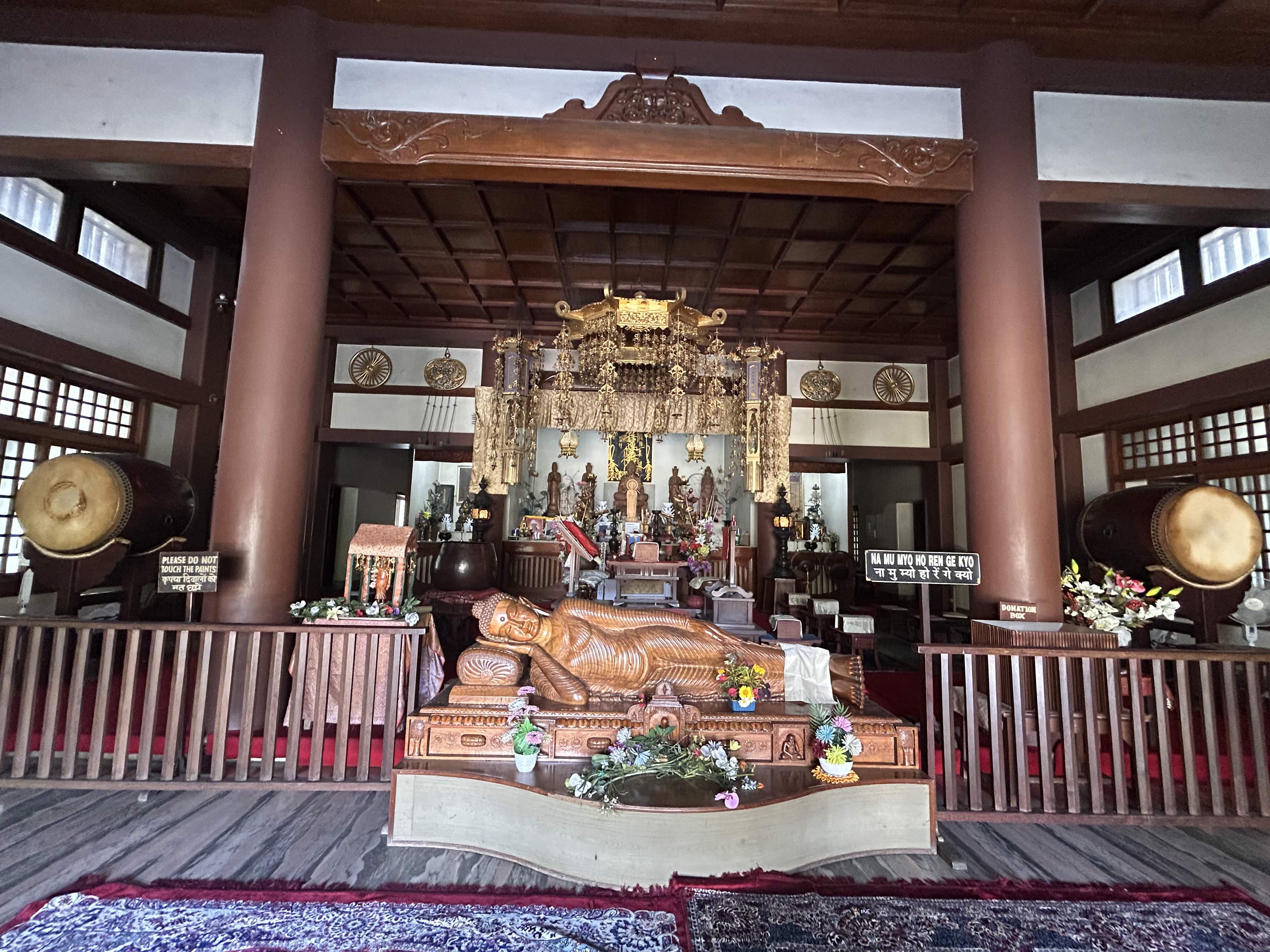
From Sarnath, I moved to the Giant Buddha statue and the Thai temple nearby. There, unexpectedly, I came across a reference to a minister from the Khampti tribe of Arunachal Pradesh. The Khamtis are a Theravada Buddhist community, and according to Samrat Choudhury in his book ‘The Braided River’, their language belongs to the same broad linguistic family as Thai. Suddenly, my mind travelled far from Sarnath to Namsai, where I had once stayed and from where I carry some especially fond memories. In that moment, standing in Uttar Pradesh and thinking of Arunachal Pradesh through a shared Buddhist thread, the world seemed to fold in on itself. It is always startling, and oddly comforting, to discover how small the world can be.
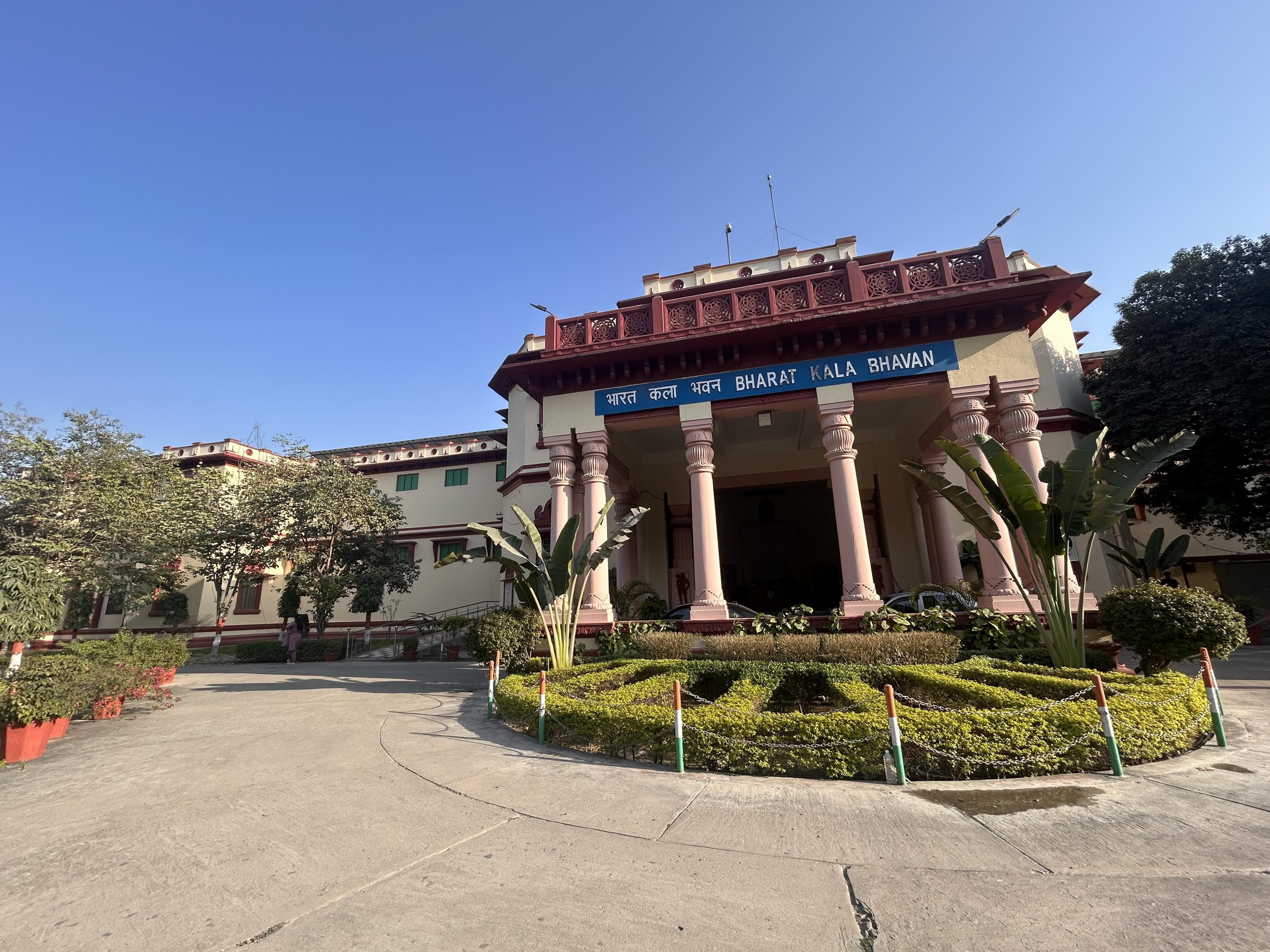

After Sarnath, I decided to go to BHU. I remembered that the Bharat Kala Bhavan Museum would close by 4.30, and we hurried to reach by three. If Sarnath carried the aura of ancient stillness, the BHU campus felt like something else entirely, an island of calm set apart from the city’s constant noise. The further one moved inside, the more Banaras seemed to lower its own volume. Inside the museum, time widened again. The artefacts ranged from the Harappan civilisation to later periods, and there was an odd pleasure in moving from age to age within a single afternoon. I found myself lingering before moulds from the Shunga period, and then pausing in surprise before a Mughal-style painting of the Exodus of Moses. Such juxtapositions always fascinate me; they remind me that Indian history is rarely linear and never simple. I had barely completed the final section when the museum announced closing time.


Outside, as I got into the car, Aftab, my driver for the visit, asked if I wished to return to the hotel.


I did not.
Instead, I asked to be taken to Assi Ghat.


I had no particular plan when I sat down on its steps. Perhaps I simply wanted to be near the river one last time. But then the foodie in me asserted itself, and memory led me to Kashi Chaat Bhandar. Google informed me that I could walk from the ghats towards Sonarpura, though part of the way would eventually shift to the road. So I began walking. It was nearly forty minutes, with the sun softening by degrees and the city entering that beautiful hour when evening begins to gather but daylight has not fully withdrawn. There was no hurry, no agenda, only the pleasure of moving through Banaras one last time.


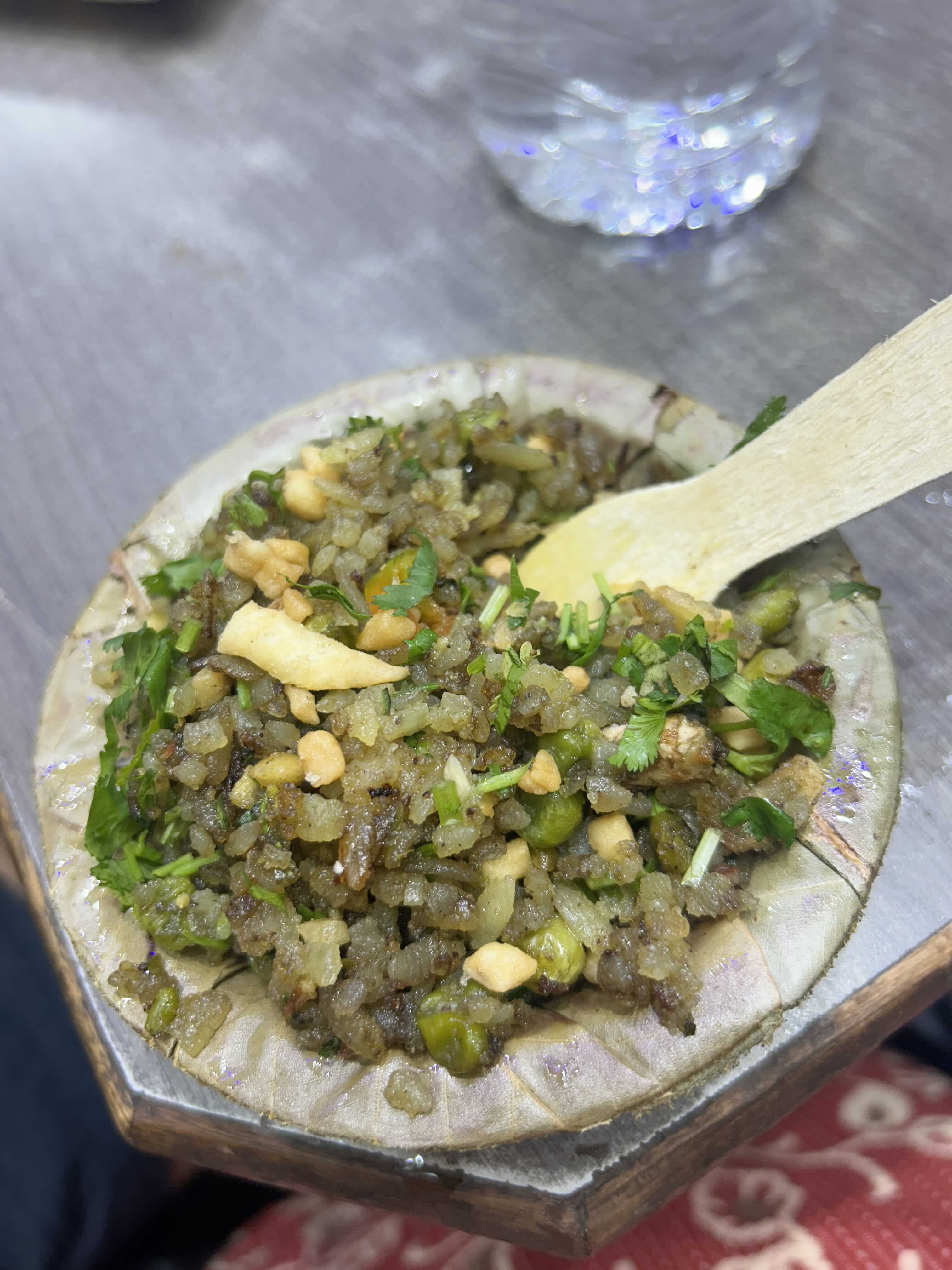
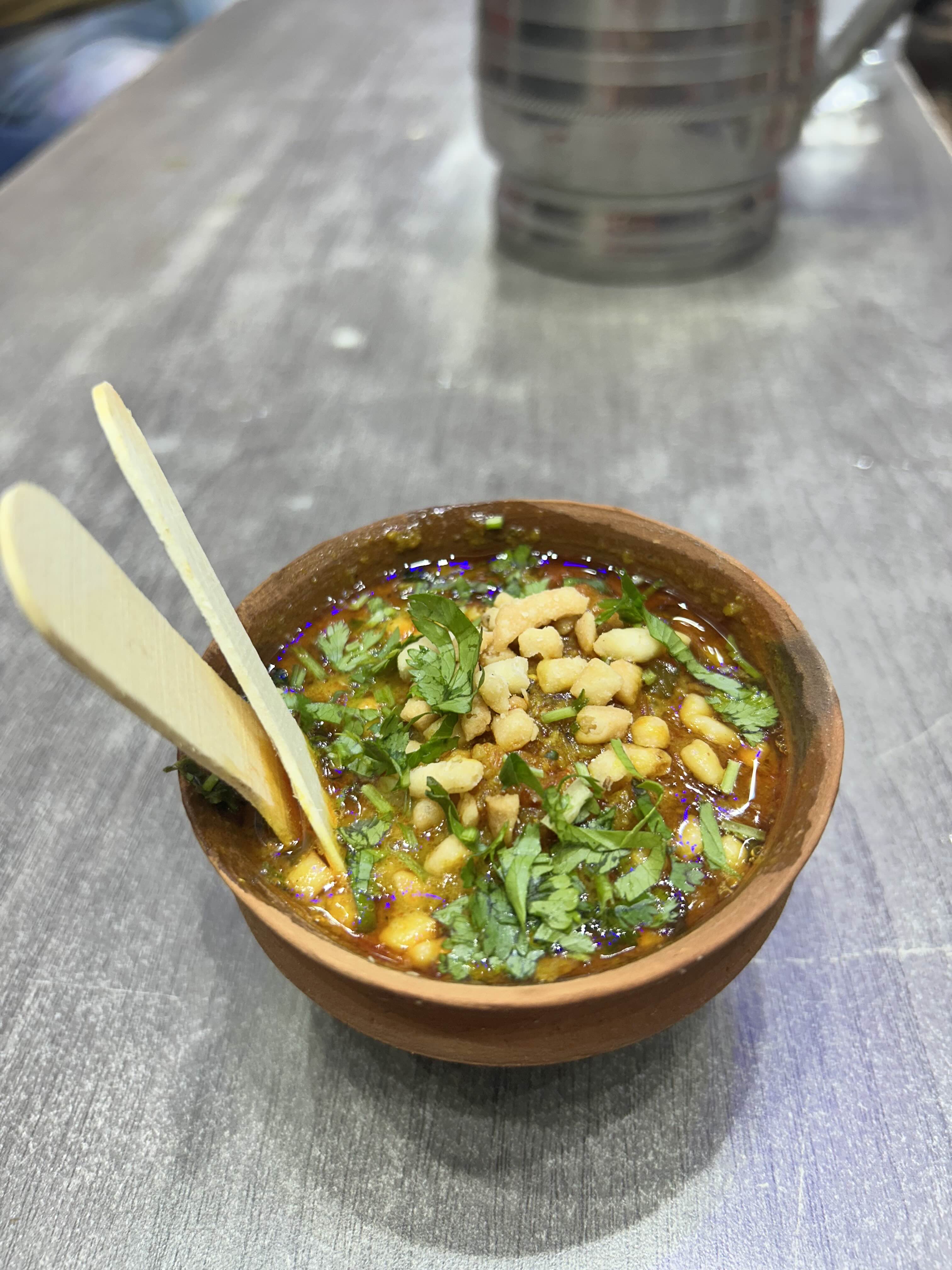
At Kashi Chaat Bhandar, after the now familiar effort of negotiating the crowd, I ordered palak patta chaat and dahi puri. There are few satisfactions as complete as good street food after a long walk. Restored and slightly emboldened by my growing confidence in navigating the city, I took a rickshaw back till Sonarpura. From there, I wanted to return to the ghats on foot, one final walk beside the river, one final conversation with the city.
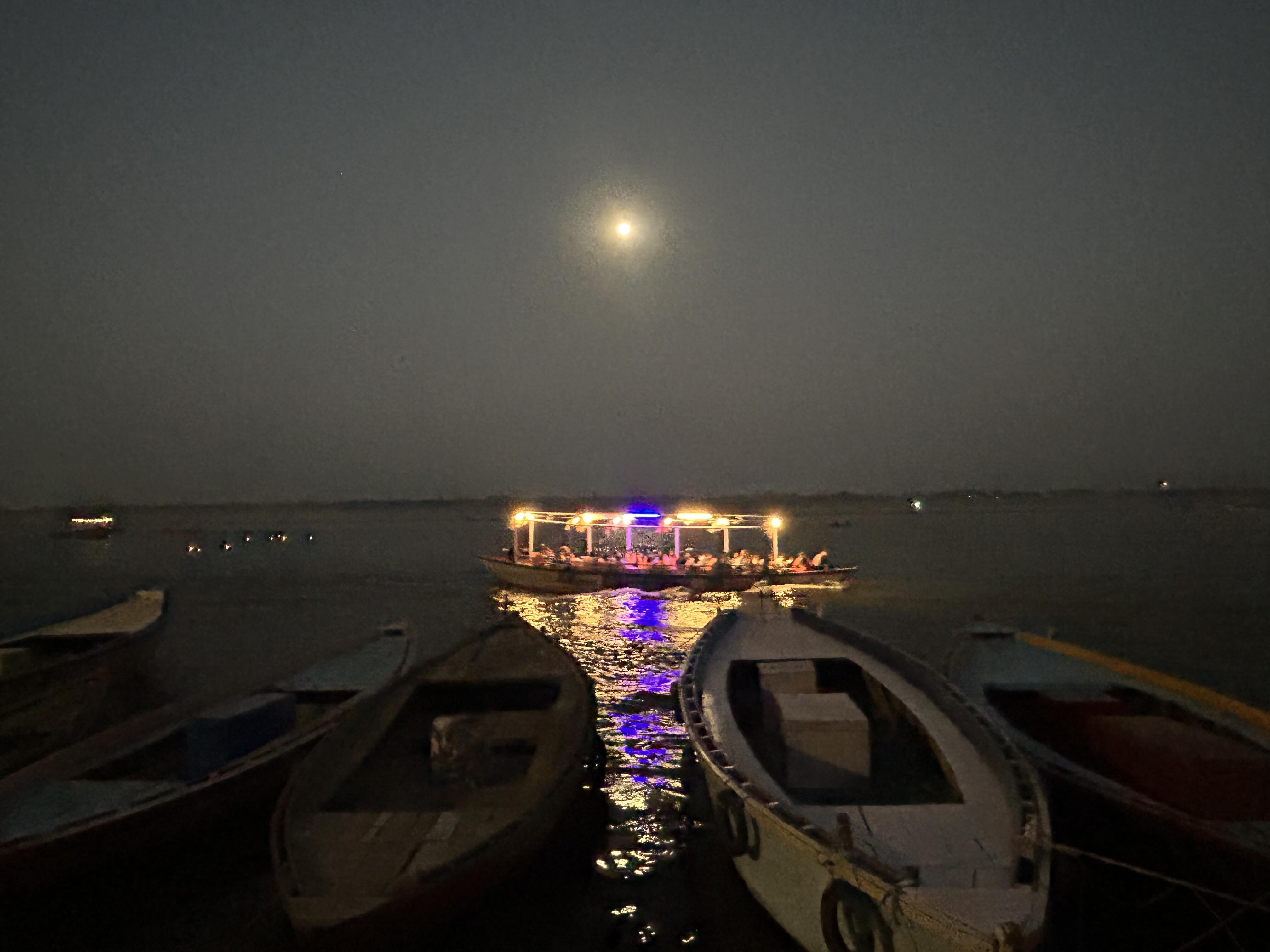

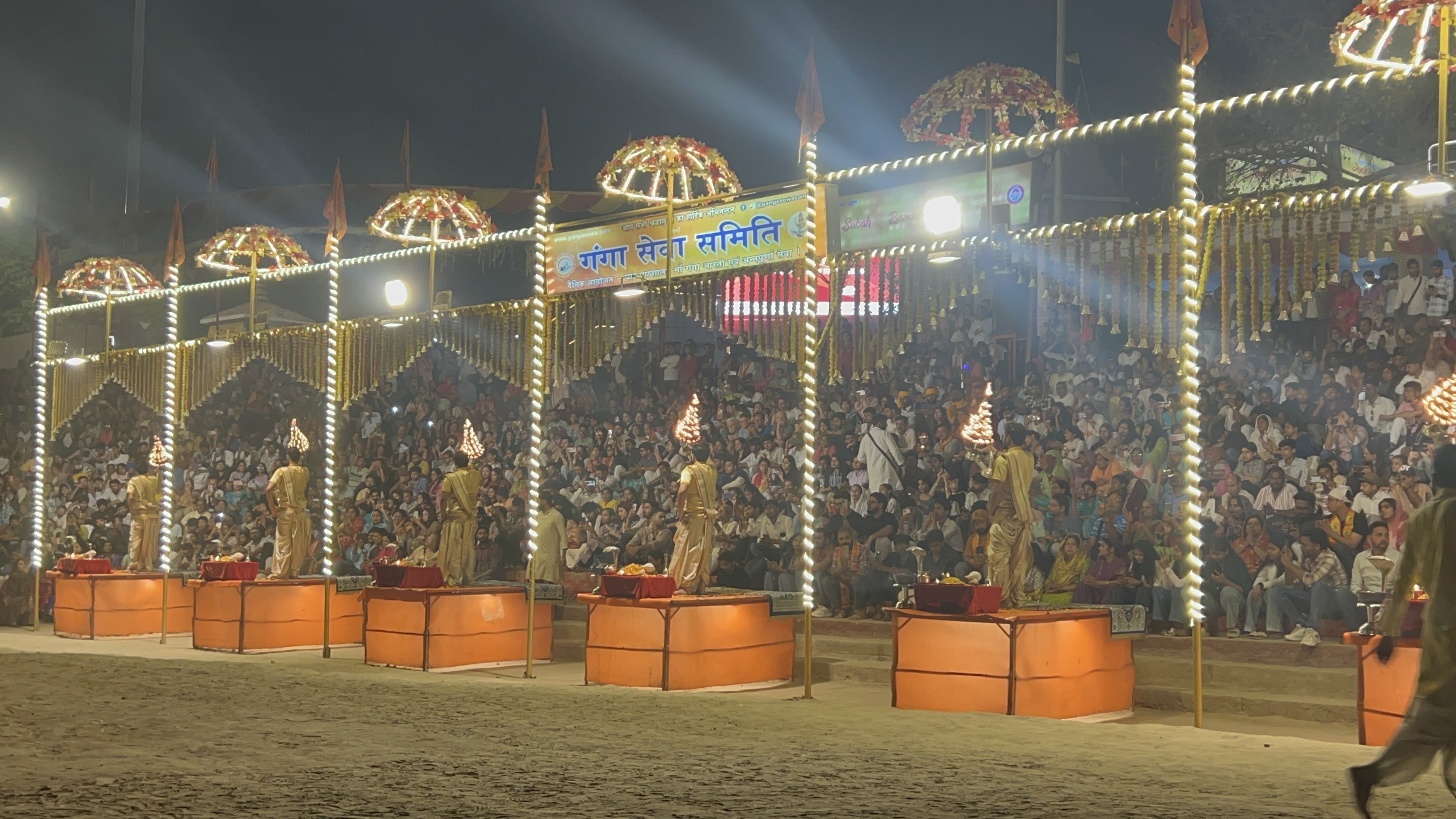
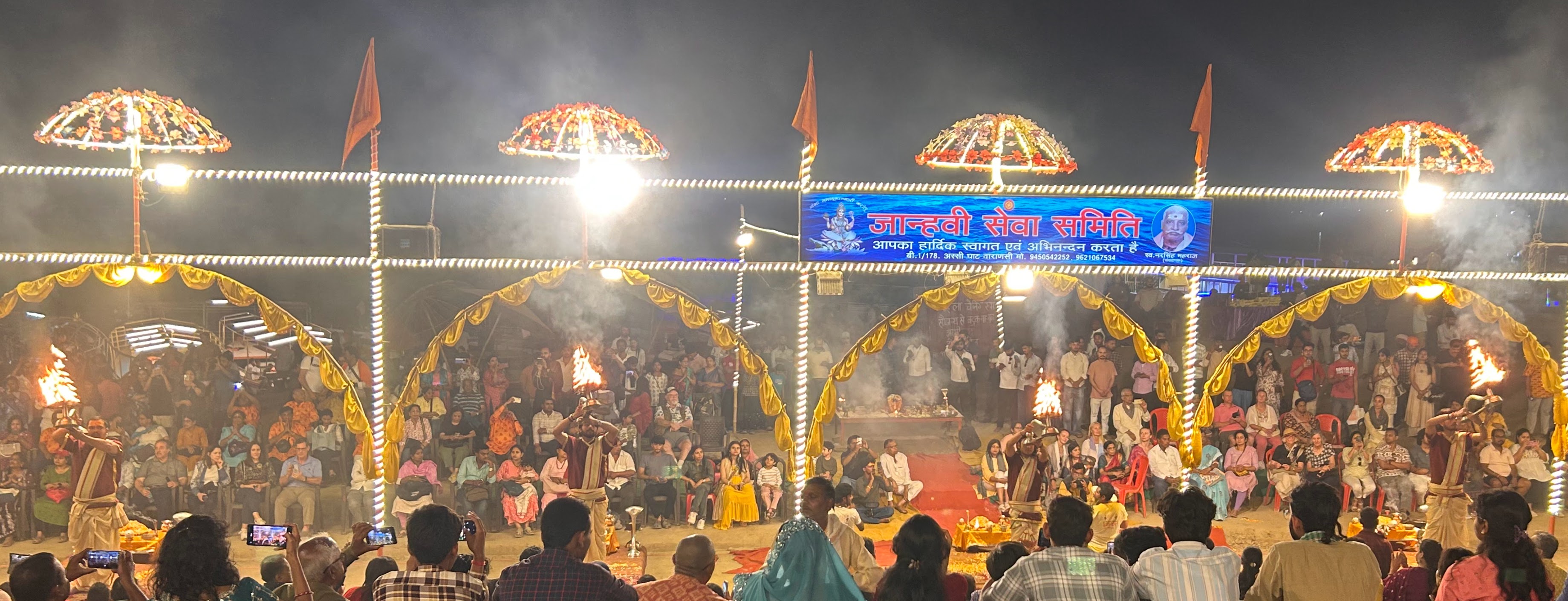
I arrived in time for the evening Ganga Aarti at Assi Ghat, though I soon realised that another aarti was underway at the neighbouring ghat as well. Sitting there among the crowd, watching the ritual unfold, I became aware once again of the invisible machinery behind devotion, the choreography, timing, discipline, and collective labour that makes such spectacle possible. Faith may appear spontaneous, but public ritual is almost always meticulously arranged.
Later, as I left the ghats, I stopped at Roma’s, a place Chandrali had recommended. It felt like the right final note: a small meal at the end of a long day, one last taste to carry away.
And so the journey ended.

After walking more than eighteen thousand steps, after ticking as many boxes as I could and leaving a few unticked on purpose or by chance, I brought my Banaras trip to a close. But what remained with me was not merely a list of places seen. It was something less tangible and more enduring.


Banaras will stay with me as a city of paradoxes, exclusive and inclusive, ancient and modern, theatrical and intimate. A city where ordinary people carry their pride in the place with an ease that never feels performative. A city where crowds can exhaust, but where solitude appears unexpectedly, in a brief moment before a jyotirlinga, in a quiet temple off the tourist map, in a boatman’s recitation of poetry, in an evening walk back from a chaat shop, in a bowl of prasad placed wordlessly into one’s hands.


And perhaps that is what I will remember most.
That this crowd-averse traveller came to Banaras expecting to observe, and instead found herself drawn in, into darshan, into ritual, into history, into appetite, into the strange intimacy of a city that reveals itself not all at once, but in fleeting moments. Tiny, solitary moments. And each of them, somehow, deeply satisfying
Of Ghats, Poetry, and the Ganga

How does one define a city and its soul? Having spent my life moving from one city to another, I have often felt that the soul of a city lies in the pride its ordinary people take in its culture and heritage. Today, I caught a glimpse of why Benaras is special.


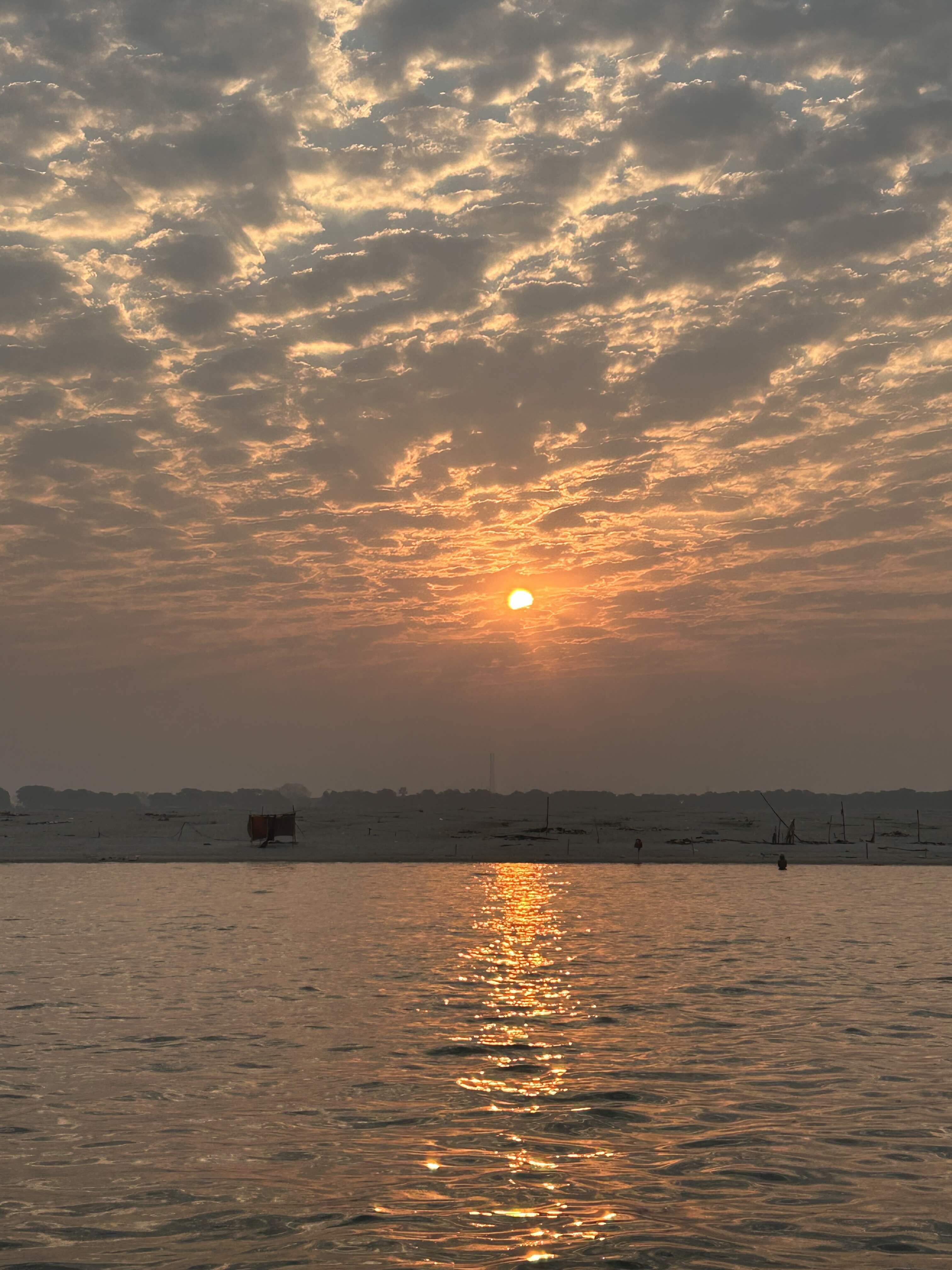
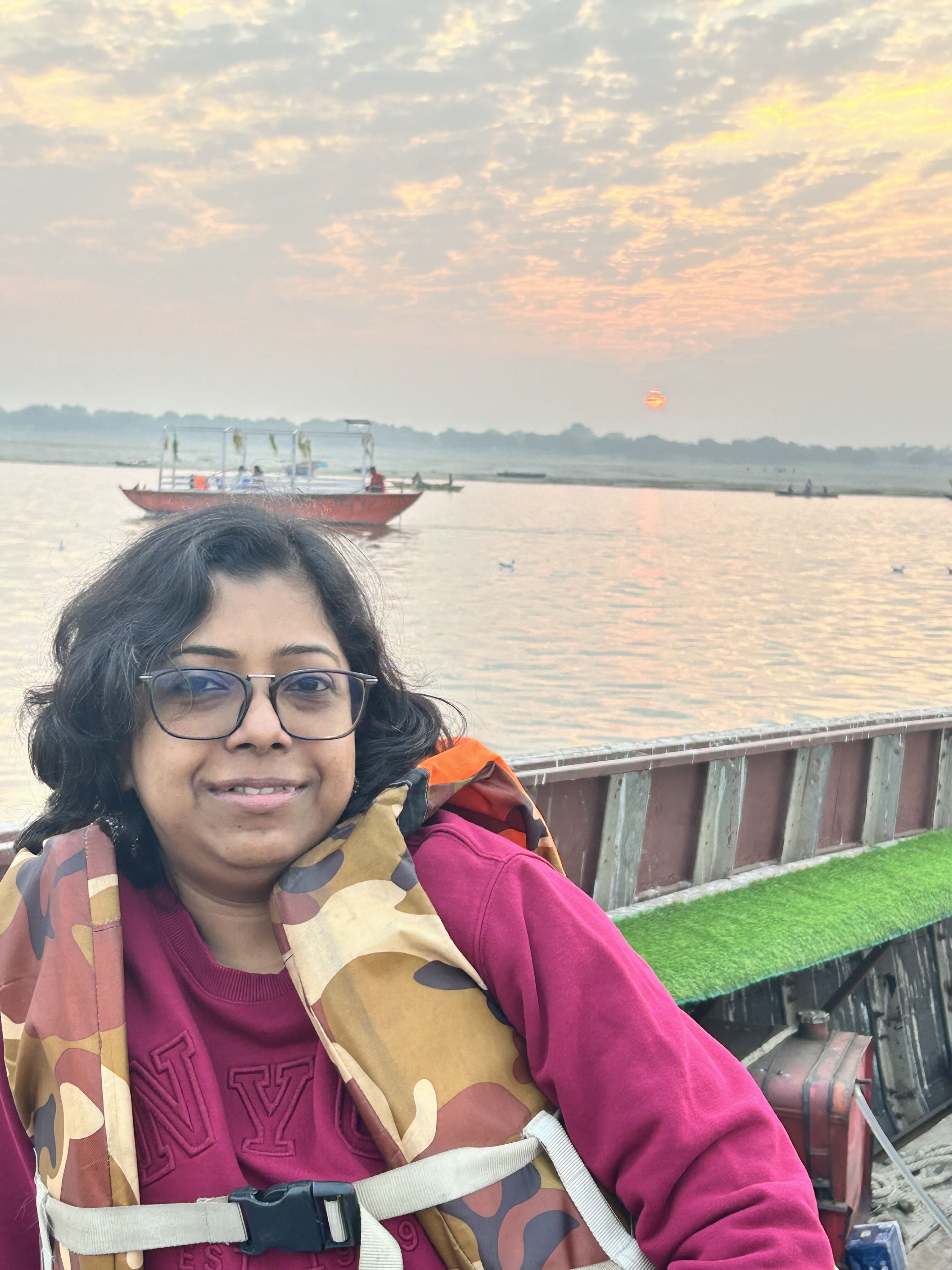
The day began early. I wanted to go for a boat ride at sunrise. Harshit had referred a boatman, and I had arranged with him to pick me up from Tulsi Ghat. I reached Assi Ghat at six in the morning, just in time to catch the final moments of the morning Ganga Aarti. From there, I walked to Tulsi Ghat and met Karma, the boatman. We began our journey just as the sky began to turn pink.

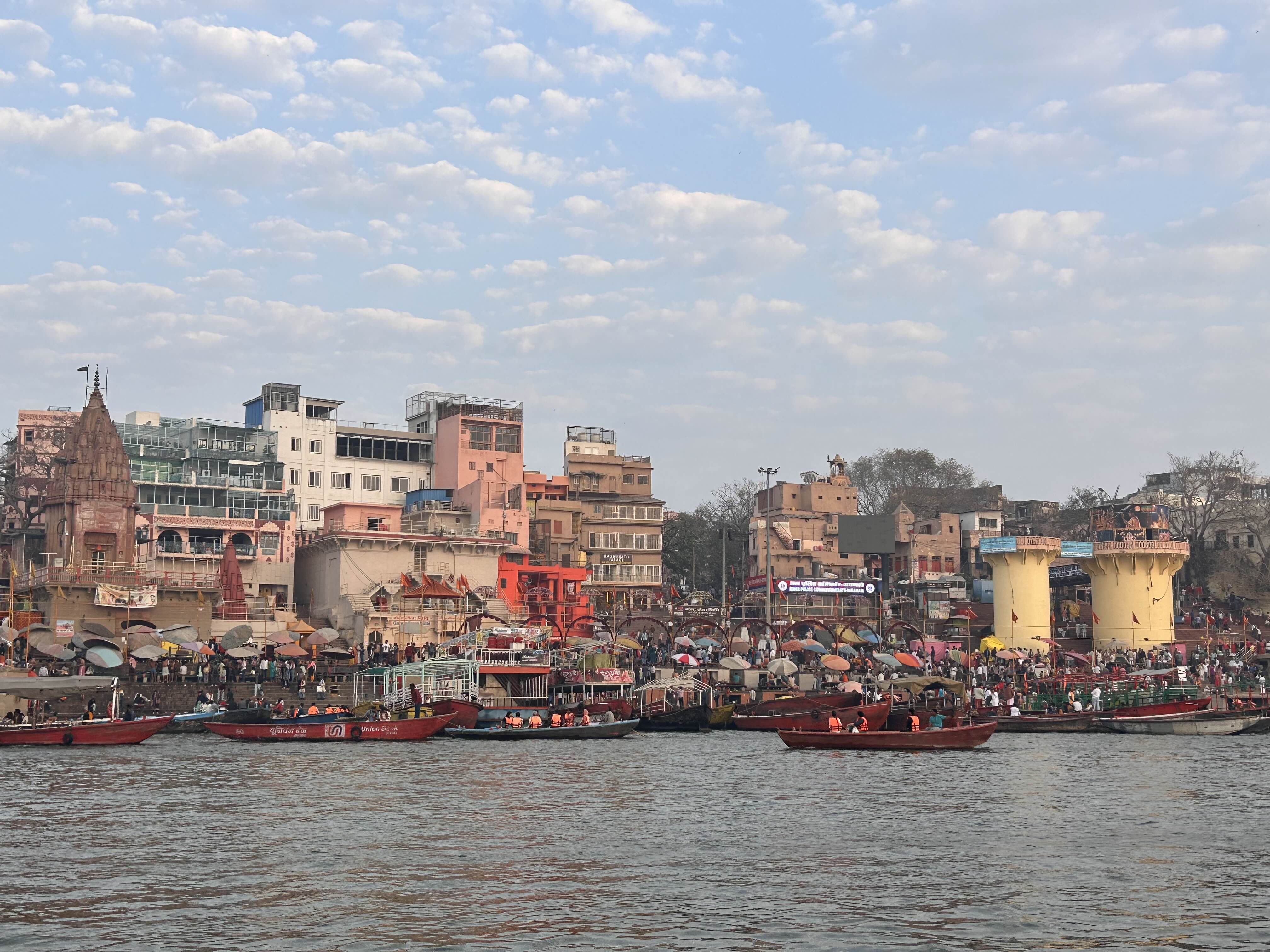
Karma turned out to be much more than a boatman; he was a guide and a storyteller. As we moved along the river, he narrated the stories of the ghats. Many of them, he told me, had been built by erstwhile rulers from across India and even Nepal. Today, many of those palaces lining the ghats have been converted into hotels. The palaces of yore are now premium hospitality properties. I found myself wondering at this quest for moksha that still sought to build palaces.

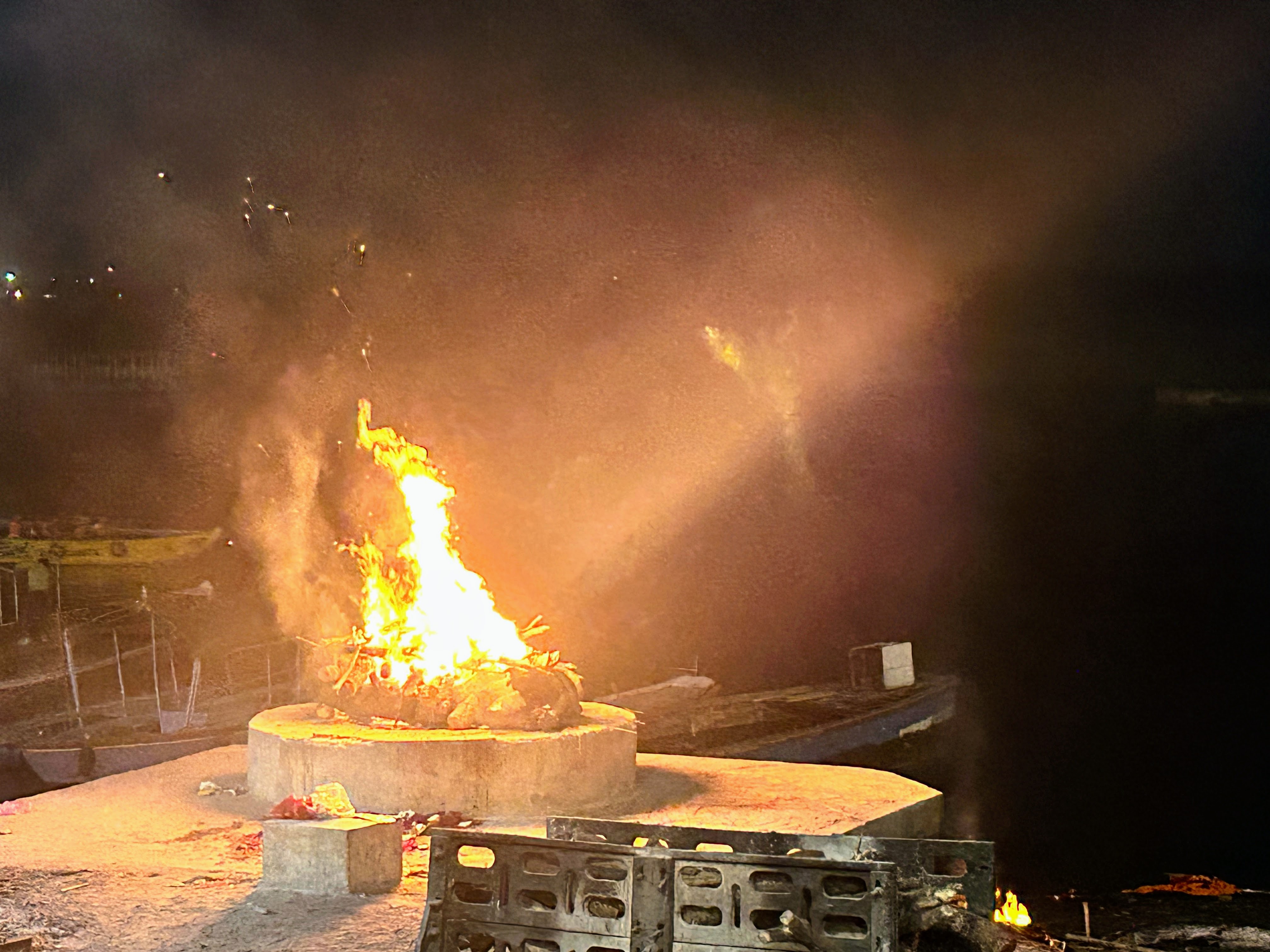
We passed Harishchandra Ghat, where pyres were burning, and Karma narrated the story of Raja Satyavadi Harishchandra. Then came Dashashwamedh Ghat, among the most famous in the city. Next to it was Manikarnika Ghat, and there I saw a pyre burning in the background while, in the foreground, a group on another boat was busy shooting a scene with someone dressed as Shiv. Life is transient indeed.

As we moved ahead, Karma surprised me by reciting Banaras, the famous poem by Jnanpith awardee Kedarnath Singh. Listening to him recite it flawlessly, I realised that it is people like Karma—common men who carry the words of poets in their hearts and wear their city with pride—who make a place truly special.

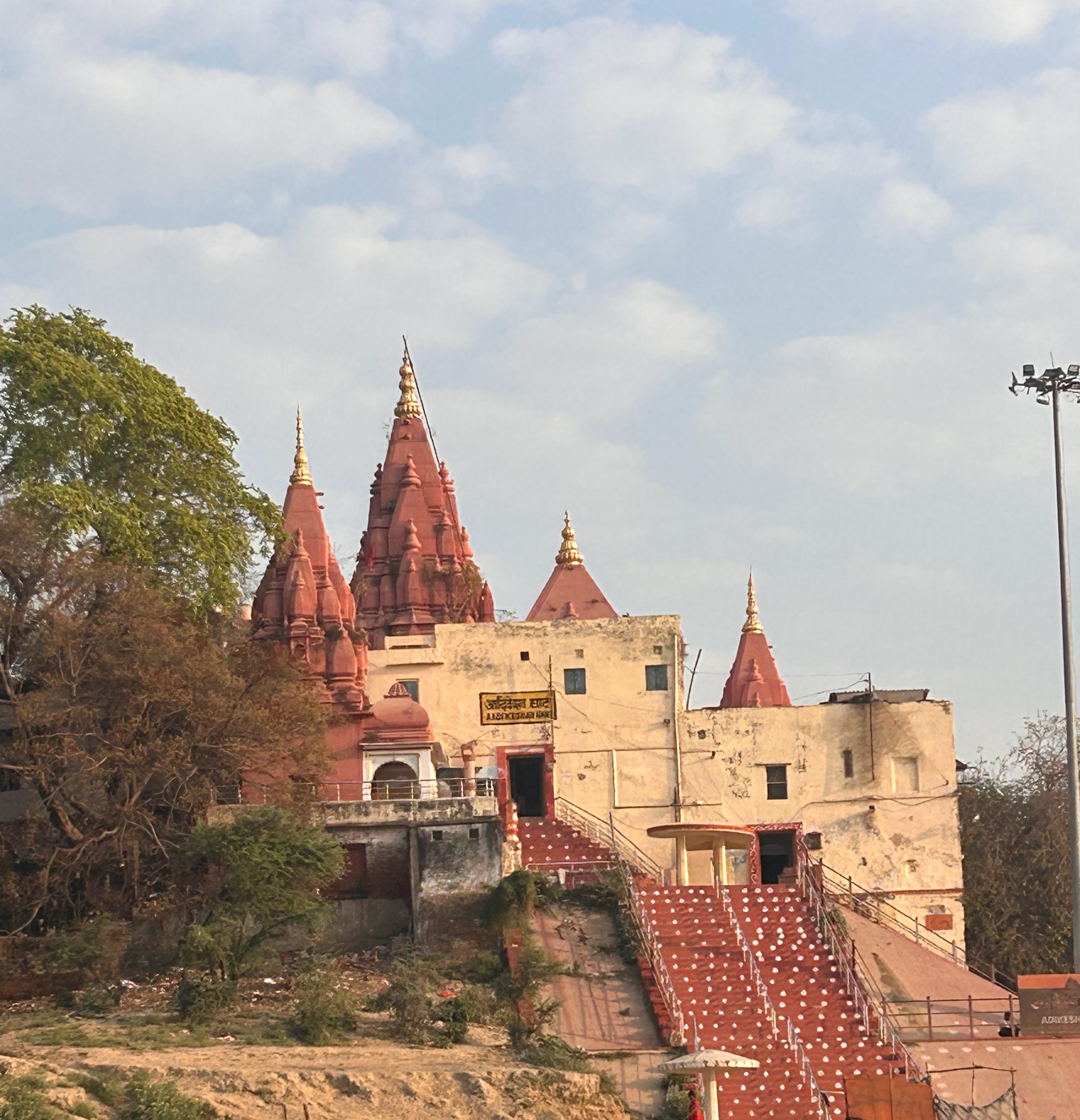
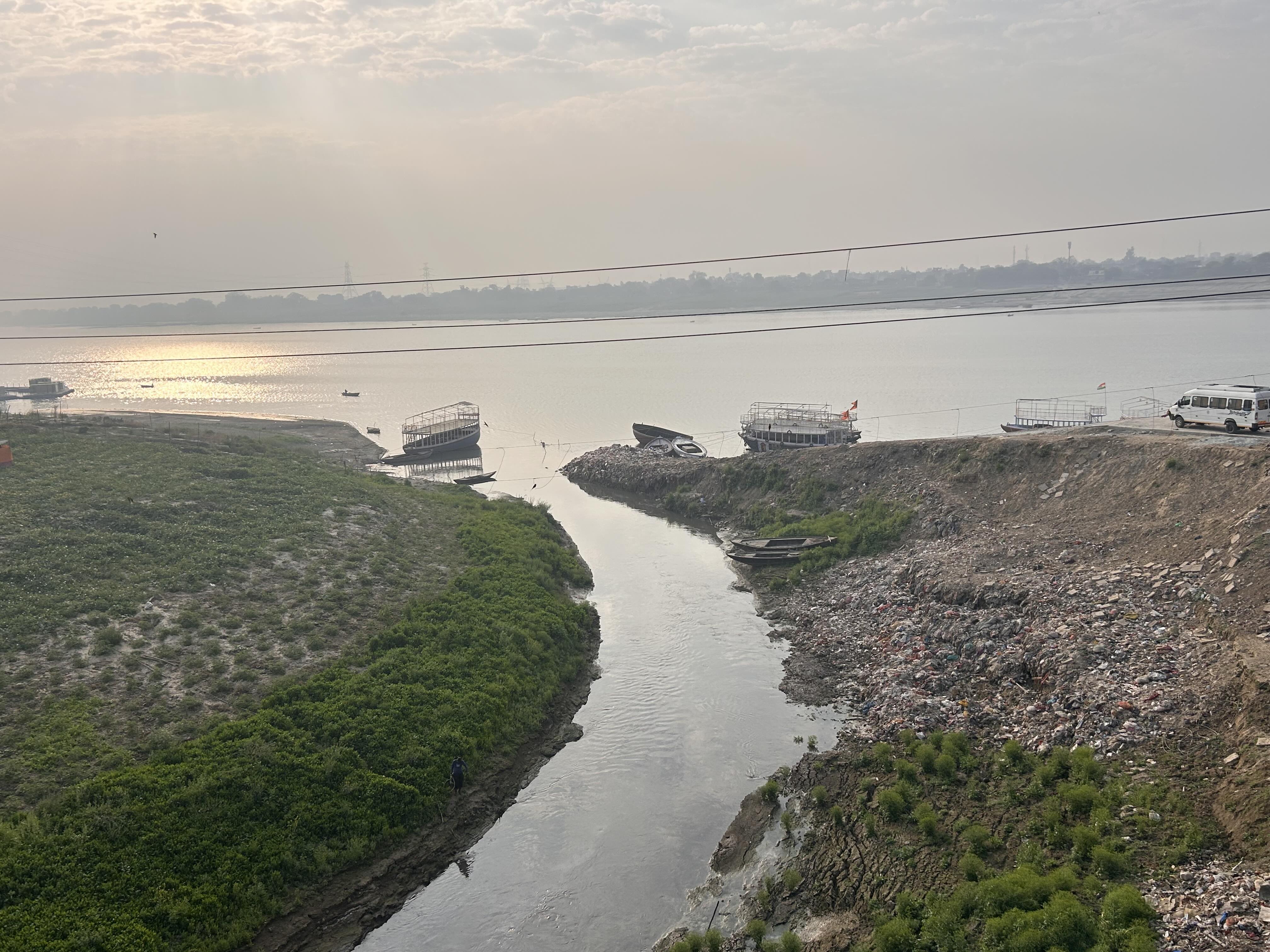
In the city of Shiv, Karma next took me to the Adi Keshav Temple, dedicated to Lord Vishnu. Located at the confluence of the Varuna and the Ganga, it is said to be the oldest shrine to Vishnu in the region. Far from the usual tourist circuit, the temple was quiet. The morning aarti was underway, and there was a stillness there that felt deeply comforting.


From the temple, I walked into the nearby village of Sarai Mohana. It is said that Buddha once walked through its lanes, and Karma pointed out a spot where he is believed to have rested.
But while the beauty of the ghats can fill the heart, it cannot fill the stomach. As I got off the boat, my growling stomach reminded me of that rather firmly. So I did what one does when one has a colleague from the city: I called Chandrali and was promptly directed to Aum Café at Assi Ghat—a small place with excellent food.

Satiated, I decided to head to Madanpura, the hub of Benarasi sarees. How can one come to this city and not explore its weaves? The next two hours saw me go completely bonkers over the astonishing range and beauty of Banarasi sarees. Did I go overboard? Absolutely yes.

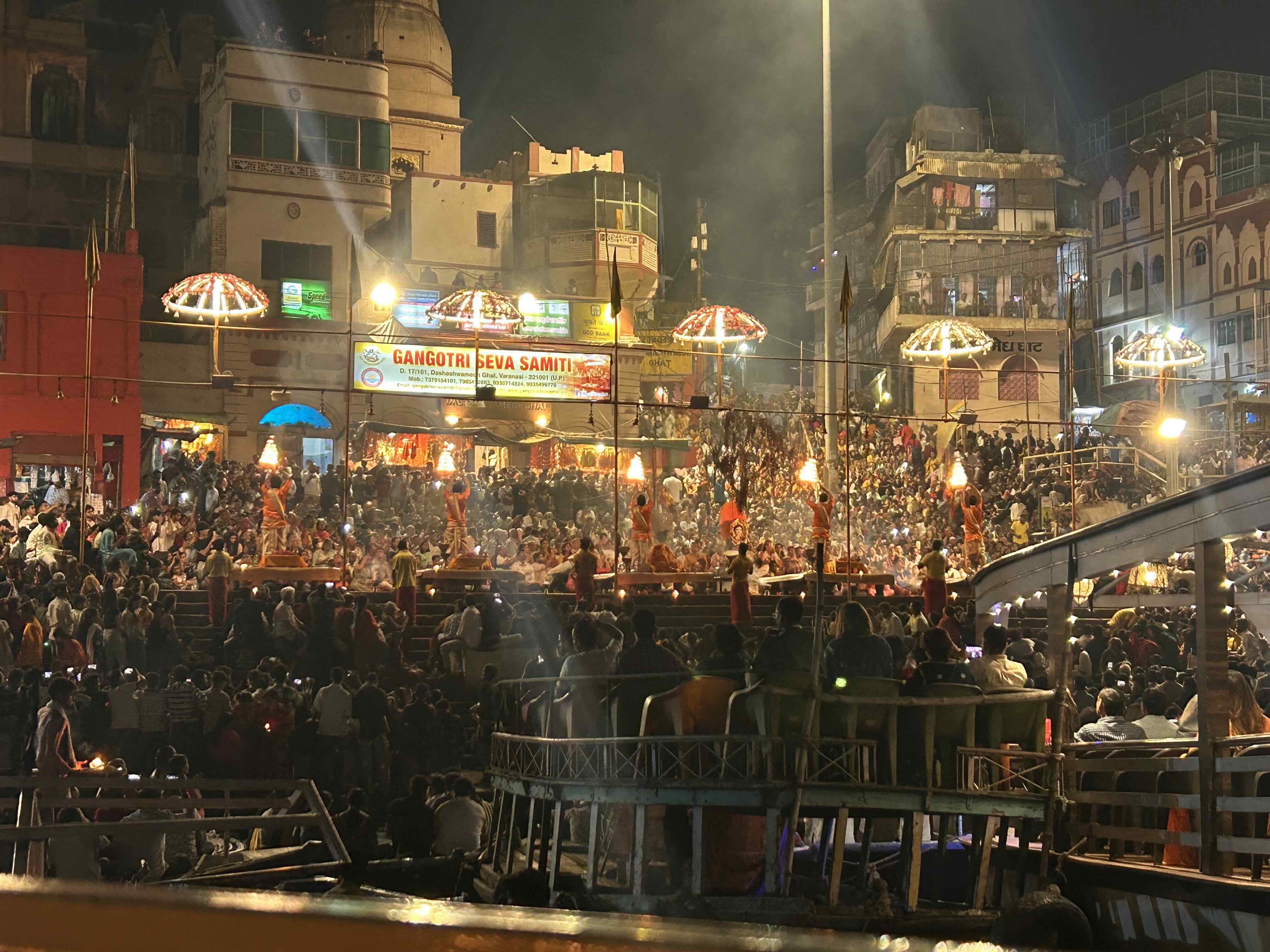
Finally, exhausted but happy, I returned to the hotel. But the day was not done yet. I wanted to watch the Ganga Aarti at Dashashwamedh Ghat from a boat. Clearly, I was not alone in that desire. By the time we reached the ghat, it looked like a sea of humanity—on the steps and on the river. Boats jostled for space to secure a better view, and I was strangely reminded of the mad rush of safari vehicles trying to catch the Great Migration at the Masai Mara.
The Ganga Aarti at Dashashwamedh Ghat has been carefully crafted as spectacle: from the priests’ camera-friendly attire, to the dimming of lights at the right moment, to the choice of music. Even the damarus had fluorescent lights. The image of the aarti with the great दीपक is so iconic that once that portion concluded, several boats began to move away, even though the aarti itself was still underway.
Thus ended the day—a day that offered me a glimpse into the fabric of the city: a boatman reciting poetry, funeral pyres forming the backdrop to a film shoot, the richness of the Benaras weave, and the eternal presence of the Ganga.
When Shiv Planned My Darshan

A few days before my visit, an acquaintance had asked, “Darshan to karengi na?”
As a crowd-averse traveller, often disappointed by the jostling and haste that accompany visits to major temples, I had replied that I had no fixed plan for darshan. If it happened, it happened. If not, there was much else to see in the city.


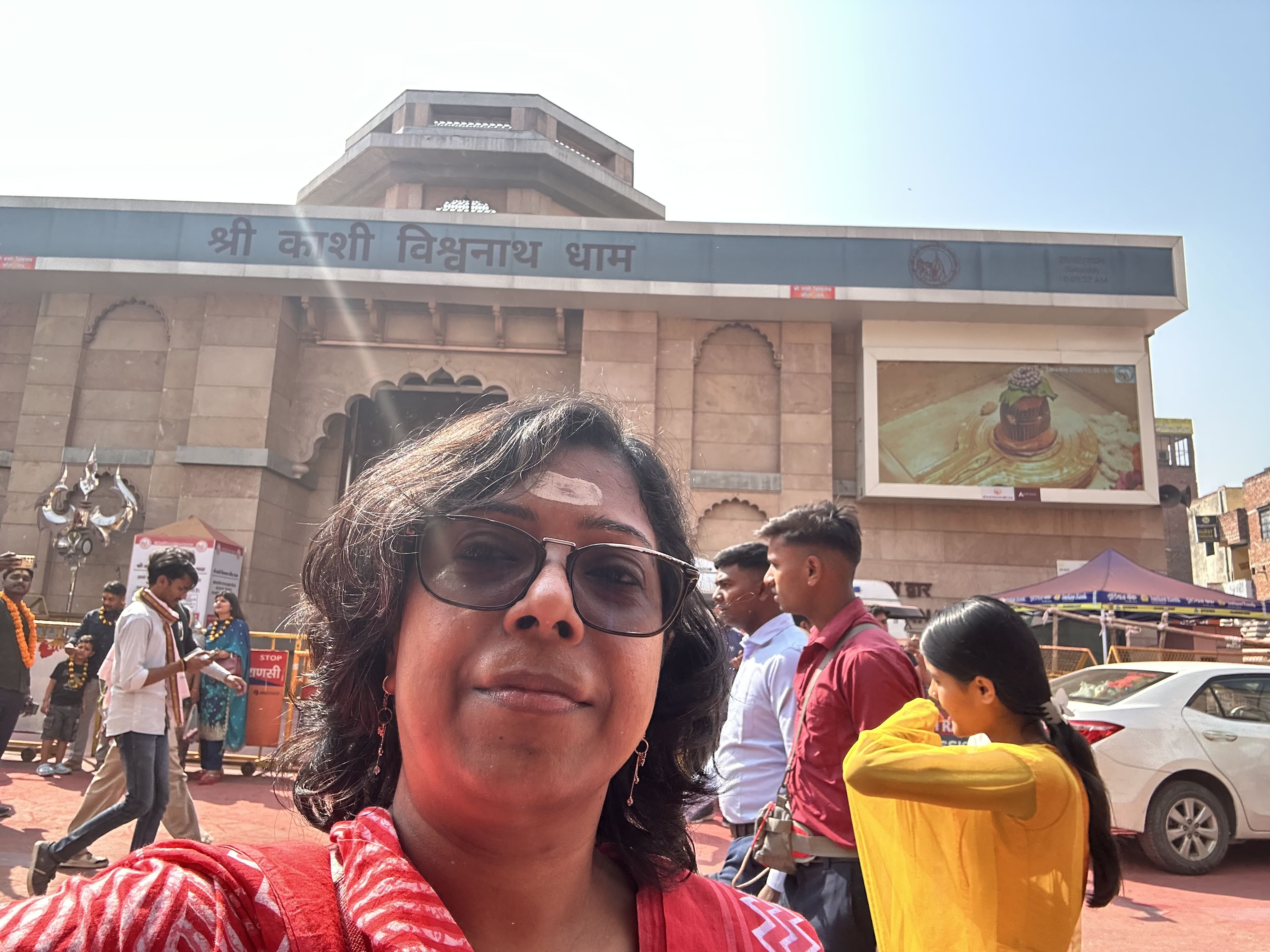
Yesterday, I repeated the same line to another acquaintance. But as someone who had spent a part of his life in Benaras, he took it upon himself to ensure that I visited the Kashi Vishwanath Temple. As I approached the temple, I could see a serpentine queue winding ahead. Several people stopped passersby, asking if they wanted darshan and offering to guide them inside. I dodged a few such offers and reached Gate No. 4 at around 9.30 in the morning.


The person deputed to facilitate my visit ensured that I completed my darshan by 10.15 a.m.—peacefully, without any pushing or jostling. And even that morning, I found a brief moment to myself as I bowed my head before the Jyotirlinga. Even if I had not planned it, Shiv, it seemed, had planned it for me.


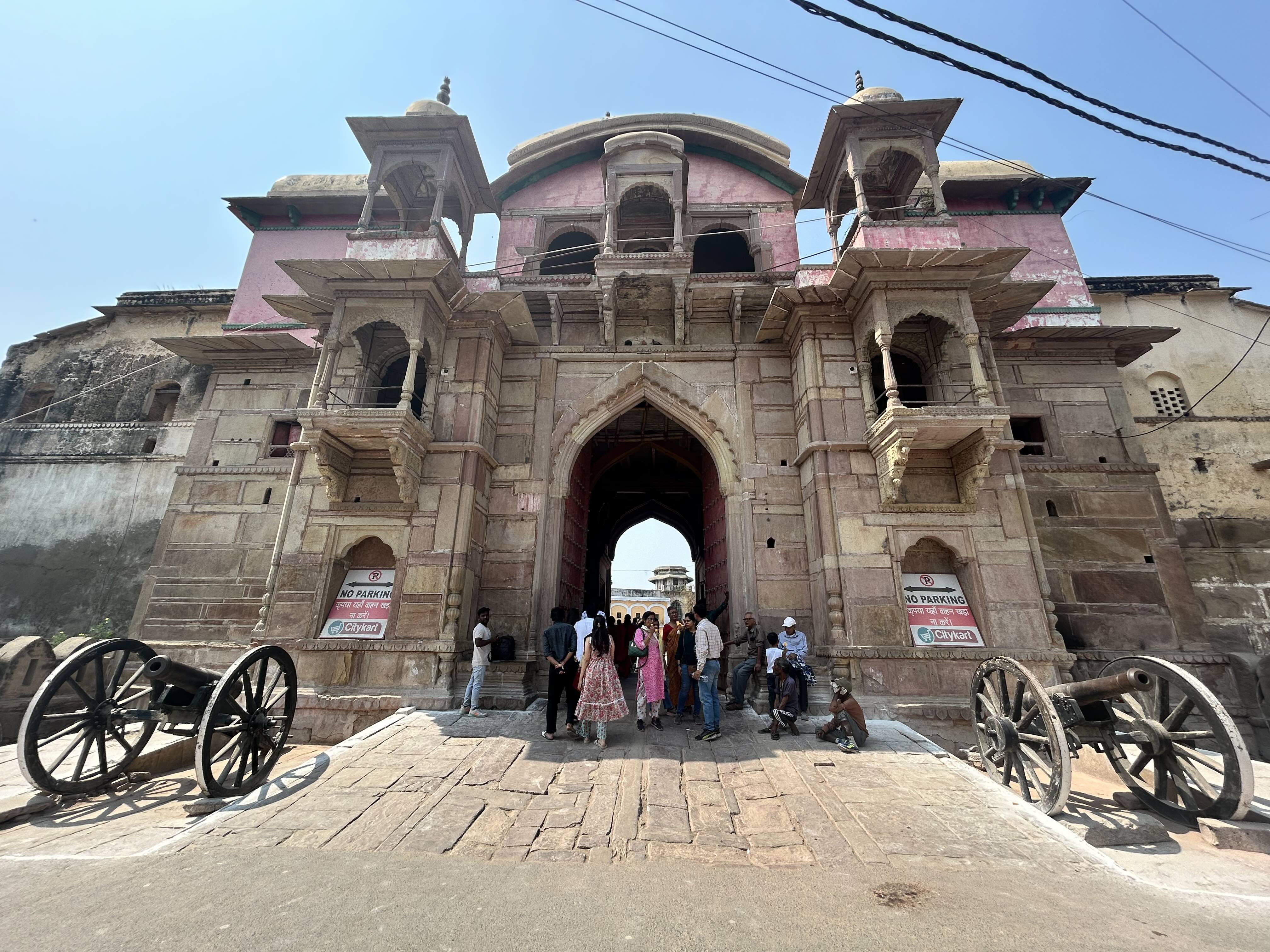
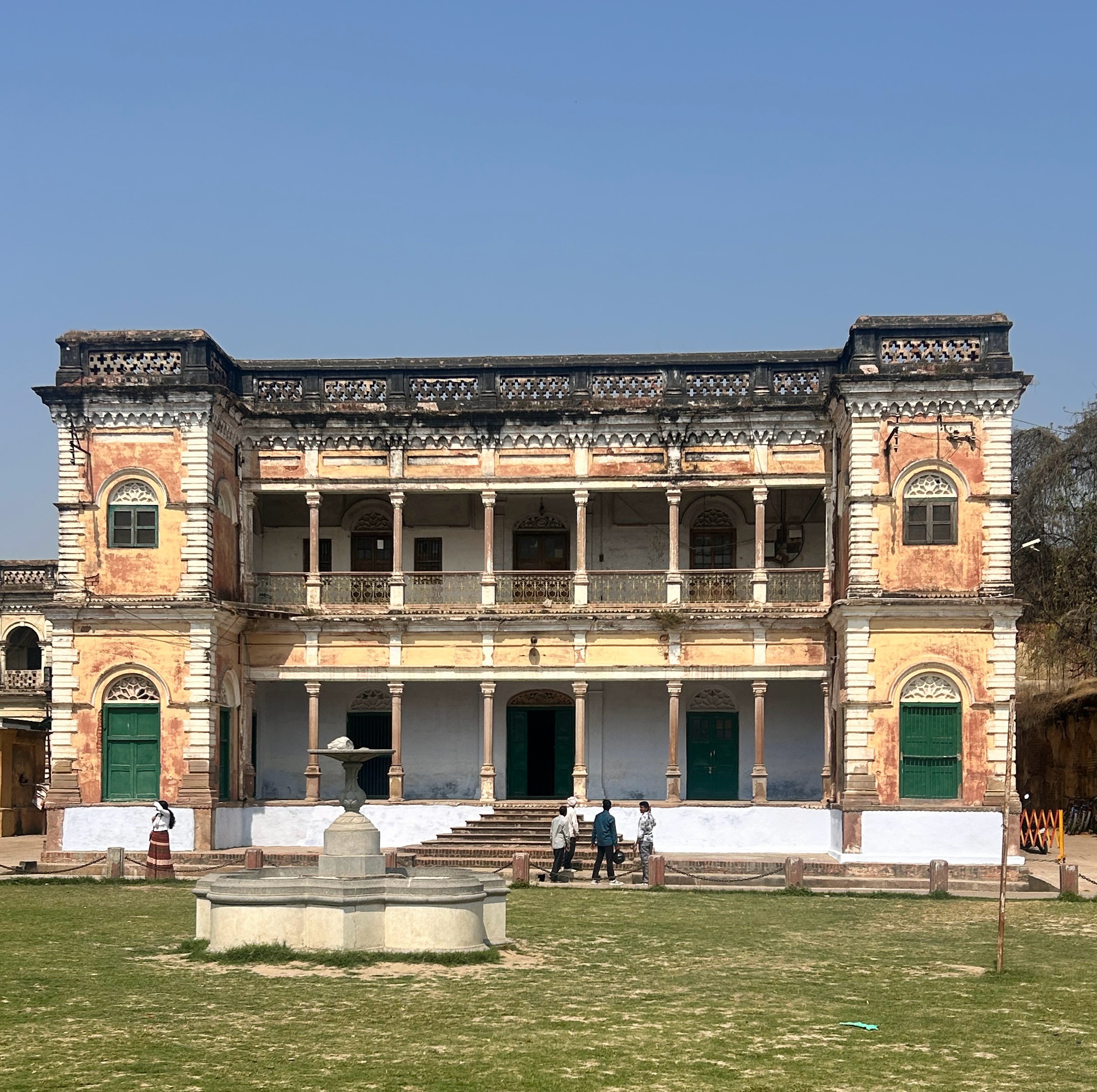
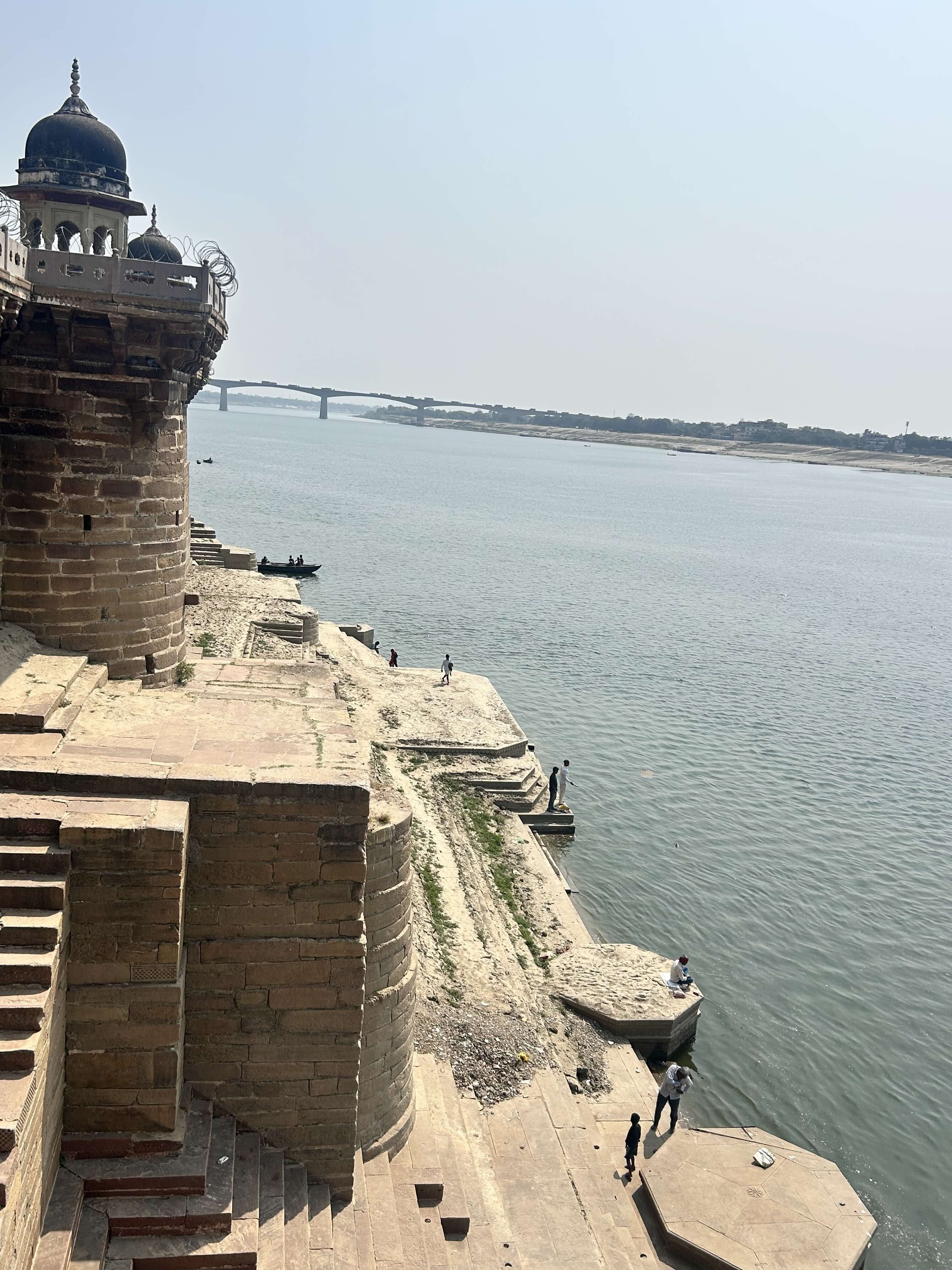
The next part of the day was spent at Ramnagar Fort, situated on the banks of the Ganga. Built in 1750 by Kashi Naresh Maharaja Balwant Singh, the fort remains the ancestral home of the Varanasi royal family. The structure is crumbling from the outside, and though the museum houses an interesting collection of vintage cars, royal costumes, arms and ammunition, the experience felt somewhat underwhelming. The display cases were dusty, many exhibits lacked proper labels, and the overall impression was of a place with great potential but limited care. I walked towards the back of the fort, expecting to reach the river, only to find the walls high. Yet the riverside edge of the fort precincts was animated by enthusiastic anglers.


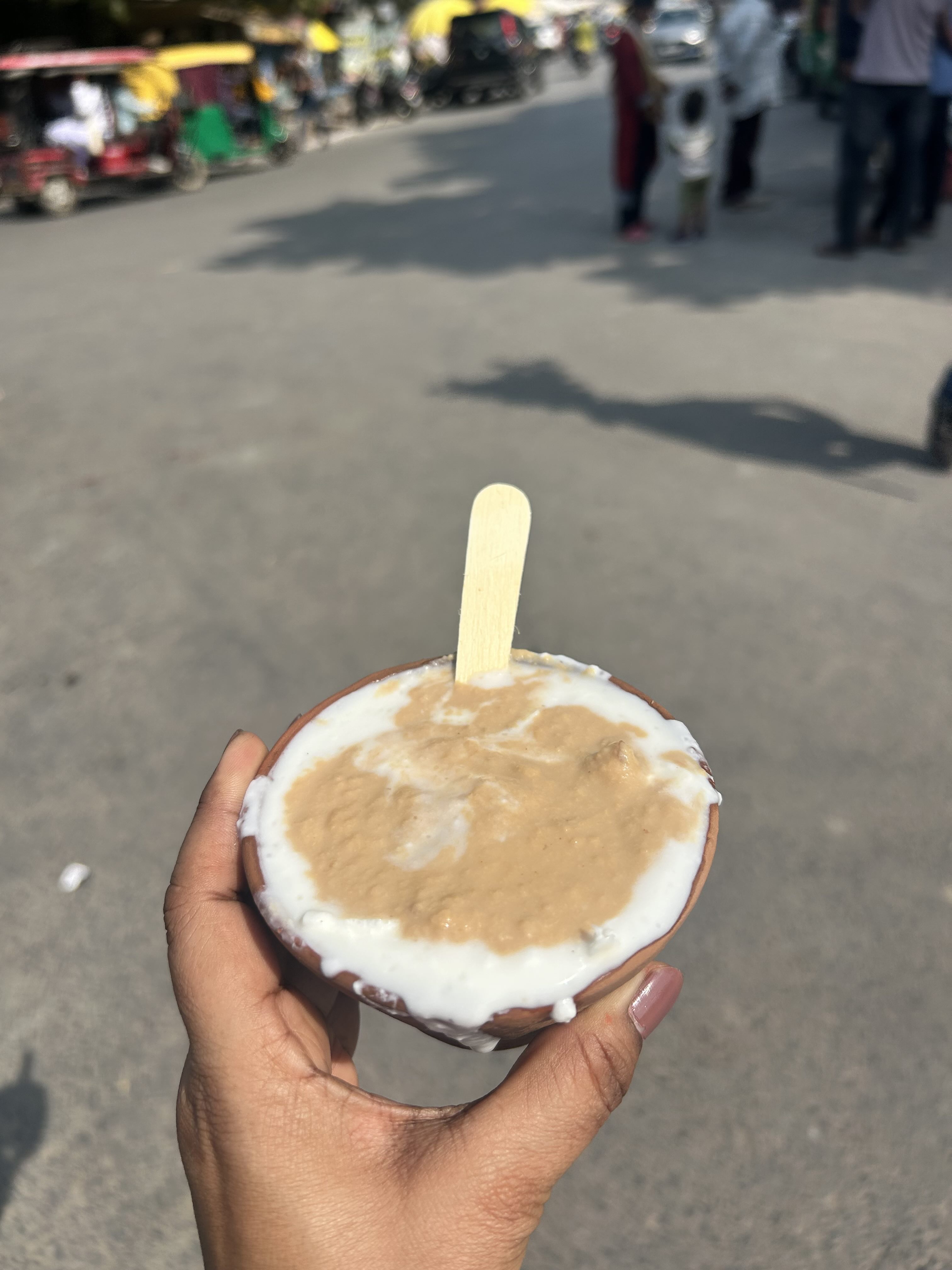
Almost next to the fort stands Shivji Lassi. The midday heat ensured that my feet found their way there almost automatically. After gulping down two glasses of lassi, I headed to the ancestral home of Lal Bahadur Shastri. It is a small but well-maintained house, offering a modest yet meaningful glimpse into the life of one of India’s most understated leaders.

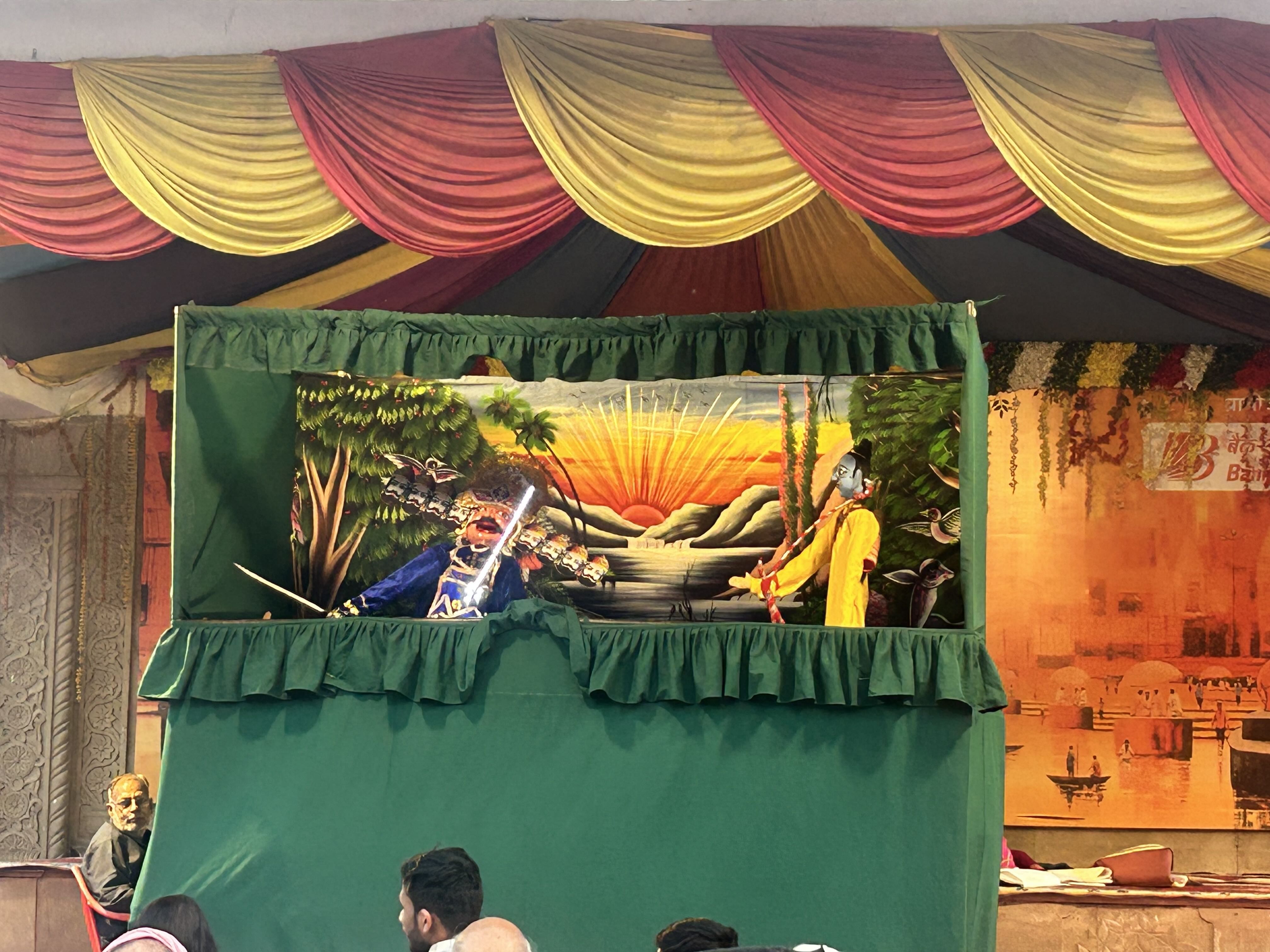
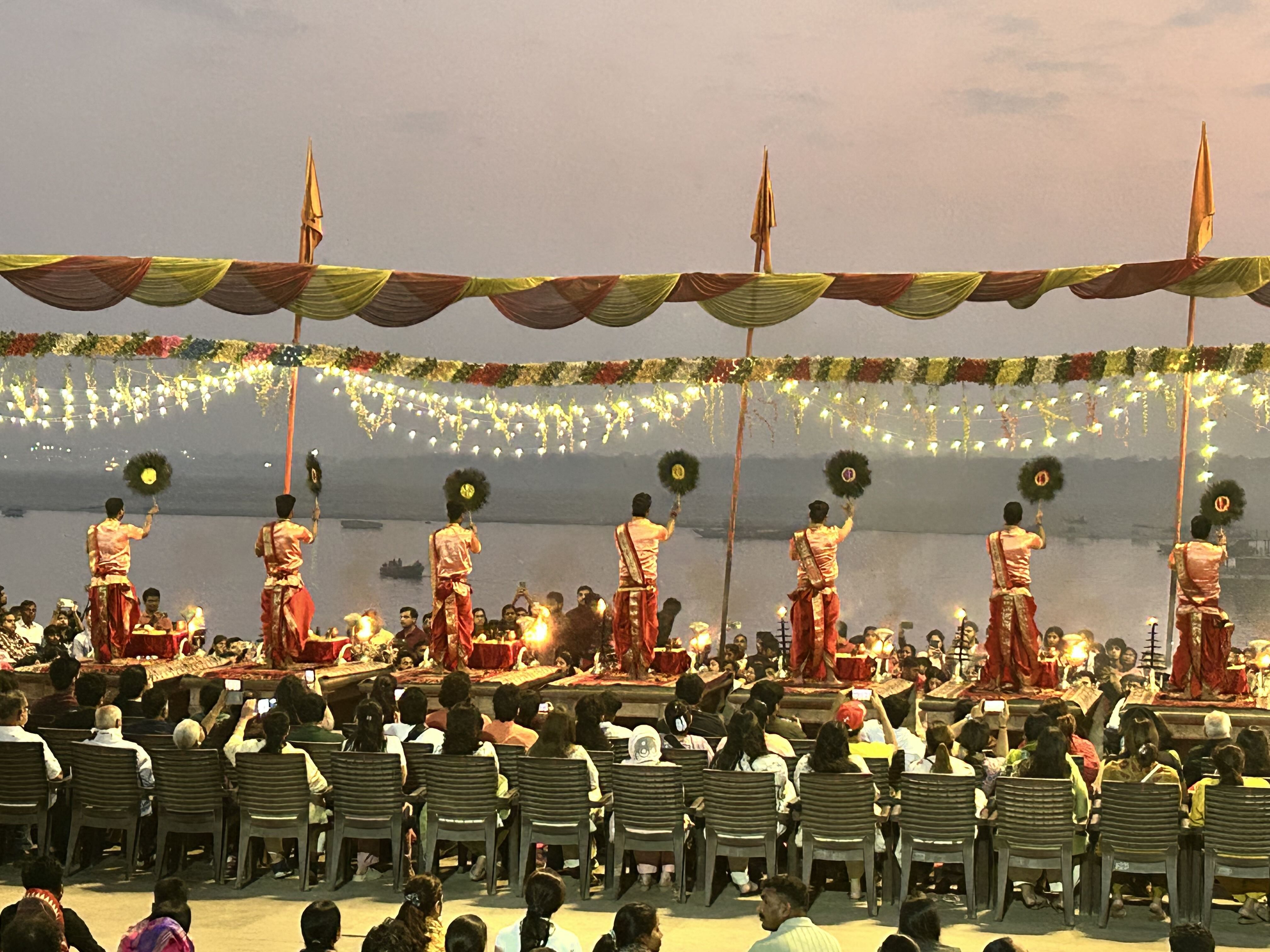
In the evening, I made my way to Assi Ghat to experience the Ganga Aarti. The first thing I encountered there was a puppet show based on the Ramayana. People were sitting, standing, moving around—but there was a curious method to the madness. As I walked further towards the aarti area, I found that most of the steps were already occupied. Somehow, I spotted a few chairs and promptly settled into one.


There is something surreal about hearing hundreds of voices recite the Hanuman Chalisa in unison. This was followed by the puja of Ma Ganga, during which the organisers invited devotees to participate. At one point, one of the priests admonished a devotee who seemed more concerned with taking photographs than with the prayer itself.


And then began the elaborate aarti.
I have always found aarti mesmerizing. But when it is carried out with such care, rhythm, and a sense of spectacle, it becomes truly unforgettable. As the aarti concluded and I slowly made my way towards the parking area, someone placed a bowl of prasad in my hands. Benaras, once again, in its own small way, touched the soul.


Thus ended my second day in the city of Shiv, a day of devotion, faith, and a little bit of history.

Between Benaras and Kashi: First Impressions of the City of Shiv

It was Benaras for my father and Kashi for my mother.
For my father, Benaras was a contradiction: a city where one seeks salvation, and where widows, until about a century ago, were often abandoned. For my mother, it was a city that lived vividly through Bengali literature, almost as if it were an enduring character in the novels she read. Somewhere between Benaras and Kashi, I do not know when it became the city I longed to visit at least once in my life. Perhaps the seed was sown in college, when I read and re-read Sarat Sahitya. In Sarat Chandra’s world, Benaras was never merely a backdrop; it was often a presence, almost a character in itself.


I had been planning this trip for a while, but somehow it never materialised. Then came the long Holi weekend, and I decided to take the plunge. It certainly helped that I had a colleague who had lived and studied in Benaras. And so, on a Friday afternoon, I landed in the city of Shiv.
Though I had drawn up a fairly detailed itinerary, the midday sun, coupled with a bit of laziness, ensured that I did not step out until evening.


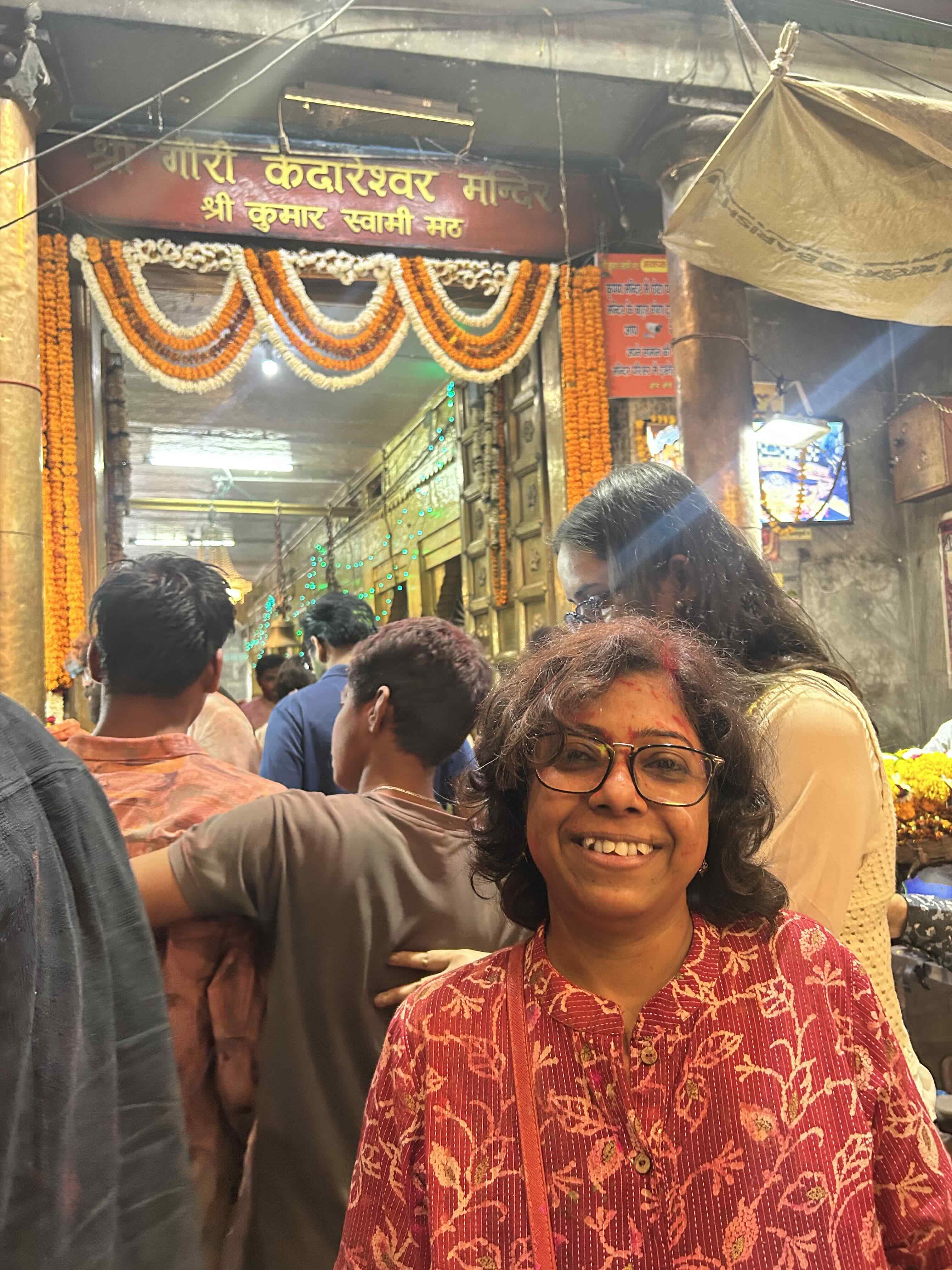
That evening, an acquaintance in the city reminded me that I had arrived on the auspicious day of Rangbhari Ekadashi, and that I must experience it. Rangbhari Ekadashi is believed to mark the day Shiv entered Kashi with Gauri for the first time after their marriage. I took an auto and reached the chowk near Kedar Ghat. Harshit met me there, and together we walked towards the Gauri Kedareshwar Temple.


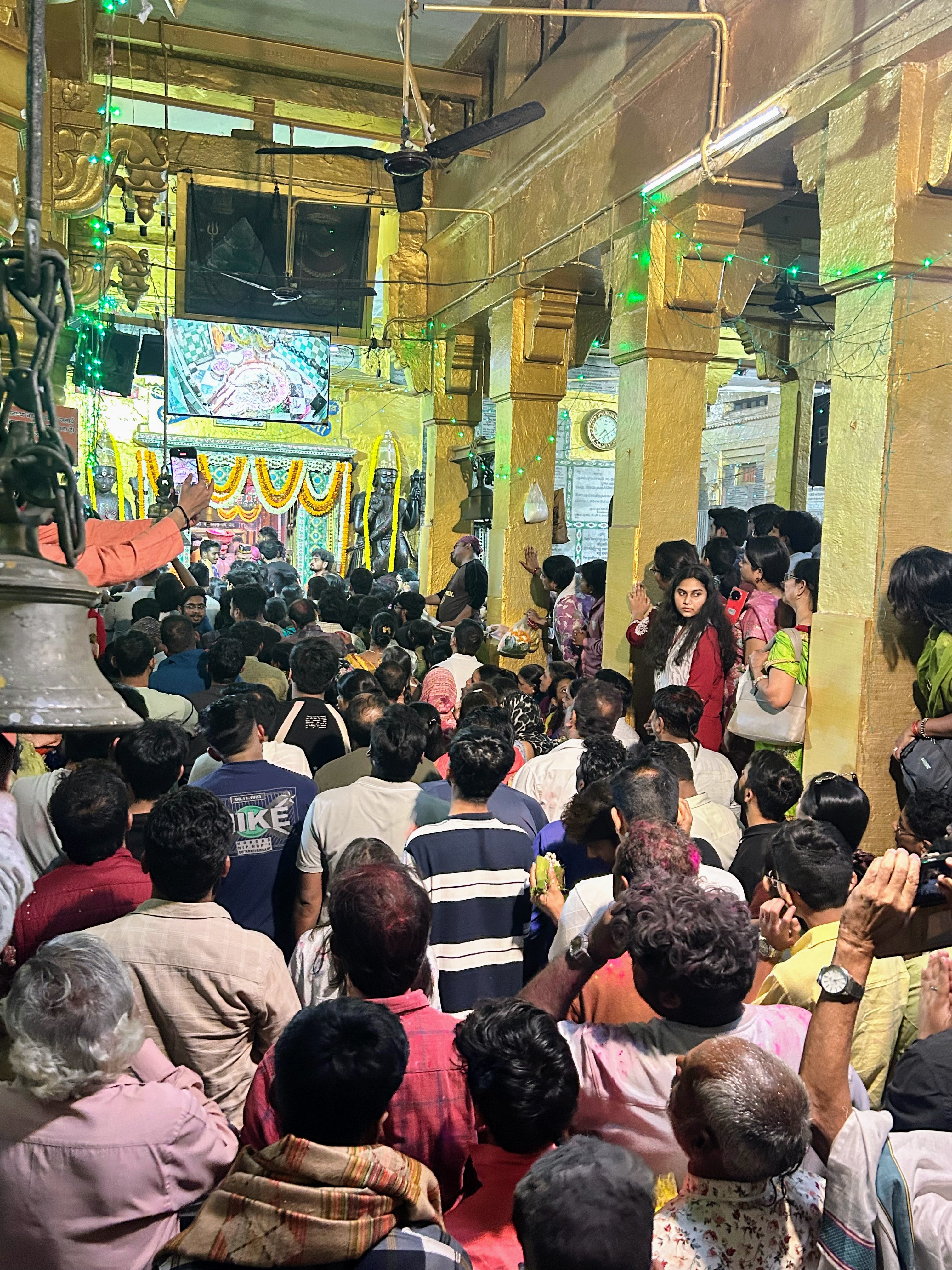
Our first stop was the ancient Chintamani Ganesh Mandir. From there, we made our way to the Gauri Kedareshwar Temple. We removed our sandals, and I was handed a paper cup containing what I assumed was water. I took a sip. The moment I realised it was not water, I peered into the cup. Harshit was scandalised. It was meant to be an offering. Armed with a fresh paper cup, I walked in again, slightly embarrassed, and joined the sea of humanity.


One of the twelve Jyotirlingas, the temple was in the midst of an elaborate puja for Rangbhari Ekadashi, and the rituals were being broadcast live on a screen outside. Technology, used well. After almost an hour, the puja concluded, and we slowly inched our way towards the sanctum sanctorum. Then I looked up at the screen and saw devotees rush in, jostling to touch the Shiv Linga. One part of me wanted to leave. But I was too deep inside the crowd by then, and there was no turning back. Swept along by the tide, I moved forward until I finally reached the Shiv Linga.


It is unusual, more an outcrop of rock than the smooth form one typically expects. Yet, despite the crush of the crowd, I somehow found a moment. A brief, still moment. I prayed, touched the Shiv Linga, and came out of the temple.


My pet peeve during temple visits has always been the speed with which one is pushed out of the inner sanctum, sometimes before one has even finished praying. But today, despite the crowd and the jostling, I was granted that moment. And that felt deeply satisfying.


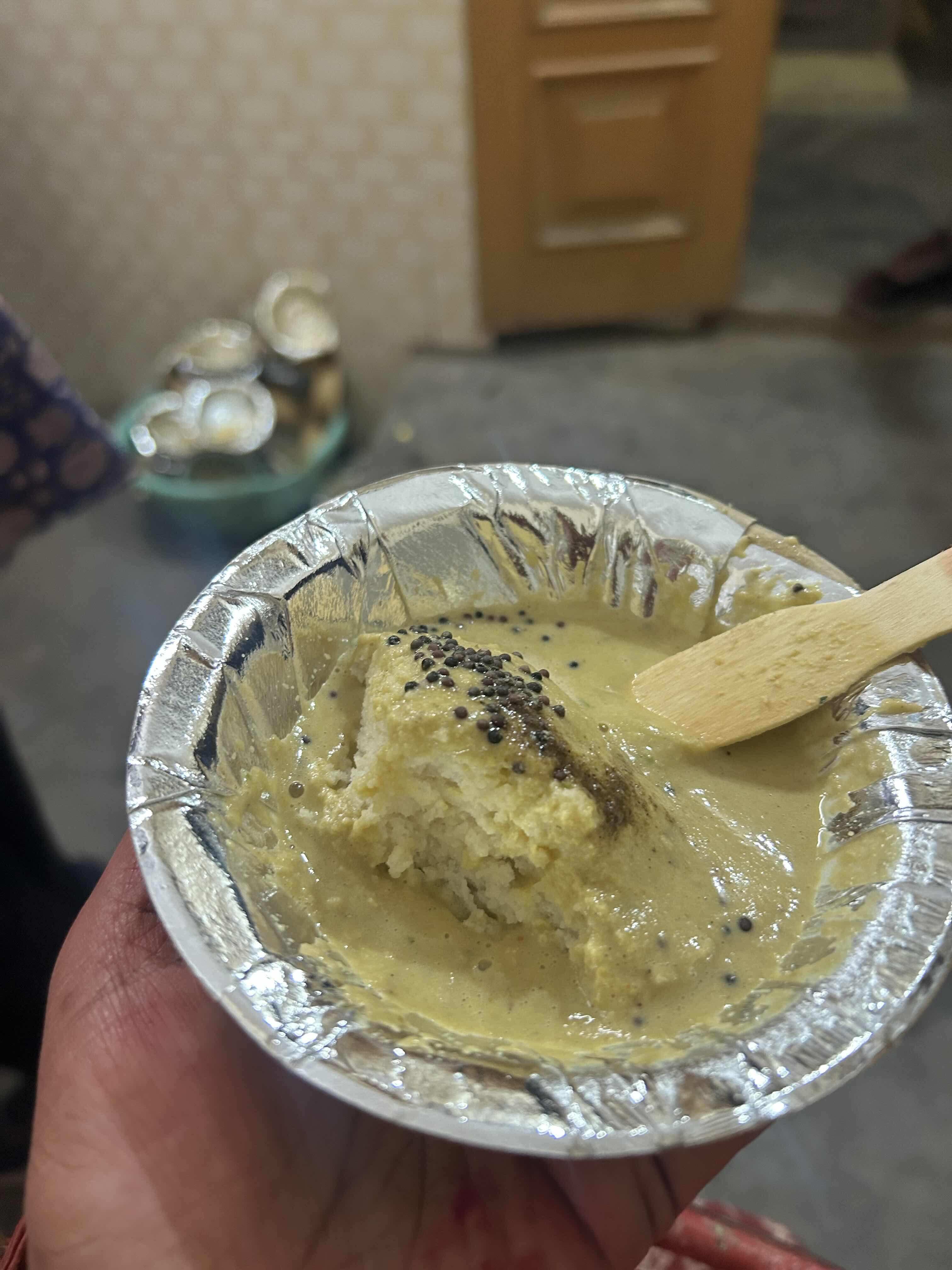
Once the visit was over, Harshit took me on a food trail through the city. We crossed Harishchandra Ghat, where funeral pyres burned even as life moved on around them, and then plunged once more into the crowds. Our first stop was idli served with dal chutney. From there we headed to Keshri Chaat, Harshit expertly manoeuvring his scooter through the dense, chaotic lanes while I sat pillion, equal parts anxious and exhilarated.


The quality of the chaat was evident from the crowd gathered outside the shop. I began with tamatar ki chaat, followed by palak patta chaat, gol gappa, and finally chewra matar—an interesting preparation made with chewra, or poha as we usually know it.


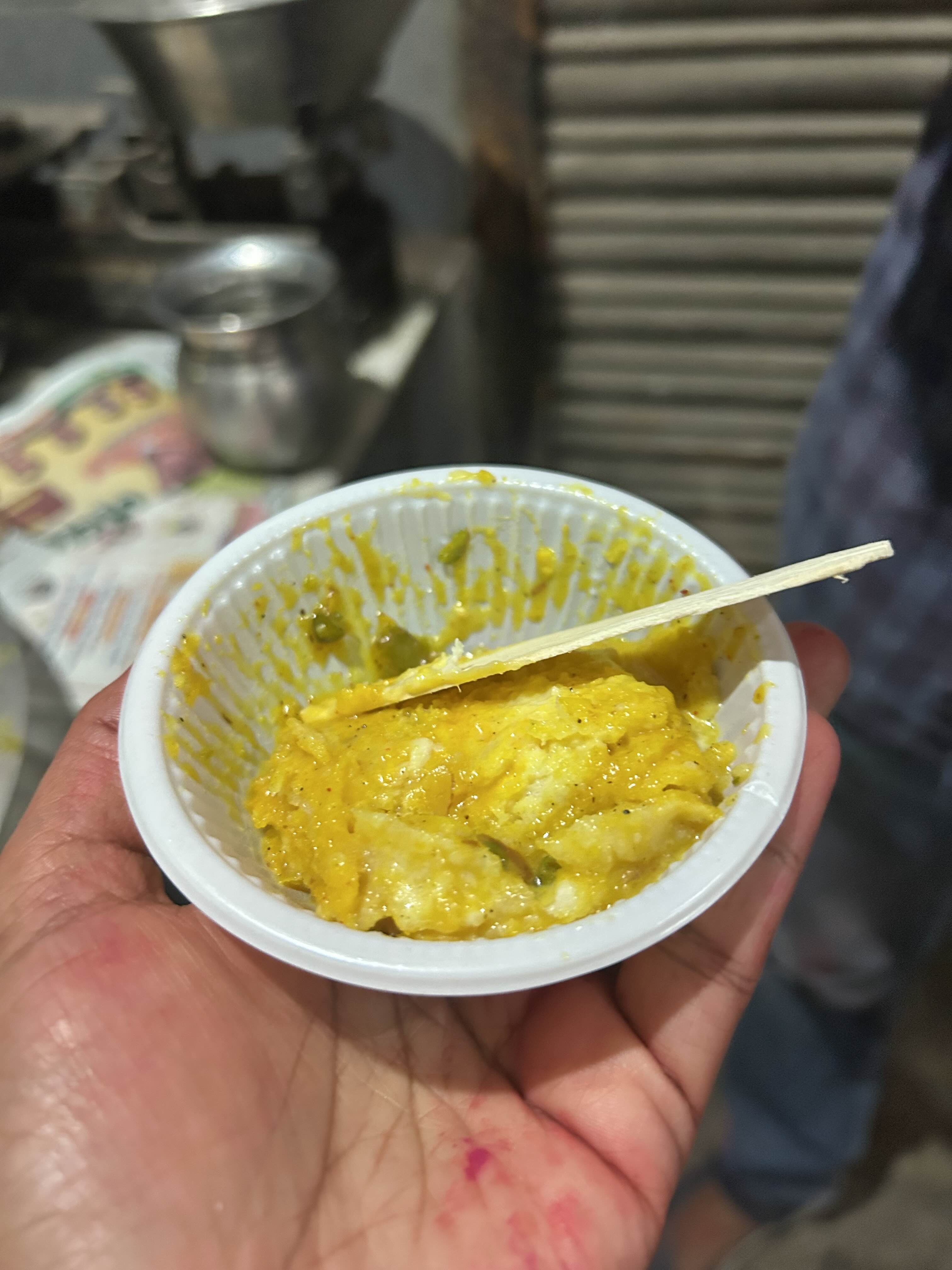
We then set out in search of thandai. With the narrow lanes teeming with two-wheelers and pedestrians, it was a challenge of its own. Unfortunately, we were too late. By the time we reached, the thandai was over. Harshit then took me to a place, opposite Parshuram Mahadev mandir, selling a sweet made of malai, which is interestingly named ‘palangtodh’.


And thus ended my first day in Benaras. A day when Shiv pulled a crowd-averse traveller into the heart of a celebration—and left her unexpectedly, completely satisfied.

Concentric Circles, Endless Gratitude: A Sunday at the National War Memorial

Winter is in full swing in the capital, with daytime temperatures dipping below 20°C. Ironically, that’s also when Delhi’s tourist spots see their biggest turnout. The smog-and-cold combination often makes me think staying home is the smarter plan. But in the eternal confrontation between my lazy self and my wanderlust-bitten self, it’s usually the latter that wins.

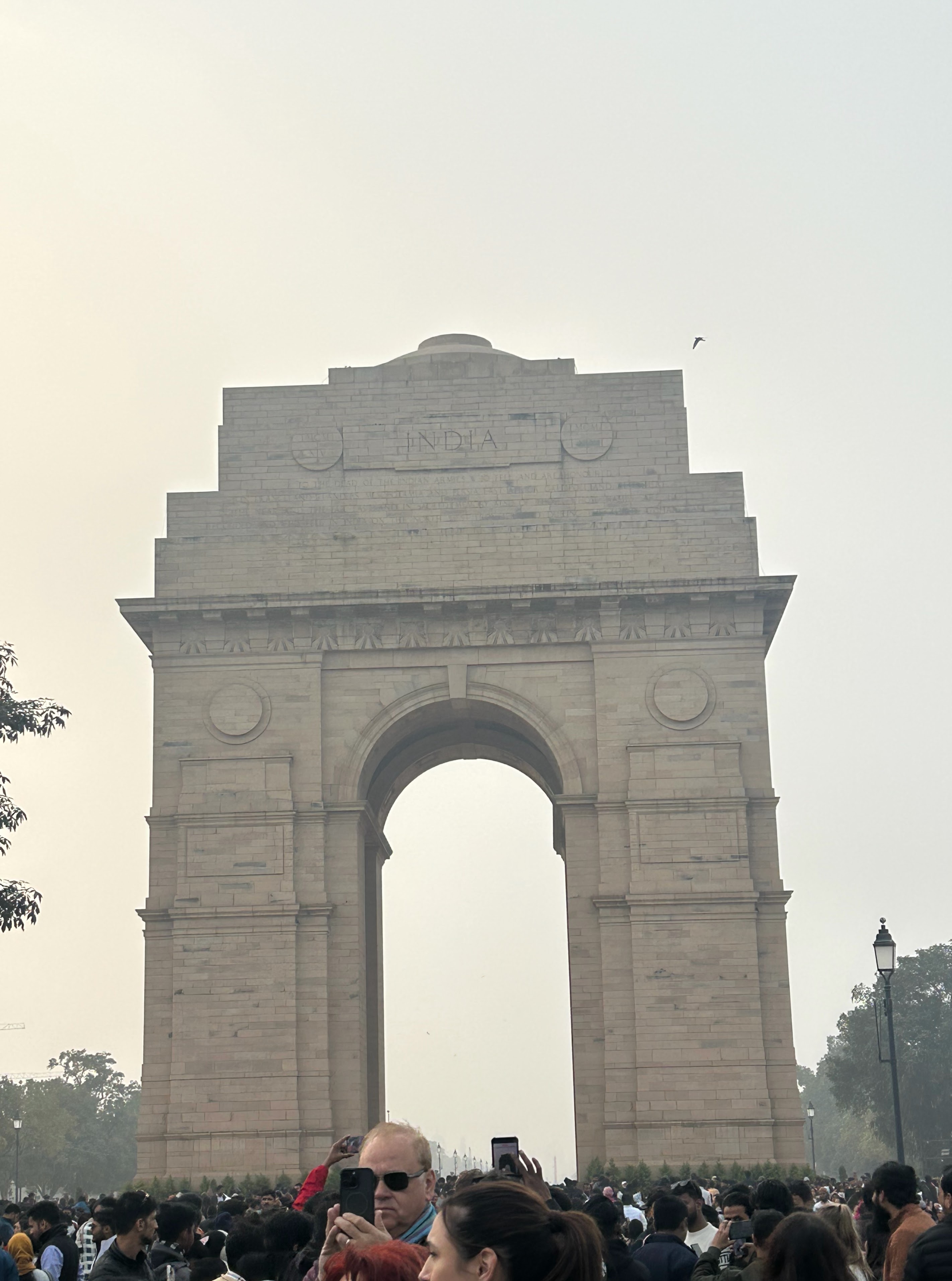
This Sunday, INTACH organised a walk at the National War Memorial, led by raconteur Dr Shahjahan Avadi—an ex–Air Force officer himself. The memorial is located near India Gate, and my logical self did know that parking would be a problem. But it was cold, and I decided to take the car anyway.

The drive up to the oddly named C-Hexagon circle was smooth. And then I joined the queue to enter the Central Vista parking and immediately realised that getting the car was not a bright idea. Thanks to a fellow walker, I managed to find a spot nearby.

Then, what should have been a simple walk to the statue of Netaji Subhas Chandra Bose turned into a brisk walk—and then a jog—as we searched for the entry. My rant about signage has now become a constant at most public locations in the country. After a brief hunt through the sea of humanity around India Gate, we finally located the group.

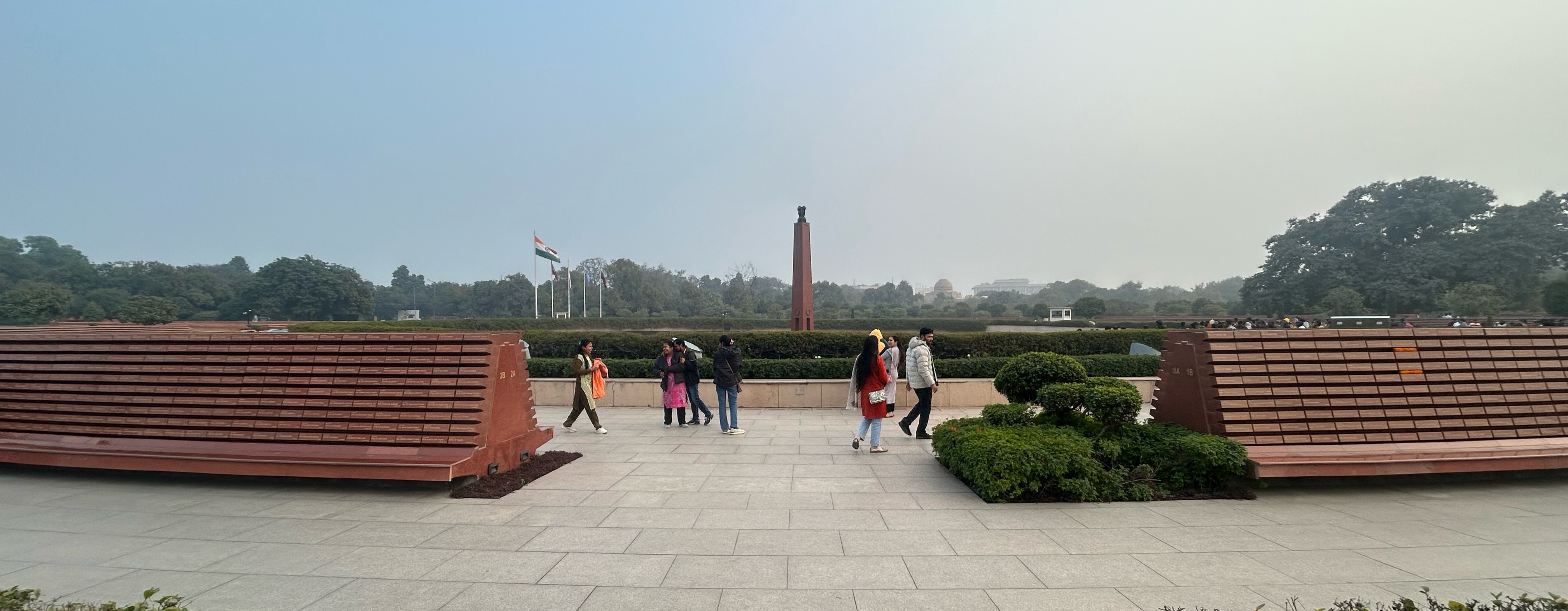
Built in 2019, the National War Memorial honours India’s fallen soldiers. Designed in concentric circles, it is said to echo the ancient war formation of the Chakravyuh.

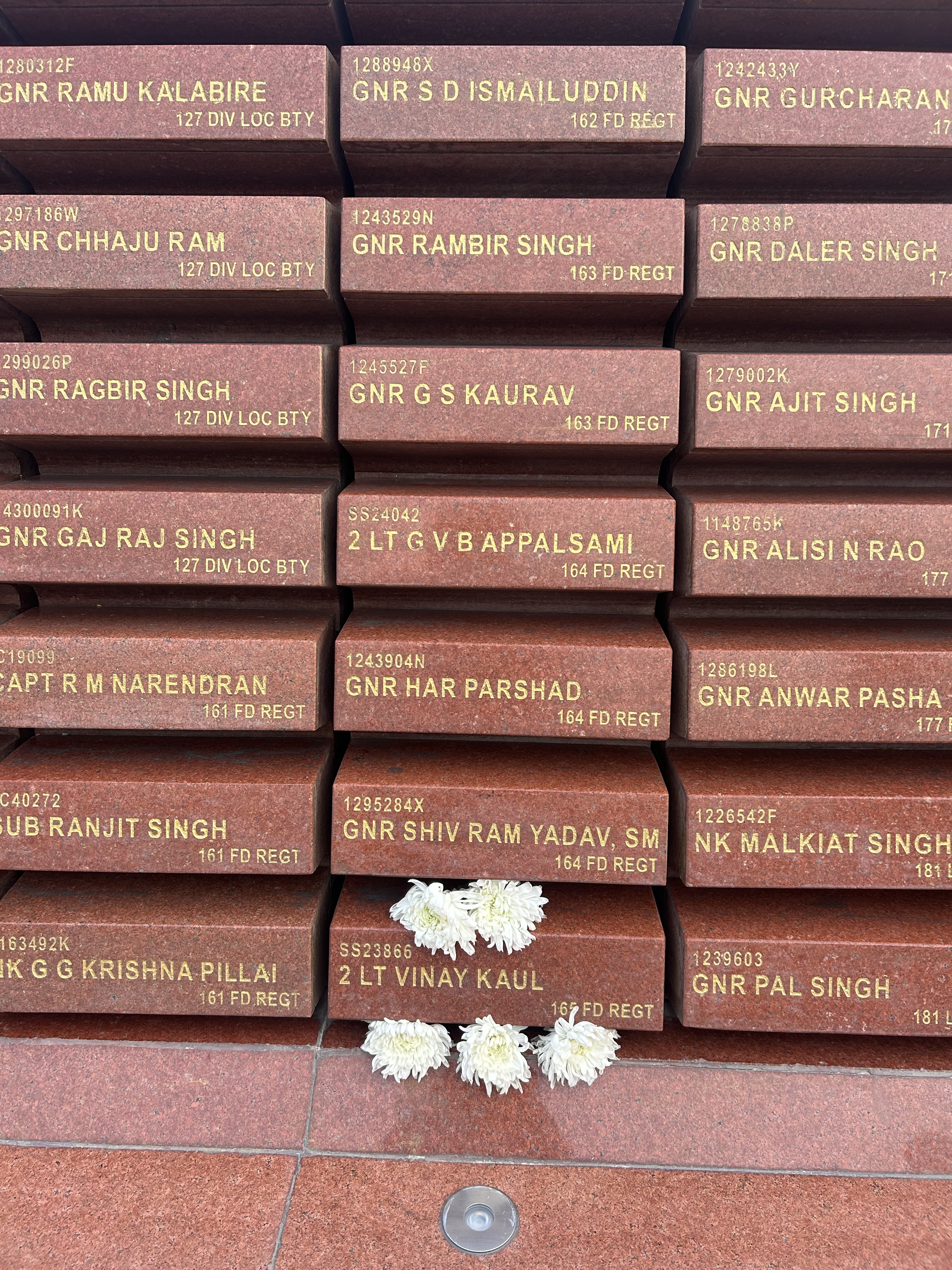
The first circle is the Raksha Chakra, a ring of trees symbolising the stability and integrity of the nation. Next comes the Tyag Chakra, where granite panels bear the names of those who made the supreme sacrifice—etched in golden letters. From 1947 to the present day, the names of martyrs can be read here.

As we walked, something caught my attention: someone had placed flowers at two granite panels. It made me wonder how often we truly think about these sacrifices when we think of our country. We celebrate achievements—and rightly so—but do we pause to consider whether those achievements would have been possible without the lives given, and without the soldiers who continue to guard our borders?

We then moved to the Veerta Chakra, which houses murals of battles that became turning points in the nation’s story. From Tithwal to Rezang La, from Longewala to Gangasagar to Meghdoot—each mural carried a reminder of indomitable courage and enduring sacrifice. It was heartening to see that even amidst the India Gate crowds, many were drawn into the quieter gravity of the memorial. These stories deserve to be known by more people.

At the centre is the Amar Chakra, where the eternal flame burns—Amar Jawan Jyoti. Beside it is a cabin where a soldier stands guard in honour. The discipline is so absolute that for a moment we almost mistook him for a statue. Being a Sunday, we also witnessed the change of guard and the retreat ceremony.

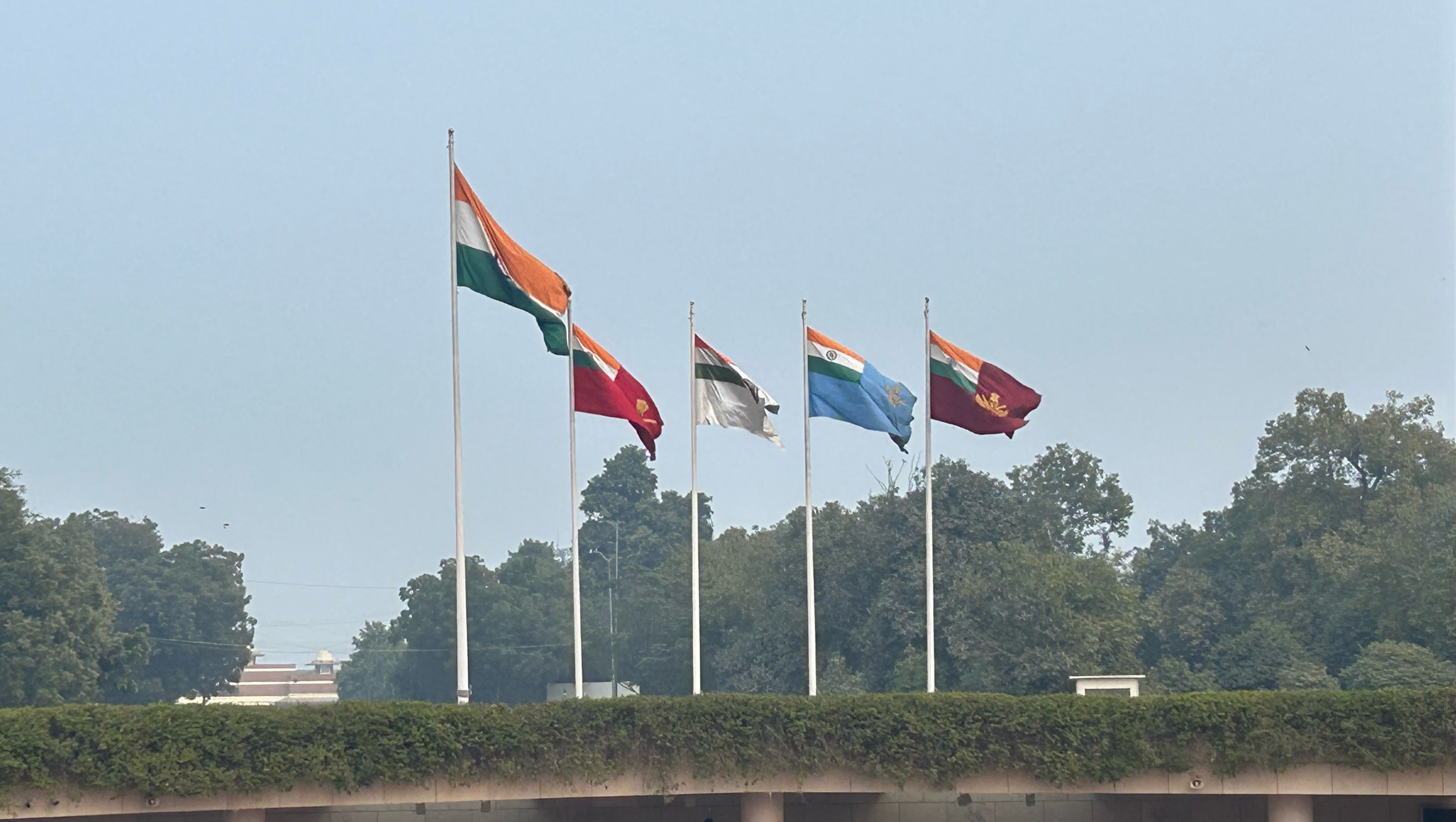
As dusk settled, the flames around Amar Jawan Jyoti were lit. An elaborate change of guard followed, and finally the five flags—the National Flag and those of the Army, Navy, Air Force, and IDS—were lowered. By the time the ceremonies ended, the air had turned sharply cold. Pulling my fleece tighter, I remembered a story Dr Avadi shared about Operation Meghdoot—how he said one can lose around 10% of one’s memory after serving in Siachen.

It was a Sunday well spent—learning a little more about the bravery, courage, and quiet determination of our armed forces.

A Medieval Icon, a Modern Nation

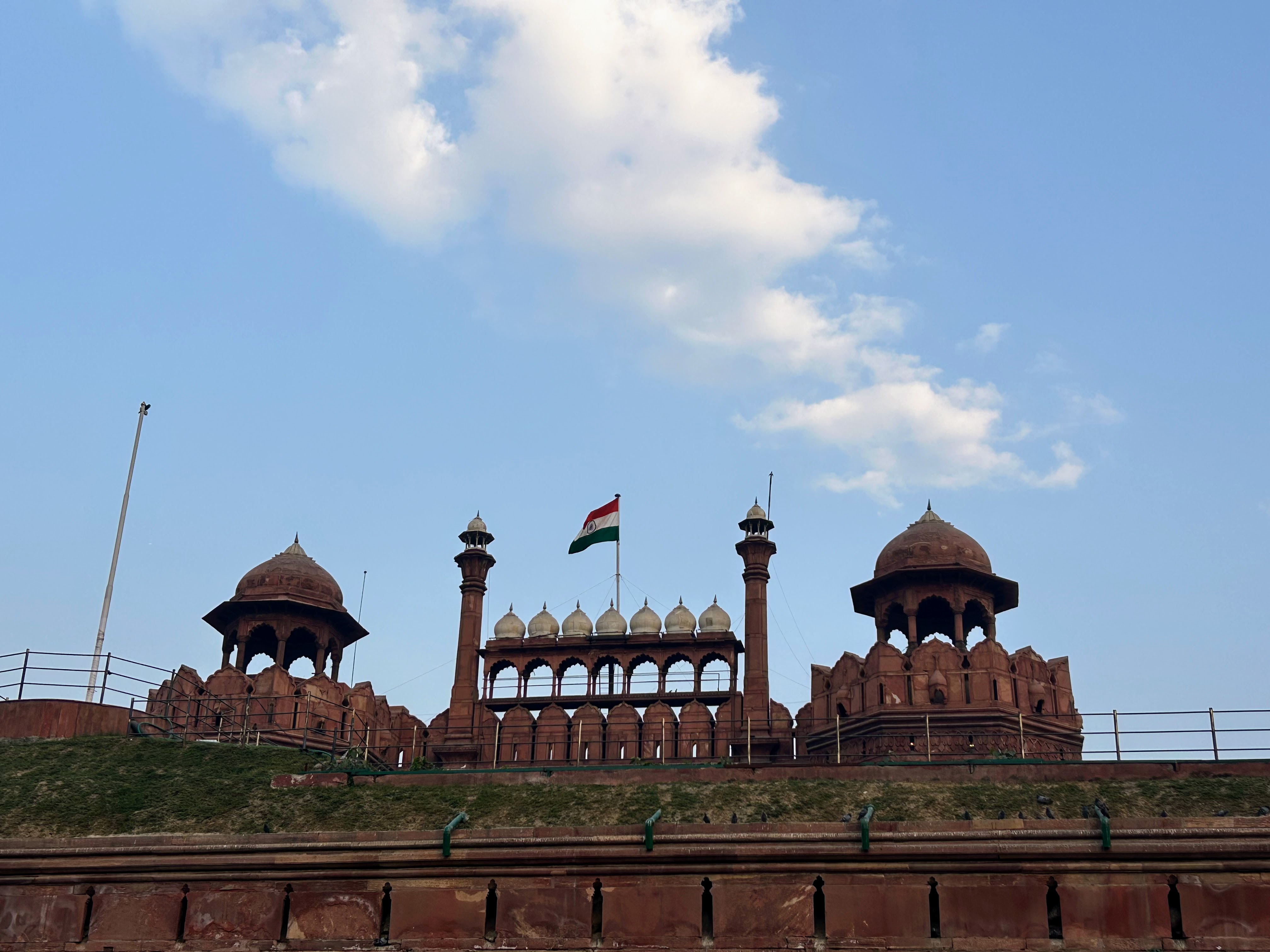
There is something about the Red Fort—maybe because every time I have seen photographs or a telecast of Independence Day or Republic Day, it is the Red Fort that comes into view: stately, majestic, almost like a witness to everything that has unfolded around it.

So when an INTACH email landed in my inbox about a heritage walk at the Red Fort this Sunday, I had to join. Delhi Metro is the best bet to reach anywhere on time. The crowd I encountered while changing trains at Kalkaji should have warned me of what was to come. At Lal Qila, I emerged from the gate and realised it was almost a sea of humanity. Somehow, manoeuvring through it, I made it to the entry near the Lahori Gate.

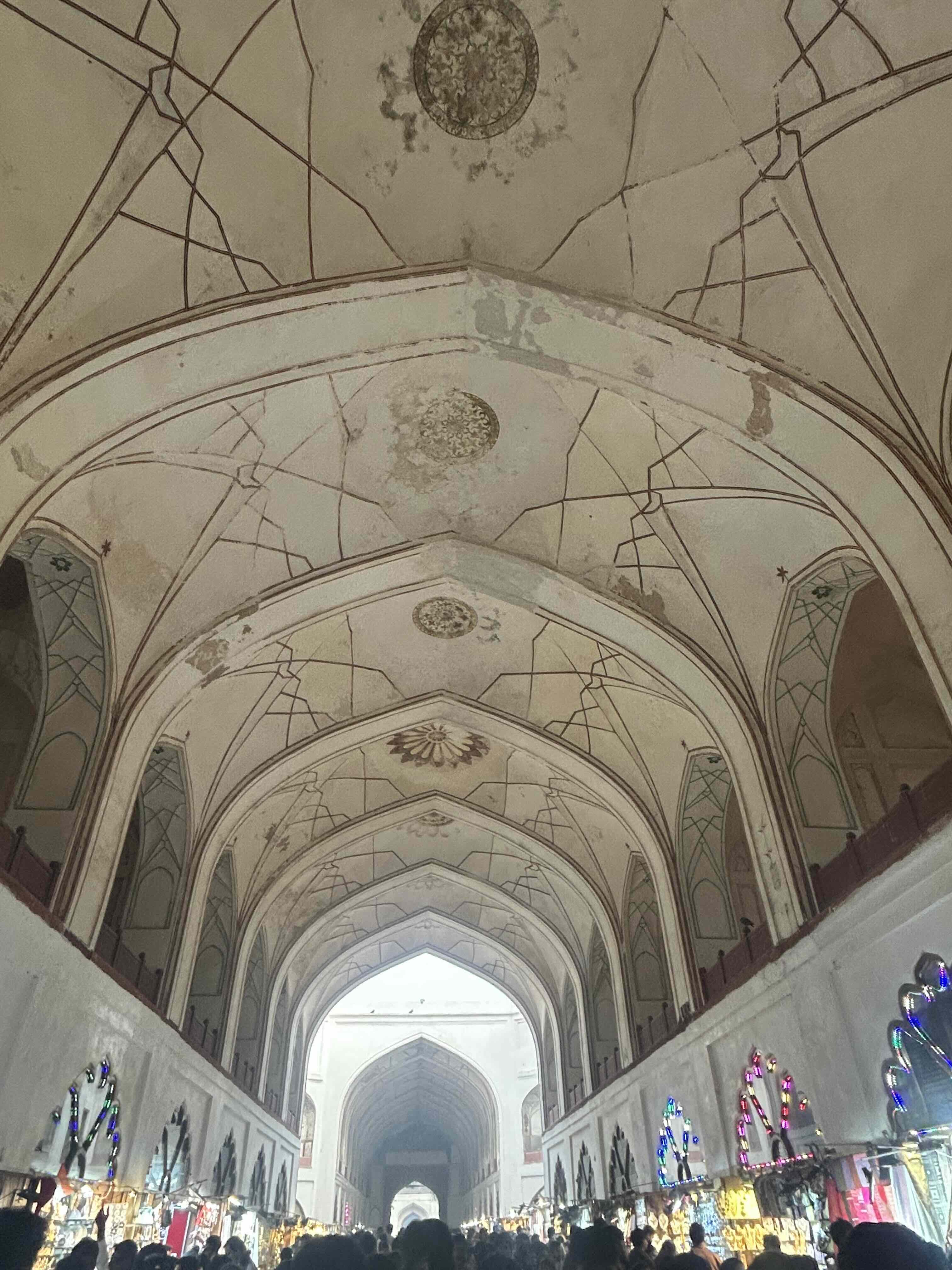
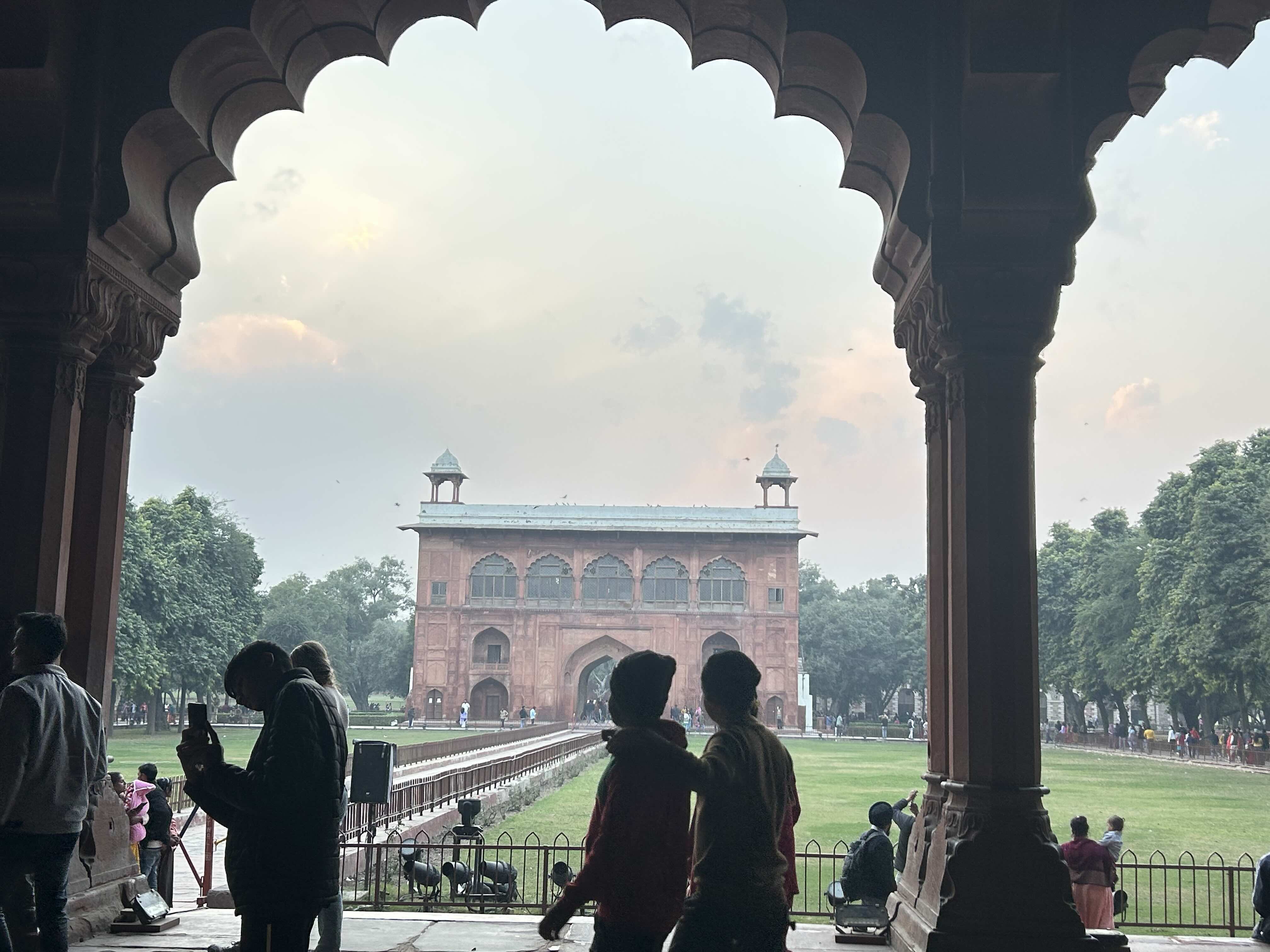
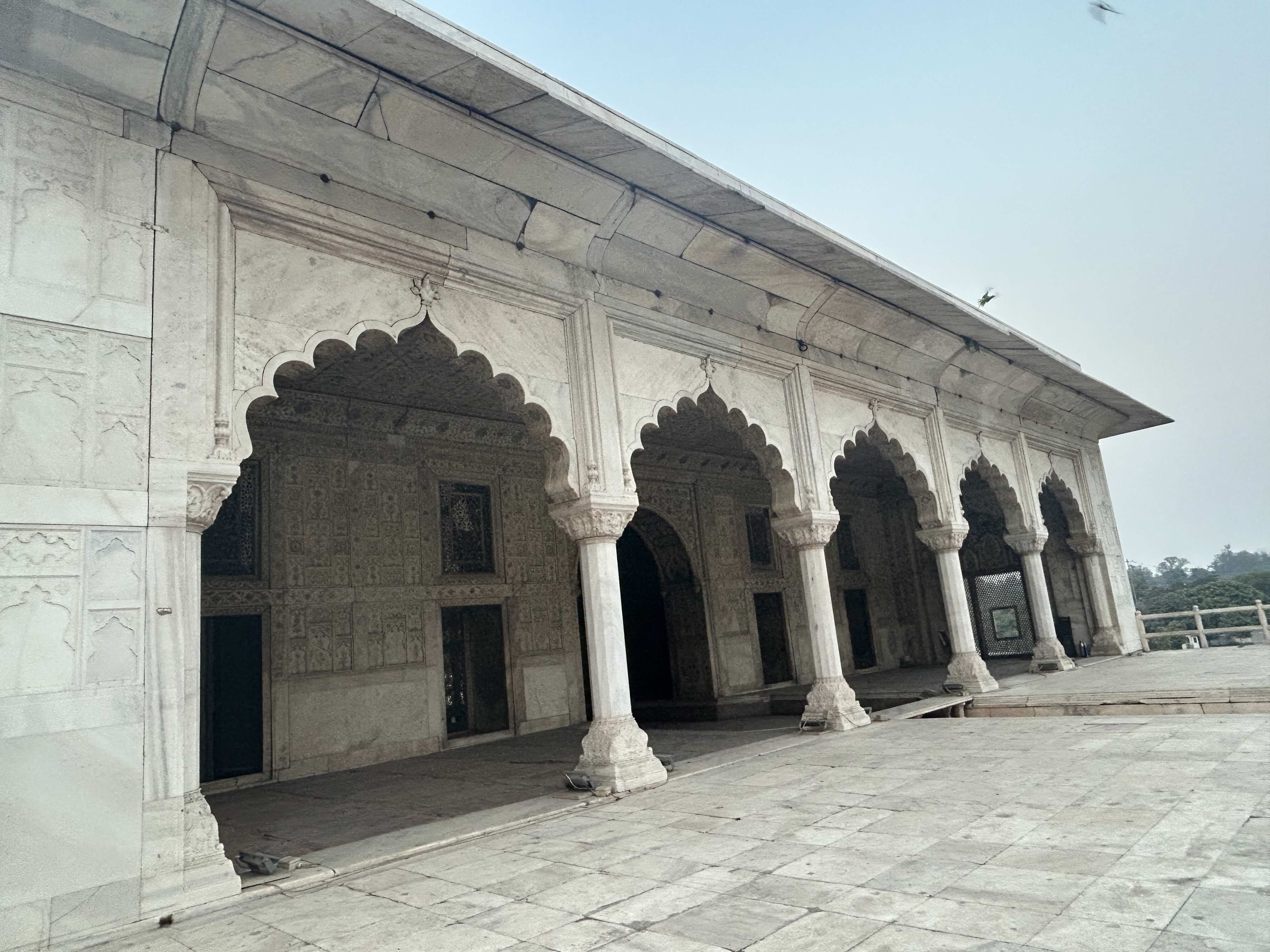
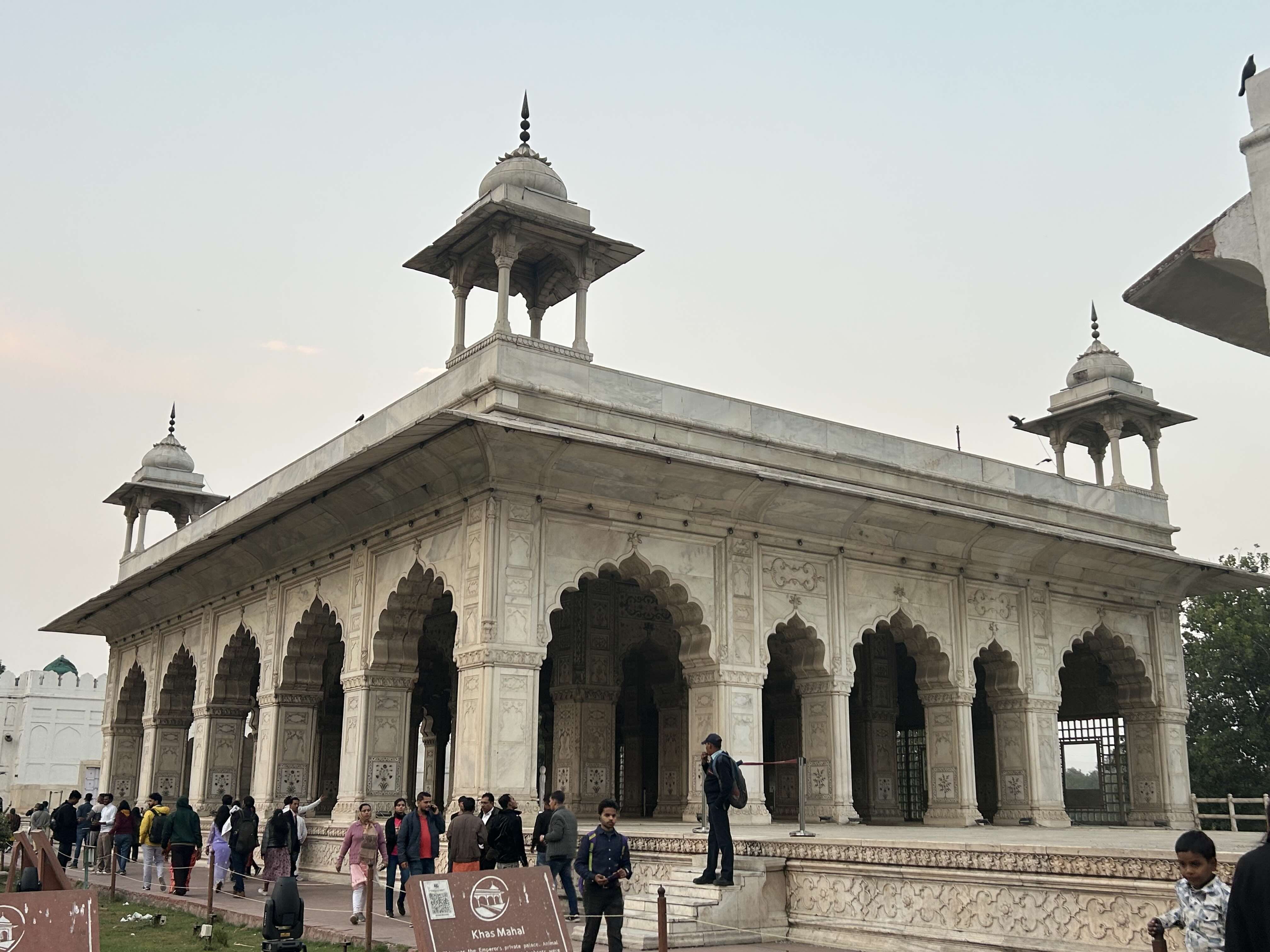
Our walk leader, Javeria, had to shout just to make herself audible. Unfazed, she led us through the crowded spaces, sharing insights not only about history but also about architecture. We entered through Chatta Chowk—one of the earliest covered markets of its time—crossed the Naqqar Khana, and reached the Diwan-i-Aam.

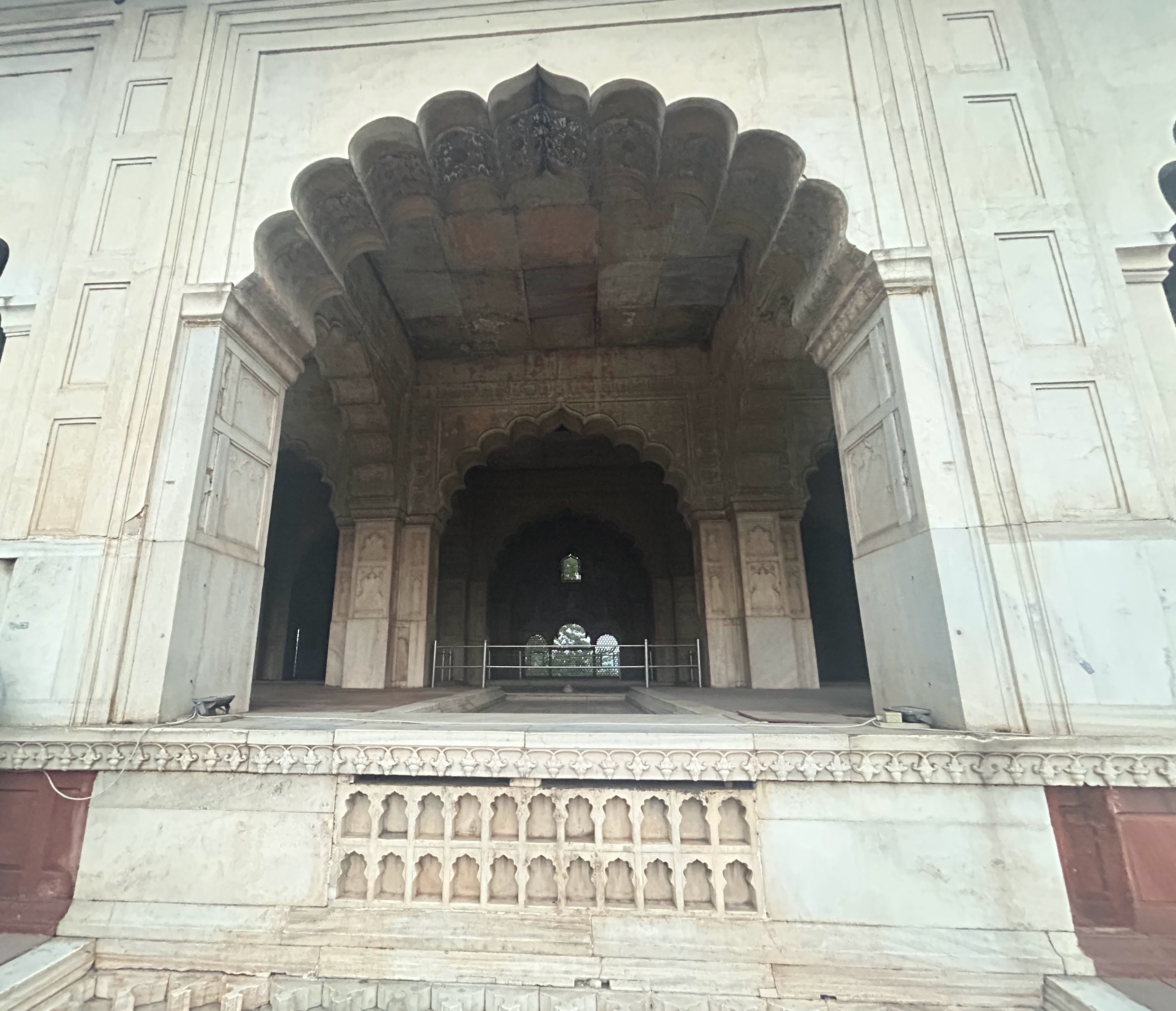
Whenever I visit forts, I find myself wondering how people lived there. How was each place used—really used, day after day? The Diwan-i-Aam is stately, and the contrast of red sandstone with the highly embellished throne stands out. But it was a small detail that shifted everything for me: hooks on the ceiling outside, used to hang curtains—muslin or velvet depending on the season. That single observation triggered my imagination more than any grand façade could.

As we paused at the corner of the Diwan-i-Aam, the fort’s hierarchy became visible in stone. The areas meant for nobles and royalty were built in Makrana marble. The fort is said to have been constructed at a cost of six lakh rupees—a princely sum, and a sizeable figure even today. But we are speaking of a period when the Indian economy was possibly booming in ways we rarely pause to remember.

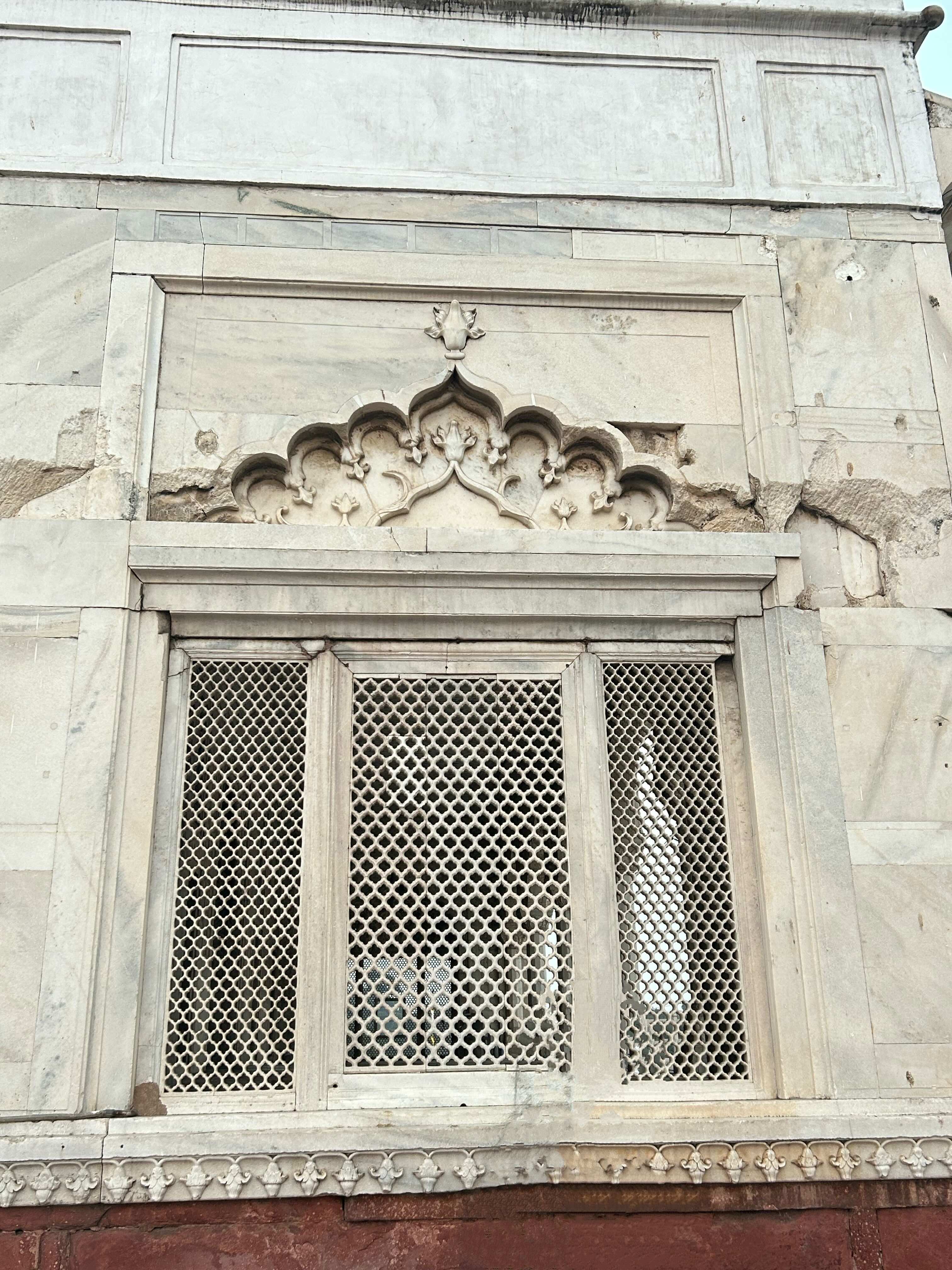
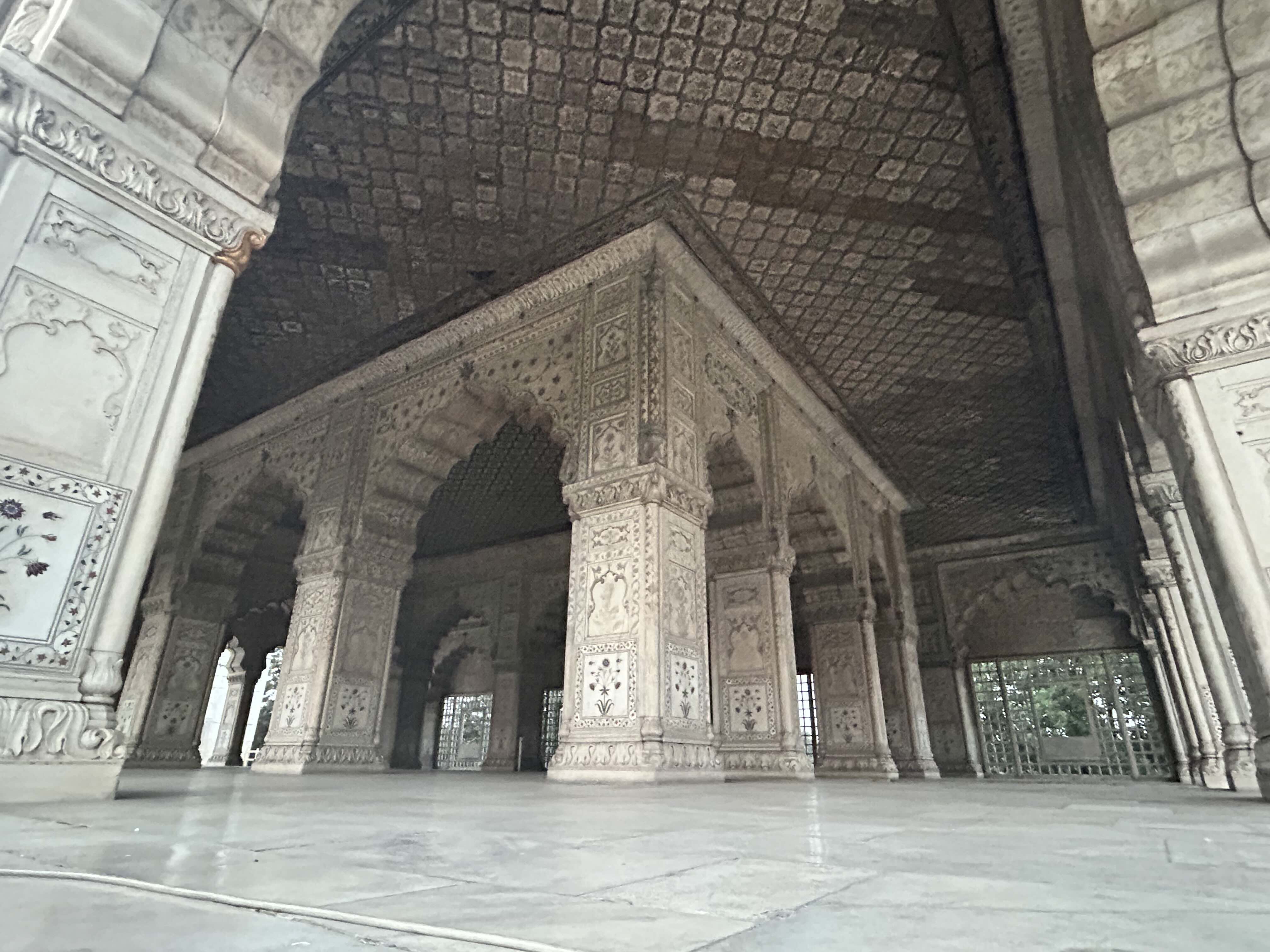
The first marble building we encountered was the Rang Mahal, a palace for the emperor’s concubines. An elaborate fountain system—run only by gravity—greets you there. I found myself wondering who the architect of the fort was. Imagine my surprise when Javeria mentioned it was the same architect associated with the Taj Mahal. And then the old story surfaced in my mind: wasn’t his hand chopped off so he could never build anything again? Apparently not. History, like memory, collects myths the way monuments collect dust.

We moved on to the emperor’s sleeping quarters. There is a barricade on the steps so people don’t climb them now, but you can still see a depression where the marble has slowly worn down with regular use. These quarters were never meant for mass entry. Today, most of the marble spaces can only be seen from outside—beauty held at a distance.

The lawns were being readied for an evening programme, ticketed. The security guards were almost shooing everyone out. But then, they underestimated our curiosity. We stopped near the pavilions to look at the Zafar Mahal: a red sandstone structure constructed by the last Mughal emperor, Bahadur Shah Zafar. It stands out for its bare, un-embellished walls—a quiet testimony to the loss of power of the Mughals.

On our way out we saw the barracks built by the British after 1857 to house soldiers. The question came automatically: where did soldiers stay earlier? Javeria pointed out that rooms within the fort walls were used for them. What struck me even more was another fact: only the emperor stayed in the fort. Even his sons and daughters were not allowed to live there. The power of intrigue, deceit, and politics—clearly—has existed in all times.

By the time we left, the crowd had thinned. For the first time that day, one could stand at the entrance and simply marvel at what the fort must have proclaimed in its heyday.

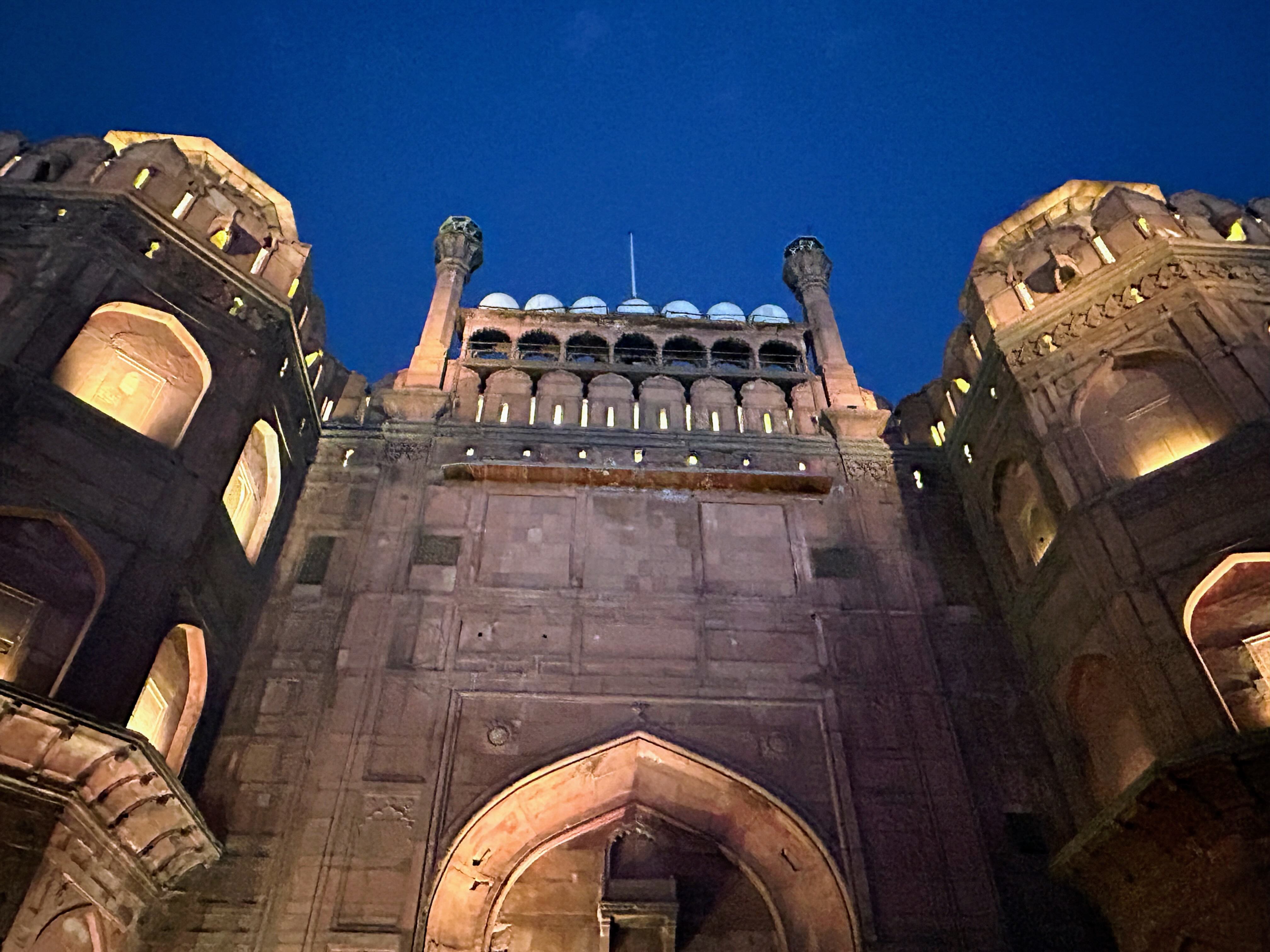
I looked up at the lit ramparts and realised the fort would pull me back again. The child who watched Republic Day parades on television, spellbound, is not yet satisfied. Until the next time, the Red Fort will remain what it has become for me: a medieval icon adopted by a modern nation.

No Plans, So I Time-Traveled

Christmas fell midweek, and I had no particular plans. After all, when one doesn’t have to go to church and pray, what does one do—eat and sleep?

As I was contemplating a lazy Thursday, an email from Tales of the City dropped in about a heritage walk around the churches of Purani Dilli. It felt like the universe was gently nudging me off the couch.

New Delhi may look like the diva, but it’s Purani Dilli that preserves the city’s soul. In Old Delhi, you can time-travel in a few steps—past a gate, around a corner, across a lane that pretends it has always been here. The walk began at St. James’ Church, and I found myself in a large group of walkers. Clearly, I wasn’t the only one with no plans for a midweek holiday.

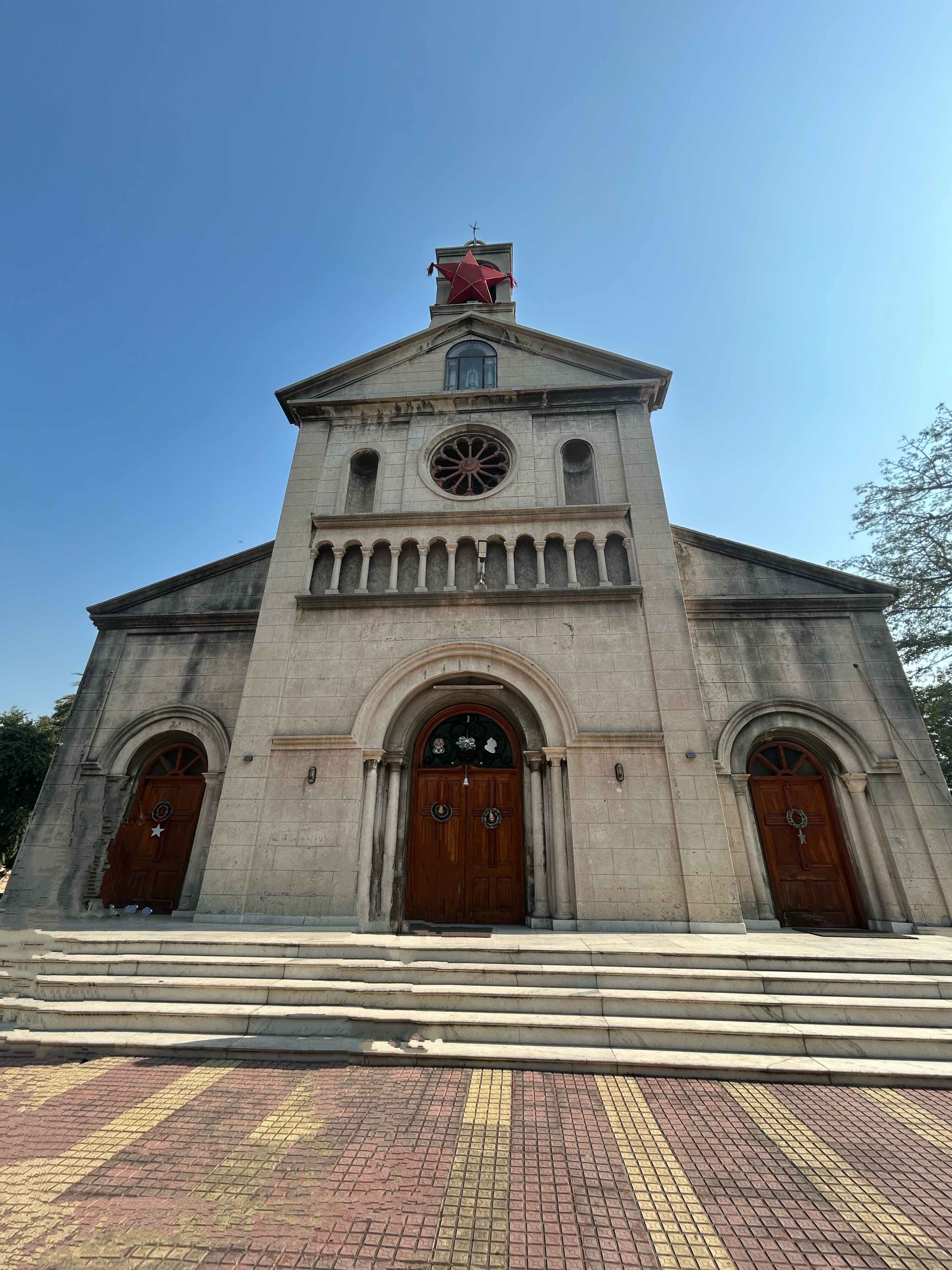
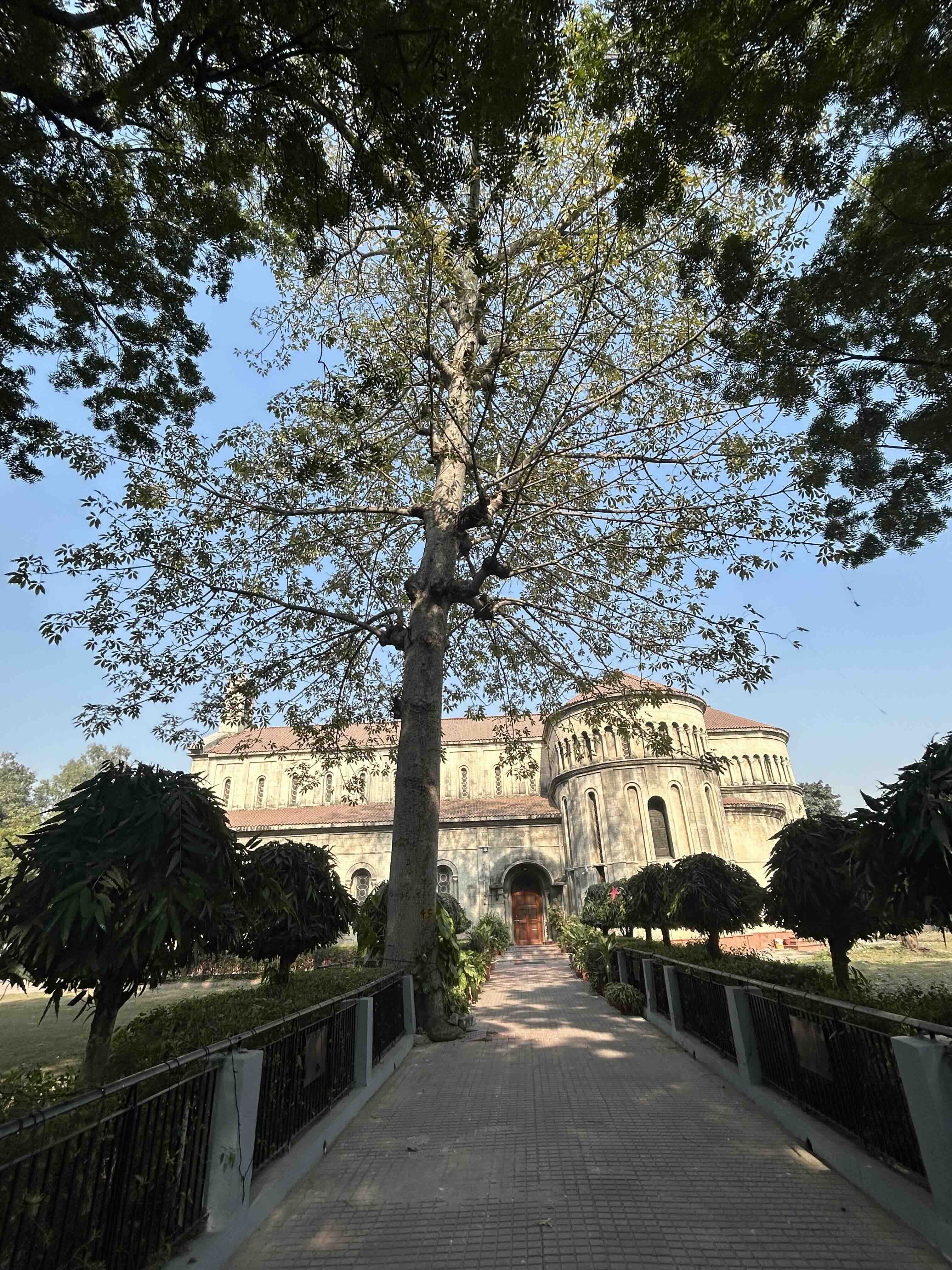
This was my second visit to the church. The last time I came, the compound was quiet, almost meditative. Today, it was full of cars. A service was underway, so we avoided going inside. Still, I have always been intrigued by this church—its location near Kashmere Gate, almost next door to Lothiyan cemetery, which was the city’s earliest Christian cemetery. There’s also the story of its origin: a church built as a vow (a very Indian thing to do) by a private individual, Colonel James Skinner—a man who struggled to fit into the British world due to his mixed parentage, and yet went on to build an institution that later became the church of the Viceroy of India.

The church compound holds more than a place of worship. It houses the private cemetery of the Skinner family, and, most importantly, the grave of William Fraser, Commissioner of Delhi. In fact, the grave pre-dates the church and may have influenced the choice of location. Next to Fraser’s grave stands a large cross erected by the British in memory of British families killed in 1857. That the memorial is part of narrative-building becomes evident when one notices engravings not only in English but also in Persian—the lingua franca of those days.

When we stepped out of the compound, we could see the old campus of St. Stephen’s, which today houses the office of the Chief Electoral Officer, Delhi. Purani Dilli does this effortlessly—lives history, then repurposes it as required. Led enthusiastically by Shreya Sahay and Karan Tekwani, our group moved along the busy lanes towards the next stop.

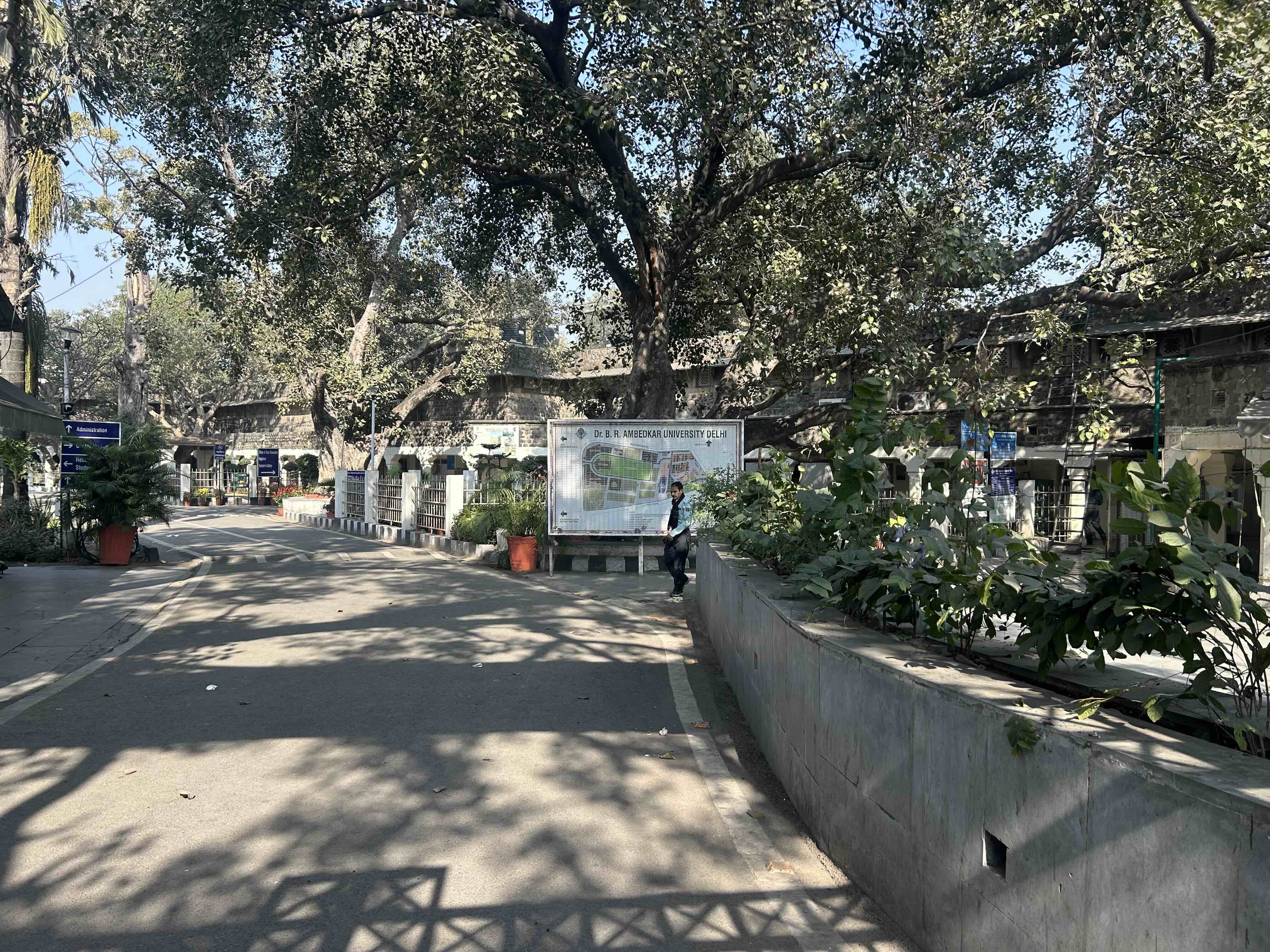
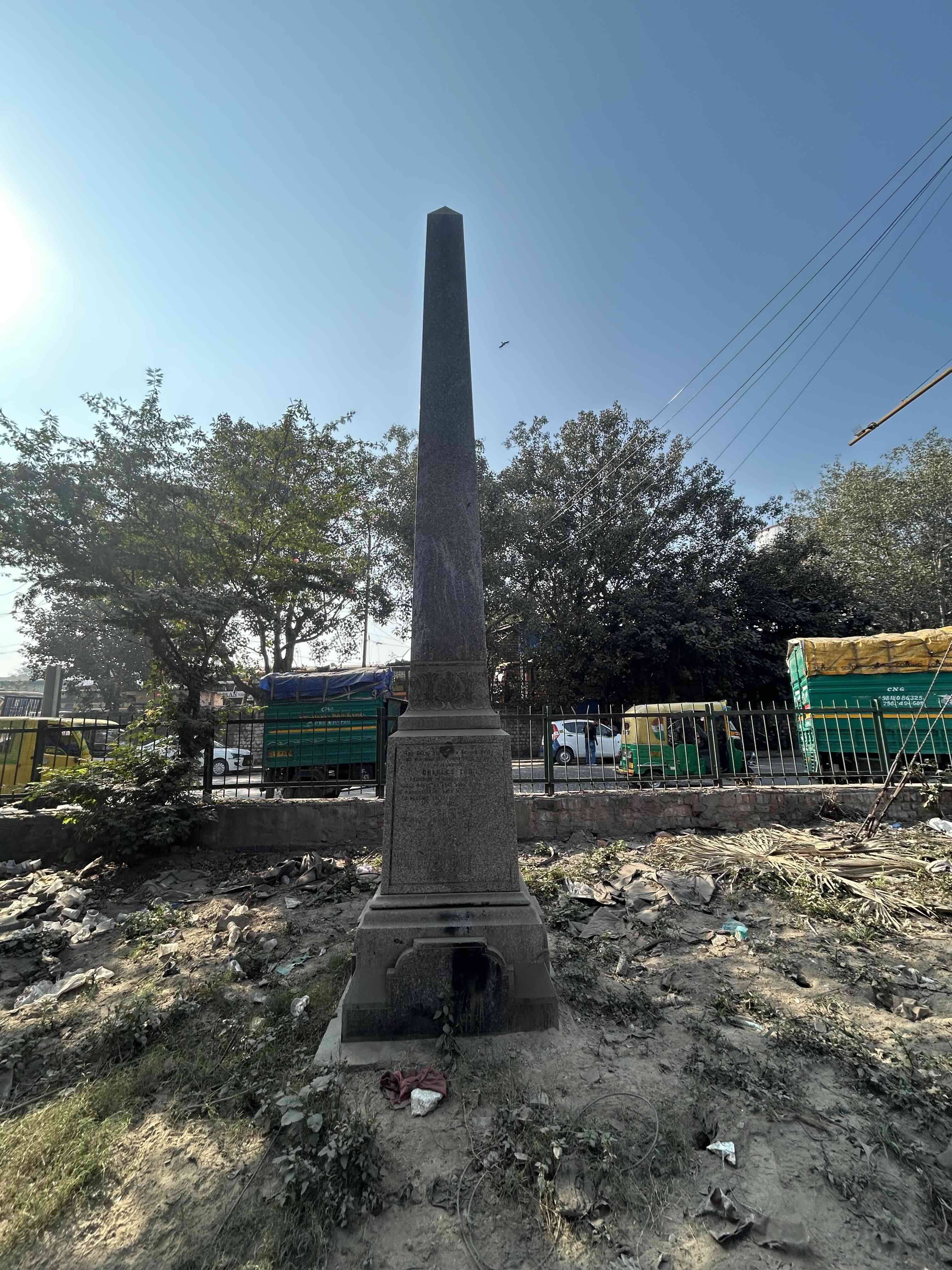
On the way, we passed Dr. B. R. Ambedkar University and an interesting signboard that claimed the building had once been the library of Dara Shikoh and was now better known as a Partition Museum. A few steps later, the walk leaders pointed to something easy to miss: a rather nondescript obelisk lying ignored at the corner of a road. Yet this quiet structure is the Mutiny Telegraph Memorial, erected by the British in honour of the telegraph staff who sent the warning of the 1857 uprising. Today, the words on its base can barely be read; construction material and a garage crowd around it. Did I ever pause to think there could be a link between the telegraph and 1857? No. And yet, apparently, a single message—sent at the right moment—could alter the course of history. It’s humbling how cities hide their turning points in plain sight.

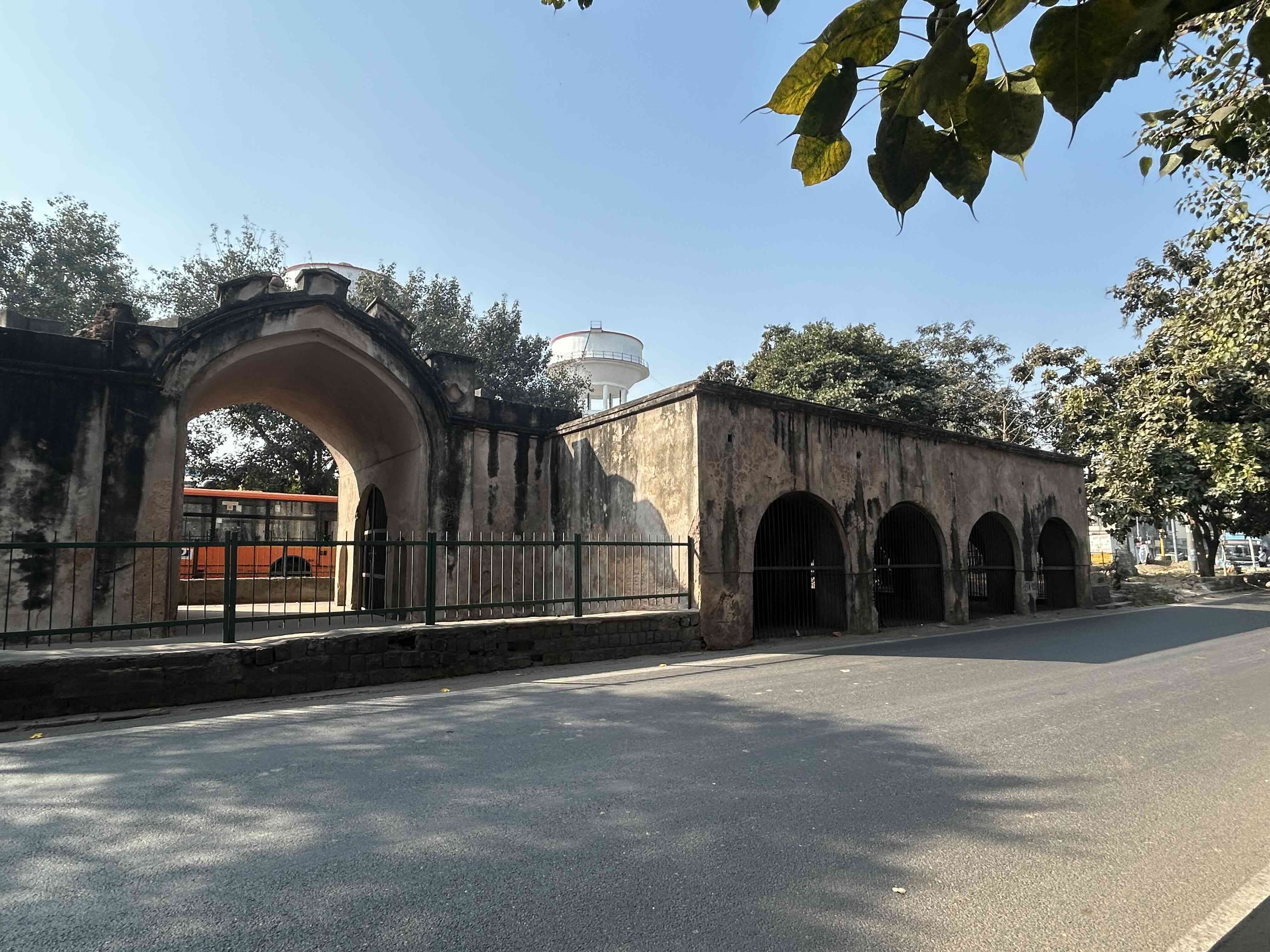
A little distance away stood another structure that draws almost no attention now: the British Magazine, constructed in the early 19th century near Kashmere Gate as a storage facility for gunpowder, arms, and explosives for the East India Company forces. In 1857, when the rebels reached Delhi, it became a target. When the British realised they couldn’t defend it, they blew it up. The ammunition is said to have burned for days, an image so dramatic it almost feels cinematic, and yet the building today sits quietly.

Our second church stop was St. Mary’s, near the Red Fort. Unfortunately, it was closed, and we could only admire the building from the outside. The walk leaders shared its layered history—how the site’s story moves through different phases of patronage and rebuilding, and how, once the later structure took shape, the church was frequented more by British officers stationed in the city. Even when a place begins with local connections, the city’s politics and power shifts can re-script who it belongs to.

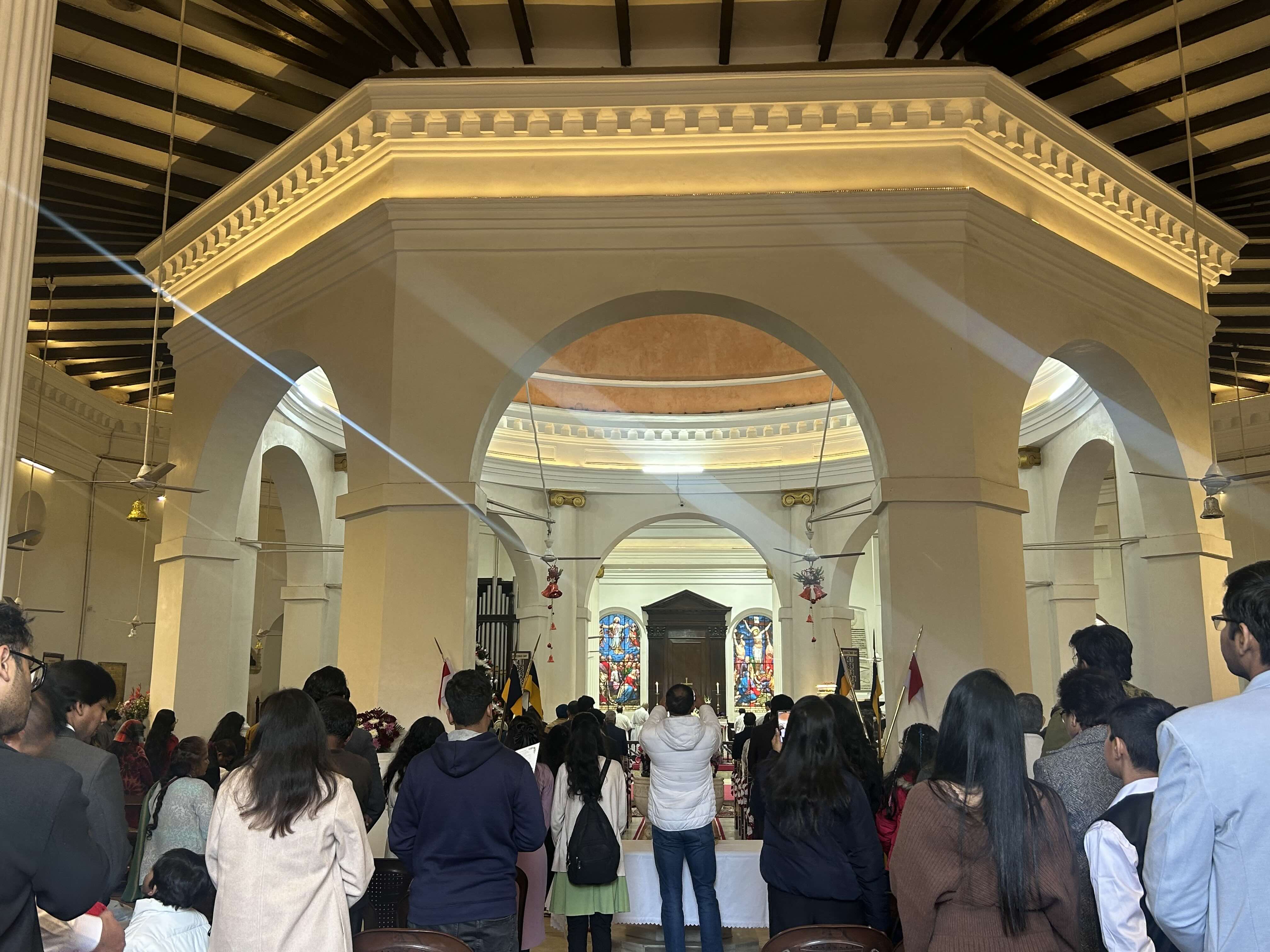
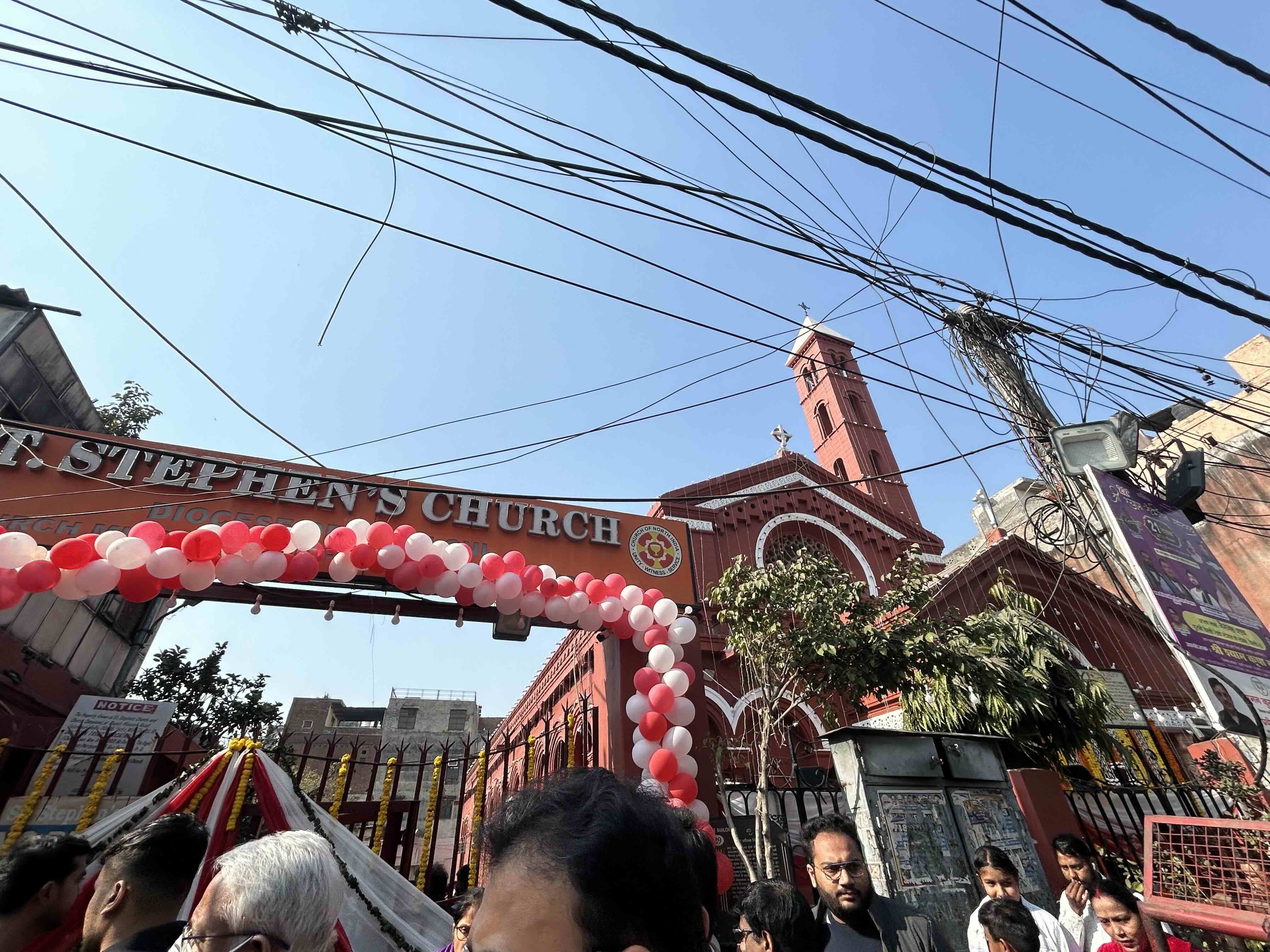
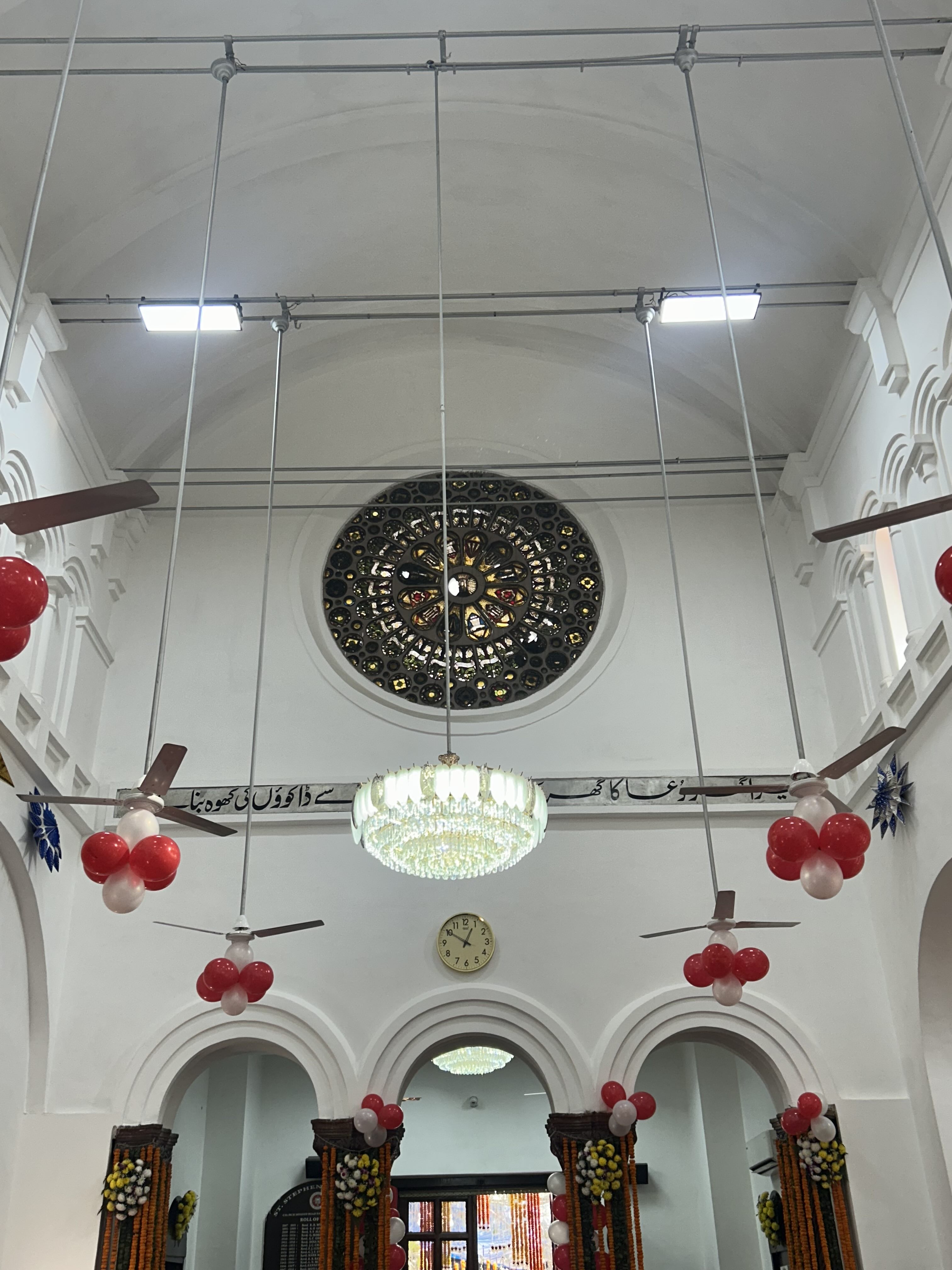
By noon, the final stop was about a kilometre away. We hopped onto e-rickshaws and landed at St. Stephen’s Church in the bustling marketplace of Church Mission Road. The service was almost over, and as we debated whether we should go in, a hymn floated out—praise for Jesus set to the tune of “Jai Jagdish Hare.” I froze for a second, smiling at the sheer ease with which India does this—borrows, blends, transforms, makes faith sound familiar without losing its meaning.

When the service ended, people streamed out and wished us Merry Christmas. Built by Anglican missionaries, the church was meant for the local population and carries inscriptions in Persian, again, a reminder of how languages travel, settle, and leave marks even in places you wouldn’t expect.

I have always enjoyed Christmas festivities, but I had never visited a church on Christmas Day. This turned out to be one of my most interesting Christmas holidays—not because it was loud or glittery, but because it gave me a glimpse into the rich tapestry of Purani Dilli.

Delhi is a palimpsest—not only of its rulers and its various capitals, but also of languages, religions, and everything that comes along with them. Spend time with the city, and it will open up its world to those who want to see it.

Guardians of Our Skies: Stories We Should Have Grown Up Knowing

We think we know what 21 looks like—restless energy, unfinished dreams, a horizon stretching endlessly ahead. I certainly believed that. But this Saturday, as I listened to the story of Flying Officer Nirmal Jit Singh Sekhon, I found myself quietly shaken. What does courage look like at 21? What does duty feel like when the cost is everything?

INTACH Delhi had announced a heritage walk at the Indian Air Force Museum, led by Retired Group Captain (Dr) Shajahan Avadi. It was curiosity that took me there. Only later did I realise how rare the opportunity was—the museum isn’t part of the usual tourist trail, and this was its very first heritage walk.

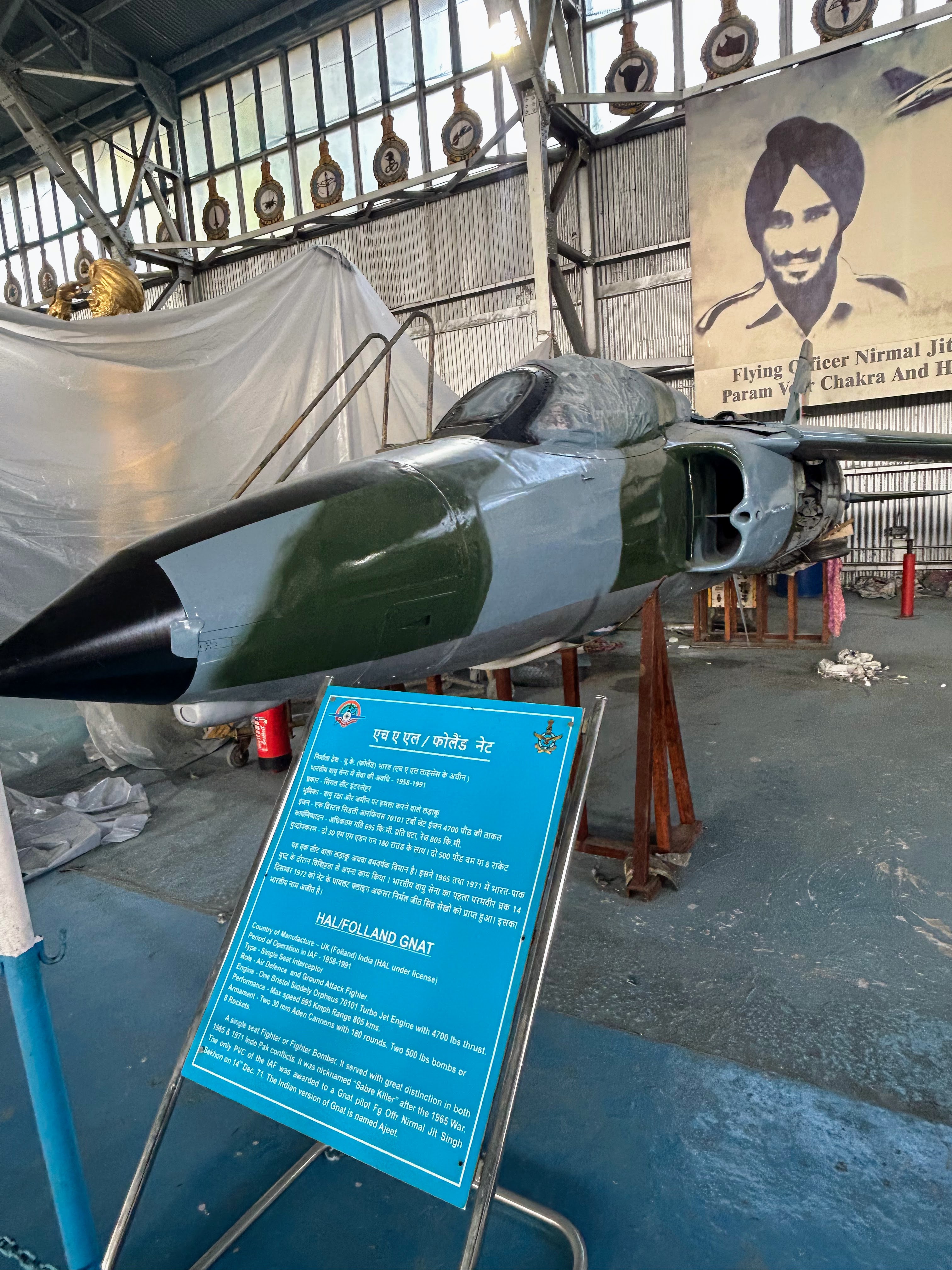
At the entrance, two things stood out. A crowd of schoolchildren—wide-eyed, excited—and at the gate, a real aircraft, standing like a guardian of memory. The walk leader began with a question: Why is a Gnat placed right at the entrance? Before we could think, an officer injured in service rolled past us in a wheelchair. The answer, perhaps, lay in the silence he left behind.

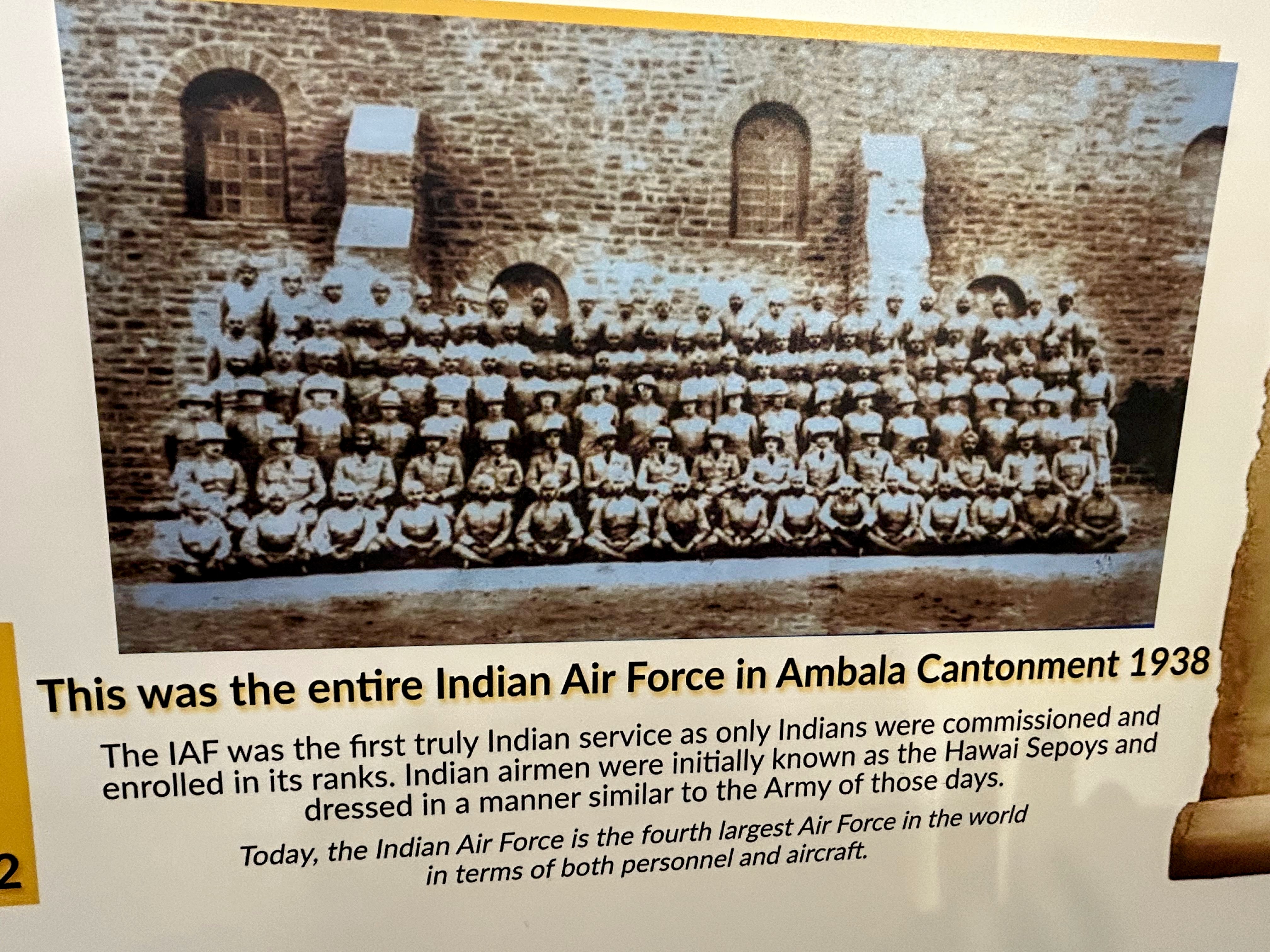
Inside, old photographs whispered forgotten stories. We heard of Indra Lal Roy, of “Jumbo” Mazumdar, of Sekhon—names that deserve far more space in our collective memory. The narrative unfolded like a tapestry: Dakotas landing in Srinagar in 1947, missions in 1965 and 1971, UN peacekeeping roles, and humanitarian operations during the Uttarakhand floods. These were not just stories of war—they were stories of service, endurance, and humanity.

Then came the aircraft displays. A Japanese kamikaze plane. A Pakistani Sabre shot down in 1971. And across from it, the small, almost fragile-looking Gnat. It was impossible not to imagine Sekhon climbing into it, fully aware that he may not return. The only Param Vir Chakra awardee of the Indian Air Force was just 21 years old.

For two hours, we walked, listened, absorbed. But more than the exhibits, it was the weight of the stories—the quiet bravery, the unspoken sacrifices—that stayed with me.

As I stepped out of the museum, a thought lingered: Why don’t we tell these stories more often? Why aren’t they part of every Indian child’s growing-up years? It was heartening to learn that the museum was in the process of moving to a larger building with more exhibits.

Maybe that morning didn’t just teach me history. Maybe it deepened my gratitude for the freedom I live so casually, so comfortably—freedom that someone, somewhere, once guarded with their life.

A Winter Walk Through Purani Dilli: Stories, Streets, and Subah ke Pakwan


With winter slowly tightening its grip on the city, I mentioned to a colleague last Friday that this year I wanted to finally try Daulat ki chaat. A fanatic Benarasi, she laughed and said, “You should go to Benaras and taste the better version.” Perhaps she wasn’t wrong—but Delhi, for all its culinary rivalries, is a food lover’s paradise. And winter? Winter is Delhi at its delicious best.

The chill in the air sharpens appetites and opens up the full spectrum of flavours: from savoury chaats to sinful ghee-soaked sweets. Amid it all, Purani Dilli holds a special place in every foodie’s heart. This Sunday, I joined a food walk titled Purani Dilli ke Subah ke Pakwan, curated by Tales of City and led by the knowledgeable Chef Sadaf Hussain. Like many, I associated Purani Dilli primarily with its legendary non-vegetarian fare.

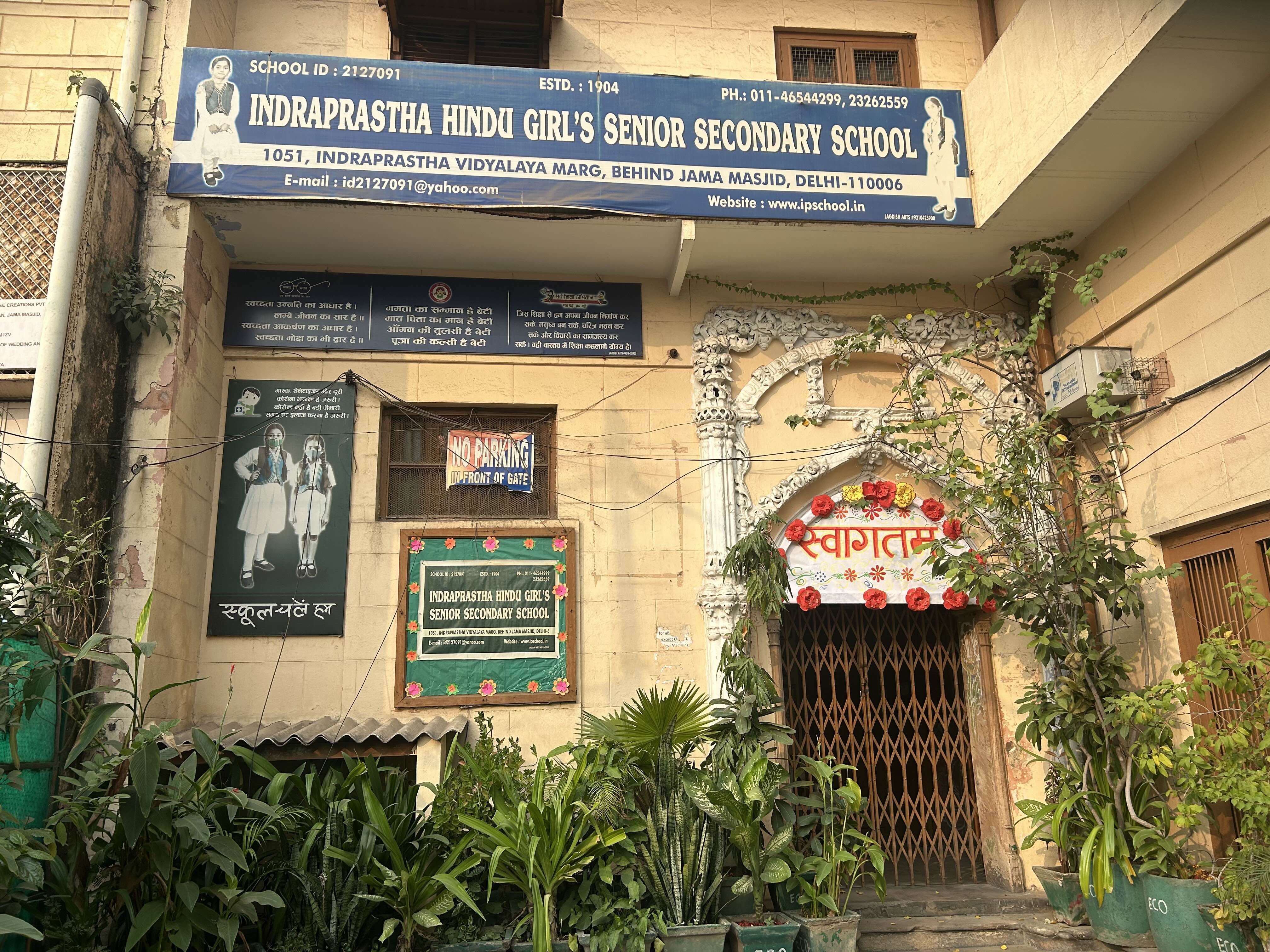
The early-morning ride through its narrow lanes was surprisingly smooth—the city was still stretching awake. The walk began in front of Indraprastha Hindu Girls’ Senior Secondary School, the city’s first girls’ school, tucked behind Jama Masjid.

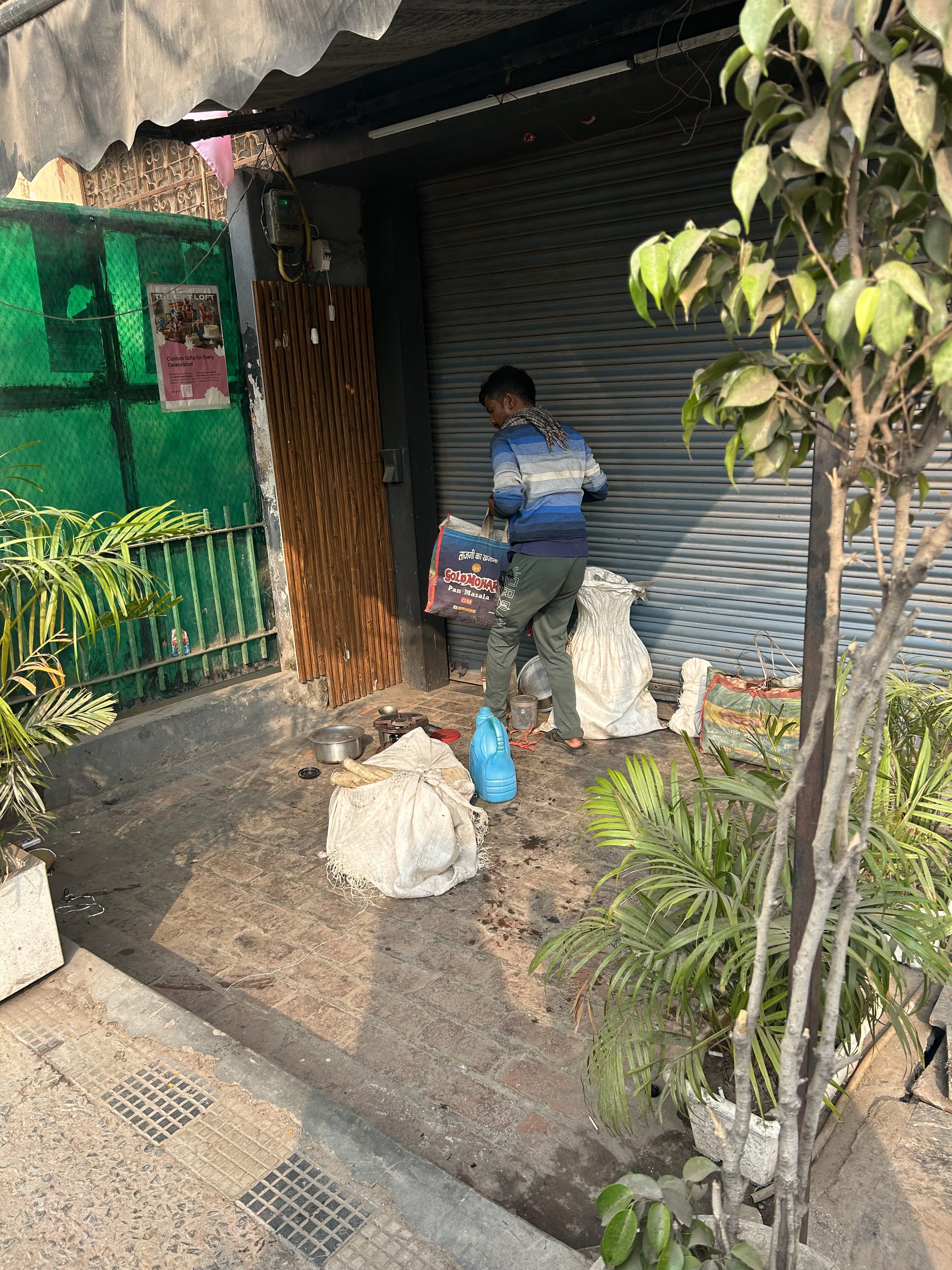
As we gathered, waiting for the walk to begin, I absorbed the scene around me: daily-wage earners cooking their modest meals, people taking their first sip of morning tea, a few men bathing by a tubewell, and roadside vendors quietly assembling their makeshift shops. Purani Dilli wakes up in chapters, each rooted in centuries of habit.

Once we set off, Chef Sadaf immediately challenged our assumptions. “This,” he announced, “will be a vegetarian food walk.” A ripple of surprise passed through the group.

Our first item was chai. I’m not a tea drinker—certainly not fond of roadside versions that lean heavily on sugar—yet this cup was surprisingly pleasant and perfectly sweet. Warm hands, warm cup, cold morning: Delhi in winter distilled into a moment.

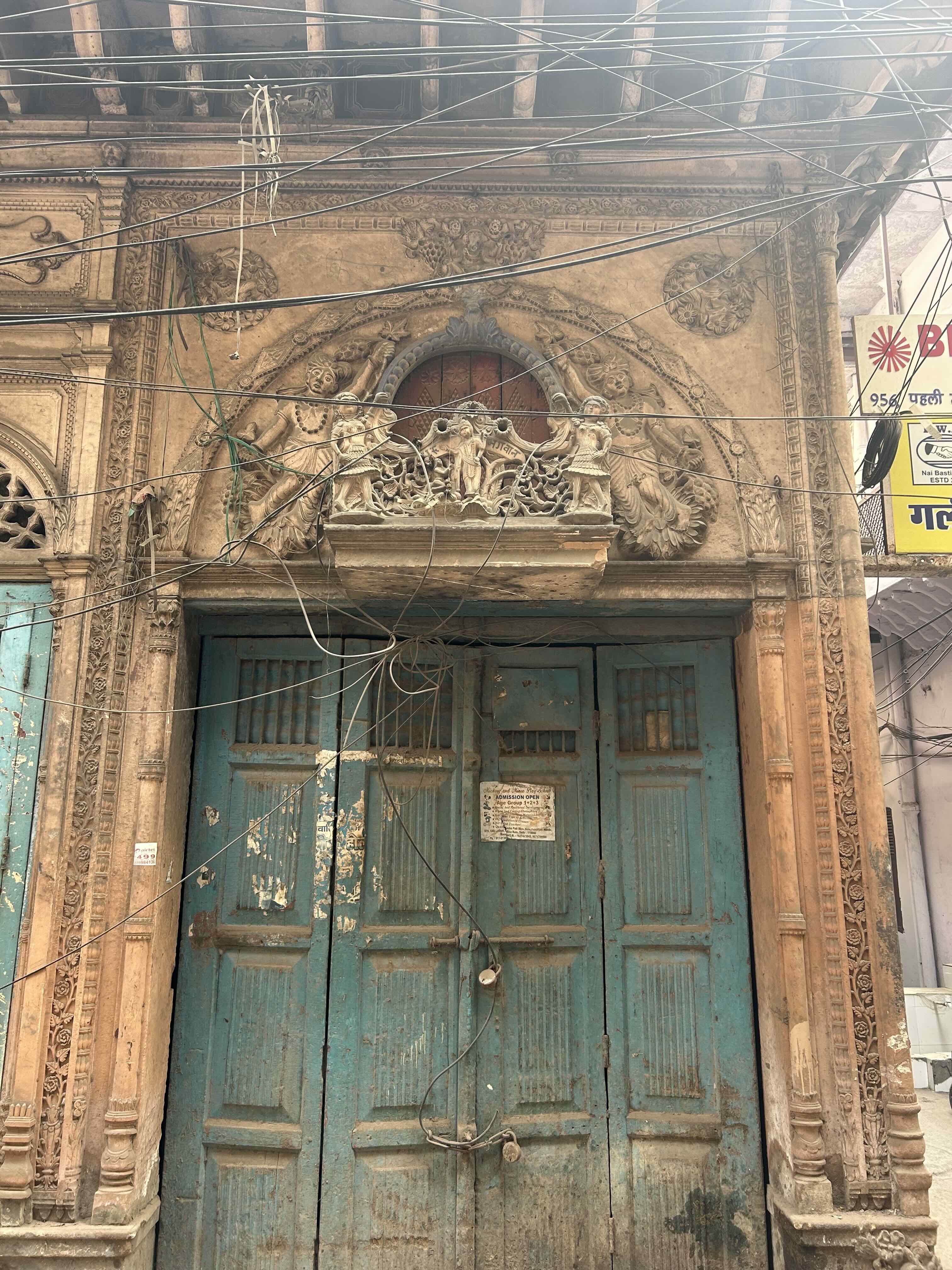
As we walked, we learned how the old city once attracted people for their skills, leaving an imprint in street names that referenced professions long since faded. Navigating the tangled lanes—dodging bikes, scooters, rickshaws—was an adventure of its own. We passed doors that had obviously seen better days. The neighbourhood is a labyrinth where every turn looks like the last, except for the unmistakable pulse of life running through it.

Our next destination was the famed Lotanji Cholewale. The shop, recently catapulted into mainstream fame after being invited to serve at the Ambani wedding, was buzzing with customers. The kulcha had a different texture than the ones I’d eaten before, while the chole was intensely flavourful. They serve three versions: less spicy, medium, and very spicy. We prudently stuck to the middle path.

As we dipped warm kulchas into spicy chole, perched precariously on the seat of a parked scooter, our group discussed breads—origins, variations, and adaptations—proving that food walks can easily turn into impromptu seminars.

Then came the moment I was waiting for: Daulat ki chaat. I had only spoken about it two days earlier. Light, airy, delicately sweet—made from milk and winter air—it remains one of North India’s most magical seasonal desserts. I learned that its origins trace back to Afghanistan, and over time, it has woven itself into the culinary traditions of cities across northern India.

We emerged from the maze onto Chawri Bazaar—“Chawri”, from chawra, meaning “wide”. It may not appear wide today, but compared with the lanes we had just left, it certainly felt expansive. Here, we sampled warm nan khatai. I’ve eaten this crumbly cookie countless times, but never fresh off the tawa. Warm, fragrant, and gently melting—it was a revelation.

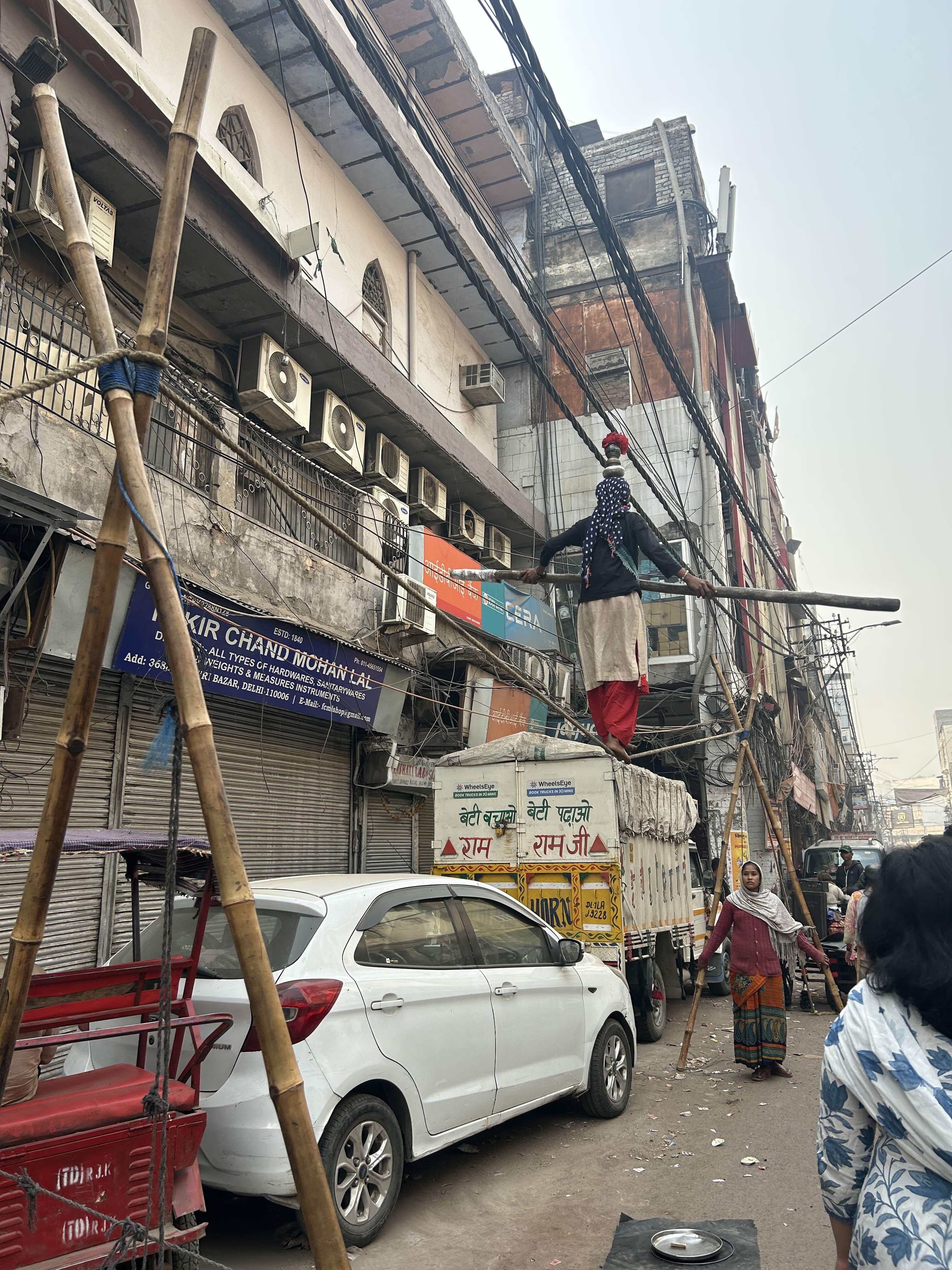
As we ate, life continued around us in its uniquely Purani Dilli way: a young girl performing acrobatics, a man getting his ears cleaned, people lining up for a shave and a massage. The old city compresses entire worlds into the width of a street.

Next came Bedmi Puri with aloo ki sabzi and a pickled carrot. Piping hot, perfectly spiced, devoured instantly. We were told to save a spoonful of the aloo sabzi for the following item—Nagori Puri with halwa. Our walk leader then demonstrated a delightful trick: puncture the top of the Nagori puri, add the leftover aloo sabzi, and crown it with a generous spoon of halwa. A small act of alchemy.

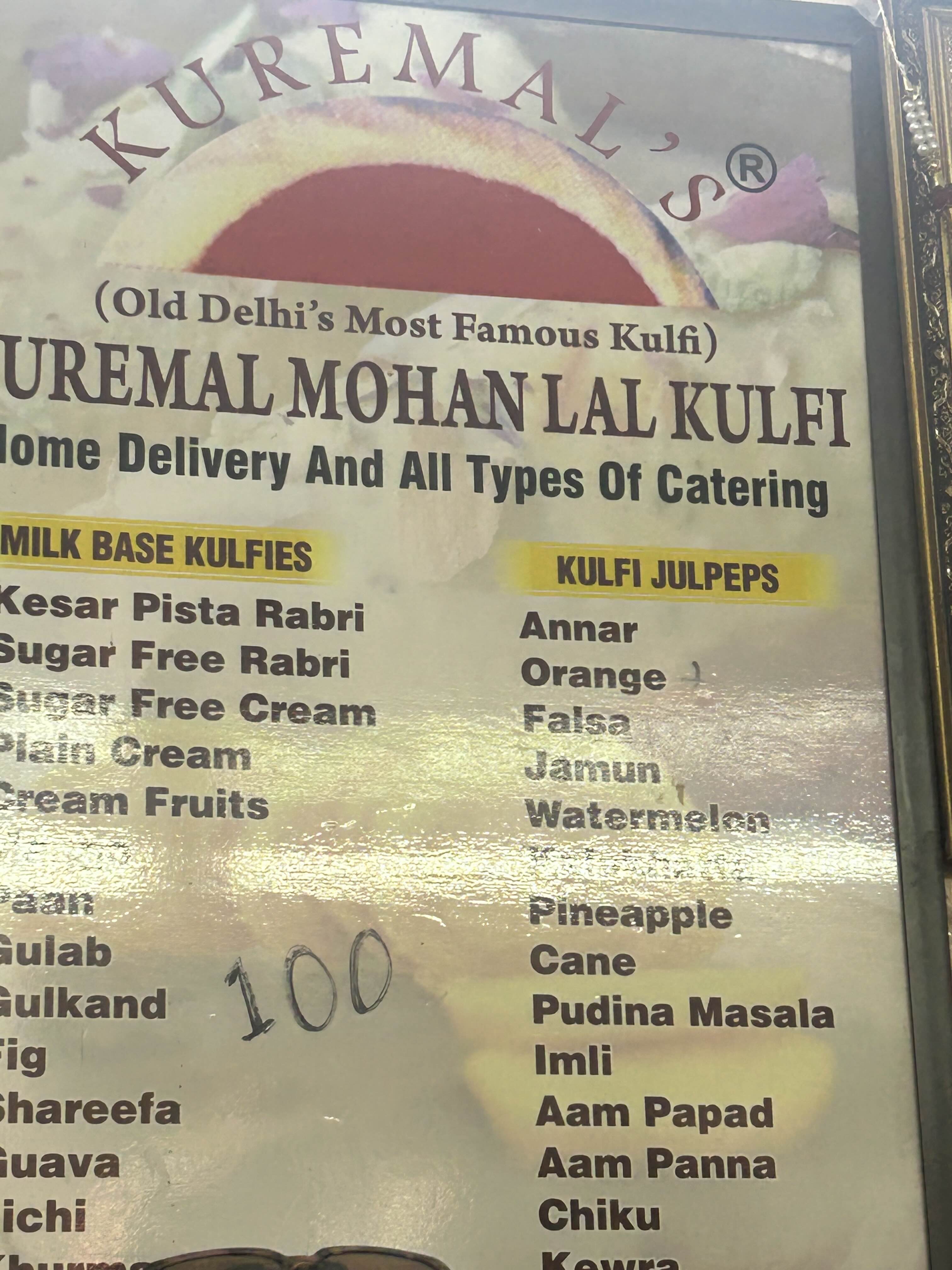
Our morning ended at one of the city’s oldest kulfi shops. As we savoured our final treat—a Santara kulfi—I noticed a curious word painted on the board—Julpep. A blend of juice, lollipops, and popsicles. Who knows—perhaps someday it will find its way into a dictionary.

Satiated with food and stories, I realised something: it isn’t just the seven historic cities of Delhi that coexist—it’s the hundreds of culinary traditions layered across generations. Purani Dilli is not merely a place; it is a living archive of flavours, skills, and memories. Each lane carries stories, each shop an inheritance, each dish a fragment of Delhi’s ever-growing love affair with food.

A Walk Through Tughlaqabad: Heritage, Haze, and the Strange Comfort of Continuity

It was during a birthday celebration for a senior colleague that the conversation inevitably drifted to Delhi’s abysmal air quality. Amid complaints about AQI, someone turned to me and asked, “Aren’t you the one who posts about heritage walks in the city?” It was an amused, almost affectionate observation. The history enthusiast in me, forever trying to nudge colleagues into discovering the layered stories of Delhi, felt seen.

The next question followed immediately: “Are the walks held even in this pollution?”
I nodded. Yes. Many of them, I said, lead us to some of the city’s most extensive green patches, pockets of nature where Delhi briefly remembers the ecology that once supported its many empires.

Returning to Tughlaqabad

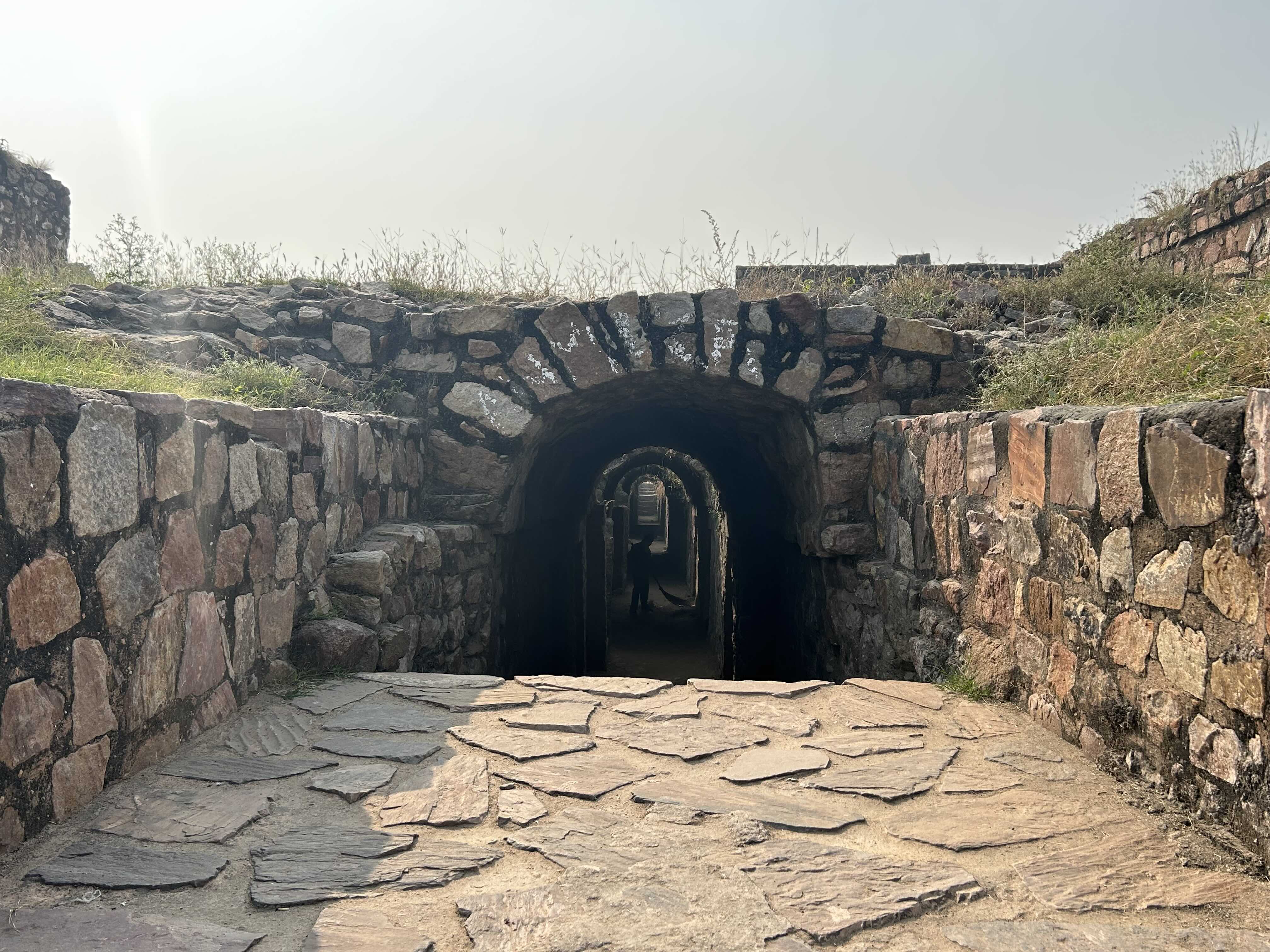
This weekend’s INTACH walk took me to Tughlaqabad, one of Delhi’s seven historical capitals. As I approached the massive fortifications, I found myself slipping back to another winter afternoon, possibly January 2006, when a friend and I first tried to explore Tughlaqabad. I had just bought my first car. We parked casually at the entrance and wandered inside, unaware of what awaited us.

The fort walls that day were crowded with groups of young men. There were no guards in sight. Two women alone in an unfamiliar, isolated space, we exchanged a brief glance, turned around, and left within minutes. That aborted visit stayed with me.

This time, everything was different. Surrounded by fellow history enthusiasts and led by the brilliant Ratnendu Ray, the experience was a complete reversal. We discussed everything from medieval weaponry to the economics of the 14th century, pausing often to take in the scale of Ghiyas-ud-Din Tughlaq’s vision.

Walls Built to Deter Eternity

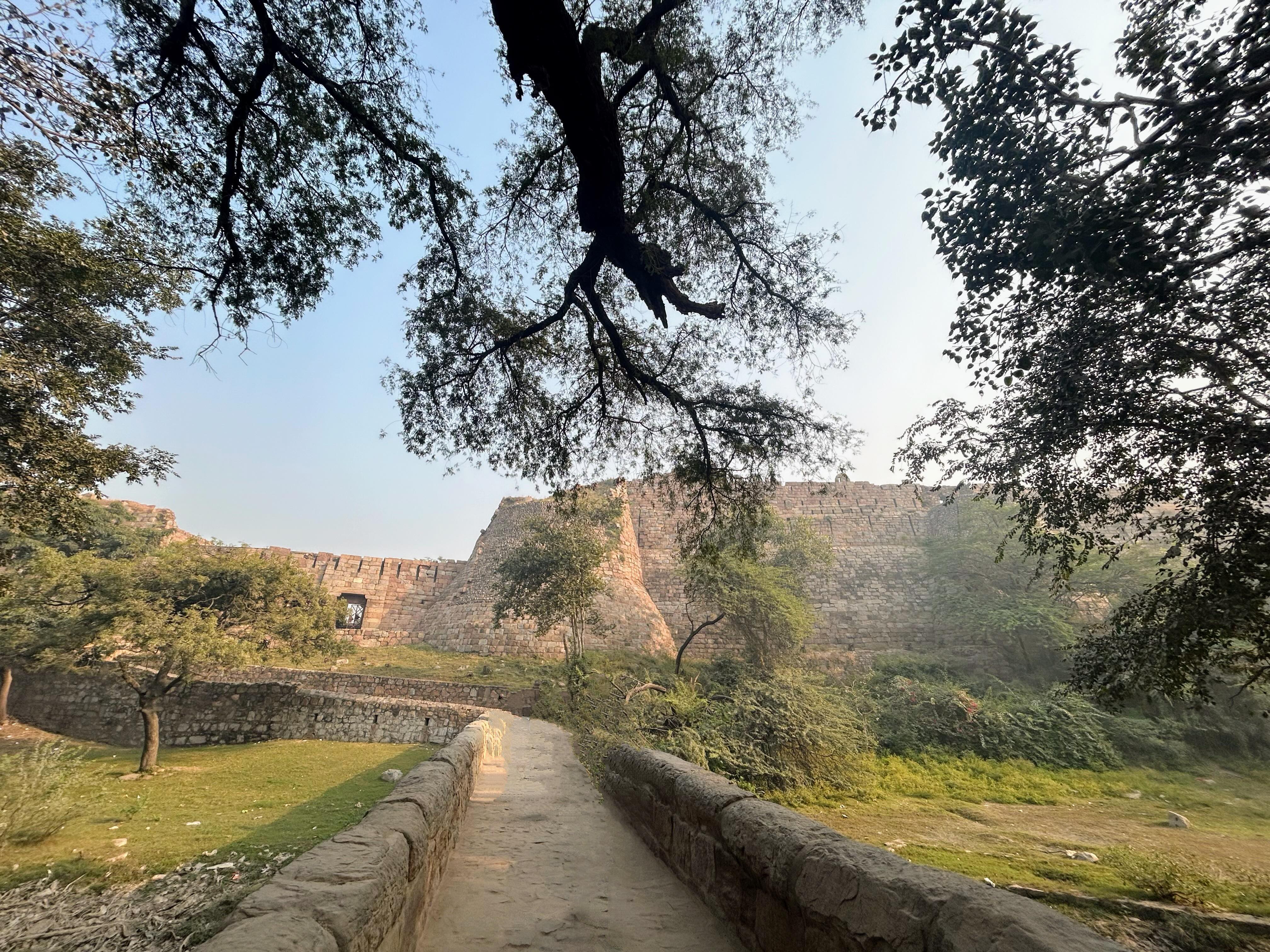
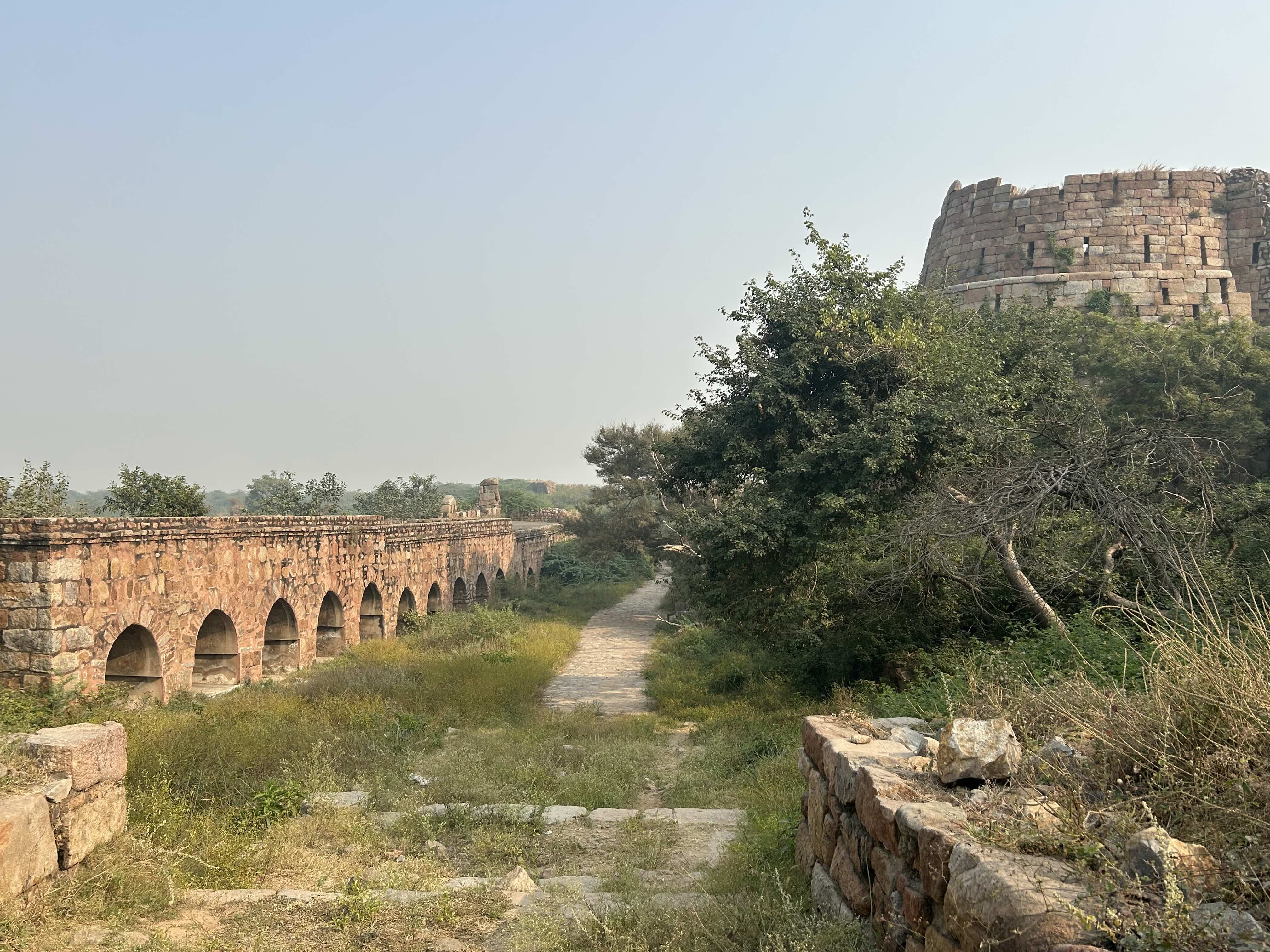
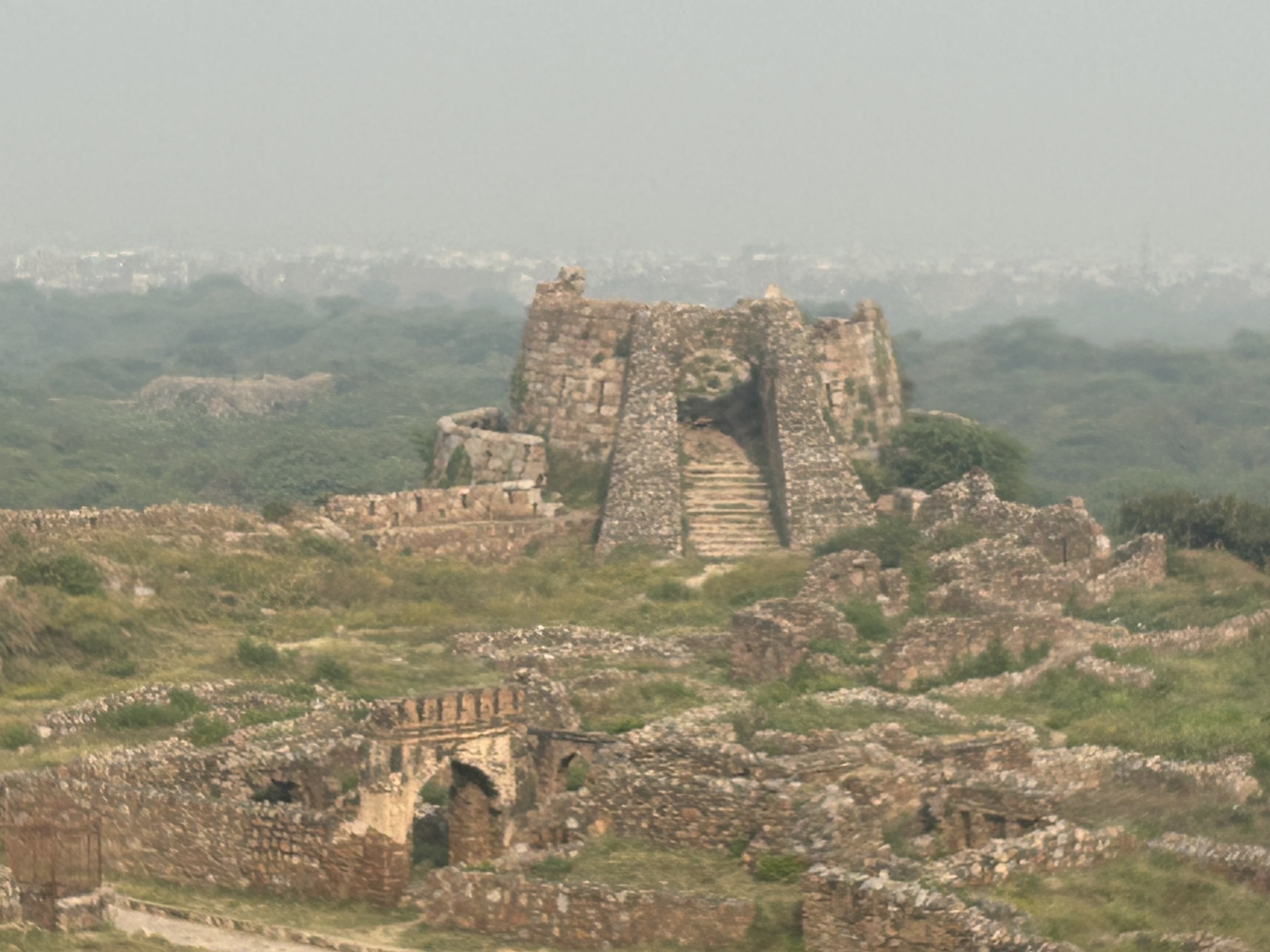
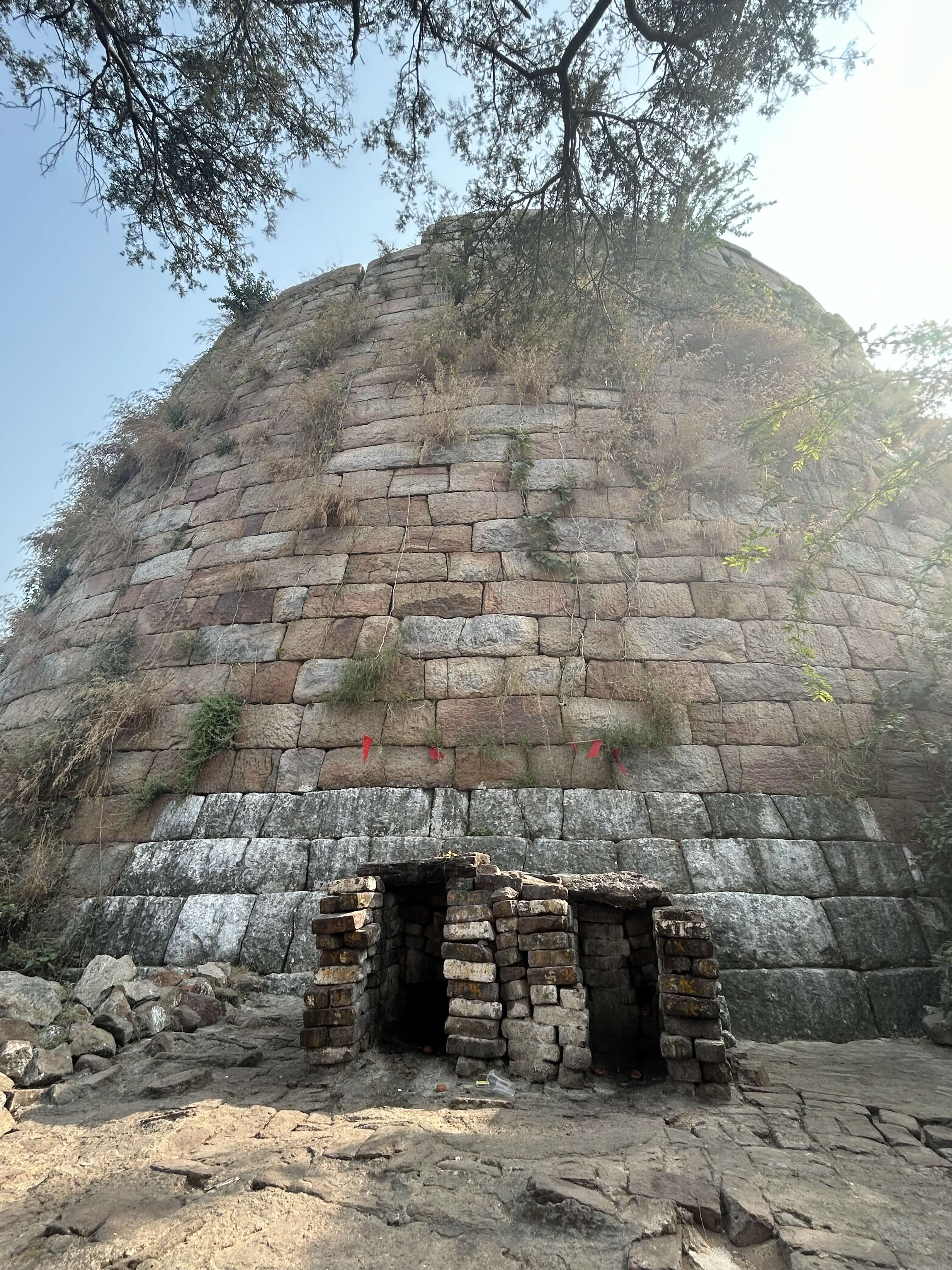
The fort announces its presence long before you reach the gate. Even in their dilapidated state, the enormous stone walls, spanning over six kilometres in a half-hexagonal shape, retain a quiet arrogance. They were once meant to intimidate enemies, withstand sieges, and hold power. Today, they are softened by shrubs, wild grass, and the slow generosity of time.

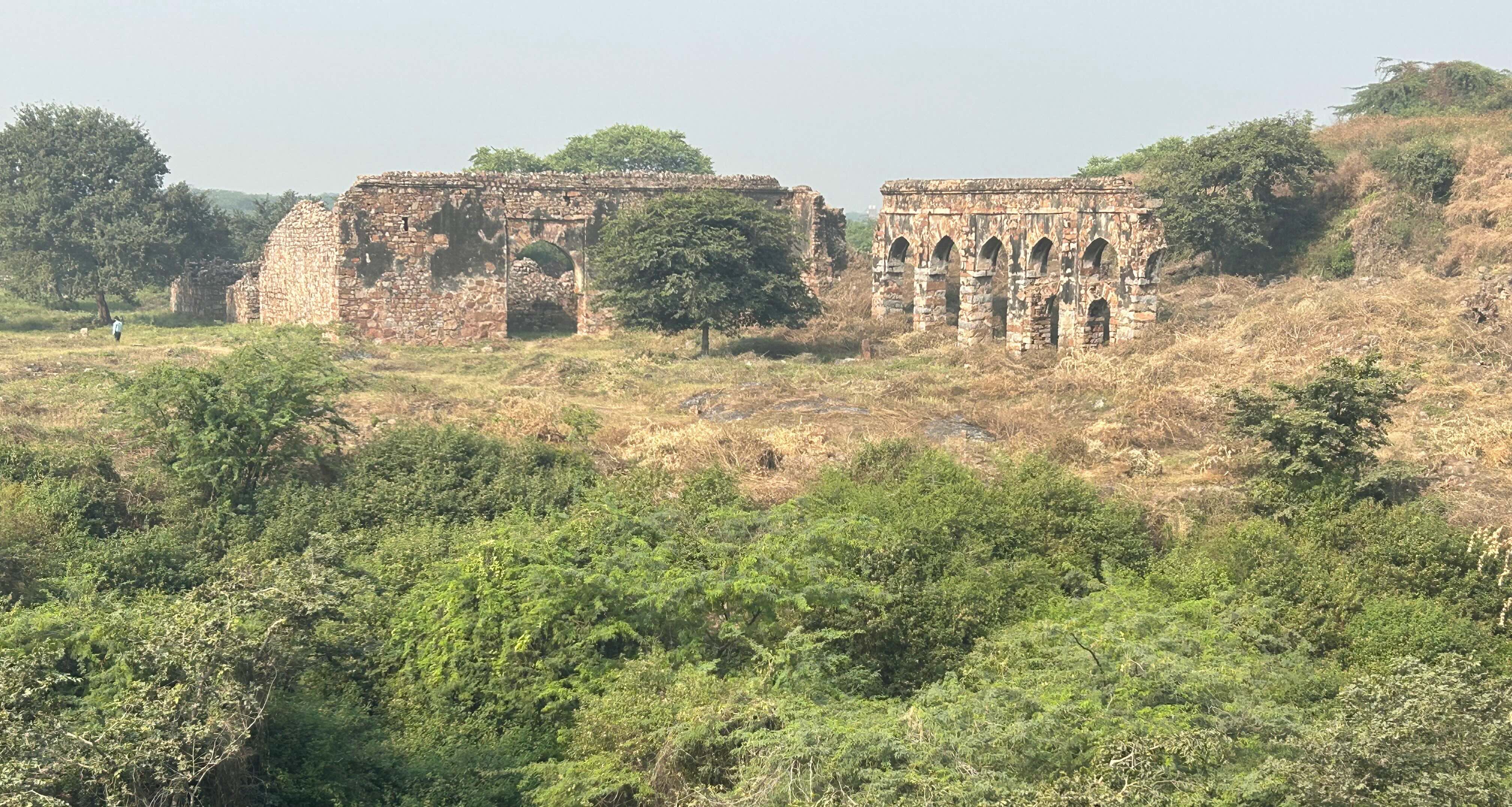
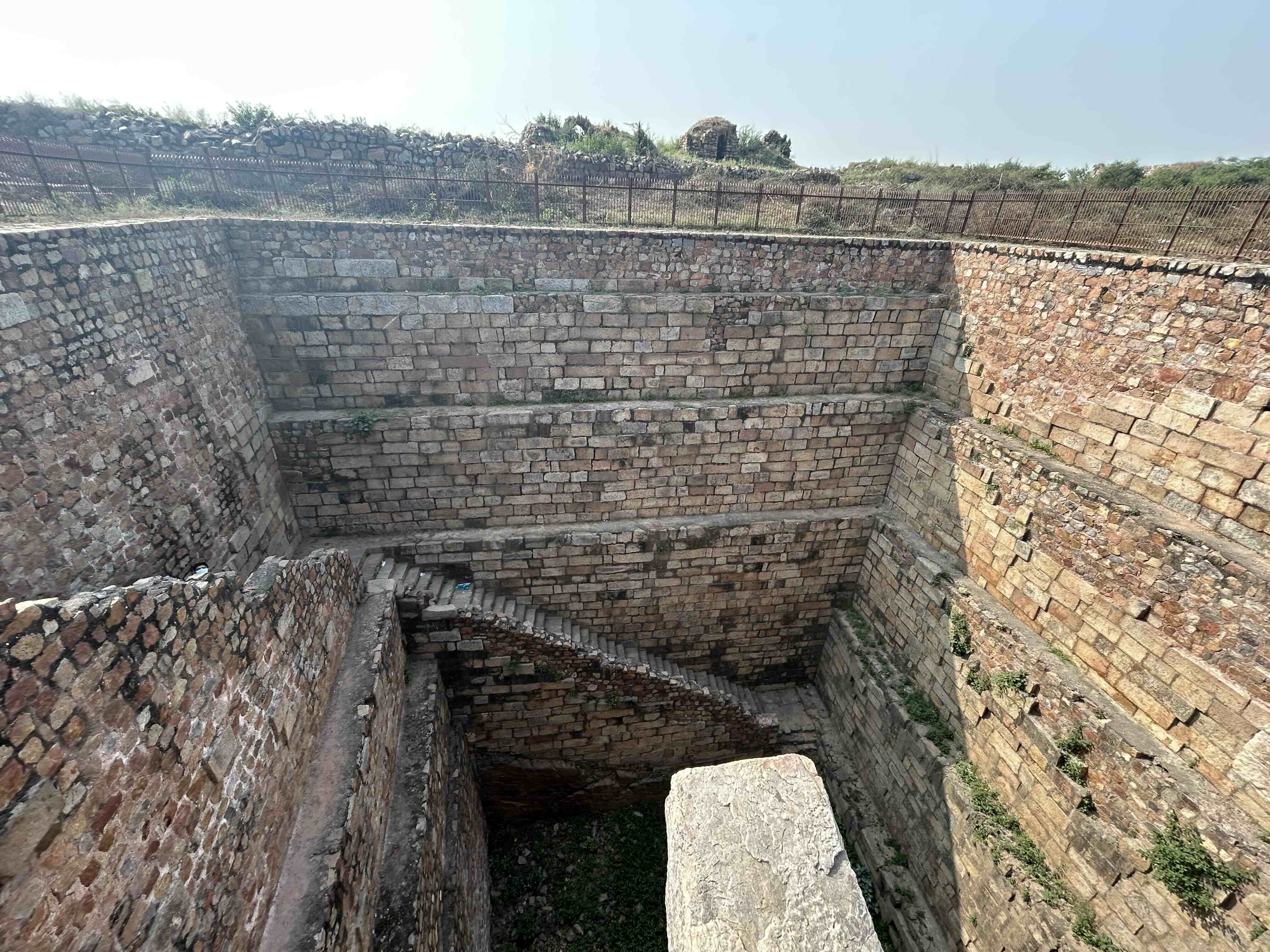
We heard stories of the Tughlaq dynasty, of Ghiyas-ud-Din’s famously strained equation with the Sufi saint Nizamuddin Aulia, and the curse that supposedly doomed the fort soon after its completion. The palace area once had a deep baoli, a hamam, and a small mosque; the walk leader showed us older photographs, and it was sobering to see how much the site has eroded. Even thick, defiant walls cannot withstand the patience of centuries.

Haze Instead of History

We climbed to one of the highest points for a panoramic view of Adilabad Fort and Nai-ka-Kot. But all we could see was haze—Delhi’s new, stubborn skyline. Even the tomb of Ghiyas-ud-Din Tughlaq, barely across the road, was a ghostly silhouette.

On the way down, we wandered into a quiet corner where rocks lay piled along the fort wall beside a mound of used diyas. A local legend speaks of a pir, revered by both Hindus and Muslims. The fort may have been abandoned by royalty, historians, and tourists at various times, but the local community has gently folded it into their everyday spiritual landscape.

A Tomb in a Garden

Across the road, the ruler’s red-sandstone tomb sits inside an unexpectedly well-maintained, manicured patch of green. It also houses the tomb of a military commander named Zafar. With little historical detail available about him, we found ourselves imagining scenarios that could explain how a commander earned a resting place beside a king.

Driving Home With Impermanence

After more than three absorbing hours, as I drove away, a familiar thought settled in.

Empires rise, rulers command, forts stretch stone by stone toward the sky, and then, quietly, they collapse into stories, legends, and vegetation.

Power is temporary. Architecture is temporary. Even memory is temporary.

And yet, the act of walking through history, of witnessing its ruins with others who care, felt strangely grounding. In a city battling pollution, noise, and restlessness, these remnants remind us that everything is transient, but nothing is ever entirely lost.