Last night, word spread through the house: Mangal Arati at 4 a.m. sharp. This was the sacred hour to wake Maa on Ashtami morning. At that hour, someone gently nudged me awake. True to my nature, I turned, muttered something unintelligible, and went back to sleep. I do love my sleep, perhaps too much.

As a child, Ashtami meant a kind of magic. I remember watching clothes, fruits, and sweets being laid out before Maa, offerings that seemed larger than life to my young eyes. Pushpanjali was always the heart of the day—Bengalis in their finest new clothes, palms folded, flowers in hand, chanting in unison. It was a ritual that seemed to stitch devotion and identity together.
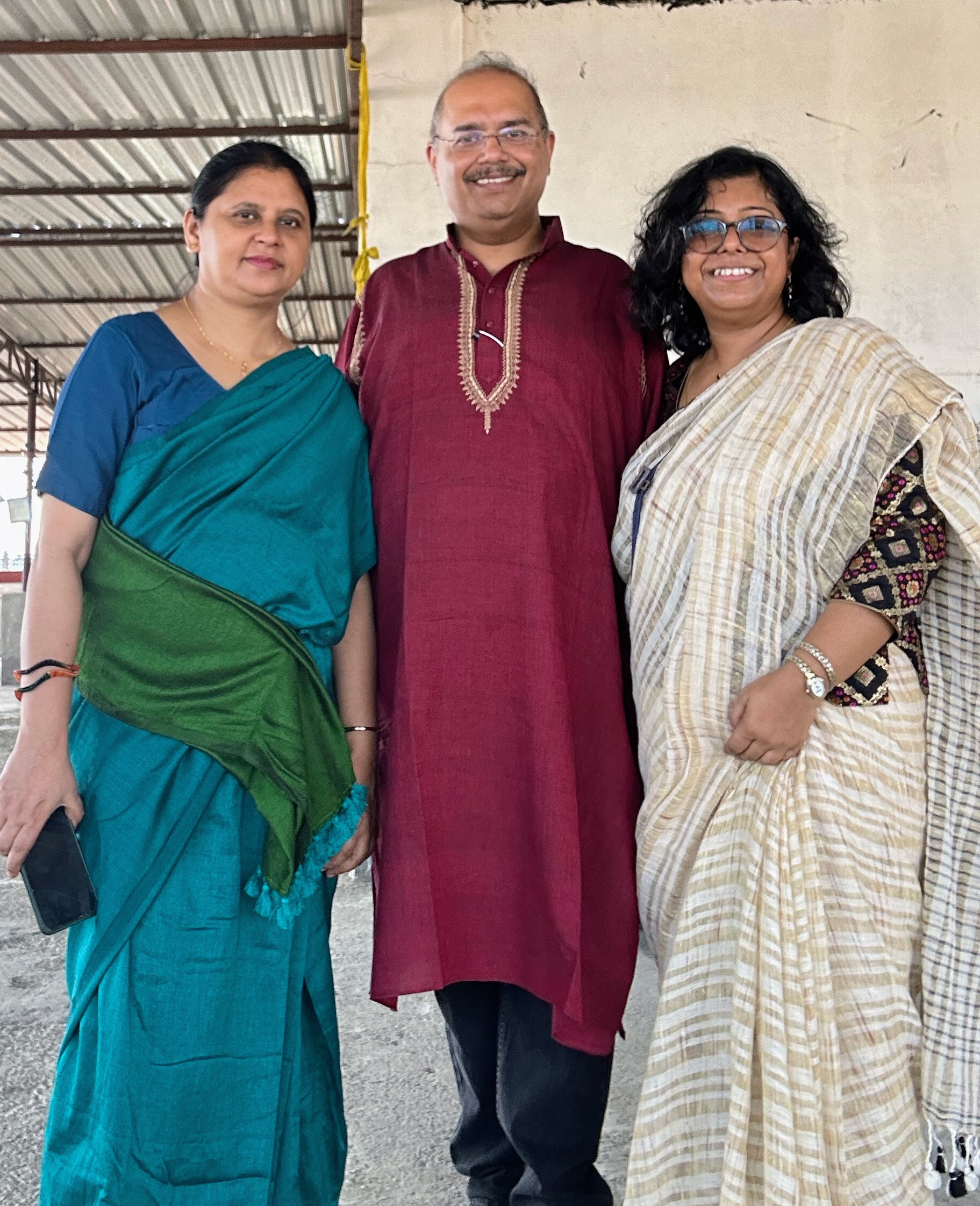
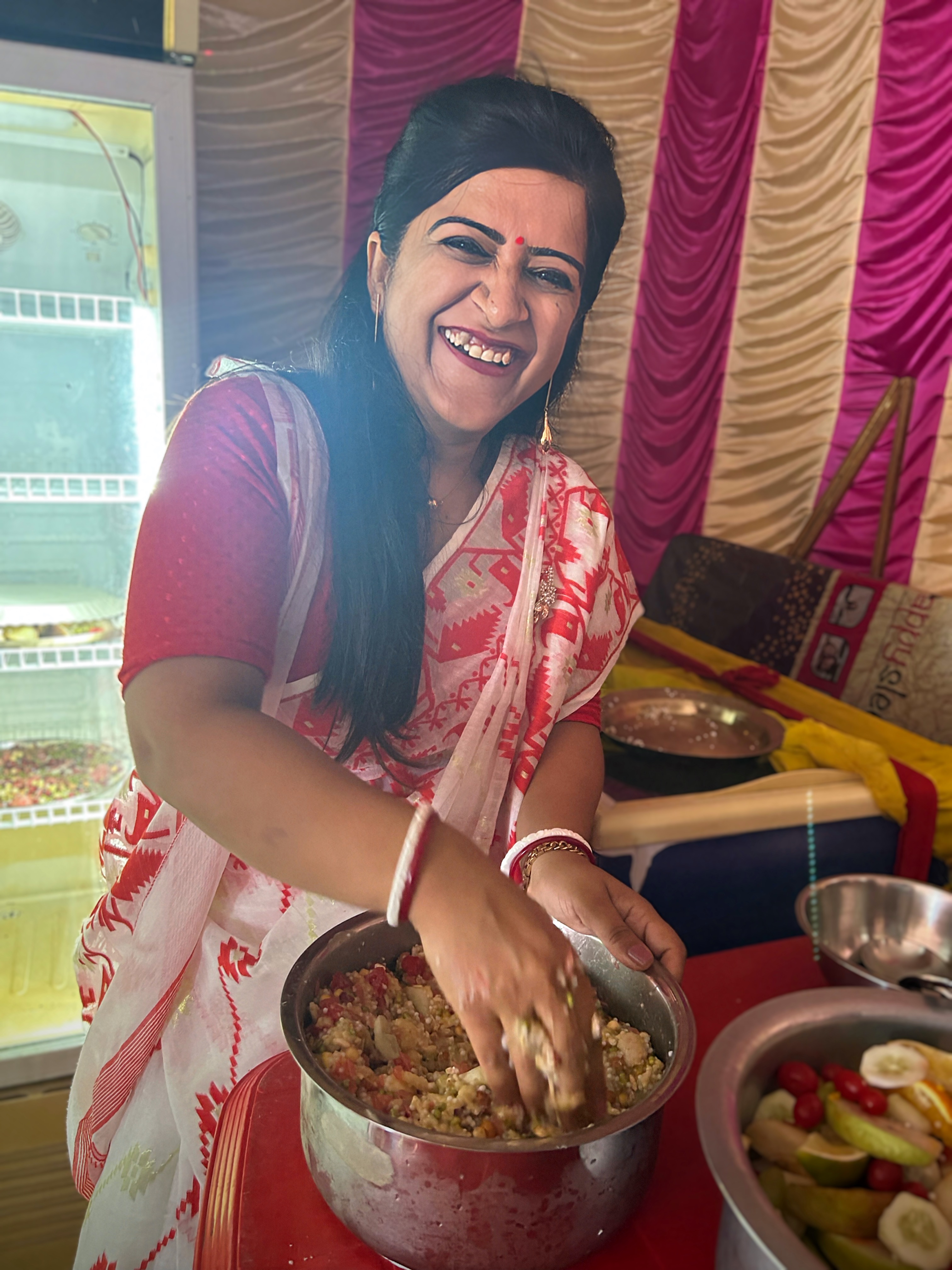
This morning, I found myself again in the role of the family’s saree-draper. It’s become an unspoken responsibility: draping pleats for cousins and younger members before the puja begins. Oddly enough, it fills me with joy. There’s a kind of generational continuity in the act—like passing down a secret language without words.
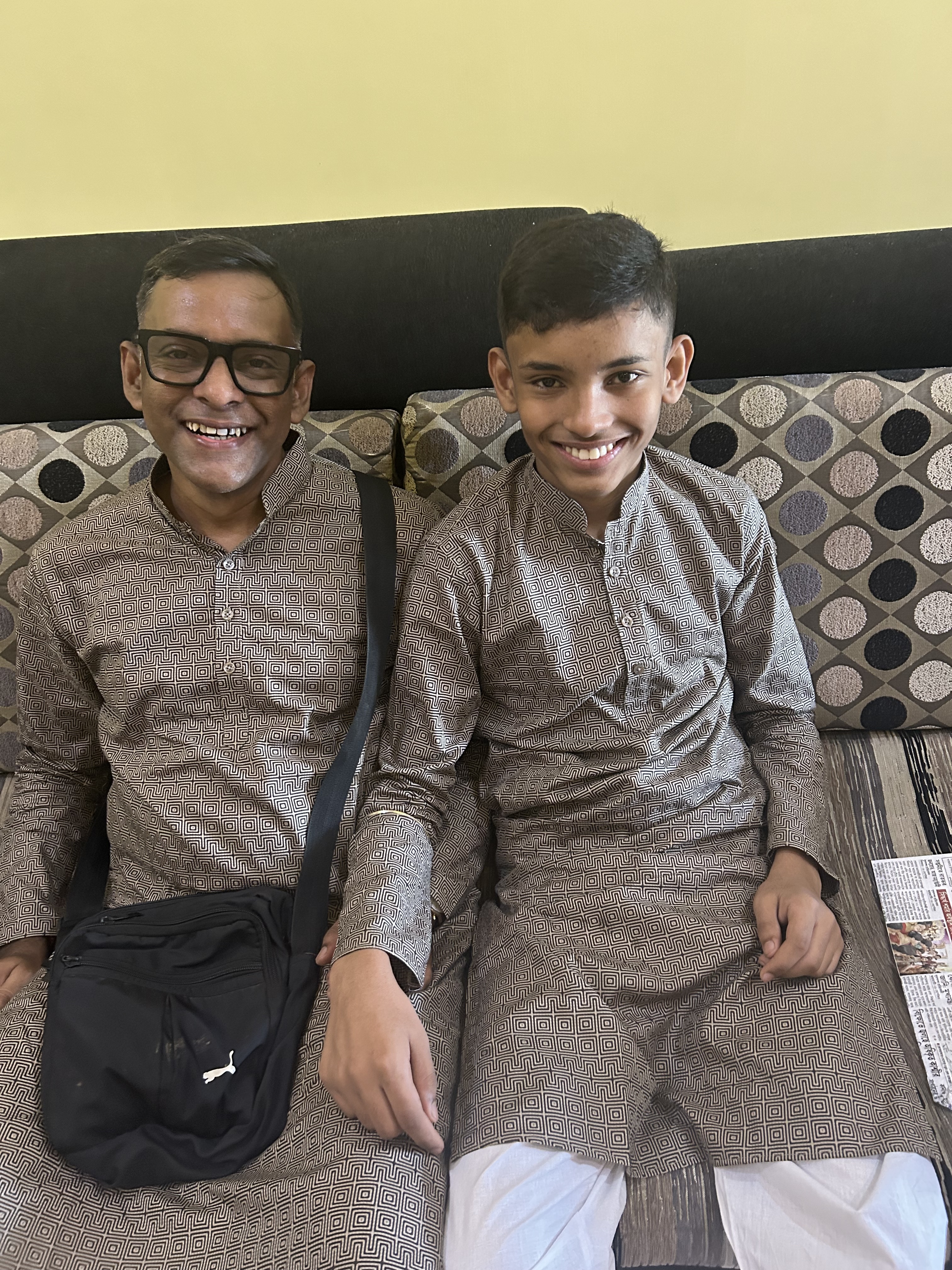
After the prayers came the easy camaraderie: photos snapped in half-serious poses, bursts of adda, the gentle chaos of laughter filling corners of the home. Lunch was a feast, as always, with a steady stream of guests braving not just the festive crowd but also the sweltering heat of the afternoon.
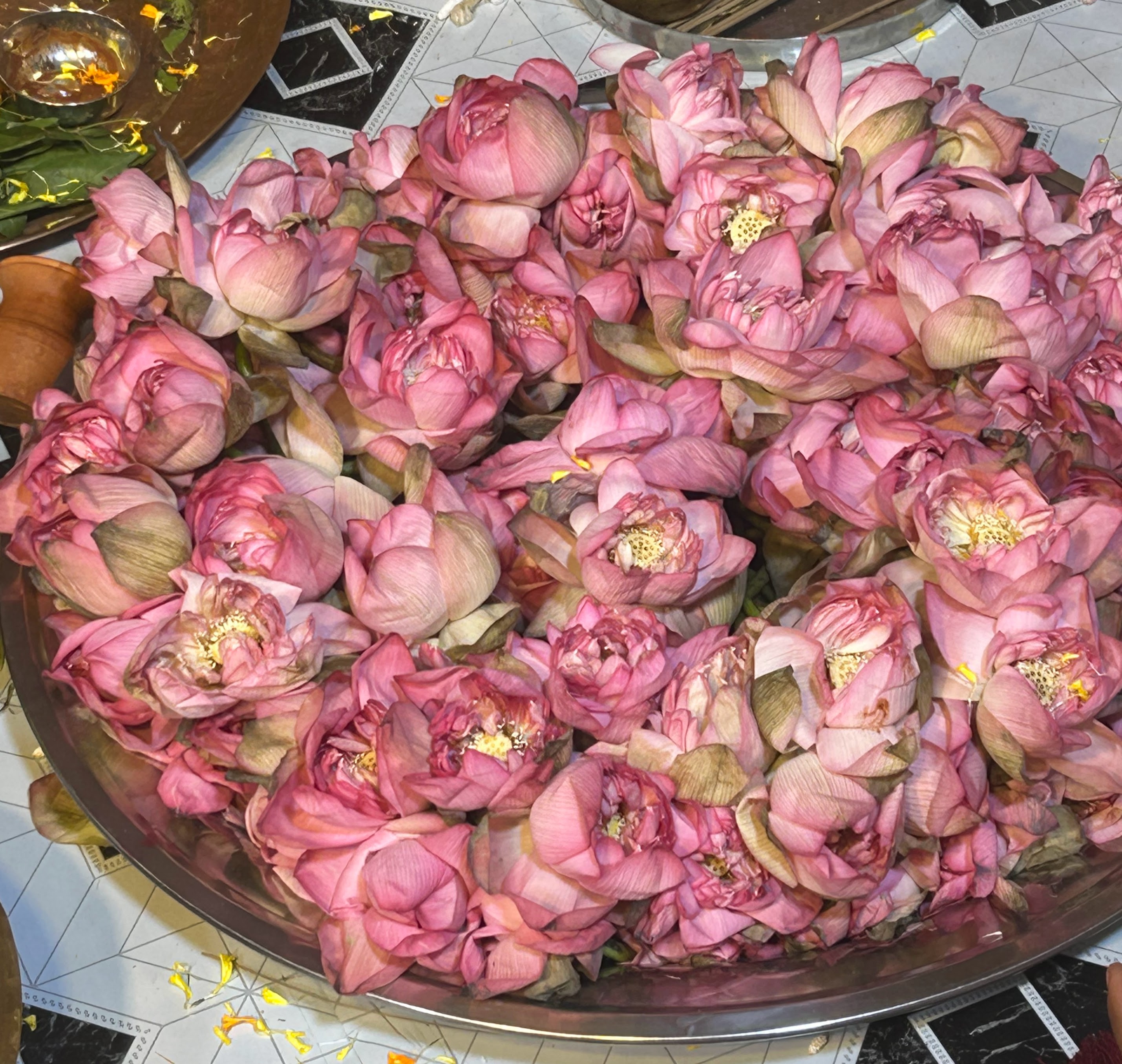
But it is the Sandhi Puja that transforms the day. That threshold moment when Ashtami gives way to Navami, when the sacred is marked with 108 lotuses and 108 diyas. This year, nature seemed to conspire with the ritual. Just as we prepared, a thunderstorm rolled in—lightning tearing across the sky, thunder echoing like a drum, and rain draping the world in cool relief.

Then, in fresh clothes (yes, yet another round of changing), the family gathered again. One by one, the diyas were lit. There is something indescribably moving about watching flames multiply in the dark, each light a small prayer, a small connection, and doing it together as a family turns it into something eternal.

And just like that, two days of Puja slipped past in a blink. The festivities, the laughter, the rituals—they always feel too brief. Yet they leave behind something lasting. The memory of a saree draped, a diya lit, a storm cooling the air, and the simple joy of being together.
These moments remind me that festivals are not just about tradition or ritual—they are about memory-making, about weaving together the ordinary and the sacred into stories we carry with us long after the drums fall silent.
 Jajabor