Tag Archives: spirituality

A Slow Farewell to Banaras

The last day of a journey is always different.


It carries neither the urgency of arrival nor the hunger of discovery that marks the first days. Instead, it moves with a quieter rhythm, leaving room for what was missed, what deserves repeating, and what one wishes to hold on to a little longer. My last day in Banaras, too, was meant to be like that, lightly planned, open-ended, leisurely. After two days of waking early, I allowed myself a slower start.

The first destination for the day was Sarnath.

The first thing I encountered there, however, was not silence or the weight of history, but a noisy Holi celebration spilling into one corner of the road. Almost immediately, someone tapped on the car window to ask if I needed a guide. I said no. He persisted, promising to tell me everything and show me the entire site. I refused again. There are some places where one does not want a hurried narration or a half-remembered script. Sarnath, one of the most significant Buddhist sites in the world, deserved better.


I chose to walk.

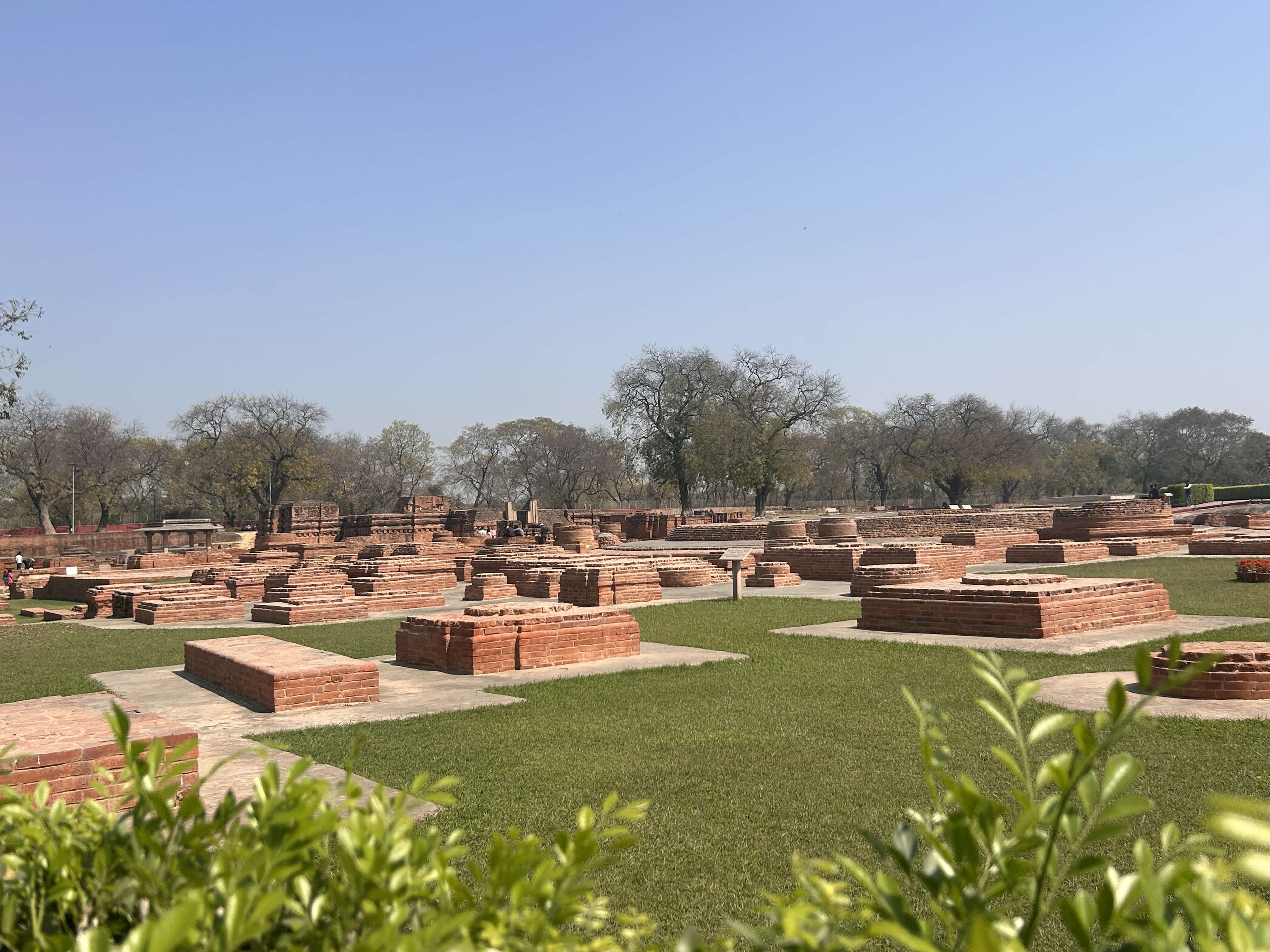
The path was clearly marked, though the sun had already begun asserting itself. As I entered the archaeological site, my first impression was of order and care. It was well maintained, and there was something reassuring in that. Around me, guides shepherded tourist groups in neat, linear movements, but I found myself grateful for solitude. Their routes appeared efficient, rehearsed, perhaps useful, but I wanted to wander, to pause, to look closely at fragments of stone and history without being hurried along.
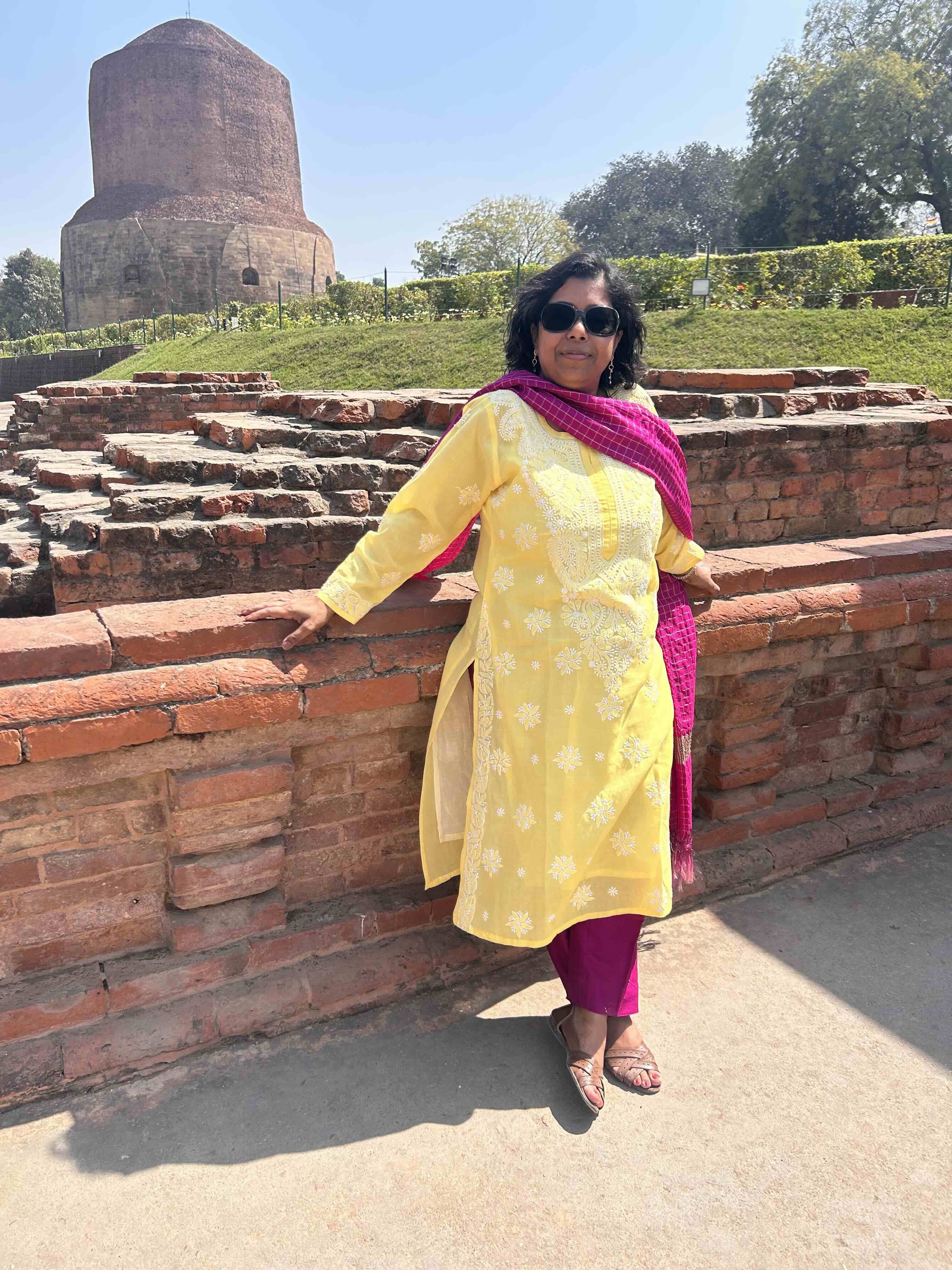

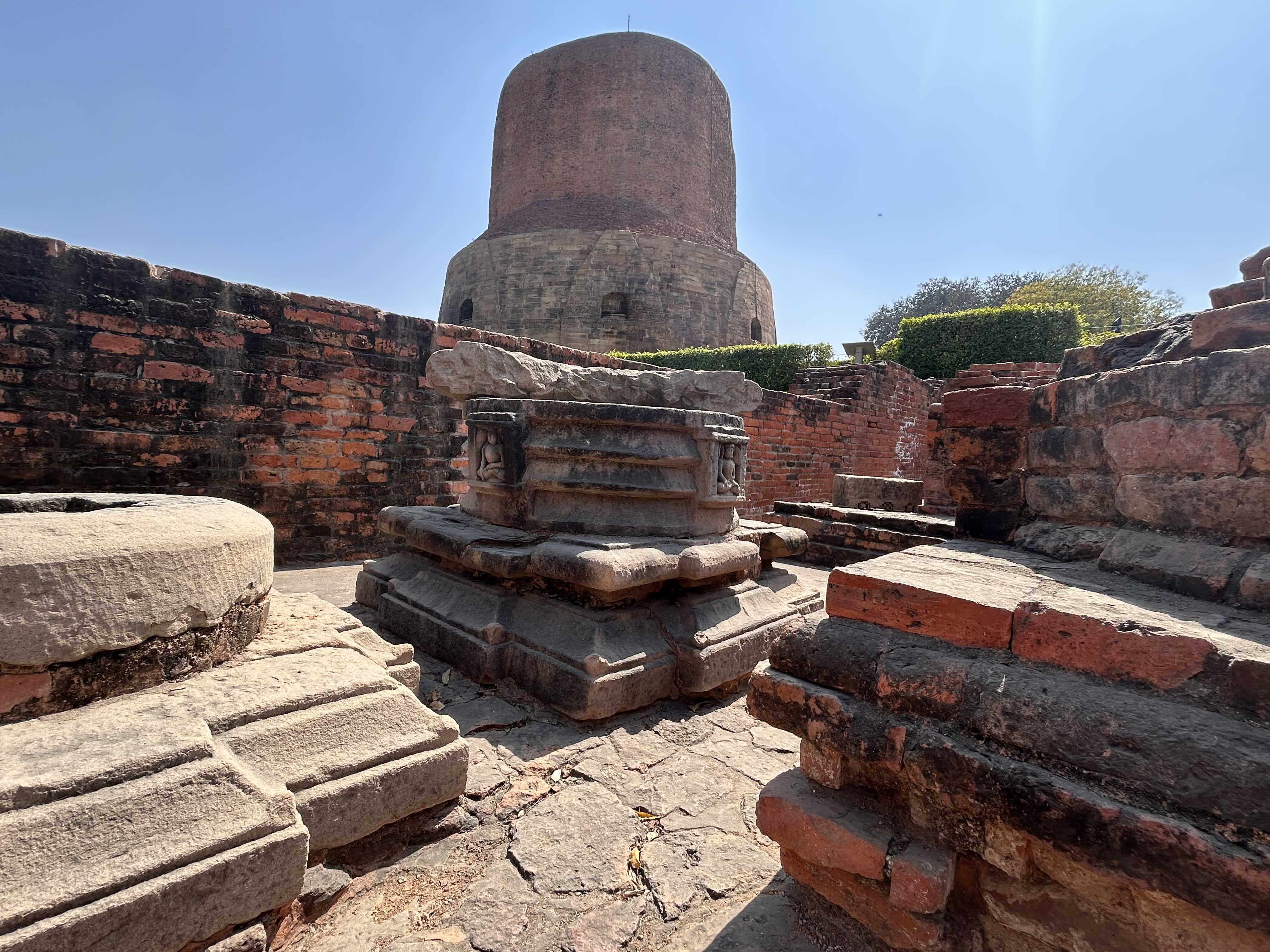
As I walked, memories of earlier visits to Buddhist sites in and around Mumbai returned to me. There is something about such places that alters one’s pace. One slows down instinctively. One begins to think not only of ruins, but of intention. I have always found it deeply ironic, and deeply human, that the Buddha, who is believed to have rejected the very idea of personal worship, became the centre of a sacred geography of stupas, relics, monasteries, and devotion. The viharas built over centuries, from the time of Ashoka in the third century BCE to those raised under later rulers, have not survived the violence of invasions and the slow erosion of time. Standing among their remains, I found myself seized by a familiar longing: the impossible wish to time travel, if only for a moment, to see these sites in their fullness, alive with monks, ritual, and learning.
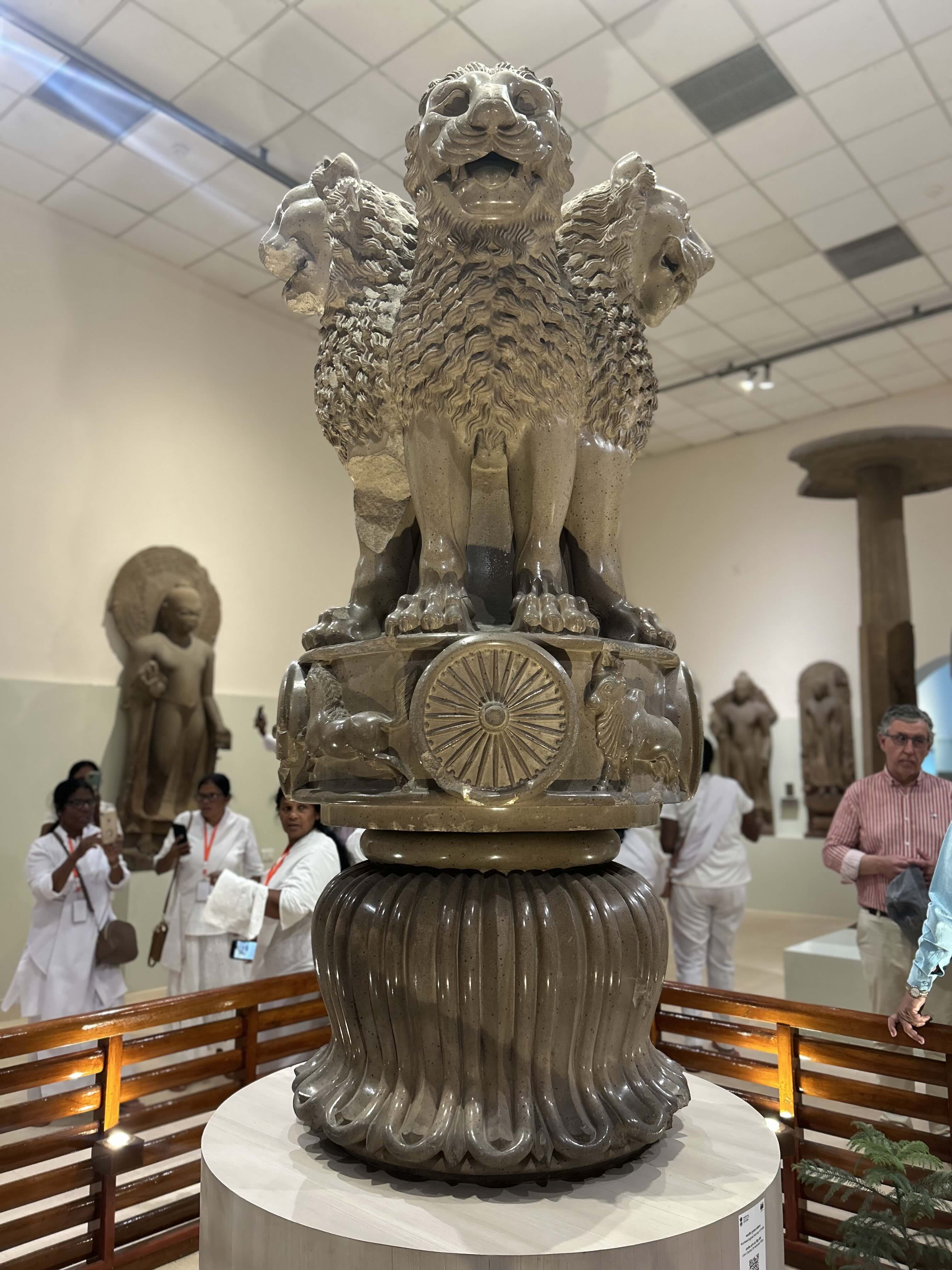

The Sarnath Museum was, as expected, indispensable. To stand before the Ashokan remains and other excavated finds is to understand how much of history survives in fragments, and yet how eloquent those fragments can be. Someone had told me that Sarnath is best experienced in the afternoon, when one can stay on till lamps are lit near the Dhamek Stupa. I, of course, could not do that. By then my visit was already drawing to a close. But perhaps every journey must leave something unfinished. It is the unchecked box, after all, that becomes an invitation to return.
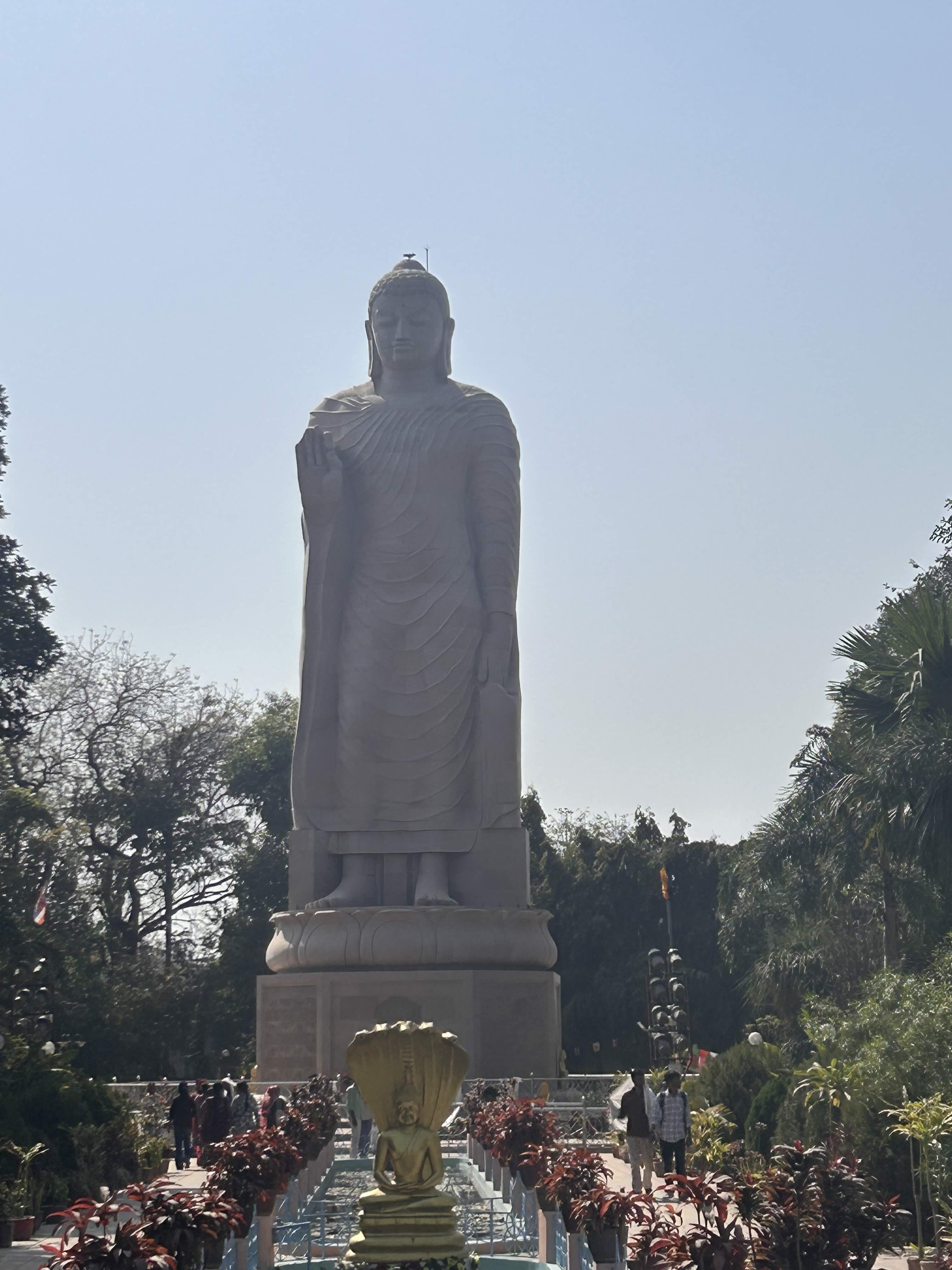
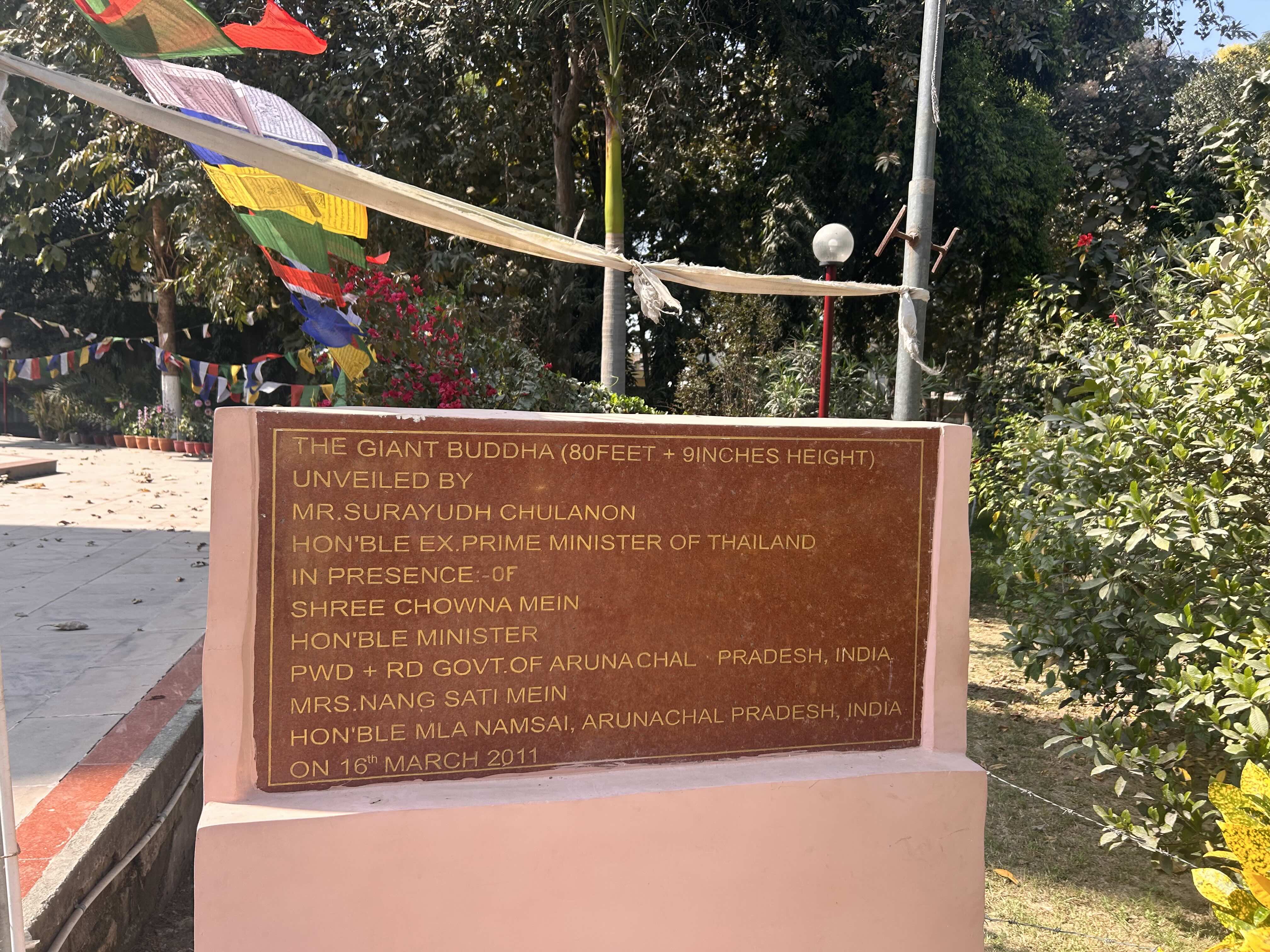
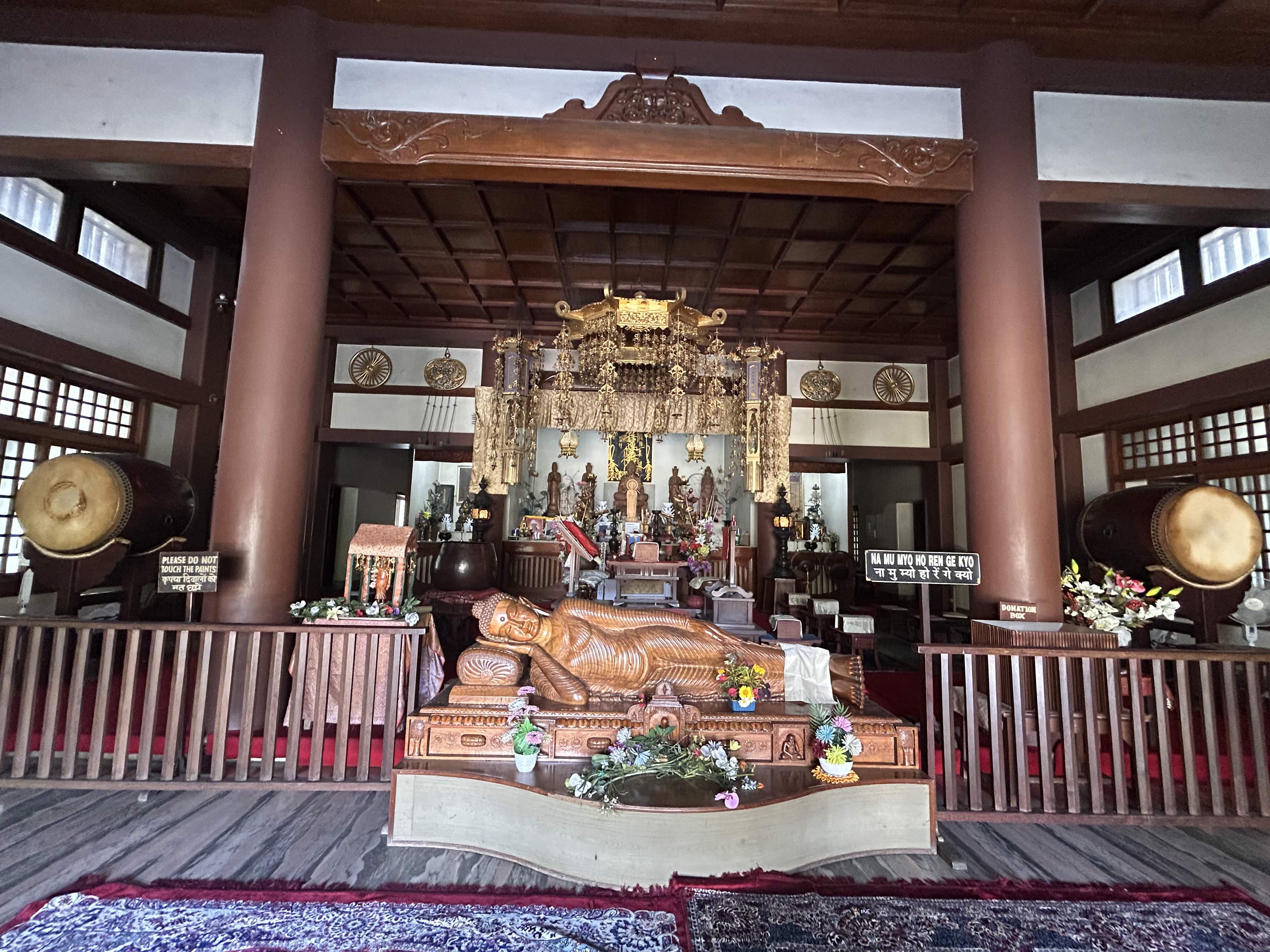
From Sarnath, I moved to the Giant Buddha statue and the Thai temple nearby. There, unexpectedly, I came across a reference to a minister from the Khampti tribe of Arunachal Pradesh. The Khamtis are a Theravada Buddhist community, and according to Samrat Choudhury in his book ‘The Braided River’, their language belongs to the same broad linguistic family as Thai. Suddenly, my mind travelled far from Sarnath to Namsai, where I had once stayed and from where I carry some especially fond memories. In that moment, standing in Uttar Pradesh and thinking of Arunachal Pradesh through a shared Buddhist thread, the world seemed to fold in on itself. It is always startling, and oddly comforting, to discover how small the world can be.
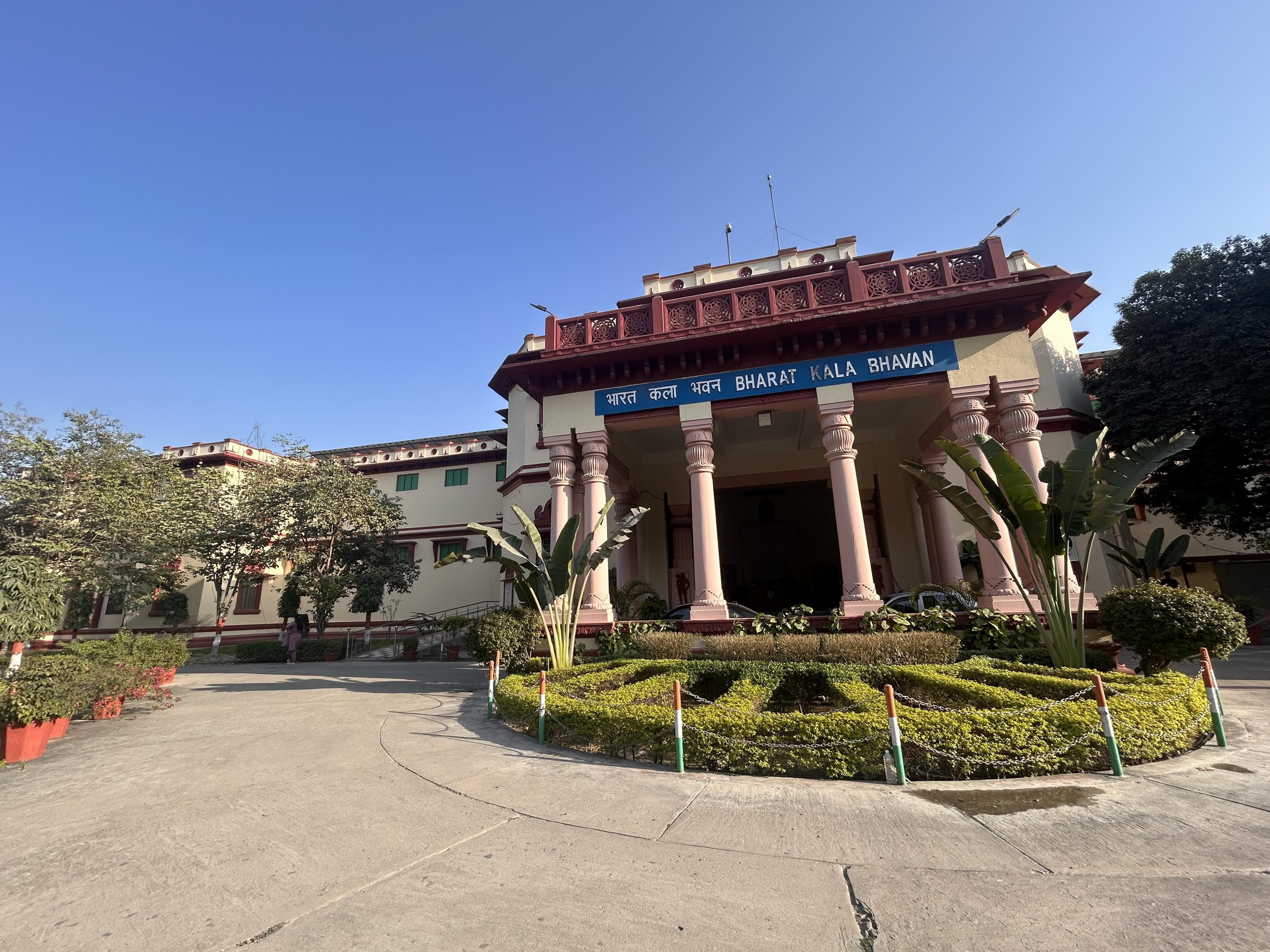

After Sarnath, I decided to go to BHU. I remembered that the Bharat Kala Bhavan Museum would close by 4.30, and we hurried to reach by three. If Sarnath carried the aura of ancient stillness, the BHU campus felt like something else entirely, an island of calm set apart from the city’s constant noise. The further one moved inside, the more Banaras seemed to lower its own volume. Inside the museum, time widened again. The artefacts ranged from the Harappan civilisation to later periods, and there was an odd pleasure in moving from age to age within a single afternoon. I found myself lingering before moulds from the Shunga period, and then pausing in surprise before a Mughal-style painting of the Exodus of Moses. Such juxtapositions always fascinate me; they remind me that Indian history is rarely linear and never simple. I had barely completed the final section when the museum announced closing time.


Outside, as I got into the car, Aftab, my driver for the visit, asked if I wished to return to the hotel.


I did not.
Instead, I asked to be taken to Assi Ghat.


I had no particular plan when I sat down on its steps. Perhaps I simply wanted to be near the river one last time. But then the foodie in me asserted itself, and memory led me to Kashi Chaat Bhandar. Google informed me that I could walk from the ghats towards Sonarpura, though part of the way would eventually shift to the road. So I began walking. It was nearly forty minutes, with the sun softening by degrees and the city entering that beautiful hour when evening begins to gather but daylight has not fully withdrawn. There was no hurry, no agenda, only the pleasure of moving through Banaras one last time.


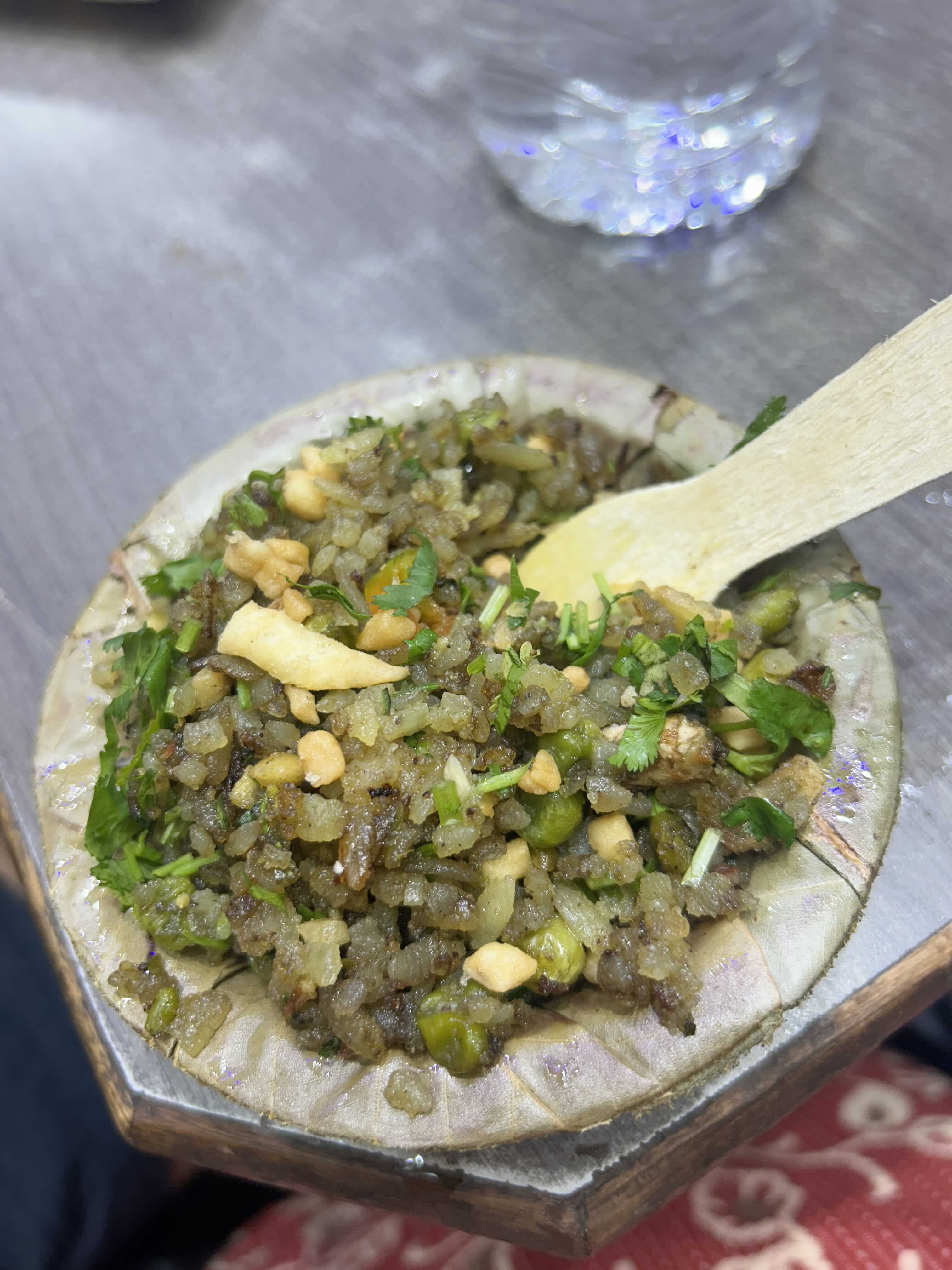
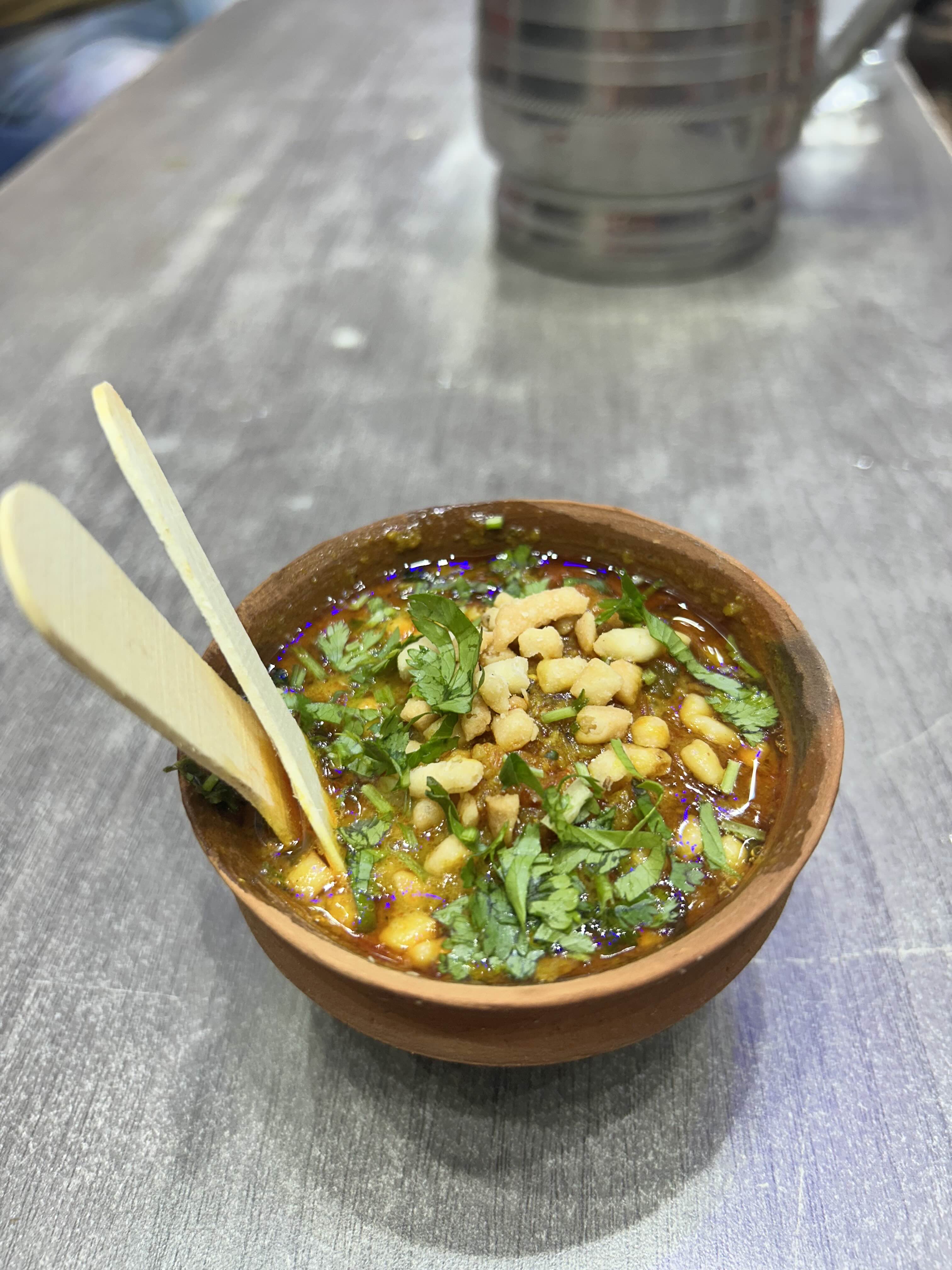
At Kashi Chaat Bhandar, after the now familiar effort of negotiating the crowd, I ordered palak patta chaat and dahi puri. There are few satisfactions as complete as good street food after a long walk. Restored and slightly emboldened by my growing confidence in navigating the city, I took a rickshaw back till Sonarpura. From there, I wanted to return to the ghats on foot, one final walk beside the river, one final conversation with the city.

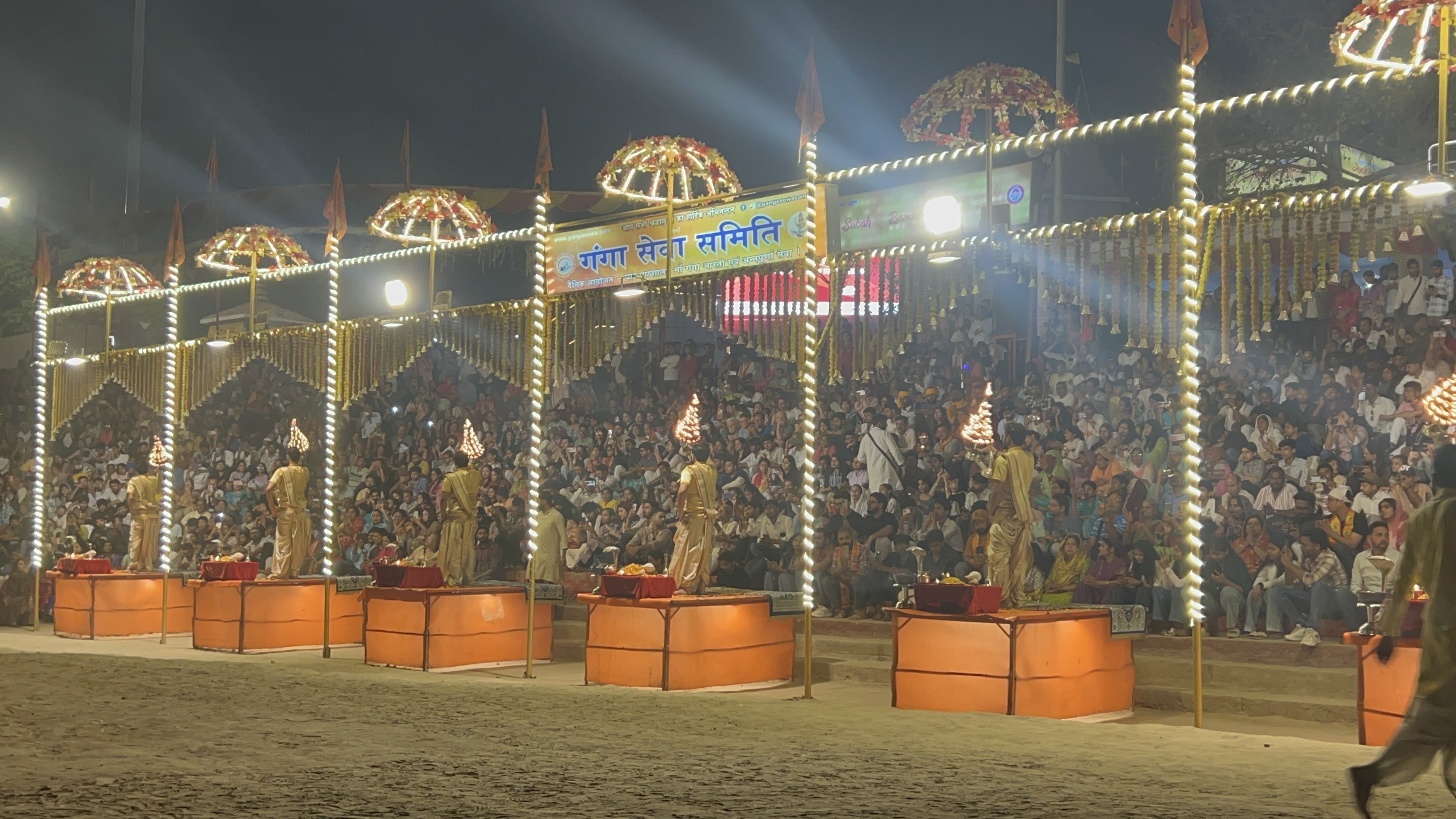
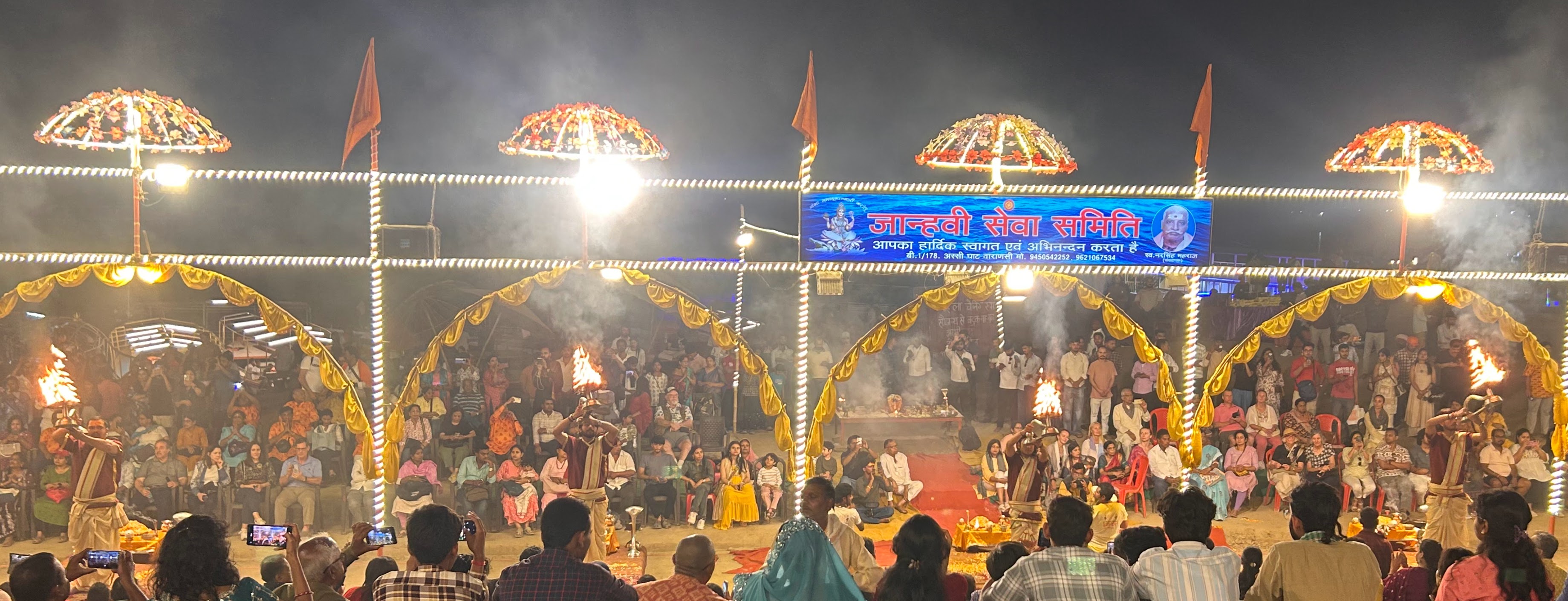
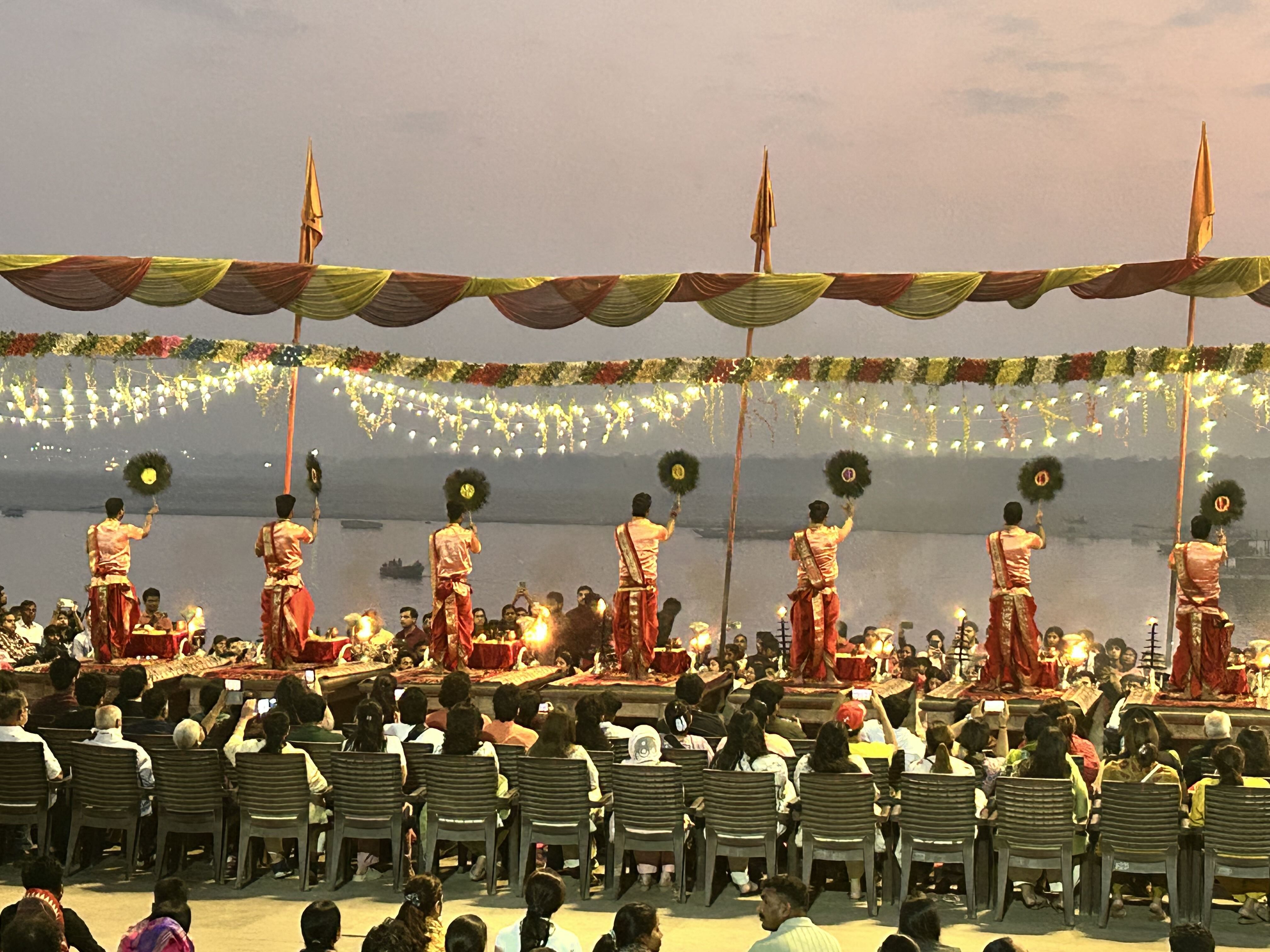
I arrived in time for the evening Ganga Aarti at Assi Ghat, though I soon realised that another aarti was underway at the neighbouring ghat as well. Sitting there among the crowd, watching the ritual unfold, I became aware once again of the invisible machinery behind devotion, the choreography, timing, discipline, and collective labour that makes such spectacle possible. Faith may appear spontaneous, but public ritual is almost always meticulously arranged.
Later, as I left the ghats, I stopped at Roma’s, a place Chandrali had recommended. It felt like the right final note: a small meal at the end of a long day, one last taste to carry away.
And so the journey ended.

After walking more than eighteen thousand steps, after ticking as many boxes as I could and leaving a few unticked on purpose or by chance, I brought my Banaras trip to a close. But what remained with me was not merely a list of places seen. It was something less tangible and more enduring.


Banaras will stay with me as a city of paradoxes, exclusive and inclusive, ancient and modern, theatrical and intimate. A city where ordinary people carry their pride in the place with an ease that never feels performative. A city where crowds can exhaust, but where solitude appears unexpectedly, in a brief moment before a jyotirlinga, in a quiet temple off the tourist map, in a boatman’s recitation of poetry, in an evening walk back from a chaat shop, in a bowl of prasad placed wordlessly into one’s hands.


And perhaps that is what I will remember most.
That this crowd-averse traveller came to Banaras expecting to observe, and instead found herself drawn in, into darshan, into ritual, into history, into appetite, into the strange intimacy of a city that reveals itself not all at once, but in fleeting moments. Tiny, solitary moments. And each of them, somehow, deeply satisfying
Of Ghats, Poetry, and the Ganga

How does one define a city and its soul? Having spent my life moving from one city to another, I have often felt that the soul of a city lies in the pride its ordinary people take in its culture and heritage. Today, I caught a glimpse of why Benaras is special.


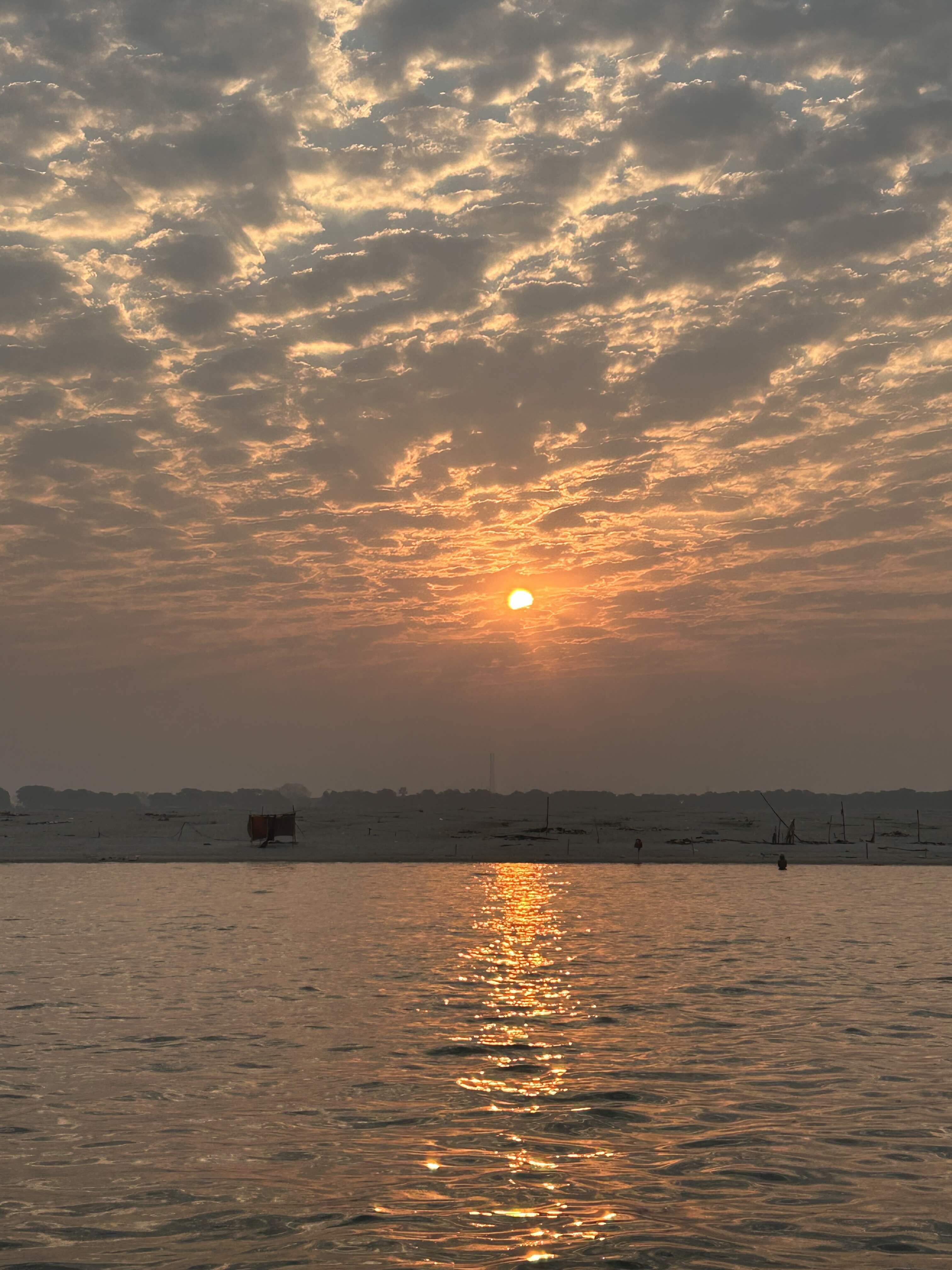
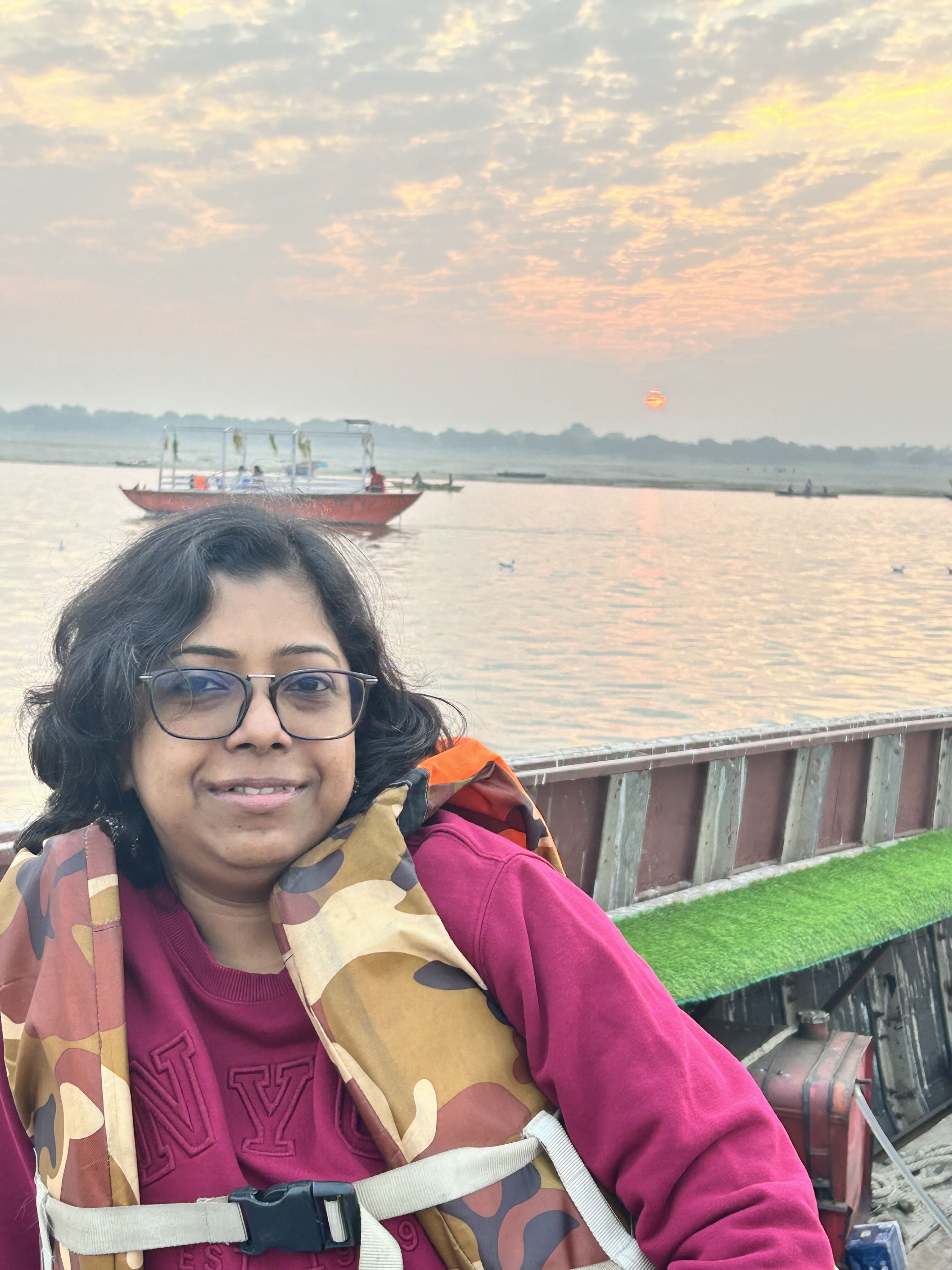
The day began early. I wanted to go for a boat ride at sunrise. Harshit had referred a boatman, and I had arranged with him to pick me up from Tulsi Ghat. I reached Assi Ghat at six in the morning, just in time to catch the final moments of the morning Ganga Aarti. From there, I walked to Tulsi Ghat and met Karma, the boatman. We began our journey just as the sky began to turn pink.

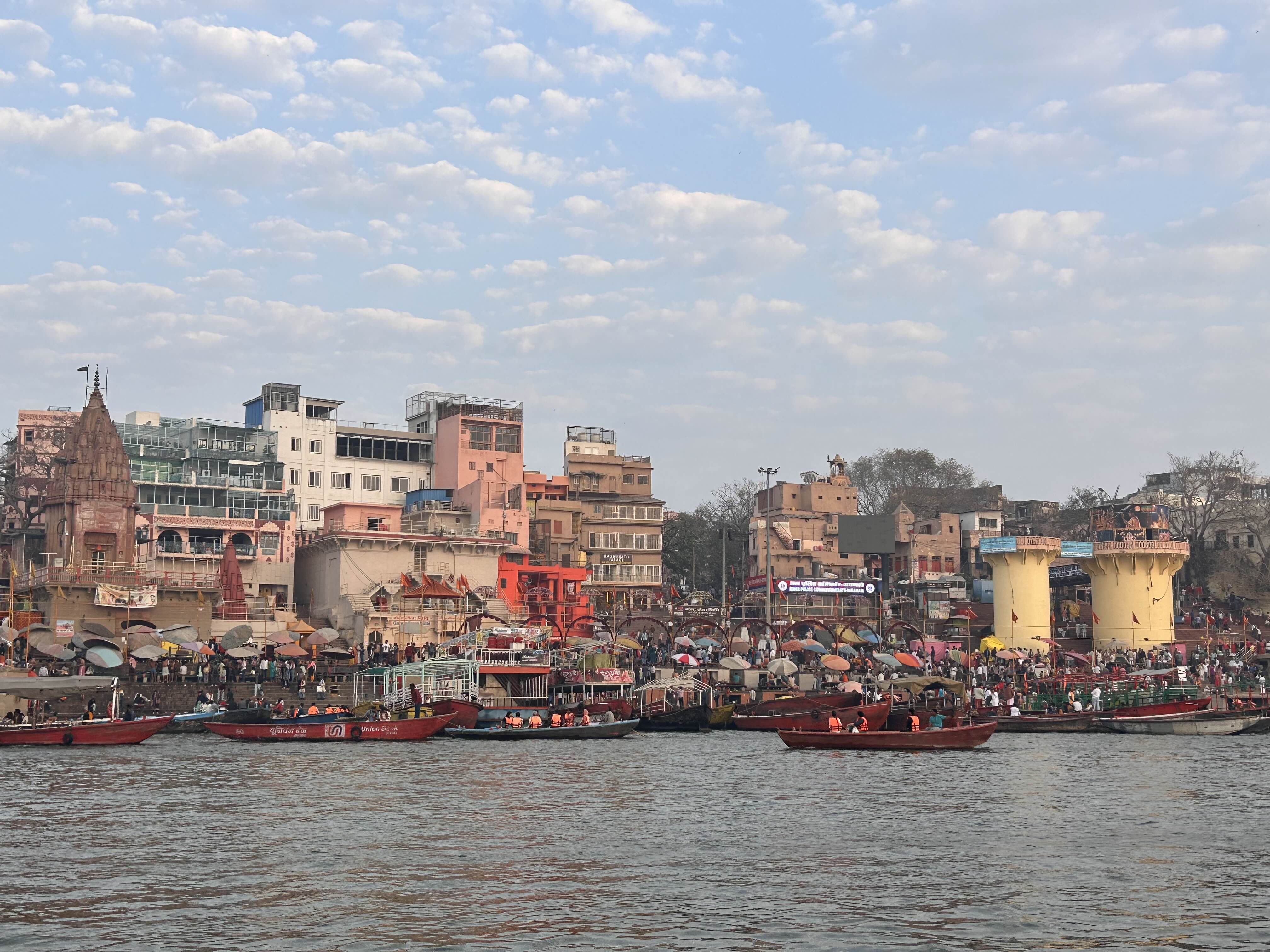
Karma turned out to be much more than a boatman; he was a guide and a storyteller. As we moved along the river, he narrated the stories of the ghats. Many of them, he told me, had been built by erstwhile rulers from across India and even Nepal. Today, many of those palaces lining the ghats have been converted into hotels. The palaces of yore are now premium hospitality properties. I found myself wondering at this quest for moksha that still sought to build palaces.

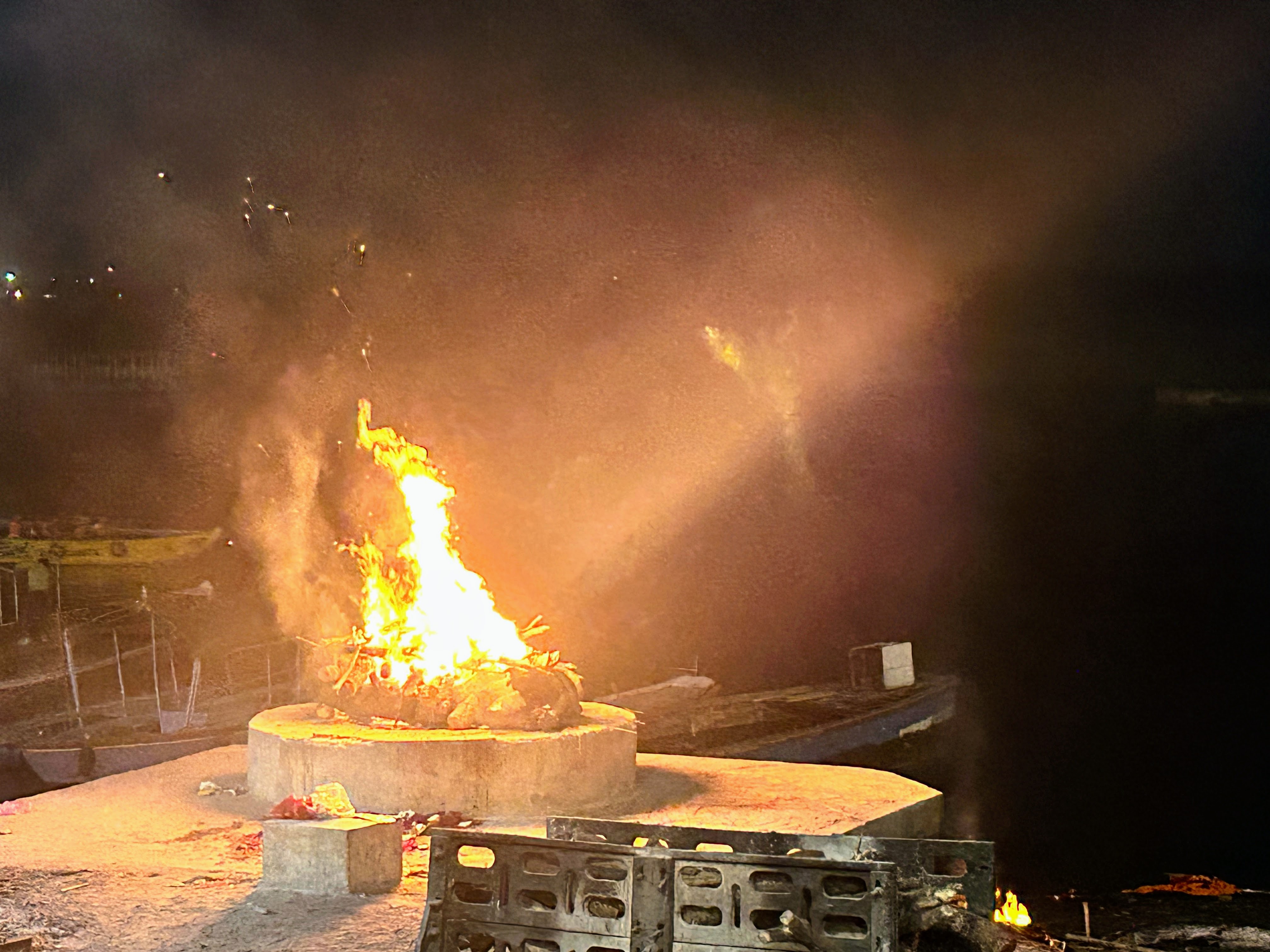
We passed Harishchandra Ghat, where pyres were burning, and Karma narrated the story of Raja Satyavadi Harishchandra. Then came Dashashwamedh Ghat, among the most famous in the city. Next to it was Manikarnika Ghat, and there I saw a pyre burning in the background while, in the foreground, a group on another boat was busy shooting a scene with someone dressed as Shiv. Life is transient indeed.

As we moved ahead, Karma surprised me by reciting Banaras, the famous poem by Jnanpith awardee Kedarnath Singh. Listening to him recite it flawlessly, I realised that it is people like Karma—common men who carry the words of poets in their hearts and wear their city with pride—who make a place truly special.

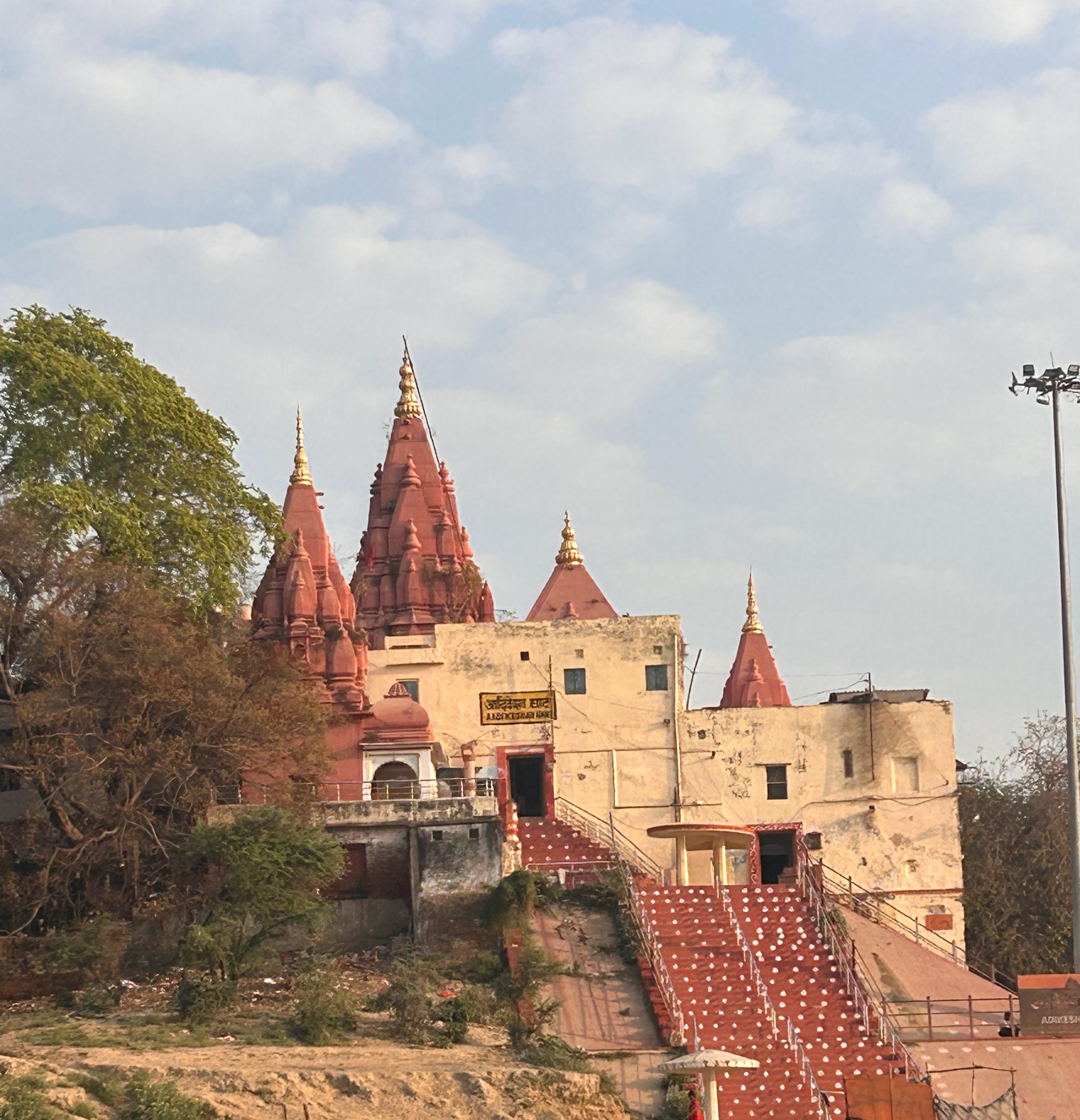
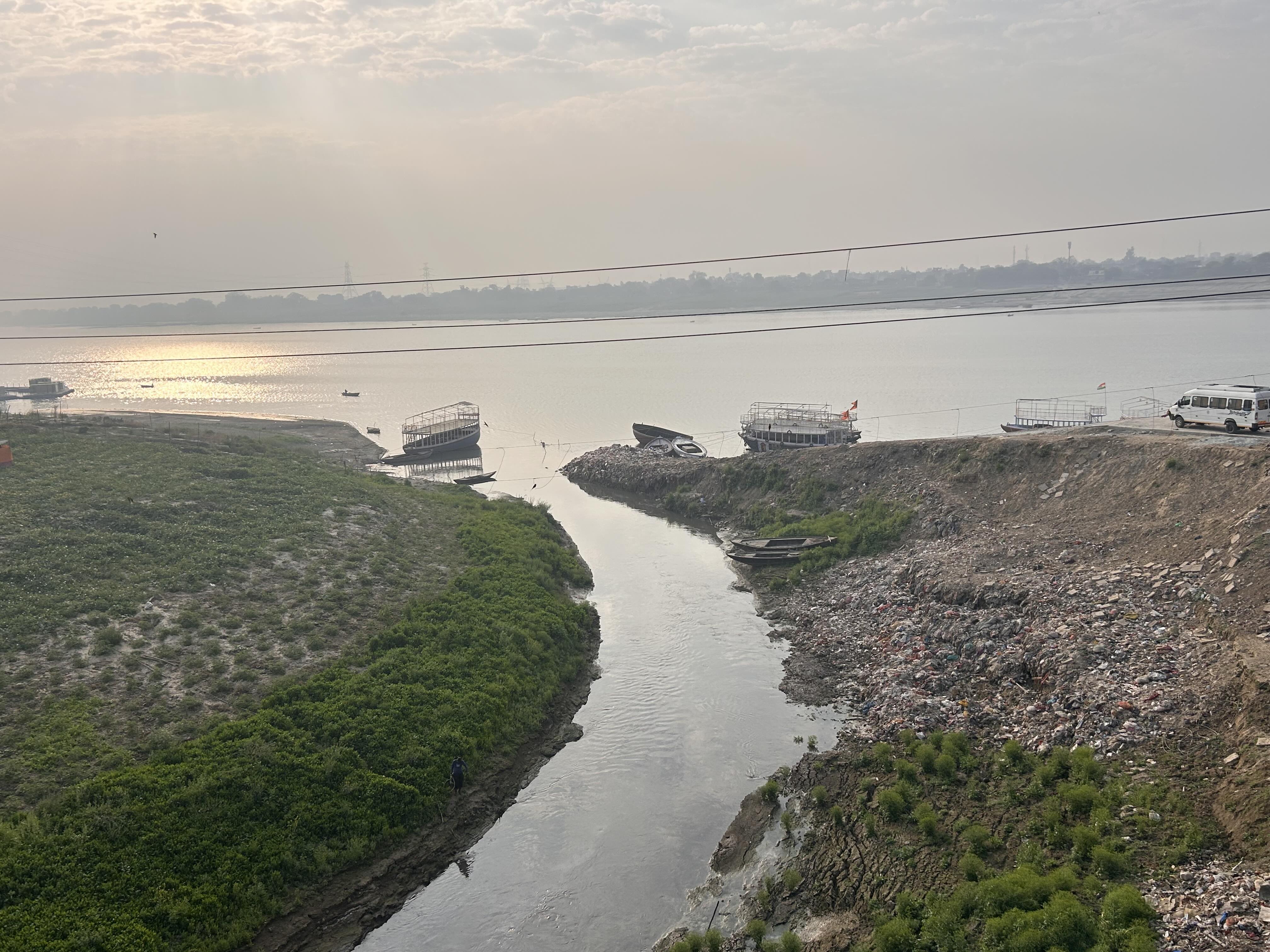
In the city of Shiv, Karma next took me to the Adi Keshav Temple, dedicated to Lord Vishnu. Located at the confluence of the Varuna and the Ganga, it is said to be the oldest shrine to Vishnu in the region. Far from the usual tourist circuit, the temple was quiet. The morning aarti was underway, and there was a stillness there that felt deeply comforting.


From the temple, I walked into the nearby village of Sarai Mohana. It is said that Buddha once walked through its lanes, and Karma pointed out a spot where he is believed to have rested.
But while the beauty of the ghats can fill the heart, it cannot fill the stomach. As I got off the boat, my growling stomach reminded me of that rather firmly. So I did what one does when one has a colleague from the city: I called Chandrali and was promptly directed to Aum Café at Assi Ghat—a small place with excellent food.

Satiated, I decided to head to Madanpura, the hub of Benarasi sarees. How can one come to this city and not explore its weaves? The next two hours saw me go completely bonkers over the astonishing range and beauty of Banarasi sarees. Did I go overboard? Absolutely yes.

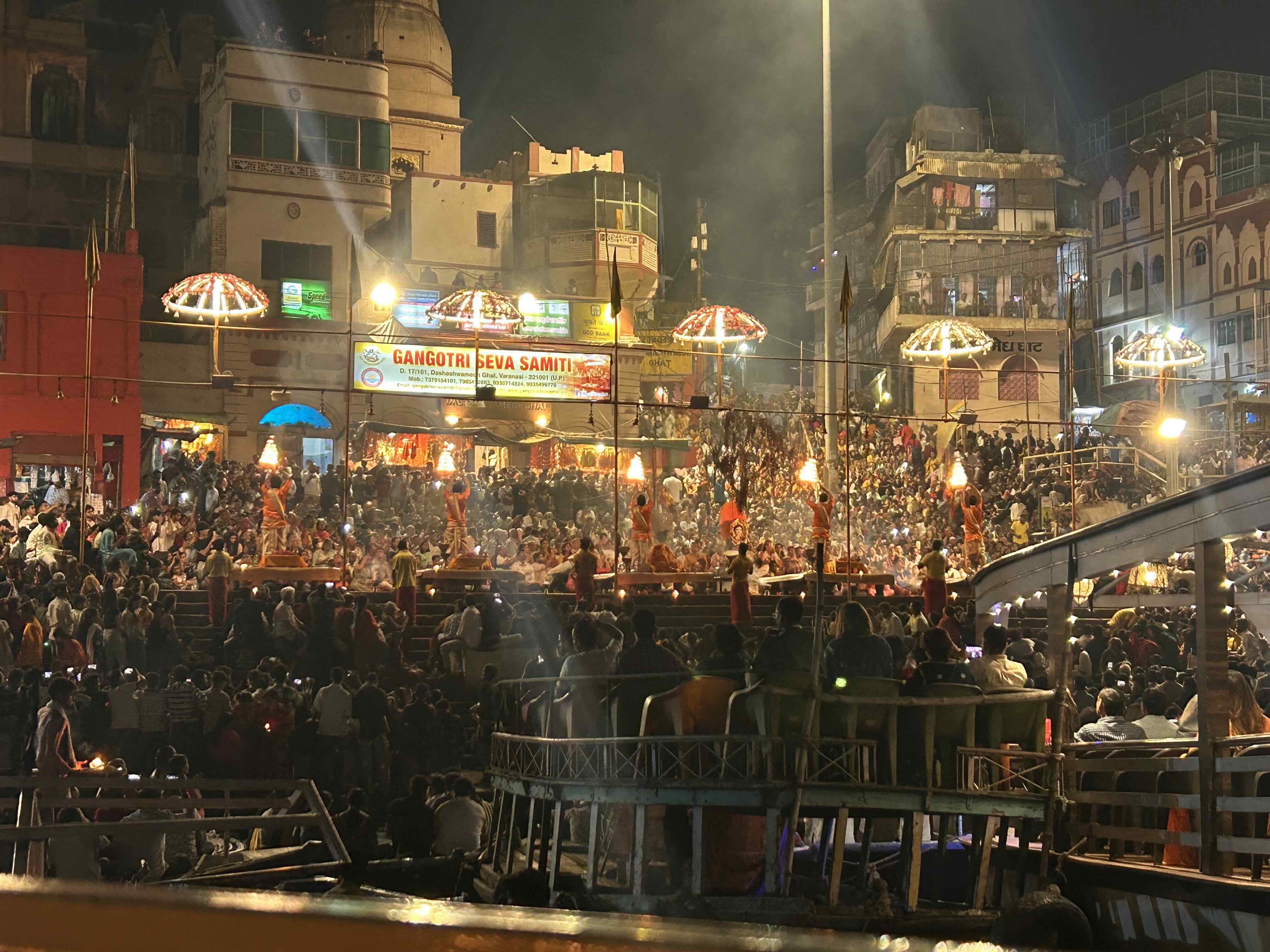
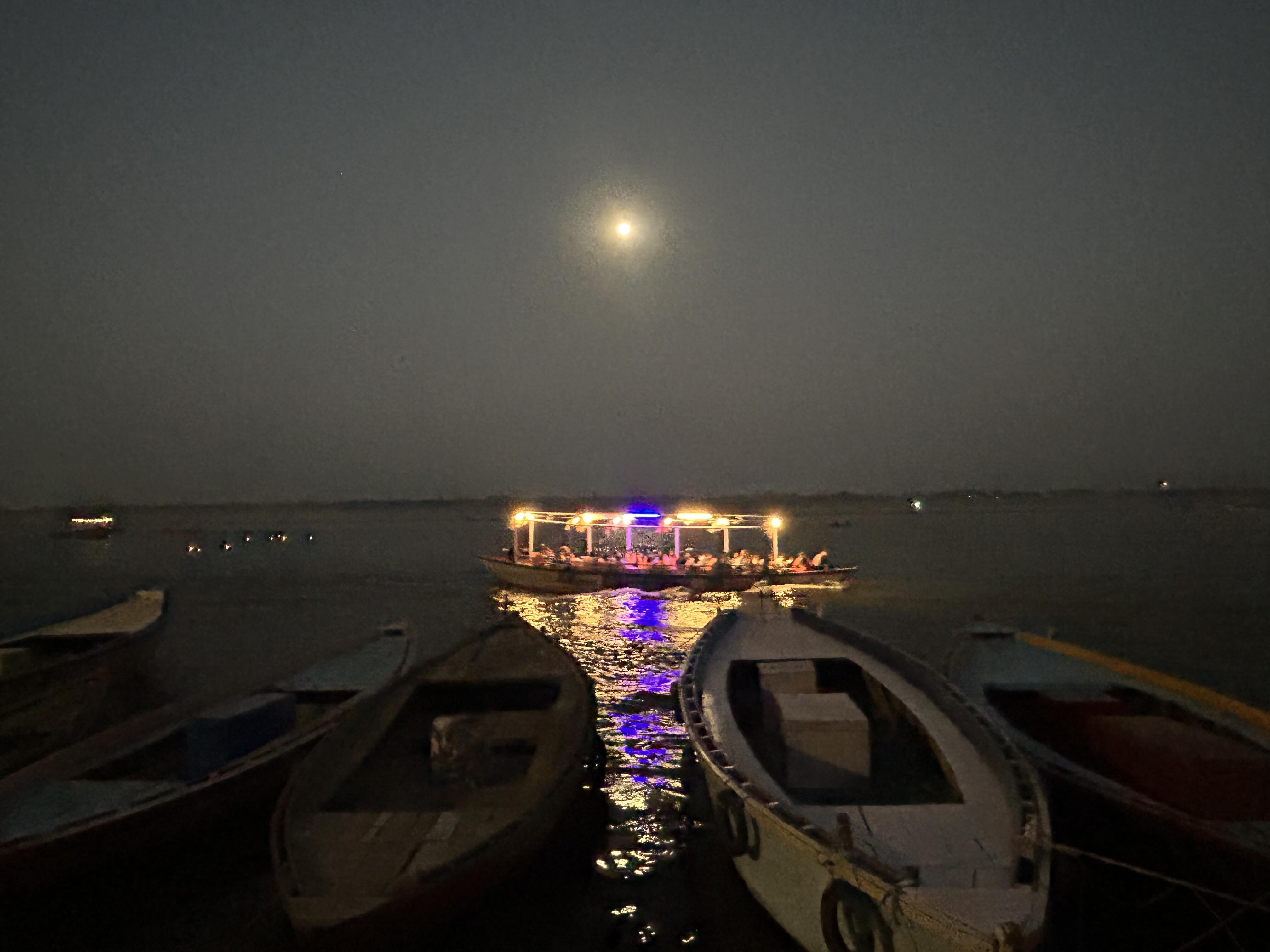
Finally, exhausted but happy, I returned to the hotel. But the day was not done yet. I wanted to watch the Ganga Aarti at Dashashwamedh Ghat from a boat. Clearly, I was not alone in that desire. By the time we reached the ghat, it looked like a sea of humanity—on the steps and on the river. Boats jostled for space to secure a better view, and I was strangely reminded of the mad rush of safari vehicles trying to catch the Great Migration at the Masai Mara.

The Ganga Aarti at Dashashwamedh Ghat has been carefully crafted as spectacle: from the priests’ camera-friendly attire, to the dimming of lights at the right moment, to the choice of music. Even the damarus had fluorescent lights. The image of the aarti with the great दीपक is so iconic that once that portion concluded, several boats began to move away, even though the aarti itself was still underway.

Thus ended the day—a day that offered me a glimpse into the fabric of the city: a boatman reciting poetry, funeral pyres forming the backdrop to a film shoot, the richness of the Benaras weave, and the eternal presence of the Ganga.

When Shiv Planned My Darshan

A few days before my visit, an acquaintance had asked, “Darshan to karengi na?”
As a crowd-averse traveller, often disappointed by the jostling and haste that accompany visits to major temples, I had replied that I had no fixed plan for darshan. If it happened, it happened. If not, there was much else to see in the city.


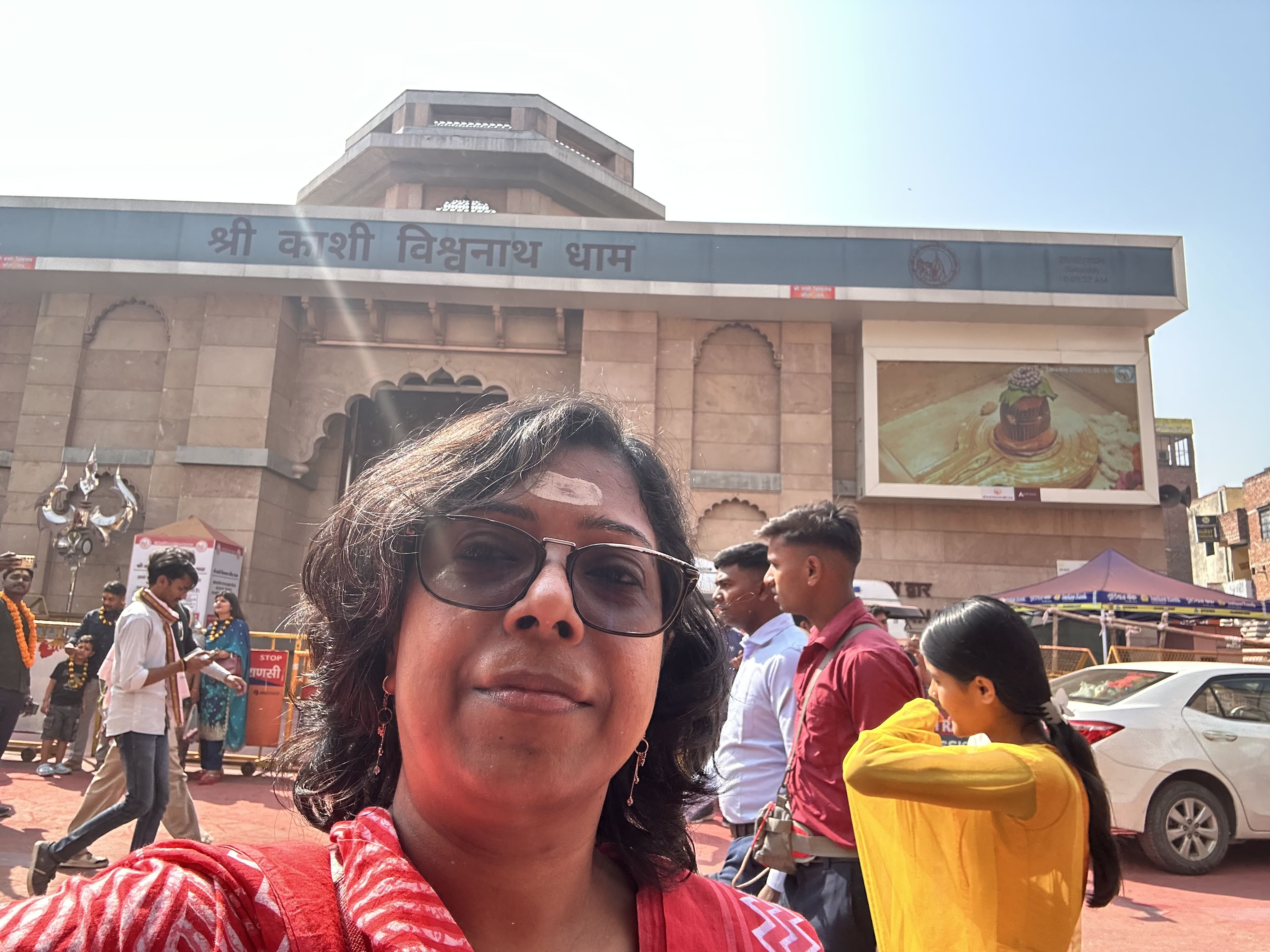
Yesterday, I repeated the same line to another acquaintance. But as someone who had spent a part of his life in Benaras, he took it upon himself to ensure that I visited the Kashi Vishwanath Temple. As I approached the temple, I could see a serpentine queue winding ahead. Several people stopped passersby, asking if they wanted darshan and offering to guide them inside. I dodged a few such offers and reached Gate No. 4 at around 9.30 in the morning.


The person deputed to facilitate my visit ensured that I completed my darshan by 10.15 a.m.—peacefully, without any pushing or jostling. And even that morning, I found a brief moment to myself as I bowed my head before the Jyotirlinga. Even if I had not planned it, Shiv, it seemed, had planned it for me.


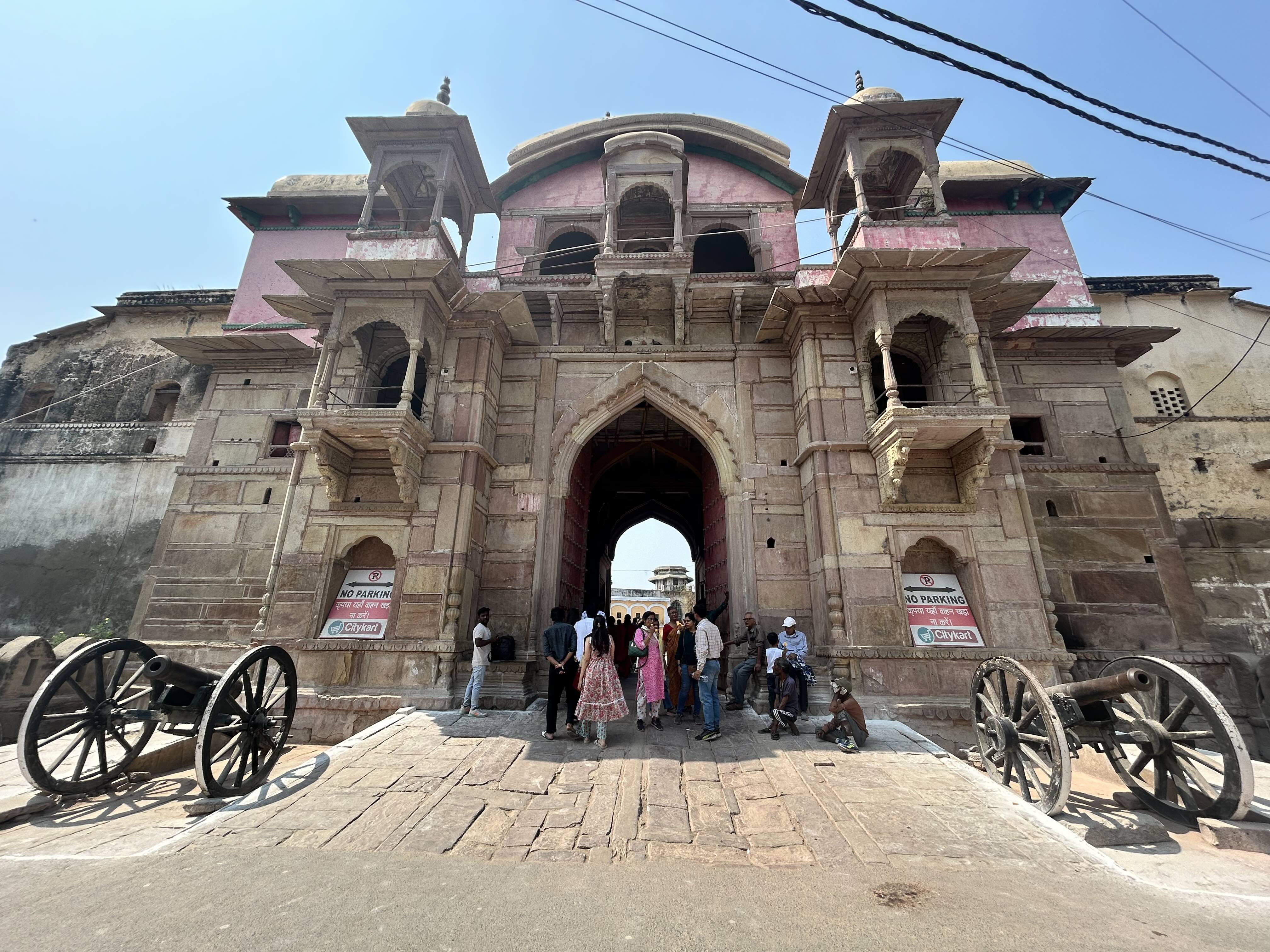
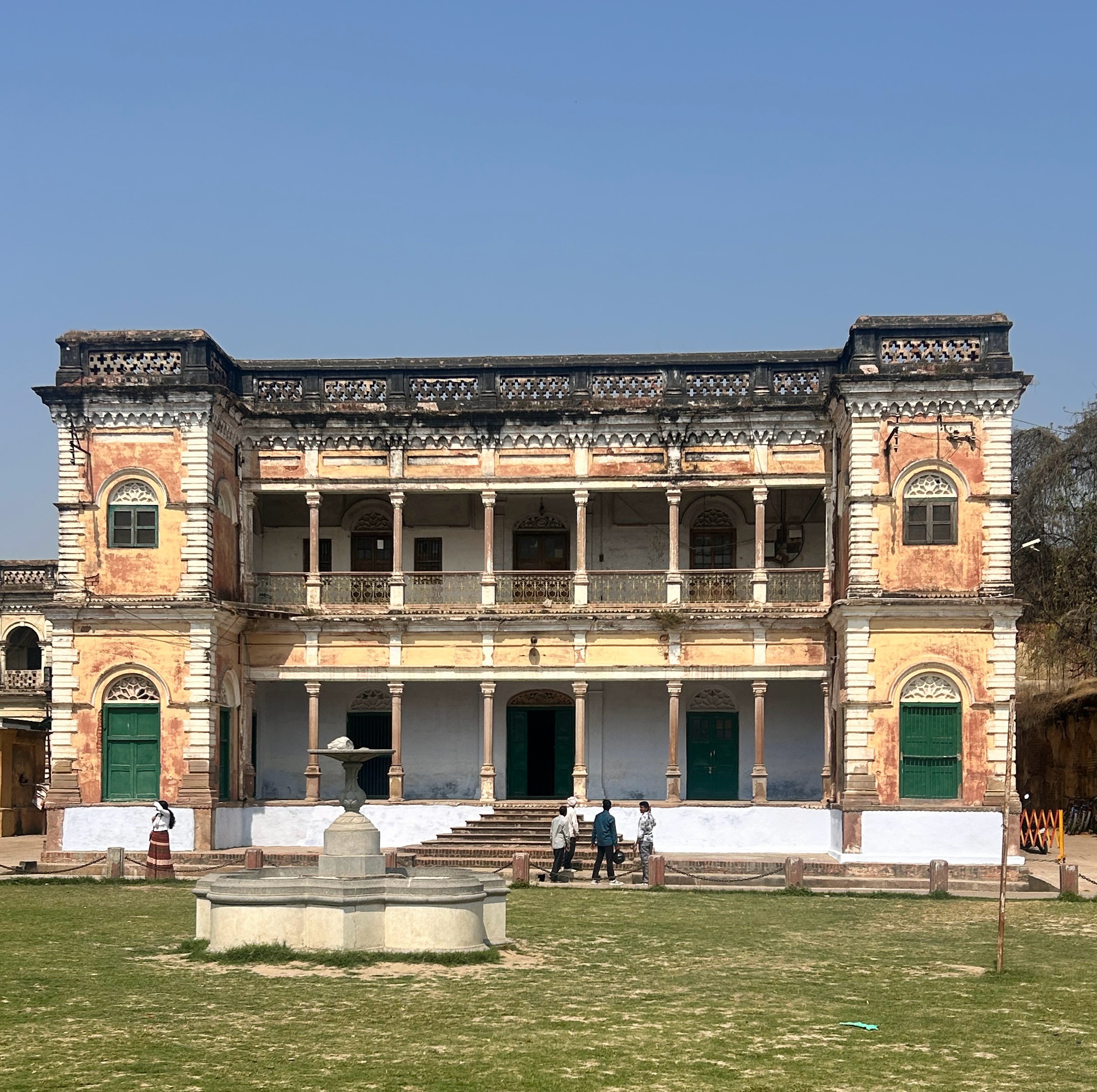
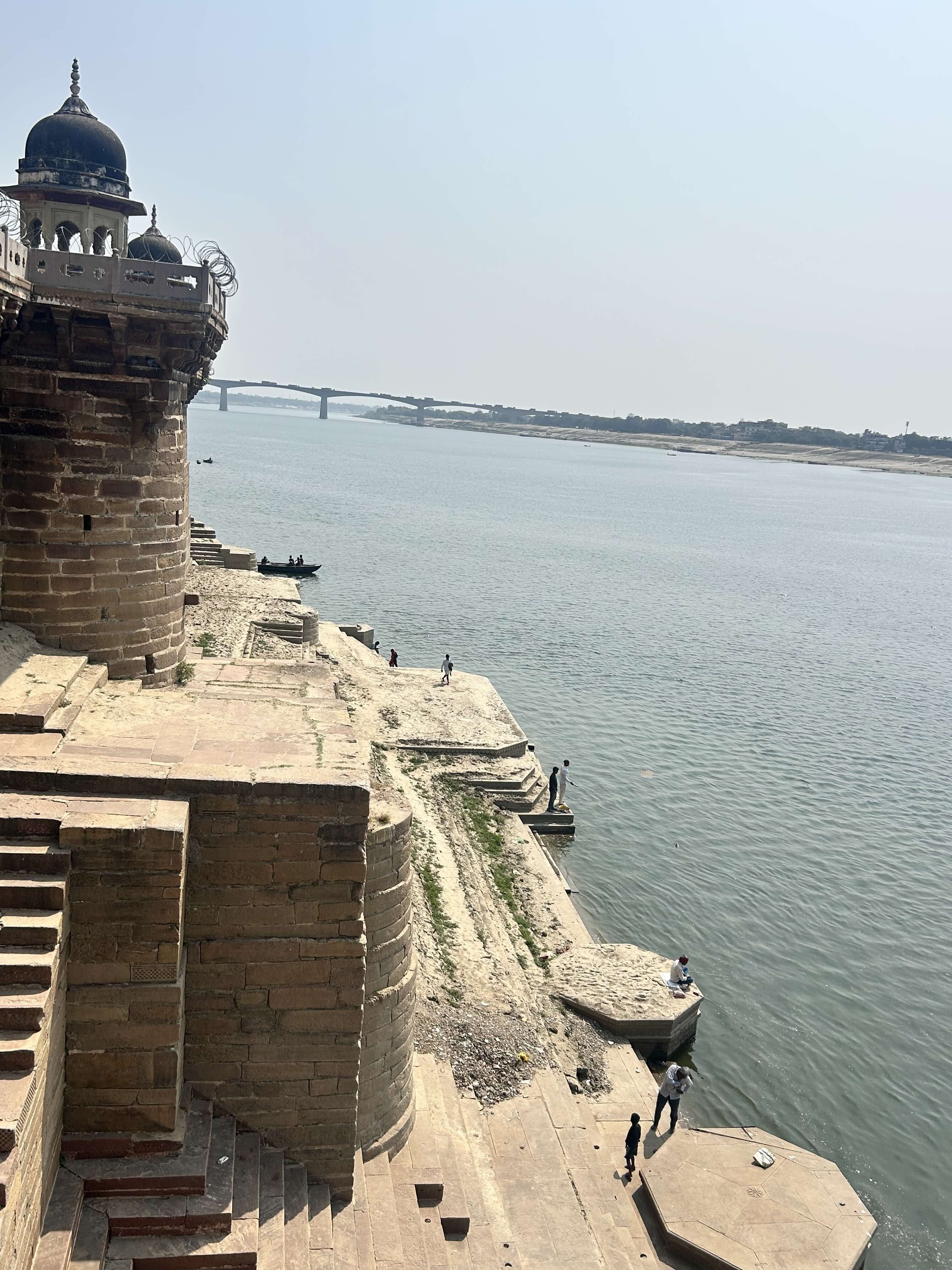
The next part of the day was spent at Ramnagar Fort, situated on the banks of the Ganga. Built in 1750 by Kashi Naresh Maharaja Balwant Singh, the fort remains the ancestral home of the Varanasi royal family. The structure is crumbling from the outside, and though the museum houses an interesting collection of vintage cars, royal costumes, arms and ammunition, the experience felt somewhat underwhelming. The display cases were dusty, many exhibits lacked proper labels, and the overall impression was of a place with great potential but limited care. I walked towards the back of the fort, expecting to reach the river, only to find the walls high. Yet the riverside edge of the fort precincts was animated by enthusiastic anglers.


Almost next to the fort stands Shivji Lassi. The midday heat ensured that my feet found their way there almost automatically. After gulping down two glasses of lassi, I headed to the ancestral home of Lal Bahadur Shastri. It is a small but well-maintained house, offering a modest yet meaningful glimpse into the life of one of India’s most understated leaders.

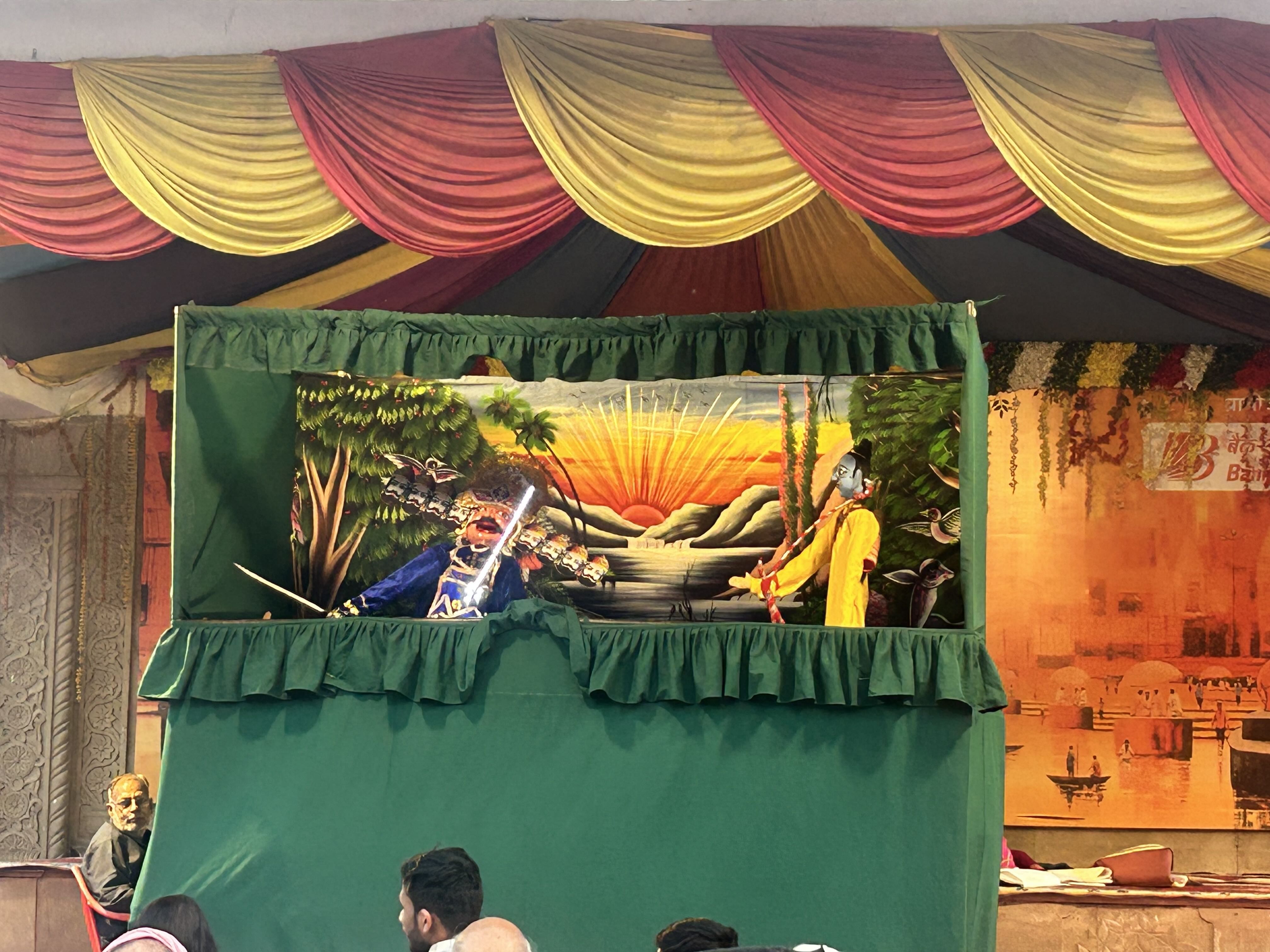
In the evening, I made my way to Assi Ghat to experience the Ganga Aarti. The first thing I encountered there was a puppet show based on the Ramayana. People were sitting, standing, moving around—but there was a curious method to the madness. As I walked further towards the aarti area, I found that most of the steps were already occupied. Somehow, I spotted a few chairs and promptly settled into one.


There is something surreal about hearing hundreds of voices recite the Hanuman Chalisa in unison. This was followed by the puja of Ma Ganga, during which the organisers invited devotees to participate. At one point, one of the priests admonished a devotee who seemed more concerned with taking photographs than with the prayer itself.


And then began the elaborate aarti.
I have always found aarti mesmerizing. But when it is carried out with such care, rhythm, and a sense of spectacle, it becomes truly unforgettable. As the aarti concluded and I slowly made my way towards the parking area, someone placed a bowl of prasad in my hands. Benaras, once again, in its own small way, touched the soul.


Thus ended my second day in the city of Shiv, a day of devotion, faith, and a little bit of history.

Between Benaras and Kashi: First Impressions of the City of Shiv

It was Benaras for my father and Kashi for my mother.
For my father, Benaras was a contradiction: a city where one seeks salvation, and where widows, until about a century ago, were often abandoned. For my mother, it was a city that lived vividly through Bengali literature, almost as if it were an enduring character in the novels she read. Somewhere between Benaras and Kashi, I do not know when it became the city I longed to visit at least once in my life. Perhaps the seed was sown in college, when I read and re-read Sarat Sahitya. In Sarat Chandra’s world, Benaras was never merely a backdrop; it was often a presence, almost a character in itself.


I had been planning this trip for a while, but somehow it never materialised. Then came the long Holi weekend, and I decided to take the plunge. It certainly helped that I had a colleague who had lived and studied in Benaras. And so, on a Friday afternoon, I landed in the city of Shiv.
Though I had drawn up a fairly detailed itinerary, the midday sun, coupled with a bit of laziness, ensured that I did not step out until evening.


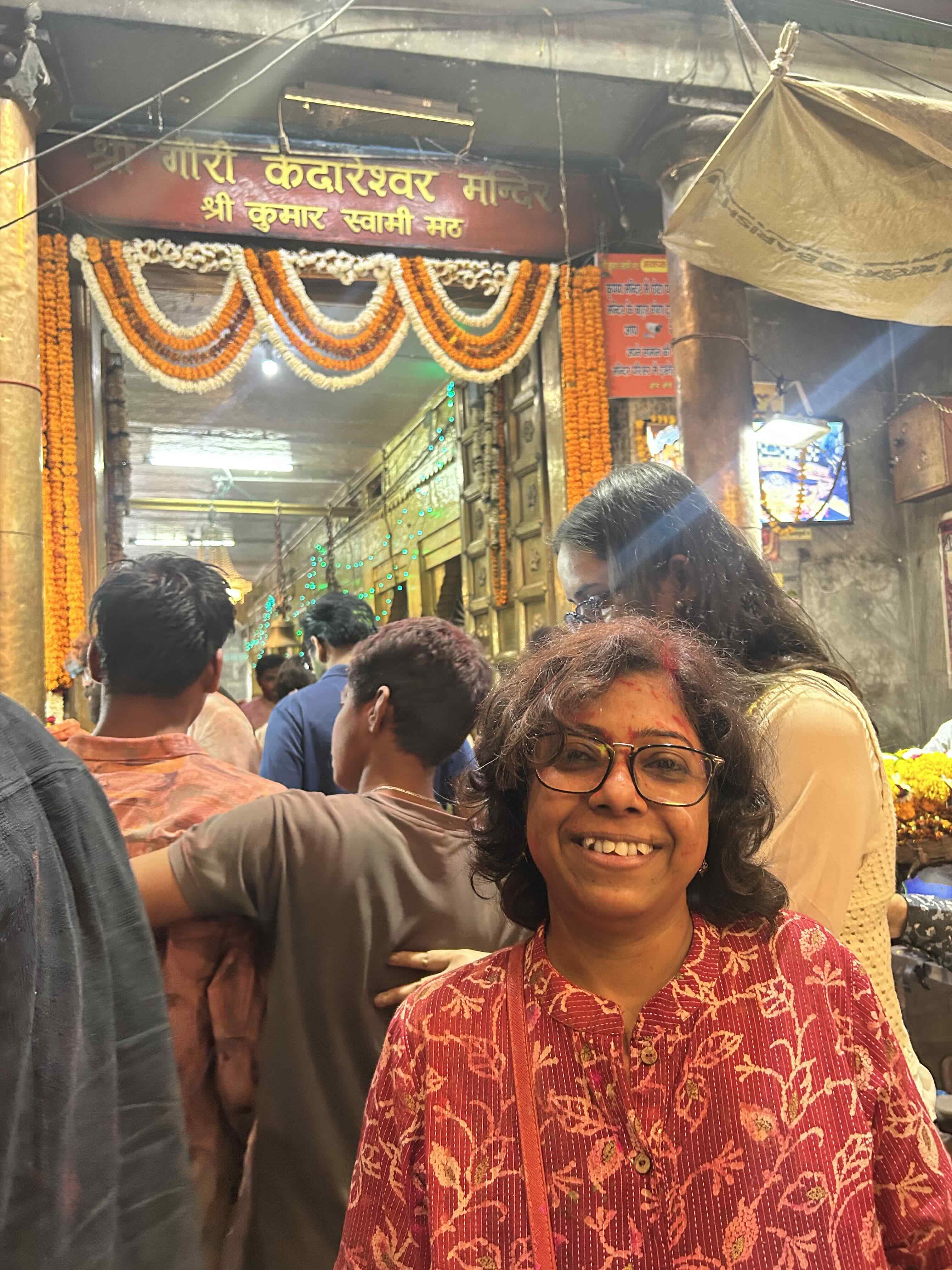
That evening, an acquaintance in the city reminded me that I had arrived on the auspicious day of Rangbhari Ekadashi, and that I must experience it. Rangbhari Ekadashi is believed to mark the day Shiv entered Kashi with Gauri for the first time after their marriage. I took an auto and reached the chowk near Kedar Ghat. Harshit met me there, and together we walked towards the Gauri Kedareshwar Temple.


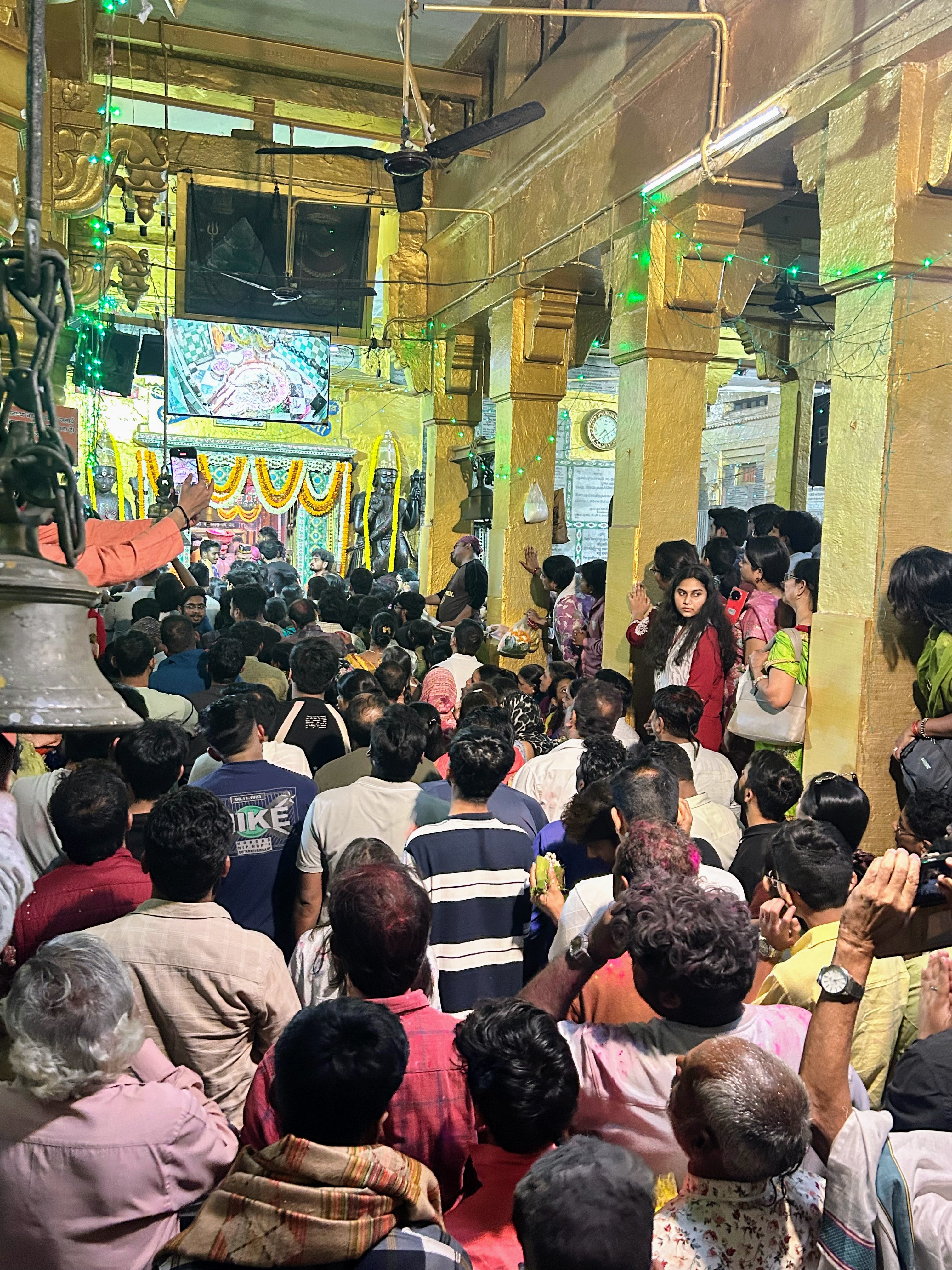
Our first stop was the ancient Chintamani Ganesh Mandir. From there, we made our way to the Gauri Kedareshwar Temple. We removed our sandals, and I was handed a paper cup containing what I assumed was water. I took a sip. The moment I realised it was not water, I peered into the cup. Harshit was scandalised. It was meant to be an offering. Armed with a fresh paper cup, I walked in again, slightly embarrassed, and joined the sea of humanity.


One of the twelve Jyotirlingas, the temple was in the midst of an elaborate puja for Rangbhari Ekadashi, and the rituals were being broadcast live on a screen outside. Technology, used well. After almost an hour, the puja concluded, and we slowly inched our way towards the sanctum sanctorum. Then I looked up at the screen and saw devotees rush in, jostling to touch the Shiv Linga. One part of me wanted to leave. But I was too deep inside the crowd by then, and there was no turning back. Swept along by the tide, I moved forward until I finally reached the Shiv Linga.


It is unusual, more an outcrop of rock than the smooth form one typically expects. Yet, despite the crush of the crowd, I somehow found a moment. A brief, still moment. I prayed, touched the Shiv Linga, and came out of the temple.


My pet peeve during temple visits has always been the speed with which one is pushed out of the inner sanctum, sometimes before one has even finished praying. But today, despite the crowd and the jostling, I was granted that moment. And that felt deeply satisfying.


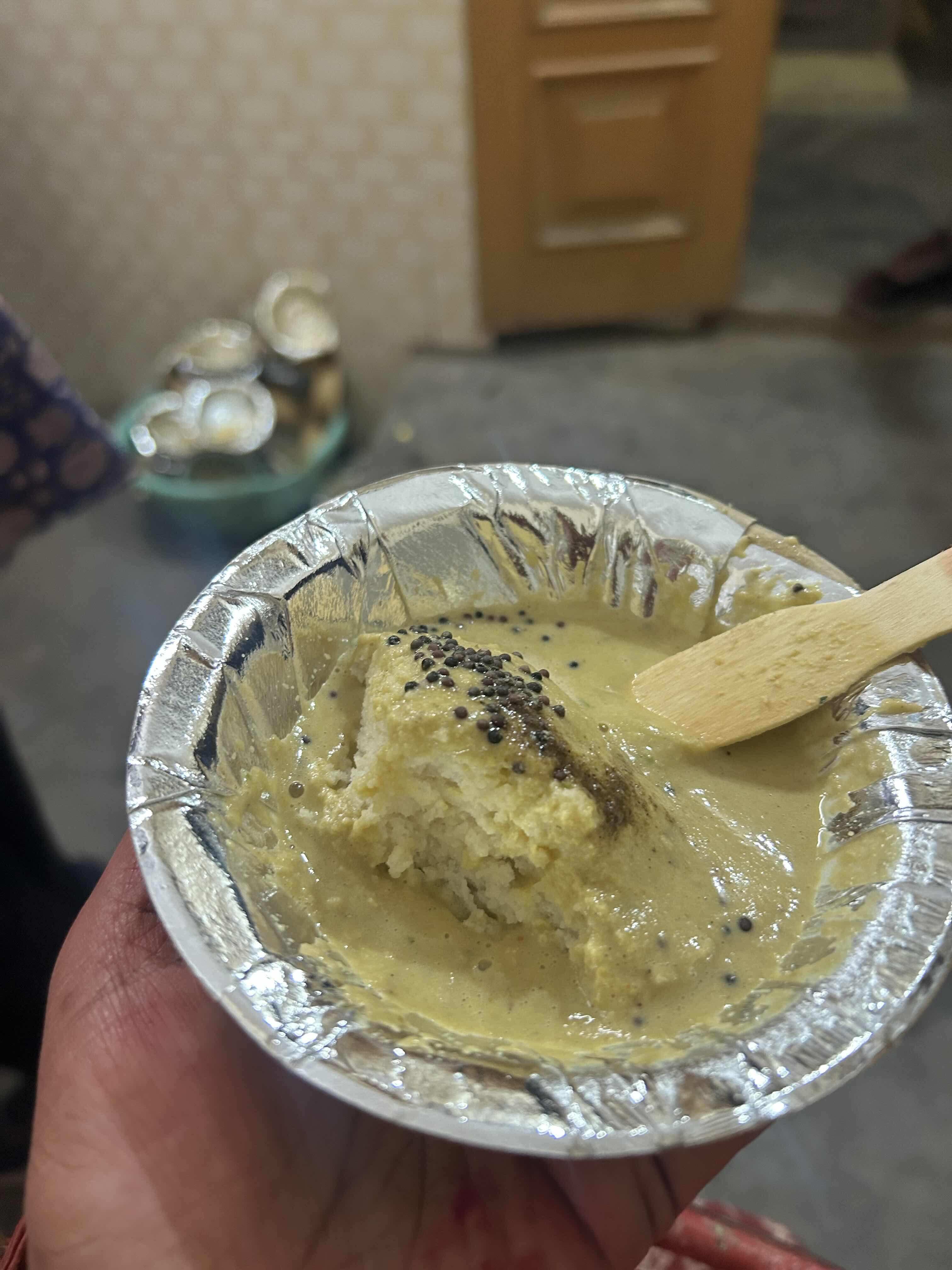
Once the visit was over, Harshit took me on a food trail through the city. We crossed Harishchandra Ghat, where funeral pyres burned even as life moved on around them, and then plunged once more into the crowds. Our first stop was idli served with dal chutney. From there we headed to Keshri Chaat, Harshit expertly manoeuvring his scooter through the dense, chaotic lanes while I sat pillion, equal parts anxious and exhilarated.


The quality of the chaat was evident from the crowd gathered outside the shop. I began with tamatar ki chaat, followed by palak patta chaat, gol gappa, and finally chewra matar—an interesting preparation made with chewra, or poha as we usually know it.


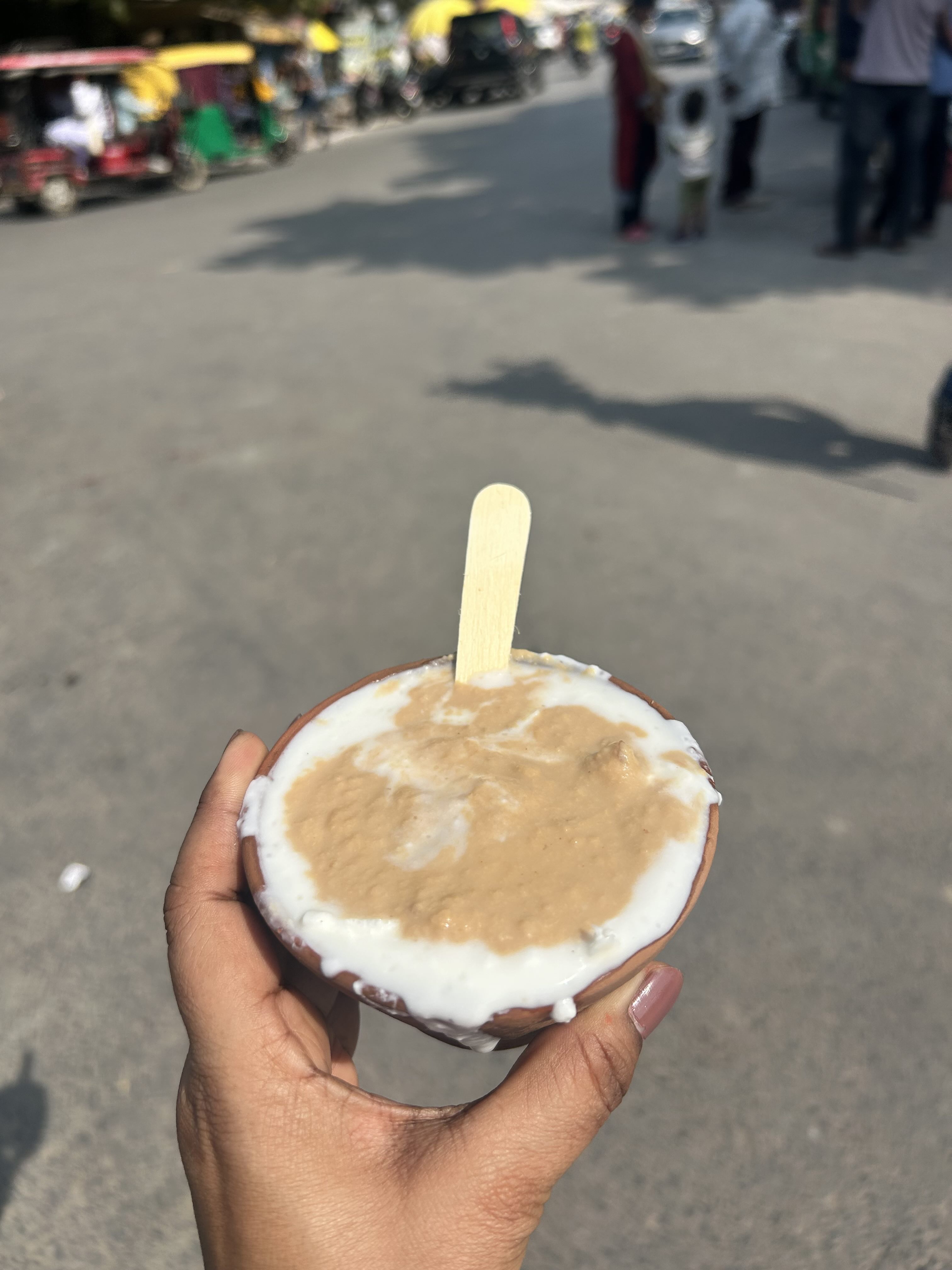
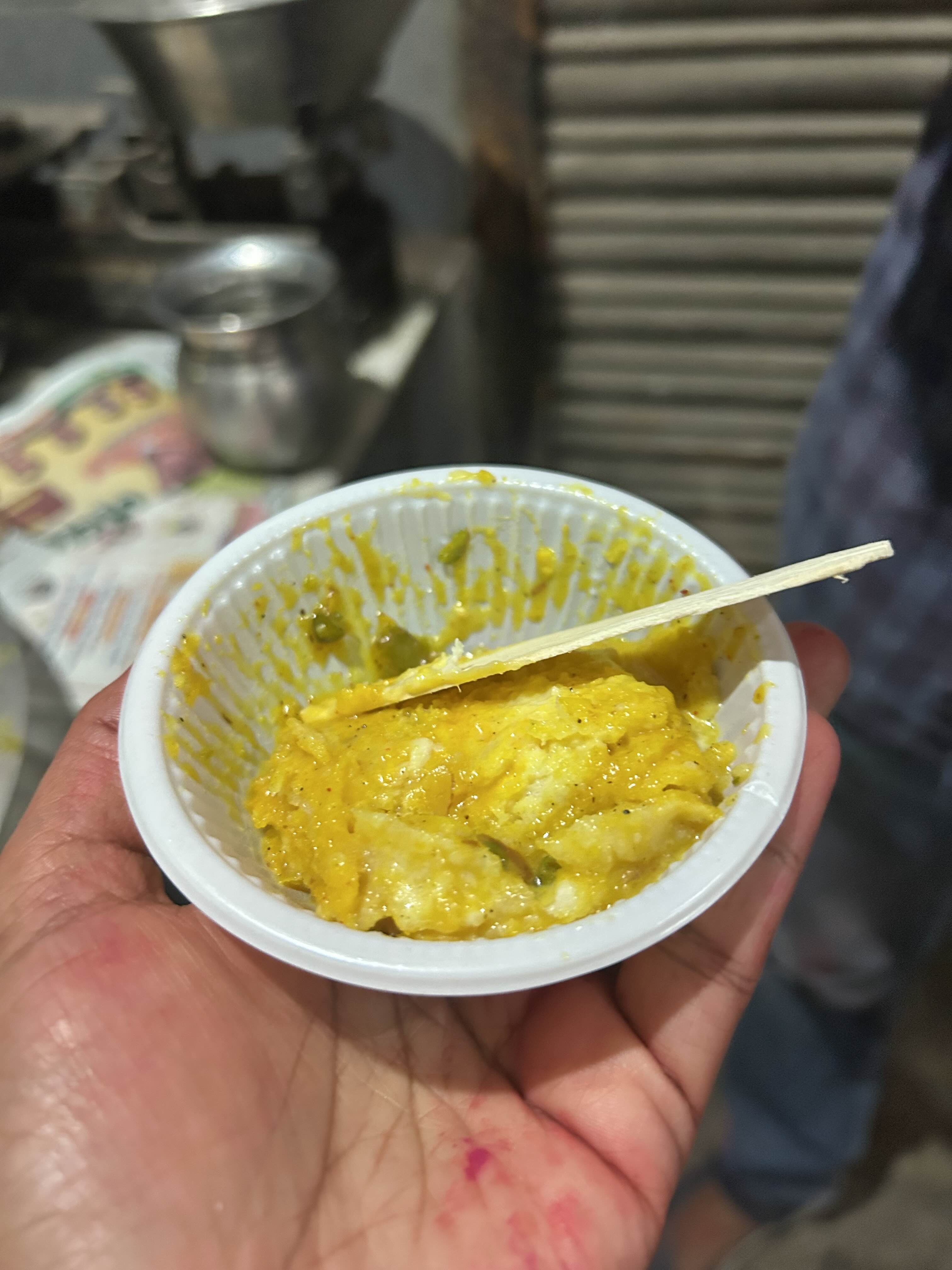
We then set out in search of thandai. With the narrow lanes teeming with two-wheelers and pedestrians, it was a challenge of its own. Unfortunately, we were too late. By the time we reached, the thandai was over. Harshit then took me to a place, opposite Parshuram Mahadev mandir, selling a sweet made of malai, which is interestingly named ‘palangtodh’.


And thus ended my first day in Benaras. A day when Shiv pulled a crowd-averse traveller into the heart of a celebration—and left her unexpectedly, completely satisfied.

When Maa Comes Home – Navami

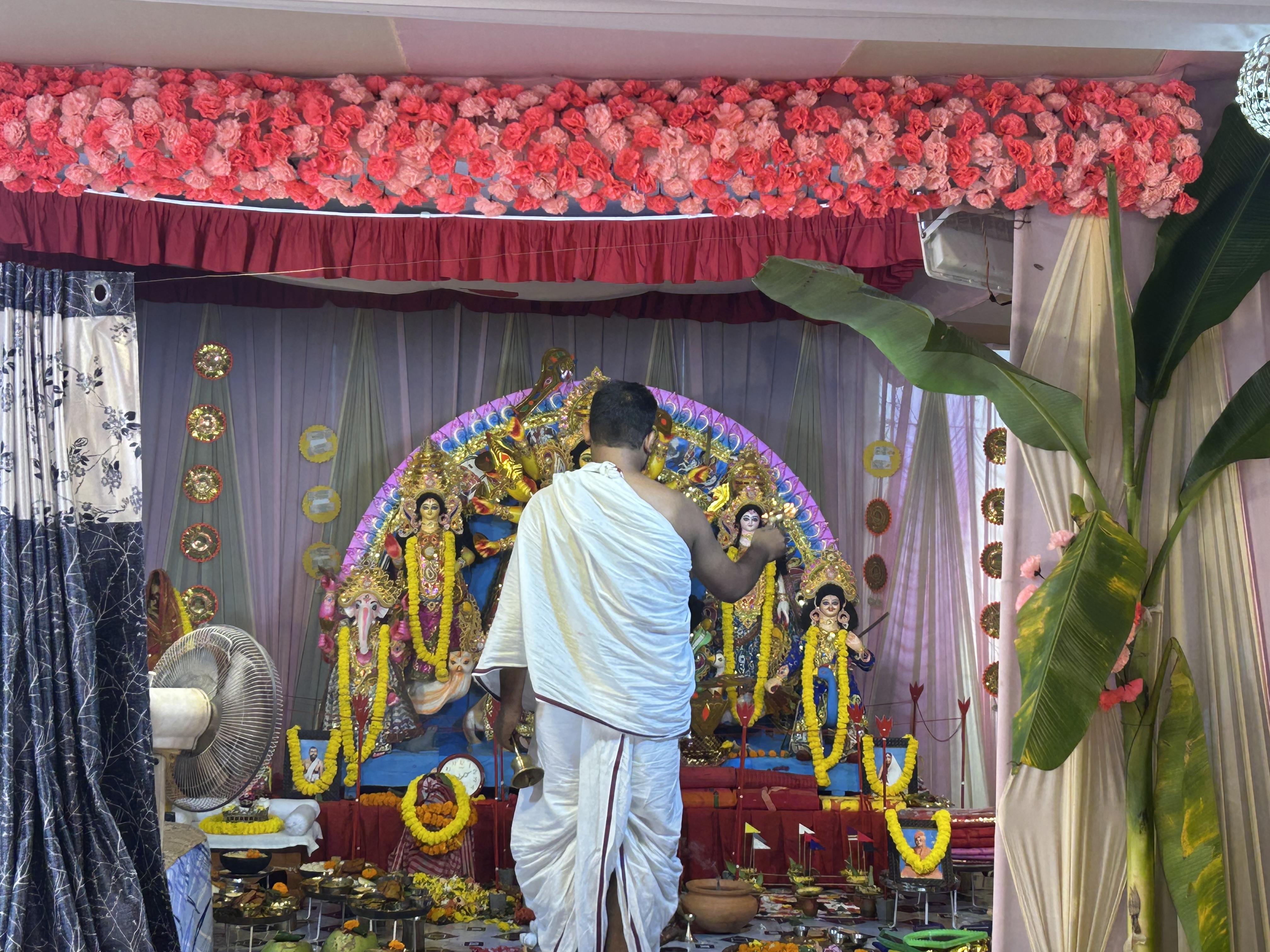
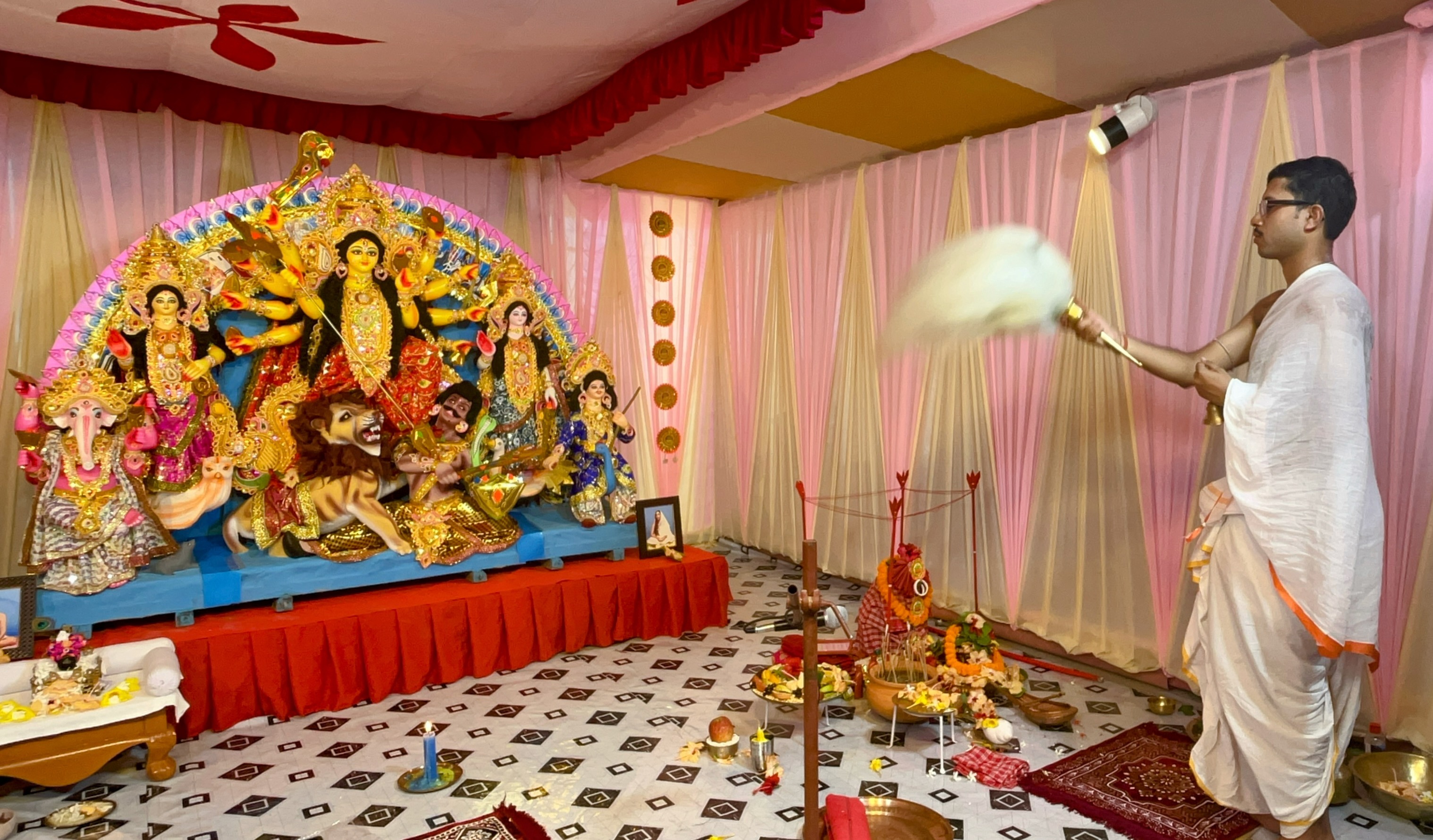
Navami dawned with a quiet urgency. It was the last full day Maa would be home with us, and I wanted to soak in every moment. So, dressed in my puja finery, I made my way to the mandap, where the goddess seemed to hold court amidst fragrance, light, and laughter.

Durga Puja, for Bengalis, is more than a festival. It is the homecoming of a daughter. Every offering, every ritual, every sound and flavor carries the symbolism of how a daughter is pampered when she returns to her parental home. Navami, coming after the solemnity of Ashtami and the intensity of Sandhi Puja — when the goddess is believed to have slain Mahishasur — is lighter in mood, filled with a sense of celebration but also tinged with an approaching farewell.


Discoveries at the Mandap

As I entered, something unusual caught my eye — a neatly made bed placed at the mandap. Curious, I asked my sister-in-law, who explained it was an offering to the goddess. Like a daughter who has come home after a long time, she must be cared for, made comfortable, and indulged. Standing there, I realized how much one can learn by simply watching the rituals closely: the goddess is not distant; she is family.

The air vibrated with familiar sounds — the dhak, the clash of kasor, the rhythmic ululations, and the deep resonance of the shankh. Each day I had tried, and failed, to blow the conch shell. But on this morning, almost to my surprise, the sound emerged clearly. It was fleeting, for when I tried again, it eluded me. My aunt, of course, then stepped in to demonstrate her flawless skill, as if reminding us that these rituals are not just sacred — they are also playful, communal, full of laughter and learning.


The Sacred Fire

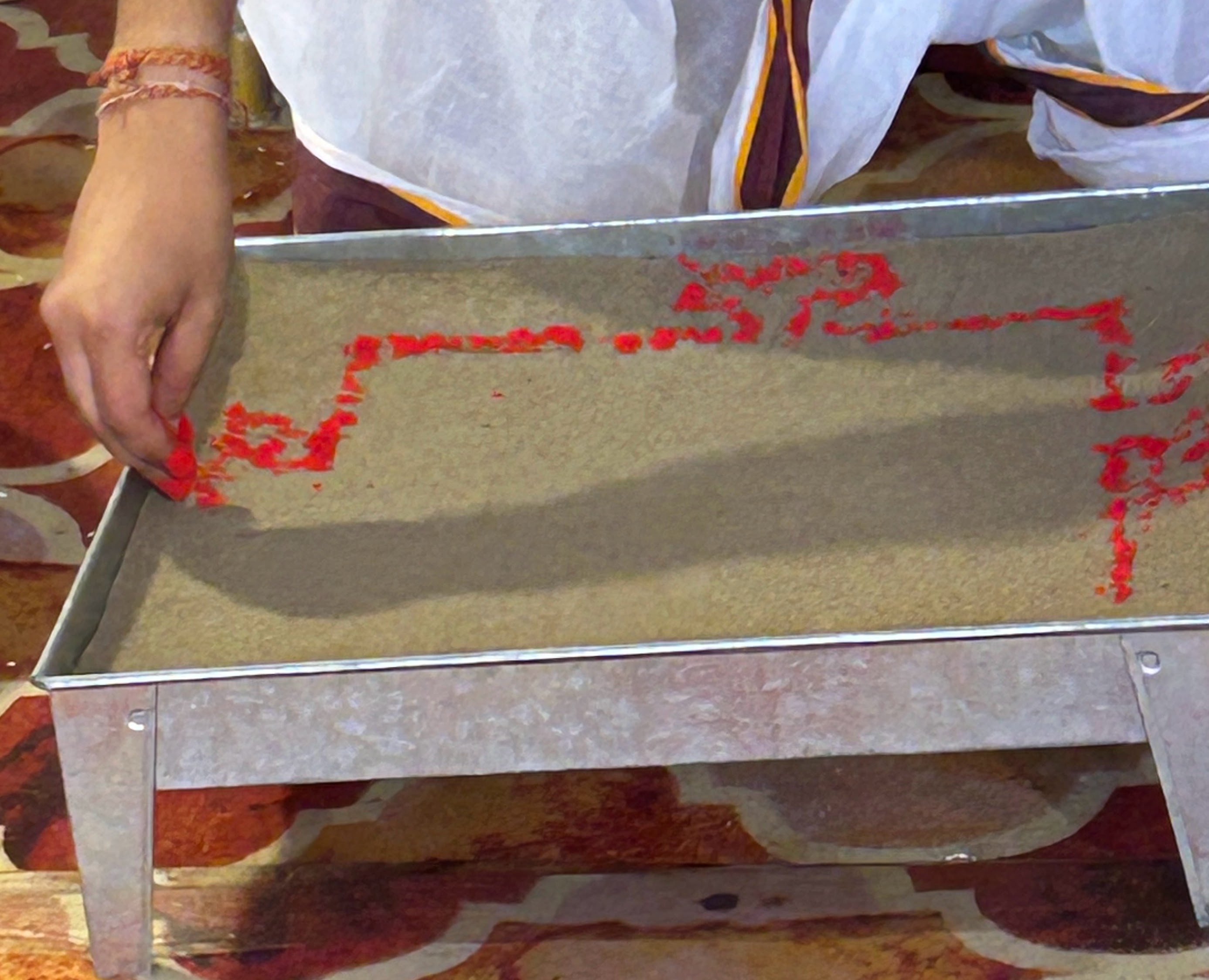
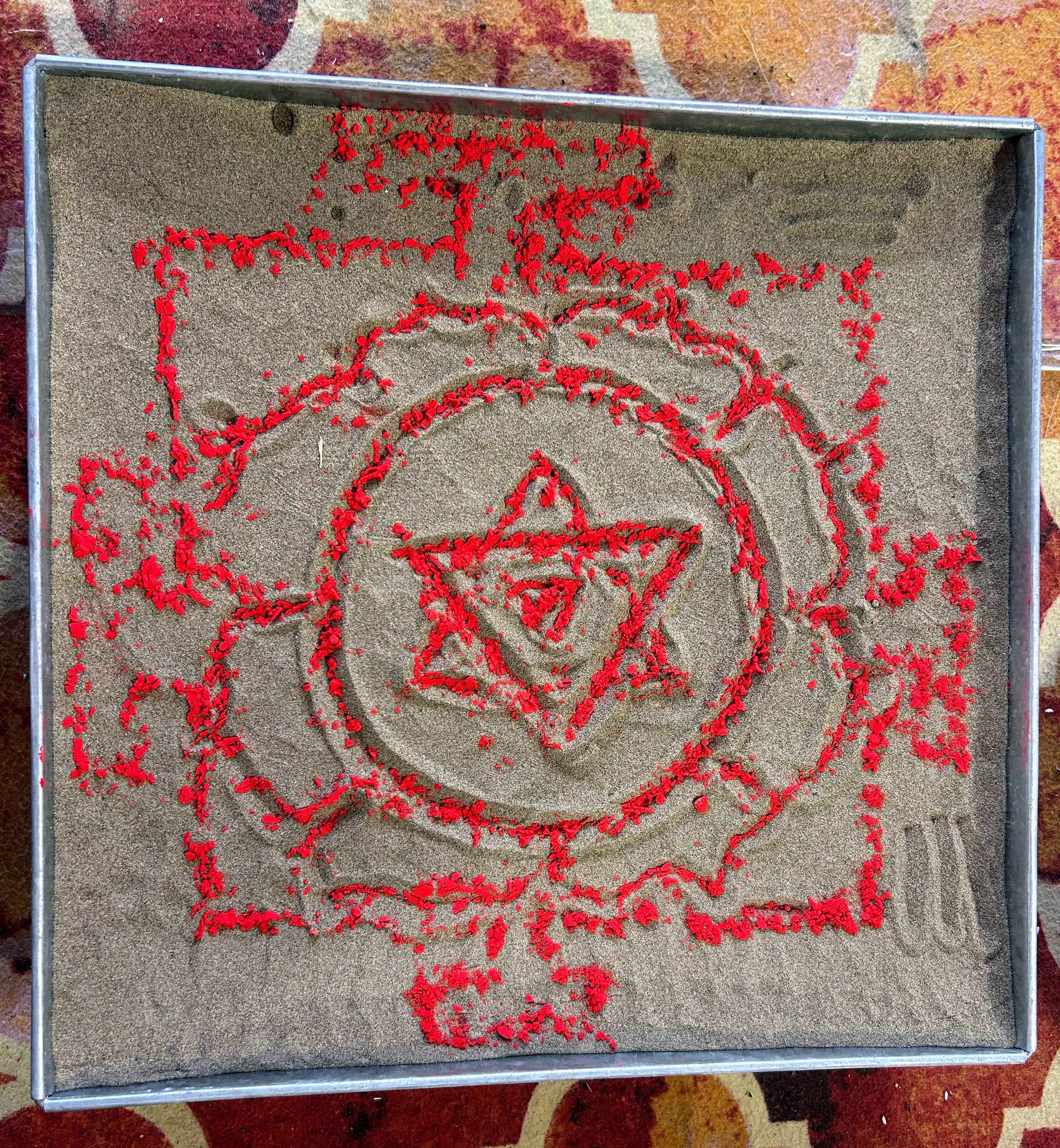
After the arati and pushpanjali, preparations began for the havan. A metal kund was filled with sand, rangoli patterns were drawn, and small wooden twigs were stacked carefully before being lit with the chanting of shlokas. Watching my family gather — the elders with folded hands, the younger ones capturing the moment on their phones, and children gazing on with wide-eyed curiosity — I felt how rituals create a tapestry of generations. Each of us participates differently, yet all are bound by the same flame, the same prayer.

The havan stretched into the afternoon, its rhythm slow and meditative, until the sacred fire gave way to another ritual no less holy for Bengalis — the bhog. Plates of steaming prasad were served, and we descended with eagerness. With a puja at home, every meal was vegetarian, but the variety revealed the richness of Bengali vegetarian cuisine — a tradition often overshadowed by our famed fish and meat dishes. Each bite was a reminder that food, too, is devotion.


The Evening Glow

As twilight approached, the mood softened. Navami evenings are bittersweet. They are filled with joy, for Maa is still with us, but also with an unspoken sadness that the festival is nearing its end. The dhunuchi dance, the laughter, the casual adda — everything seemed brighter, livelier, because we knew it would soon be over.

Durga Puja is not just about rituals. It is about the coming together of family, the blending of the sacred and the everyday, the music and the meals, the stories and the silences. It is about homecoming — not just of the goddess, but of all of us, returning to roots, to belonging, to shared memories.


Carrying the Light Forward

When Maa comes home, everything brightens. And yet, as her departure nears, I realize that the beauty of Durga Puja lies not only in her presence but also in the light she leaves behind. The mandap, the dhak, the laughter of family, the taste of bhog — all of it becomes memory and meaning, carried within us until the next autumn when the daughter returns again.

Durga Puja, in its essence, teaches us that joy and impermanence walk hand in hand. That even departures are sacred, for they remind us to cherish the moments we have.

And so, on Navami, as Maa prepared to leave, I understood: she never truly goes away.

Maa Comes home: Sashti


The day began at sunrise. My brother woke us up, reminding us that Chandi Puja was scheduled to start at 6 a.m. The quiet of the morning soon gave way to the rhythmic chants of shlokas, and with that the day unfolded into one steeped in devotion, tradition, and togetherness.

The Young Purohits: Tradition in New Hands
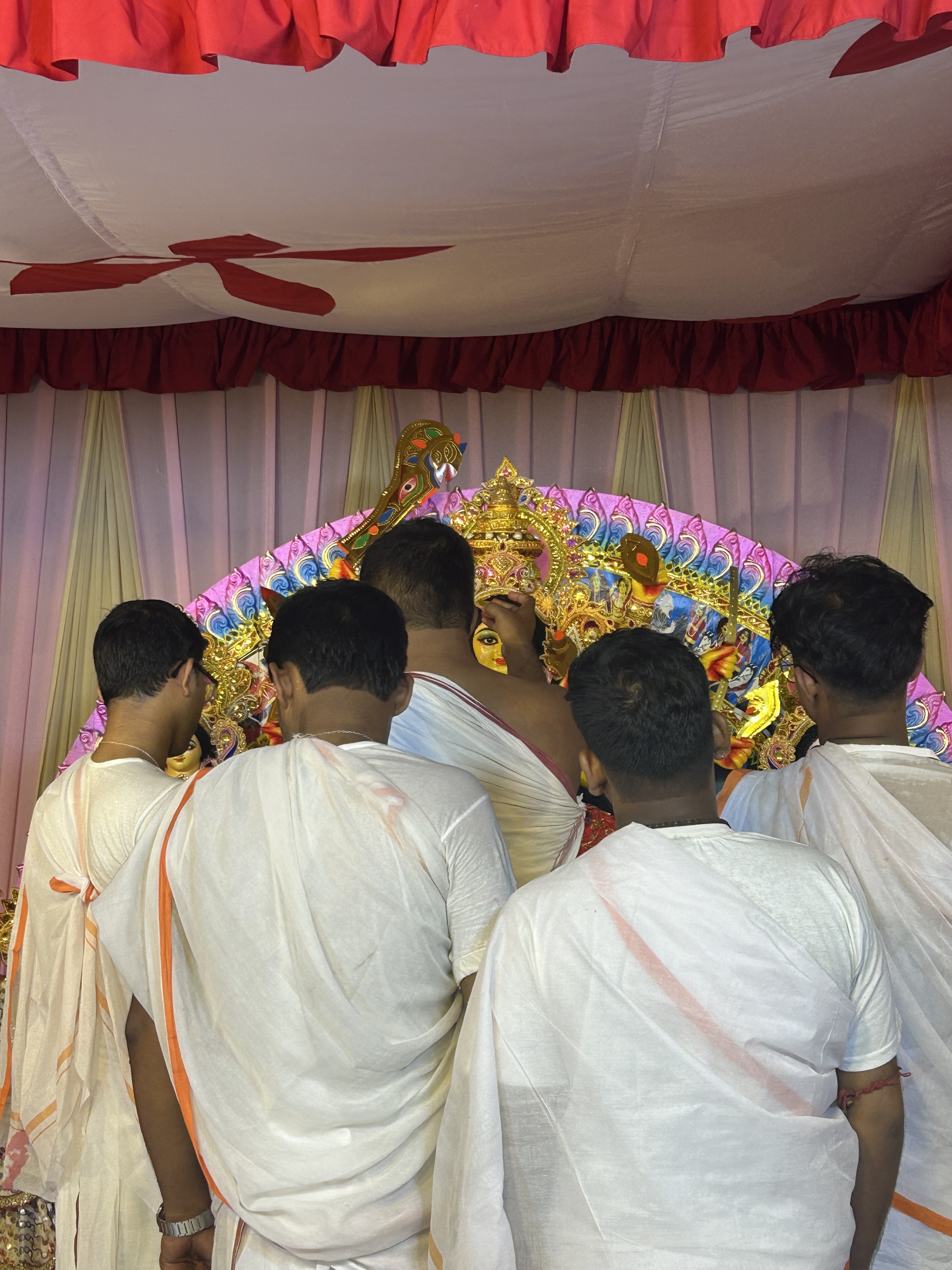
This year’s puja carried a unique touch — the rituals were conducted by a group of young purohits in their twenties. It was both heartening and reassuring to watch tradition being carried forward so earnestly. What struck me most was a young Purohit, a student doing his masters, reciting the Chandi Path with impeccable diction and clarity.

As I listened, memories came rushing back, of my childhood, when my eldest uncle would perform the Chandi Path. That sound had long been my only reference for this sacred recitation. Watching the next generation step into that role was a reminder of how rituals survive through continuity, transforming into lived heritage.

The Sacred Offering: Bhog-er Prasad
Around noon, it was time for the bhog-er prasad. This is not a meal in the conventional sense but a divine mash-up of everything offered to Maa — from lemon to Anna bhog to payesh. The mix, though unusual, always tastes heavenly, not only for its flavors but because it is sanctified as Maa’s blessing.

Evening Rituals: Sashti, Kola Bou and Pran Pratistha
The evening brought with it the rituals of Sashti and the preparation of Kola Bou, symbolizing the nine sacred plants or Nabapatrika. Kola Bou reinforces our eternal connection with nature, reminding us that the festival is as much about celebrating divinity as it is about honoring the earth that sustains us. This was followed by the elaborate ritual of Pran Pratishtha, when life is invoked in the idol.

Beyond the Mandap: The Joy of Togetherness
But puja is never just about rituals. It is about everything that happens around the rituals — the pranks, the eagerness to dress up, slipping back into the cool AC room after braving the heat of the mandap, and the endless adda sessions that spill over from morning to night. These moments are what bind families and generations, adding warmth to the devotion.

A Day to Remember
Chandi Puja is said to be an integral part of Durga Puja, yet for me it has always carried the memory of one elder’s voice, one family moment. Experiencing it in this way — led by the young, shared in the company of many, and accompanied by laughter and joy — made the day unforgettable.

Durga Puja is not just worship; it is living culture. It is where tradition meets memory, devotion meets joy, and Maa comes home in a thousand little ways.