The day began at sunrise. My brother woke us up, reminding us that Chandi Puja was scheduled to start at 6 a.m. The quiet of the morning soon gave way to the rhythmic chants of shlokas, and with that the day unfolded into one steeped in devotion, tradition, and togetherness.

The Young Purohits: Tradition in New Hands
This year’s puja carried a unique touch — the rituals were conducted by a group of young purohits in their twenties. It was both heartening and reassuring to watch tradition being carried forward so earnestly. What struck me most was a young Purohit, a student doing his masters, reciting the Chandi Path with impeccable diction and clarity.
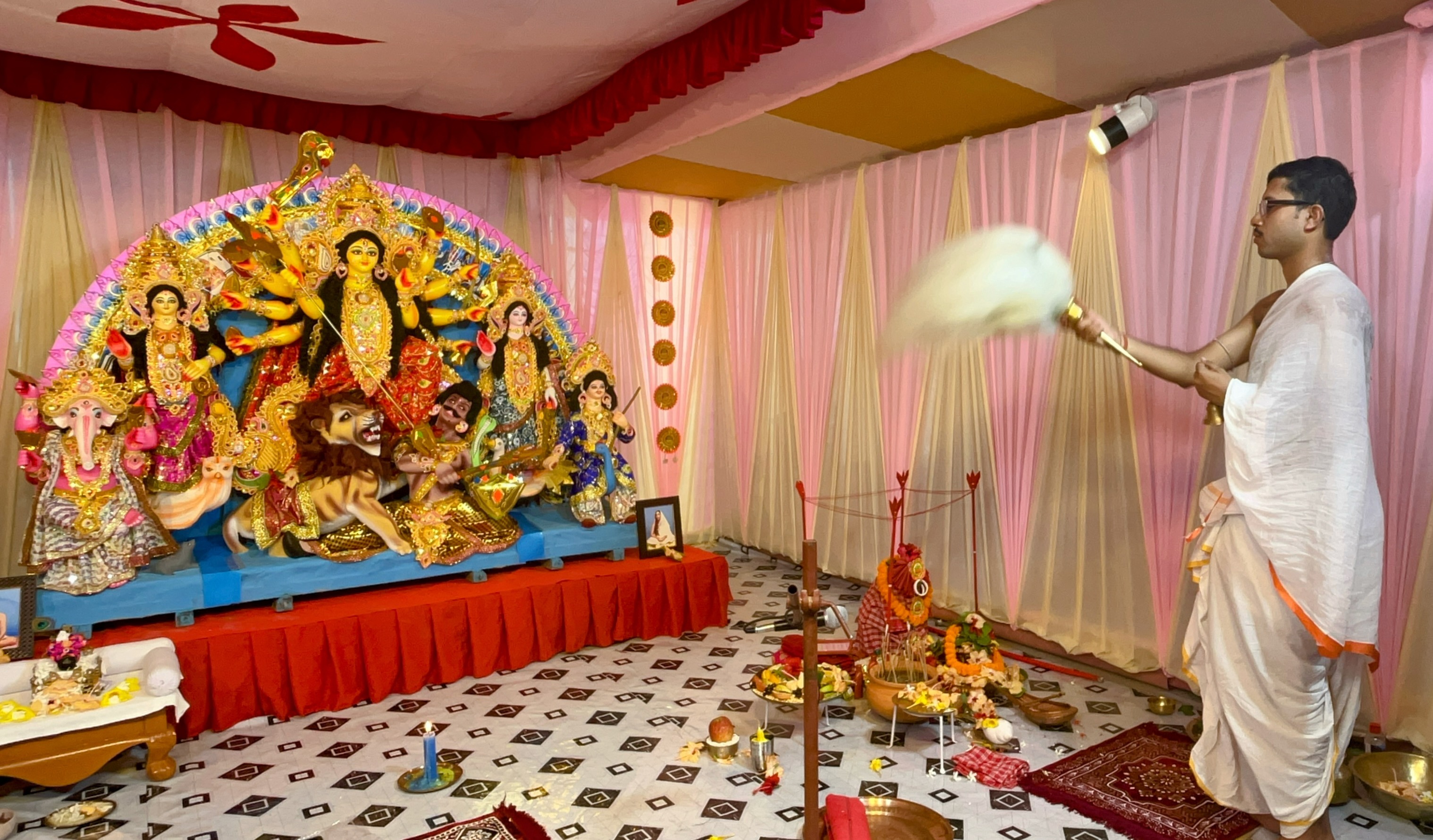
As I listened, memories came rushing back, of my childhood, when my eldest uncle would perform the Chandi Path. That sound had long been my only reference for this sacred recitation. Watching the next generation step into that role was a reminder of how rituals survive through continuity, transforming into lived heritage.
The Sacred Offering: Bhog-er Prasad
Around noon, it was time for the bhog-er prasad. This is not a meal in the conventional sense but a divine mash-up of everything offered to Maa — from lemon to Anna bhog to payesh. The mix, though unusual, always tastes heavenly, not only for its flavors but because it is sanctified as Maa’s blessing.
Evening Rituals: Sashti, Kola Bou and Pran Pratistha
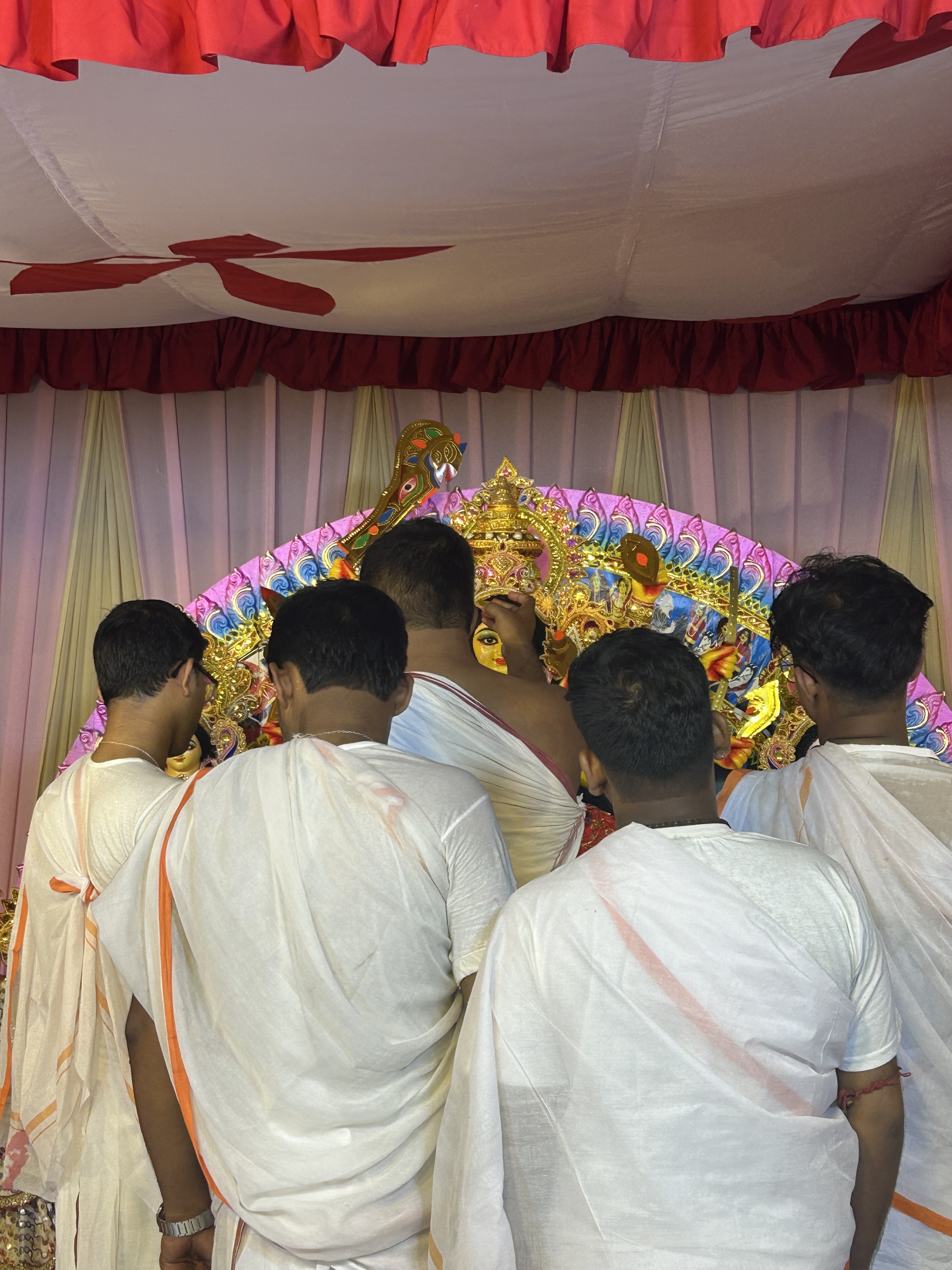
The evening brought with it the rituals of Sashti and the preparation of Kola Bou, symbolizing the nine sacred plants or Nabapatrika. Kola Bou reinforces our eternal connection with nature, reminding us that the festival is as much about celebrating divinity as it is about honoring the earth that sustains us. This was followed by the elaborate ritual of Pran Pratishtha, when life is invoked in the idol.
Beyond the Mandap: The Joy of Togetherness
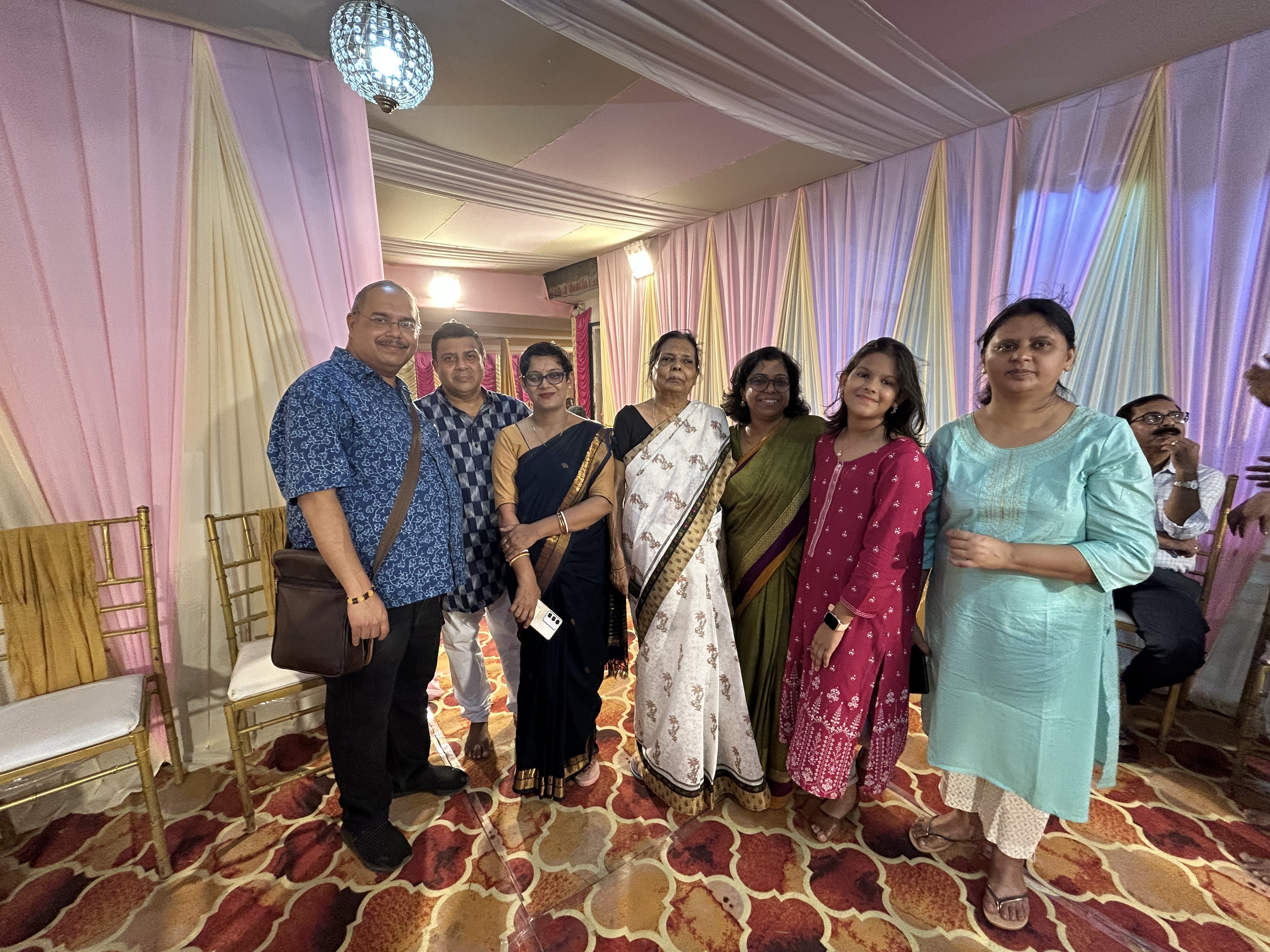
But puja is never just about rituals. It is about everything that happens around the rituals — the pranks, the eagerness to dress up, slipping back into the cool AC room after braving the heat of the mandap, and the endless adda sessions that spill over from morning to night. These moments are what bind families and generations, adding warmth to the devotion.
A Day to Remember
Chandi Puja is said to be an integral part of Durga Puja, yet for me it has always carried the memory of one elder’s voice, one family moment. Experiencing it in this way — led by the young, shared in the company of many, and accompanied by laughter and joy — made the day unforgettable.

Durga Puja is not just worship; it is living culture. It is where tradition meets memory, devotion meets joy, and Maa comes home in a thousand little ways.
 Jajabor