Tag Archives: INTACH Delhi

Guardians of Our Skies: Stories We Should Have Grown Up Knowing

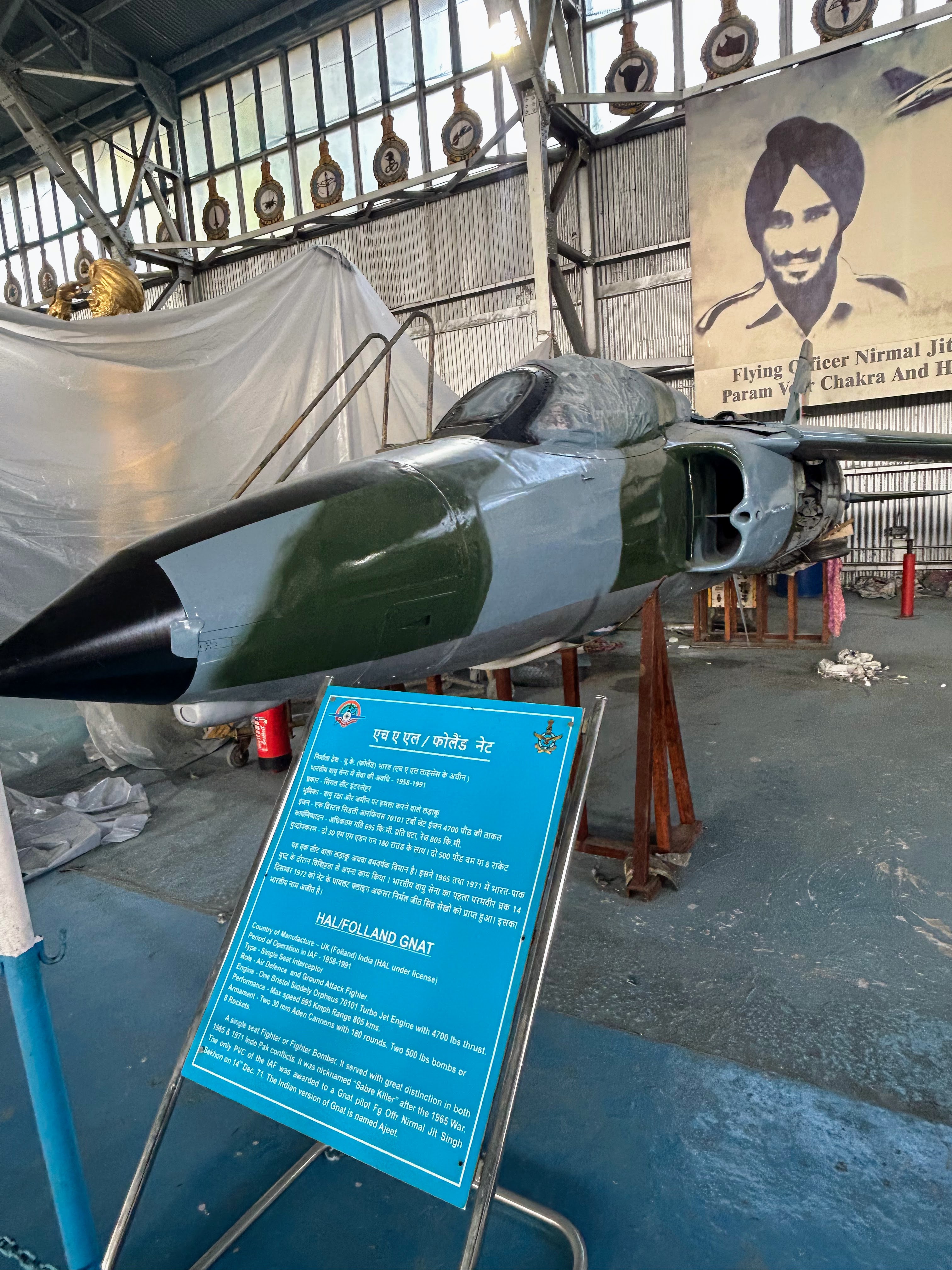
We think we know what 21 looks like—restless energy, unfinished dreams, a horizon stretching endlessly ahead. I certainly believed that. But this Saturday, as I listened to the story of Flying Officer Nirmal Jit Singh Sekhon, I found myself quietly shaken. What does courage look like at 21? What does duty feel like when the cost is everything?

INTACH Delhi had announced a heritage walk at the Indian Air Force Museum, led by Retired Group Captain (Dr) Shajahan Avadi. It was curiosity that took me there. Only later did I realise how rare the opportunity was—the museum isn’t part of the usual tourist trail, and this was its very first heritage walk.

At the entrance, two things stood out. A crowd of schoolchildren—wide-eyed, excited—and at the gate, a real aircraft, standing like a guardian of memory. The walk leader began with a question: Why is a Gnat placed right at the entrance? Before we could think, an officer injured in service rolled past us in a wheelchair. The answer, perhaps, lay in the silence he left behind.

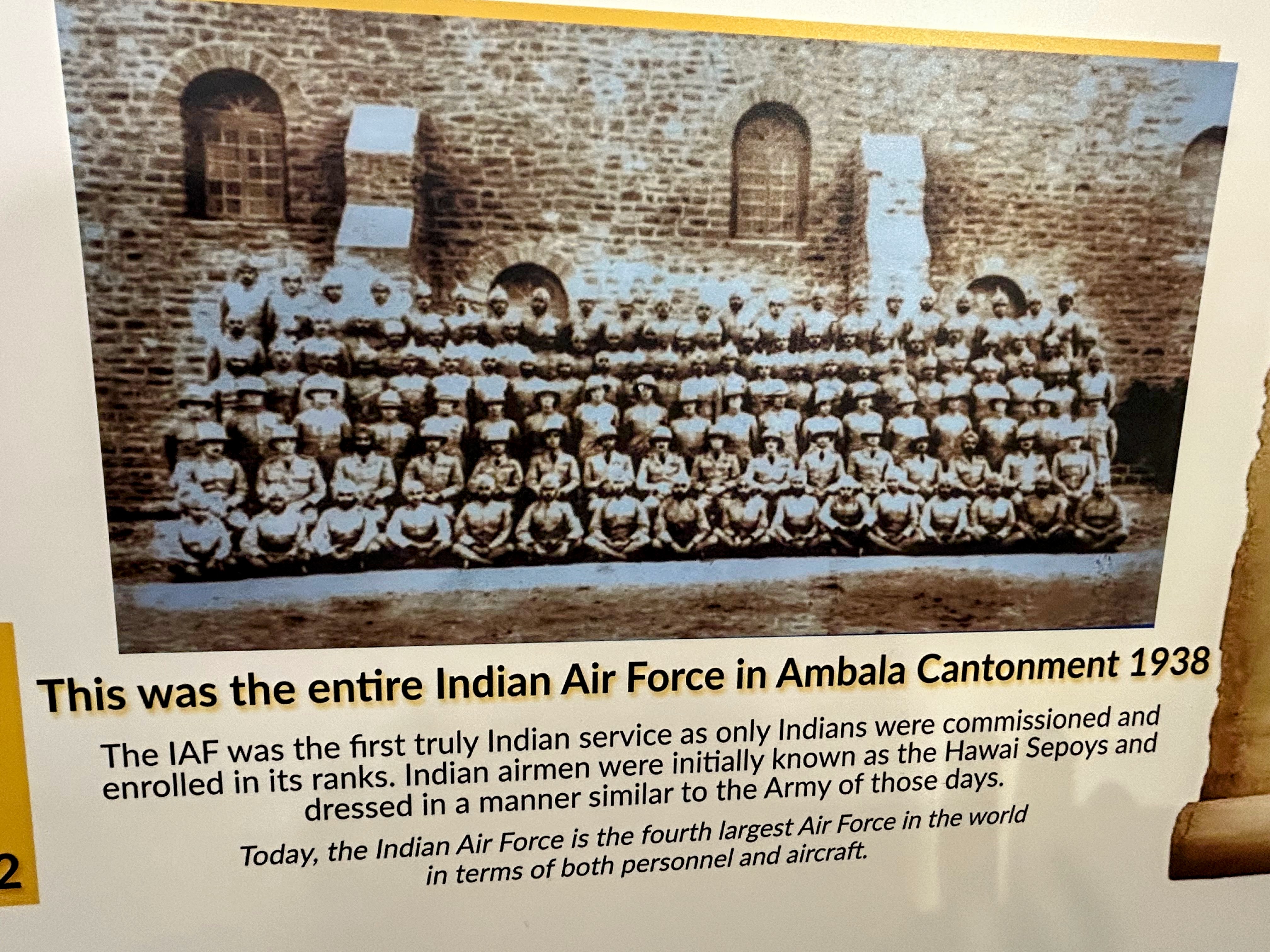
Inside, old photographs whispered forgotten stories. We heard of Indra Lal Roy, of “Jumbo” Mazumdar, of Sekhon—names that deserve far more space in our collective memory. The narrative unfolded like a tapestry: Dakotas landing in Srinagar in 1947, missions in 1965 and 1971, UN peacekeeping roles, and humanitarian operations during the Uttarakhand floods. These were not just stories of war—they were stories of service, endurance, and humanity.
Then came the aircraft displays. A Japanese kamikaze plane. A Pakistani Sabre shot down in 1971. And across from it, the small, almost fragile-looking Gnat. It was impossible not to imagine Sekhon climbing into it, fully aware that he may not return. The only Param Vir Chakra awardee of the Indian Air Force was just 21 years old.

For two hours, we walked, listened, absorbed. But more than the exhibits, it was the weight of the stories—the quiet bravery, the unspoken sacrifices—that stayed with me.

As I stepped out of the museum, a thought lingered: Why don’t we tell these stories more often? Why aren’t they part of every Indian child’s growing-up years? It was heartening to learn that the museum was in the process of moving to a larger building with more exhibits.

Maybe that morning didn’t just teach me history. Maybe it deepened my gratitude for the freedom I live so casually, so comfortably—freedom that someone, somewhere, once guarded with their life.

Ridge of Resilience: Seeking Fresh Air in Delhi’s Living History

How is it that as technology advances, the quality of life seems to decline? This thought weighed heavily on my mind as I stepped out into Delhi’s smog-filled morning. Dull. Dreary. Suffocating. Each winter, the capital transforms into a gas chamber, and each year’s promises of cleaner air evaporate faster than the smog settles back in. With my quota of casual leaves exhausted, and thus, my dreams of a temporary escape, frustration clung to me like the haze itself.

Just then, a message flashed: an INTACH heritage walk in the Northern Ridge. A chance to breathe history, if not fresh air. That it was led by a master storyteller Ratnendu Ray, the idea was inviting. I signed up.

Sleep, however, conspired against me. I woke late, rushed through the morning, and hastened toward Kamla Nehru Ridge Park or Bonta Park, frantically searching for Gate No. 1. Inside, a short walk led to Flagstaff Tower, where the group awaited.

On the way, monkeys ambled fearlessly across the path as if they owned it. Morning walkers clutched sticks as insurance. Memories of Vrindavan’s notorious simian bandits resurfaced. Would my glasses survive this walk? But the monkeys only cast indifferent glances my way.


Where History Watches the City Below

The Northern Ridge rises above Shahjahanabad or Purani Dilli, one of Delhi’s seven historical cities. Flagstaff Tower, once a watchpoint, sits at its highest elevation. Today, it is surrounded by trees, but this greenery is not ancient; it is the product of three rounds of afforestation before independence. Hard to imagine that this tranquil patch of forest was once a British encampment during the 1857 war.

Our walk began with stories of the siege, of smoke and cannon fire, where parakeets now flutter, and a glimpse into early war journalism. Felice Beato, the pioneering war photographer, had captured this very landscape scorched by battle. The Delhi Urdu Akhbar had tried to shape public sentiment, reinforcing Bahadur Shah Zafar as the symbolic leader. The tools change, but the media’s role in nation-building and narratives remains constant.

We learned of Brigadier General John Nicholson, the strict Irish officer who commanded British forces from August 1857 till his death in September 1857. His reputation in the North-West Frontier was so imposing that he inspired a cult — his followers, the Nikal Seynis, treating him almost as divine. History has its ironic humour. Interestingly, the cult is said to have lasted into the 21st century.


Ruins, Remnants, and the People Who Remember

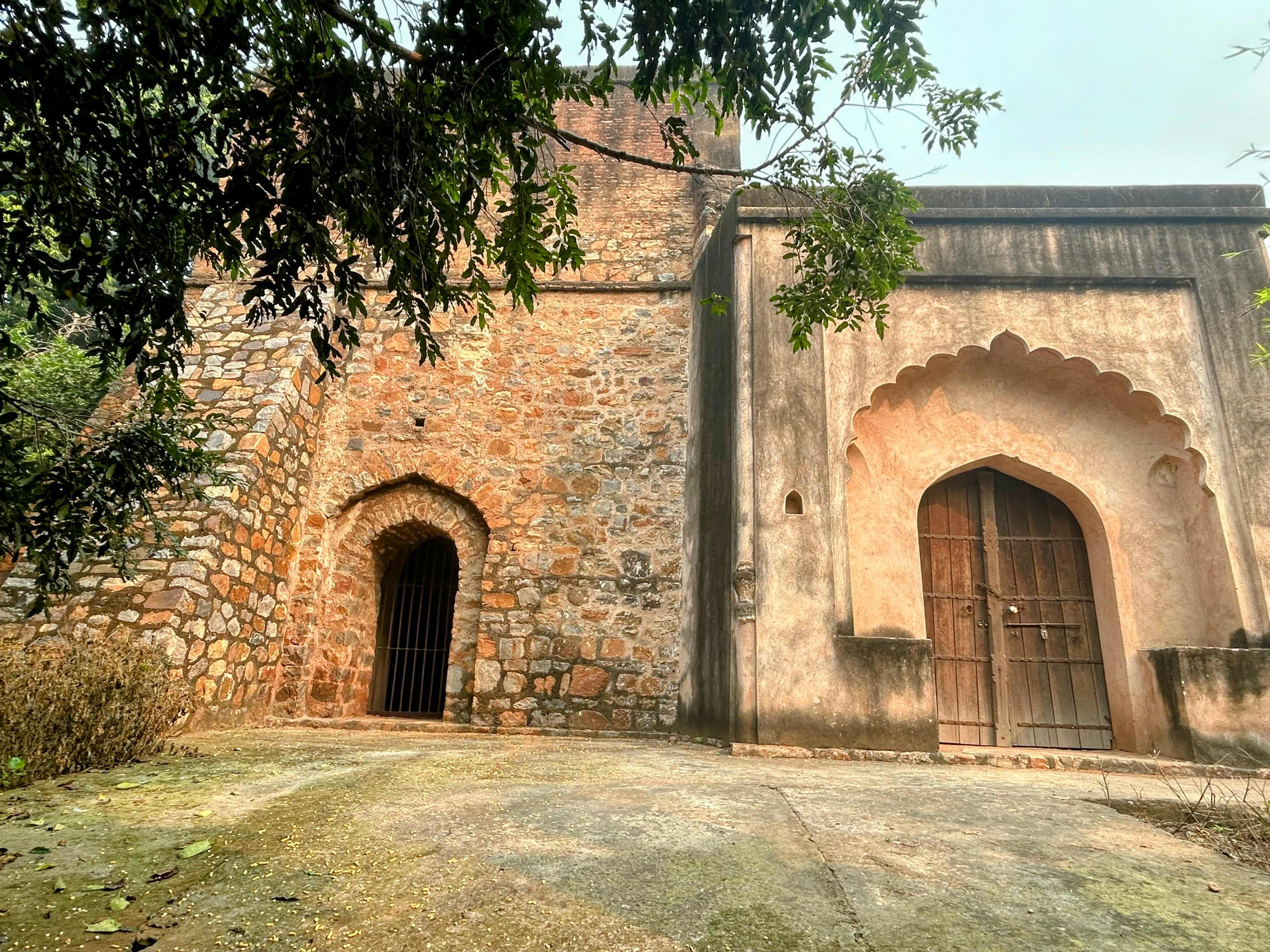
Next came Chauburji Masjid — a 13th-century mosque once crowned by four domes, now missing half its crown thanks to the bombardments of 1857. With its gates locked, we admired it from the outside. A group of elderly men paused their morning banter to offer us sweets and snacks. Their warmth cut through the wintry chill — and reminded me that heritage isn’t only stone and mortar, but memory and community.

At Pir Ghaib, originally Firoz Shah Tughlaq’s hunting lodge, a lone structure now stands beside Hindu Rao Hospital. A baoli lies neglected nearby. The mansion of Raja Hindu Rao, once a mighty noble’s residence, has vanished and today stands the hospital in its place. Has history been replaced by urgent modern needs? May be not. People who come to the hospital may not know him but his name carries on.

Near the Ashokan Pillar — fragmented by a 1713 East India Company ammunition dump explosion and later restored — the layers deepened. Mauryan ideals. Tughlaq’s passion for collectibles, Mughal drama. British intervention. Modern restoration. Delhi does not erase its history; it compacts it like geological strata.


A Victory Tower, A Shifted Narrative

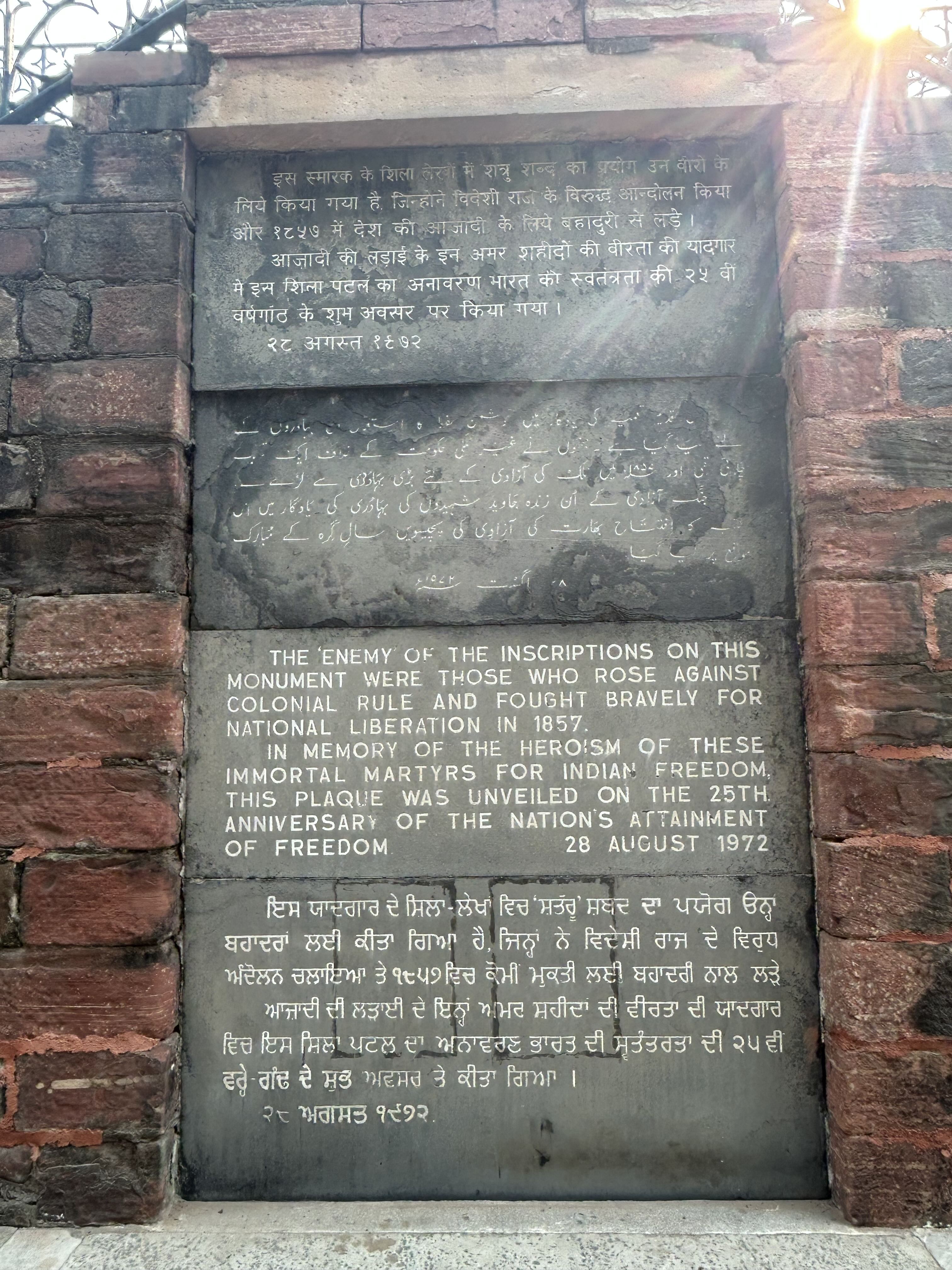
We concluded at the Mutiny Memorial — a Gothic tower celebrating British “victory,” its plaques once labeling Indian freedom fighters as the enemy. After independence, a corrective marker was added: a reminder that the empire’s enemy was India’s fight for self.

Standing there, surrounded by green silence, I reflected on the three hours that had passed. My irritation from the morning now felt smaller. The air may be polluted, but the past here still breathes — vividly, defiantly.

Delhi’s history isn’t merely to be read in books. It rises from the earth, whispers through crumbling walls, lingers in the names of forgotten places. Technology may advance, and quality of life may falter — but what endures are stories. And on the Ridge, the city’s oldest stories still hold their ground.