The Rant Before the Romance
Let’s get this out of the way — navigating to Purana Qila or even the Delhi Zoo is a task that tests patience. You’d imagine that such landmark institutions would be well-marked, but no. The absence of clear road signage makes you meander through a confusing network of turns and traffic. You arrive more relieved than excited. Rant over.
First Glimpses, Lasting Impressions
My relationship with Purana Qila began from a distance. I first came to Delhi in 2003. Living in Noida and working in Connaught Place, my daily commute via Mathura Road brought me past those imposing fort walls. Every day, I’d glance at them and wonder — what stories do those stones hold?
But like many things in life, wonder didn’t translate into action. During those five years in Delhi, I never crossed the threshold.
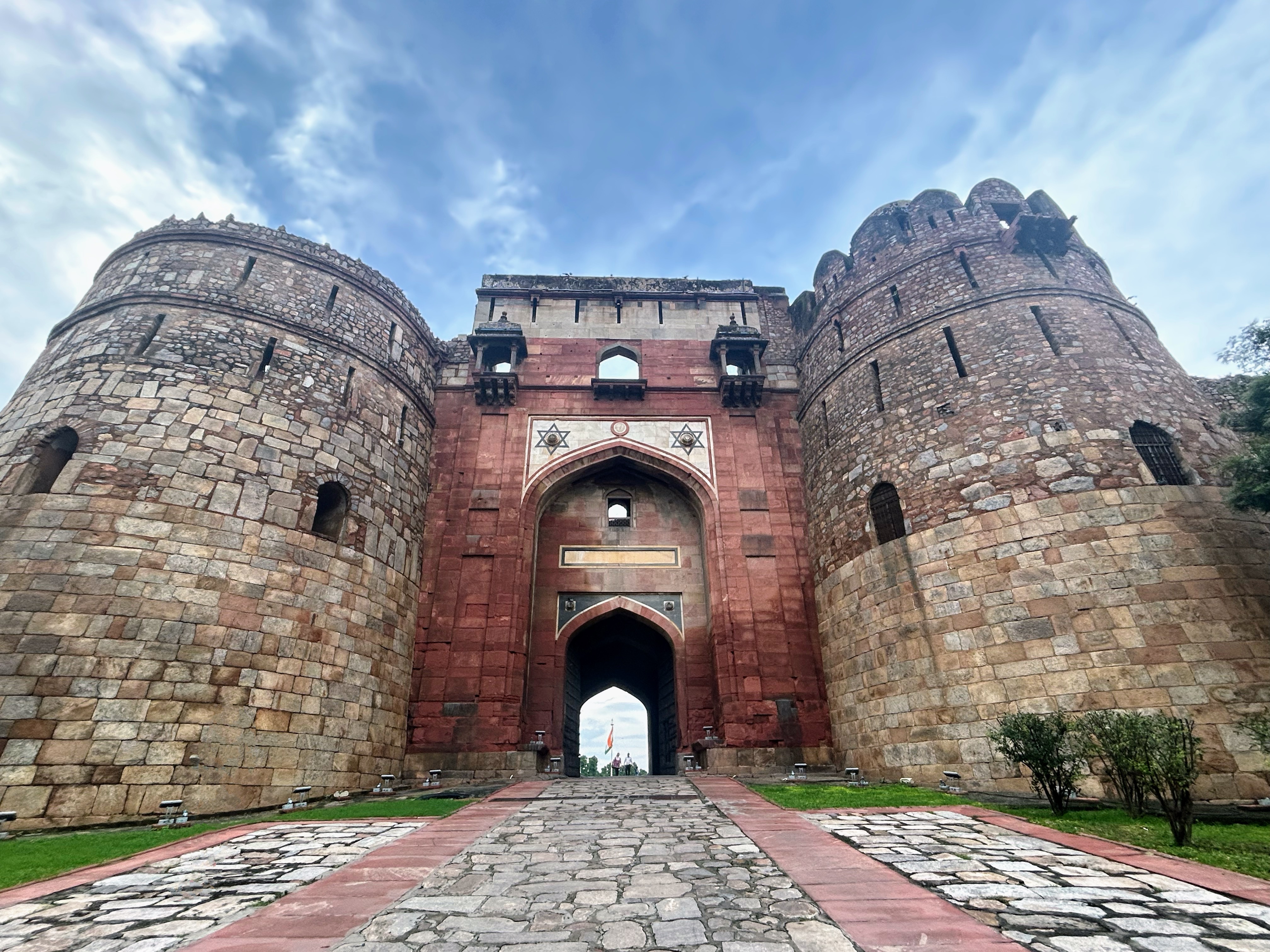
A Scorching Start
Years later, Delhi called me back. This time, I finally entered the fort — albeit during one of its infamous blistering summers. The heat was relentless, and the visit brief, rushed, and largely overshadowed by the lure of an air-conditioned retreat.
This Sunday: A Walk Through Time
Last Sunday, I joined a heritage walk with Enroute Indian History. The experience was different — thoughtful, immersive, and filled with the kind of stories that give walls a voice.
Purana Qila, they said, was built on the ruins of history itself. The Mughal emperor Humayun built his capital, Dinpanah, here. His rival, Sher Shah Suri, later took over, expanding and fortifying the structure into what we now see — layers of ambition etched in sandstone.
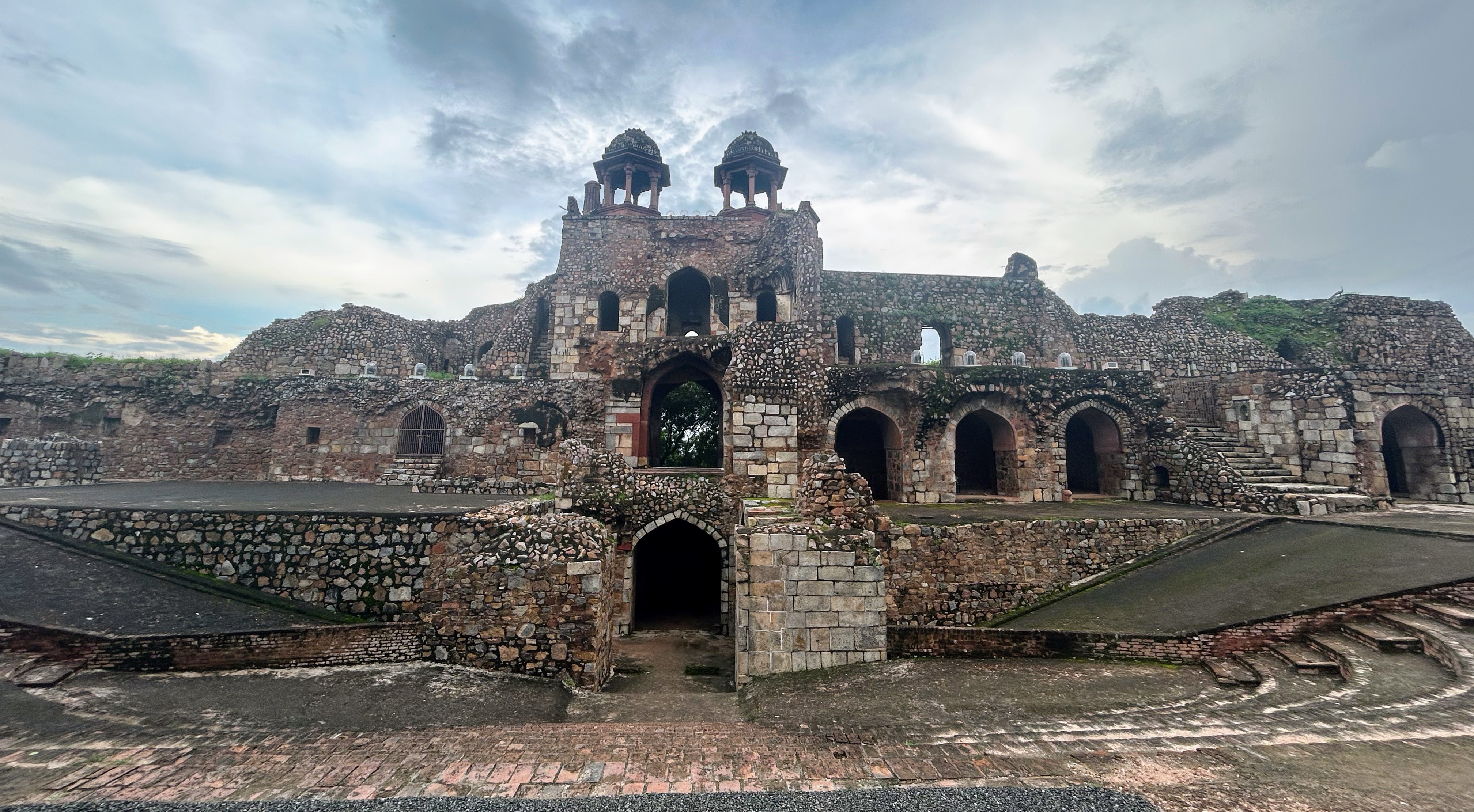
The Talaqi Darwaza Mystery
We stopped at the Talaqi Darwaza — a magnificent gateway sealed shut for nearly 200 years. The River Yamuna used to flow next to the fort, and one can still see the boat landings at the Talaqi Darwaza and Humayun Darwaza. We were told no one had walked through it in generations. And then, as if summoned by our collective curiosity, a small pedestrian door in the grand gate creaked open. A workman stepped through. Our group rushed toward the passage, only to be gently turned away by the guard. Restoration work, he said. The door may have opened, but not for us.

A glimpse of the forbidden. A tease of time.
Qila-i-Kuhna Mosque: Geometry and Grace
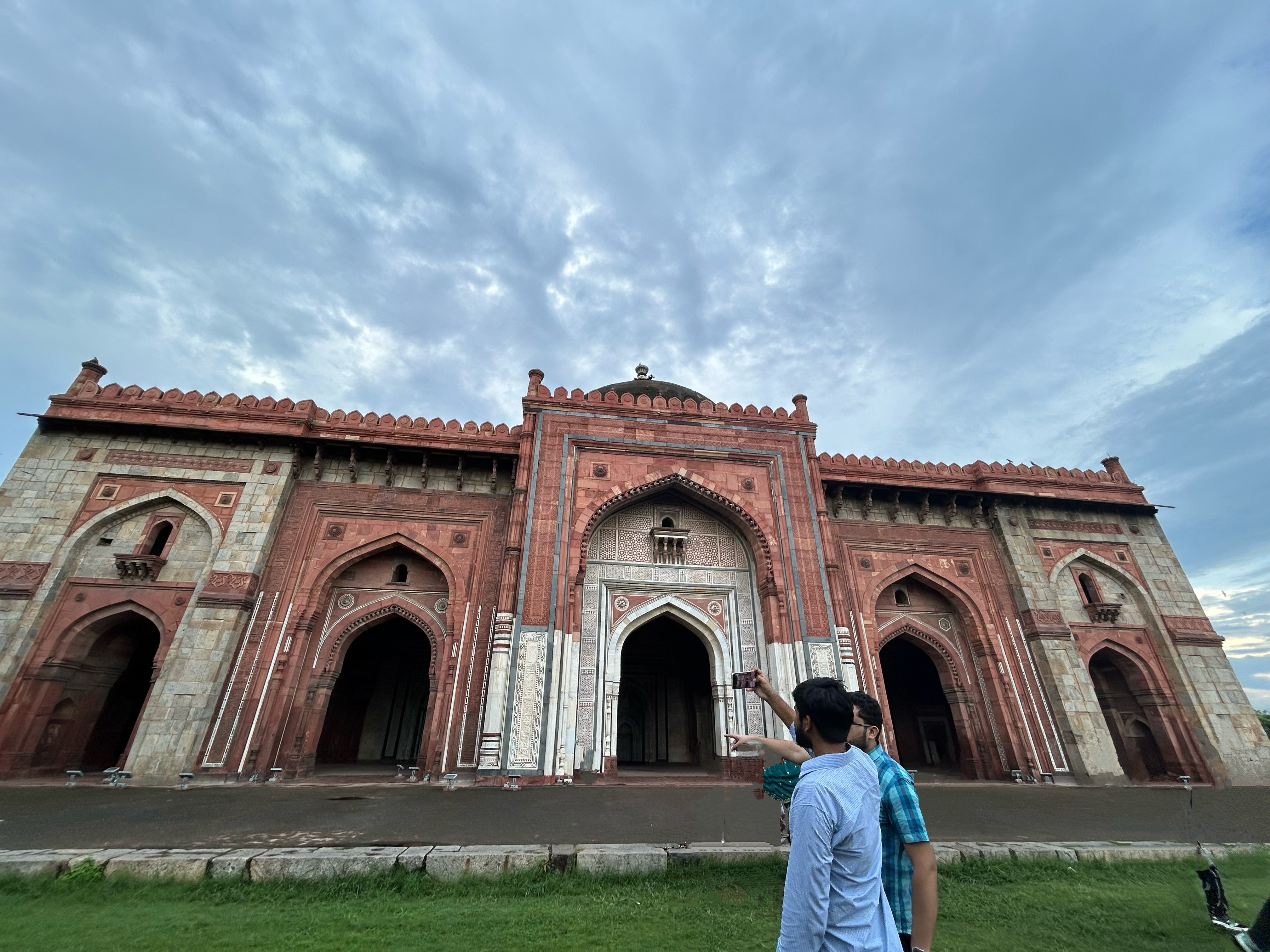
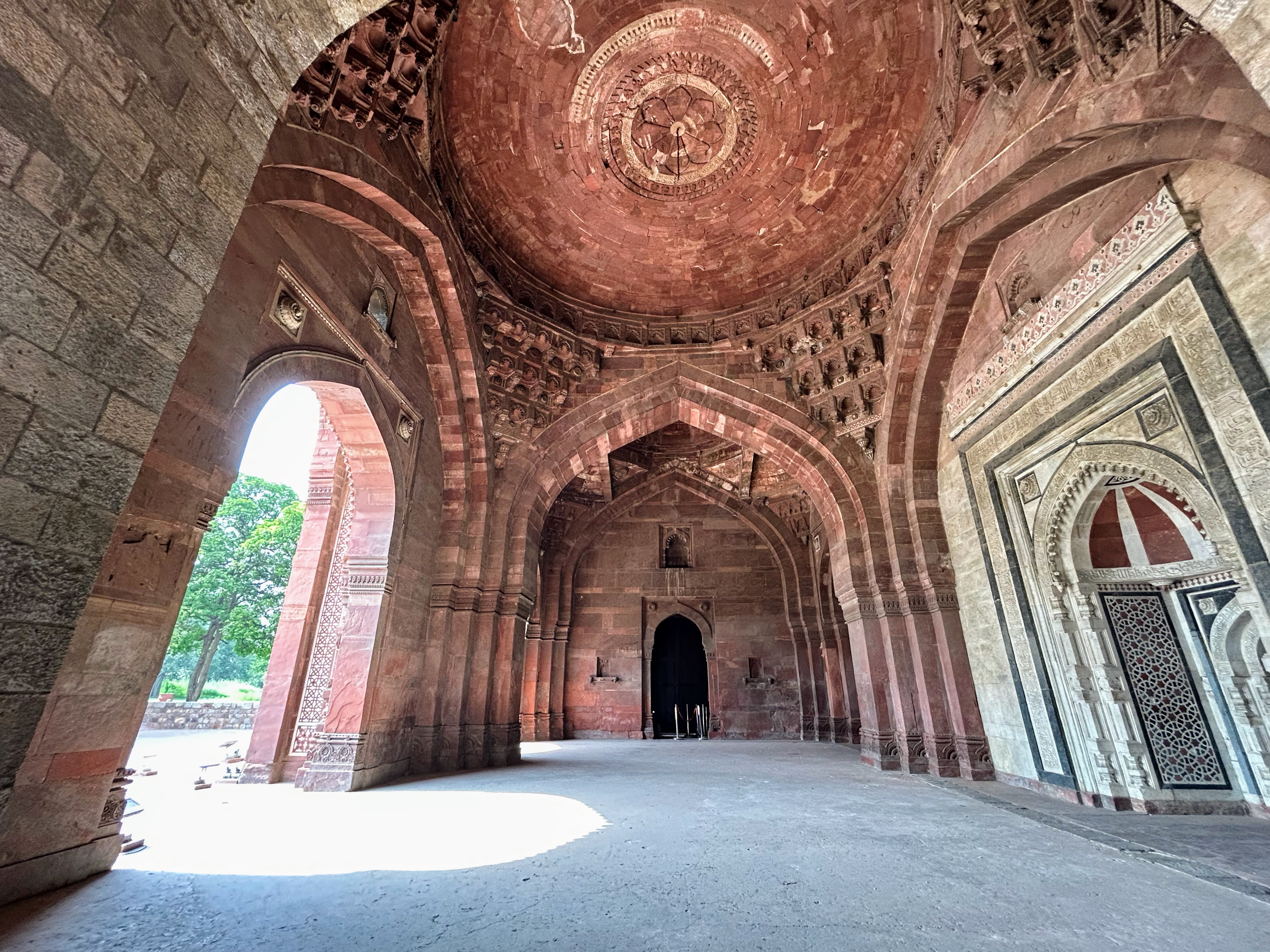
We moved next to the Qila-i-Kuhna Mosque, a corner masterpiece built by Sher Shah. Its intricately carved arches and calligraphy revealed a confluence of power and piety. The upper floor — once reserved for women — hinted at a forgotten intimacy within this public space of worship.

The Baoli: Secret to Sustenance
To counter Delhi’s relentless summers, the fort holds a baoli — a deep stepwell, once connected to the royal hammam through terracotta pipes. It whispers of ancient engineering and the luxury of cool retreats.

Sher Mandal: A Tragic Legacy
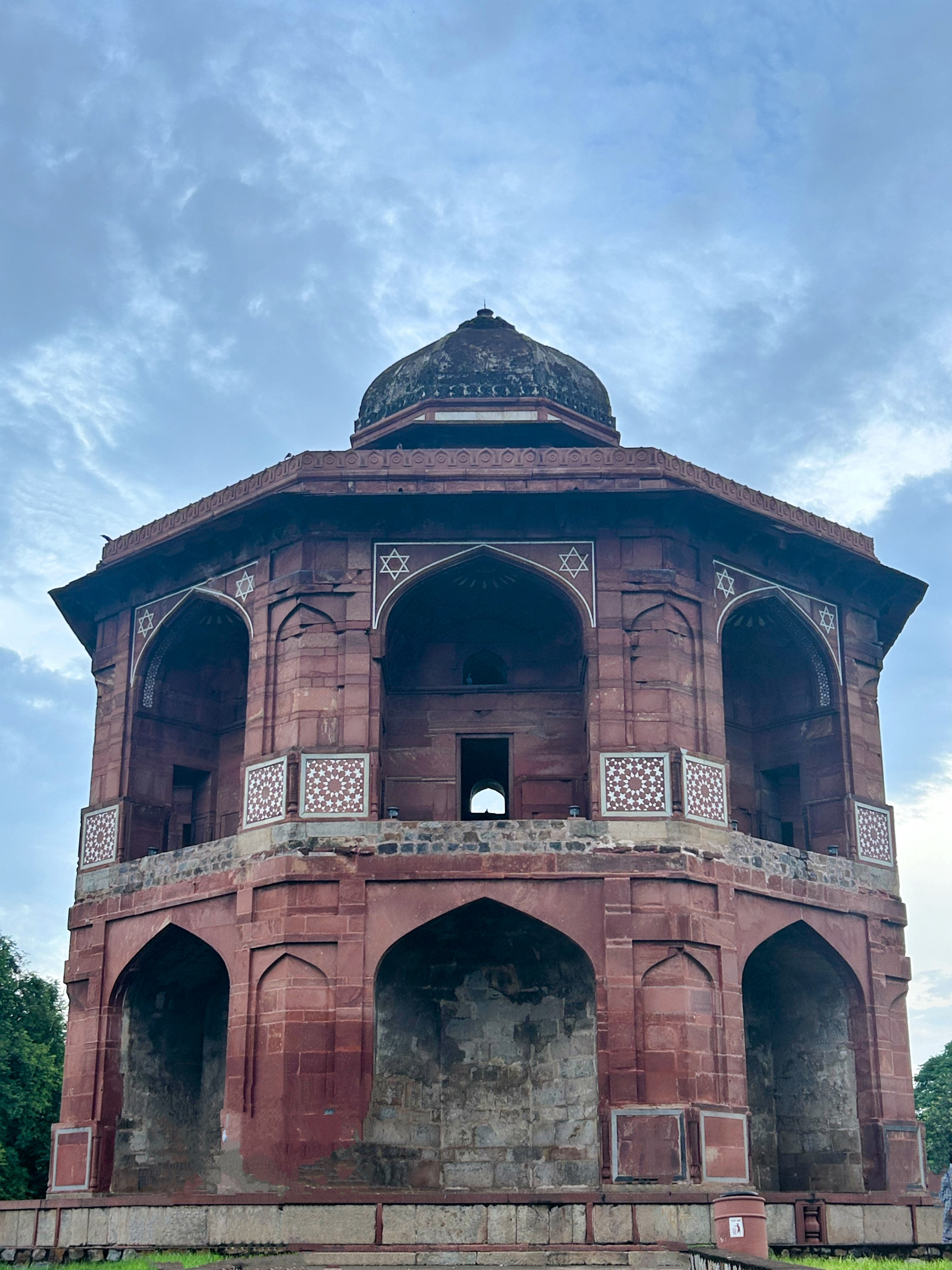
Near the baoli stands the octagonal Sher Mandal, once used by Humayun as a library and astronomical observatory. Ironically, this beautiful tower is where he met his tragic end — falling down its steps after hearing the call to prayer.
Traces of the Lost Village
Few today know that a village once thrived within these very walls. The British cleared it out, leaving no trace. Just open lawns and an eerie sense of absence.
Kunti Mandir: Myth Meets Stone
And then, a mythic interlude. Within the fort stands a modest Kunti Mandir, said to link the fort to Indraprastha of the Mahabharata. Not well-preserved, yet quietly potent — a link between epic pasts and empirical history.

From Wondering Outside to Wandering Inside
What was once a fleeting glance from a car window is now a lingering memory. From the outside to the inside, from myth to masonry, from stories overheard to stories remembered — Purana Qila finally revealed itself.
And with that, my Sunday was well spent.
 Jajabor