Tag Archives: IncredibleIndia

Through the Sacred Corridors of Mathura and Vrindavan

Day two of my sudden visit to Vrindavan began early. I wanted to make the most of the morning calm and planned to cover Mathura before the crowds swelled. The lanes grew narrower as I neared the Krishna Janmabhumi Temple — ancient walls closing in on centuries of devotion. A man pointed me toward a parking spot and casually suggested taking a guide who, he promised, would show me not just the temple but also Gokul. I agreed.

At the entrance, I had to surrender my bag and all electronic devices. The security rule was firm: no cameras, no phones — no distractions. As I stepped inside, I noticed the resident monkeys, confident and curious. I tightened my grip on my glasses, prompting my guide to chuckle, “Vrindavan ke bandar padhe likhe hain” — the monkeys of Vrindavan are educated; so they snatch glasses!

The temple complex opened into the garbha griha, the Yogmaya Mandir, and finally the Bhagvad Bhawan, where the main idols of Radha and Krishna are enshrined. My early start paid off — I reached just in time for the Mangal Aarti, the first offering of the day that wakes the deity. The chants, the incense, and flickering lamps created a rhythm that seemed to dissolve the boundary between ritual and reverence.

As I stepped out, the domes of the Shahi Idgah Mosque gleamed across the complex — a reminder that Mathura’s story, like India’s, is layered with shared histories.


Across the Yamuna: Gokul’s Cradle of Legends

Though my next stop was supposed to be the Dwarkadhish Temple, my guide gently reminded me of my promise to visit Gokul. We crossed the Yamuna — that mythical river Vasudev once forded on a stormy night carrying baby Krishna.

Gokul’s lanes were humble yet alive with myth. The centerpiece, Shri Nand Mahal, stood adorned with vibrant murals and a cradle for little Krishna. Watching people do so with gentle reverence made the mythology come alive in the most tender, human way.


Dwarkadhish Temple and the Call of Vishram Ghat

Back in Mathura, the Dwarkadhish Temple awaited at the end of another labyrinth of lanes. A rickshaw helped me glide through the festive chaos — Diwali shoppers, sweet sellers, and vendors adding color to the air. Inside the temple, serenity prevailed. I had a clear darshan of the idol and a brief, grounding silence amid the bustle.
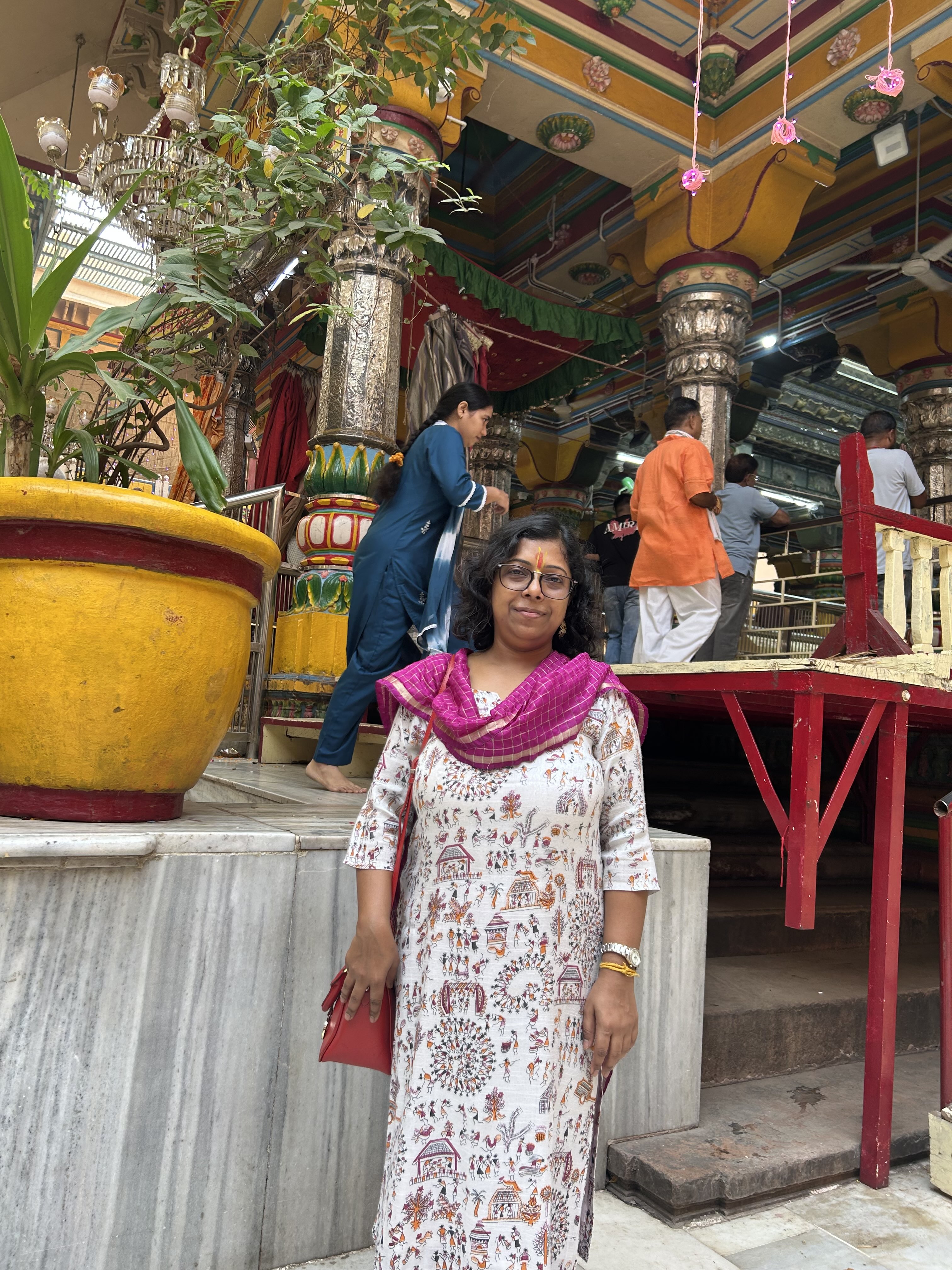
Just a few steps away lay Vishram Ghat, the sacred stretch where Krishna is believed to have rested after slaying Kansa. My guide seemed mildly disappointed when I declined a puja, preferring instead to watch life unfold — priests lighting lamps, pilgrims taking a dip in the Yamuna, and boats plying. When I pulled out my phone for a photo, he sighed, “Aajkal sab picnic ban gaya hai.” I smiled quietly and said nothing. Sometimes, observation is devotion too.


Vrindavan Again: The Marble Glow of Prem Mandir

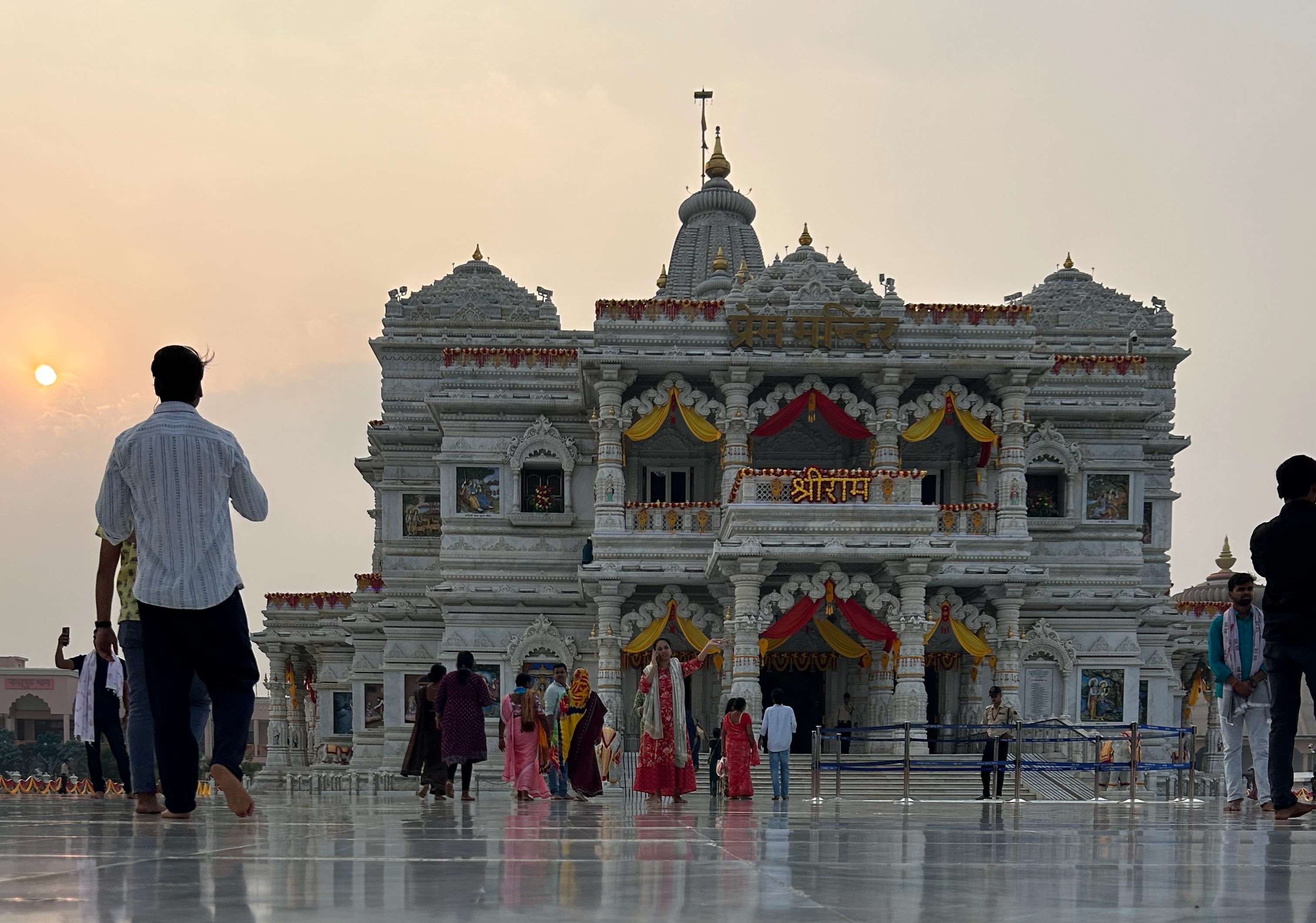
By afternoon, I was back in Vrindavan. The crowd at Prem Mandir looked overwhelming, but curiosity won. The line for women moved swiftly, and within minutes I stood inside a vast marble complex where devotion and architecture met in perfect harmony. Tableaux from Krishna’s life lined the approach to the temple — scenes from Govardhan, Rasleela, and Kaliya Mardan — each carved in intricate detail. The crowd no longer felt like a crowd; it felt like community.

The Curtain Falls at Banke Bihari Temple

My final stop was the Banke Bihari Temple, where the playful aspect of Krishna is worshipped. The idol, believed to have appeared in Nidhivan, is known to be so charming that the priests periodically draw a curtain — lest devotees lose themselves in his gaze.

Navigating the lanes took effort, and I nearly lost my way back, mistaking one identical shop for another while trying to retrieve my juttis. The small confusion felt fitting for Vrindavan — a town where divine playfulness extends even into mundane moments.


Evening Reflections: A City That Chooses You

As I walked back, the sound of kirtans filled the streets. Monks from ISKCON sang “Hare Krishna” in unison, their cymbals echoing through the festive air. Shops and homes glittered in Diwali lights, and everyone greeted one another with a gentle “Radhe Radhe.”

Some places you plan to visit; others seem to summon you. Vrindavan, I realised, had chosen me for this long weekend — to remind me that faith isn’t always about ritual. Sometimes, it’s about rhythm, stillness, and surrender in a place where every corner hums with devotion.
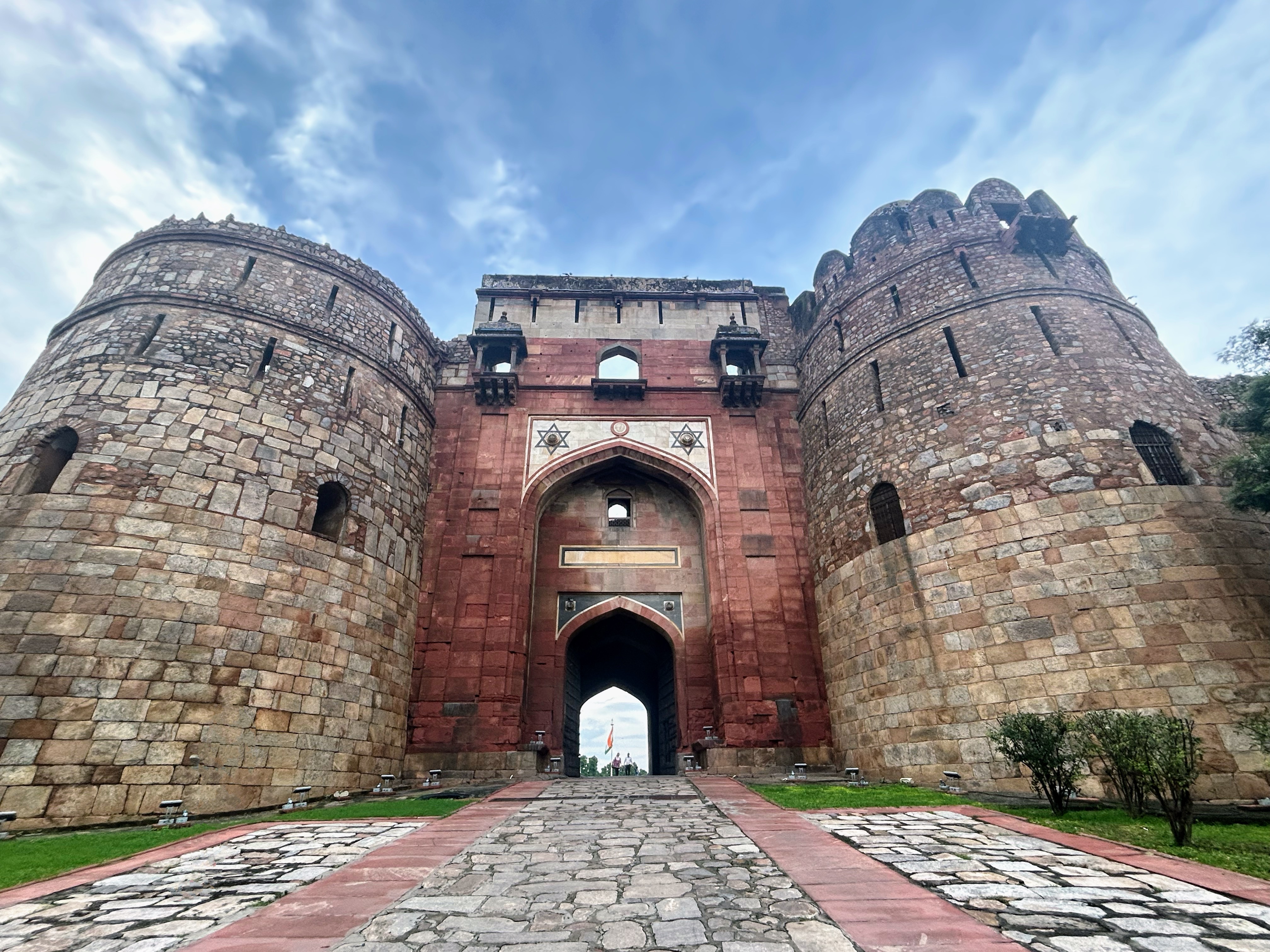
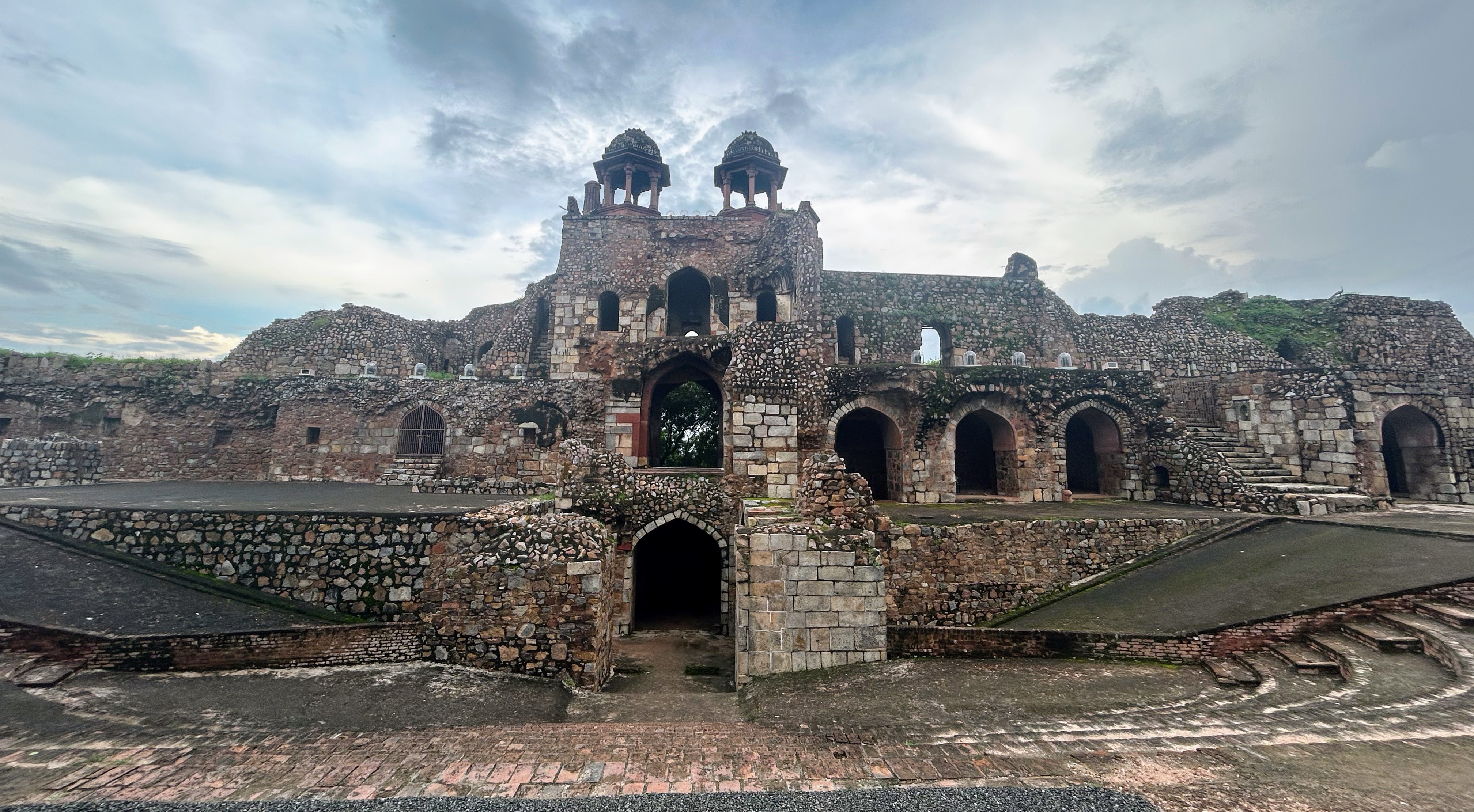
Purana Qila and Me: A Sunday Rediscovery

The Rant Before the Romance

Let’s get this out of the way — navigating to Purana Qila or even the Delhi Zoo is a task that tests patience. You’d imagine that such landmark institutions would be well-marked, but no. The absence of clear road signage makes you meander through a confusing network of turns and traffic. You arrive more relieved than excited. Rant over.

First Glimpses, Lasting Impressions

My relationship with Purana Qila began from a distance. I first came to Delhi in 2003. Living in Noida and working in Connaught Place, my daily commute via Mathura Road brought me past those imposing fort walls. Every day, I’d glance at them and wonder — what stories do those stones hold?

But like many things in life, wonder didn’t translate into action. During those five years in Delhi, I never crossed the threshold.

A Scorching Start

Years later, Delhi called me back. This time, I finally entered the fort — albeit during one of its infamous blistering summers. The heat was relentless, and the visit brief, rushed, and largely overshadowed by the lure of an air-conditioned retreat.

This Sunday: A Walk Through Time

Last Sunday, I joined a heritage walk with Enroute Indian History. The experience was different — thoughtful, immersive, and filled with the kind of stories that give walls a voice.

Purana Qila, they said, was built on the ruins of history itself. The Mughal emperor Humayun built his capital, Dinpanah, here. His rival, Sher Shah Suri, later took over, expanding and fortifying the structure into what we now see — layers of ambition etched in sandstone.

The Talaqi Darwaza Mystery

We stopped at the Talaqi Darwaza — a magnificent gateway sealed shut for nearly 200 years. The River Yamuna used to flow next to the fort, and one can still see the boat landings at the Talaqi Darwaza and Humayun Darwaza. We were told no one had walked through it in generations. And then, as if summoned by our collective curiosity, a small pedestrian door in the grand gate creaked open. A workman stepped through. Our group rushed toward the passage, only to be gently turned away by the guard. Restoration work, he said. The door may have opened, but not for us.

A glimpse of the forbidden. A tease of time.

Qila-i-Kuhna Mosque: Geometry and Grace

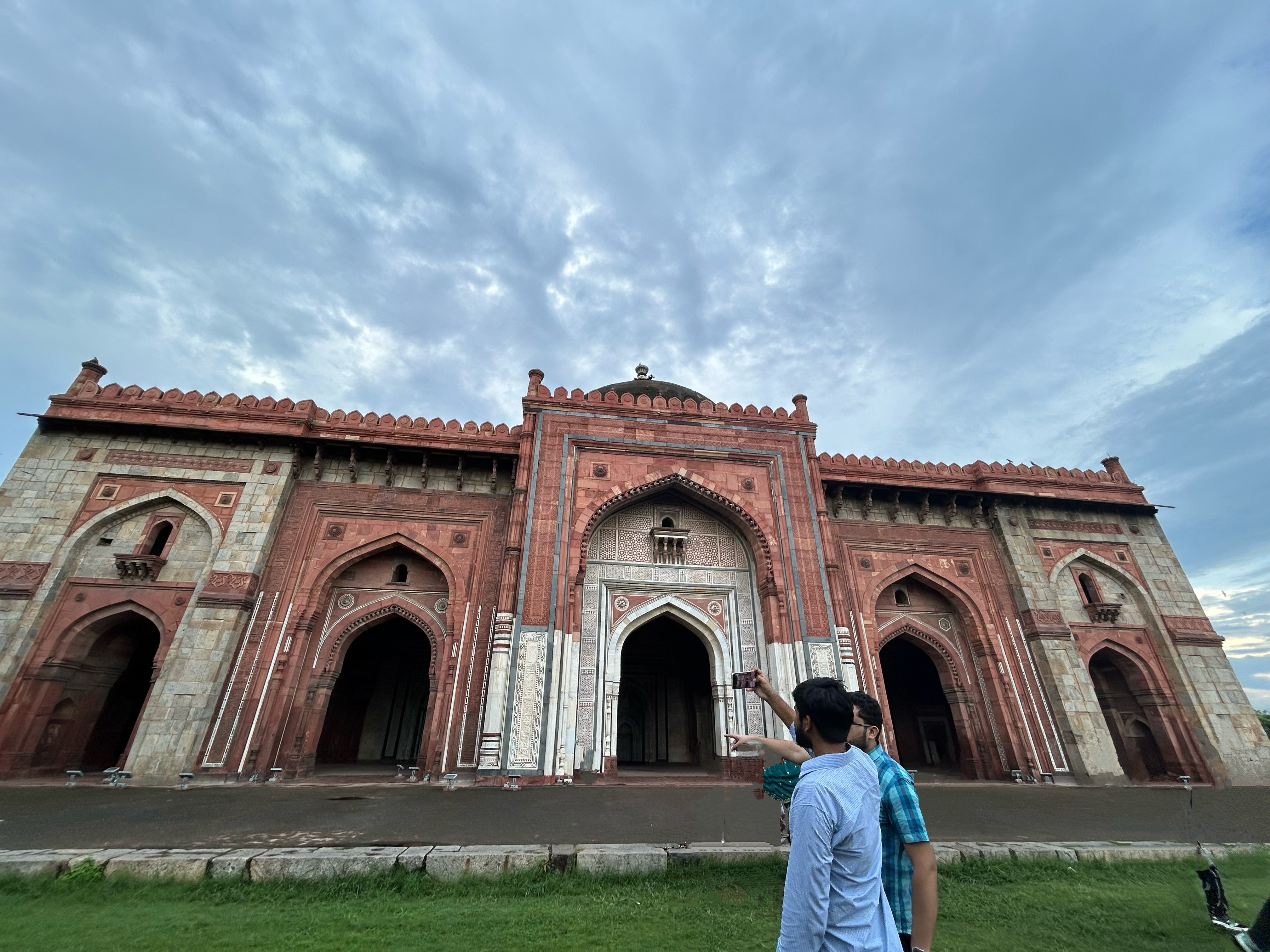
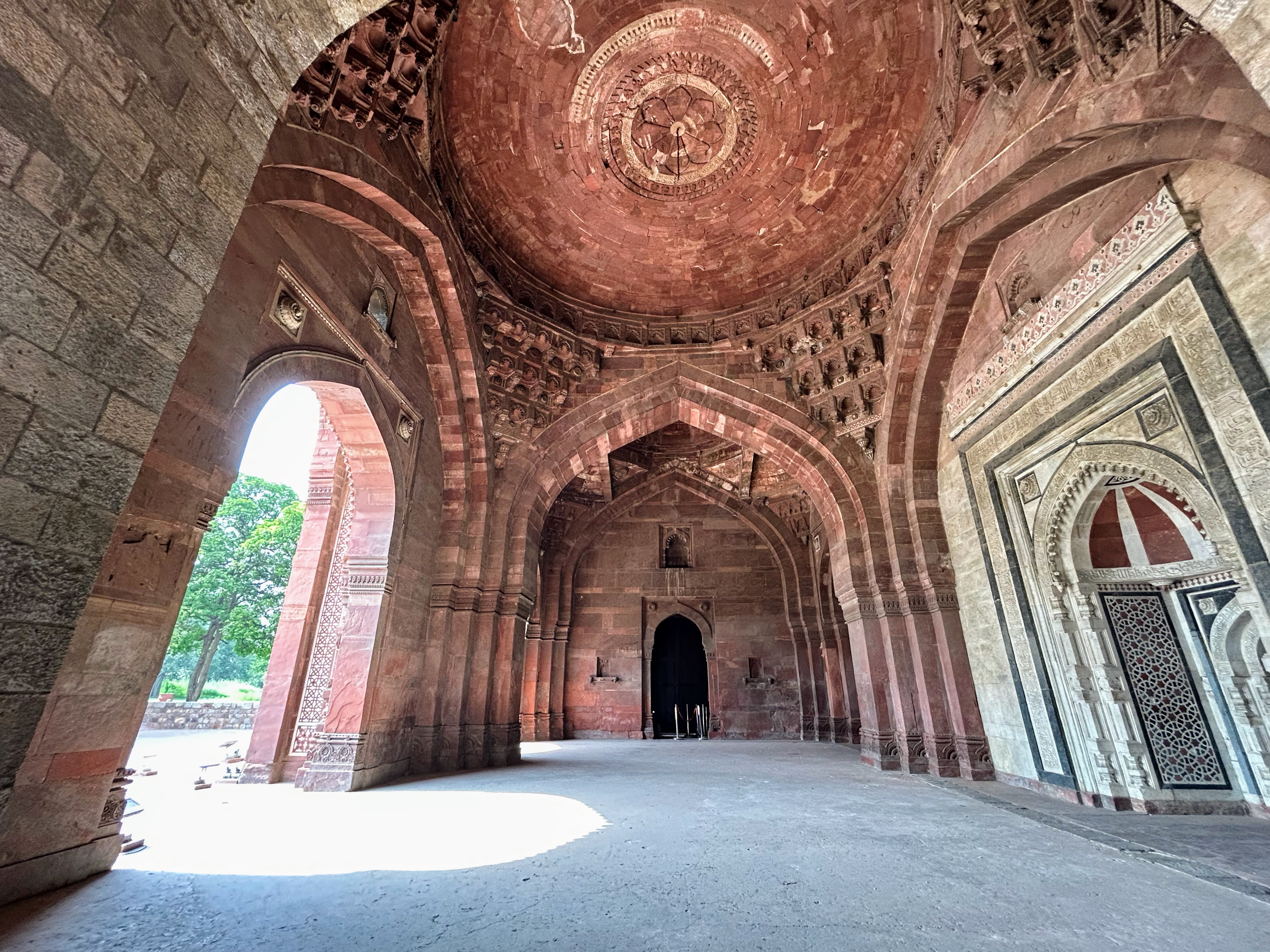
We moved next to the Qila-i-Kuhna Mosque, a corner masterpiece built by Sher Shah. Its intricately carved arches and calligraphy revealed a confluence of power and piety. The upper floor — once reserved for women — hinted at a forgotten intimacy within this public space of worship.

The Baoli: Secret to Sustenance

To counter Delhi’s relentless summers, the fort holds a baoli — a deep stepwell, once connected to the royal hammam through terracotta pipes. It whispers of ancient engineering and the luxury of cool retreats.

Sher Mandal: A Tragic Legacy

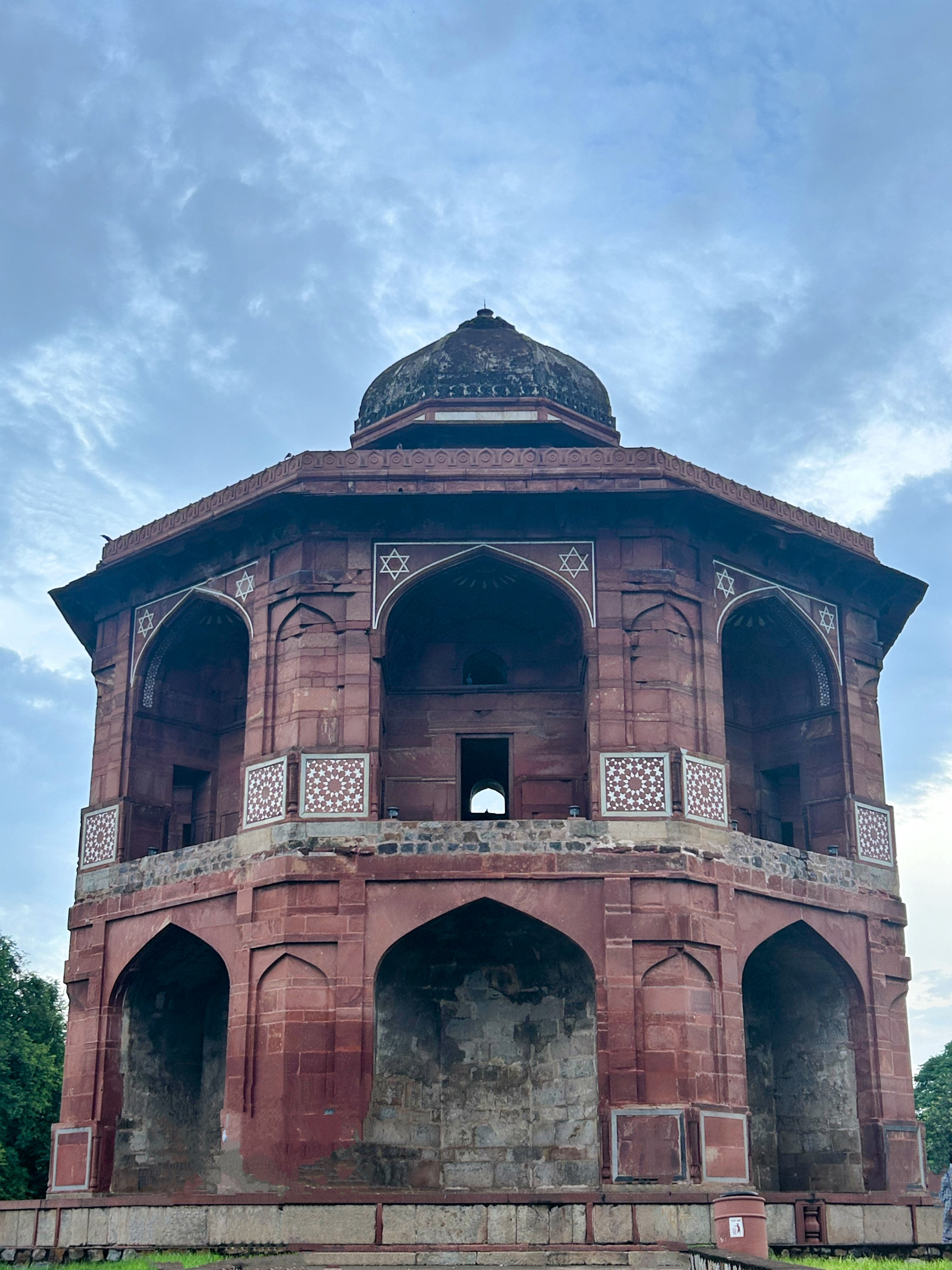
Near the baoli stands the octagonal Sher Mandal, once used by Humayun as a library and astronomical observatory. Ironically, this beautiful tower is where he met his tragic end — falling down its steps after hearing the call to prayer.

Traces of the Lost Village

Few today know that a village once thrived within these very walls. The British cleared it out, leaving no trace. Just open lawns and an eerie sense of absence.

Kunti Mandir: Myth Meets Stone

And then, a mythic interlude. Within the fort stands a modest Kunti Mandir, said to link the fort to Indraprastha of the Mahabharata. Not well-preserved, yet quietly potent — a link between epic pasts and empirical history.

From Wondering Outside to Wandering Inside

What was once a fleeting glance from a car window is now a lingering memory. From the outside to the inside, from myth to masonry, from stories overheard to stories remembered — Purana Qila finally revealed itself.

And with that, my Sunday was well spent.

Temple Run in an old capital

A mid-week holiday is always a bonus. In Tripura, Garia Puja—a local festival—fell on April 21, 2015, giving us the rare joy of a Tuesday off. For once, Monday felt a little lighter.

By then, I had been in Tripura for almost a year. While the state is rich in history and heritage, I had noticed that many of its treasures remain under-publicised and, consequently, under-visited. Tripura, one of India’s Seven Sisters in the northeast, is a small, predominantly tribal state with a surprisingly rich royal past. The present-day capital, Agartala, is well-connected by air from major Indian cities, but it is the old capital—Udaipur—that holds some of the most intriguing historical gems.

The Search Begins

My late-blooming love for heritage sites meant that I now actively sought out every nugget of history I could find. One day, while browsing online, I stumbled upon a photograph of Bhubaneswari Temple in Udaipur. What piqued my interest further was the fact that Rabindranath Tagore had mentioned it in his novel Rajarshi.

Holiday in hand, I convinced two colleagues to join me. We hired a car, only to find that our driver had never heard of Bhubaneswari Temple. His explanation was simple: “No one goes there. People go to Udaipur to visit Tripura Sundari Temple—Mata Bari—one of the revered Shakti Peeths.”

Undeterred, we decided to head to Udaipur anyway, certain that locals there would know. Udaipur lies about 55 km from Agartala, and in just over an hour, we reached the town and began our search.

An Unexpected Find – The Chaturdas Devata Temple

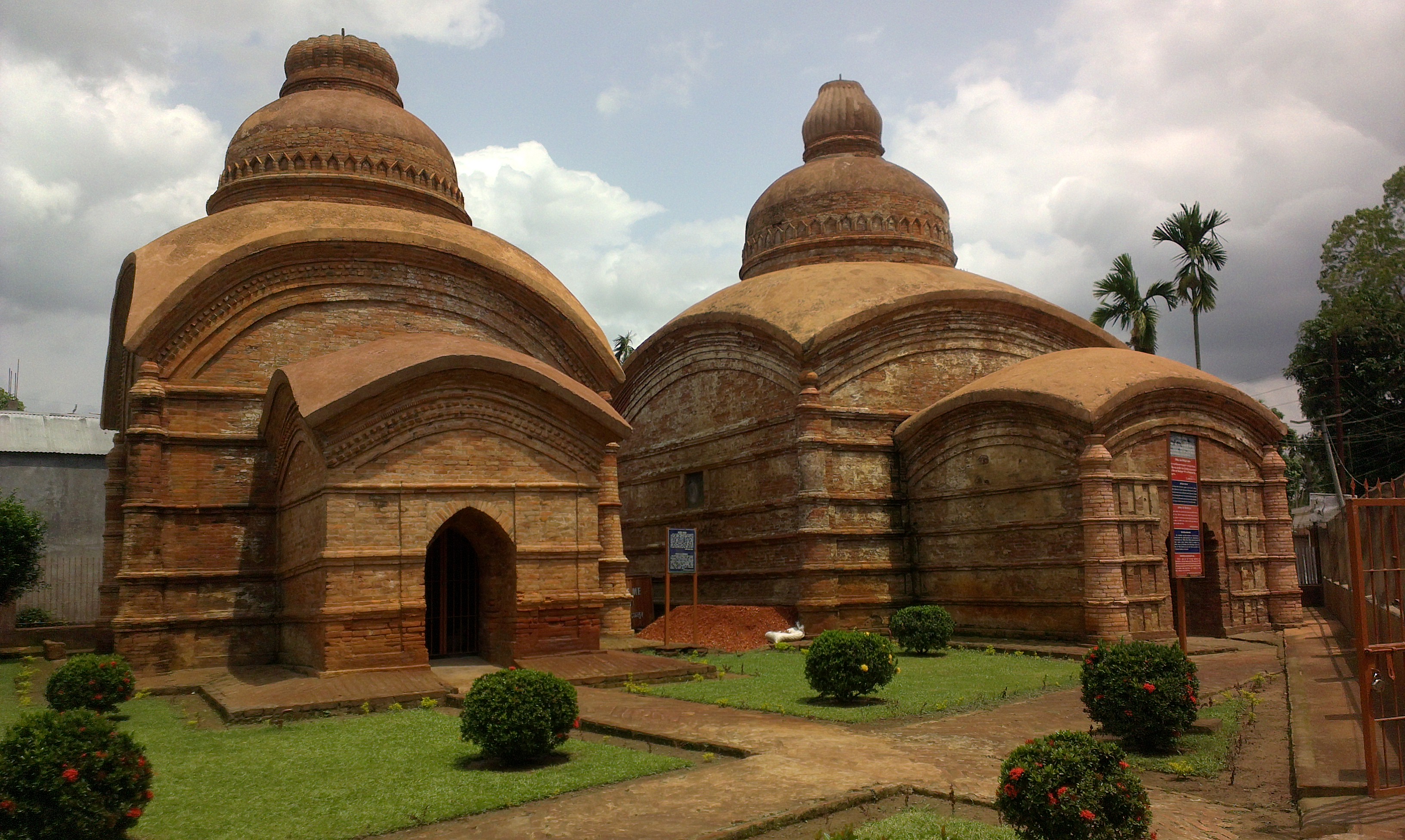
Winding through Udaipur’s narrow lanes, we spotted a set of temples and stopped, thinking we had arrived. Instead, it turned out to be a Shiva temple. But nearby, two smaller temples preserved by the Archaeological Survey of India (ASI) caught our attention.

The signboard revealed that this was the Chaturdas Devata Temple—the Temple of Fourteen Gods. The fourteen deities include Shiva, Durga, Vishnu, Lakshmi, Saraswati, Kartikeya, Ganesha, Brahma, Prithvi, Samudra, Ganga, Agni, Kamadeva, and Himadri. These were the presiding deities of Tripura’s royal house, worshipped by special priests known as Cantais.

IMAG0562IMAG0566

Chaturdas Devata Temple

It was a reminder of Tripura’s glorious past. At its zenith in the 14th and 15th centuries, the Tripura kingdom stretched from the Brahmaputra in the north and west to the Bay of Bengal in the south, and as far as Myanmar in the east. Udaipur—then called Rangamati—was their capital, and home to temples honouring their royal patrons.

IMAG0563IMAG0564

These rock carvings stood at the entrance of the temple

The Gunabati Group of Temples

Our quest continued, and soon we stumbled upon another surprise: the Gunabati Group of Temples. Hidden in a residential area, these temples’ origins remain obscure. Only one stone inscription sheds light—it states that one was built in 1668 CE in the name of Maharani Gunabati, wife of Maharaja Govinda Manikya. The other two temples appear to be from the same era, but their stories remain untold.

I couldn’t help but wonder about the Queen herself. How remarkable must she have been to have temples dedicated to her?

IMAG0571

Gunabati Group of Temples

A Hilltop Gem – Bhubaneswari Temple

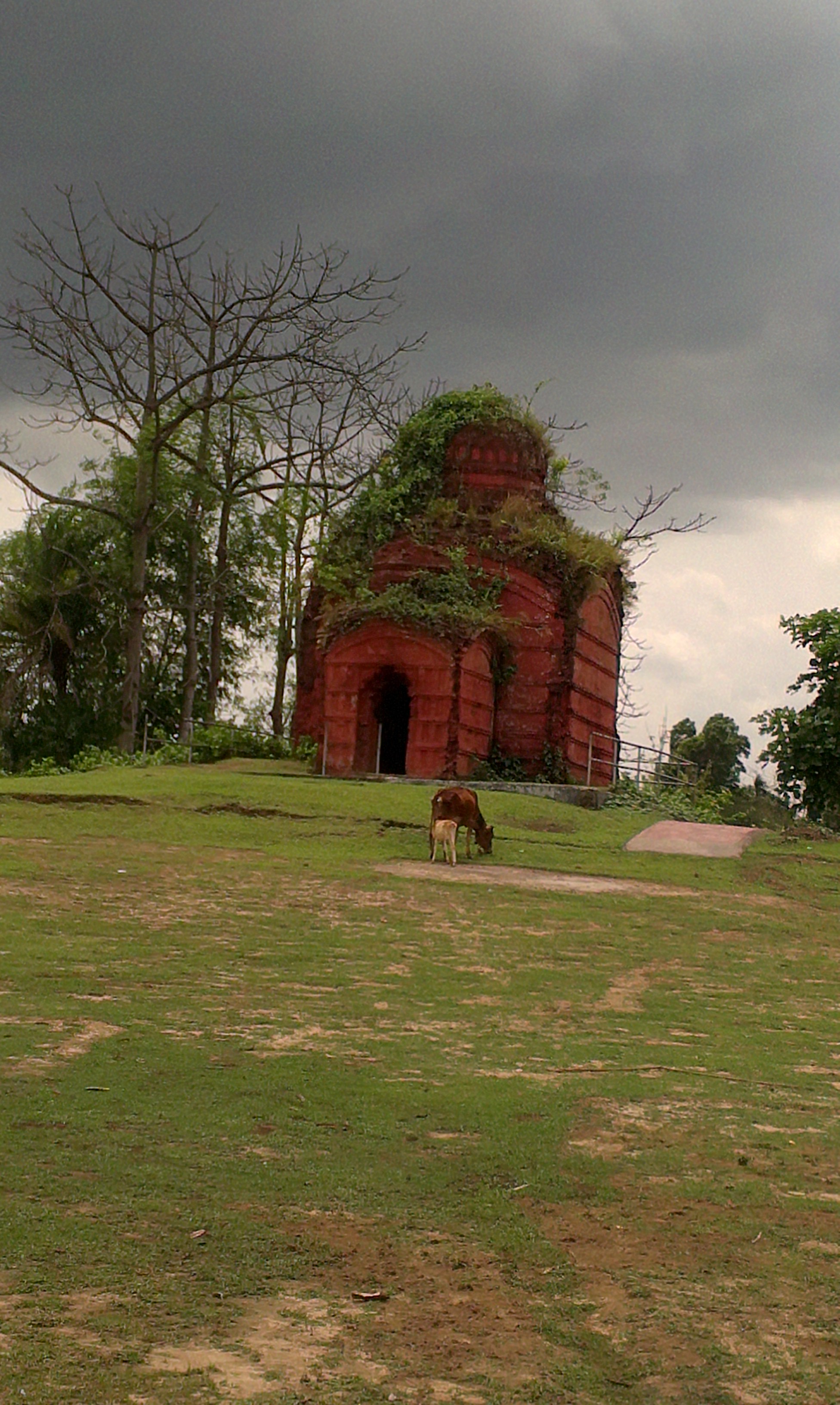
Just as our car began ascending another hill, we passed the ruins of a Laxmi-Narayan Temple—a silent witness to the passage of centuries. Finally, we reached our destination: Bhubaneswari Temple.

Built between 1667 and 1676 CE during Maharaja Govinda Manikya’s reign, the temple sits on a 3-foot-high terrace. Its roof follows the distinctive four-chaala style, with stupa-like crowns on both the vestibule and core chamber. The main stupa is adorned with floral motifs, adding a delicate charm to its regal presence.

With the River Gomti flowing nearby, the temple radiates a serene calm. The absence of crowds meant no noise, no clutter—just the quiet dignity of history.

IMAG0572

Even the ruins were so beautiful

IMAG0574

Bhubaneswari Temple

More Than a Trip, A Time Travel

Our “temple run” through Udaipur turned into a journey through Tripura’s layered history—from royal deities to queens, from ruined shrines to hilltop sanctuaries. It was a reminder that sometimes, the lesser-known sites tell the richest stories—if only we take the time to seek them out.