It was during a birthday celebration for a senior colleague that the conversation inevitably drifted to Delhi’s abysmal air quality. Amid complaints about AQI, someone turned to me and asked, “Aren’t you the one who posts about heritage walks in the city?” It was an amused, almost affectionate observation. The history enthusiast in me, forever trying to nudge colleagues into discovering the layered stories of Delhi, felt seen.
The next question followed immediately: “Are the walks held even in this pollution?”
I nodded. Yes. Many of them, I said, lead us to some of the city’s most extensive green patches, pockets of nature where Delhi briefly remembers the ecology that once supported its many empires.
Returning to Tughlaqabad
This weekend’s INTACH walk took me to Tughlaqabad, one of Delhi’s seven historical capitals. As I approached the massive fortifications, I found myself slipping back to another winter afternoon, possibly January 2006, when a friend and I first tried to explore Tughlaqabad. I had just bought my first car. We parked casually at the entrance and wandered inside, unaware of what awaited us.
The fort walls that day were crowded with groups of young men. There were no guards in sight. Two women alone in an unfamiliar, isolated space, we exchanged a brief glance, turned around, and left within minutes. That aborted visit stayed with me.
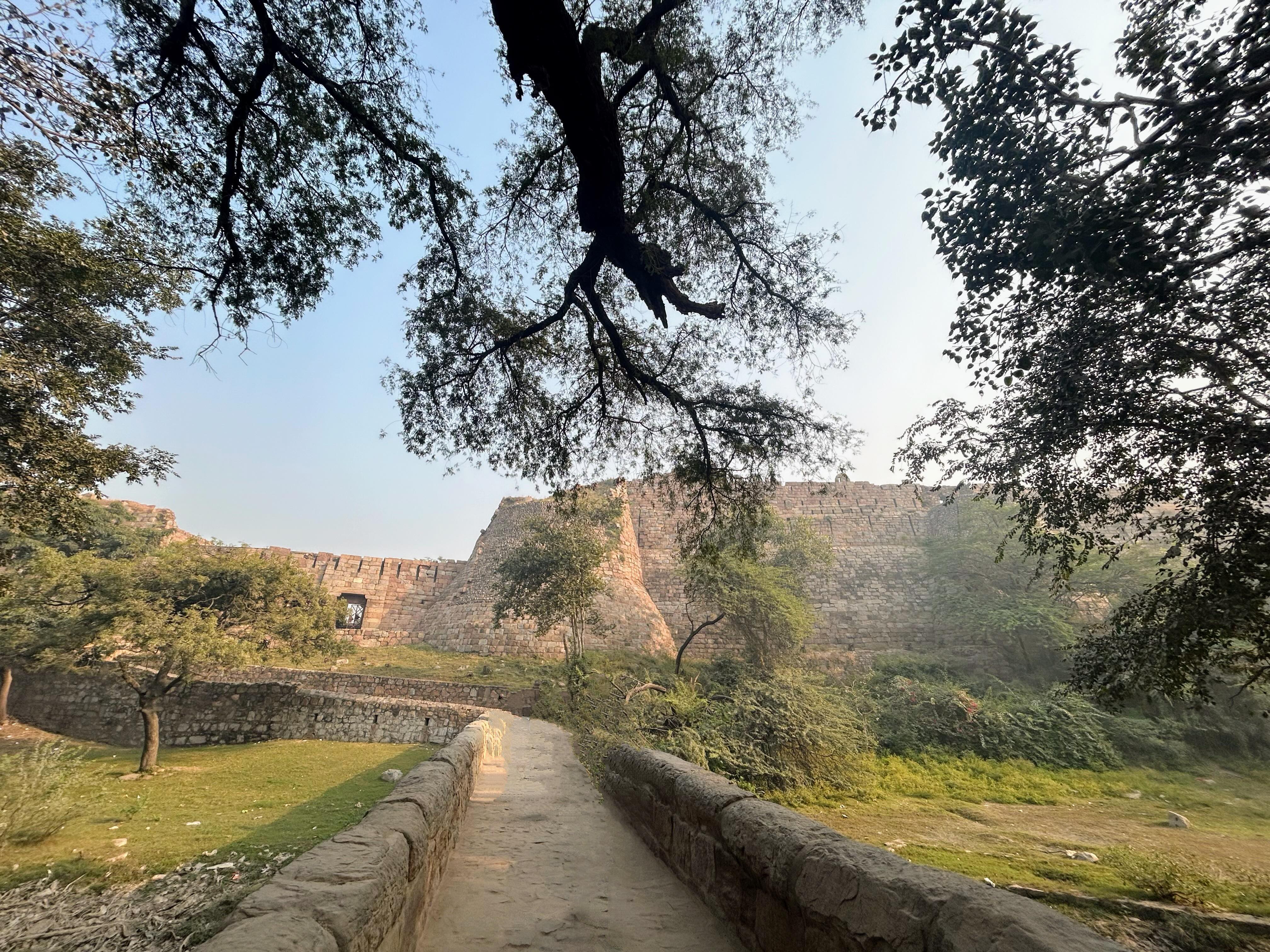
This time, everything was different. Surrounded by fellow history enthusiasts and led by the brilliant Ratnendu Ray, the experience was a complete reversal. We discussed everything from medieval weaponry to the economics of the 14th century, pausing often to take in the scale of Ghiyas-ud-Din Tughlaq’s vision.
Walls Built to Deter Eternity
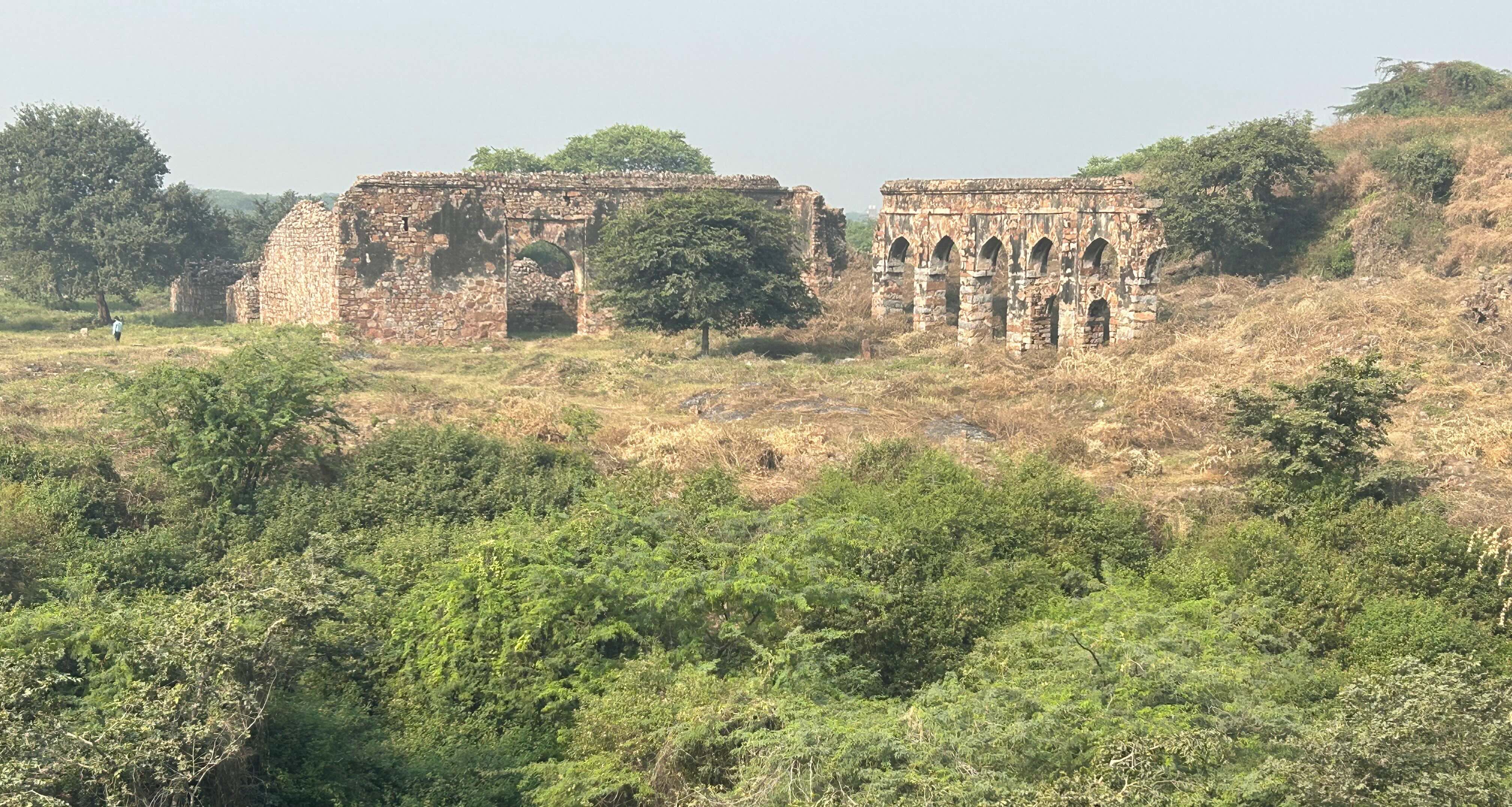
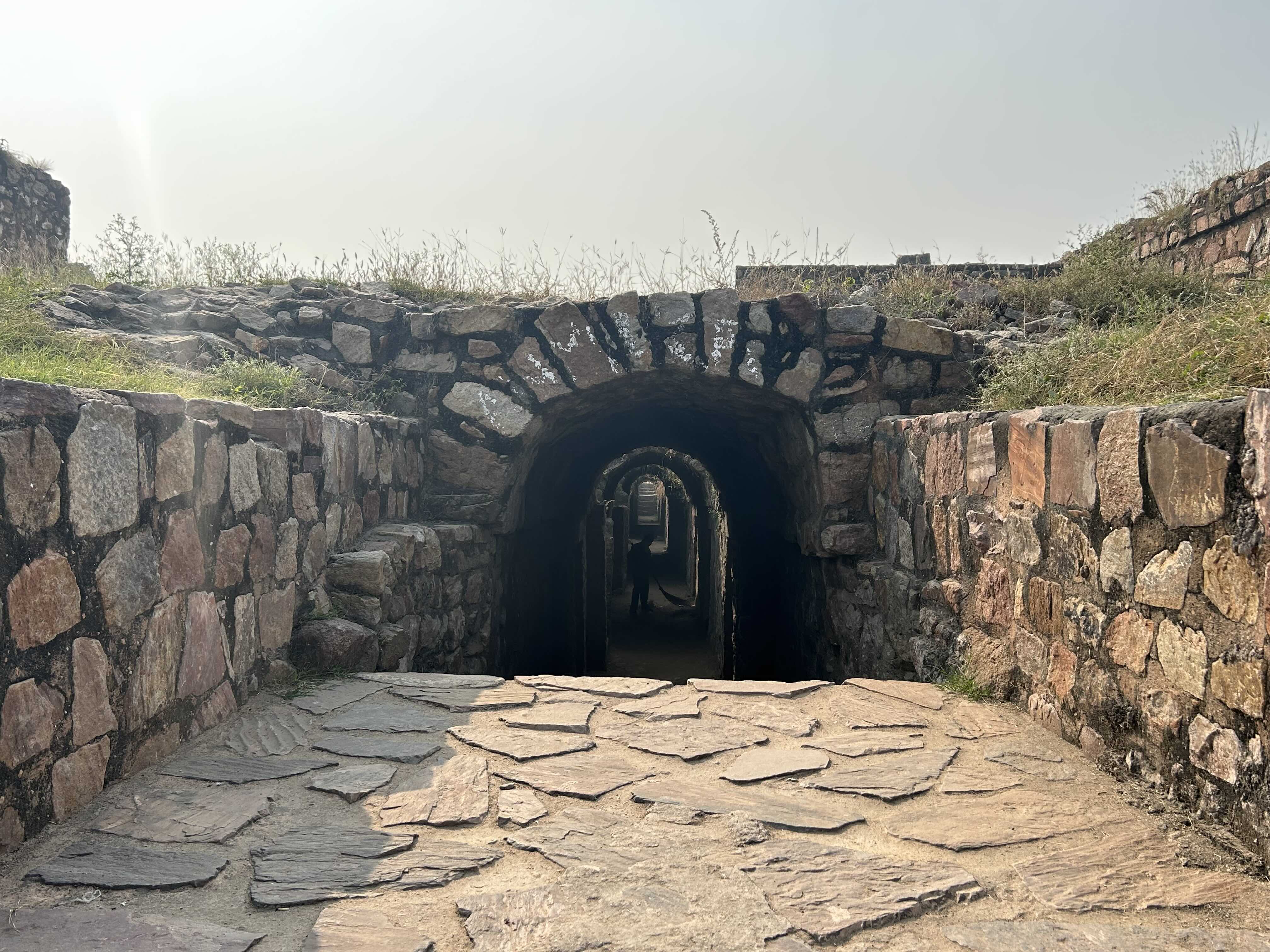
The fort announces its presence long before you reach the gate. Even in their dilapidated state, the enormous stone walls, spanning over six kilometres in a half-hexagonal shape, retain a quiet arrogance. They were once meant to intimidate enemies, withstand sieges, and hold power. Today, they are softened by shrubs, wild grass, and the slow generosity of time.
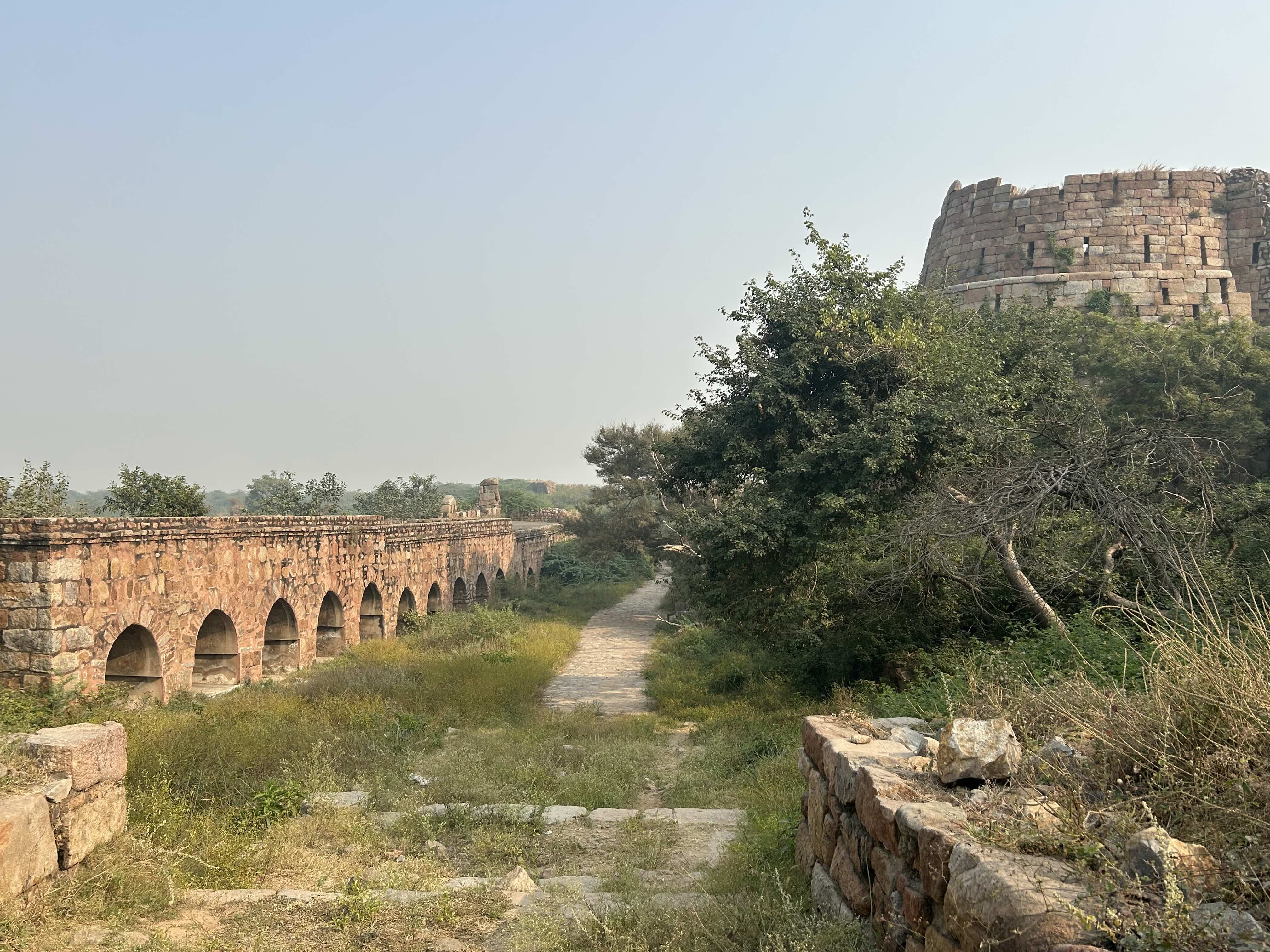

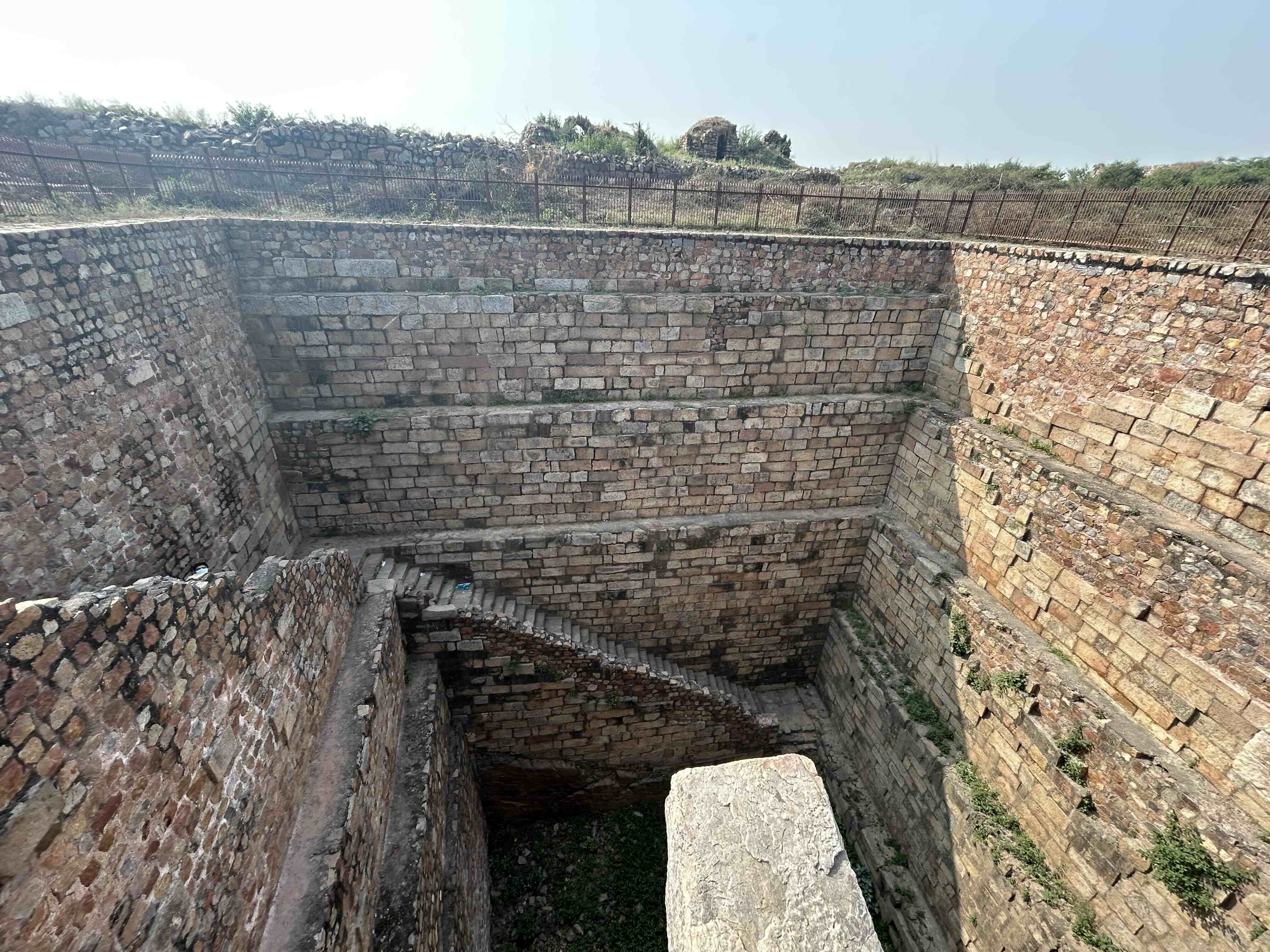
We heard stories of the Tughlaq dynasty, of Ghiyas-ud-Din’s famously strained equation with the Sufi saint Nizamuddin Aulia, and the curse that supposedly doomed the fort soon after its completion. The palace area once had a deep baoli, a hamam, and a small mosque; the walk leader showed us older photographs, and it was sobering to see how much the site has eroded. Even thick, defiant walls cannot withstand the patience of centuries.
Haze Instead of History
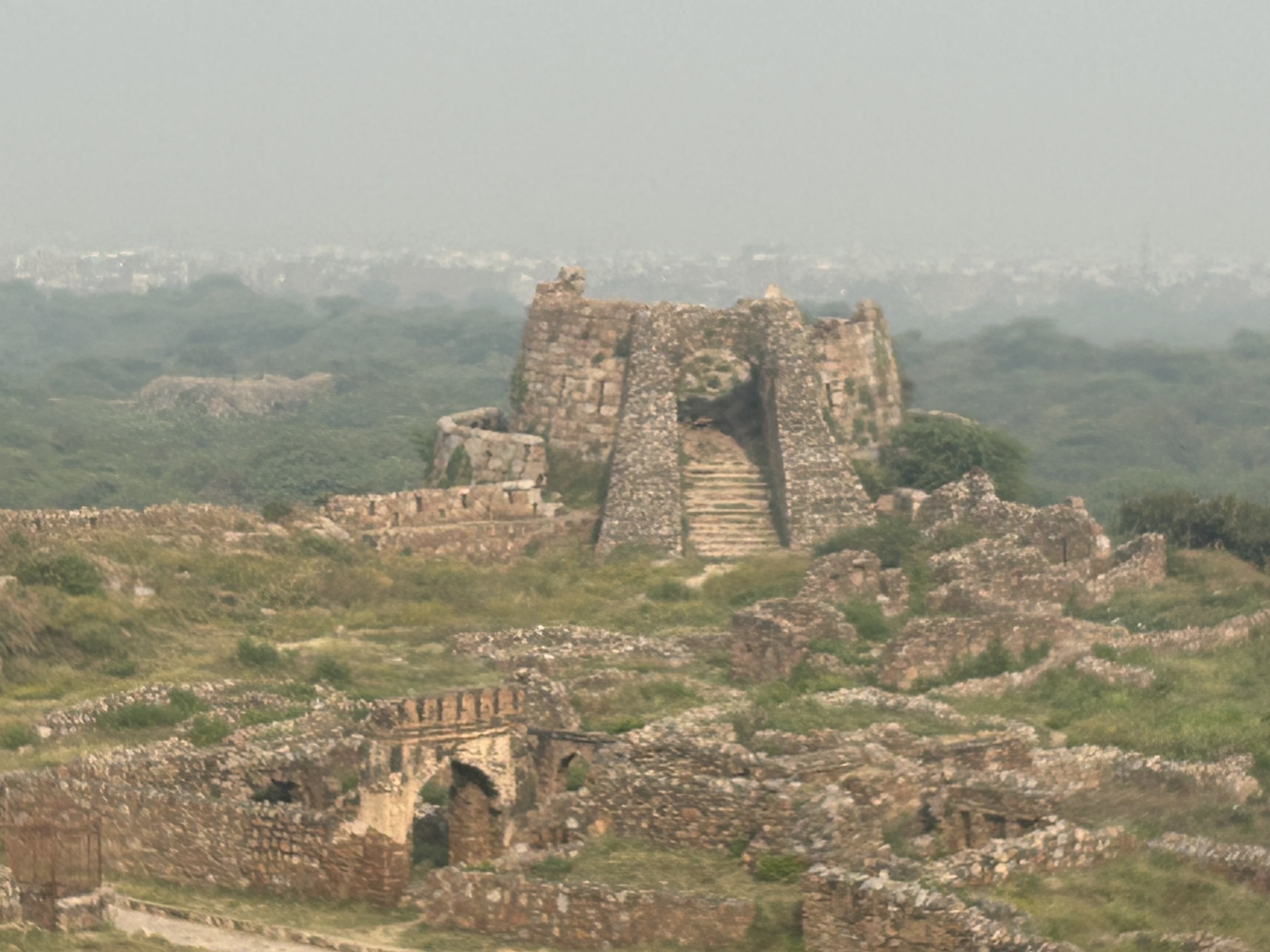
We climbed to one of the highest points for a panoramic view of Adilabad Fort and Nai-ka-Kot. But all we could see was haze—Delhi’s new, stubborn skyline. Even the tomb of Ghiyas-ud-Din Tughlaq, barely across the road, was a ghostly silhouette.

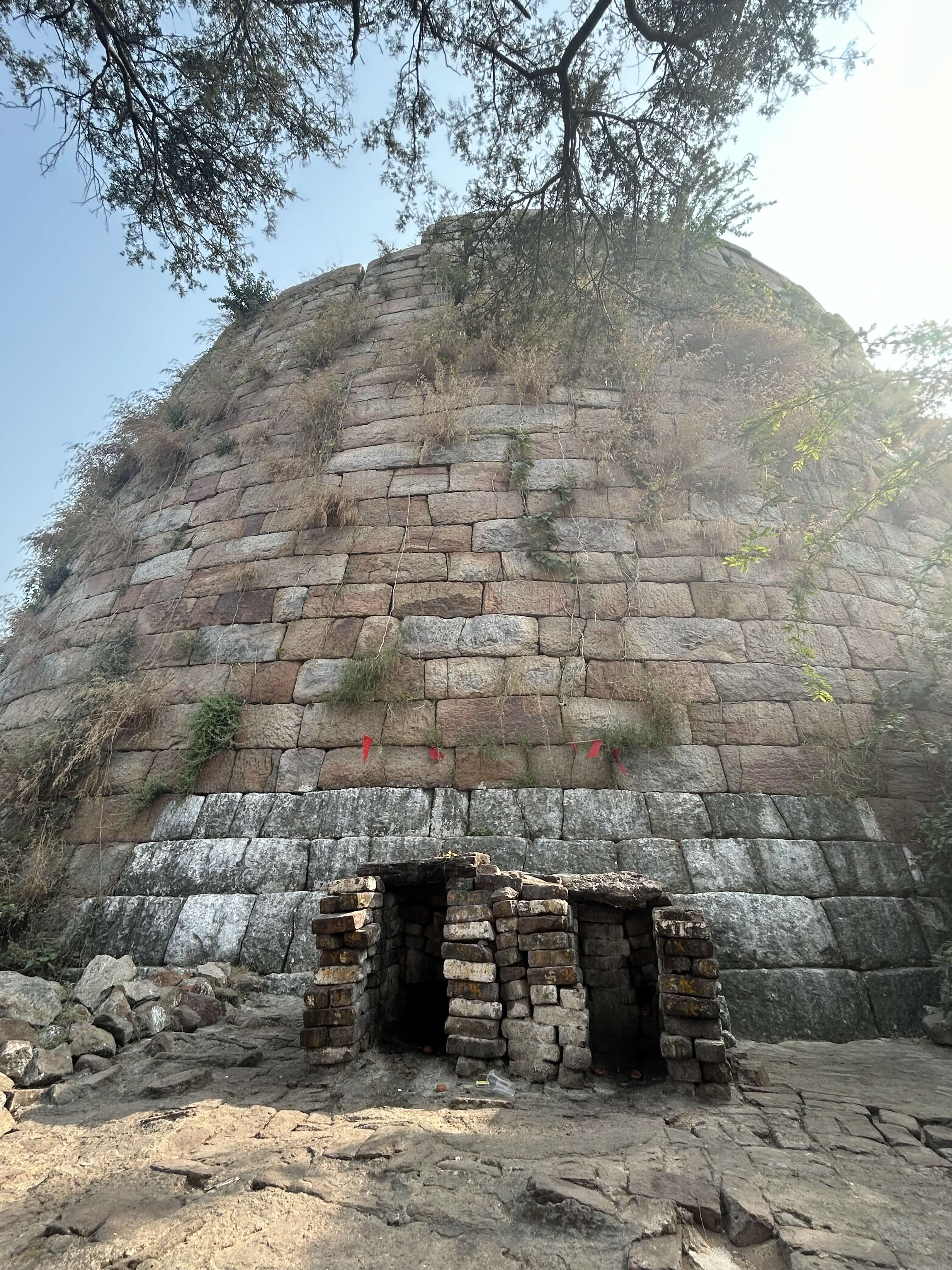
On the way down, we wandered into a quiet corner where rocks lay piled along the fort wall beside a mound of used diyas. A local legend speaks of a pir, revered by both Hindus and Muslims. The fort may have been abandoned by royalty, historians, and tourists at various times, but the local community has gently folded it into their everyday spiritual landscape.
A Tomb in a Garden
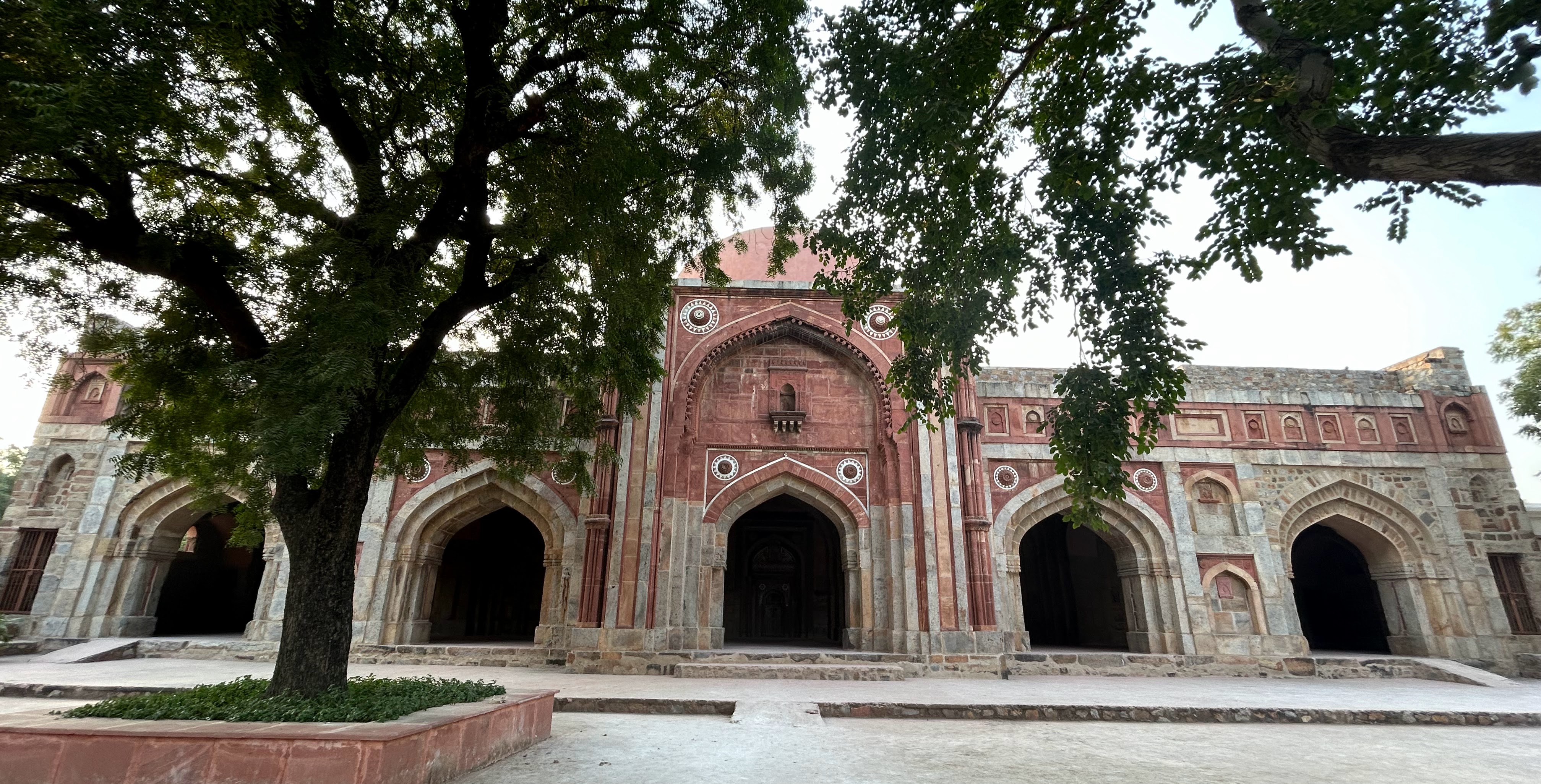
Across the road, the ruler’s red-sandstone tomb sits inside an unexpectedly well-maintained, manicured patch of green. It also houses the tomb of a military commander named Zafar. With little historical detail available about him, we found ourselves imagining scenarios that could explain how a commander earned a resting place beside a king.

Driving Home With Impermanence
After more than three absorbing hours, as I drove away, a familiar thought settled in.
Empires rise, rulers command, forts stretch stone by stone toward the sky, and then, quietly, they collapse into stories, legends, and vegetation.
Power is temporary. Architecture is temporary. Even memory is temporary.
And yet, the act of walking through history, of witnessing its ruins with others who care, felt strangely grounding. In a city battling pollution, noise, and restlessness, these remnants remind us that everything is transient, but nothing is ever entirely lost.



 Jajabor