Christmas fell midweek, and I had no particular plans. After all, when one doesn’t have to go to church and pray, what does one do—eat and sleep?
As I was contemplating a lazy Thursday, an email from Tales of the City dropped in about a heritage walk around the churches of Purani Dilli. It felt like the universe was gently nudging me off the couch.
New Delhi may look like the diva, but it’s Purani Dilli that preserves the city’s soul. In Old Delhi, you can time-travel in a few steps—past a gate, around a corner, across a lane that pretends it has always been here. The walk began at St. James’ Church, and I found myself in a large group of walkers. Clearly, I wasn’t the only one with no plans for a midweek holiday.

This was my second visit to the church. The last time I came, the compound was quiet, almost meditative. Today, it was full of cars. A service was underway, so we avoided going inside. Still, I have always been intrigued by this church—its location near Kashmere Gate, almost next door to Lothiyan cemetery, which was the city’s earliest Christian cemetery. There’s also the story of its origin: a church built as a vow (a very Indian thing to do) by a private individual, Colonel James Skinner—a man who struggled to fit into the British world due to his mixed parentage, and yet went on to build an institution that later became the church of the Viceroy of India.
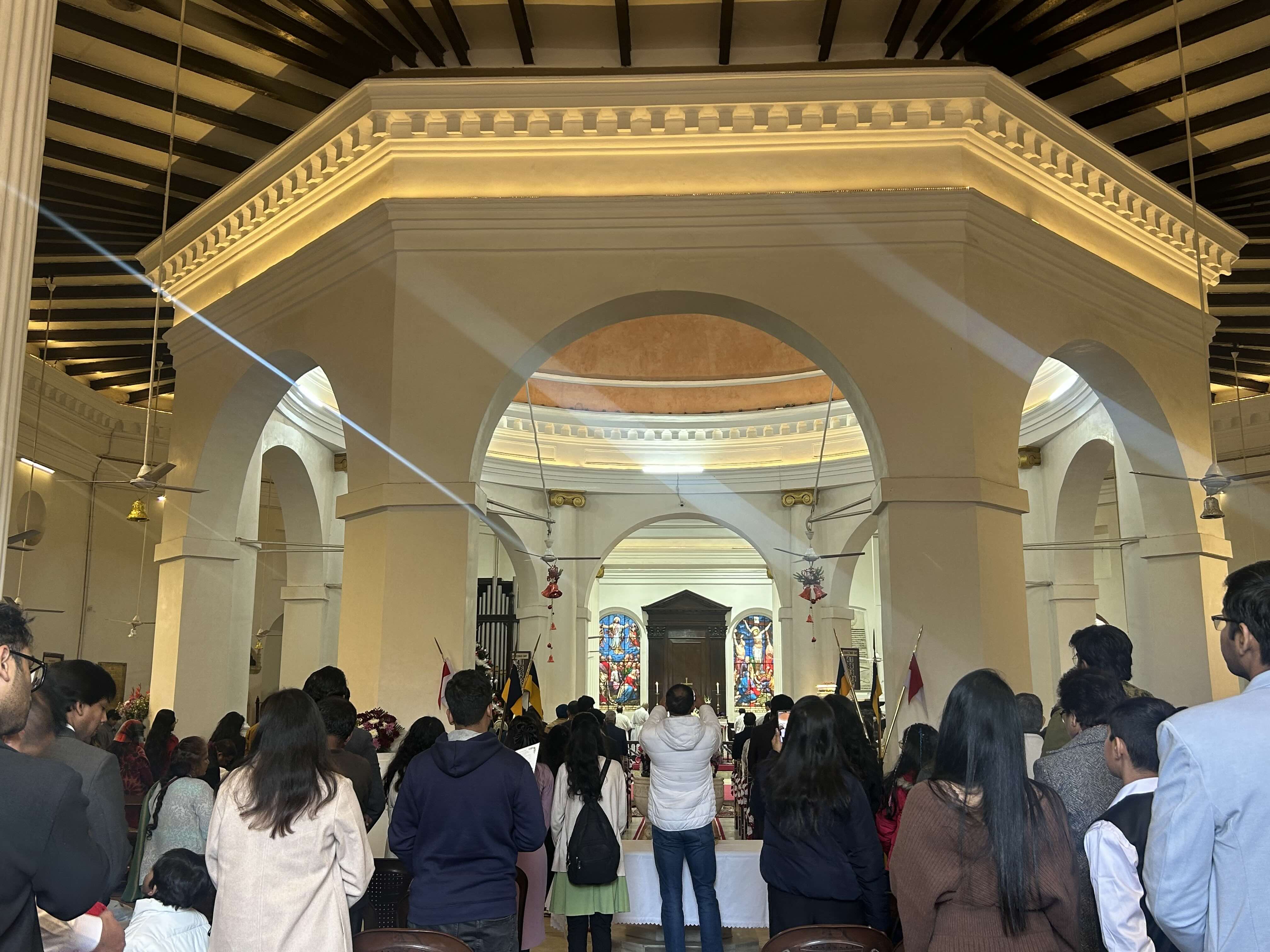
The church compound holds more than a place of worship. It houses the private cemetery of the Skinner family, and, most importantly, the grave of William Fraser, Commissioner of Delhi. In fact, the grave pre-dates the church and may have influenced the choice of location. Next to Fraser’s grave stands a large cross erected by the British in memory of British families killed in 1857. That the memorial is part of narrative-building becomes evident when one notices engravings not only in English but also in Persian—the lingua franca of those days.

When we stepped out of the compound, we could see the old campus of St. Stephen’s, which today houses the office of the Chief Electoral Officer, Delhi. Purani Dilli does this effortlessly—lives history, then repurposes it as required. Led enthusiastically by Shreya Sahay and Karan Tekwani, our group moved along the busy lanes towards the next stop.
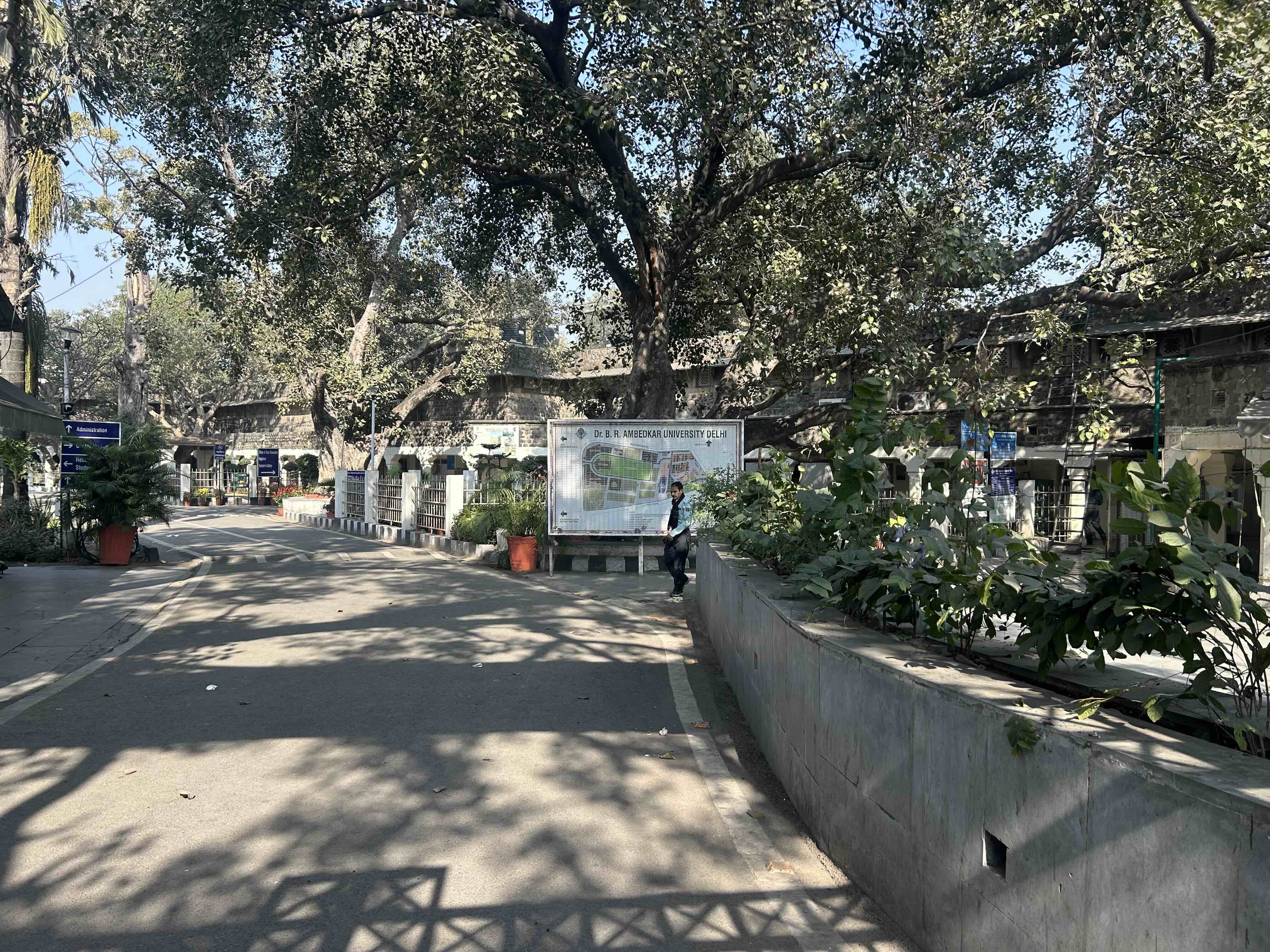
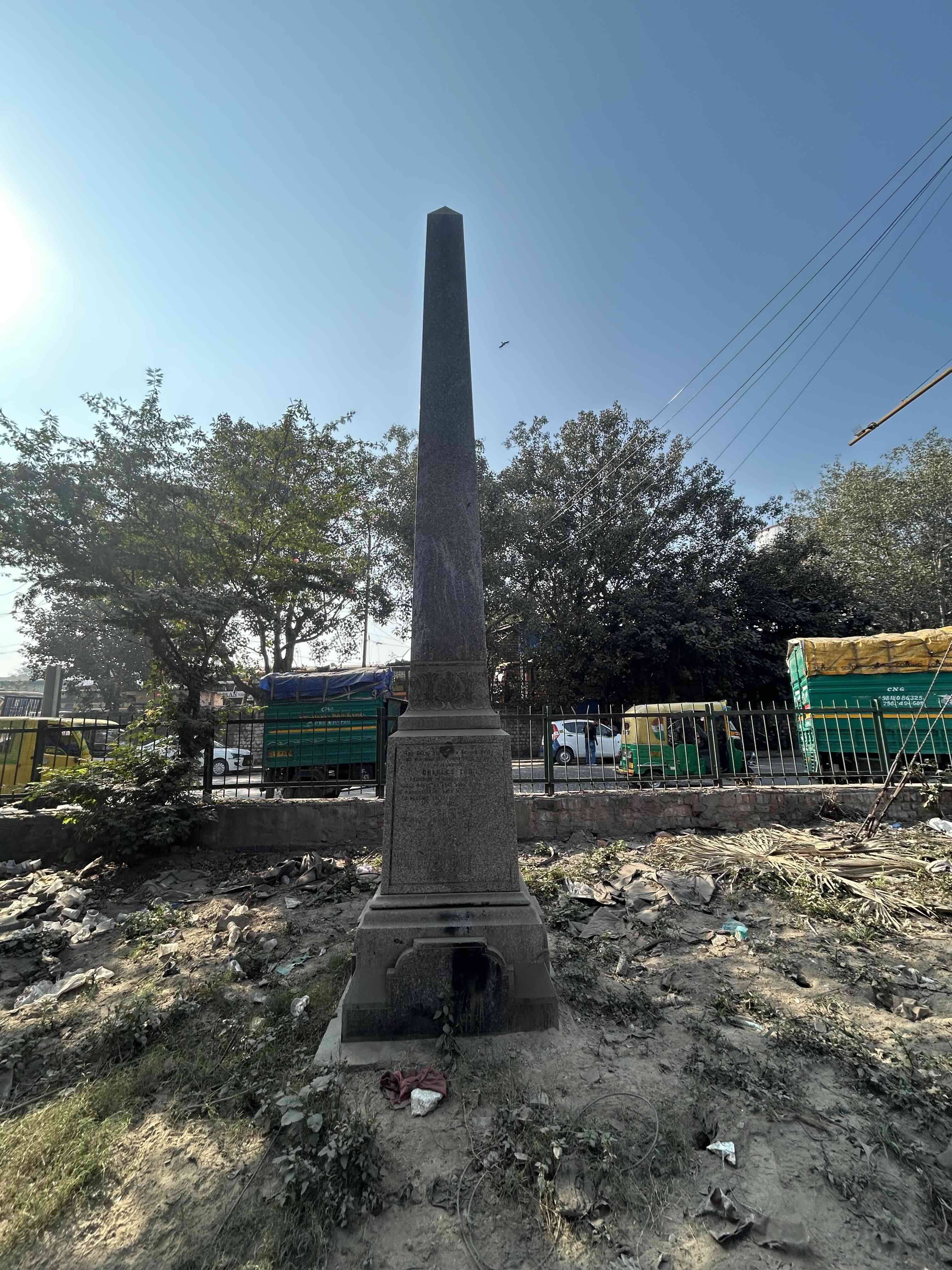
On the way, we passed Dr. B. R. Ambedkar University and an interesting signboard that claimed the building had once been the library of Dara Shikoh and was now better known as a Partition Museum. A few steps later, the walk leaders pointed to something easy to miss: a rather nondescript obelisk lying ignored at the corner of a road. Yet this quiet structure is the Mutiny Telegraph Memorial, erected by the British in honour of the telegraph staff who sent the warning of the 1857 uprising. Today, the words on its base can barely be read; construction material and a garage crowd around it. Did I ever pause to think there could be a link between the telegraph and 1857? No. And yet, apparently, a single message—sent at the right moment—could alter the course of history. It’s humbling how cities hide their turning points in plain sight.
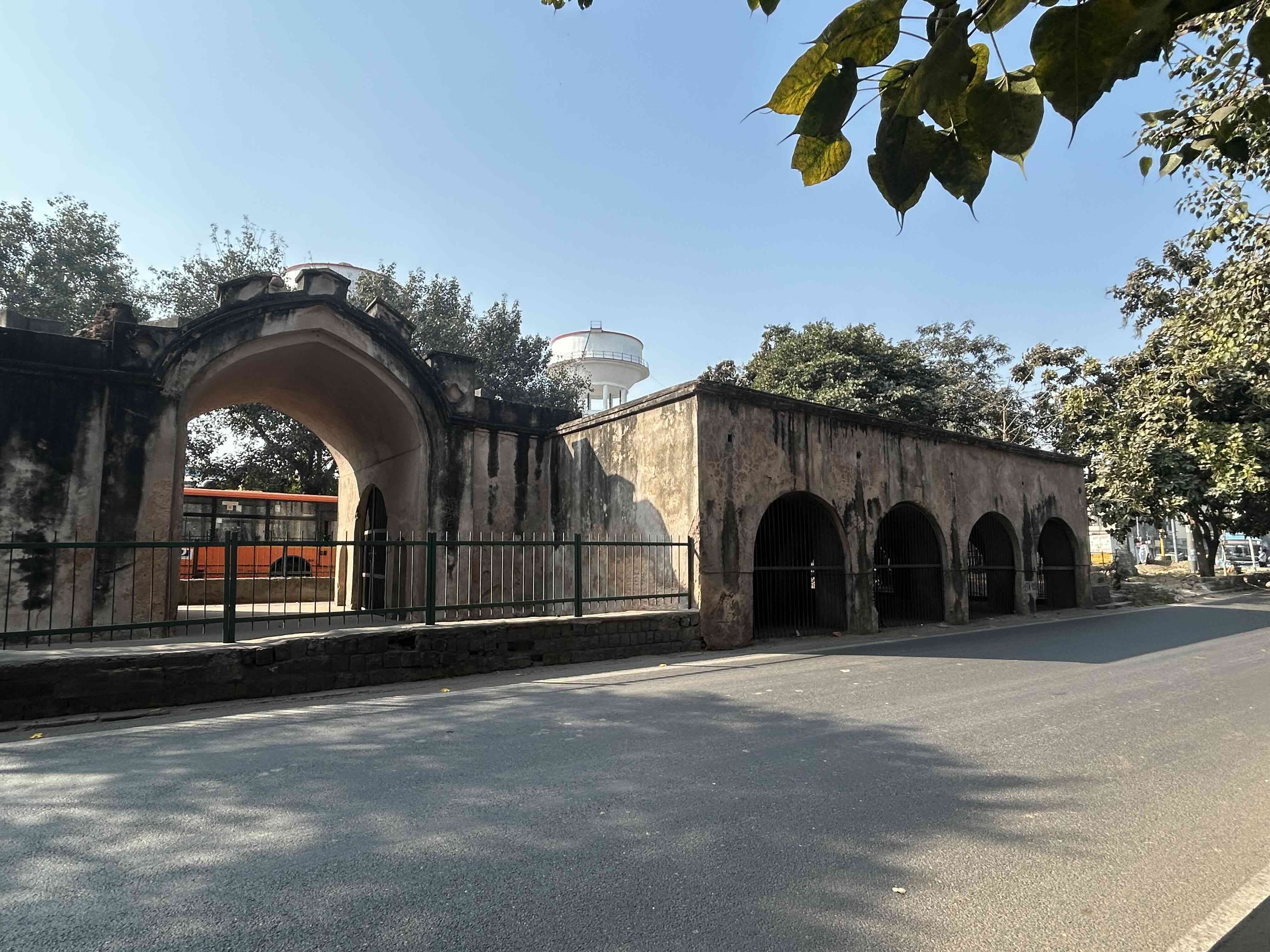
A little distance away stood another structure that draws almost no attention now: the British Magazine, constructed in the early 19th century near Kashmere Gate as a storage facility for gunpowder, arms, and explosives for the East India Company forces. In 1857, when the rebels reached Delhi, it became a target. When the British realised they couldn’t defend it, they blew it up. The ammunition is said to have burned for days, an image so dramatic it almost feels cinematic, and yet the building today sits quietly.
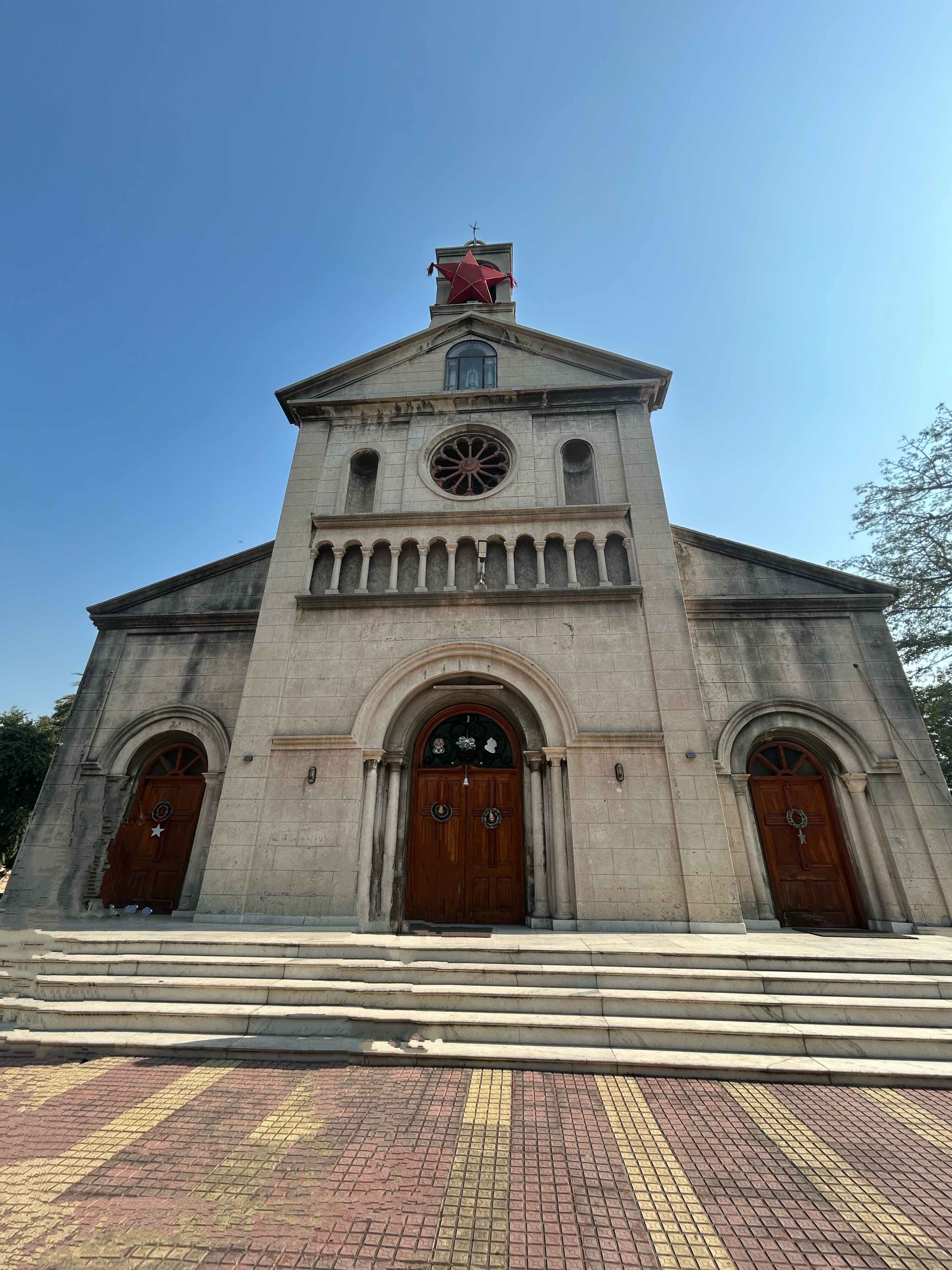
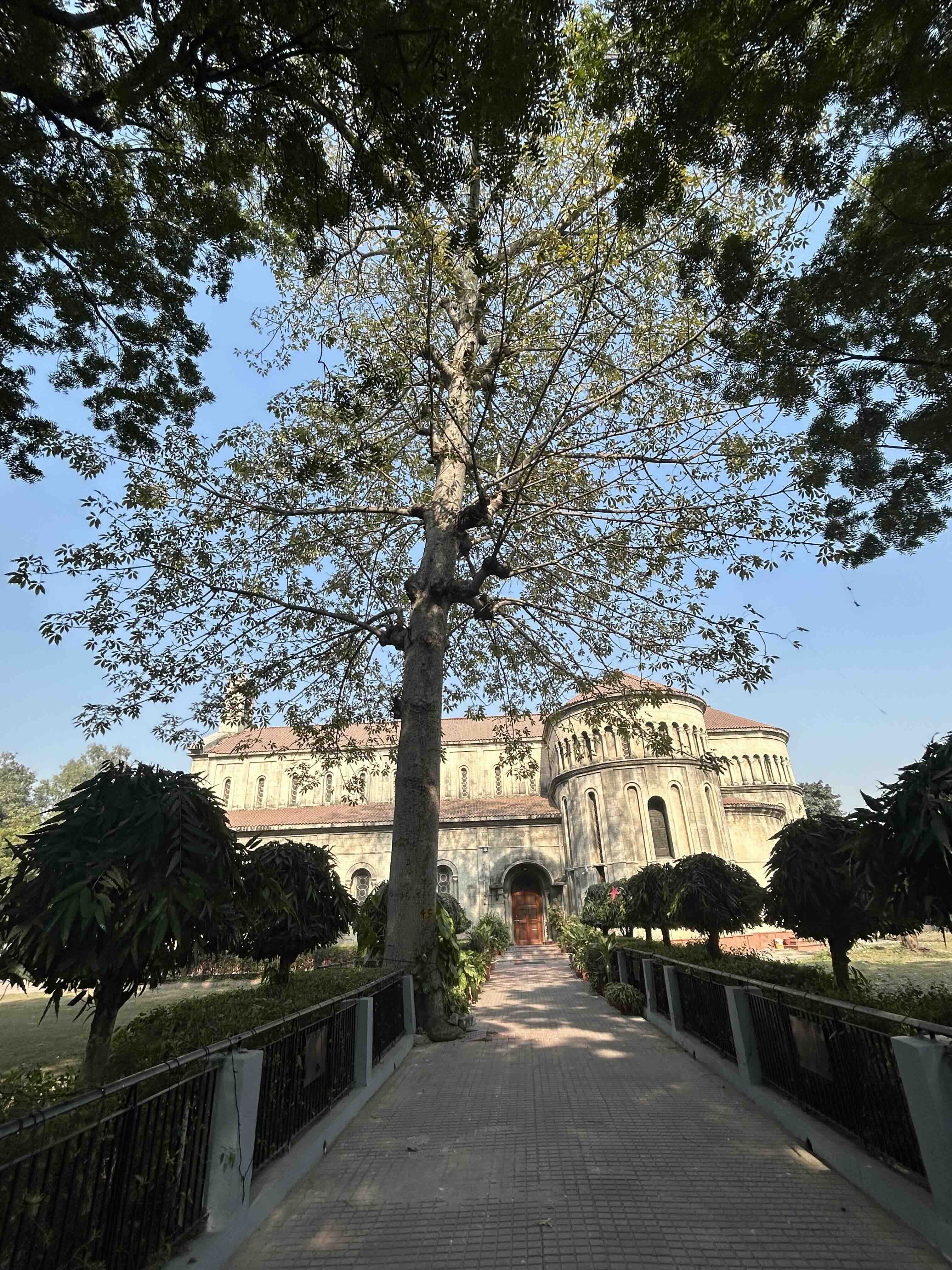
Our second church stop was St. Mary’s, near the Red Fort. Unfortunately, it was closed, and we could only admire the building from the outside. The walk leaders shared its layered history—how the site’s story moves through different phases of patronage and rebuilding, and how, once the later structure took shape, the church was frequented more by British officers stationed in the city. Even when a place begins with local connections, the city’s politics and power shifts can re-script who it belongs to.
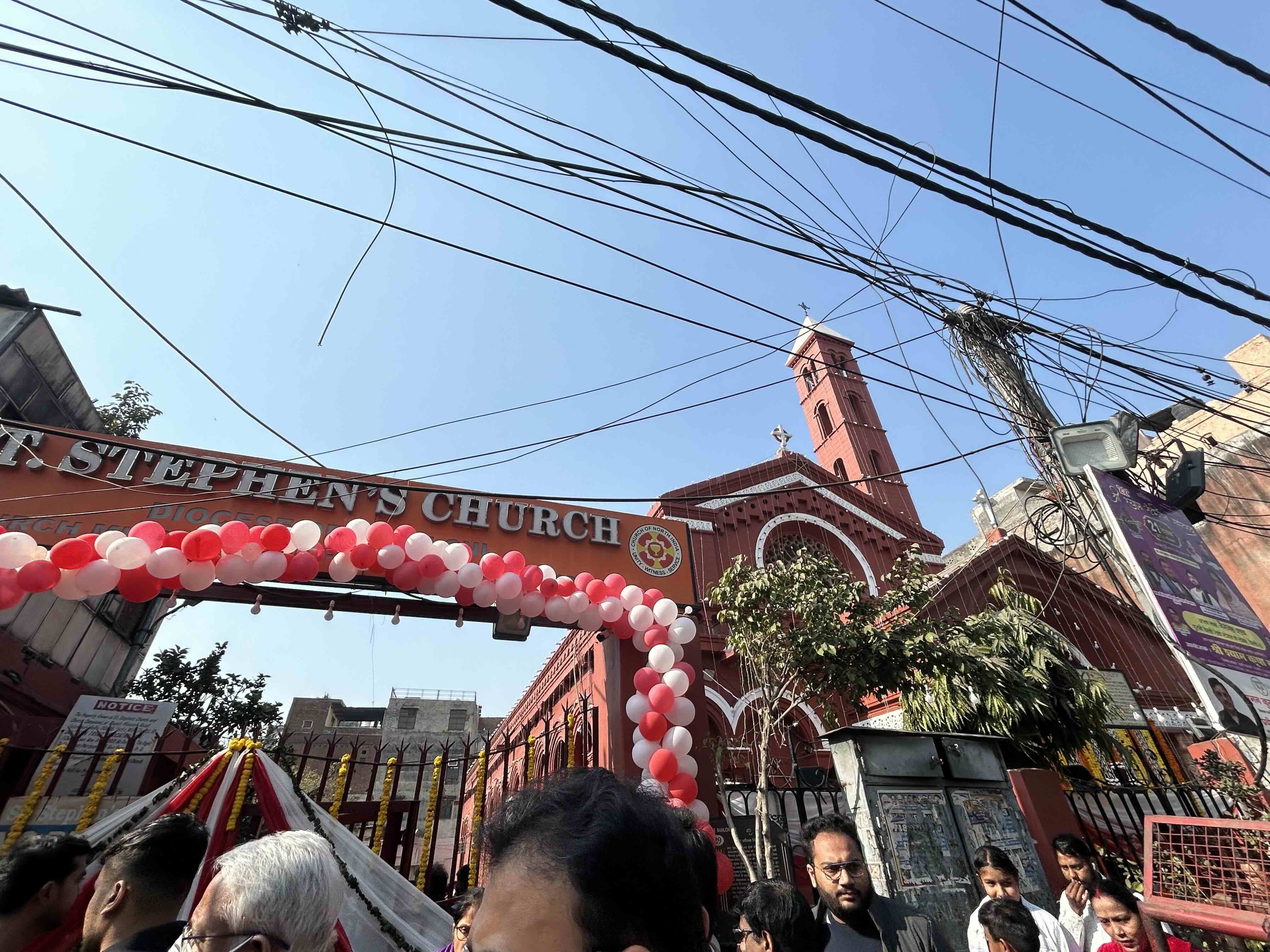
By noon, the final stop was about a kilometre away. We hopped onto e-rickshaws and landed at St. Stephen’s Church in the bustling marketplace of Church Mission Road. The service was almost over, and as we debated whether we should go in, a hymn floated out—praise for Jesus set to the tune of “Jai Jagdish Hare.” I froze for a second, smiling at the sheer ease with which India does this—borrows, blends, transforms, makes faith sound familiar without losing its meaning.
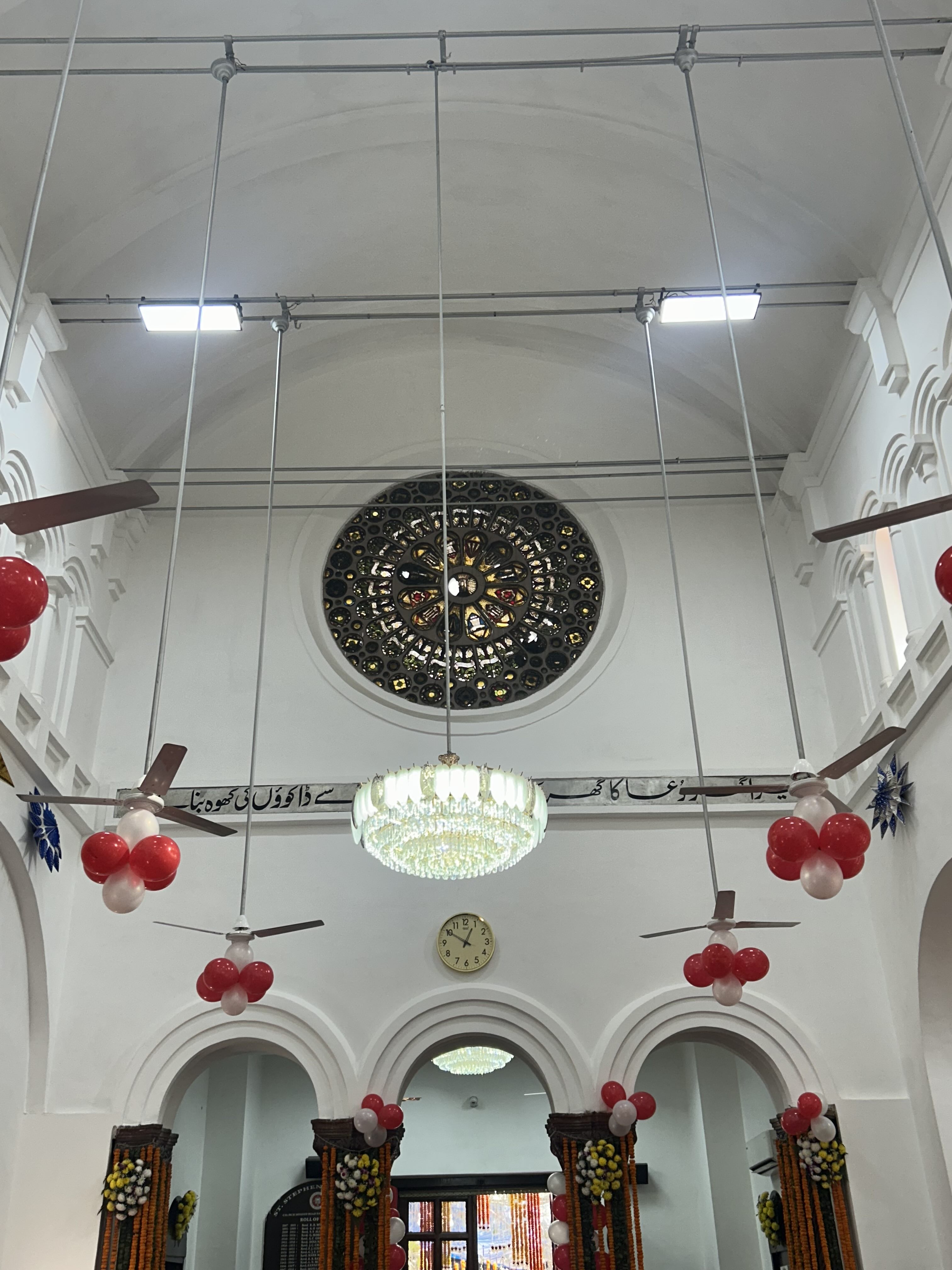
When the service ended, people streamed out and wished us Merry Christmas. Built by Anglican missionaries, the church was meant for the local population and carries inscriptions in Persian, again, a reminder of how languages travel, settle, and leave marks even in places you wouldn’t expect.
I have always enjoyed Christmas festivities, but I had never visited a church on Christmas Day. This turned out to be one of my most interesting Christmas holidays—not because it was loud or glittery, but because it gave me a glimpse into the rich tapestry of Purani Dilli.
Delhi is a palimpsest—not only of its rulers and its various capitals, but also of languages, religions, and everything that comes along with them. Spend time with the city, and it will open up its world to those who want to see it.
 Jajabor