Tag Archives: Heritage Walk

Concentric Circles, Endless Gratitude: A Sunday at the National War Memorial

Winter is in full swing in the capital, with daytime temperatures dipping below 20°C. Ironically, that’s also when Delhi’s tourist spots see their biggest turnout. The smog-and-cold combination often makes me think staying home is the smarter plan. But in the eternal confrontation between my lazy self and my wanderlust-bitten self, it’s usually the latter that wins.
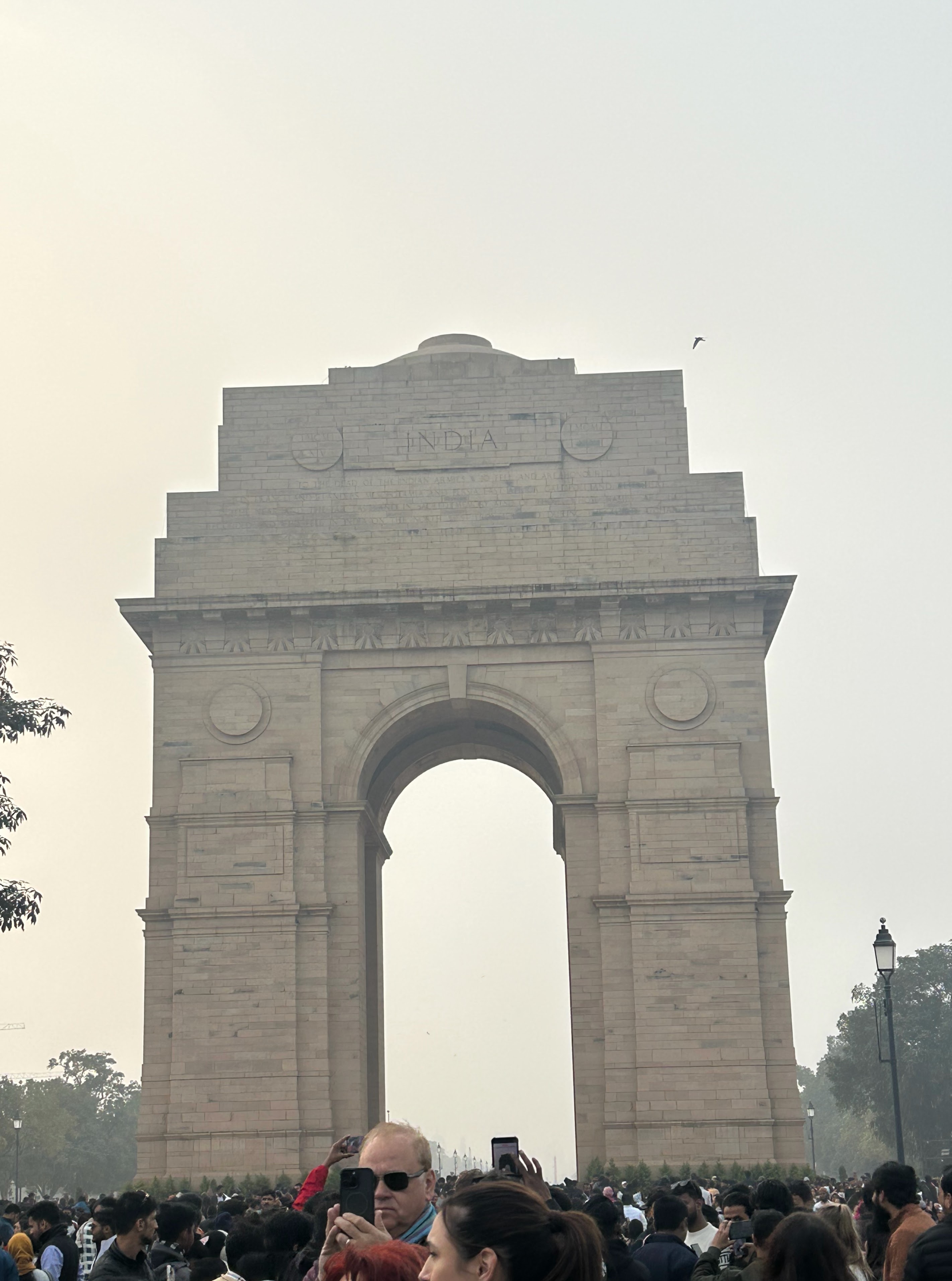
This Sunday, INTACH organised a walk at the National War Memorial, led by raconteur Dr Shahjahan Avadi—an ex–Air Force officer himself. The memorial is located near India Gate, and my logical self did know that parking would be a problem. But it was cold, and I decided to take the car anyway.

The drive up to the oddly named C-Hexagon circle was smooth. And then I joined the queue to enter the Central Vista parking and immediately realised that getting the car was not a bright idea. Thanks to a fellow walker, I managed to find a spot nearby.

Then, what should have been a simple walk to the statue of Netaji Subhas Chandra Bose turned into a brisk walk—and then a jog—as we searched for the entry. My rant about signage has now become a constant at most public locations in the country. After a brief hunt through the sea of humanity around India Gate, we finally located the group.

Built in 2019, the National War Memorial honours India’s fallen soldiers. Designed in concentric circles, it is said to echo the ancient war formation of the Chakravyuh.
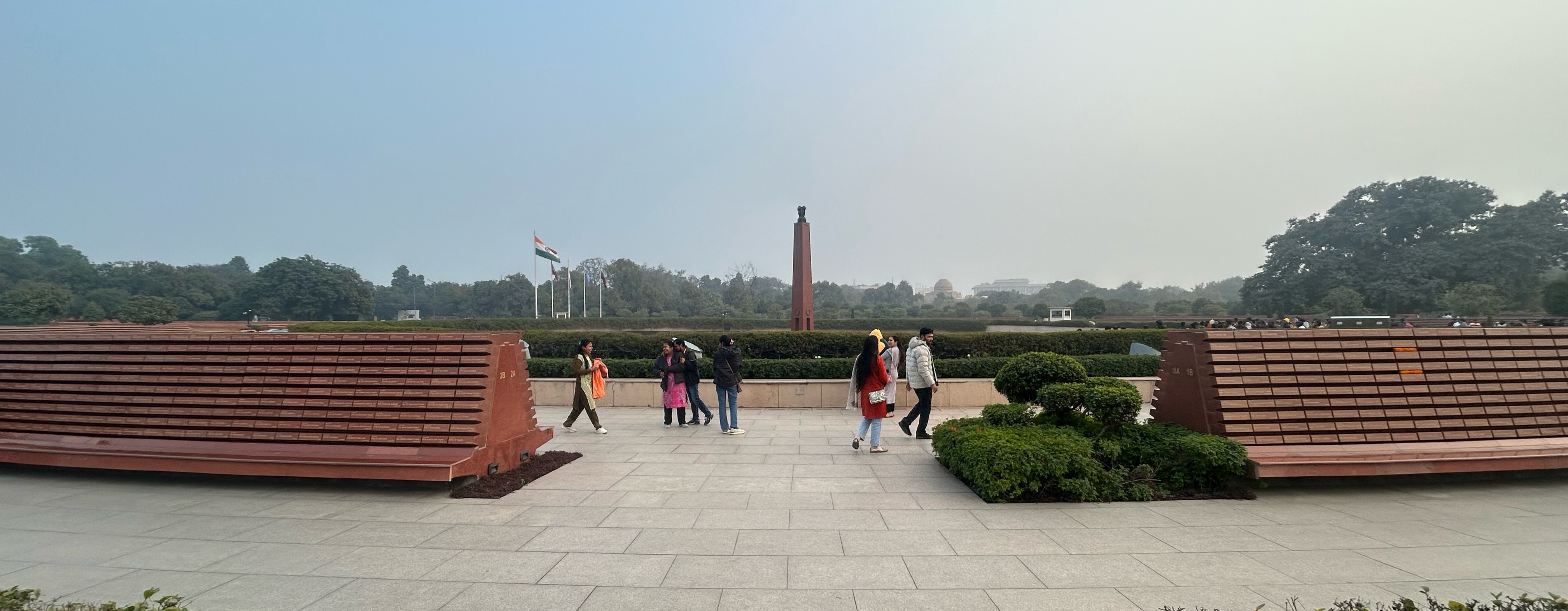
The first circle is the Raksha Chakra, a ring of trees symbolising the stability and integrity of the nation. Next comes the Tyag Chakra, where granite panels bear the names of those who made the supreme sacrifice—etched in golden letters. From 1947 to the present day, the names of martyrs can be read here.
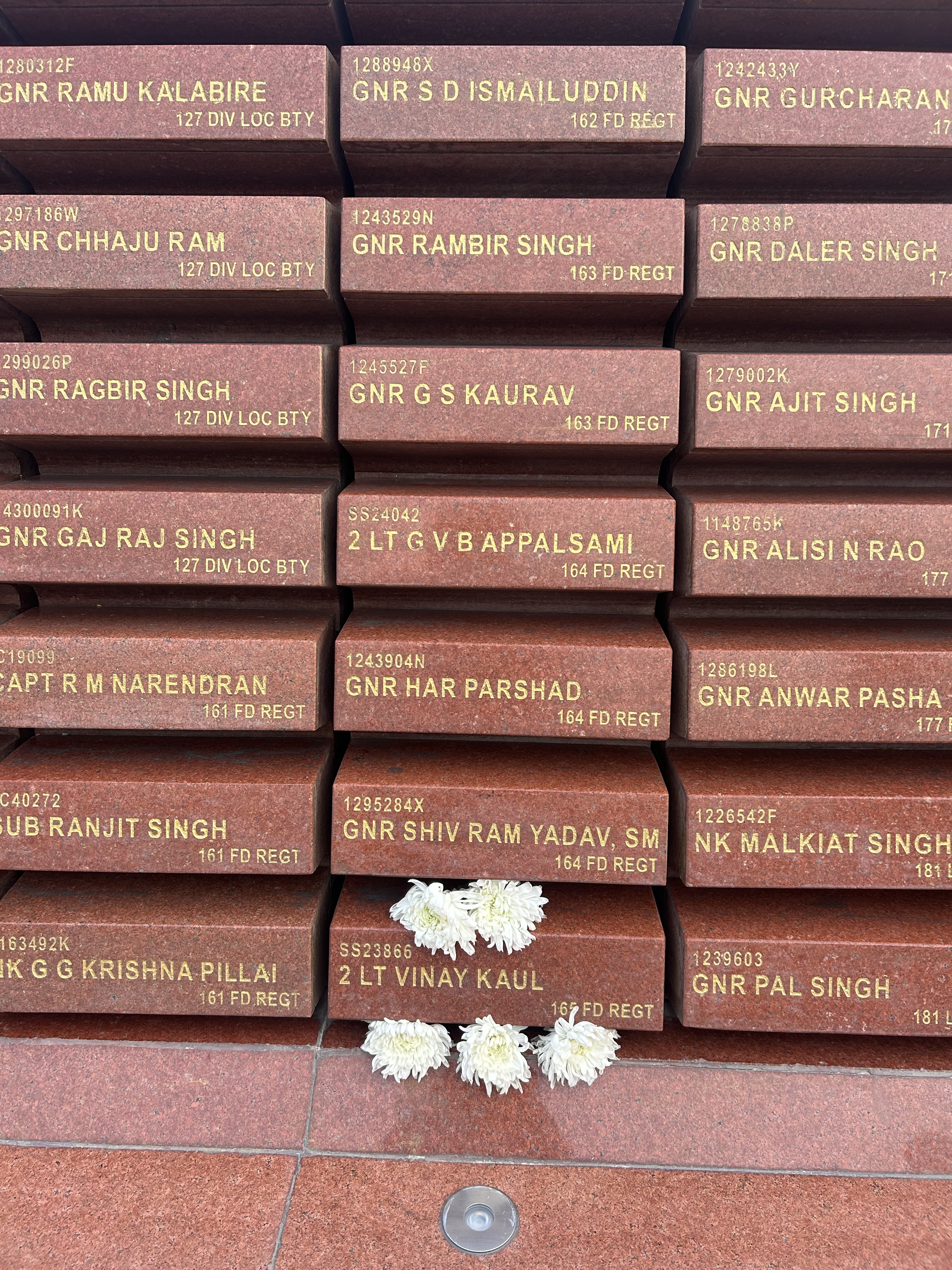
As we walked, something caught my attention: someone had placed flowers at two granite panels. It made me wonder how often we truly think about these sacrifices when we think of our country. We celebrate achievements—and rightly so—but do we pause to consider whether those achievements would have been possible without the lives given, and without the soldiers who continue to guard our borders?

We then moved to the Veerta Chakra, which houses murals of battles that became turning points in the nation’s story. From Tithwal to Rezang La, from Longewala to Gangasagar to Meghdoot—each mural carried a reminder of indomitable courage and enduring sacrifice. It was heartening to see that even amidst the India Gate crowds, many were drawn into the quieter gravity of the memorial. These stories deserve to be known by more people.
At the centre is the Amar Chakra, where the eternal flame burns—Amar Jawan Jyoti. Beside it is a cabin where a soldier stands guard in honour. The discipline is so absolute that for a moment we almost mistook him for a statue. Being a Sunday, we also witnessed the change of guard and the retreat ceremony.

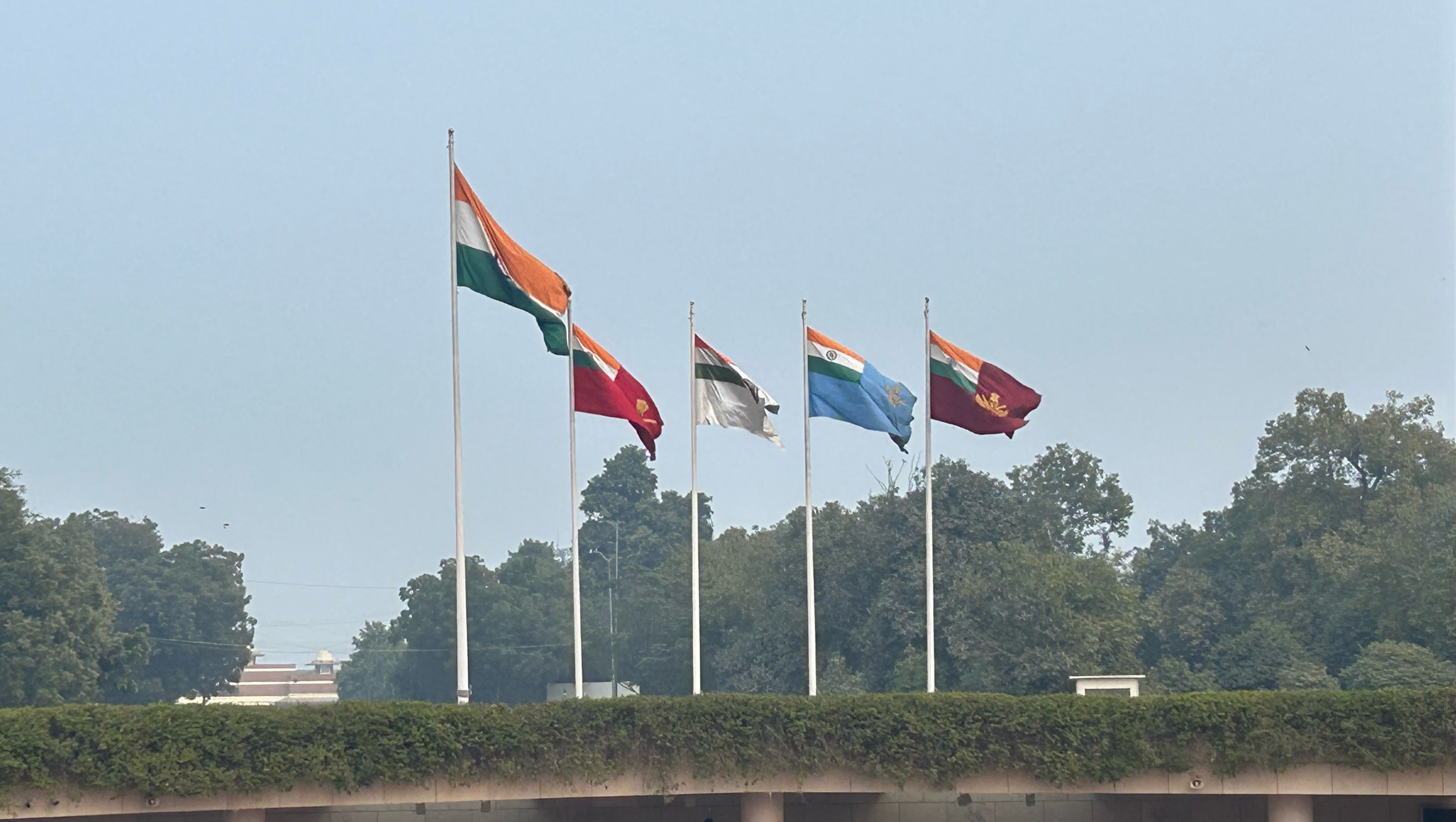
As dusk settled, the flames around Amar Jawan Jyoti were lit. An elaborate change of guard followed, and finally the five flags—the National Flag and those of the Army, Navy, Air Force, and IDS—were lowered. By the time the ceremonies ended, the air had turned sharply cold. Pulling my fleece tighter, I remembered a story Dr Avadi shared about Operation Meghdoot—how he said one can lose around 10% of one’s memory after serving in Siachen.

It was a Sunday well spent—learning a little more about the bravery, courage, and quiet determination of our armed forces.

Walking Through Memory: From Ugrasen ki Baoli to Jantar Mantar

It began, as many good things do, with a conversation over nostalgia.

About a month ago, a colleague who had started his career with me reminisced about our old office in Connaught Place, New Delhi. That memory sparked a half-hour exchange of stories — about coffees and milkshakes, thalis and biryanis, the food at various State Bhavans, and those impulsive lunch-hour shopping sojourns.

We were in our mid-twenties then, discovering what independence truly meant. So when an INTACH walk from Ugrasen ki Baoli to Jantar Mantar popped up in my WhatsApp feed, I knew I had to join. My first five years in Delhi — and at Connaught Place — had left me with some of my fondest memories. This walk, I thought, might help me know a little more about the city that once shaped my days. And with Ratnendu Ray leading it, there were bound to be stories worth walking for.


Setting Out

The email had advised us not to bring vehicles since the start and end points were different. But, true to my contrary instincts, I drove anyway. I parked opposite Barakhamba Road, found no attendant in sight, and left the car neatly in a corner so as not to inconvenience anyone.

It was a crisp morning, and I decided to walk to Hailey Road, where the Baoli stands. The roads were largely empty — the kind of quiet Delhi rarely offers. The footpaths were uneven, sometimes absent, sometimes grimy, but the city already felt alive in its own unhurried way.


The Baoli and Its Backstories

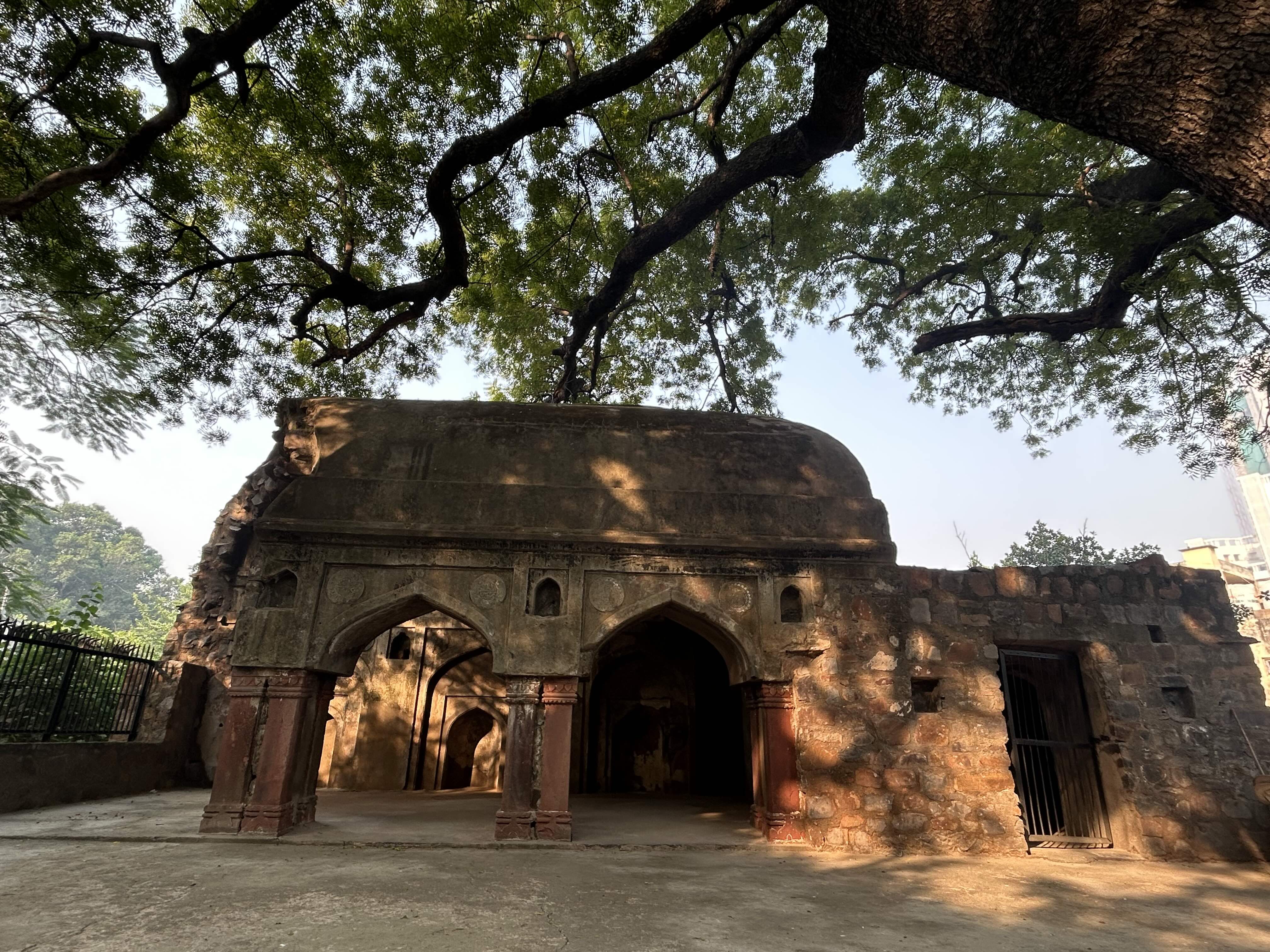
Nestled among high-rises, Ugrasen ki Baoli is remarkably well-maintained and ever popular with tourists. Our group gathered in the soft winter sun, listening to tales of Maharaja Agrasen, the Aggarwal Samaj, and the care of Delhi’s monuments.

As we left the site, someone asked who “Hailey” was — after whom the road was named. That led to the story of William Malcolm Hailey, Governor of Punjab and Delhi’s first Chief Commissioner. His work on the Jhelum Canal, which boosted agriculture in undivided Punjab, earned him a knighthood. Interestingly, what we now call Jim Corbett National Park was once Hailey National Park.

It struck me that the naming and renaming of roads — so often seen as a modern exercise — have always reflected changing eras and ideologies.


Glass Elevators and Forgotten Doors

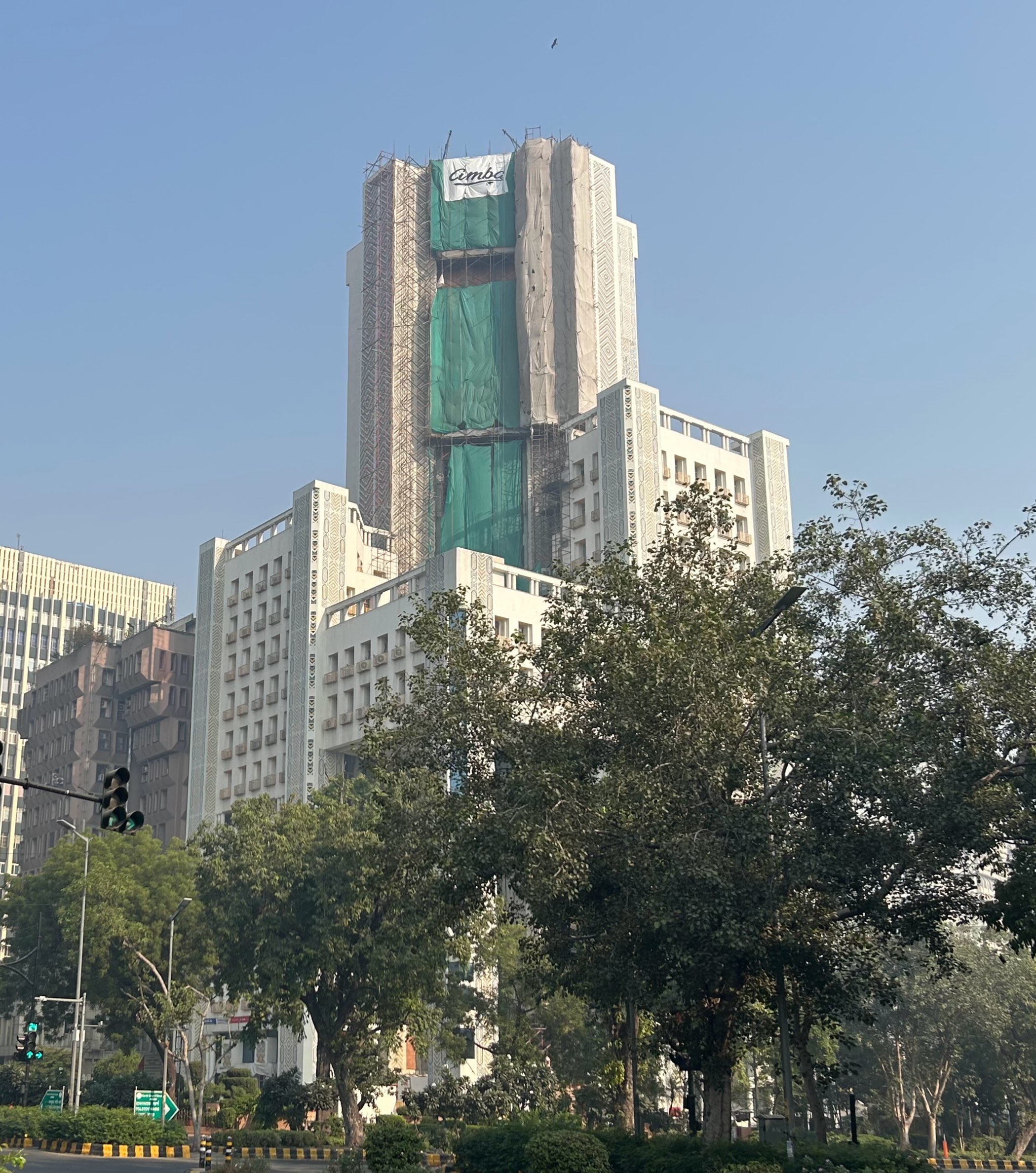
Leaving Hailey’s history behind, we reached the Ambadeep Building — a striking landmark and the first in Delhi to feature external glass elevators. I must have passed it hundreds of times, marvelling at its mirrored façade, yet it was only today that I noticed its courtyards, terraces, and mosaic tiles.

A little ahead, as we turned toward Janpath, a locked old doorway caught our attention. Above it hung a faded board that read Martin Burn Limited. To most Bengalis, Martin Burn is synonymous with the construction of the iconic Howrah Bridge. What I hadn’t known was that the company was co-founded by Sir Rajendranath Mookerjee and Sir Thomas Acquin Martin — and that they chose the name “Martin” to sidestep the racial bias that Indian firms faced in securing British contracts.

Sometimes, the smallest details in a cityscape open windows to vast forgotten worlds.


Architecture, Emporiums, and Echoes of Communication

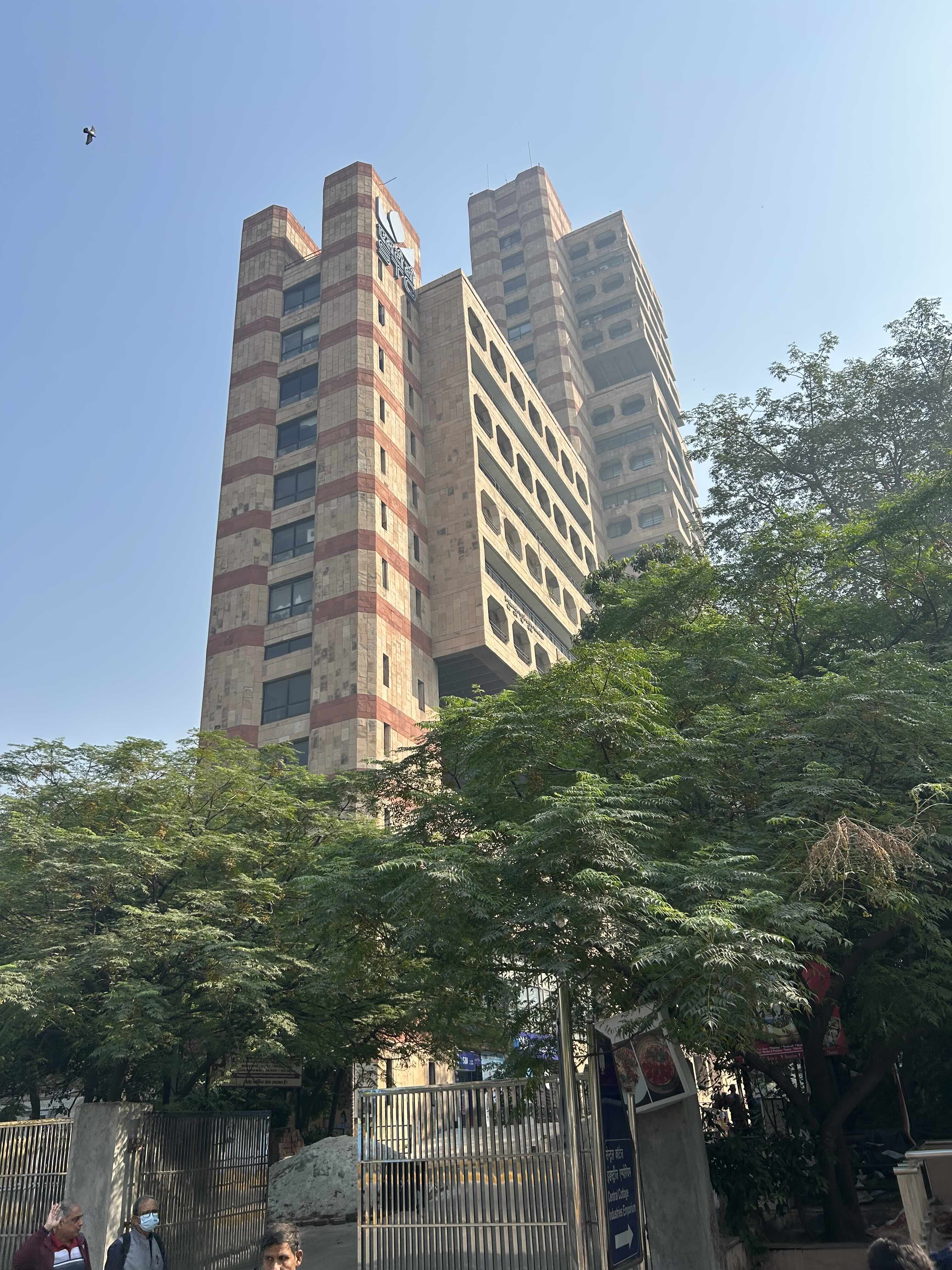
On Janpath stood Jawahar Vyapar Bhavan, home to the government emporium. I’ve always found the building intriguing, but I learnt that its design blends Japanese “Metabolism” architecture with Mughal influences — reflected in its material and rhythm.

Just ahead loomed the ageing MTNL building, its façade dulled by time, and in front of it, the bust of Rafi Ahmed Kidwai — India’s first Communications Minister. Today, when we take overnight deliveries and instant communication for granted, it’s easy to forget that Kidwai was the one who introduced night mail flights between Delhi, Mumbai, Kolkata, Chennai, and Nagpur — an innovation that once shrank the country’s distances.

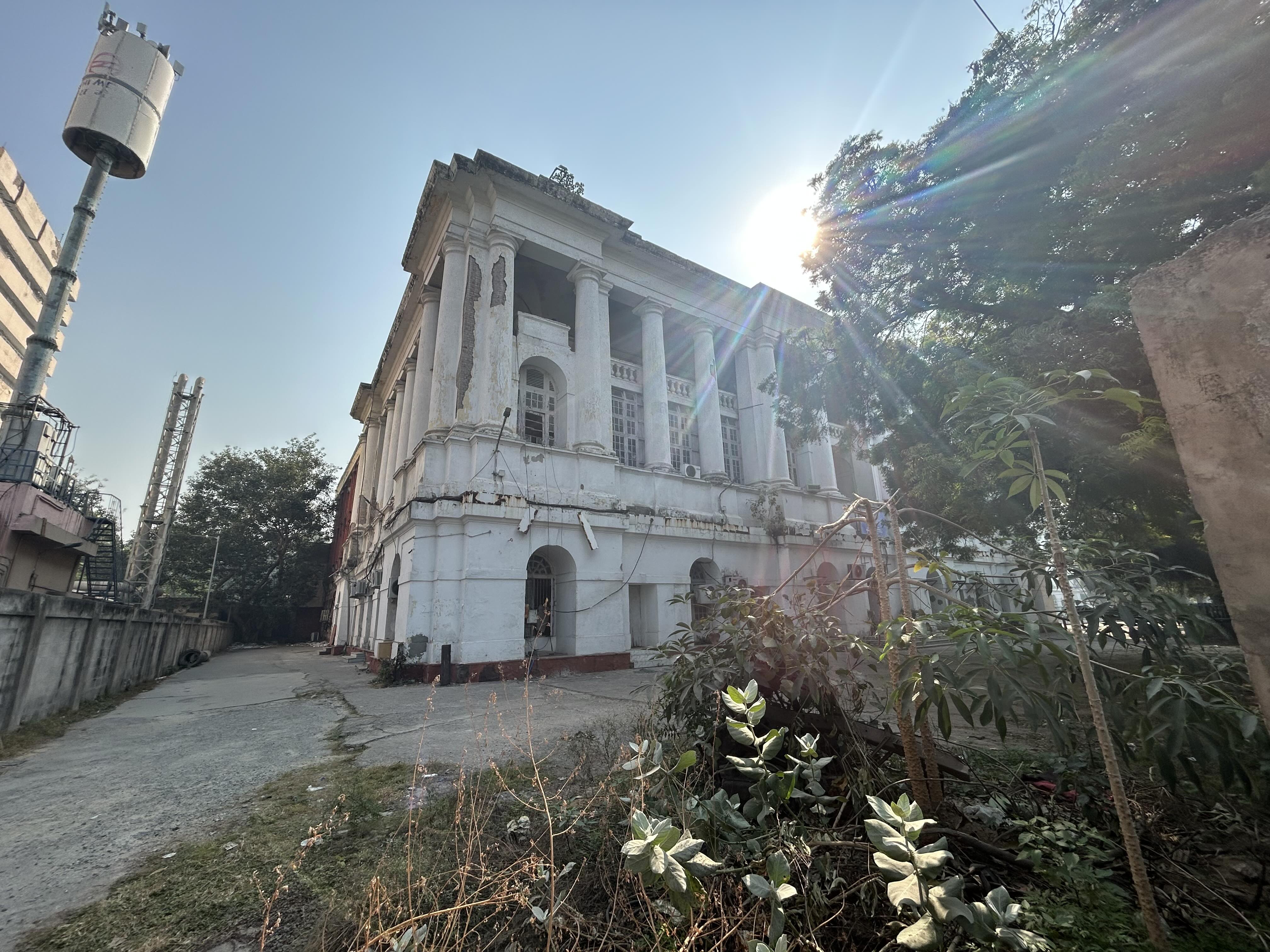
Further down, Eastern Court stood in quiet resignation. Once, along with its twin Western Court, it had housed legislators. While the Western Court still serves as an MPs’ hostel, the Eastern Court was converted into offices for the Post and Telegraph Department. The building’s fading grace seemed to mirror the slow decline of the postal era itself — a reminder that communication, too, has its ruins.


Temples, Protests, and Time

Our next stop was a small, almost hidden temple of Batuk Bhairav, located behind Jantar Mantar. It once formed part of the same complex. We often forget that the land the British chose for their capital wasn’t empty — it was dotted with villages, shrines, and habitations. A sizeable portion belonged to the Maharaja of Jaipur, which is why this temple is still maintained by the Rajasthan government.

As we neared Jantar Mantar, the sound of chants grew louder. Protesters were gathered near the monument, many nibbling at roadside snacks between slogans. I’ve always wondered how this spot became India’s favourite protest site — perhaps that’s a story for another walk.


At Jantar Mantar — and Beyond

Jantar Mantar itself needs no introduction. The site, once neglected, was restored by the British. Its sandstone instruments, though outpaced by modern technology, remain astronomical marvels — precise, poetic, and quietly monumental.

The walk ended, but the city’s spell didn’t. I decided to take a slight detour to buy shoes. After trying several shops, I discovered that none had my size — everything was meant for larger feet.

So much for the saying, “Good things come in small packages.” The package, alas, still needs shoes.


Epilogue: The City as a Companion

Delhi often feels like a living palimpsest — each layer of its architecture, every old signboard, a trace of time refusing to fade. That morning’s walk wasn’t just a lesson in history or urban design; it was a quiet reminder of how cities hold our stories long after we’ve moved on.

Walking through Delhi, I wasn’t just revisiting its streets — I was revisiting myself, the twenty-something with coffee in hand and dreams in her eyes, finding independence one Connaught Place lunch break at a time.