After two days of endless running around, I slept like a log. No one woke me up—or perhaps I was simply too tired to hear anything. When I finally opened my eyes, I realized with a jolt that the crucial ritual of Kolabou Snan was to take place that morning. Had I overslept and missed it?
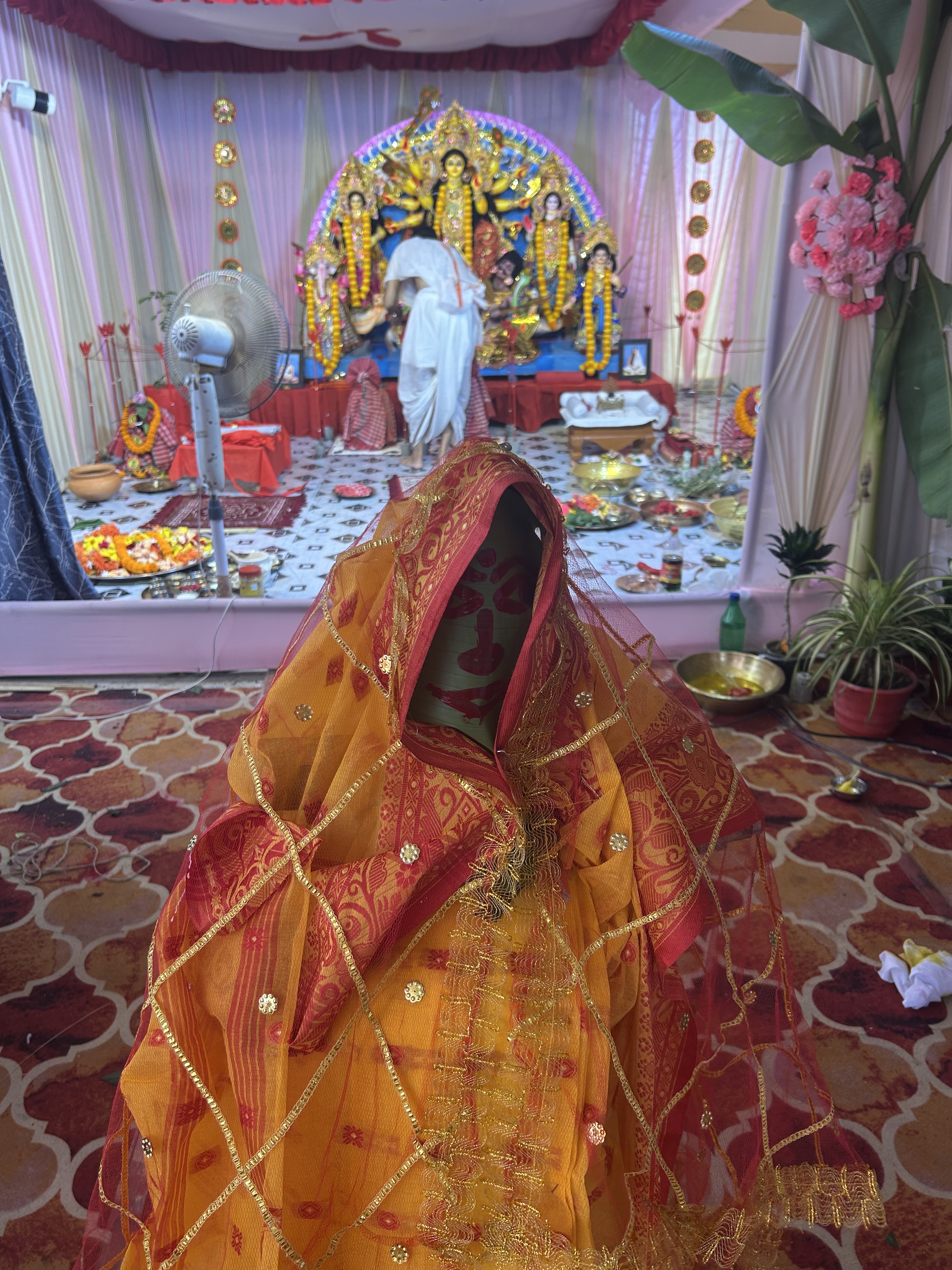
Half in panic, I rushed towards the puja mandap, only to find that the ritual was just about to begin. Relief washed over me. This is the very first ritual of Saptami—the bathing of the kola bou, the banana plant that is ceremoniously transformed into a symbolic form of the Goddess.

With elaborate chanting, the kola bou was bathed. What fascinated me most was the next step—draping a saree around the plant. I don’t think I had ever seen this ritual so closely before. A face was drawn on a fresh banana leaf (kola pata), carefully placed, and the saree was adjusted. With the aanchal gracefully covering her head, there stood before us a new form of Maa, so simple yet so divine.
But there was little time to linger—pushpanjali was at 10 a.m. and the house was abuzz with last-minute preparations. My two nieces, brimming with excitement, had decided they must wear sarees for the offering. The problem? They had no idea how to drape one. One of my uncles insisted that his granddaughters must do pushpanjali in saree, and suddenly I found myself cast in the role of saree-dresser. Their hurried, uneven attempts soon gave way to my hands pulling pleats and adjusting pallus—just as my elders once did for me. It was one of those tender, everyday moments that define a Bengali household.

The day flowed on with arati, bhog, laughter, and photo sessions. But the evening held a special thrill—the dhanuchi nach. A clay pot was lit, smoke curling upwards in the mandap, the rhythmic beat of the dhol filling the air. As a child, I never had the chance to try the dhanuchi nach, living too far from community pujas. This time, something inside me stirred. I picked up the earthen pot, still uncertain of my two left feet. Yet, in front of Maa, hesitation melted away. The beat took over, and before I knew it, my steps found rhythm, my body moved in sync with the drum, and I was dancing—smoke, fire, and devotion all mingling in that fleeting moment.


Saptami was a day of rituals, but more than that, it was a day of family, of shared laughter, of discovery and tradition blending seamlessly. It reminded me that Maa doesn’t just come home in the idol—she arrives in these lived moments of togetherness, joy, and courage.

Indeed, Maa does wonders.
 Jajabor