Tag Archives: durgapuja

When Maa Comes Home – Navami

Navami dawned with a quiet urgency. It was the last full day Maa would be home with us, and I wanted to soak in every moment. So, dressed in my puja finery, I made my way to the mandap, where the goddess seemed to hold court amidst fragrance, light, and laughter.
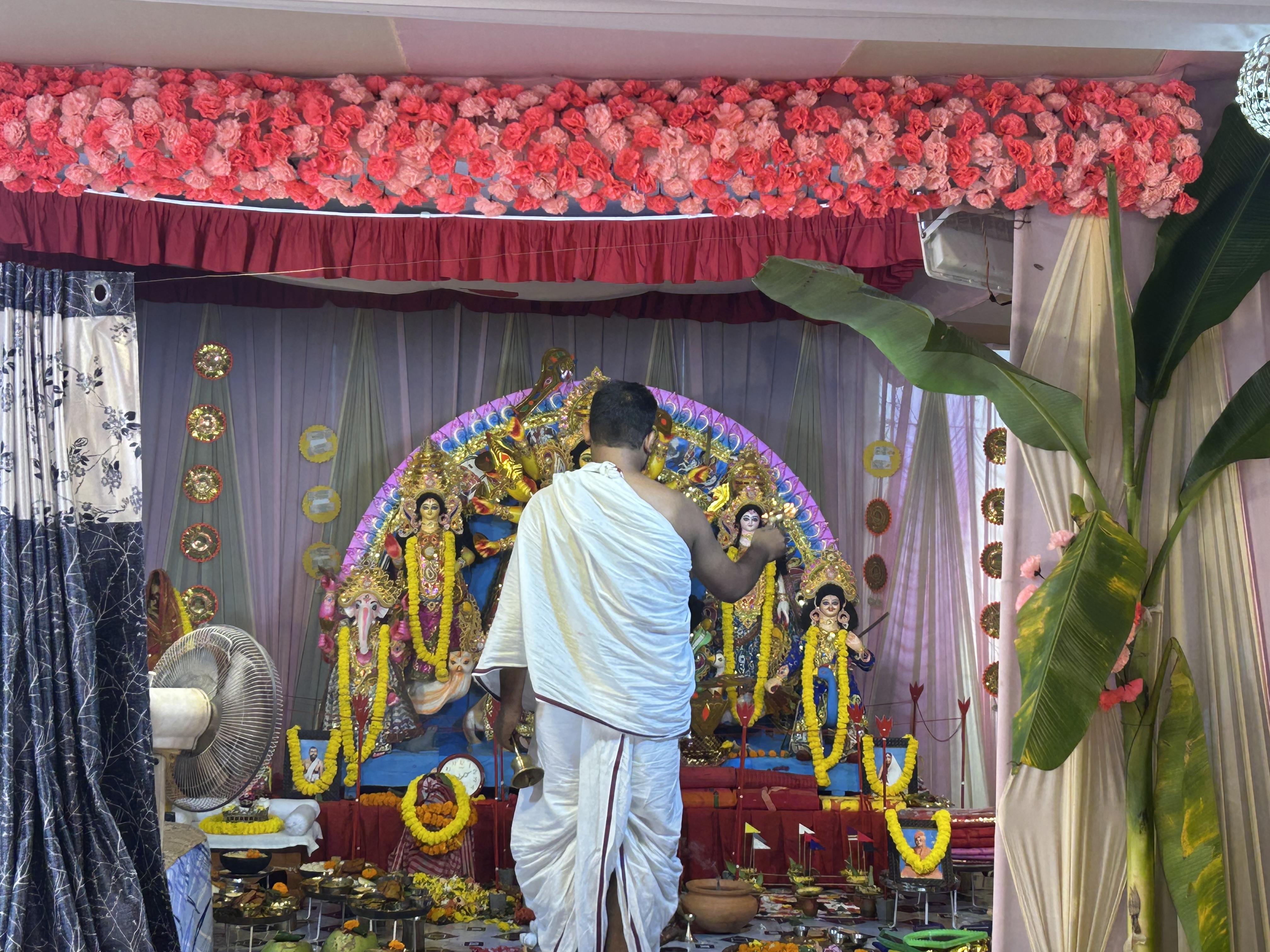
Durga Puja, for Bengalis, is more than a festival. It is the homecoming of a daughter. Every offering, every ritual, every sound and flavor carries the symbolism of how a daughter is pampered when she returns to her parental home. Navami, coming after the solemnity of Ashtami and the intensity of Sandhi Puja — when the goddess is believed to have slain Mahishasur — is lighter in mood, filled with a sense of celebration but also tinged with an approaching farewell.


Discoveries at the Mandap

As I entered, something unusual caught my eye — a neatly made bed placed at the mandap. Curious, I asked my sister-in-law, who explained it was an offering to the goddess. Like a daughter who has come home after a long time, she must be cared for, made comfortable, and indulged. Standing there, I realized how much one can learn by simply watching the rituals closely: the goddess is not distant; she is family.

The air vibrated with familiar sounds — the dhak, the clash of kasor, the rhythmic ululations, and the deep resonance of the shankh. Each day I had tried, and failed, to blow the conch shell. But on this morning, almost to my surprise, the sound emerged clearly. It was fleeting, for when I tried again, it eluded me. My aunt, of course, then stepped in to demonstrate her flawless skill, as if reminding us that these rituals are not just sacred — they are also playful, communal, full of laughter and learning.


The Sacred Fire

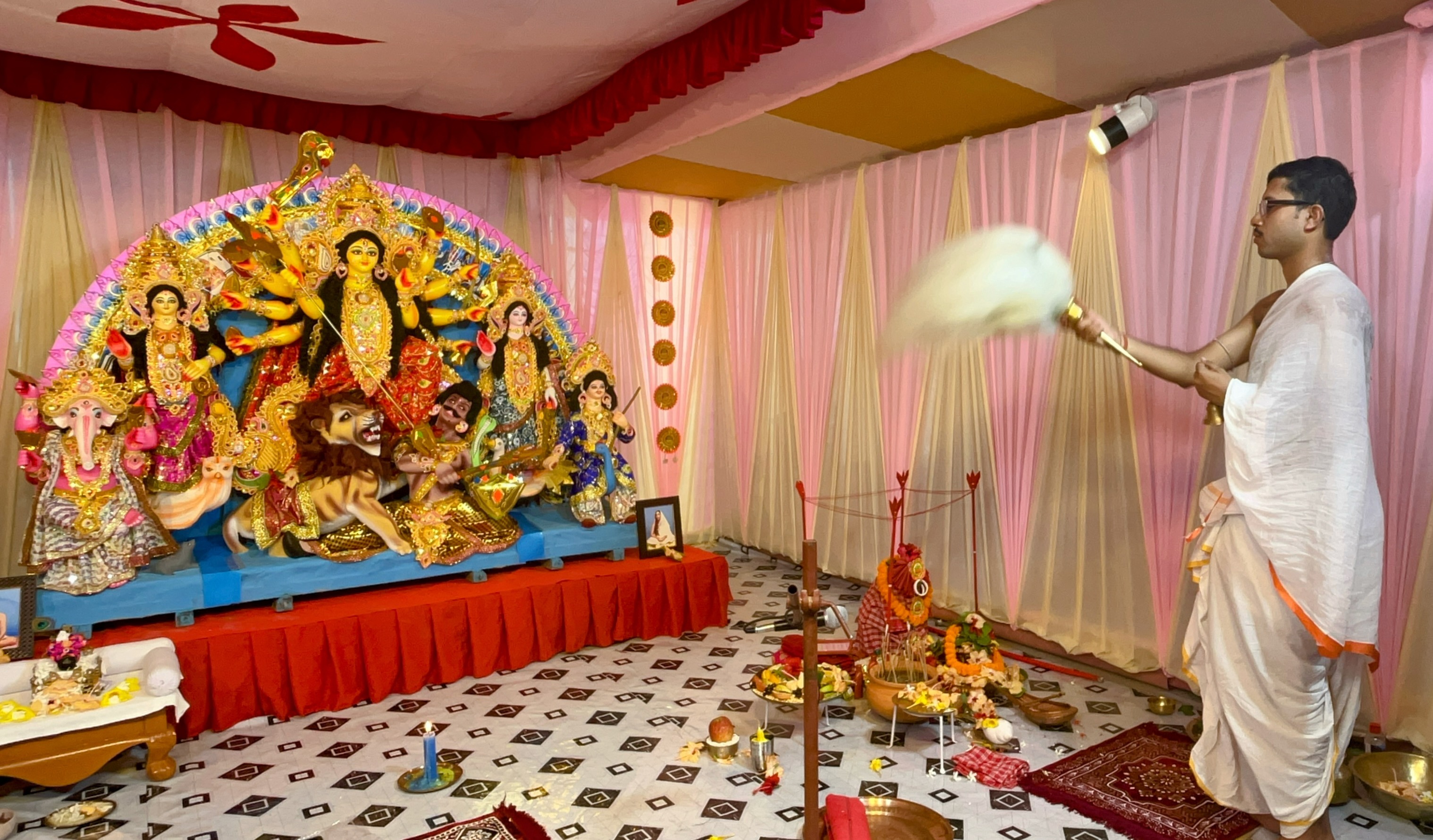
After the arati and pushpanjali, preparations began for the havan. A metal kund was filled with sand, rangoli patterns were drawn, and small wooden twigs were stacked carefully before being lit with the chanting of shlokas. Watching my family gather — the elders with folded hands, the younger ones capturing the moment on their phones, and children gazing on with wide-eyed curiosity — I felt how rituals create a tapestry of generations. Each of us participates differently, yet all are bound by the same flame, the same prayer.
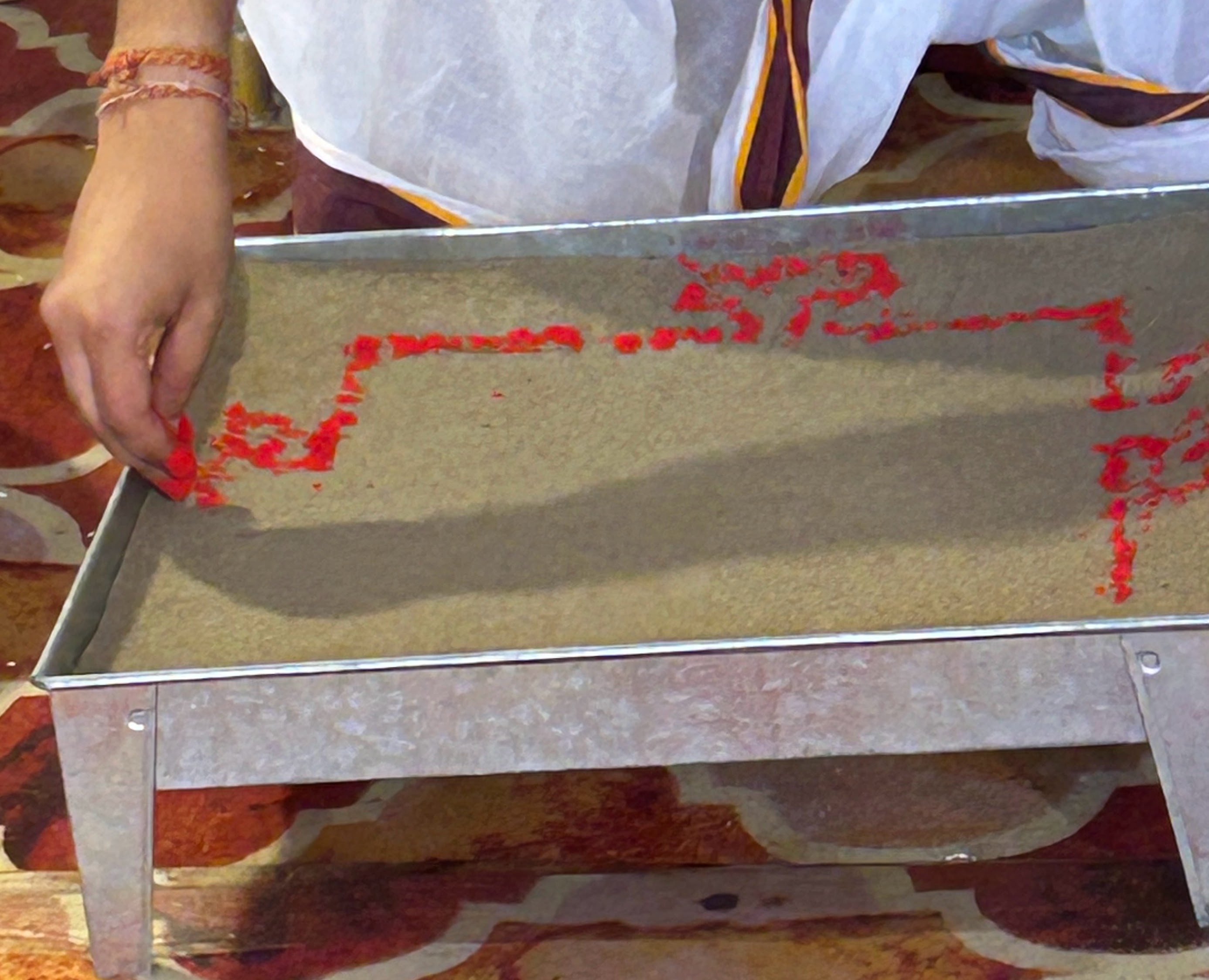
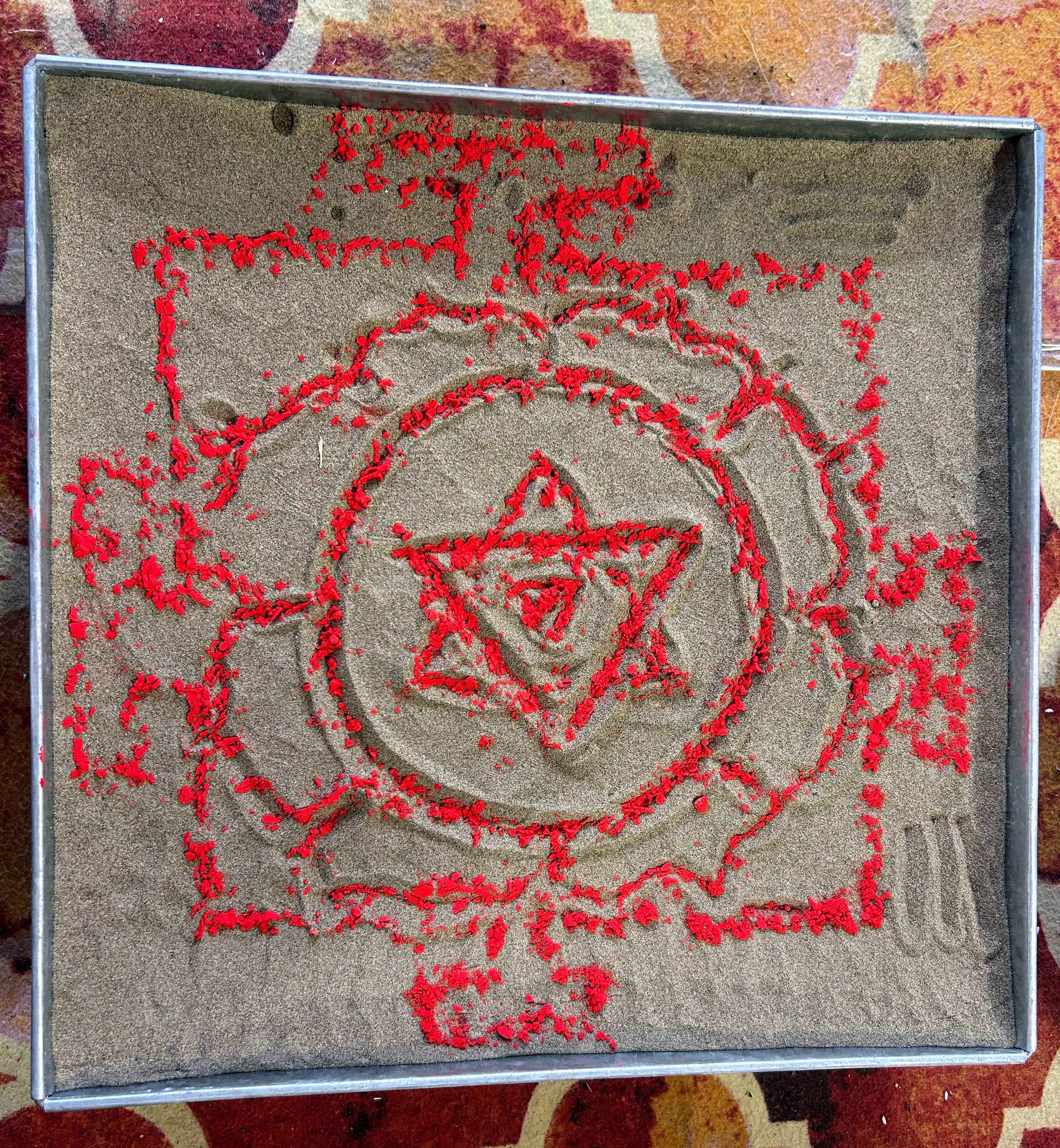
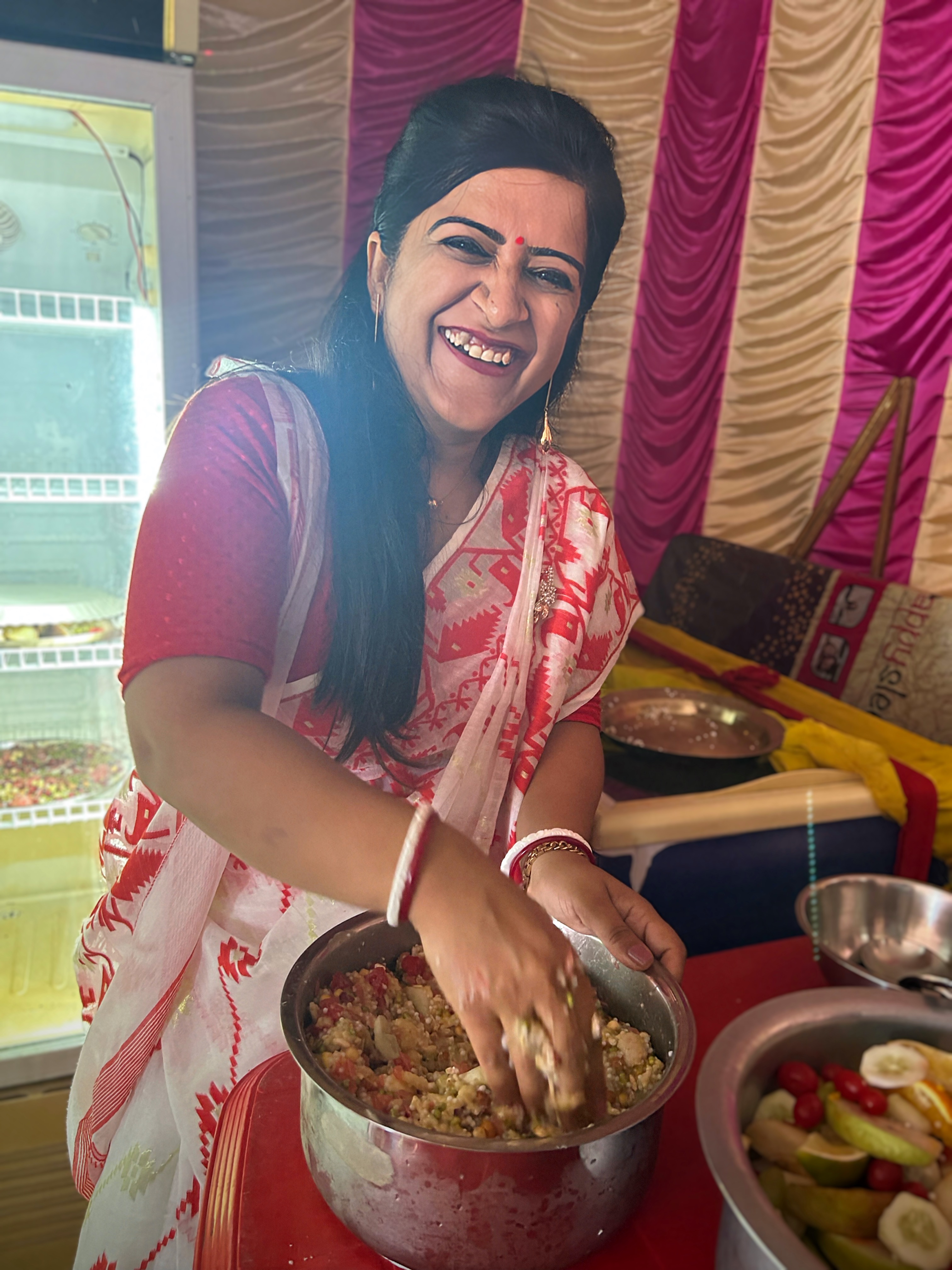
The havan stretched into the afternoon, its rhythm slow and meditative, until the sacred fire gave way to another ritual no less holy for Bengalis — the bhog. Plates of steaming prasad were served, and we descended with eagerness. With a puja at home, every meal was vegetarian, but the variety revealed the richness of Bengali vegetarian cuisine — a tradition often overshadowed by our famed fish and meat dishes. Each bite was a reminder that food, too, is devotion.


The Evening Glow

As twilight approached, the mood softened. Navami evenings are bittersweet. They are filled with joy, for Maa is still with us, but also with an unspoken sadness that the festival is nearing its end. The dhunuchi dance, the laughter, the casual adda — everything seemed brighter, livelier, because we knew it would soon be over.

Durga Puja is not just about rituals. It is about the coming together of family, the blending of the sacred and the everyday, the music and the meals, the stories and the silences. It is about homecoming — not just of the goddess, but of all of us, returning to roots, to belonging, to shared memories.


Carrying the Light Forward

When Maa comes home, everything brightens. And yet, as her departure nears, I realize that the beauty of Durga Puja lies not only in her presence but also in the light she leaves behind. The mandap, the dhak, the laughter of family, the taste of bhog — all of it becomes memory and meaning, carried within us until the next autumn when the daughter returns again.

Durga Puja, in its essence, teaches us that joy and impermanence walk hand in hand. That even departures are sacred, for they remind us to cherish the moments we have.

And so, on Navami, as Maa prepared to leave, I understood: she never truly goes away.

When Maa Came Home – Ashtami

Last night, word spread through the house: Mangal Arati at 4 a.m. sharp. This was the sacred hour to wake Maa on Ashtami morning. At that hour, someone gently nudged me awake. True to my nature, I turned, muttered something unintelligible, and went back to sleep. I do love my sleep, perhaps too much.

As a child, Ashtami meant a kind of magic. I remember watching clothes, fruits, and sweets being laid out before Maa, offerings that seemed larger than life to my young eyes. Pushpanjali was always the heart of the day—Bengalis in their finest new clothes, palms folded, flowers in hand, chanting in unison. It was a ritual that seemed to stitch devotion and identity together.

This morning, I found myself again in the role of the family’s saree-draper. It’s become an unspoken responsibility: draping pleats for cousins and younger members before the puja begins. Oddly enough, it fills me with joy. There’s a kind of generational continuity in the act—like passing down a secret language without words.

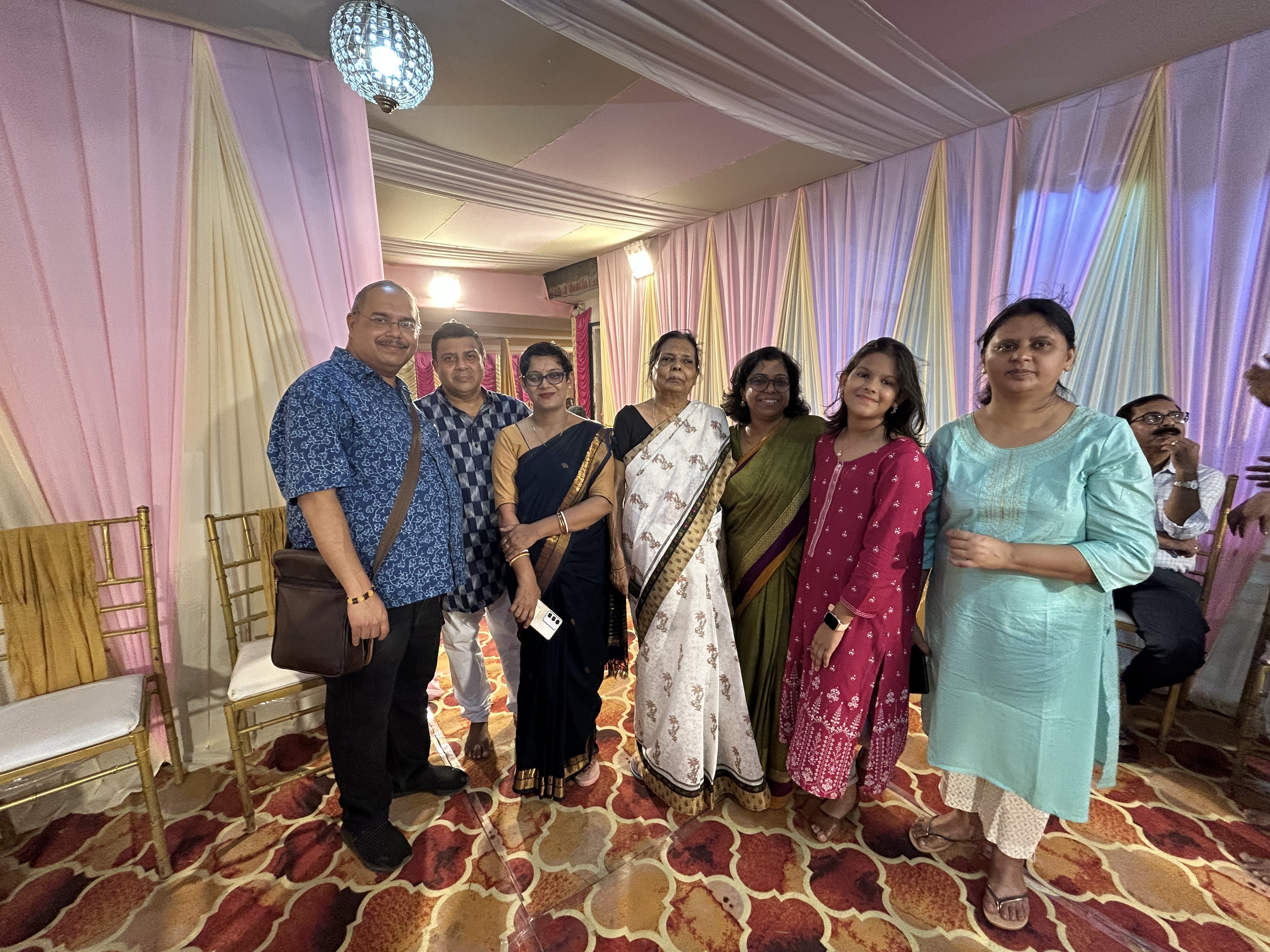
After the prayers came the easy camaraderie: photos snapped in half-serious poses, bursts of adda, the gentle chaos of laughter filling corners of the home. Lunch was a feast, as always, with a steady stream of guests braving not just the festive crowd but also the sweltering heat of the afternoon.

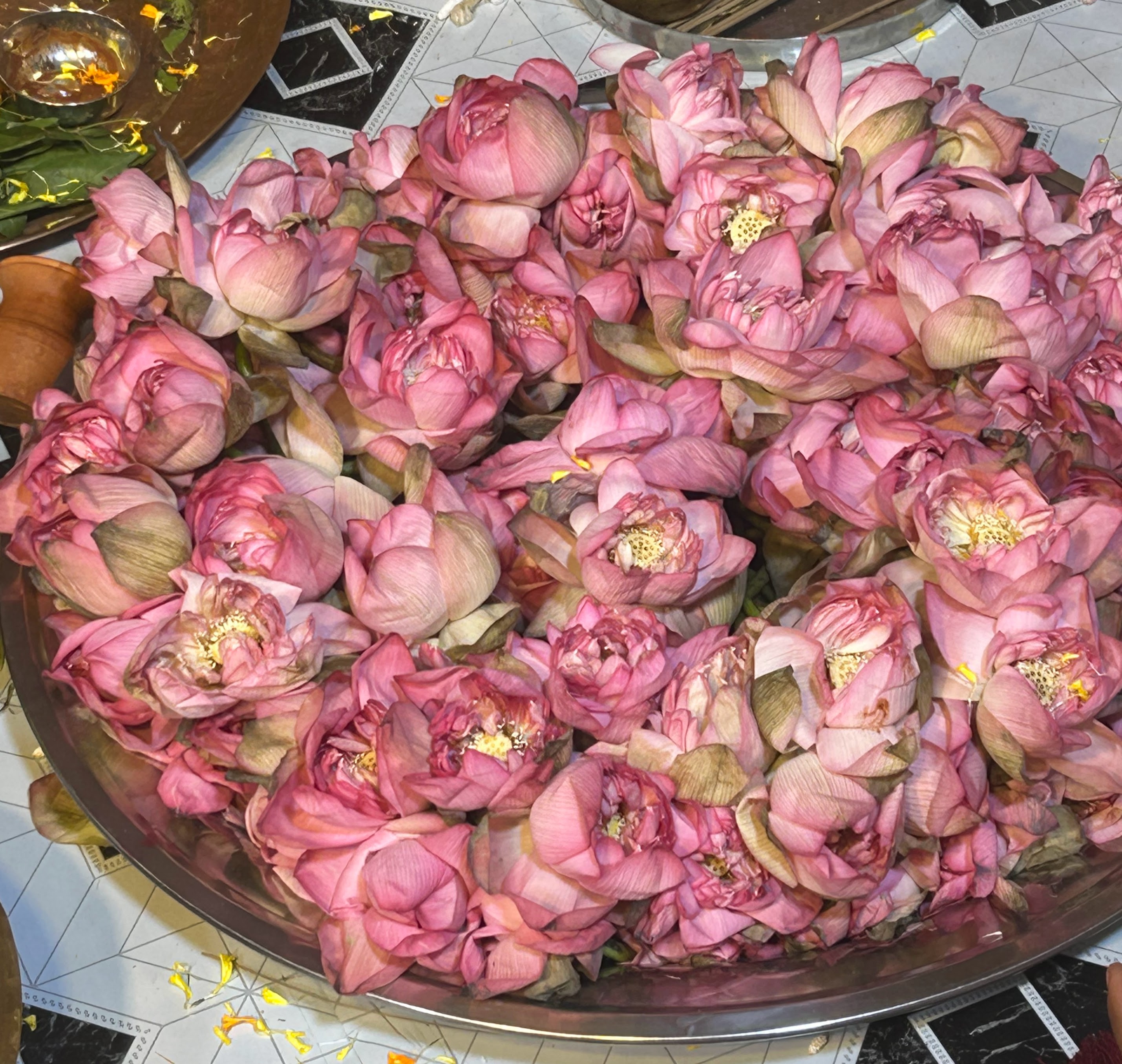
But it is the Sandhi Puja that transforms the day. That threshold moment when Ashtami gives way to Navami, when the sacred is marked with 108 lotuses and 108 diyas. This year, nature seemed to conspire with the ritual. Just as we prepared, a thunderstorm rolled in—lightning tearing across the sky, thunder echoing like a drum, and rain draping the world in cool relief.

Then, in fresh clothes (yes, yet another round of changing), the family gathered again. One by one, the diyas were lit. There is something indescribably moving about watching flames multiply in the dark, each light a small prayer, a small connection, and doing it together as a family turns it into something eternal.

And just like that, two days of Puja slipped past in a blink. The festivities, the laughter, the rituals—they always feel too brief. Yet they leave behind something lasting. The memory of a saree draped, a diya lit, a storm cooling the air, and the simple joy of being together.

These moments remind me that festivals are not just about tradition or ritual—they are about memory-making, about weaving together the ordinary and the sacred into stories we carry with us long after the drums fall silent.


Maa Comes home: Sashti


The day began at sunrise. My brother woke us up, reminding us that Chandi Puja was scheduled to start at 6 a.m. The quiet of the morning soon gave way to the rhythmic chants of shlokas, and with that the day unfolded into one steeped in devotion, tradition, and togetherness.

The Young Purohits: Tradition in New Hands
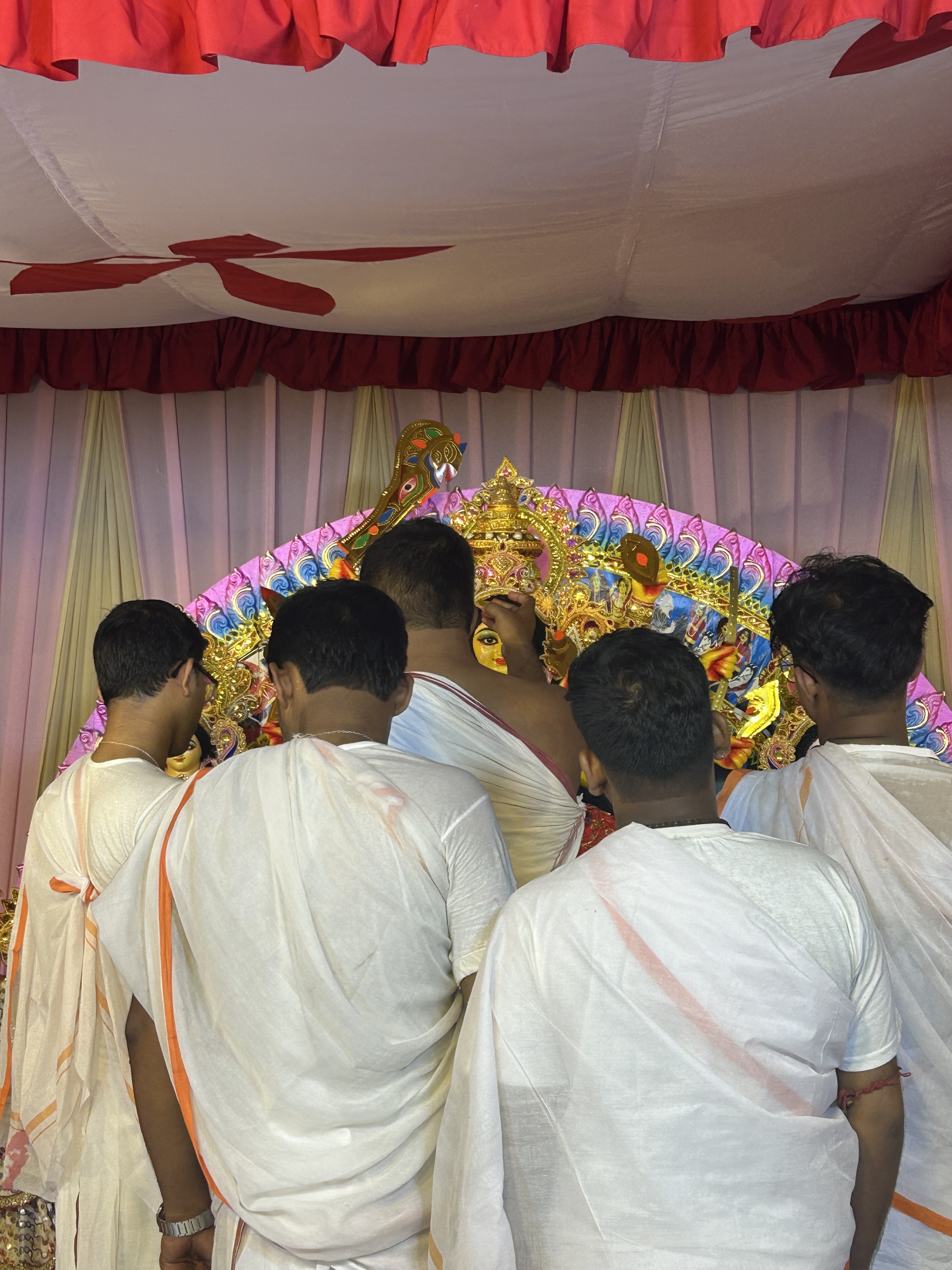
This year’s puja carried a unique touch — the rituals were conducted by a group of young purohits in their twenties. It was both heartening and reassuring to watch tradition being carried forward so earnestly. What struck me most was a young Purohit, a student doing his masters, reciting the Chandi Path with impeccable diction and clarity.

As I listened, memories came rushing back, of my childhood, when my eldest uncle would perform the Chandi Path. That sound had long been my only reference for this sacred recitation. Watching the next generation step into that role was a reminder of how rituals survive through continuity, transforming into lived heritage.

The Sacred Offering: Bhog-er Prasad
Around noon, it was time for the bhog-er prasad. This is not a meal in the conventional sense but a divine mash-up of everything offered to Maa — from lemon to Anna bhog to payesh. The mix, though unusual, always tastes heavenly, not only for its flavors but because it is sanctified as Maa’s blessing.

Evening Rituals: Sashti, Kola Bou and Pran Pratistha
The evening brought with it the rituals of Sashti and the preparation of Kola Bou, symbolizing the nine sacred plants or Nabapatrika. Kola Bou reinforces our eternal connection with nature, reminding us that the festival is as much about celebrating divinity as it is about honoring the earth that sustains us. This was followed by the elaborate ritual of Pran Pratishtha, when life is invoked in the idol.

Beyond the Mandap: The Joy of Togetherness
But puja is never just about rituals. It is about everything that happens around the rituals — the pranks, the eagerness to dress up, slipping back into the cool AC room after braving the heat of the mandap, and the endless adda sessions that spill over from morning to night. These moments are what bind families and generations, adding warmth to the devotion.

A Day to Remember
Chandi Puja is said to be an integral part of Durga Puja, yet for me it has always carried the memory of one elder’s voice, one family moment. Experiencing it in this way — led by the young, shared in the company of many, and accompanied by laughter and joy — made the day unforgettable.

Durga Puja is not just worship; it is living culture. It is where tradition meets memory, devotion meets joy, and Maa comes home in a thousand little ways.

When Maa Comes Home – Panchami

Durga Puja is special for every Bengali. But this year, it turned extra special. This year, Maa came home.

What does it feel like when Maa comes home?
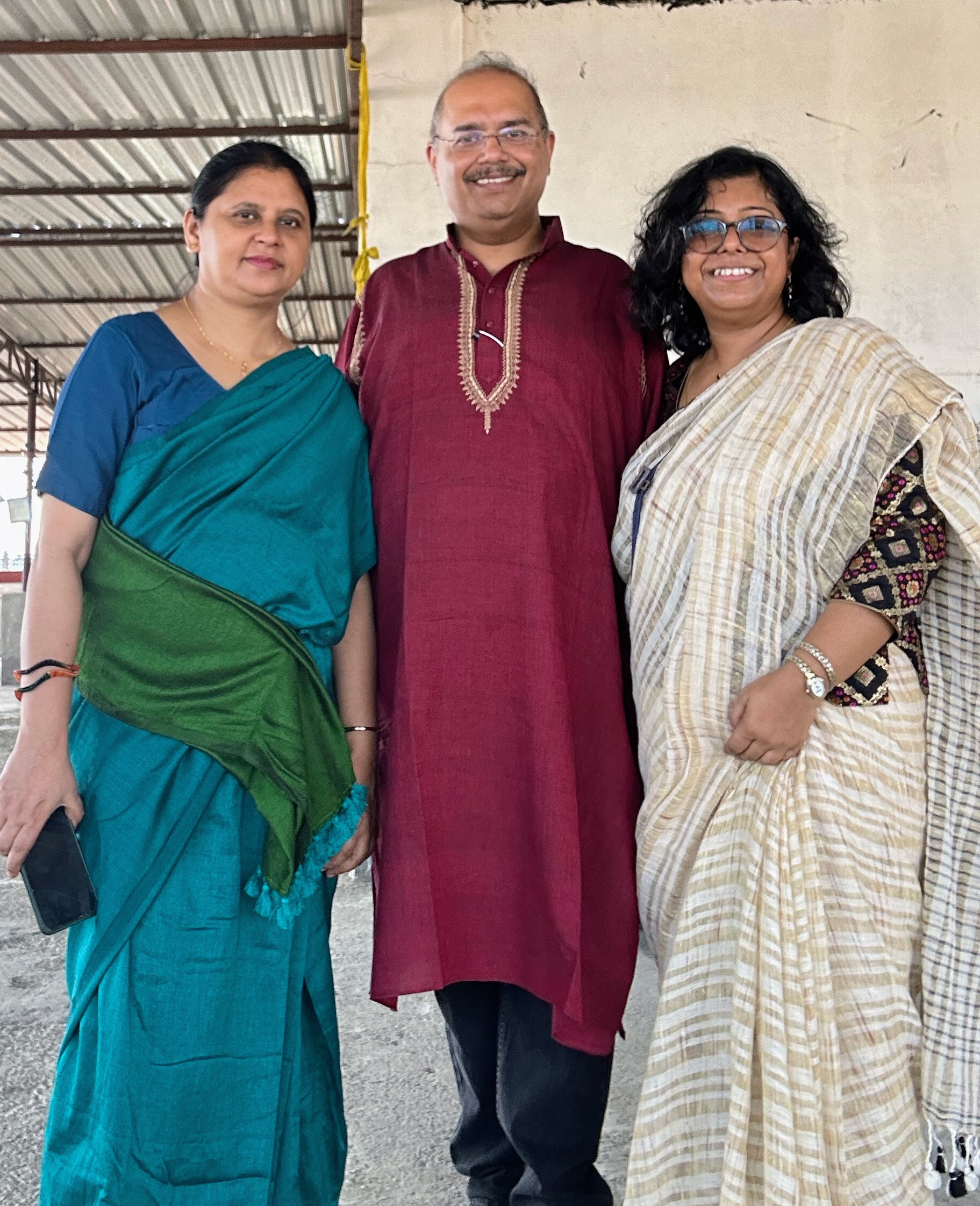
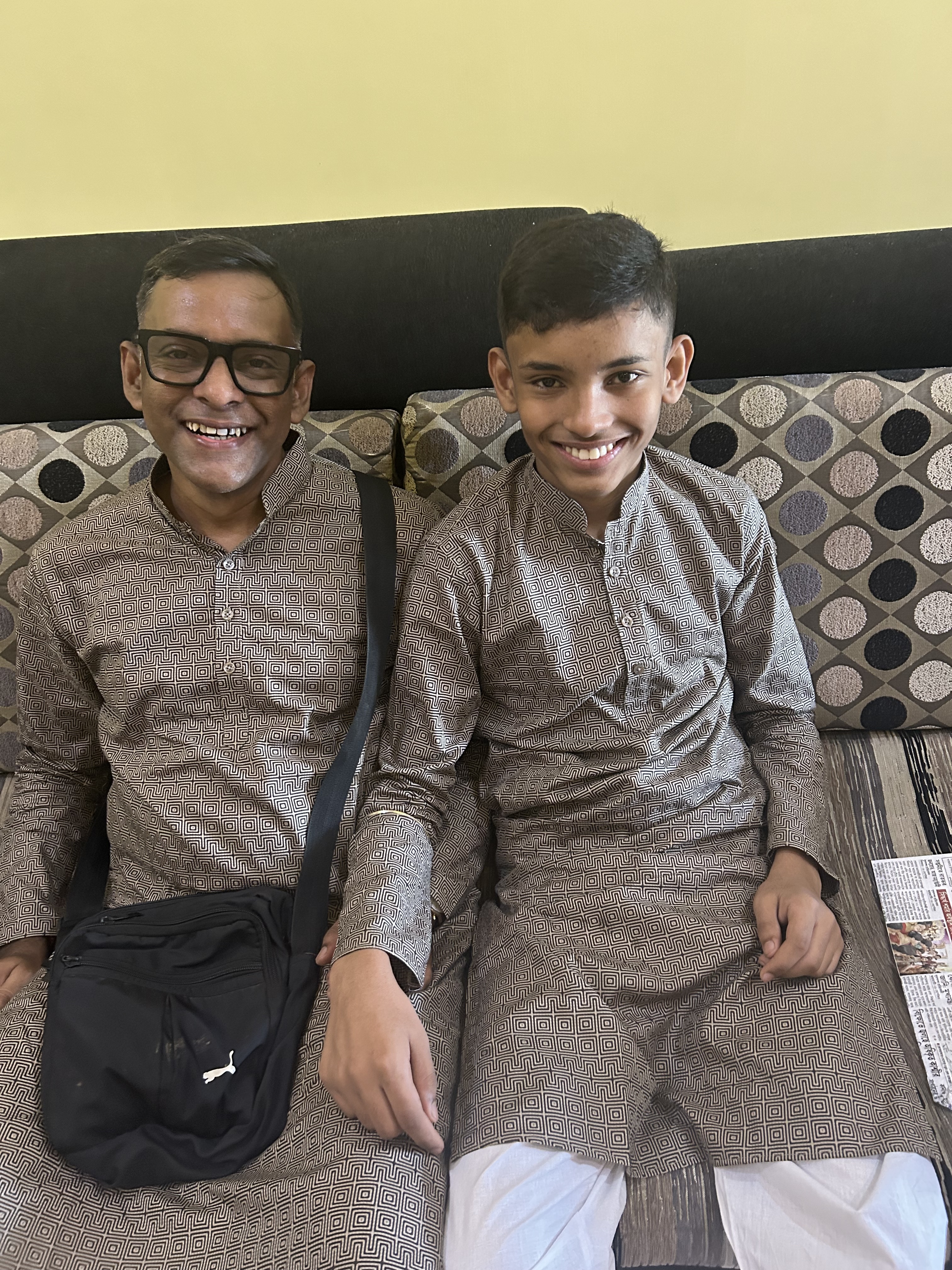
It feels like months of planning and tons of shopping. It feels like chaos that somehow turns into joy. It feels like generations coming together—airport meetups filled with hugs, endless food, dressing up in silks and kurtas, and continuous adda sessions that carry through the night.

For me, Durga Puja has always been a community festival. My most vivid memory was from Kolkata, when our apartment complex organised the Puja—collective, chaotic, and deeply rooted in togetherness. I had only read about ghar-er pujo—Durga Pujas held at home—or seen them recreated in films. So when my cousin decided to organise one this year, I knew I had to be there.

And let me tell you, to call it “challenging” is an understatement. Durga Puja is often described as a Rajashik puja—one that kings performed. And here, a family carrying on this grand tradition at home.

I woke up before dawn, ran across airports to catch connecting flights, and landed in the sweltering heat and humidity of Silchar. It was Panchami—the fifth day of Navratri—and time for the first ritual, Bodhon, where Maa Durga is ceremonially invited.

The evening was filled with frantic activity when a power cut threatened to plunge everything into darkness. Out came our mobile phones, lighting up the puja mandap in a glow both modern and makeshift. But Maa, it seemed, wasn’t amused by this arrangement. The power cut lingered, and finally, generators whirred to life, bathing the mandap in light once more. Just when we thought we would melt away in the humid heat, the electricity returned—as if Maa had decided it was time to ease our troubles.

And then it began. The sounds of the conch, ulu, and dhak filled the air, announcing what our hearts already knew—
Maa had come home.