Tag Archives: DelhiDiaries

A Walk Through Tughlaqabad: Heritage, Haze, and the Strange Comfort of Continuity

It was during a birthday celebration for a senior colleague that the conversation inevitably drifted to Delhi’s abysmal air quality. Amid complaints about AQI, someone turned to me and asked, “Aren’t you the one who posts about heritage walks in the city?” It was an amused, almost affectionate observation. The history enthusiast in me, forever trying to nudge colleagues into discovering the layered stories of Delhi, felt seen.

The next question followed immediately: “Are the walks held even in this pollution?”
I nodded. Yes. Many of them, I said, lead us to some of the city’s most extensive green patches, pockets of nature where Delhi briefly remembers the ecology that once supported its many empires.

Returning to Tughlaqabad

This weekend’s INTACH walk took me to Tughlaqabad, one of Delhi’s seven historical capitals. As I approached the massive fortifications, I found myself slipping back to another winter afternoon, possibly January 2006, when a friend and I first tried to explore Tughlaqabad. I had just bought my first car. We parked casually at the entrance and wandered inside, unaware of what awaited us.

The fort walls that day were crowded with groups of young men. There were no guards in sight. Two women alone in an unfamiliar, isolated space, we exchanged a brief glance, turned around, and left within minutes. That aborted visit stayed with me.
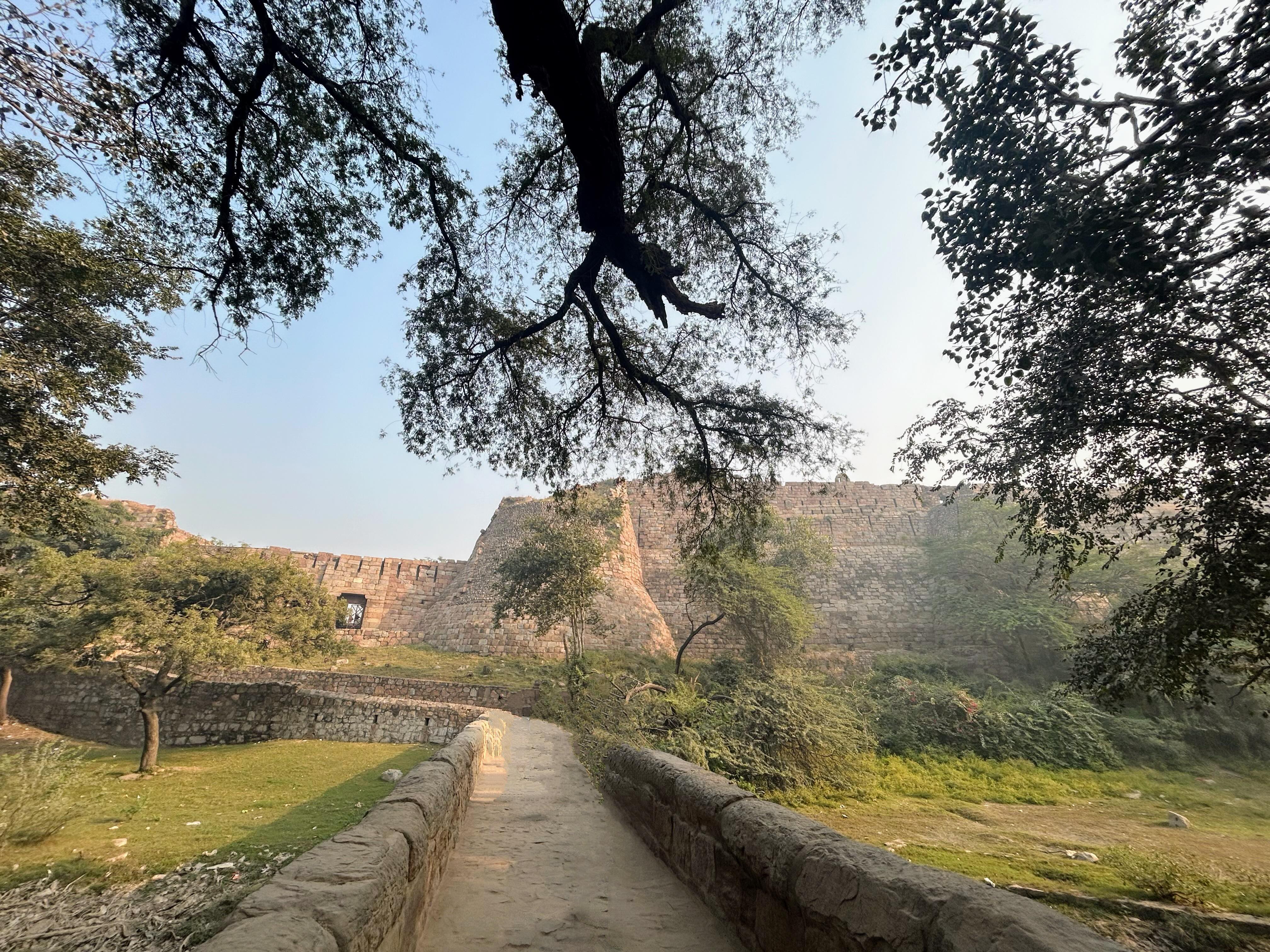
This time, everything was different. Surrounded by fellow history enthusiasts and led by the brilliant Ratnendu Ray, the experience was a complete reversal. We discussed everything from medieval weaponry to the economics of the 14th century, pausing often to take in the scale of Ghiyas-ud-Din Tughlaq’s vision.
Walls Built to Deter Eternity

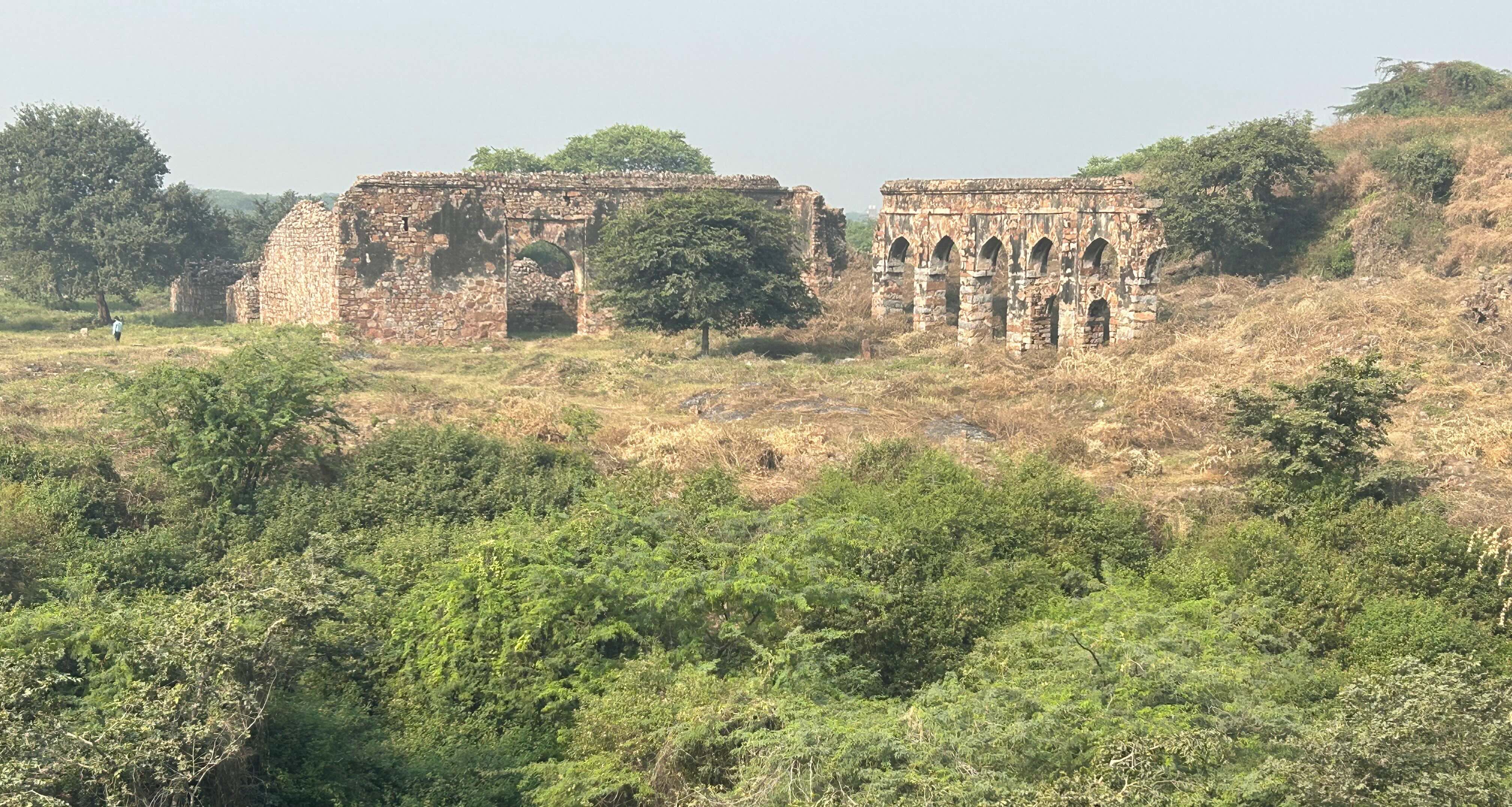
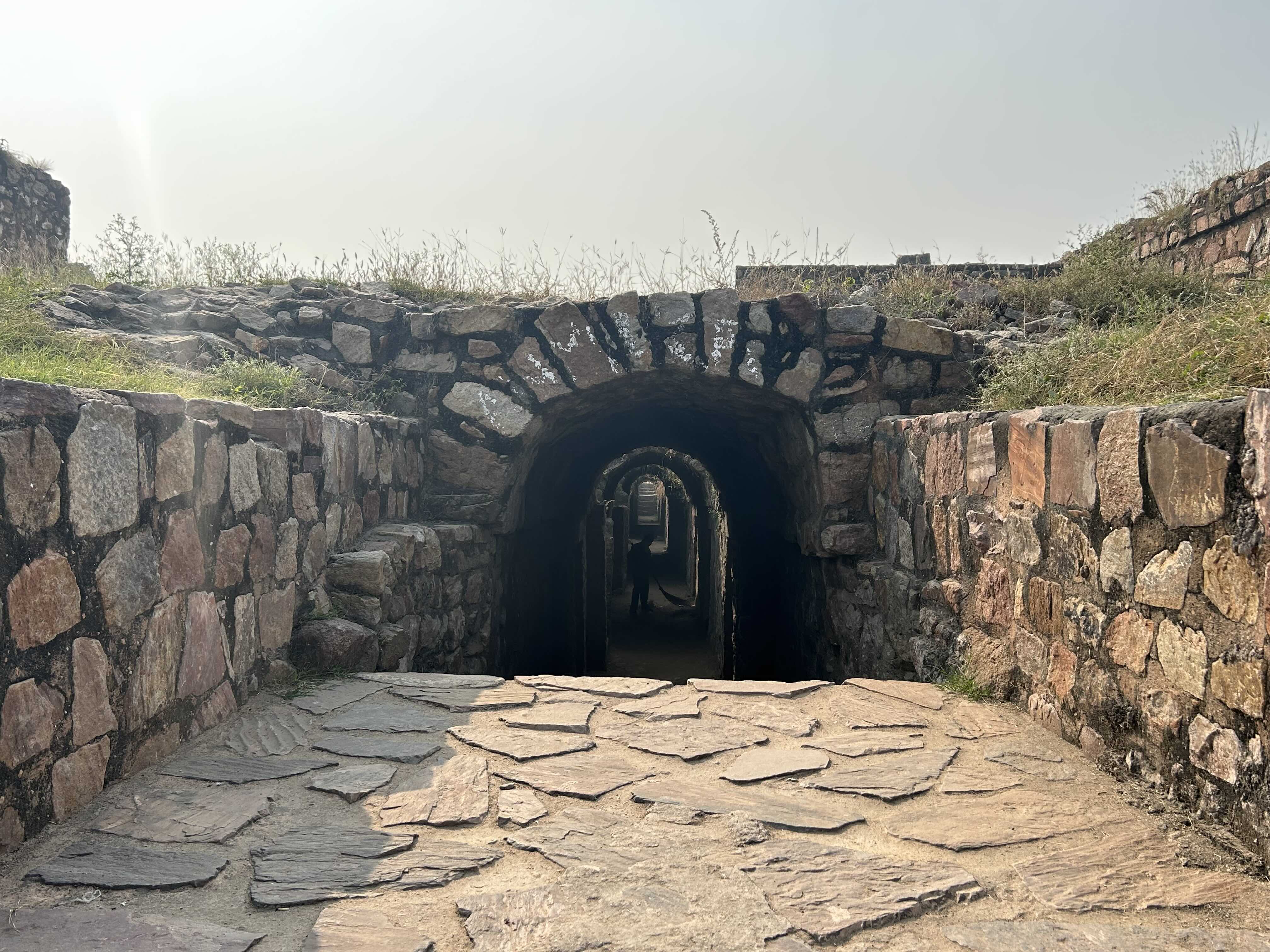
The fort announces its presence long before you reach the gate. Even in their dilapidated state, the enormous stone walls, spanning over six kilometres in a half-hexagonal shape, retain a quiet arrogance. They were once meant to intimidate enemies, withstand sieges, and hold power. Today, they are softened by shrubs, wild grass, and the slow generosity of time.
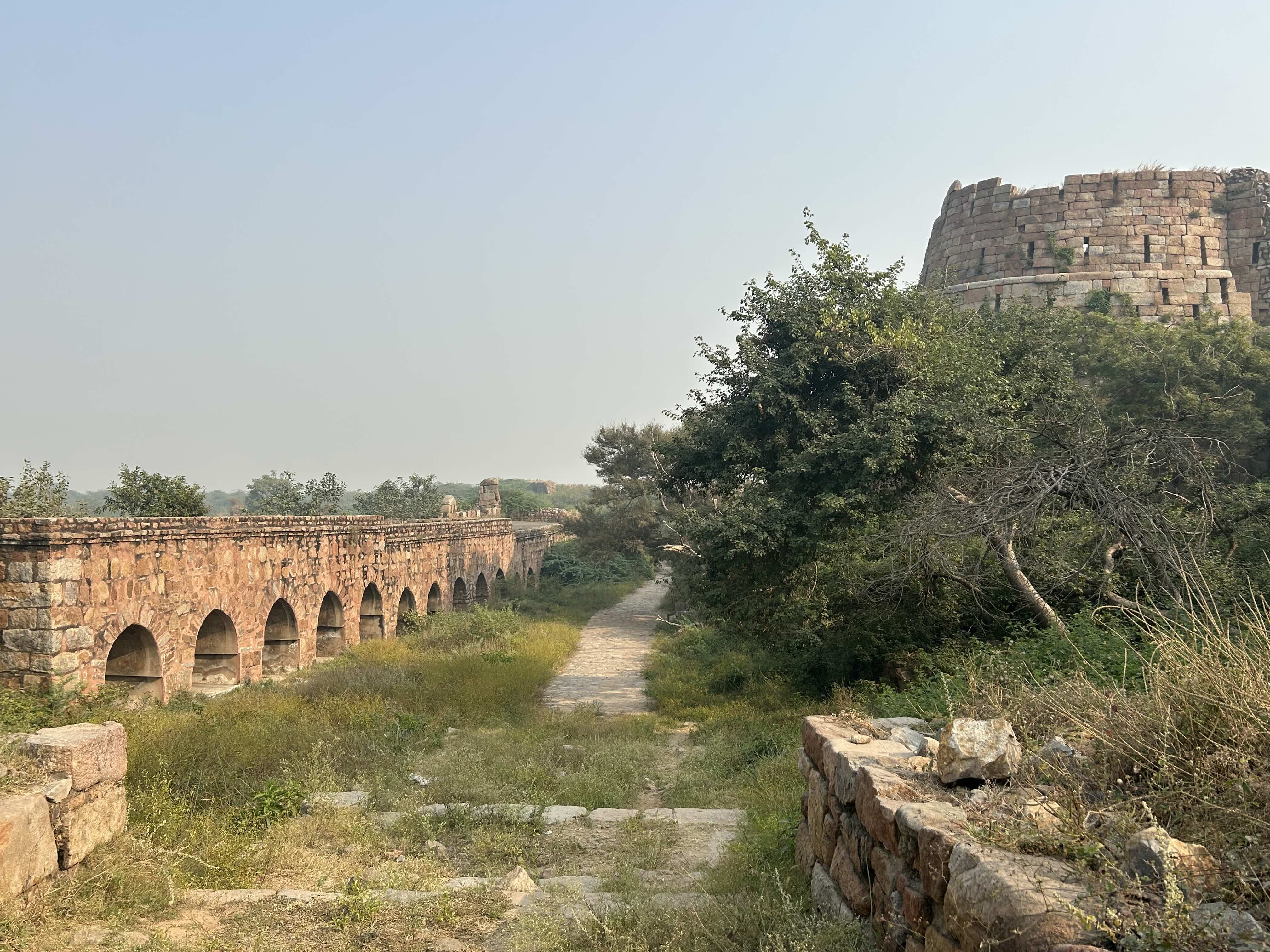
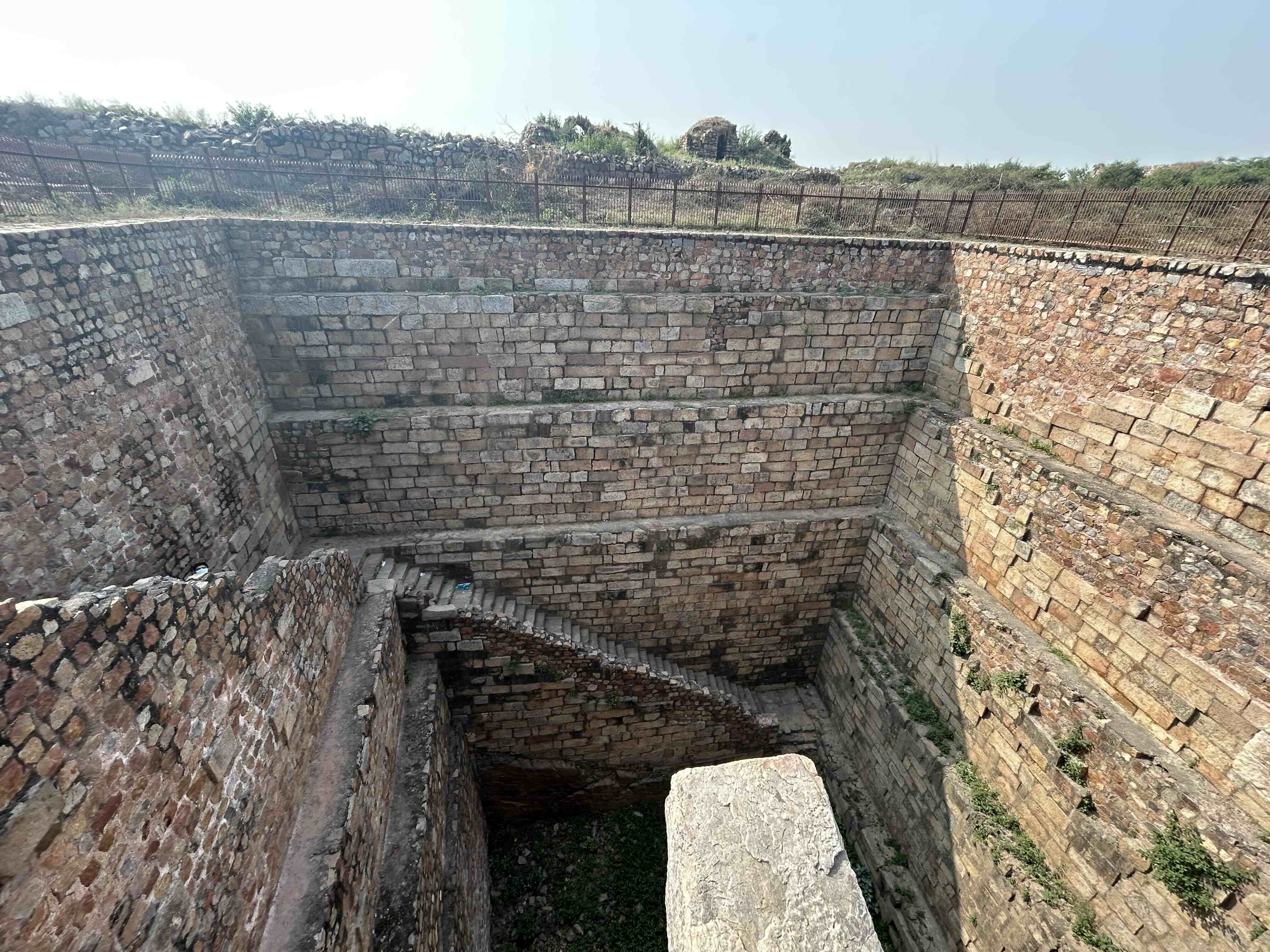
We heard stories of the Tughlaq dynasty, of Ghiyas-ud-Din’s famously strained equation with the Sufi saint Nizamuddin Aulia, and the curse that supposedly doomed the fort soon after its completion. The palace area once had a deep baoli, a hamam, and a small mosque; the walk leader showed us older photographs, and it was sobering to see how much the site has eroded. Even thick, defiant walls cannot withstand the patience of centuries.
Haze Instead of History

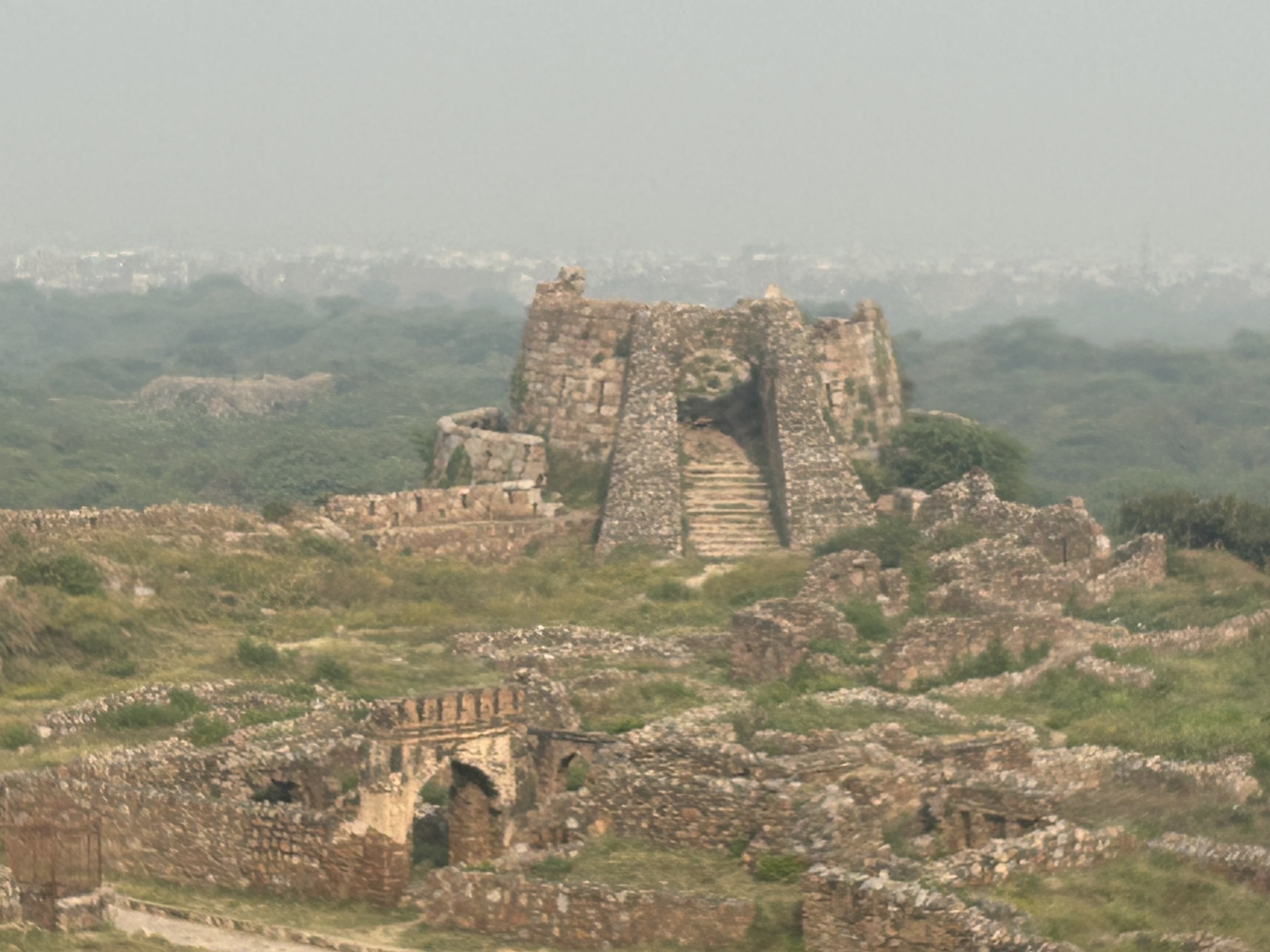
We climbed to one of the highest points for a panoramic view of Adilabad Fort and Nai-ka-Kot. But all we could see was haze—Delhi’s new, stubborn skyline. Even the tomb of Ghiyas-ud-Din Tughlaq, barely across the road, was a ghostly silhouette.

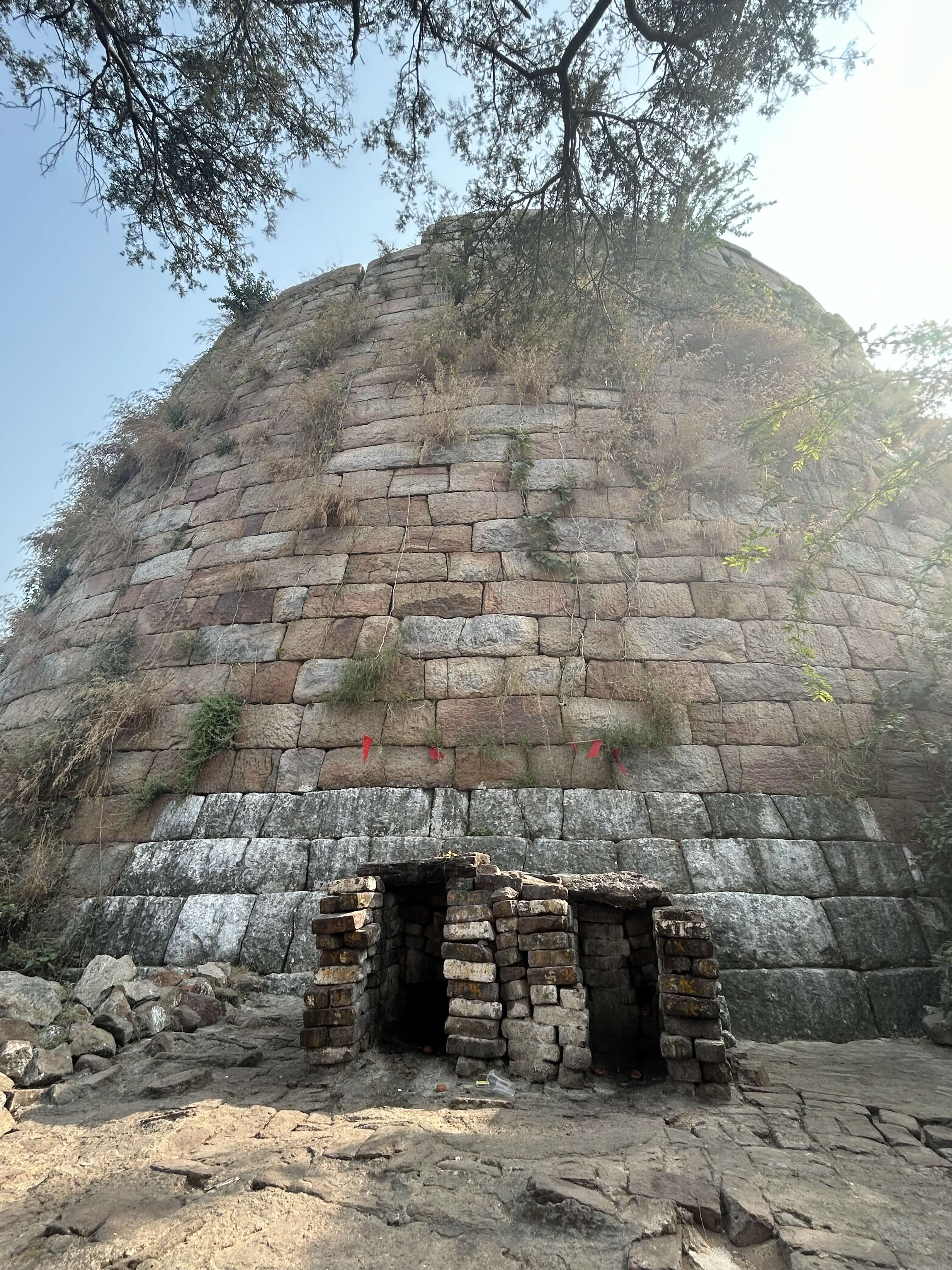
On the way down, we wandered into a quiet corner where rocks lay piled along the fort wall beside a mound of used diyas. A local legend speaks of a pir, revered by both Hindus and Muslims. The fort may have been abandoned by royalty, historians, and tourists at various times, but the local community has gently folded it into their everyday spiritual landscape.
A Tomb in a Garden

Across the road, the ruler’s red-sandstone tomb sits inside an unexpectedly well-maintained, manicured patch of green. It also houses the tomb of a military commander named Zafar. With little historical detail available about him, we found ourselves imagining scenarios that could explain how a commander earned a resting place beside a king.

Driving Home With Impermanence

After more than three absorbing hours, as I drove away, a familiar thought settled in.

Empires rise, rulers command, forts stretch stone by stone toward the sky, and then, quietly, they collapse into stories, legends, and vegetation.

Power is temporary. Architecture is temporary. Even memory is temporary.

And yet, the act of walking through history, of witnessing its ruins with others who care, felt strangely grounding. In a city battling pollution, noise, and restlessness, these remnants remind us that everything is transient, but nothing is ever entirely lost.
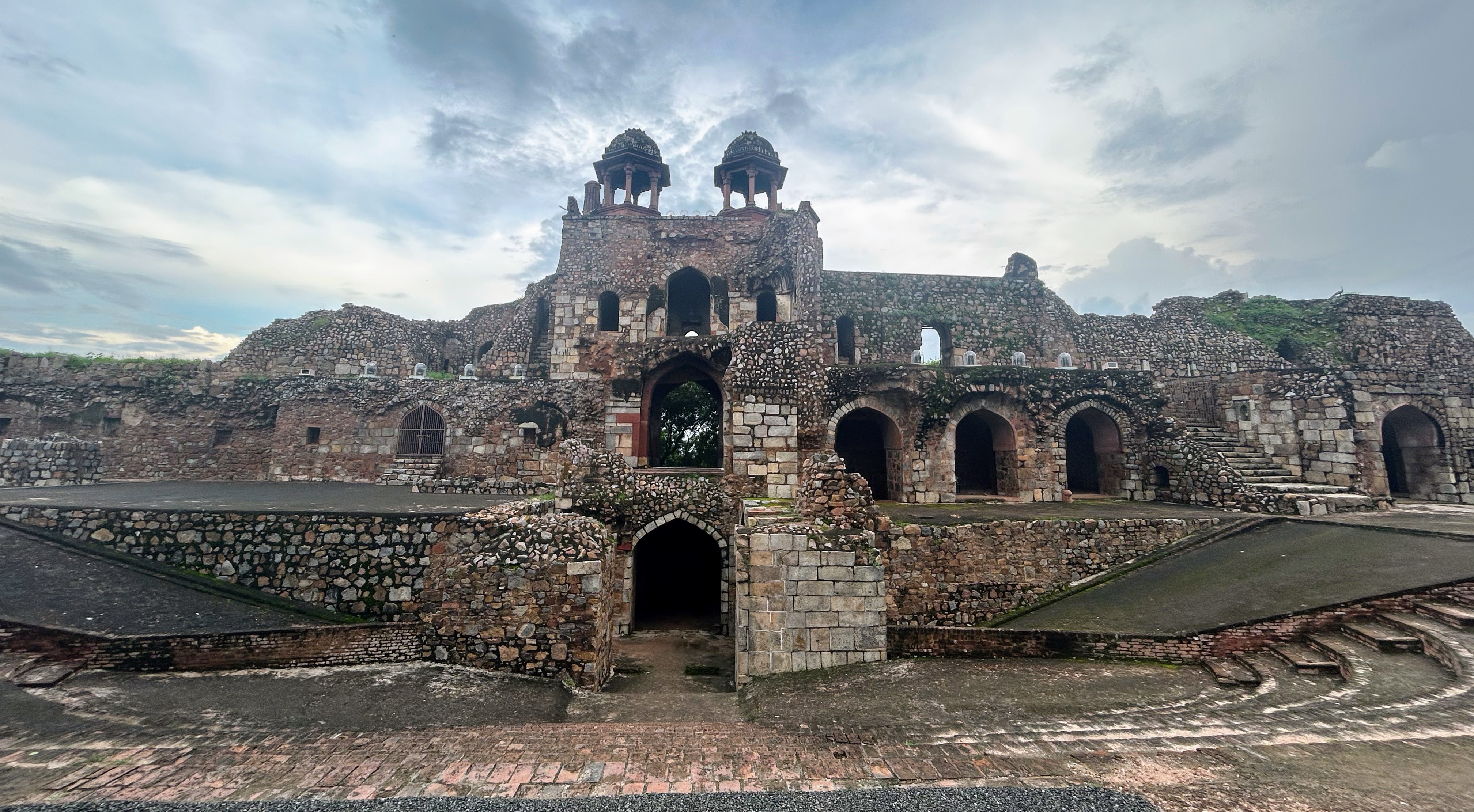
Purana Qila and Me: A Sunday Rediscovery

The Rant Before the Romance

Let’s get this out of the way — navigating to Purana Qila or even the Delhi Zoo is a task that tests patience. You’d imagine that such landmark institutions would be well-marked, but no. The absence of clear road signage makes you meander through a confusing network of turns and traffic. You arrive more relieved than excited. Rant over.

First Glimpses, Lasting Impressions

My relationship with Purana Qila began from a distance. I first came to Delhi in 2003. Living in Noida and working in Connaught Place, my daily commute via Mathura Road brought me past those imposing fort walls. Every day, I’d glance at them and wonder — what stories do those stones hold?

But like many things in life, wonder didn’t translate into action. During those five years in Delhi, I never crossed the threshold.

A Scorching Start

Years later, Delhi called me back. This time, I finally entered the fort — albeit during one of its infamous blistering summers. The heat was relentless, and the visit brief, rushed, and largely overshadowed by the lure of an air-conditioned retreat.

This Sunday: A Walk Through Time

Last Sunday, I joined a heritage walk with Enroute Indian History. The experience was different — thoughtful, immersive, and filled with the kind of stories that give walls a voice.

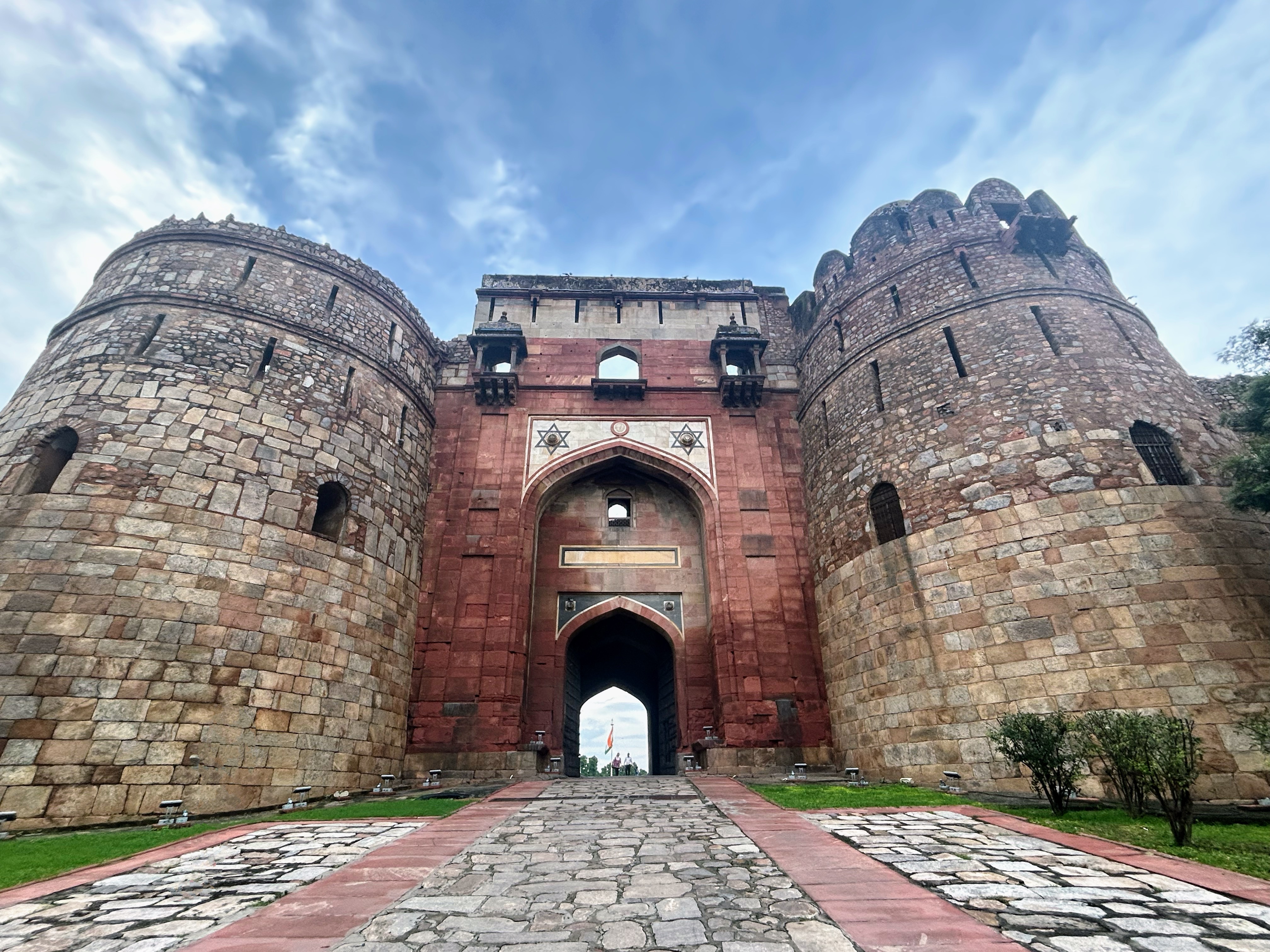
Purana Qila, they said, was built on the ruins of history itself. The Mughal emperor Humayun built his capital, Dinpanah, here. His rival, Sher Shah Suri, later took over, expanding and fortifying the structure into what we now see — layers of ambition etched in sandstone.

The Talaqi Darwaza Mystery

We stopped at the Talaqi Darwaza — a magnificent gateway sealed shut for nearly 200 years. The River Yamuna used to flow next to the fort, and one can still see the boat landings at the Talaqi Darwaza and Humayun Darwaza. We were told no one had walked through it in generations. And then, as if summoned by our collective curiosity, a small pedestrian door in the grand gate creaked open. A workman stepped through. Our group rushed toward the passage, only to be gently turned away by the guard. Restoration work, he said. The door may have opened, but not for us.

A glimpse of the forbidden. A tease of time.

Qila-i-Kuhna Mosque: Geometry and Grace

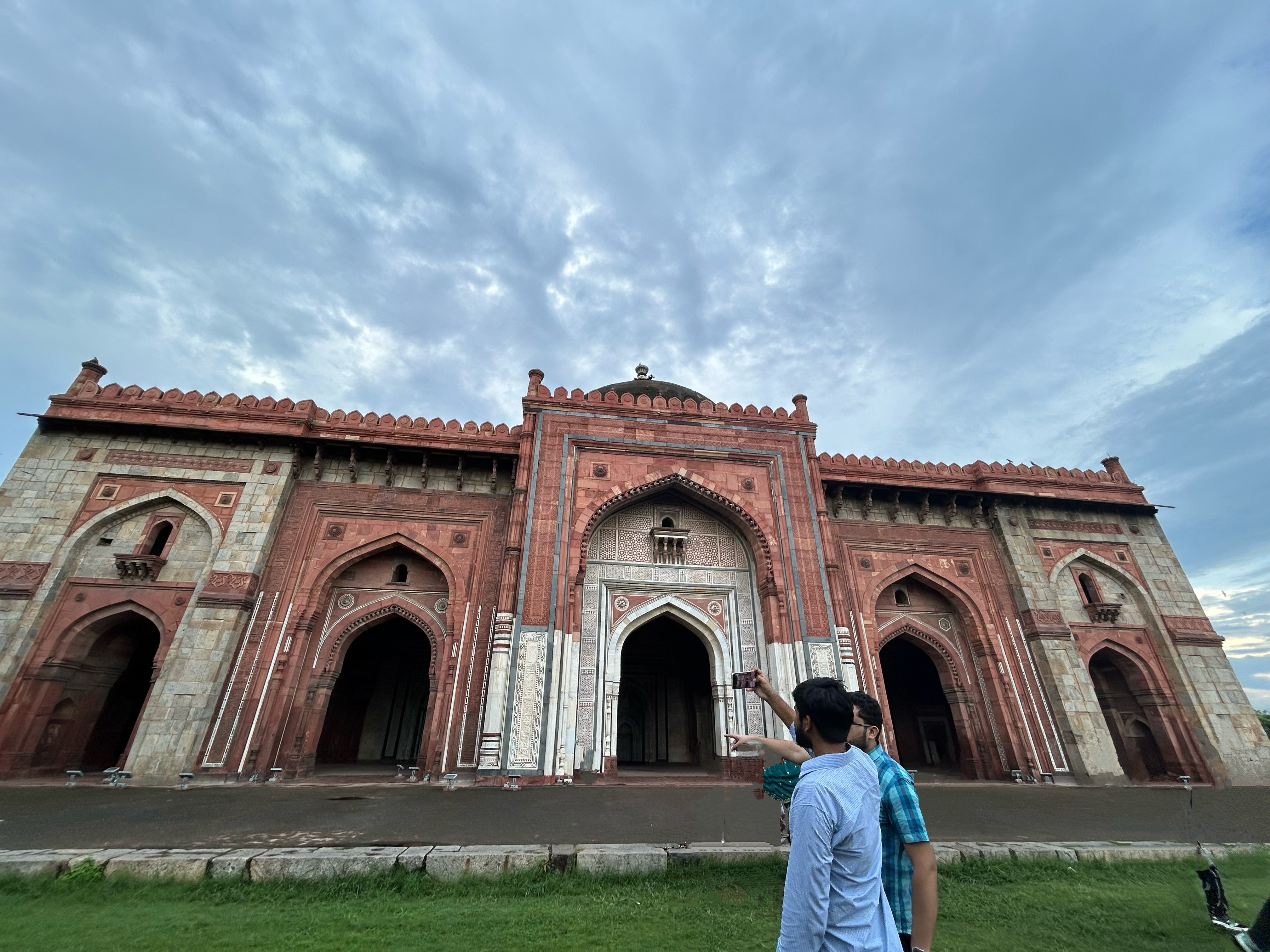
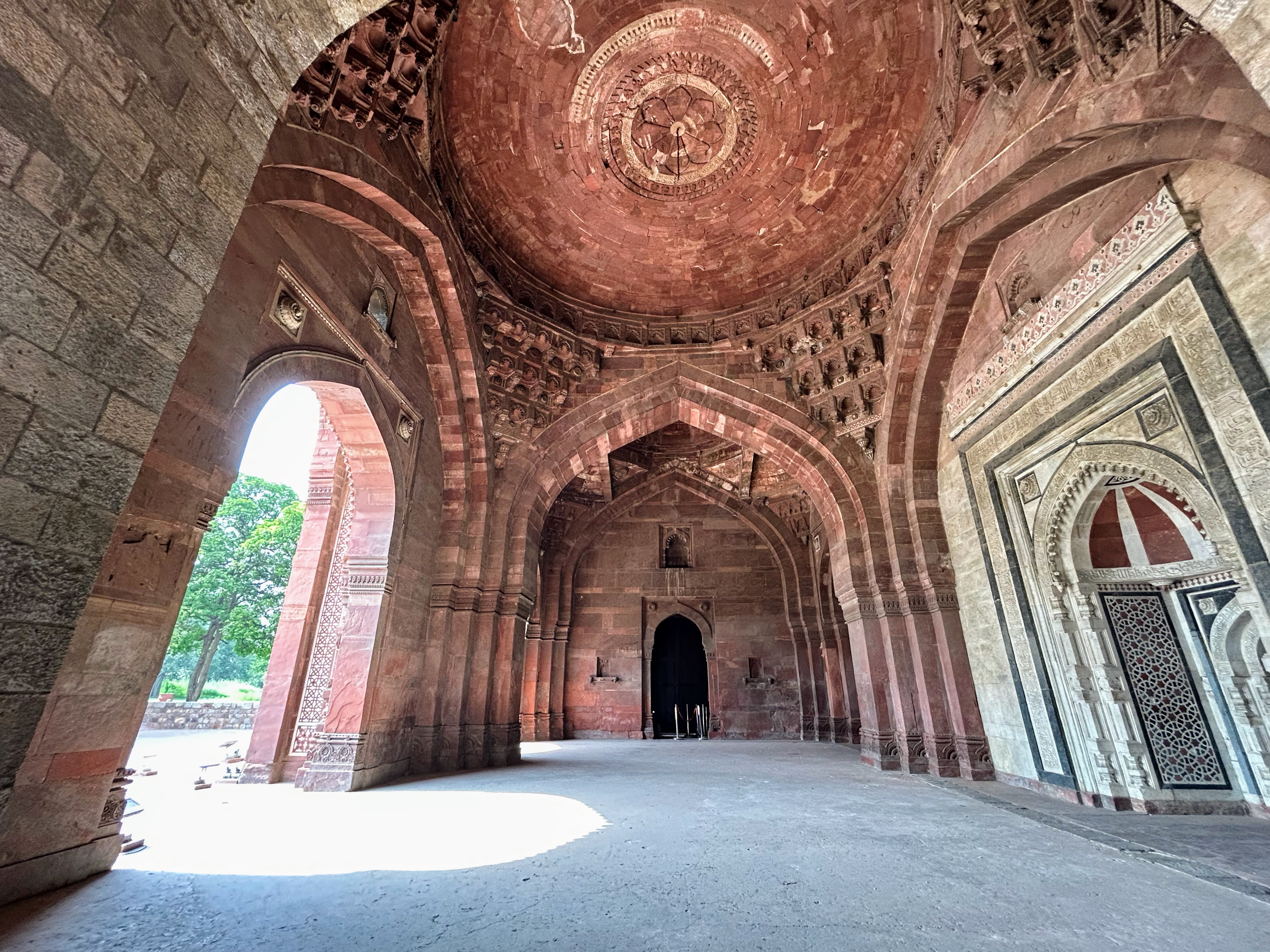
We moved next to the Qila-i-Kuhna Mosque, a corner masterpiece built by Sher Shah. Its intricately carved arches and calligraphy revealed a confluence of power and piety. The upper floor — once reserved for women — hinted at a forgotten intimacy within this public space of worship.

The Baoli: Secret to Sustenance

To counter Delhi’s relentless summers, the fort holds a baoli — a deep stepwell, once connected to the royal hammam through terracotta pipes. It whispers of ancient engineering and the luxury of cool retreats.

Sher Mandal: A Tragic Legacy

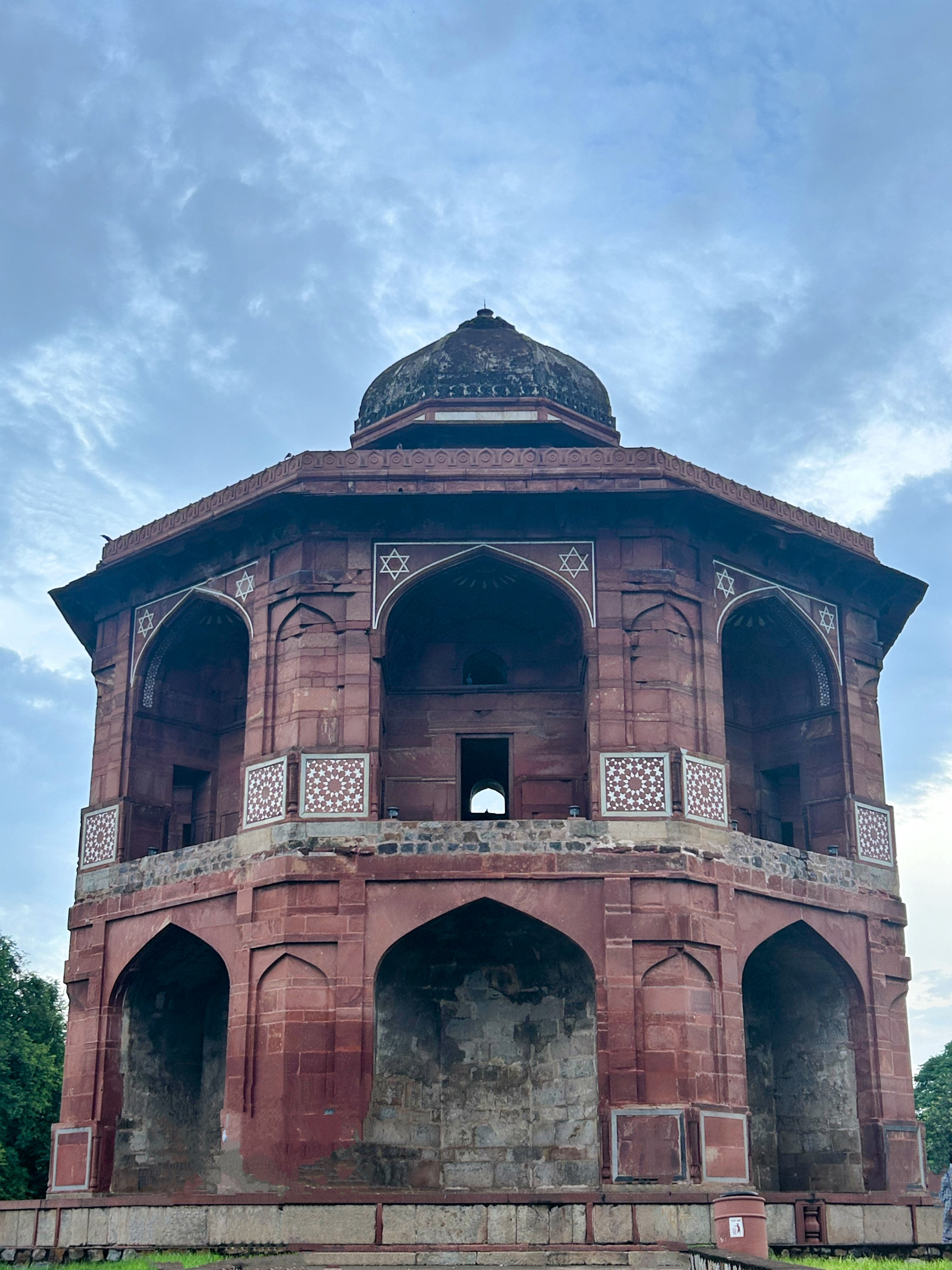
Near the baoli stands the octagonal Sher Mandal, once used by Humayun as a library and astronomical observatory. Ironically, this beautiful tower is where he met his tragic end — falling down its steps after hearing the call to prayer.

Traces of the Lost Village

Few today know that a village once thrived within these very walls. The British cleared it out, leaving no trace. Just open lawns and an eerie sense of absence.

Kunti Mandir: Myth Meets Stone

And then, a mythic interlude. Within the fort stands a modest Kunti Mandir, said to link the fort to Indraprastha of the Mahabharata. Not well-preserved, yet quietly potent — a link between epic pasts and empirical history.

From Wondering Outside to Wandering Inside

What was once a fleeting glance from a car window is now a lingering memory. From the outside to the inside, from myth to masonry, from stories overheard to stories remembered — Purana Qila finally revealed itself.

And with that, my Sunday was well spent.

Walking Through Time: Mehrauli Archaeological Park

Delhi is often said to be a city of seven historical cities, each founded by different rulers and woven together to form the capital as we know it. Among them, Lal Kot or Qila Rai Pithora is believed to be the first city of Delhi, located in present-day Mehrauli.

This Sunday, I joined a walk by Enroute Indian History inside the Mehrauli Archaeological Park. Spread across undulating terrain, the park houses nearly 55 archaeological monuments—some documented, others fading into obscurity, their stories lost to time.


Jamali Kamali Mosque & Tomb

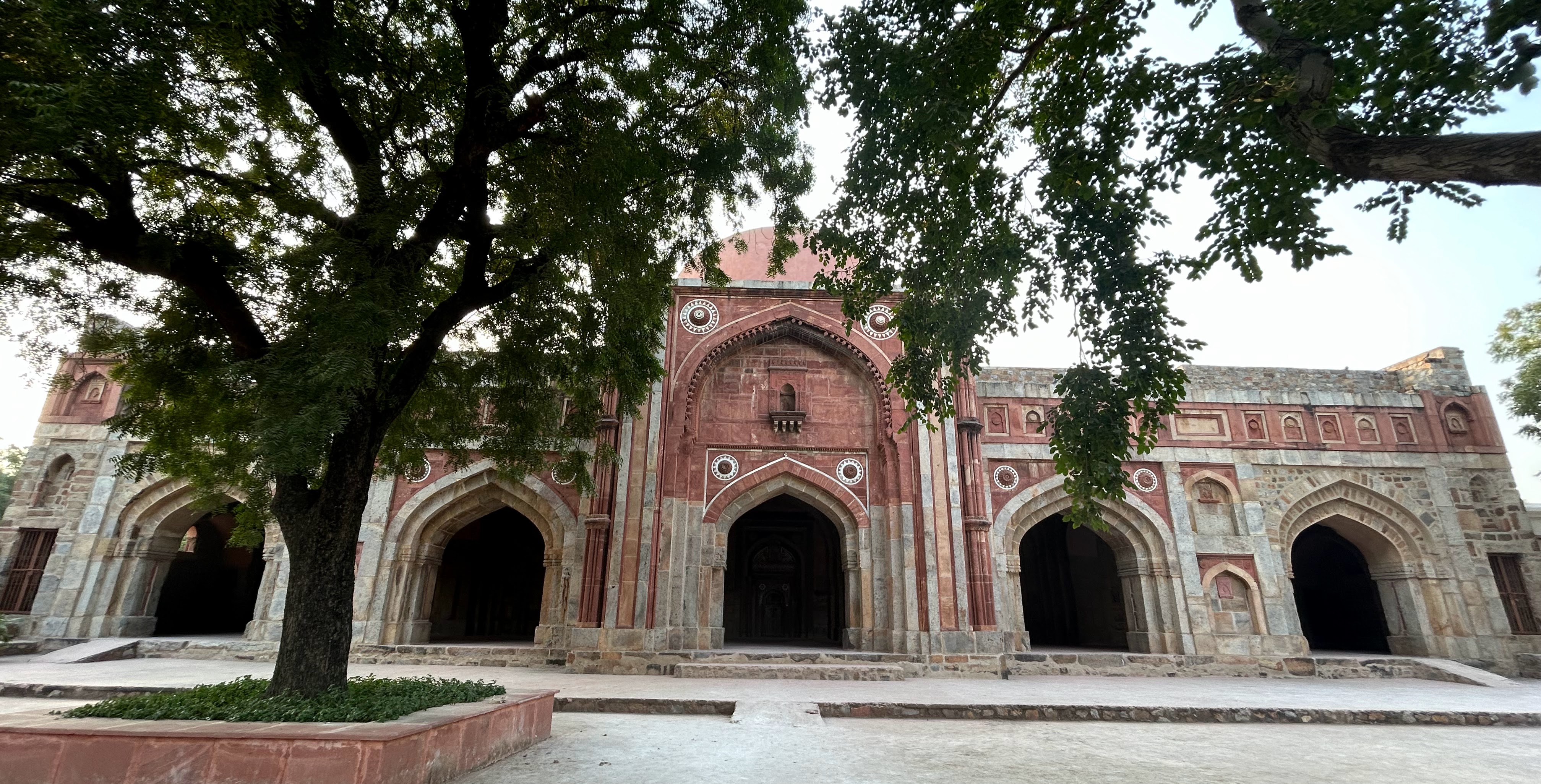
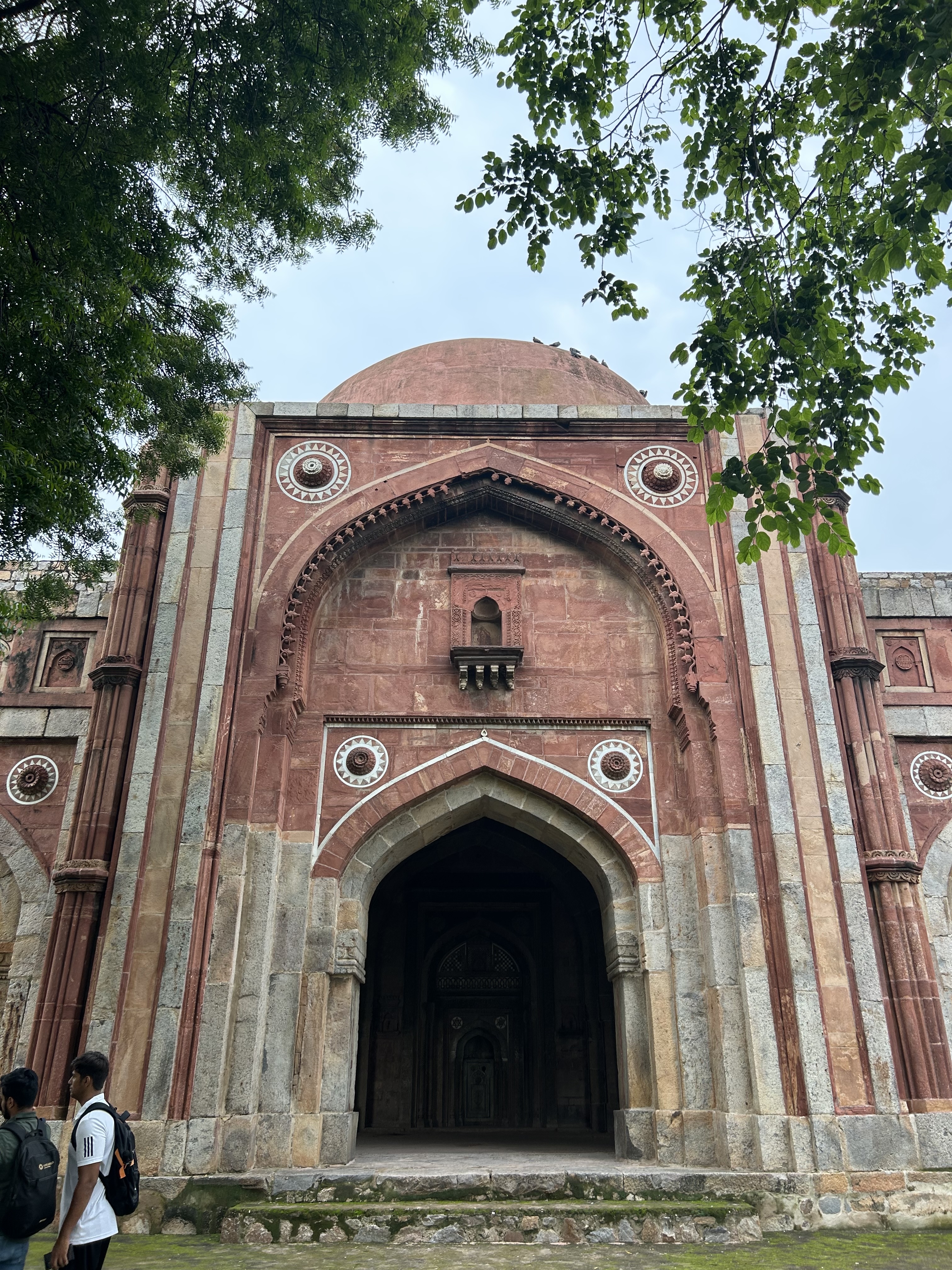
Our walk began at the Jamali Kamali mosque, dedicated to Shaikh Fazlullah, also known as Jamali—a courtier of Sikander Lodhi who later fought and died for Humayun.

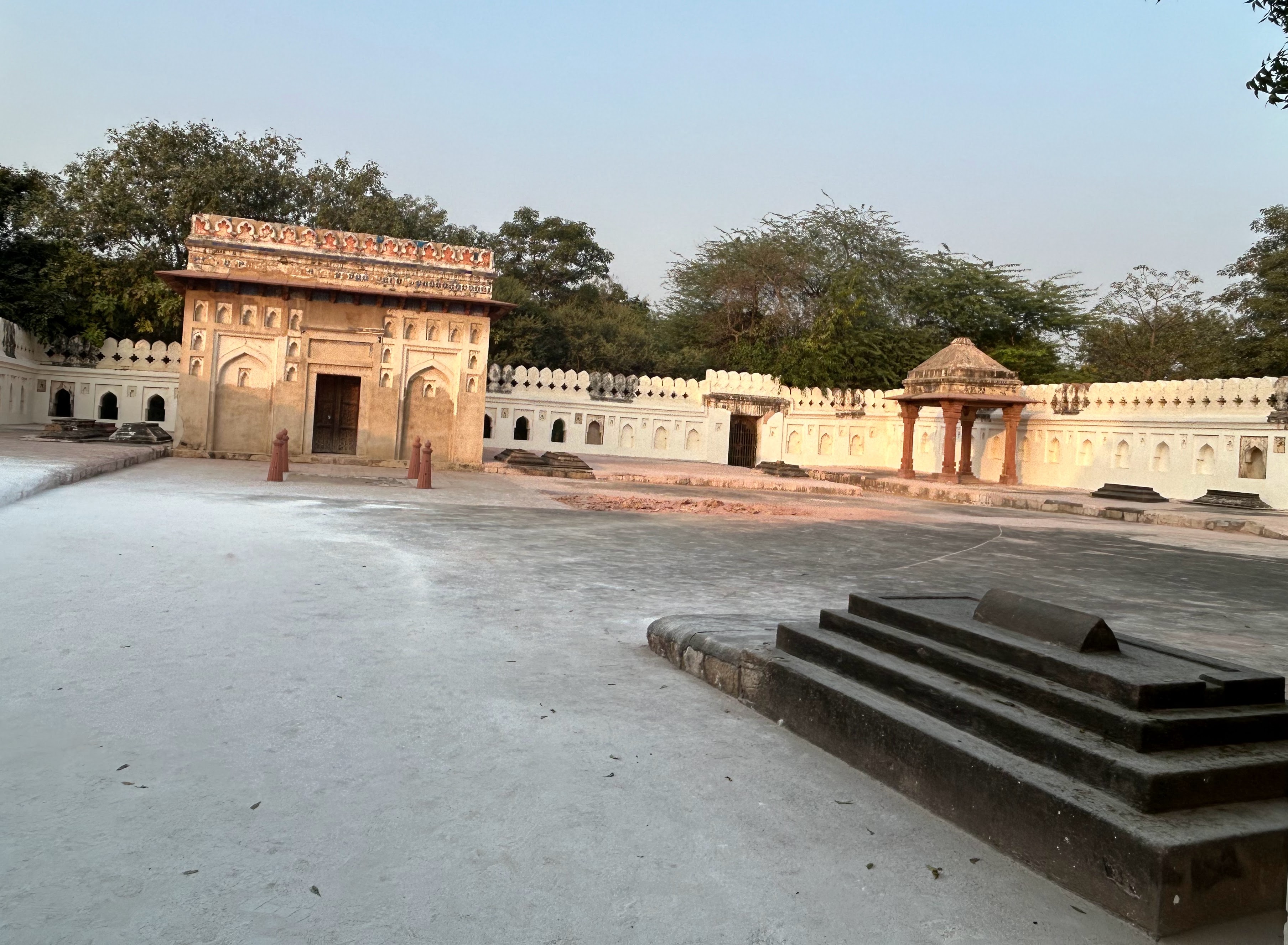
Beside the mosque lies a locked chamber, believed to be the resting place of Jamali and Kamali. The identity of Kamali is cloaked in folklore; some accounts call him Jamali’s beloved. Both are said to be buried together in this compound, a rare tale of intimacy and companionship from medieval Delhi.

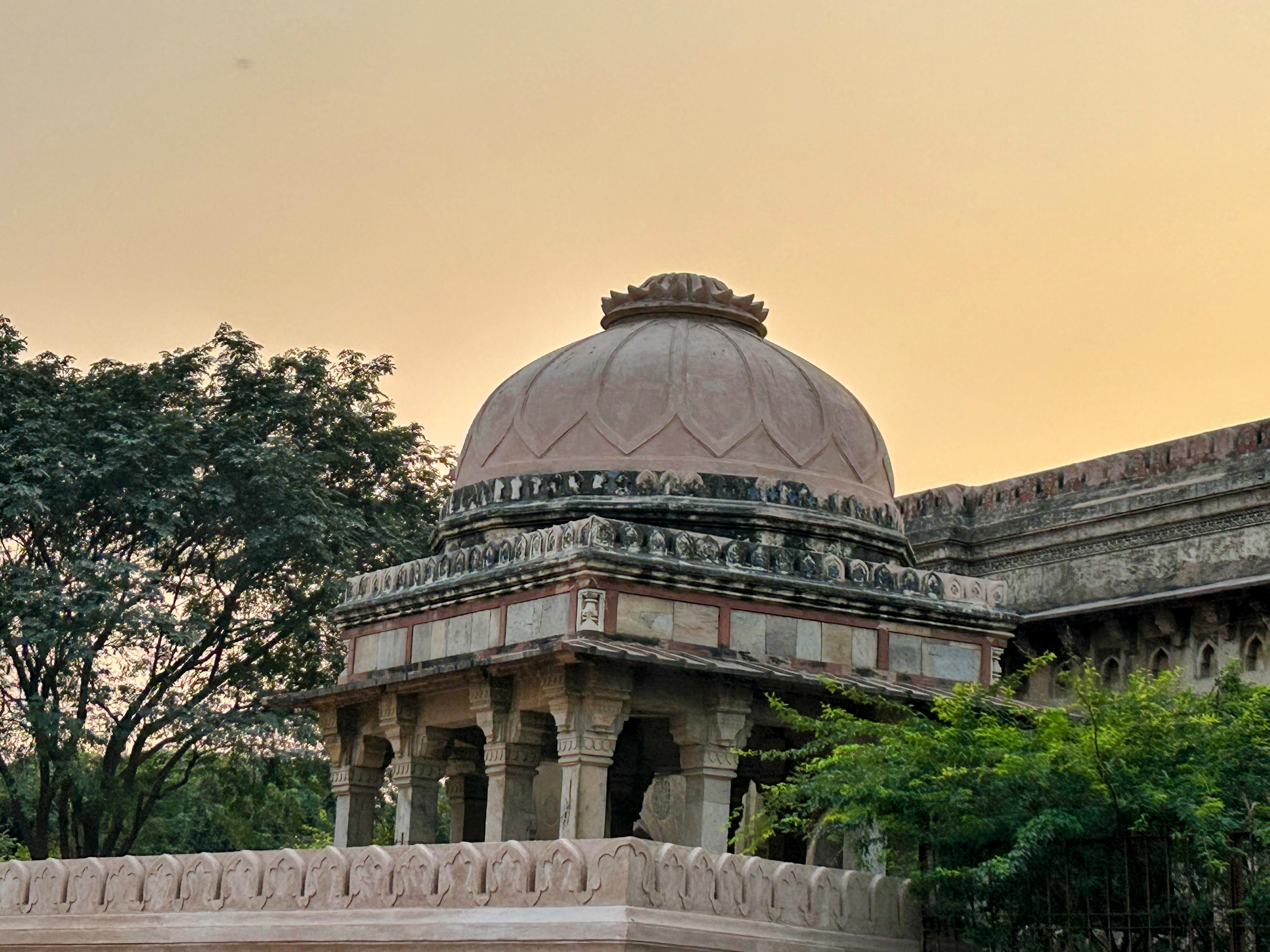
The land itself was a grant from Sikander Lodhi, and the mosque reflects syncretic architecture—kalash motifs, inverted lotuses, and temple-like details—likely owing to local craftsmen more used to building temples.


Rajon ki Baoli

Next, we descended into the quiet depths of Rajon ki Baoli, a stepwell built in 1510 by Daulat Khan, the military commander of Ibrahim Lodhi. History records that it was this very Daulat Khan who invited Babur to India, setting the stage for the Mughal dynasty.

The four-storey stepwell is flanked by rooms used for bathing and washing, fitted with terracotta pipe outlets that ensured fresh water circulation. Yet, curiously, the baoli is not remembered by its builder’s name. Instead, after Partition, it became home to raj mistris (masons), and so the name Rajon ki Baoli endured.


Dilkhusha: Metcalfe’s Retreat

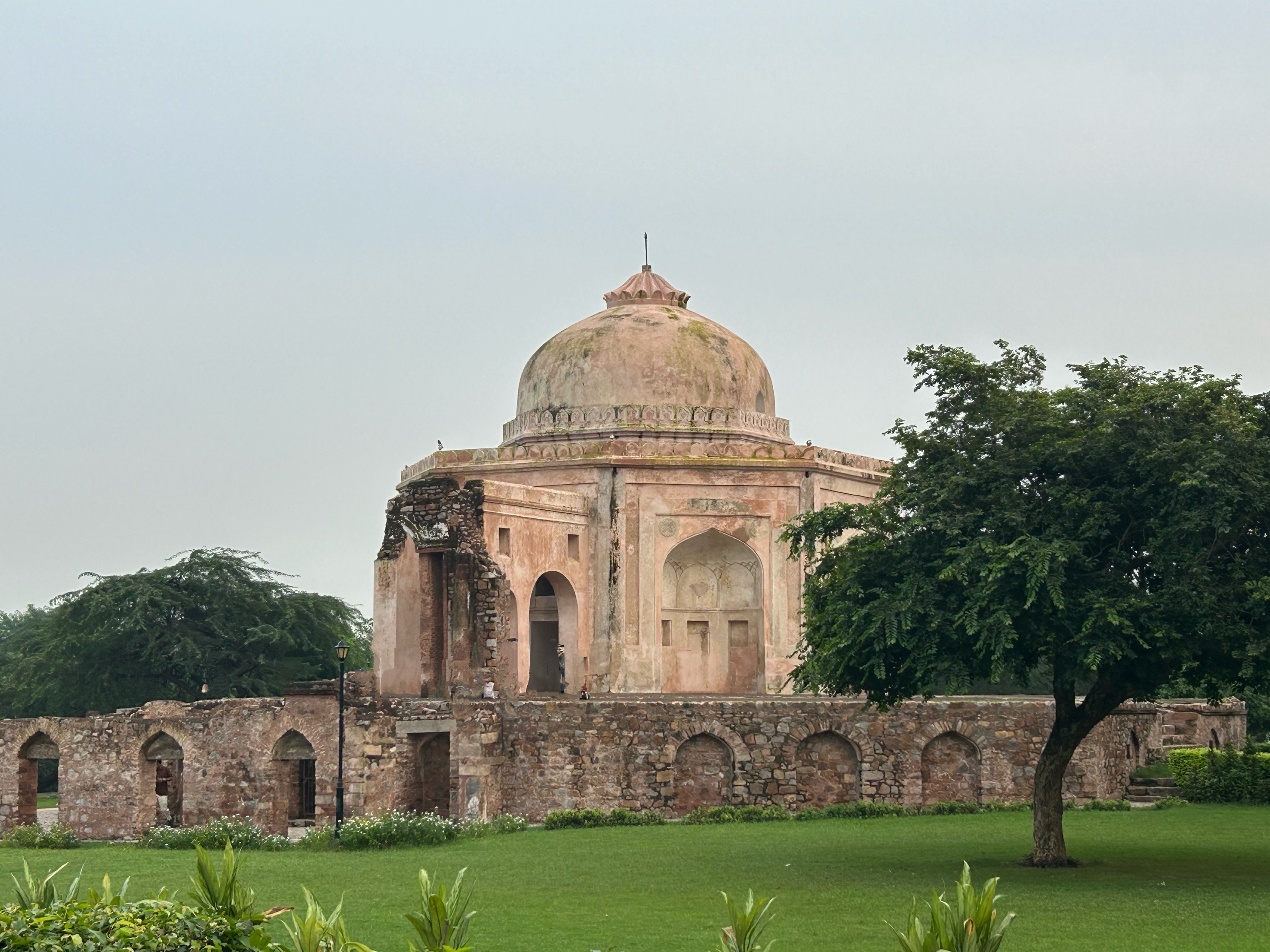
We then arrived at the picturesque ruins of Dilkhusha, once the country house of Sir Thomas Metcalfe, a civil servant of the East India Company and agent of the Governor General at Bahadur Shah Zafar’s court.

The first structure is a quaint boat house, curiously perched atop a Lodhi-era tomb. Though Metcalfe’s residence was later dismantled to restore the tomb, traces of its outer walls remain. From here, one can glimpse the soaring silhouette of the Qutub Minar.

The estate was built around the tomb of Muhammad Quli Khan, the foster brother of Emperor Akbar. Like many Mughal-era tombs, it was repurposed into a colonial residence, perhaps to establish distance between the ruling elite and the ordinary people.

The complex also houses what was once described as a “honeymoon suite”, complete with a fireplace and private pool. Today, it functions as a small museum, but in its day, it was rented out as a luxurious retreat.


Echoes of a Forgotten Past

Much of the park lies in decay, its walls slowly surrendering to time and nature. Yet a walk here feels like time travel—through the Sultanate, the Mughals, and the British Raj—when Mehrauli was alive with kings, saints, travelers, and storytellers.

It is a reminder that Delhi is not just a capital city but a palimpsest of civilizations, each layer shaping its destiny.