Tag Archives: Delhi Heritage

Ridge of Resilience: Seeking Fresh Air in Delhi’s Living History

How is it that as technology advances, the quality of life seems to decline? This thought weighed heavily on my mind as I stepped out into Delhi’s smog-filled morning. Dull. Dreary. Suffocating. Each winter, the capital transforms into a gas chamber, and each year’s promises of cleaner air evaporate faster than the smog settles back in. With my quota of casual leaves exhausted, and thus, my dreams of a temporary escape, frustration clung to me like the haze itself.

Just then, a message flashed: an INTACH heritage walk in the Northern Ridge. A chance to breathe history, if not fresh air. That it was led by a master storyteller Ratnendu Ray, the idea was inviting. I signed up.

Sleep, however, conspired against me. I woke late, rushed through the morning, and hastened toward Kamla Nehru Ridge Park or Bonta Park, frantically searching for Gate No. 1. Inside, a short walk led to Flagstaff Tower, where the group awaited.

On the way, monkeys ambled fearlessly across the path as if they owned it. Morning walkers clutched sticks as insurance. Memories of Vrindavan’s notorious simian bandits resurfaced. Would my glasses survive this walk? But the monkeys only cast indifferent glances my way.


Where History Watches the City Below

The Northern Ridge rises above Shahjahanabad or Purani Dilli, one of Delhi’s seven historical cities. Flagstaff Tower, once a watchpoint, sits at its highest elevation. Today, it is surrounded by trees, but this greenery is not ancient; it is the product of three rounds of afforestation before independence. Hard to imagine that this tranquil patch of forest was once a British encampment during the 1857 war.

Our walk began with stories of the siege, of smoke and cannon fire, where parakeets now flutter, and a glimpse into early war journalism. Felice Beato, the pioneering war photographer, had captured this very landscape scorched by battle. The Delhi Urdu Akhbar had tried to shape public sentiment, reinforcing Bahadur Shah Zafar as the symbolic leader. The tools change, but the media’s role in nation-building and narratives remains constant.

We learned of Brigadier General John Nicholson, the strict Irish officer who commanded British forces from August 1857 till his death in September 1857. His reputation in the North-West Frontier was so imposing that he inspired a cult — his followers, the Nikal Seynis, treating him almost as divine. History has its ironic humour. Interestingly, the cult is said to have lasted into the 21st century.


Ruins, Remnants, and the People Who Remember

Next came Chauburji Masjid — a 13th-century mosque once crowned by four domes, now missing half its crown thanks to the bombardments of 1857. With its gates locked, we admired it from the outside. A group of elderly men paused their morning banter to offer us sweets and snacks. Their warmth cut through the wintry chill — and reminded me that heritage isn’t only stone and mortar, but memory and community.

At Pir Ghaib, originally Firoz Shah Tughlaq’s hunting lodge, a lone structure now stands beside Hindu Rao Hospital. A baoli lies neglected nearby. The mansion of Raja Hindu Rao, once a mighty noble’s residence, has vanished and today stands the hospital in its place. Has history been replaced by urgent modern needs? May be not. People who come to the hospital may not know him but his name carries on.

Near the Ashokan Pillar — fragmented by a 1713 East India Company ammunition dump explosion and later restored — the layers deepened. Mauryan ideals. Tughlaq’s passion for collectibles, Mughal drama. British intervention. Modern restoration. Delhi does not erase its history; it compacts it like geological strata.


A Victory Tower, A Shifted Narrative

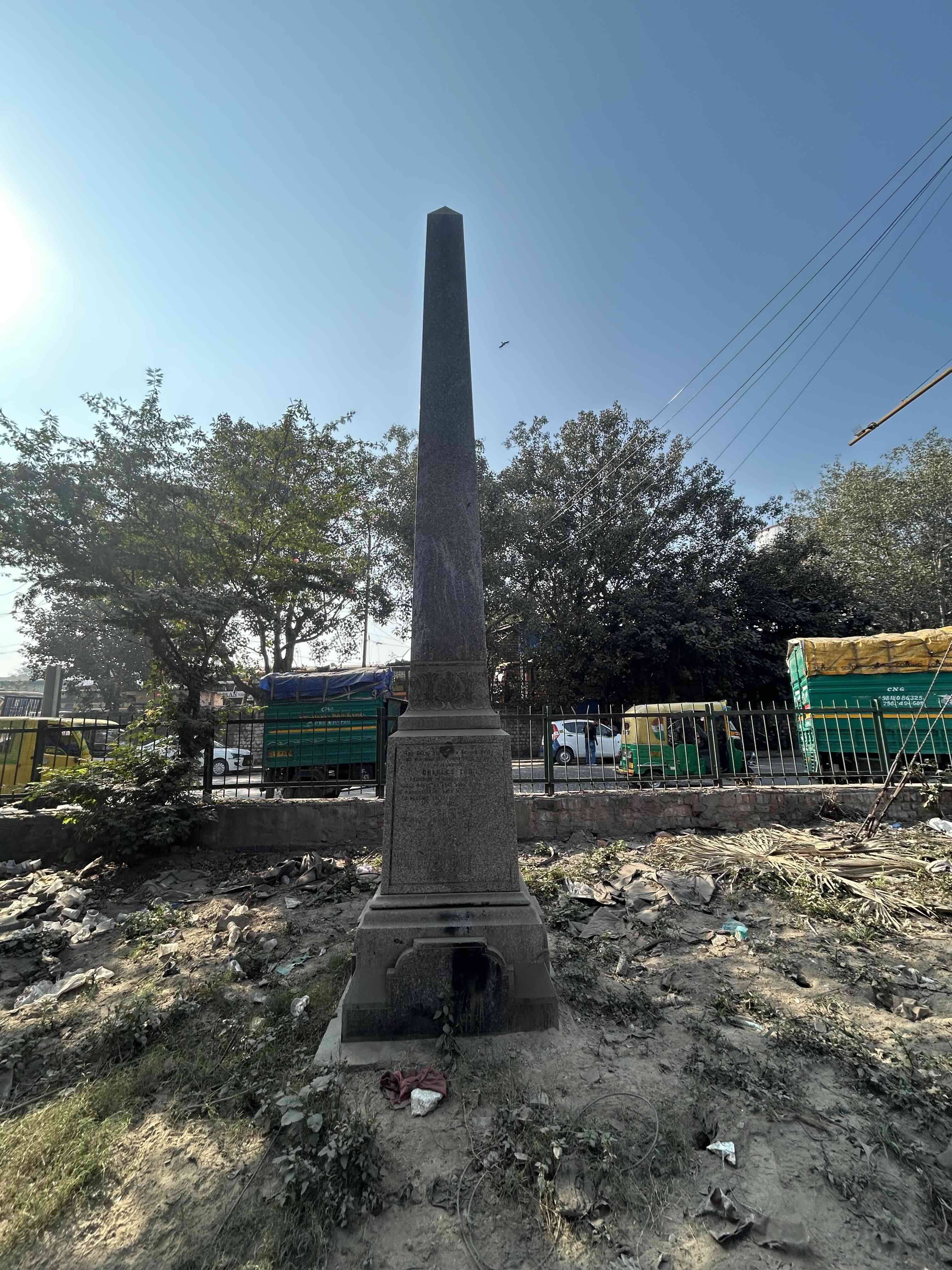
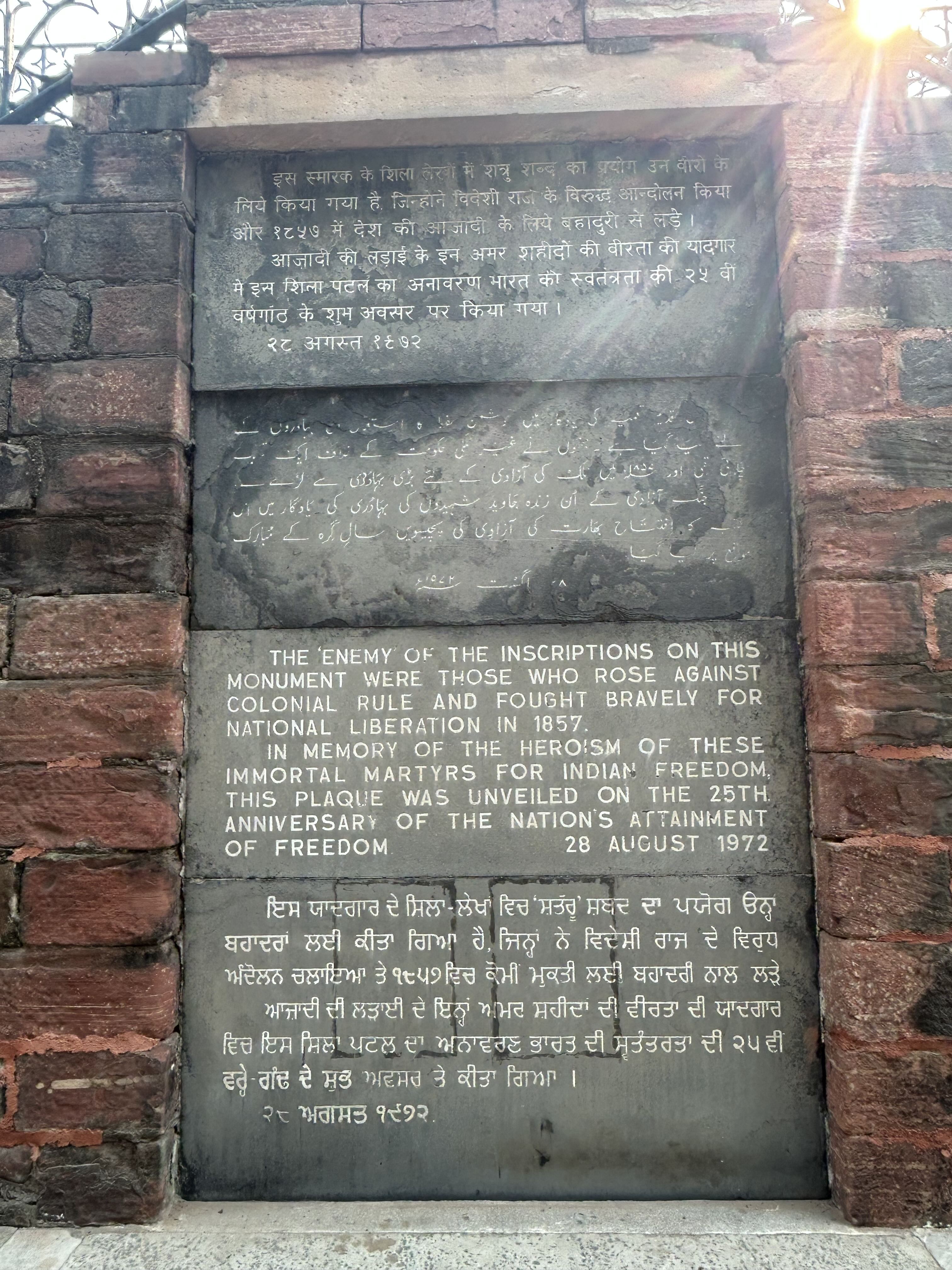
We concluded at the Mutiny Memorial — a Gothic tower celebrating British “victory,” its plaques once labeling Indian freedom fighters as the enemy. After independence, a corrective marker was added: a reminder that the empire’s enemy was India’s fight for self.

Standing there, surrounded by green silence, I reflected on the three hours that had passed. My irritation from the morning now felt smaller. The air may be polluted, but the past here still breathes — vividly, defiantly.

Delhi’s history isn’t merely to be read in books. It rises from the earth, whispers through crumbling walls, lingers in the names of forgotten places. Technology may advance, and quality of life may falter — but what endures are stories. And on the Ridge, the city’s oldest stories still hold their ground.

A Sunday Morning in Hauz Khas: Walking Through Layers of Time

Hauz Khas has always been that buzzing South Delhi address — synonymous with nightlife, chic cafés, designer boutiques, and a medley of world cuisines. For me, it had long existed as that happening urban village, where the city comes to unwind. Someone had once mentioned there were “some old monuments” tucked away there, but then, Delhi has monuments scattered like punctuation marks in its long, layered history.

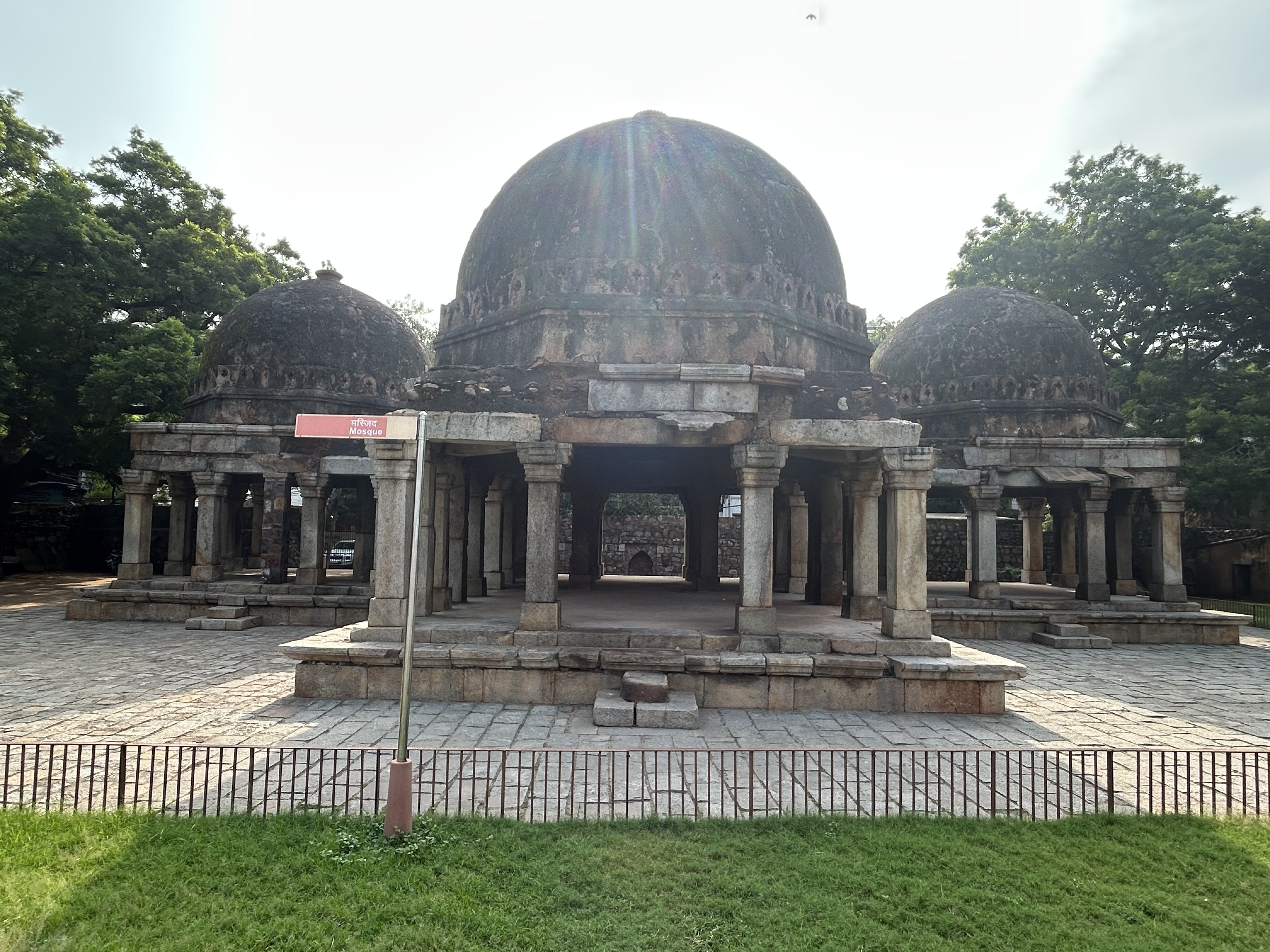
So when an email from INTACH dropped into my inbox about a heritage walk through Hauz Khas, curiosity nudged me to sign up. That is how, on a quiet Sunday morning, I found myself standing with fellow history enthusiasts at the gates of the Hauz Khas mosque — ready to peel back the centuries, guided by the brilliant storyteller Ratnendu Roy.


Stepping Into a Medieval Campus

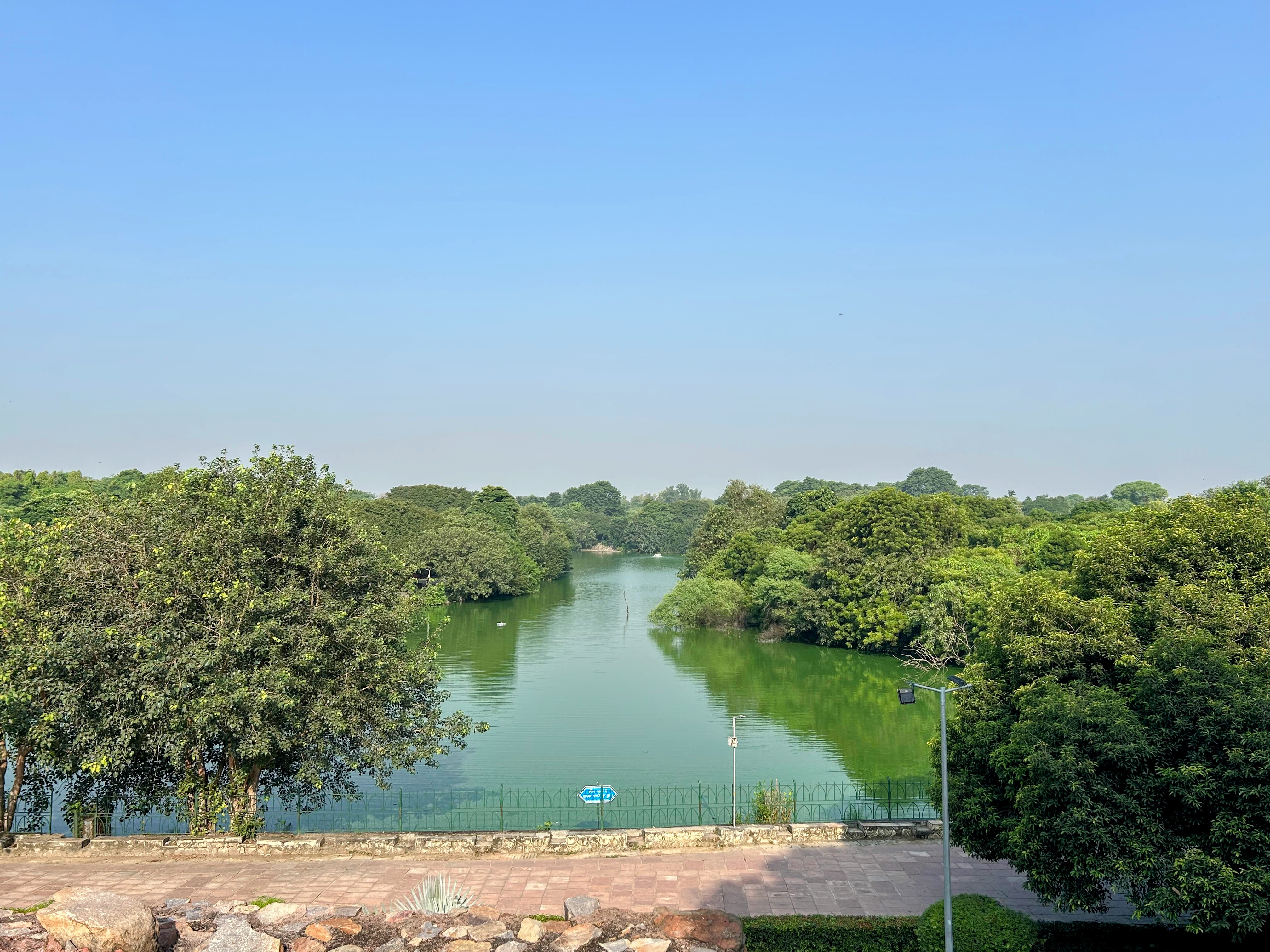
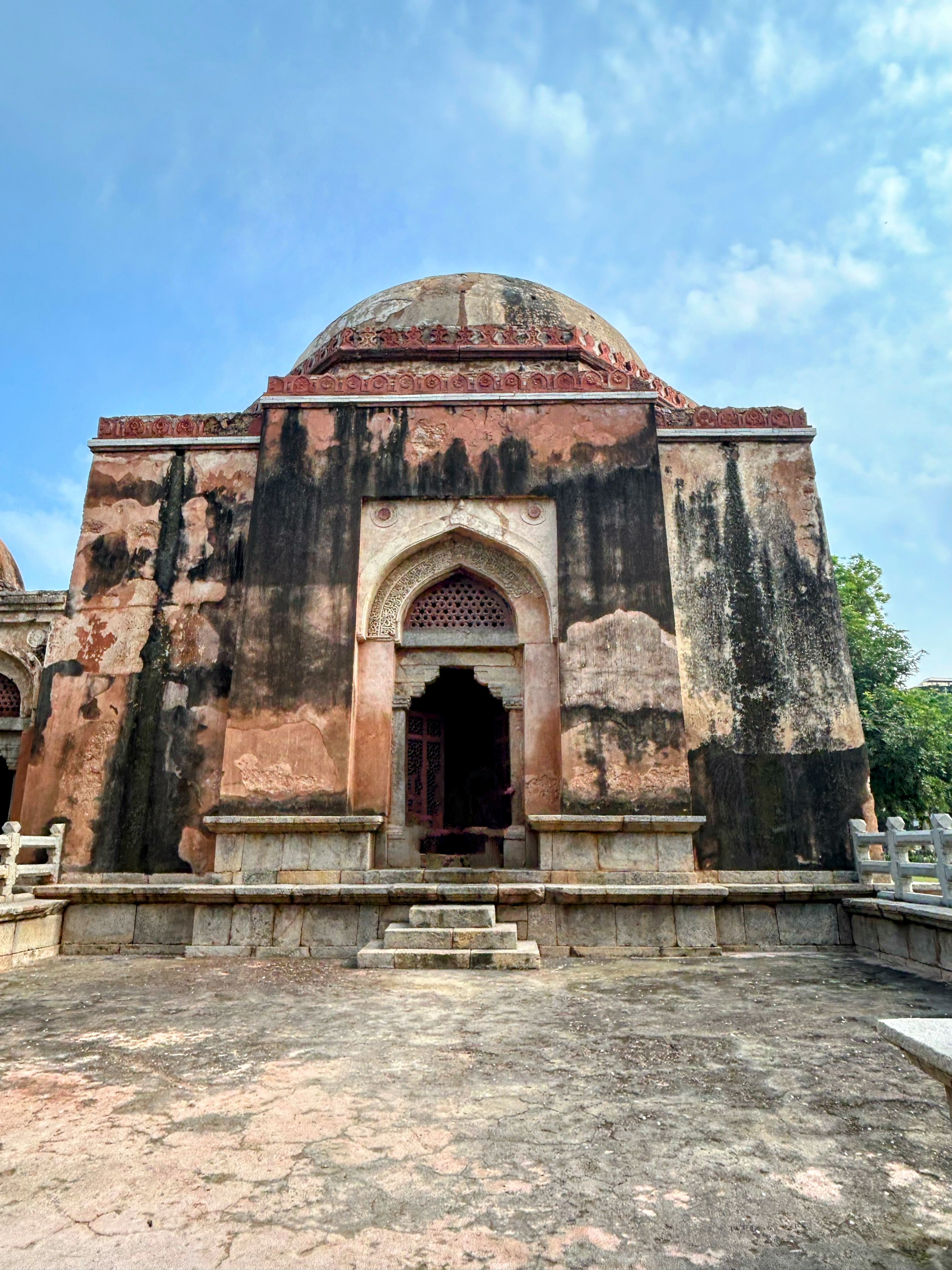
Hauz Khas was originally built by Alauddin Khilji and reached its pinnacle under Firoz Shah Tughlaq. As we walked into the mosque and madrasa complex — complete with hostel cells once meant for students — it was easy to imagine its glory days: serene gardens, the expansive water tank shimmering beyond, and scholars breathing life into its stone corridors.

Tucked within the complex are several tombs, the most prominent being that of Firoz Shah himself. Legend has it that the surrounding village grew as an ecosystem around this premier centre of learning. Even today, gazing out from the madrasa’s colonnaded windows towards the hauz (reservoir), the scene feels remarkably tranquil — as if time has paused just for a moment.


From Forgotten Village to Trendy Hotspot

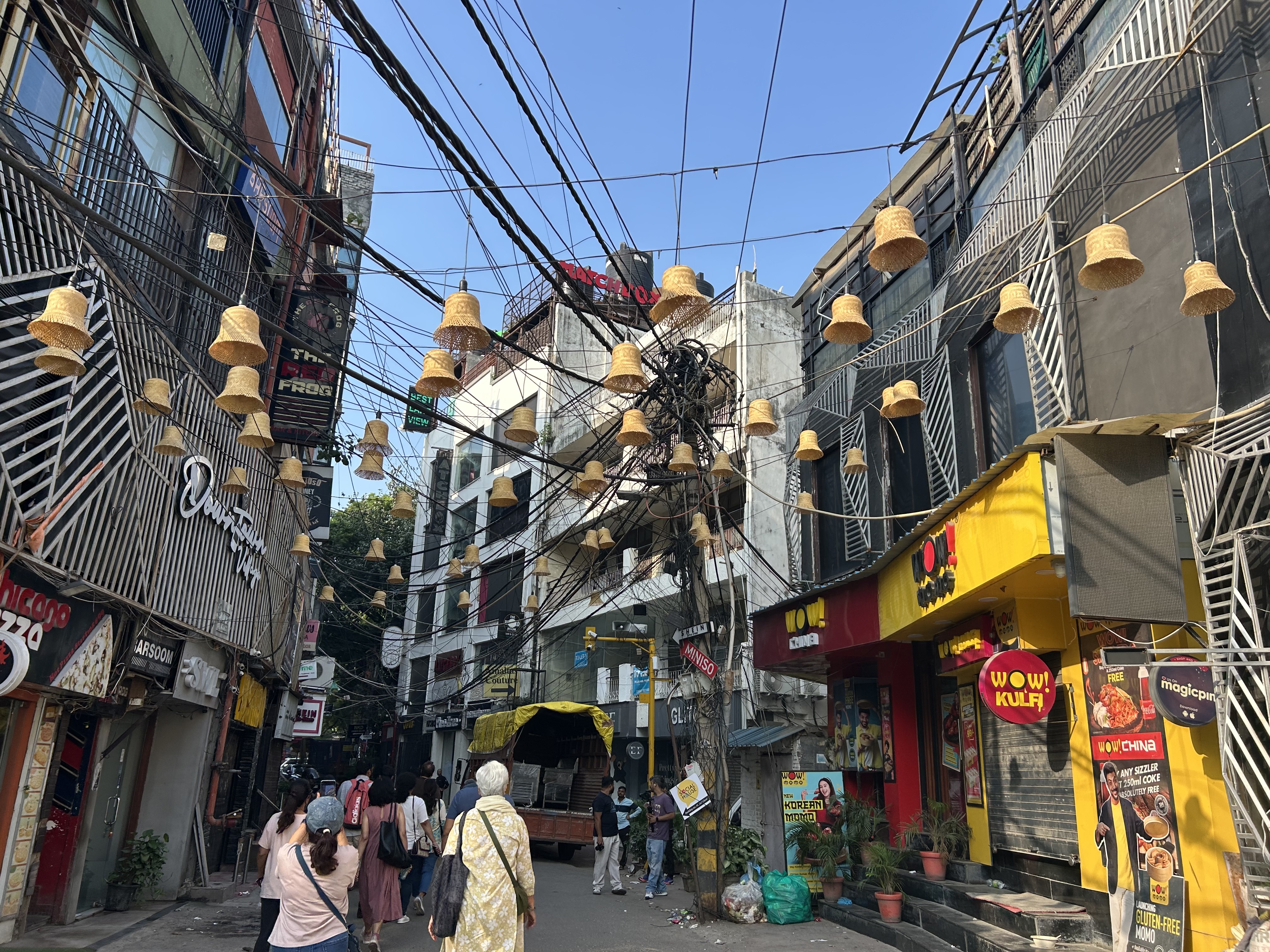
Hauz Khas village lay largely forgotten until the mid-1980s, when designers and café owners “discovered” its rustic charm. Boutiques sprang up in old village homes, and the area morphed into Delhi’s go-to party destination. Yet behind the neon signs and polished façades, you can still spot the original mud-brick houses — a whisper of the village it once was.

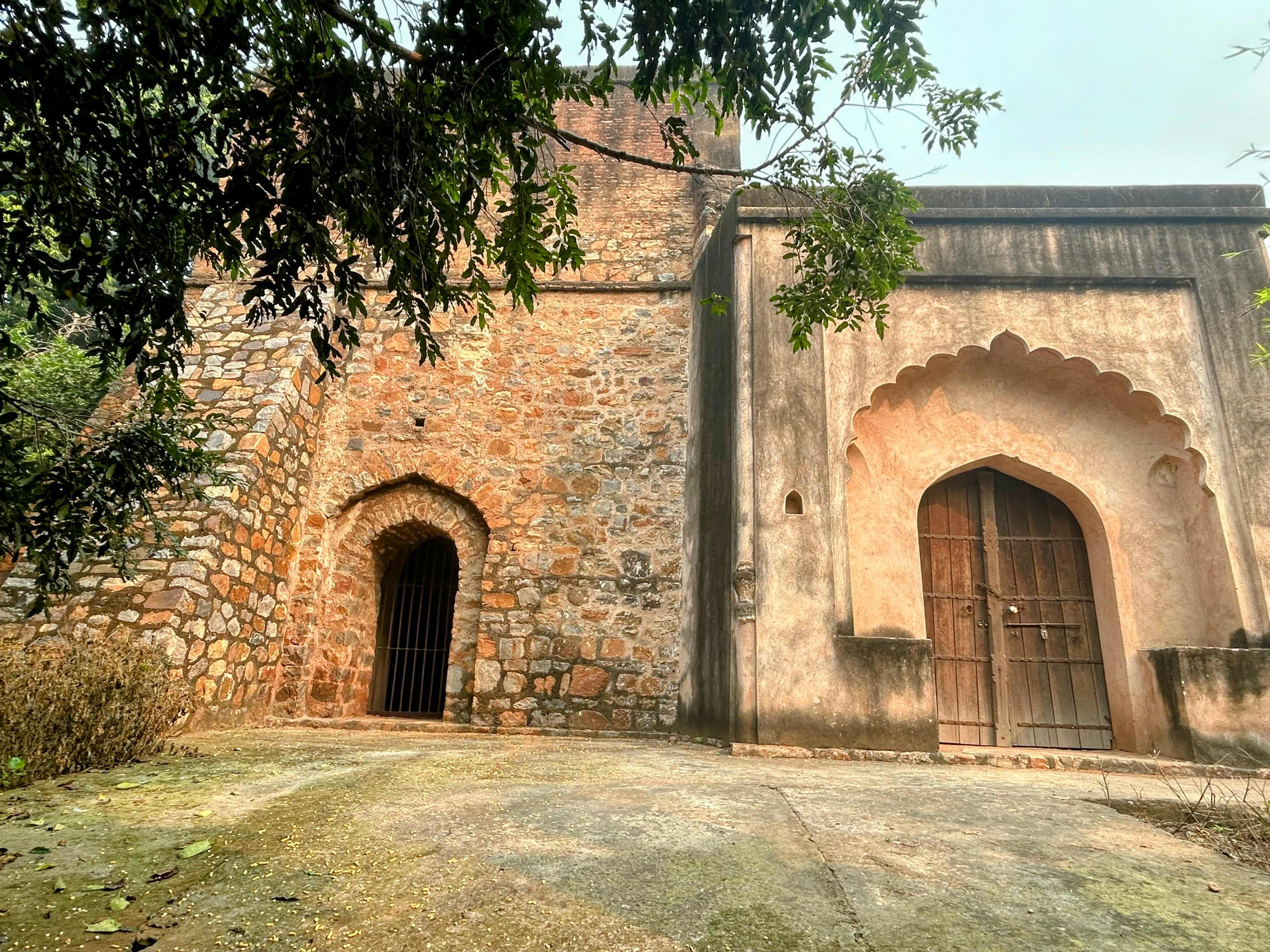
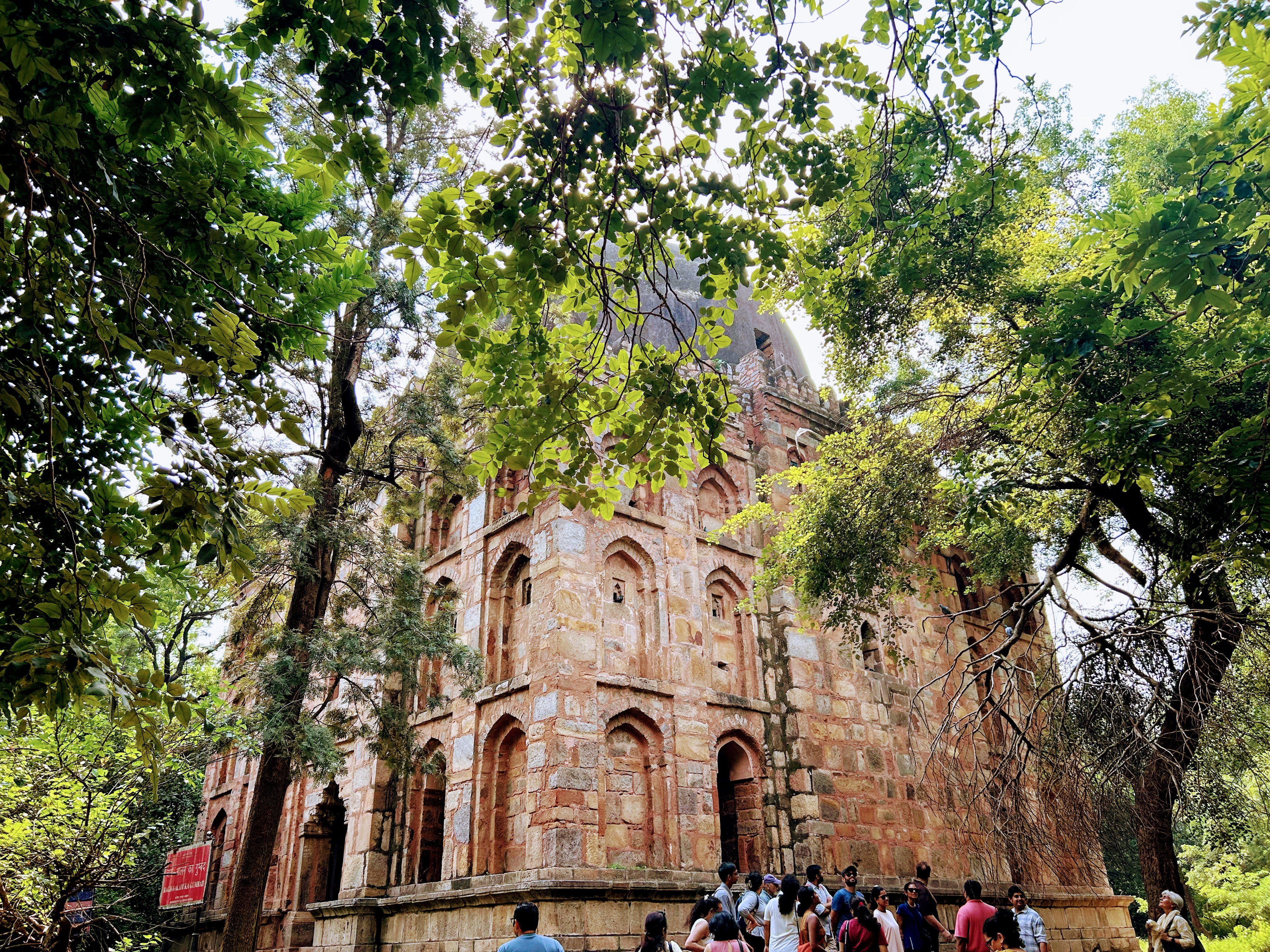
A short stroll led us into the lush Deer Park. It is one of those rare green islands in Delhi where city sounds dim into silence. Joggers, families, and groups of friends dotted the winding paths. Within its leafy expanse stand two medieval gems: the Lodhi-era Bagh-e-Alam ka Gumbad, said to have taken inspiration from Firoz Shah’s tomb, and the diminutive Kali Gumti, whose cenotaph has vanished into history’s mists.


Munda Gumbad and the Whisper of the Wind

The walk ended at Munda Gumbad — literally the “headless dome” — a pleasure pavilion once located on an island in the middle of the reservoir. Encroachments have since pushed the water’s edge far back, but the charm lingers. Climbing the short steps, I was met with a 360° panorama: the green canopy of the park, the stone silhouettes of monuments, and the glimmering water. A soft breeze wrapped around us, and I found myself imagining an earlier time — boats gliding across the water, ducks splashing, and royalty reclining under the dome to escape the summer sun.

As we were walking towards the Munda Gumbad, a sudden rustling and cacophony above made us look up — a massive colony of bats hung like dark fruits from the branches overhead. I had never seen so many at once; they seemed like watchful guardians of the place’s secrets.


Threads Between Past and Future

Along the walk, our conversations meandered — from vandalised monuments and encroached heritage zones to the challenges of restoration, the scarcity of funds, and the lack of public awareness. It struck me then: history is not just an episode of the past. It is a thread that connects us to the future — a legacy to be understood, protected, and cherished.

A Sunday morning, well spent. A city rediscovered.