Tag Archives: delhi

A Winter Walk Through Purani Dilli: Stories, Streets, and Subah ke Pakwan


With winter slowly tightening its grip on the city, I mentioned to a colleague last Friday that this year I wanted to finally try Daulat ki chaat. A fanatic Benarasi, she laughed and said, “You should go to Benaras and taste the better version.” Perhaps she wasn’t wrong—but Delhi, for all its culinary rivalries, is a food lover’s paradise. And winter? Winter is Delhi at its delicious best.

The chill in the air sharpens appetites and opens up the full spectrum of flavours: from savoury chaats to sinful ghee-soaked sweets. Amid it all, Purani Dilli holds a special place in every foodie’s heart. This Sunday, I joined a food walk titled Purani Dilli ke Subah ke Pakwan, curated by Tales of City and led by the knowledgeable Chef Sadaf Hussain. Like many, I associated Purani Dilli primarily with its legendary non-vegetarian fare.

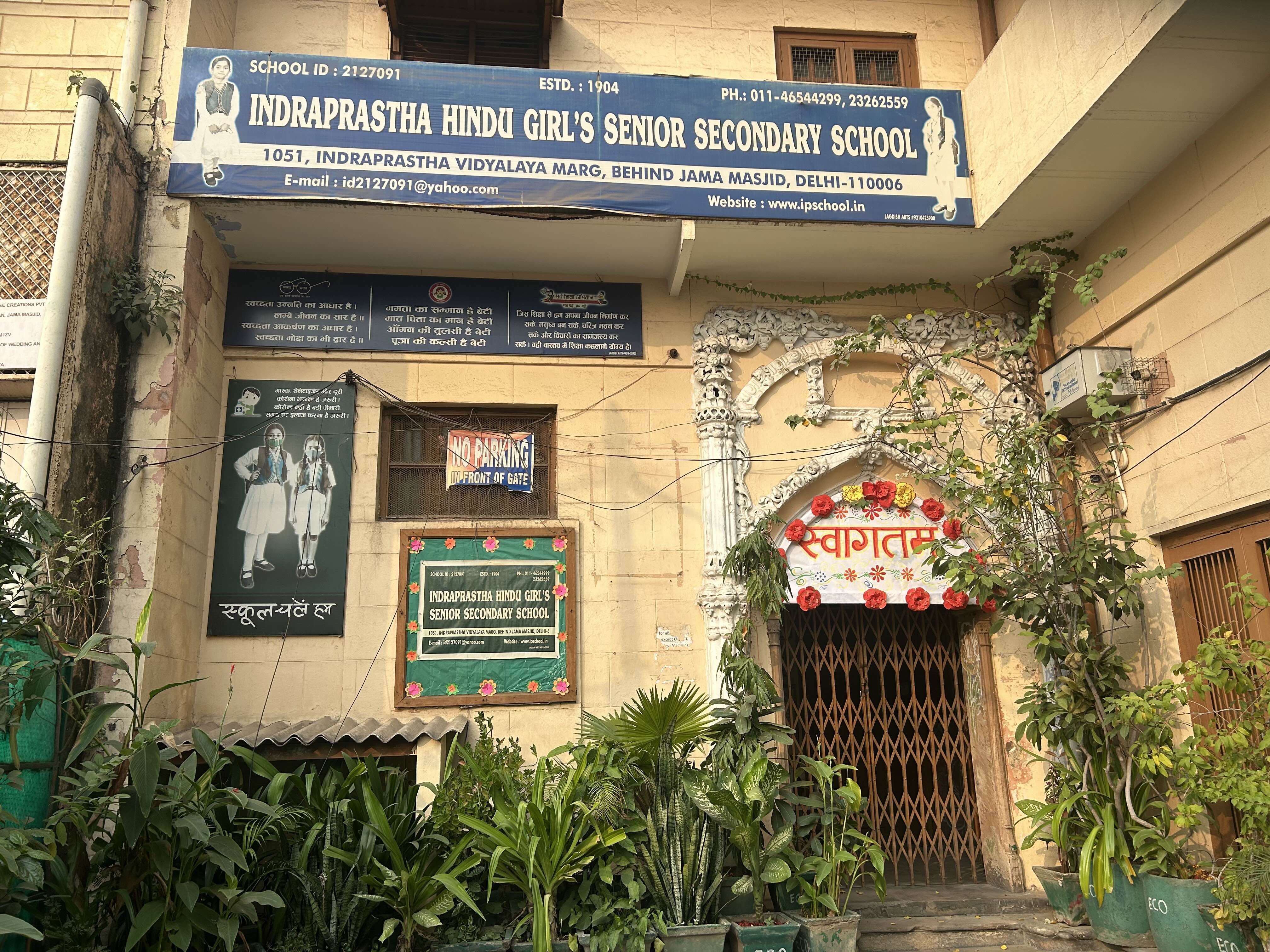
The early-morning ride through its narrow lanes was surprisingly smooth—the city was still stretching awake. The walk began in front of Indraprastha Hindu Girls’ Senior Secondary School, the city’s first girls’ school, tucked behind Jama Masjid.

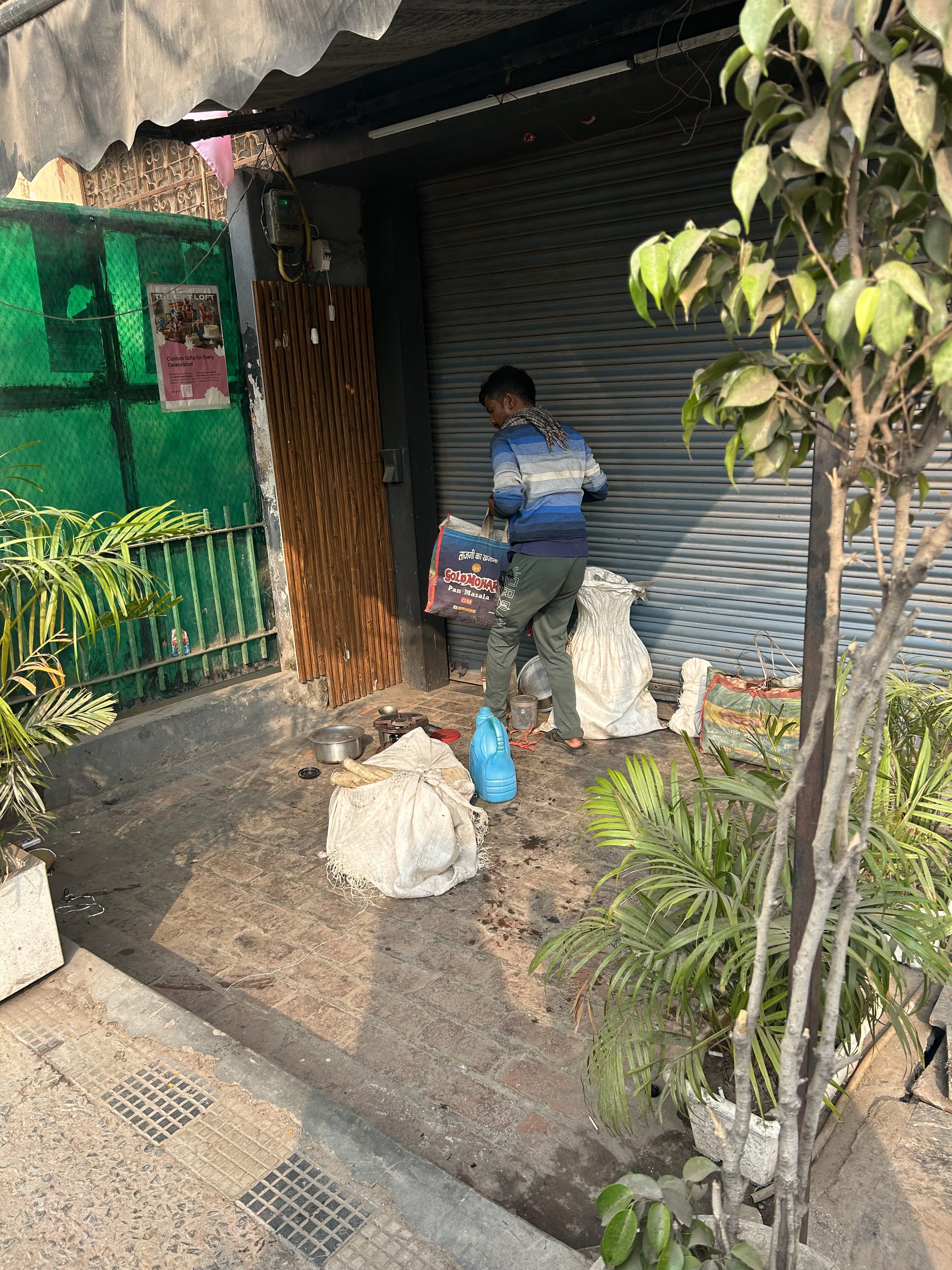
As we gathered, waiting for the walk to begin, I absorbed the scene around me: daily-wage earners cooking their modest meals, people taking their first sip of morning tea, a few men bathing by a tubewell, and roadside vendors quietly assembling their makeshift shops. Purani Dilli wakes up in chapters, each rooted in centuries of habit.

Once we set off, Chef Sadaf immediately challenged our assumptions. “This,” he announced, “will be a vegetarian food walk.” A ripple of surprise passed through the group.

Our first item was chai. I’m not a tea drinker—certainly not fond of roadside versions that lean heavily on sugar—yet this cup was surprisingly pleasant and perfectly sweet. Warm hands, warm cup, cold morning: Delhi in winter distilled into a moment.

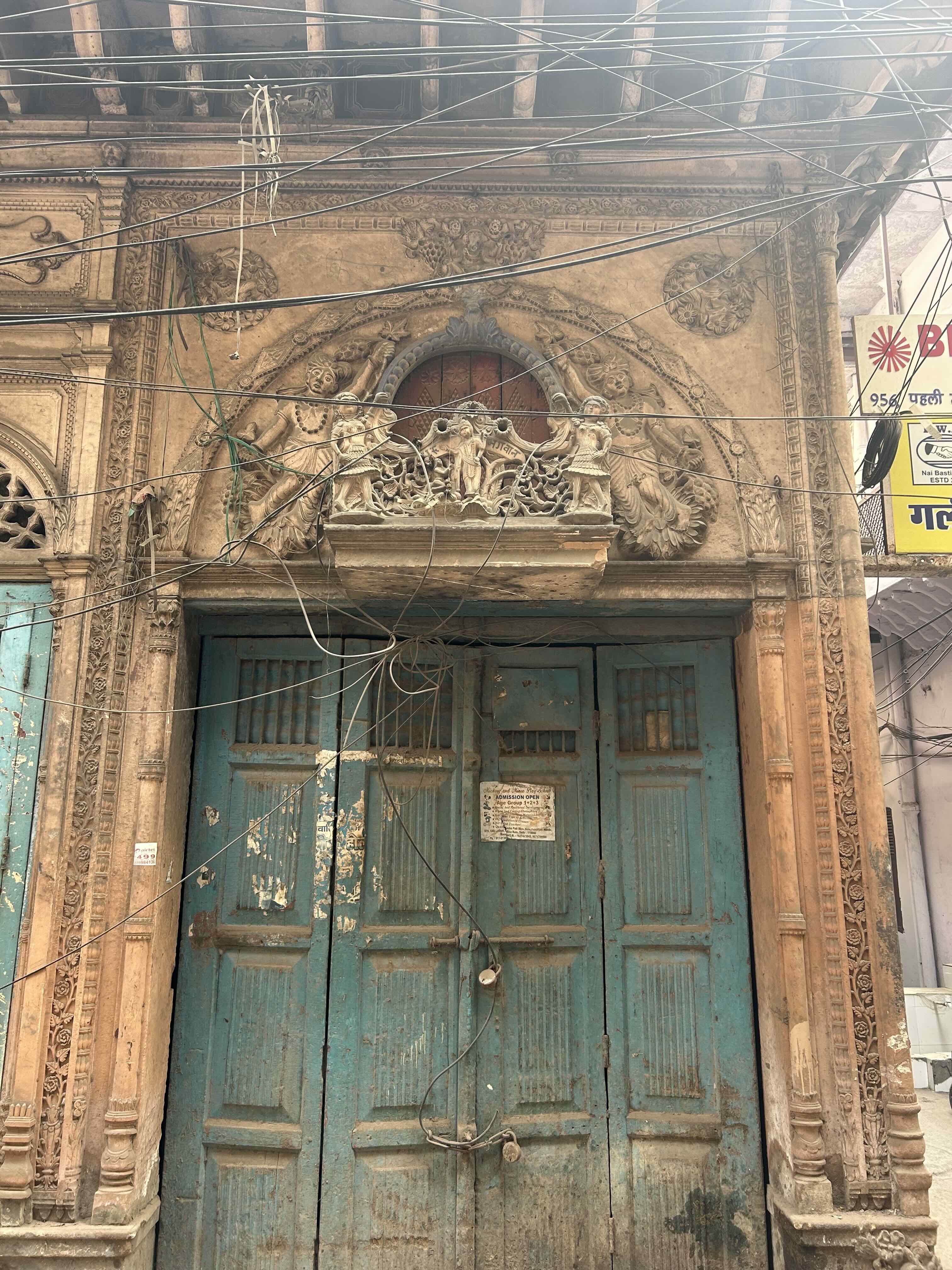
As we walked, we learned how the old city once attracted people for their skills, leaving an imprint in street names that referenced professions long since faded. Navigating the tangled lanes—dodging bikes, scooters, rickshaws—was an adventure of its own. We passed doors that had obviously seen better days. The neighbourhood is a labyrinth where every turn looks like the last, except for the unmistakable pulse of life running through it.

Our next destination was the famed Lotanji Cholewale. The shop, recently catapulted into mainstream fame after being invited to serve at the Ambani wedding, was buzzing with customers. The kulcha had a different texture than the ones I’d eaten before, while the chole was intensely flavourful. They serve three versions: less spicy, medium, and very spicy. We prudently stuck to the middle path.

As we dipped warm kulchas into spicy chole, perched precariously on the seat of a parked scooter, our group discussed breads—origins, variations, and adaptations—proving that food walks can easily turn into impromptu seminars.

Then came the moment I was waiting for: Daulat ki chaat. I had only spoken about it two days earlier. Light, airy, delicately sweet—made from milk and winter air—it remains one of North India’s most magical seasonal desserts. I learned that its origins trace back to Afghanistan, and over time, it has woven itself into the culinary traditions of cities across northern India.

We emerged from the maze onto Chawri Bazaar—“Chawri”, from chawra, meaning “wide”. It may not appear wide today, but compared with the lanes we had just left, it certainly felt expansive. Here, we sampled warm nan khatai. I’ve eaten this crumbly cookie countless times, but never fresh off the tawa. Warm, fragrant, and gently melting—it was a revelation.

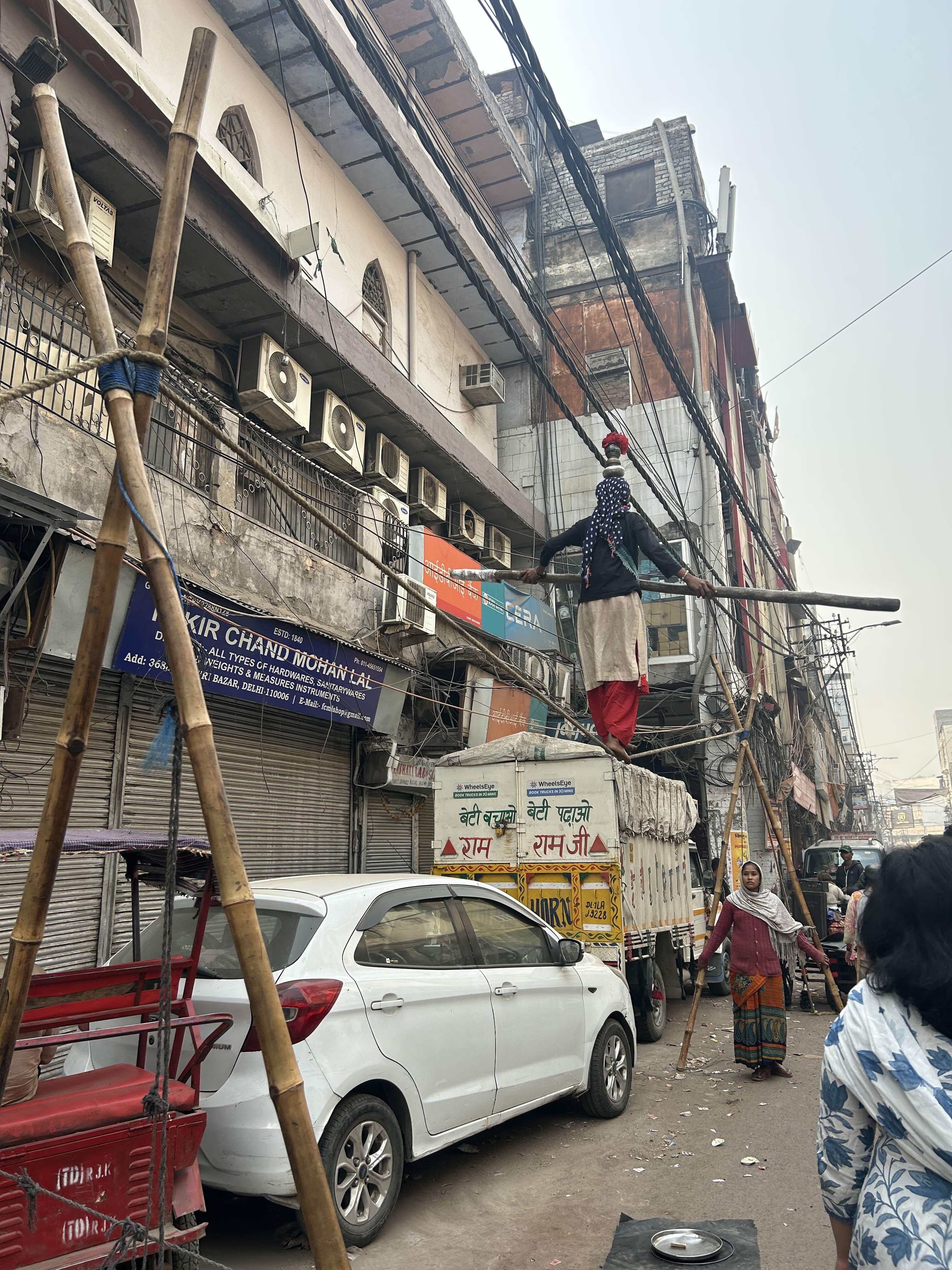
As we ate, life continued around us in its uniquely Purani Dilli way: a young girl performing acrobatics, a man getting his ears cleaned, people lining up for a shave and a massage. The old city compresses entire worlds into the width of a street.

Next came Bedmi Puri with aloo ki sabzi and a pickled carrot. Piping hot, perfectly spiced, devoured instantly. We were told to save a spoonful of the aloo sabzi for the following item—Nagori Puri with halwa. Our walk leader then demonstrated a delightful trick: puncture the top of the Nagori puri, add the leftover aloo sabzi, and crown it with a generous spoon of halwa. A small act of alchemy.

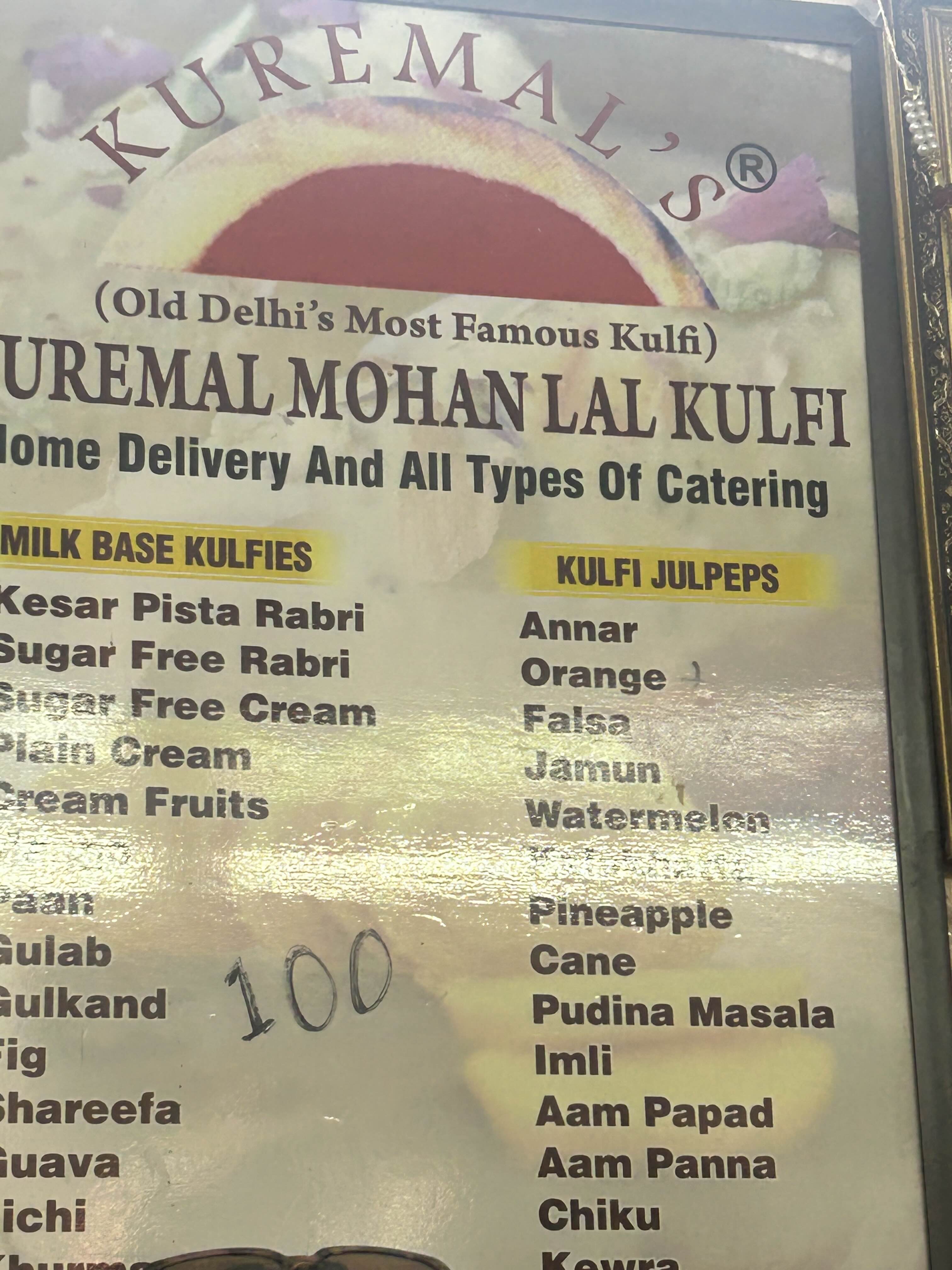
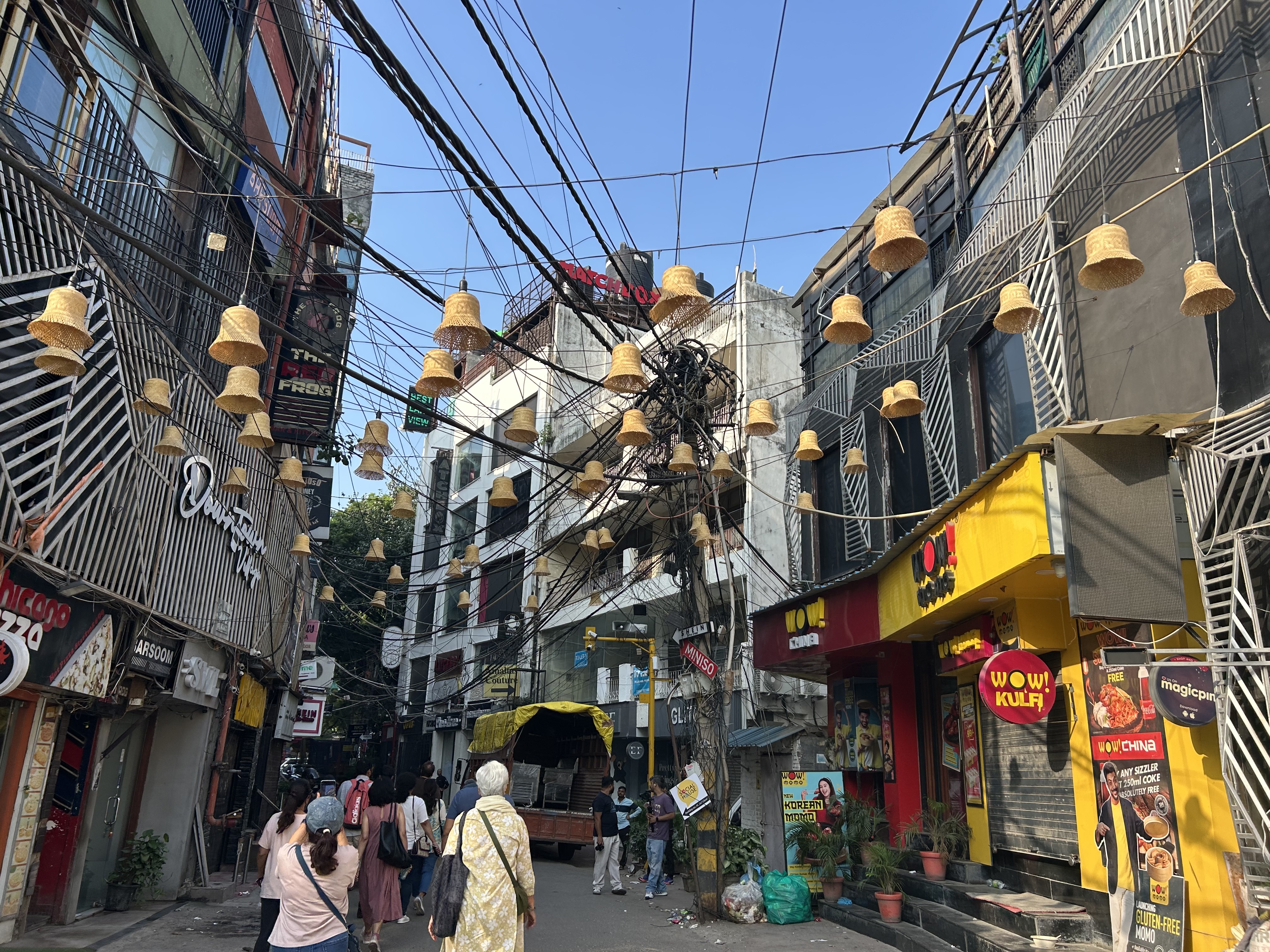
Our morning ended at one of the city’s oldest kulfi shops. As we savoured our final treat—a Santara kulfi—I noticed a curious word painted on the board—Julpep. A blend of juice, lollipops, and popsicles. Who knows—perhaps someday it will find its way into a dictionary.

Satiated with food and stories, I realised something: it isn’t just the seven historic cities of Delhi that coexist—it’s the hundreds of culinary traditions layered across generations. Purani Dilli is not merely a place; it is a living archive of flavours, skills, and memories. Each lane carries stories, each shop an inheritance, each dish a fragment of Delhi’s ever-growing love affair with food.

A Walk Through Tughlaqabad: Heritage, Haze, and the Strange Comfort of Continuity

It was during a birthday celebration for a senior colleague that the conversation inevitably drifted to Delhi’s abysmal air quality. Amid complaints about AQI, someone turned to me and asked, “Aren’t you the one who posts about heritage walks in the city?” It was an amused, almost affectionate observation. The history enthusiast in me, forever trying to nudge colleagues into discovering the layered stories of Delhi, felt seen.

The next question followed immediately: “Are the walks held even in this pollution?”
I nodded. Yes. Many of them, I said, lead us to some of the city’s most extensive green patches, pockets of nature where Delhi briefly remembers the ecology that once supported its many empires.

Returning to Tughlaqabad

This weekend’s INTACH walk took me to Tughlaqabad, one of Delhi’s seven historical capitals. As I approached the massive fortifications, I found myself slipping back to another winter afternoon, possibly January 2006, when a friend and I first tried to explore Tughlaqabad. I had just bought my first car. We parked casually at the entrance and wandered inside, unaware of what awaited us.

The fort walls that day were crowded with groups of young men. There were no guards in sight. Two women alone in an unfamiliar, isolated space, we exchanged a brief glance, turned around, and left within minutes. That aborted visit stayed with me.

This time, everything was different. Surrounded by fellow history enthusiasts and led by the brilliant Ratnendu Ray, the experience was a complete reversal. We discussed everything from medieval weaponry to the economics of the 14th century, pausing often to take in the scale of Ghiyas-ud-Din Tughlaq’s vision.

Walls Built to Deter Eternity

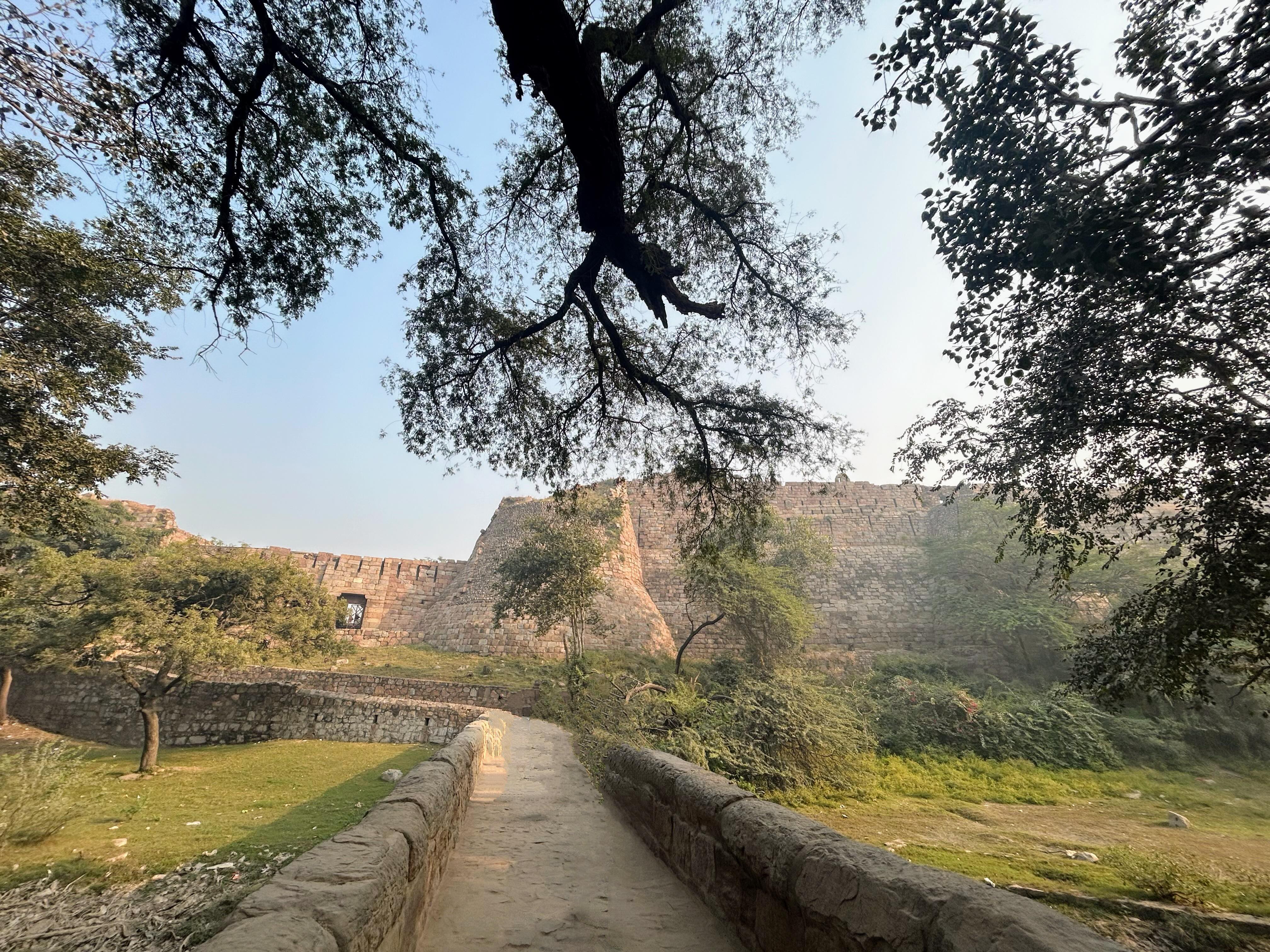
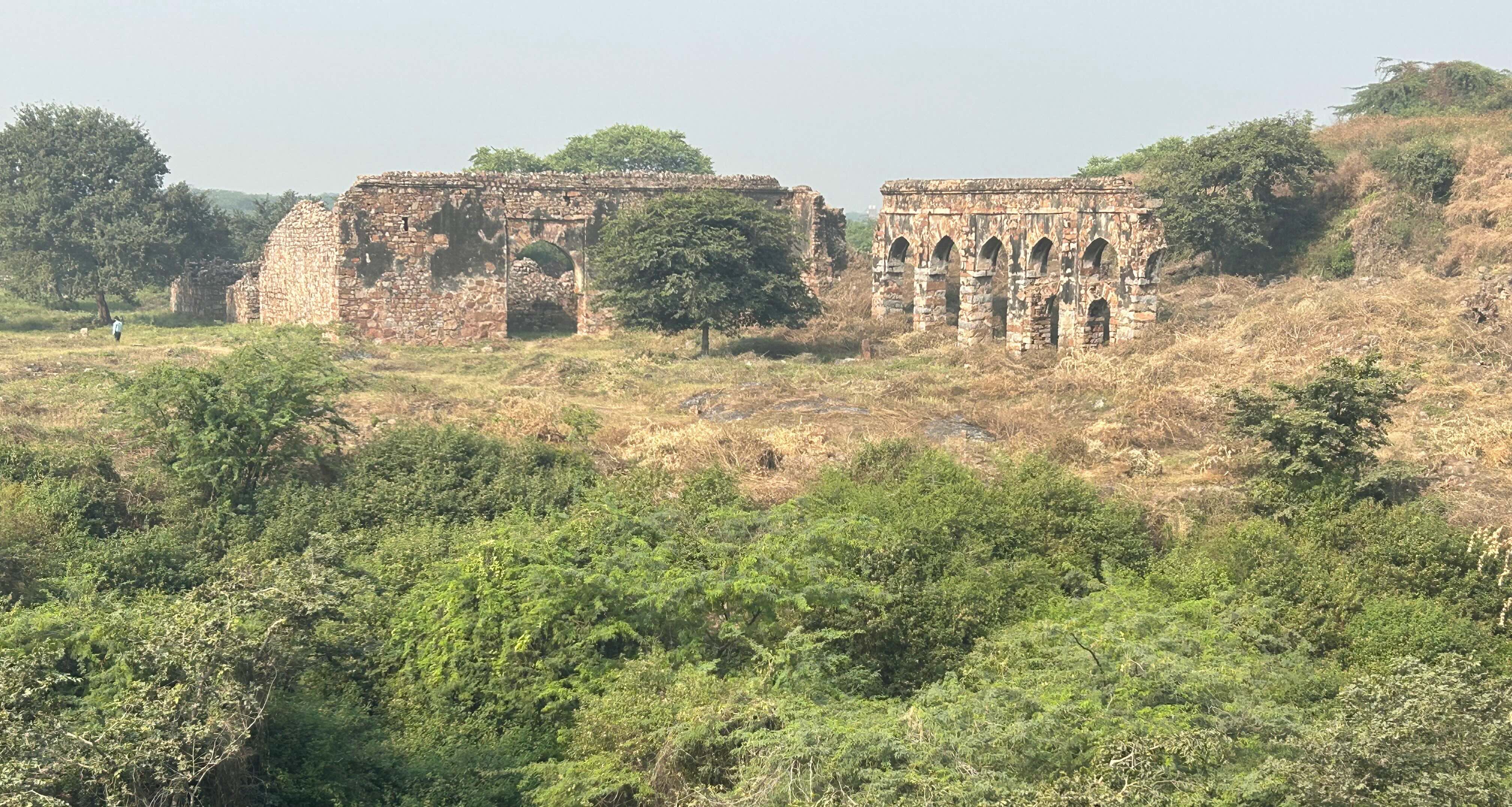
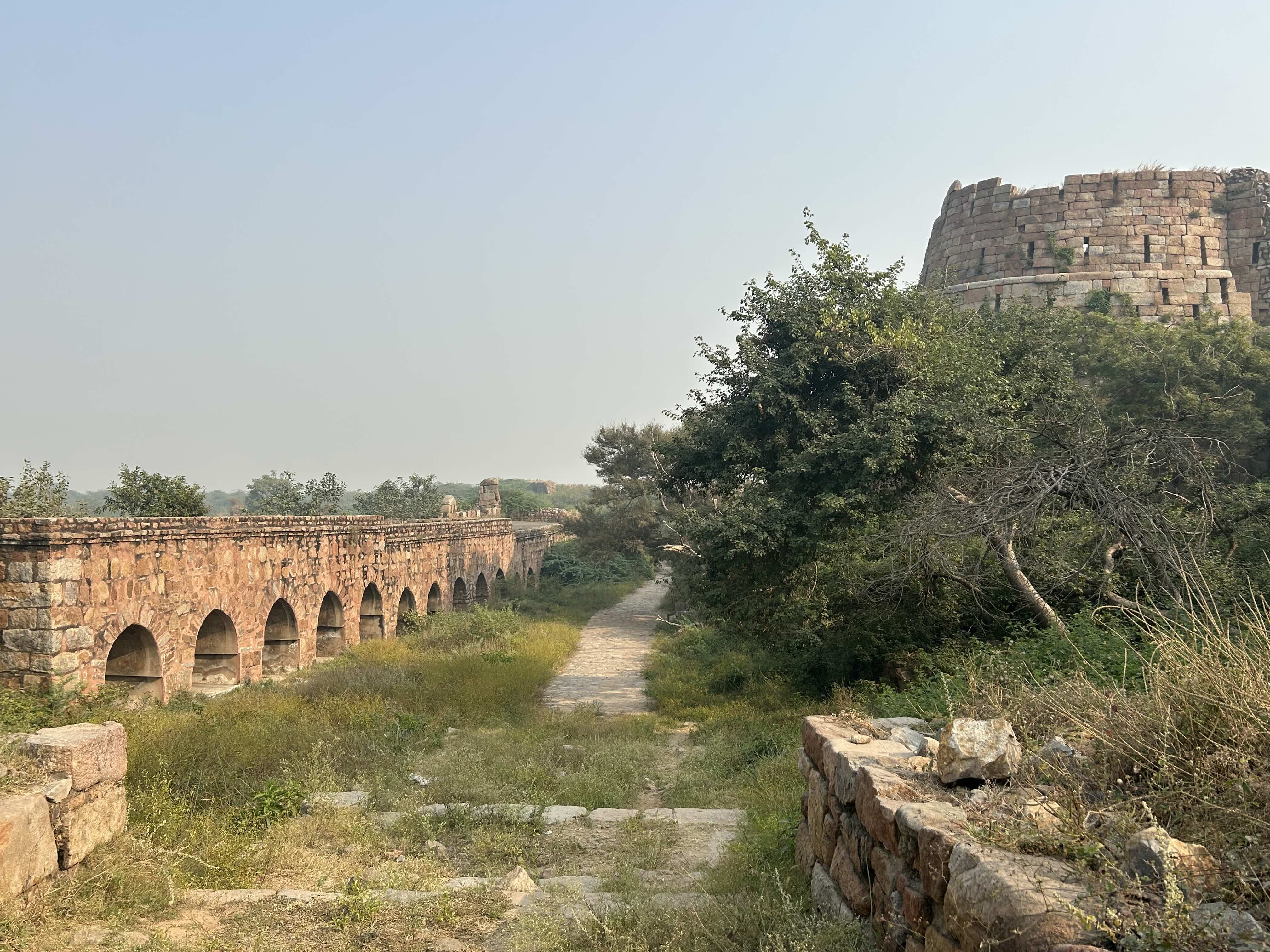
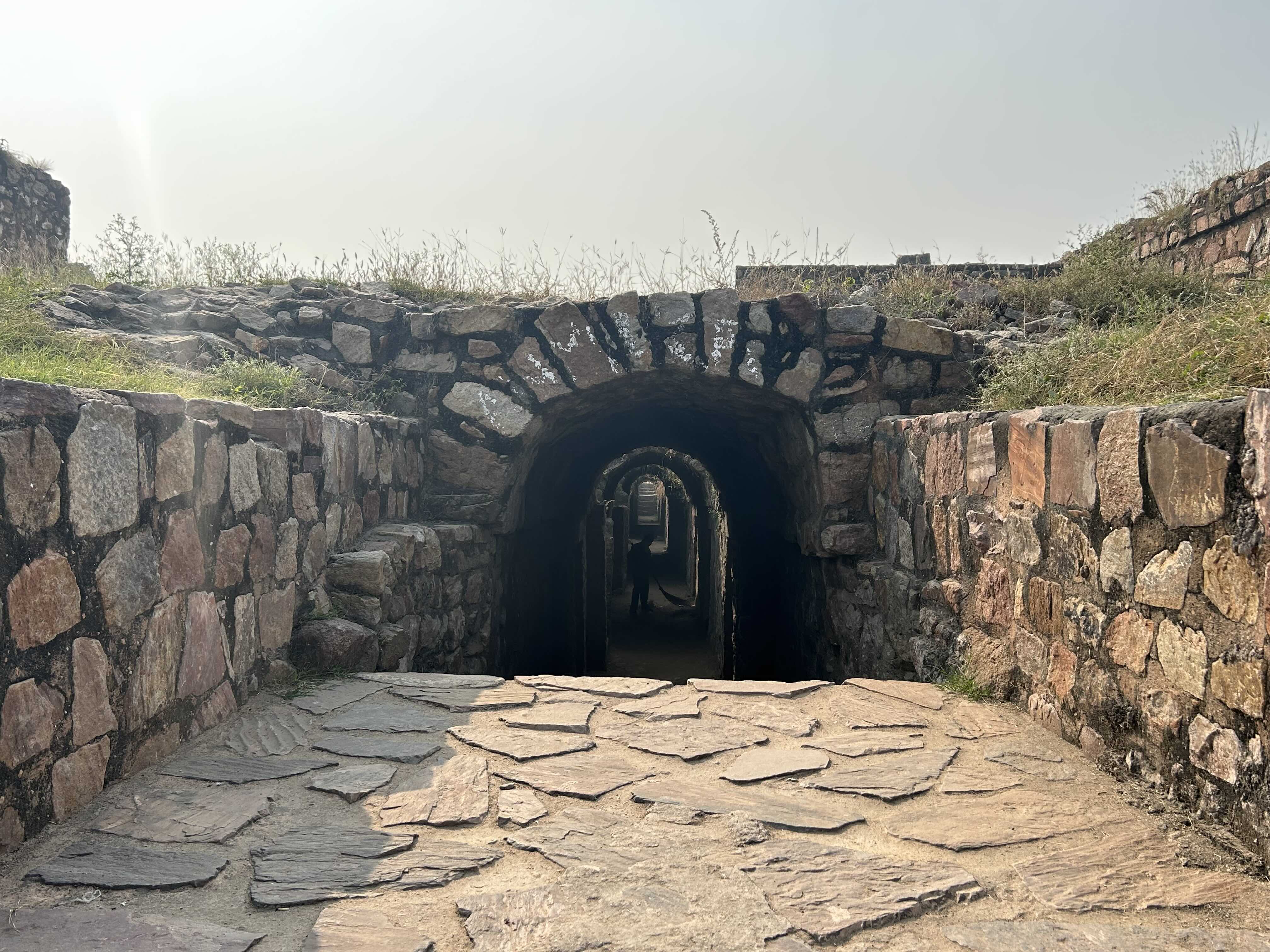
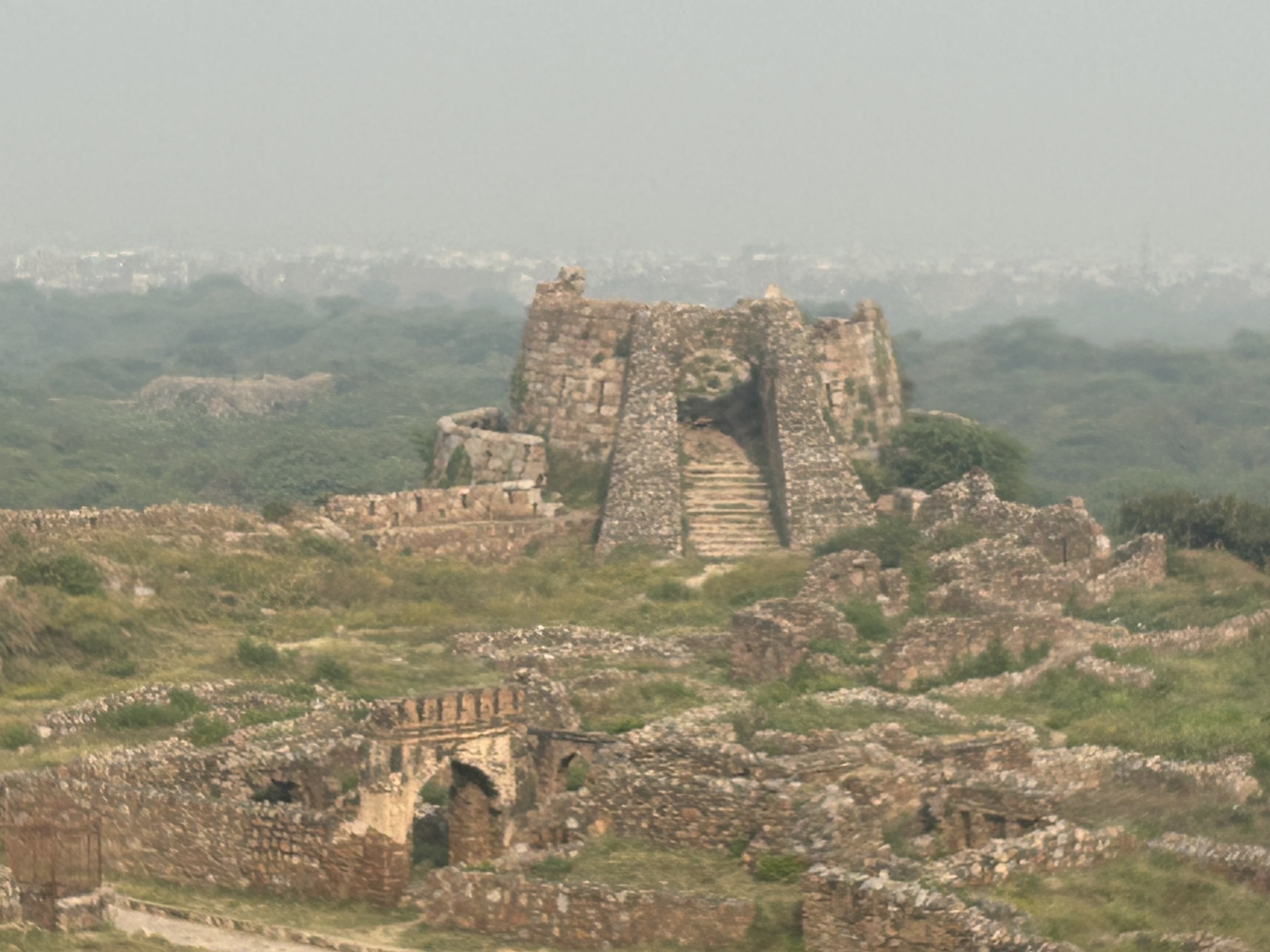
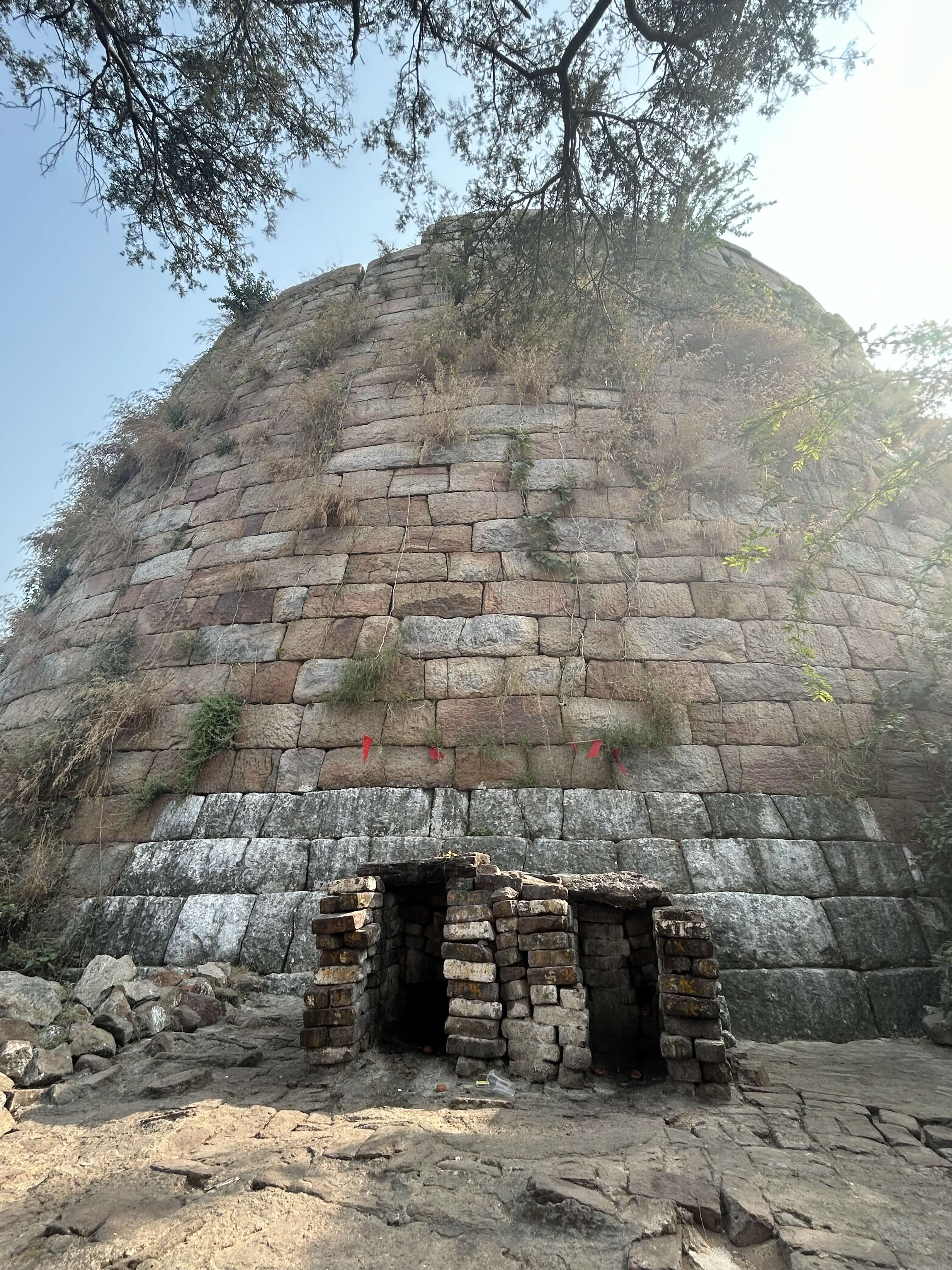
The fort announces its presence long before you reach the gate. Even in their dilapidated state, the enormous stone walls, spanning over six kilometres in a half-hexagonal shape, retain a quiet arrogance. They were once meant to intimidate enemies, withstand sieges, and hold power. Today, they are softened by shrubs, wild grass, and the slow generosity of time.

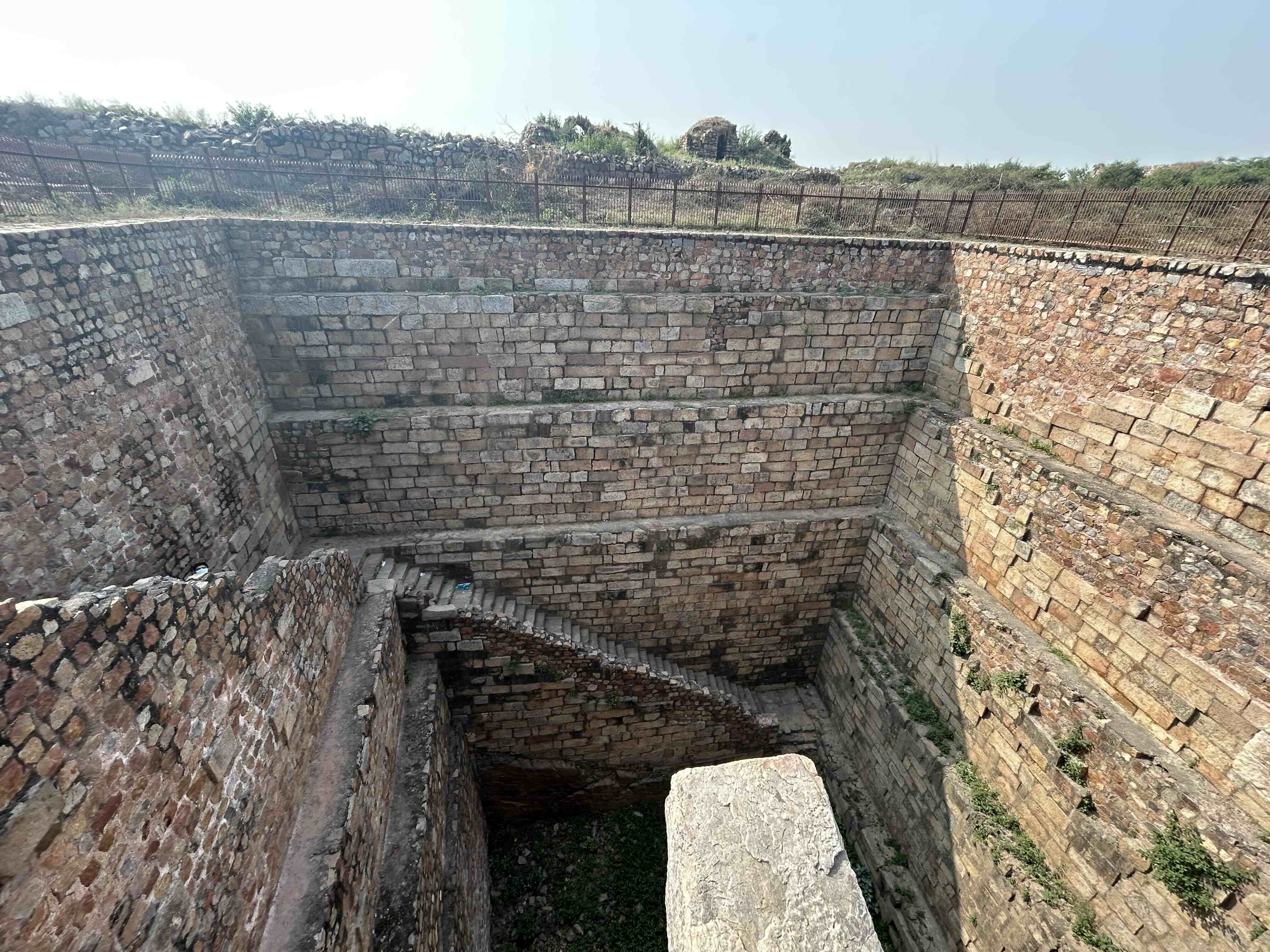
We heard stories of the Tughlaq dynasty, of Ghiyas-ud-Din’s famously strained equation with the Sufi saint Nizamuddin Aulia, and the curse that supposedly doomed the fort soon after its completion. The palace area once had a deep baoli, a hamam, and a small mosque; the walk leader showed us older photographs, and it was sobering to see how much the site has eroded. Even thick, defiant walls cannot withstand the patience of centuries.

Haze Instead of History

We climbed to one of the highest points for a panoramic view of Adilabad Fort and Nai-ka-Kot. But all we could see was haze—Delhi’s new, stubborn skyline. Even the tomb of Ghiyas-ud-Din Tughlaq, barely across the road, was a ghostly silhouette.

On the way down, we wandered into a quiet corner where rocks lay piled along the fort wall beside a mound of used diyas. A local legend speaks of a pir, revered by both Hindus and Muslims. The fort may have been abandoned by royalty, historians, and tourists at various times, but the local community has gently folded it into their everyday spiritual landscape.

A Tomb in a Garden

Across the road, the ruler’s red-sandstone tomb sits inside an unexpectedly well-maintained, manicured patch of green. It also houses the tomb of a military commander named Zafar. With little historical detail available about him, we found ourselves imagining scenarios that could explain how a commander earned a resting place beside a king.

Driving Home With Impermanence

After more than three absorbing hours, as I drove away, a familiar thought settled in.

Empires rise, rulers command, forts stretch stone by stone toward the sky, and then, quietly, they collapse into stories, legends, and vegetation.

Power is temporary. Architecture is temporary. Even memory is temporary.

And yet, the act of walking through history, of witnessing its ruins with others who care, felt strangely grounding. In a city battling pollution, noise, and restlessness, these remnants remind us that everything is transient, but nothing is ever entirely lost.

Walking Through Memory: From Ugrasen ki Baoli to Jantar Mantar

It began, as many good things do, with a conversation over nostalgia.

About a month ago, a colleague who had started his career with me reminisced about our old office in Connaught Place, New Delhi. That memory sparked a half-hour exchange of stories — about coffees and milkshakes, thalis and biryanis, the food at various State Bhavans, and those impulsive lunch-hour shopping sojourns.

We were in our mid-twenties then, discovering what independence truly meant. So when an INTACH walk from Ugrasen ki Baoli to Jantar Mantar popped up in my WhatsApp feed, I knew I had to join. My first five years in Delhi — and at Connaught Place — had left me with some of my fondest memories. This walk, I thought, might help me know a little more about the city that once shaped my days. And with Ratnendu Ray leading it, there were bound to be stories worth walking for.


Setting Out

The email had advised us not to bring vehicles since the start and end points were different. But, true to my contrary instincts, I drove anyway. I parked opposite Barakhamba Road, found no attendant in sight, and left the car neatly in a corner so as not to inconvenience anyone.

It was a crisp morning, and I decided to walk to Hailey Road, where the Baoli stands. The roads were largely empty — the kind of quiet Delhi rarely offers. The footpaths were uneven, sometimes absent, sometimes grimy, but the city already felt alive in its own unhurried way.


The Baoli and Its Backstories

Nestled among high-rises, Ugrasen ki Baoli is remarkably well-maintained and ever popular with tourists. Our group gathered in the soft winter sun, listening to tales of Maharaja Agrasen, the Aggarwal Samaj, and the care of Delhi’s monuments.

As we left the site, someone asked who “Hailey” was — after whom the road was named. That led to the story of William Malcolm Hailey, Governor of Punjab and Delhi’s first Chief Commissioner. His work on the Jhelum Canal, which boosted agriculture in undivided Punjab, earned him a knighthood. Interestingly, what we now call Jim Corbett National Park was once Hailey National Park.

It struck me that the naming and renaming of roads — so often seen as a modern exercise — have always reflected changing eras and ideologies.


Glass Elevators and Forgotten Doors

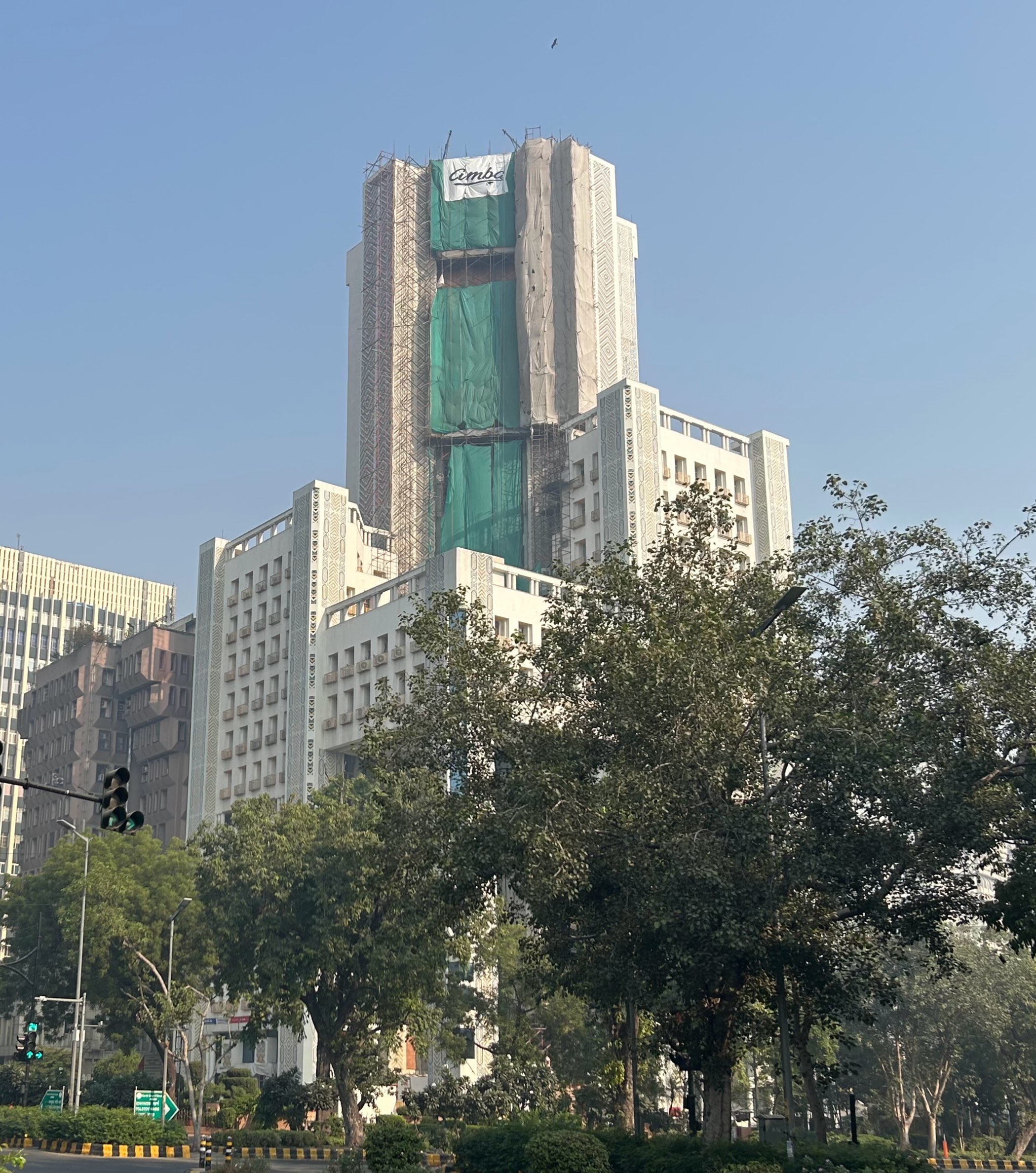
Leaving Hailey’s history behind, we reached the Ambadeep Building — a striking landmark and the first in Delhi to feature external glass elevators. I must have passed it hundreds of times, marvelling at its mirrored façade, yet it was only today that I noticed its courtyards, terraces, and mosaic tiles.

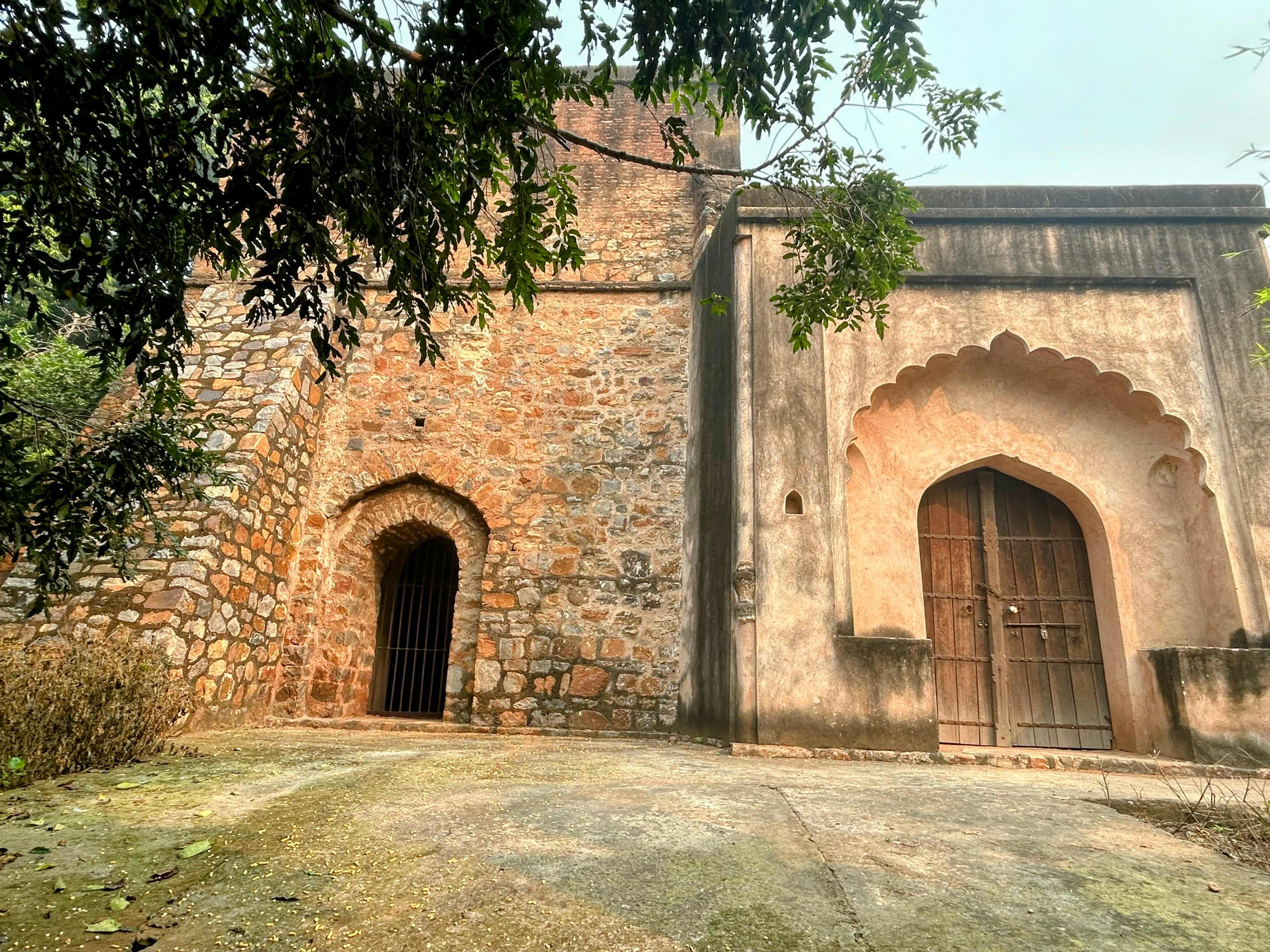
A little ahead, as we turned toward Janpath, a locked old doorway caught our attention. Above it hung a faded board that read Martin Burn Limited. To most Bengalis, Martin Burn is synonymous with the construction of the iconic Howrah Bridge. What I hadn’t known was that the company was co-founded by Sir Rajendranath Mookerjee and Sir Thomas Acquin Martin — and that they chose the name “Martin” to sidestep the racial bias that Indian firms faced in securing British contracts.

Sometimes, the smallest details in a cityscape open windows to vast forgotten worlds.


Architecture, Emporiums, and Echoes of Communication

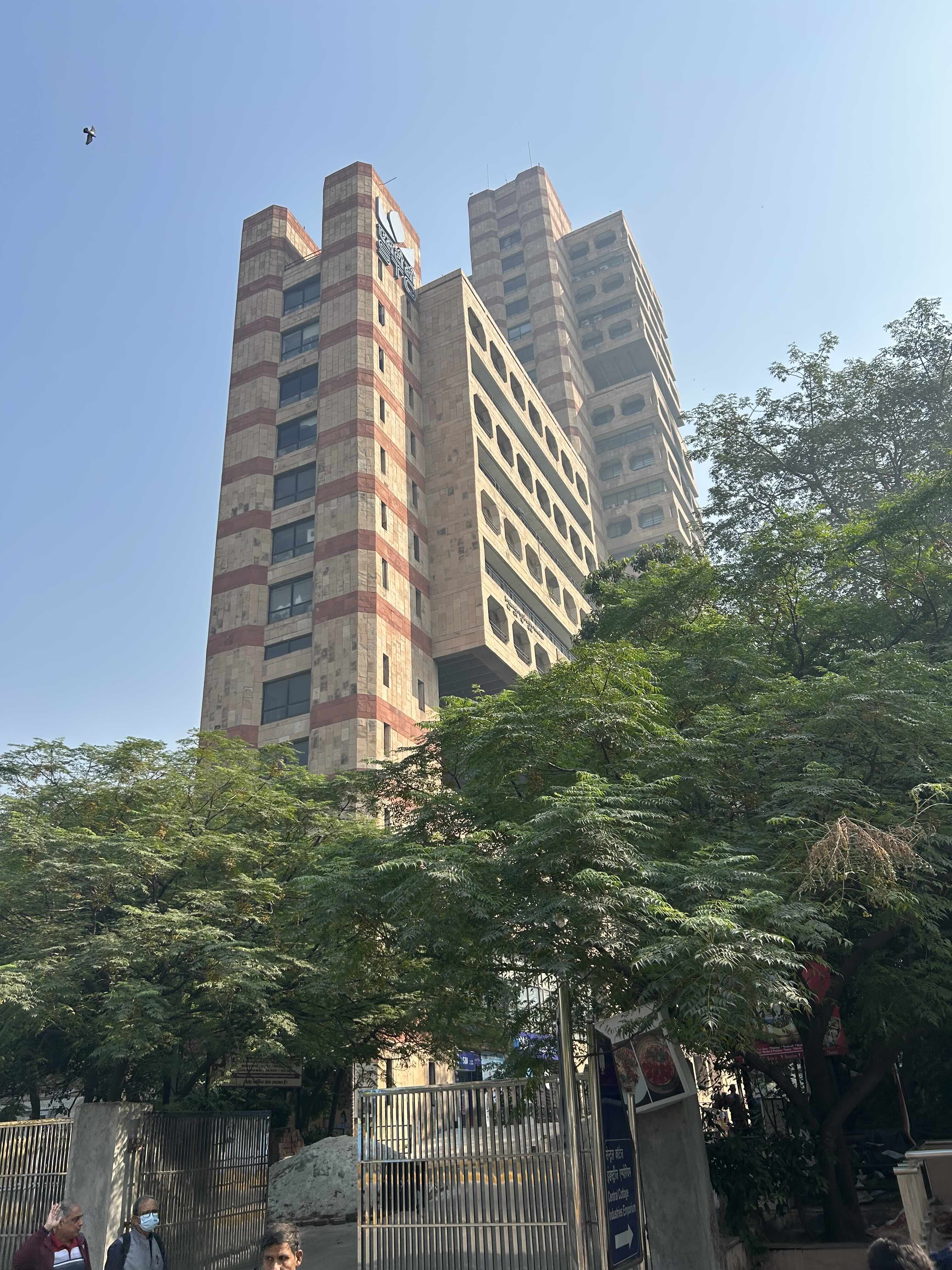
On Janpath stood Jawahar Vyapar Bhavan, home to the government emporium. I’ve always found the building intriguing, but I learnt that its design blends Japanese “Metabolism” architecture with Mughal influences — reflected in its material and rhythm.

Just ahead loomed the ageing MTNL building, its façade dulled by time, and in front of it, the bust of Rafi Ahmed Kidwai — India’s first Communications Minister. Today, when we take overnight deliveries and instant communication for granted, it’s easy to forget that Kidwai was the one who introduced night mail flights between Delhi, Mumbai, Kolkata, Chennai, and Nagpur — an innovation that once shrank the country’s distances.

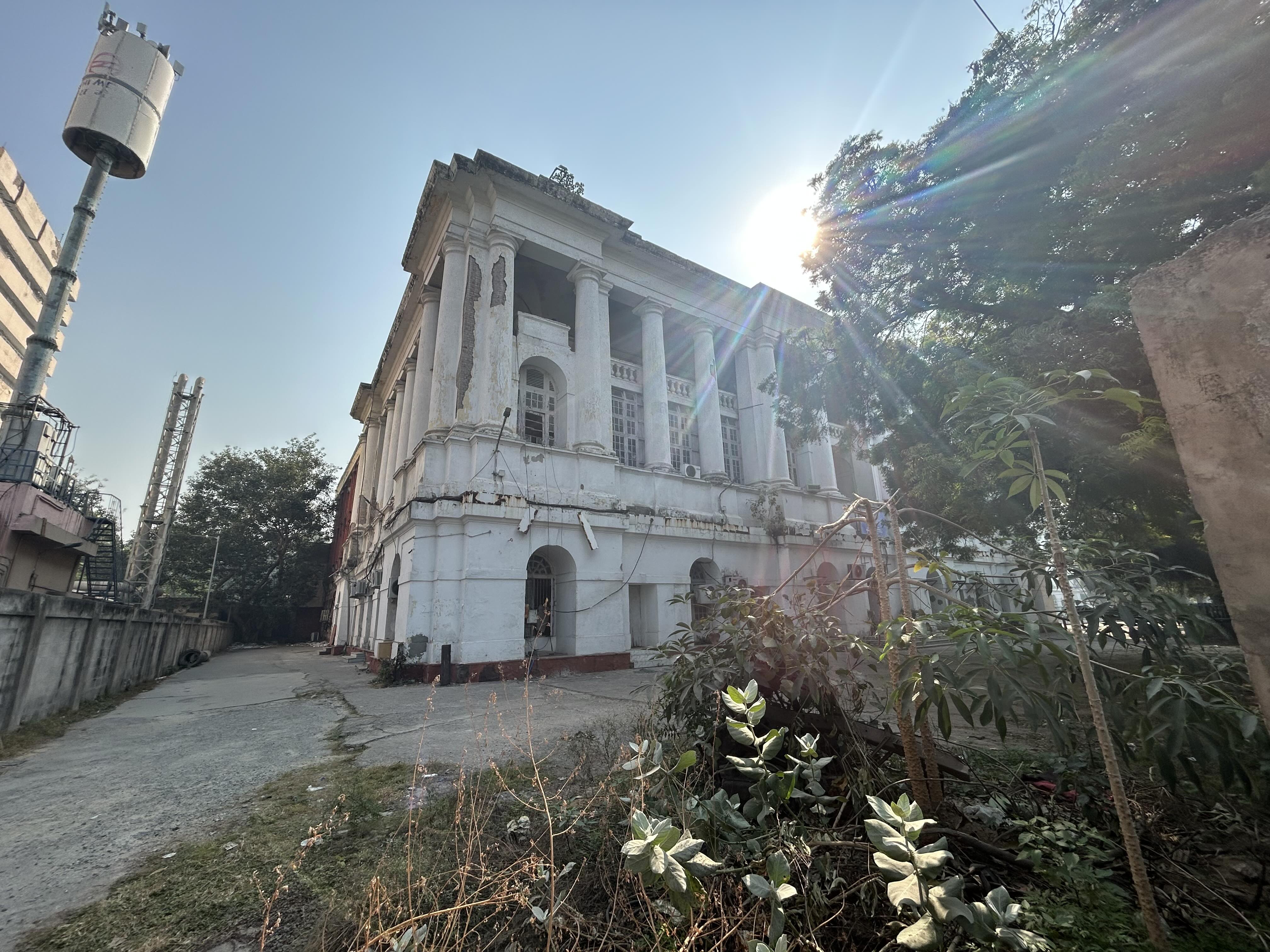
Further down, Eastern Court stood in quiet resignation. Once, along with its twin Western Court, it had housed legislators. While the Western Court still serves as an MPs’ hostel, the Eastern Court was converted into offices for the Post and Telegraph Department. The building’s fading grace seemed to mirror the slow decline of the postal era itself — a reminder that communication, too, has its ruins.


Temples, Protests, and Time

Our next stop was a small, almost hidden temple of Batuk Bhairav, located behind Jantar Mantar. It once formed part of the same complex. We often forget that the land the British chose for their capital wasn’t empty — it was dotted with villages, shrines, and habitations. A sizeable portion belonged to the Maharaja of Jaipur, which is why this temple is still maintained by the Rajasthan government.

As we neared Jantar Mantar, the sound of chants grew louder. Protesters were gathered near the monument, many nibbling at roadside snacks between slogans. I’ve always wondered how this spot became India’s favourite protest site — perhaps that’s a story for another walk.


At Jantar Mantar — and Beyond

Jantar Mantar itself needs no introduction. The site, once neglected, was restored by the British. Its sandstone instruments, though outpaced by modern technology, remain astronomical marvels — precise, poetic, and quietly monumental.

The walk ended, but the city’s spell didn’t. I decided to take a slight detour to buy shoes. After trying several shops, I discovered that none had my size — everything was meant for larger feet.

So much for the saying, “Good things come in small packages.” The package, alas, still needs shoes.

Epilogue: The City as a Companion

Delhi often feels like a living palimpsest — each layer of its architecture, every old signboard, a trace of time refusing to fade. That morning’s walk wasn’t just a lesson in history or urban design; it was a quiet reminder of how cities hold our stories long after we’ve moved on.

Walking through Delhi, I wasn’t just revisiting its streets — I was revisiting myself, the twenty-something with coffee in hand and dreams in her eyes, finding independence one Connaught Place lunch break at a time.

Ridge of Resilience: Seeking Fresh Air in Delhi’s Living History

How is it that as technology advances, the quality of life seems to decline? This thought weighed heavily on my mind as I stepped out into Delhi’s smog-filled morning. Dull. Dreary. Suffocating. Each winter, the capital transforms into a gas chamber, and each year’s promises of cleaner air evaporate faster than the smog settles back in. With my quota of casual leaves exhausted, and thus, my dreams of a temporary escape, frustration clung to me like the haze itself.

Just then, a message flashed: an INTACH heritage walk in the Northern Ridge. A chance to breathe history, if not fresh air. That it was led by a master storyteller Ratnendu Ray, the idea was inviting. I signed up.

Sleep, however, conspired against me. I woke late, rushed through the morning, and hastened toward Kamla Nehru Ridge Park or Bonta Park, frantically searching for Gate No. 1. Inside, a short walk led to Flagstaff Tower, where the group awaited.

On the way, monkeys ambled fearlessly across the path as if they owned it. Morning walkers clutched sticks as insurance. Memories of Vrindavan’s notorious simian bandits resurfaced. Would my glasses survive this walk? But the monkeys only cast indifferent glances my way.


Where History Watches the City Below

The Northern Ridge rises above Shahjahanabad or Purani Dilli, one of Delhi’s seven historical cities. Flagstaff Tower, once a watchpoint, sits at its highest elevation. Today, it is surrounded by trees, but this greenery is not ancient; it is the product of three rounds of afforestation before independence. Hard to imagine that this tranquil patch of forest was once a British encampment during the 1857 war.

Our walk began with stories of the siege, of smoke and cannon fire, where parakeets now flutter, and a glimpse into early war journalism. Felice Beato, the pioneering war photographer, had captured this very landscape scorched by battle. The Delhi Urdu Akhbar had tried to shape public sentiment, reinforcing Bahadur Shah Zafar as the symbolic leader. The tools change, but the media’s role in nation-building and narratives remains constant.

We learned of Brigadier General John Nicholson, the strict Irish officer who commanded British forces from August 1857 till his death in September 1857. His reputation in the North-West Frontier was so imposing that he inspired a cult — his followers, the Nikal Seynis, treating him almost as divine. History has its ironic humour. Interestingly, the cult is said to have lasted into the 21st century.


Ruins, Remnants, and the People Who Remember

Next came Chauburji Masjid — a 13th-century mosque once crowned by four domes, now missing half its crown thanks to the bombardments of 1857. With its gates locked, we admired it from the outside. A group of elderly men paused their morning banter to offer us sweets and snacks. Their warmth cut through the wintry chill — and reminded me that heritage isn’t only stone and mortar, but memory and community.

At Pir Ghaib, originally Firoz Shah Tughlaq’s hunting lodge, a lone structure now stands beside Hindu Rao Hospital. A baoli lies neglected nearby. The mansion of Raja Hindu Rao, once a mighty noble’s residence, has vanished and today stands the hospital in its place. Has history been replaced by urgent modern needs? May be not. People who come to the hospital may not know him but his name carries on.

Near the Ashokan Pillar — fragmented by a 1713 East India Company ammunition dump explosion and later restored — the layers deepened. Mauryan ideals. Tughlaq’s passion for collectibles, Mughal drama. British intervention. Modern restoration. Delhi does not erase its history; it compacts it like geological strata.


A Victory Tower, A Shifted Narrative

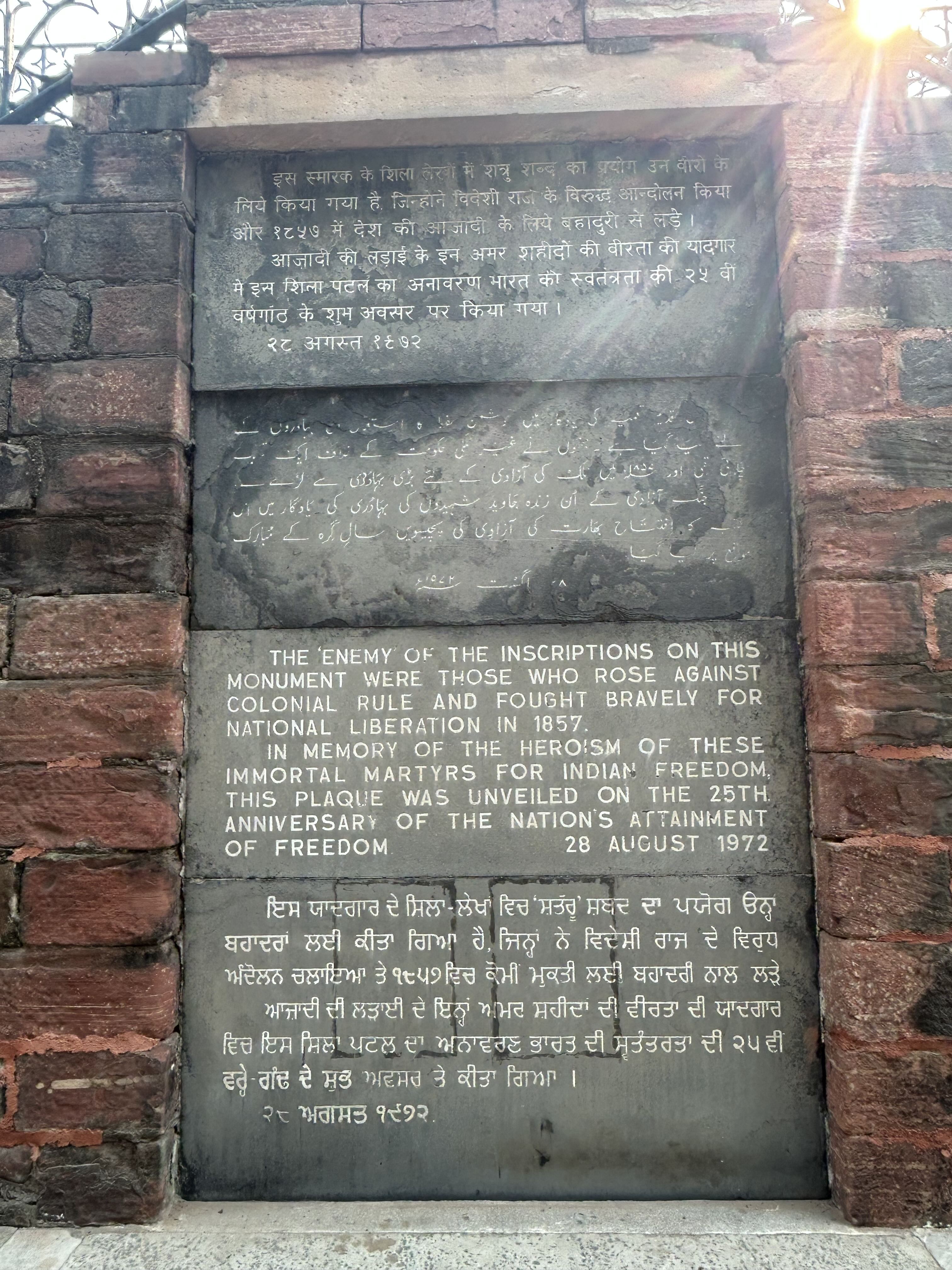
We concluded at the Mutiny Memorial — a Gothic tower celebrating British “victory,” its plaques once labeling Indian freedom fighters as the enemy. After independence, a corrective marker was added: a reminder that the empire’s enemy was India’s fight for self.

Standing there, surrounded by green silence, I reflected on the three hours that had passed. My irritation from the morning now felt smaller. The air may be polluted, but the past here still breathes — vividly, defiantly.

Delhi’s history isn’t merely to be read in books. It rises from the earth, whispers through crumbling walls, lingers in the names of forgotten places. Technology may advance, and quality of life may falter — but what endures are stories. And on the Ridge, the city’s oldest stories still hold their ground.

A Sunday Morning in Hauz Khas: Walking Through Layers of Time

Hauz Khas has always been that buzzing South Delhi address — synonymous with nightlife, chic cafés, designer boutiques, and a medley of world cuisines. For me, it had long existed as that happening urban village, where the city comes to unwind. Someone had once mentioned there were “some old monuments” tucked away there, but then, Delhi has monuments scattered like punctuation marks in its long, layered history.

So when an email from INTACH dropped into my inbox about a heritage walk through Hauz Khas, curiosity nudged me to sign up. That is how, on a quiet Sunday morning, I found myself standing with fellow history enthusiasts at the gates of the Hauz Khas mosque — ready to peel back the centuries, guided by the brilliant storyteller Ratnendu Roy.


Stepping Into a Medieval Campus

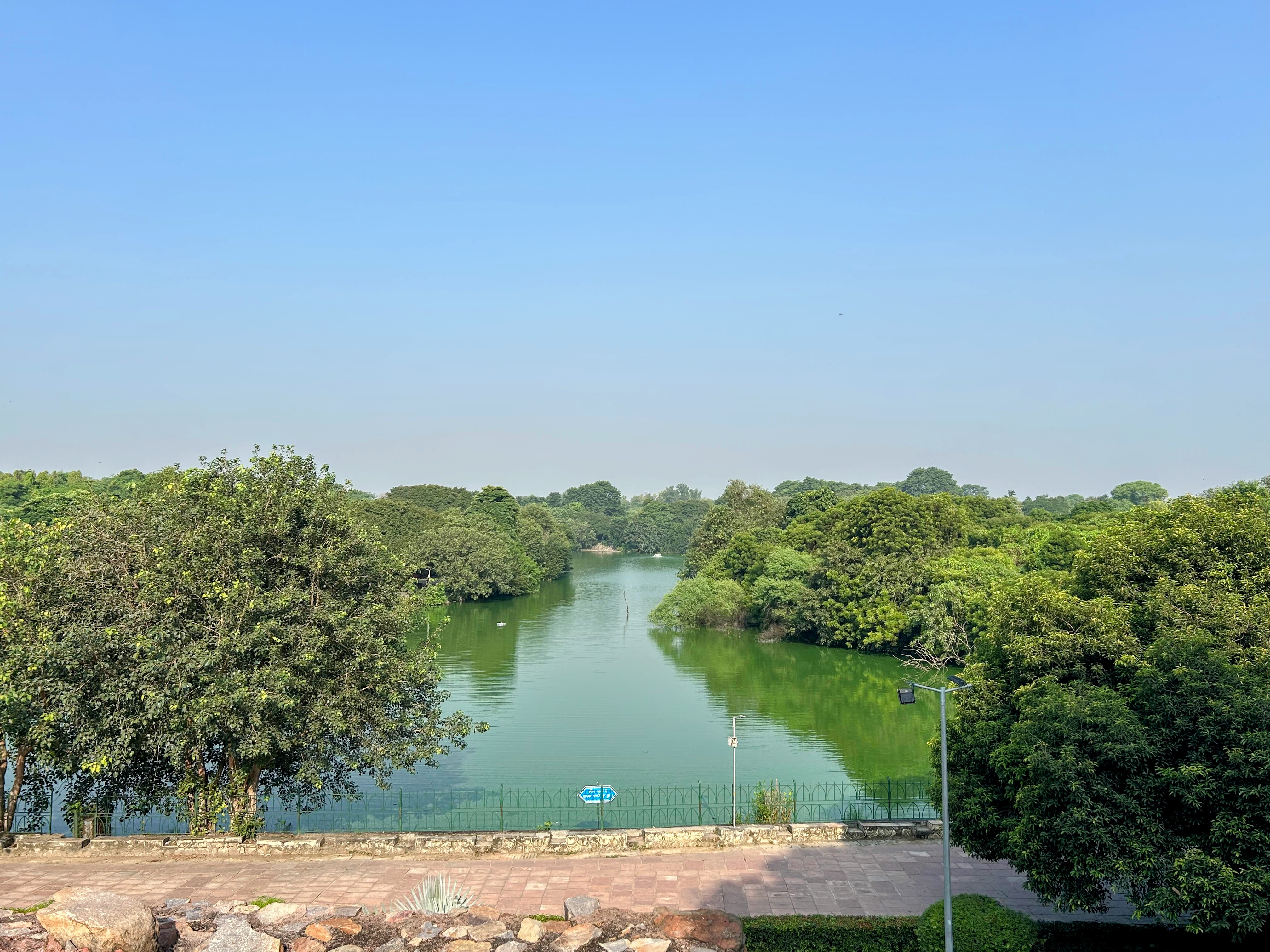
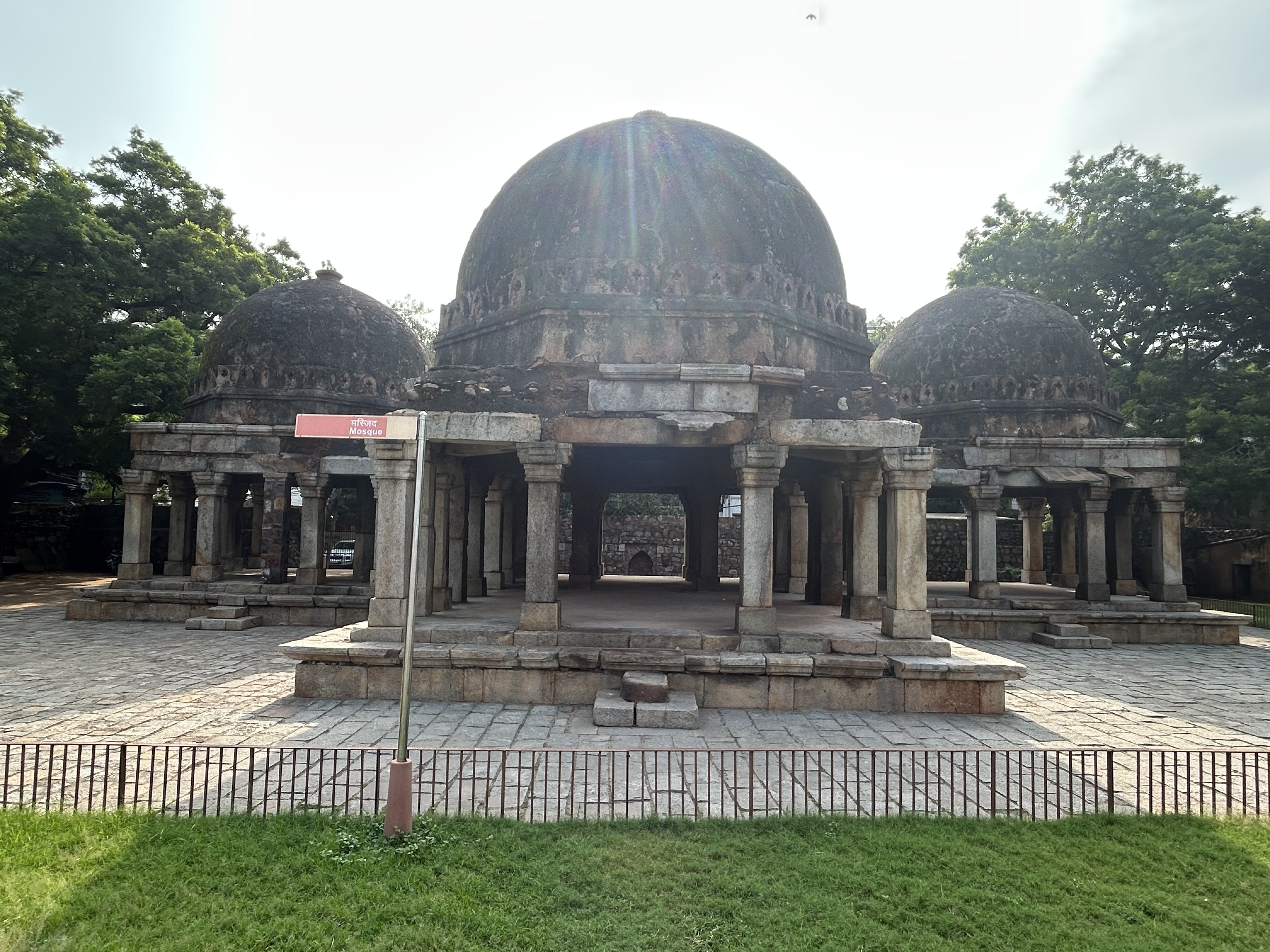
Hauz Khas was originally built by Alauddin Khilji and reached its pinnacle under Firoz Shah Tughlaq. As we walked into the mosque and madrasa complex — complete with hostel cells once meant for students — it was easy to imagine its glory days: serene gardens, the expansive water tank shimmering beyond, and scholars breathing life into its stone corridors.

Tucked within the complex are several tombs, the most prominent being that of Firoz Shah himself. Legend has it that the surrounding village grew as an ecosystem around this premier centre of learning. Even today, gazing out from the madrasa’s colonnaded windows towards the hauz (reservoir), the scene feels remarkably tranquil — as if time has paused just for a moment.


From Forgotten Village to Trendy Hotspot

Hauz Khas village lay largely forgotten until the mid-1980s, when designers and café owners “discovered” its rustic charm. Boutiques sprang up in old village homes, and the area morphed into Delhi’s go-to party destination. Yet behind the neon signs and polished façades, you can still spot the original mud-brick houses — a whisper of the village it once was.

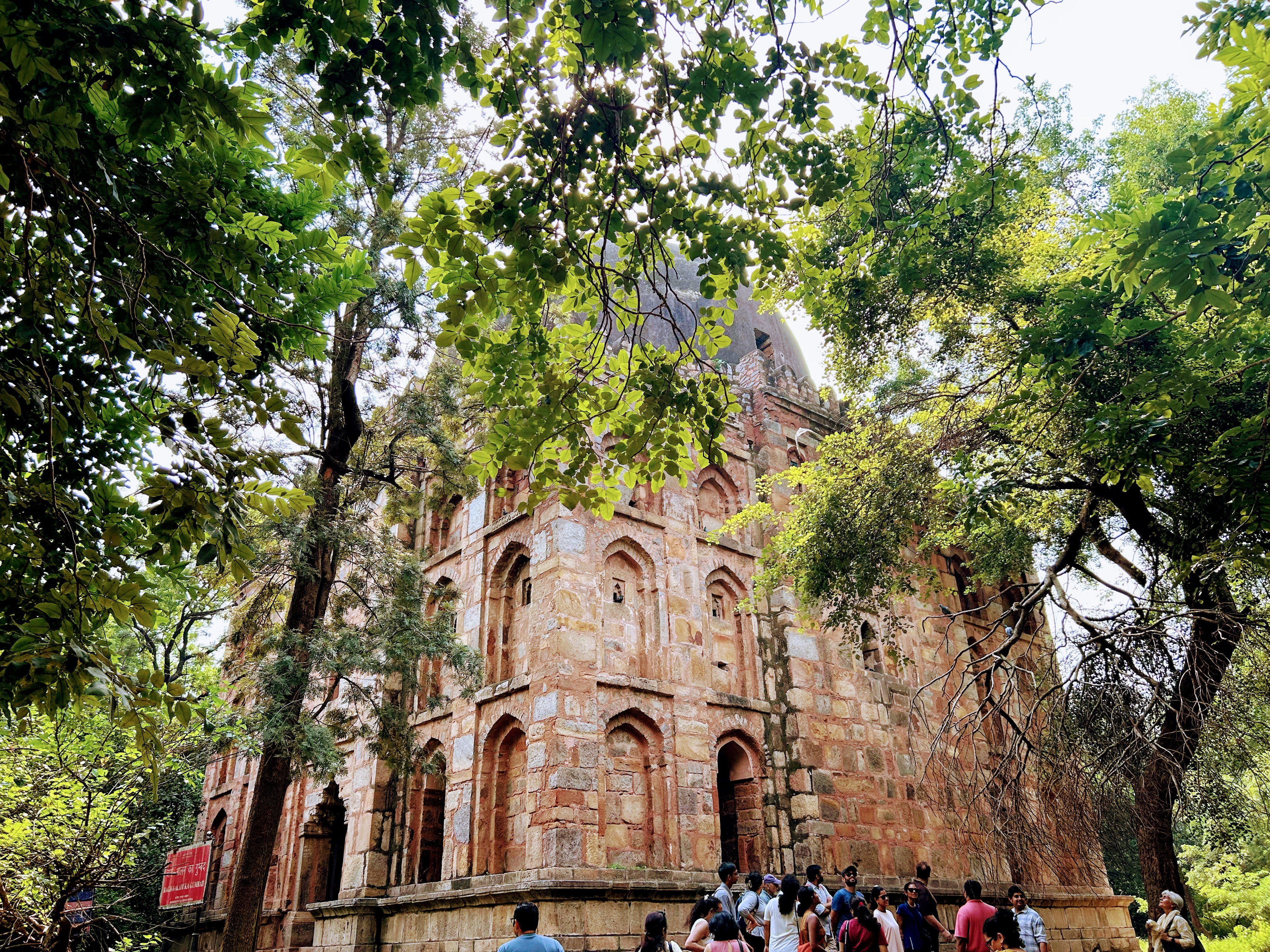
A short stroll led us into the lush Deer Park. It is one of those rare green islands in Delhi where city sounds dim into silence. Joggers, families, and groups of friends dotted the winding paths. Within its leafy expanse stand two medieval gems: the Lodhi-era Bagh-e-Alam ka Gumbad, said to have taken inspiration from Firoz Shah’s tomb, and the diminutive Kali Gumti, whose cenotaph has vanished into history’s mists.


Munda Gumbad and the Whisper of the Wind

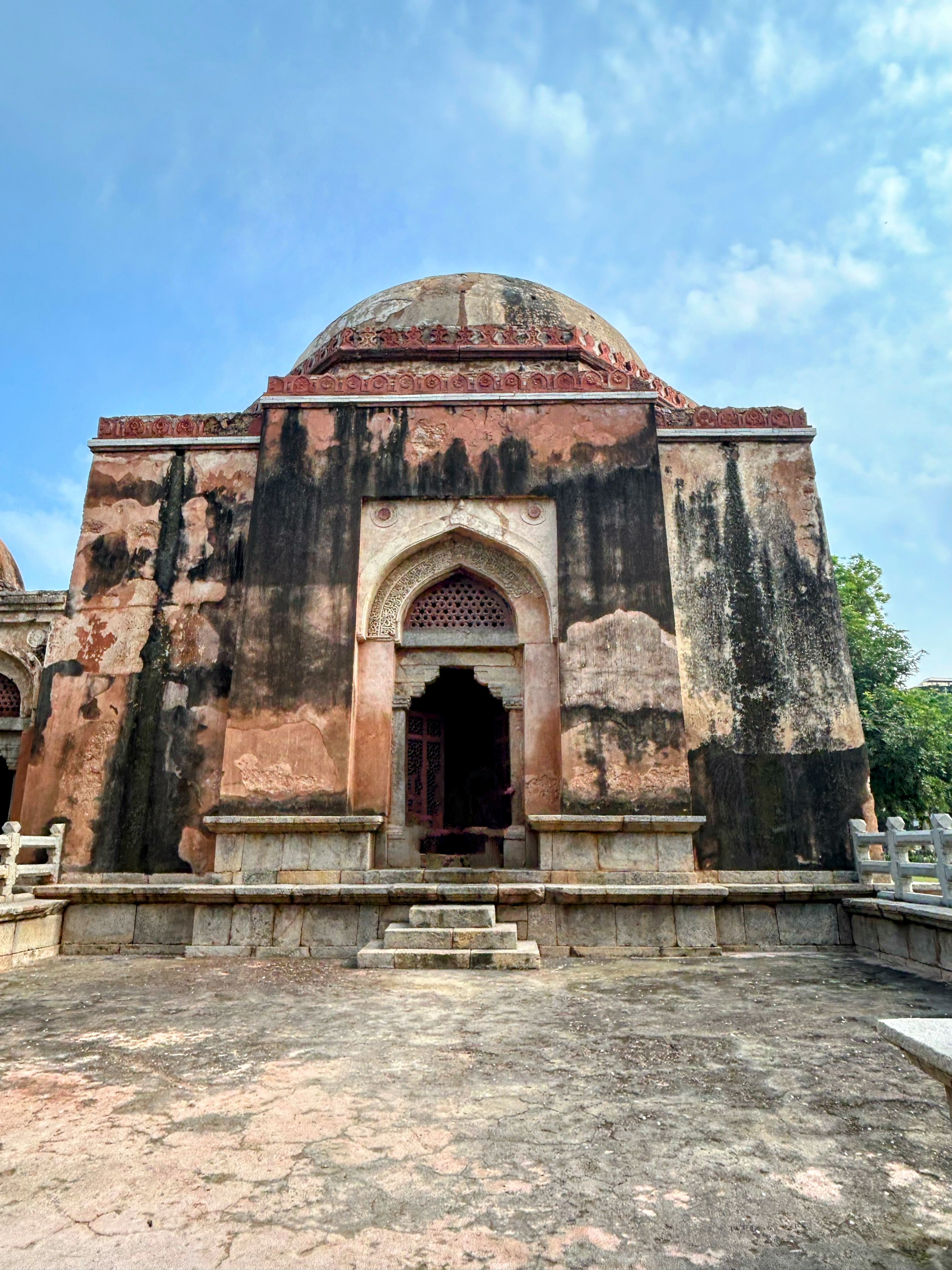
The walk ended at Munda Gumbad — literally the “headless dome” — a pleasure pavilion once located on an island in the middle of the reservoir. Encroachments have since pushed the water’s edge far back, but the charm lingers. Climbing the short steps, I was met with a 360° panorama: the green canopy of the park, the stone silhouettes of monuments, and the glimmering water. A soft breeze wrapped around us, and I found myself imagining an earlier time — boats gliding across the water, ducks splashing, and royalty reclining under the dome to escape the summer sun.

As we were walking towards the Munda Gumbad, a sudden rustling and cacophony above made us look up — a massive colony of bats hung like dark fruits from the branches overhead. I had never seen so many at once; they seemed like watchful guardians of the place’s secrets.


Threads Between Past and Future

Along the walk, our conversations meandered — from vandalised monuments and encroached heritage zones to the challenges of restoration, the scarcity of funds, and the lack of public awareness. It struck me then: history is not just an episode of the past. It is a thread that connects us to the future — a legacy to be understood, protected, and cherished.

A Sunday morning, well spent. A city rediscovered.

Tracing Flowers, Faith, and Forgotten Thrones: A Walk Through Mehrauli’s Living History

Delhi doesn’t reveal itself all at once. It unspools in layers — a whisper here, a ruin there, a breeze carrying the scent of marigolds and memory. On a quiet Sunday morning, I joined a heritage walk curated by Enroute Indian History, tracing the sacred and ceremonial path of Phoolwalon ki Sair — the annual festival of flowers, peace, and communal harmony held in Mehrauli.

But what I encountered was far more than just a trail of rituals — it was a journey through the soul of Delhi.


Where the City Began: Yogmaya Temple

Our walk began at the Yogmaya Temple, one of the few surviving temples from ancient Delhi and possibly as old as the city itself. It stands tucked away in the heart of Mehrauli, quiet yet powerful, like the still eye of a storm that has raged for centuries around it.

Long before Mehrauli acquired its present name, the area was known as Yoginipur — the city of yoginis. The temple, dedicated to Goddess Yogmaya (a sister of Krishna in mythology), still plays a central role during Phoolwalon ki Sair, with floral offerings made here alongside those at the nearby Dargah. As we stood beneath the age-worn arches, time itself seemed to slow down.


A Tomb with a Curse: Adam Khan’s Memorial

Not far from the temple, we made a detour to the tomb of Adam Khan, a monument steeped in local lore. Adam Khan, the foster brother of Akbar, was executed for treason, flung twice from the ramparts of Agra Fort to ensure death.

His tomb stands out for its Indo-Islamic architecture, reminiscent of Delhi Sultanate-era design rather than typical Mughal grandeur. It is said that no local woman of Mehrauli visits the tomb, believing it to be cursed. The only women who do are usually tourists or history students, like us. The air around the tomb is oddly heavy — less reverence, more caution.


A Sacred Journey: Dargah of Khwaja Bakhtiyar Kaki

We then followed the festival’s spiritual trail to the Dargah of Khwaja Bakhtiyar Kaki, the 13th-century Sufi saint and disciple of Khwaja Moinuddin Chishti of Ajmer. A contemporary of Sultan Iltutmish, Kaki is revered as one of Delhi’s patron saints, and his shrine continues to draw pilgrims, politicians, and poets.

It is said that every ruler of Delhi sought the blessings of Sufi saints to gain legitimacy, and this Dargah, in particular, carries that aura of sanctified power.

As we stepped inside the whitewashed courtyard, a qawwal seated by the gateway began to sing. His voice, deep and raw, cut through the morning stillness, carrying the lyrics of Chaap Tilak. The Dargah came alive — not with grandeur, but with music, faith, and centuries of longing.


A Forgotten Well of Healing: Gandak ki Bawli

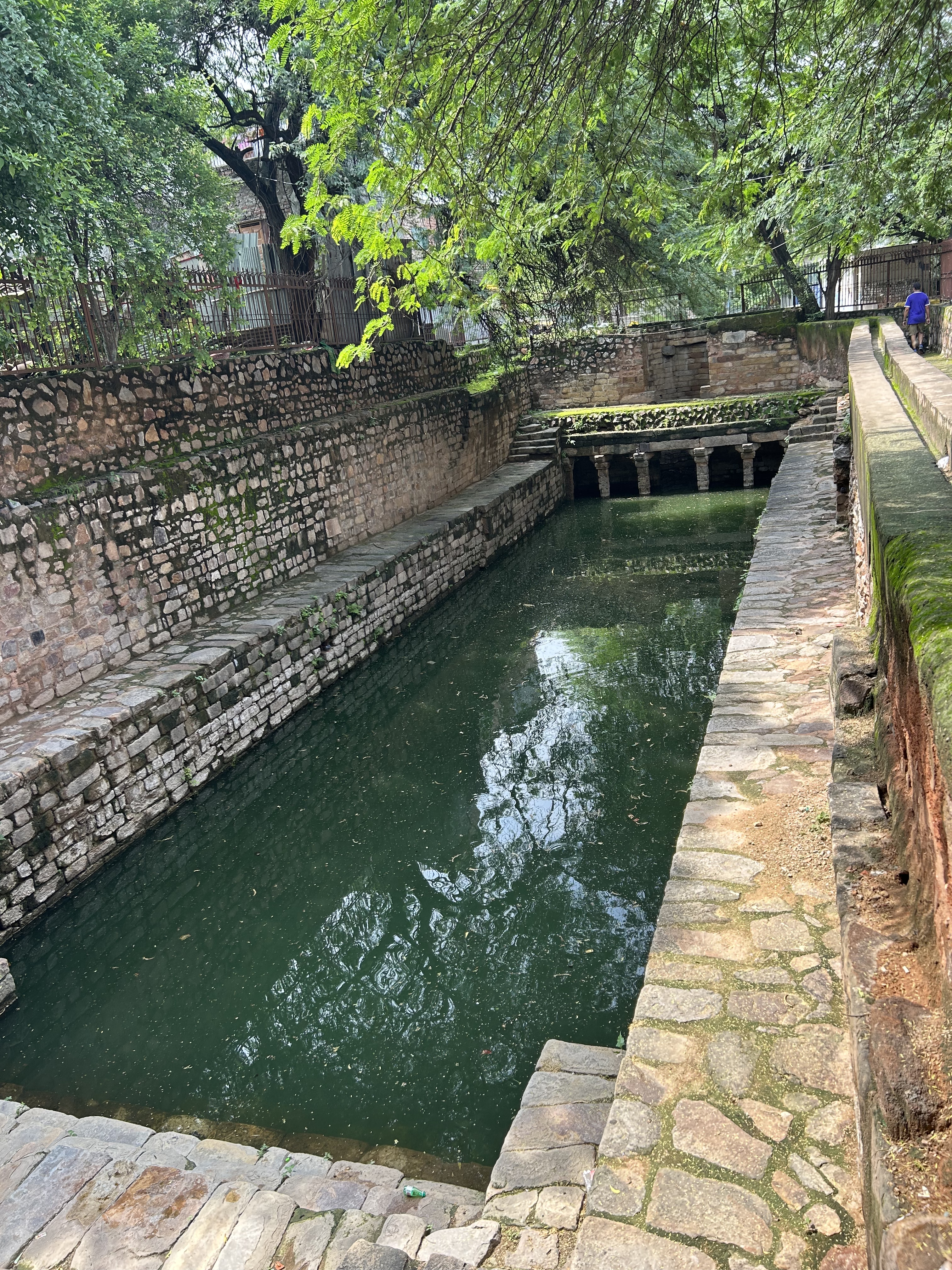
On the way to the Dargah, we stopped at the near-forgotten Gandak ki Bawli — a stepwell slowly sinking into neglect, yet once central to local life. Gifted by Iltutmish to the Dargah, the stepwell was believed to possess healing powers, and pilgrims would take a dip in its waters before offering prayers.

Later studies revealed the water had a high sulphur content, lending some scientific basis to the belief that it could cure skin ailments and other illnesses. Today, the water is stagnant, the steps cracked, but the legend still lingers — like a half-remembered dream.


Where the Empire Withered: Zafar Mahal

The final stop of our walk was the Zafar Mahal, the summer residence of Bahadur Shah Zafar, Delhi’s last Mughal emperor. Mehrauli, cooler than the rest of Delhi due to its elevation and greenery, became the seasonal retreat of the royal court. And this retreat wasn’t symbolic — the emperor moved with his whole retinue, even shifting the throne to Mehrauli for the duration.

Inside the Mahal is the Moti Masjid, a private prayer space built by Zafar himself. But the site is not just a reminder of royal solitude — it is also the stage for a powerful piece of local lore.

People in Mehrauli still say that the proximity of Zafar Mahal to the Dargah was a fateful misstep. “Sufi badshah se bada hota hai,” they say — a Sufi saint is greater than a king. Perhaps it was no coincidence, they whisper, that the Mughal Empire collapsed soon after. Bahadur Shah Zafar, the poet-emperor, would eventually die in exile, far from his beloved Delhi, and never be laid to rest in the tomb he had built for himself beside the Dargah.


A City of Shadows and Fragrance

As I walked back through Mehrauli’s bylanes, the scent of mogra, the hum of old qawwalis, and the echoes of royal processions accompanied me. Delhi, I realized, isn’t just a city of monuments — it is a city of memory, myth, and mood. Every stone here remembers. Every shrine still breathes.

Phoolwalon ki Sair may be celebrated once a year, but the path it takes is eternal — a living map of Delhi’s soul, etched in fragrance, footsteps, and faith.