The last day of a journey is always different.
It carries neither the urgency of arrival nor the hunger of discovery that marks the first days. Instead, it moves with a quieter rhythm, leaving room for what was missed, what deserves repeating, and what one wishes to hold on to a little longer. My last day in Banaras, too, was meant to be like that, lightly planned, open-ended, leisurely. After two days of waking early, I allowed myself a slower start.
The first destination for the day was Sarnath.
The first thing I encountered there, however, was not silence or the weight of history, but a noisy Holi celebration spilling into one corner of the road. Almost immediately, someone tapped on the car window to ask if I needed a guide. I said no. He persisted, promising to tell me everything and show me the entire site. I refused again. There are some places where one does not want a hurried narration or a half-remembered script. Sarnath, one of the most significant Buddhist sites in the world, deserved better.
I chose to walk.
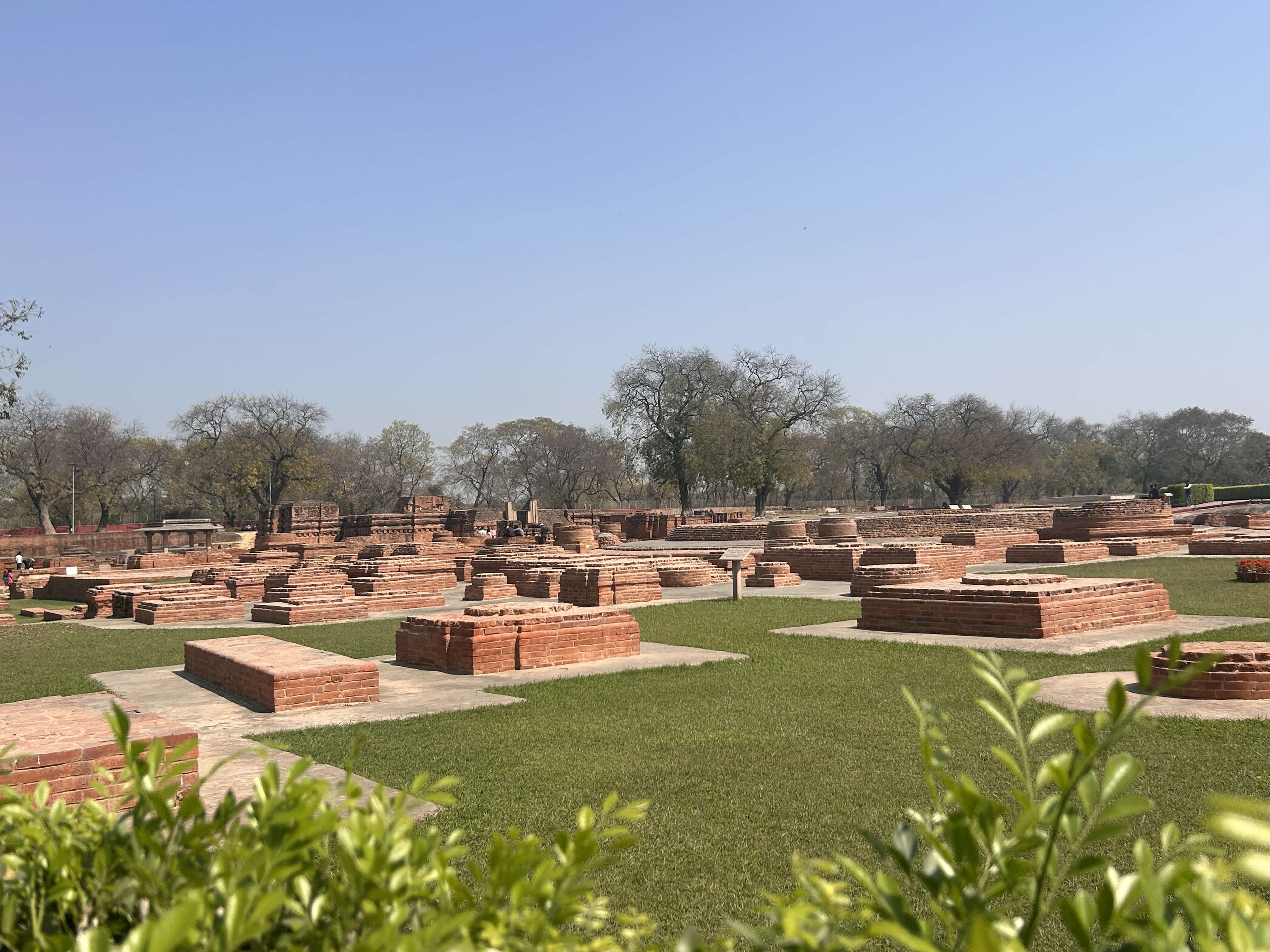
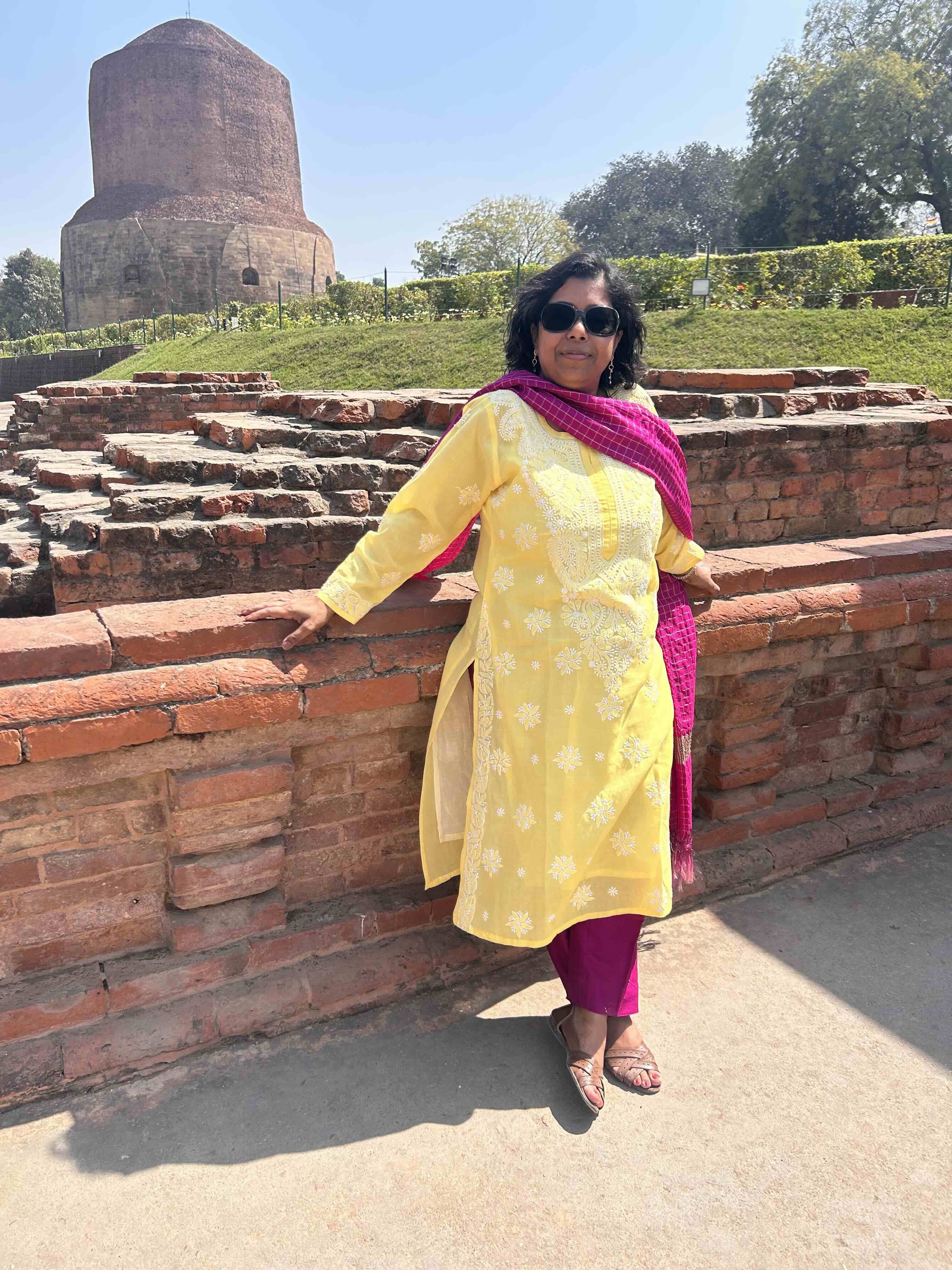
The path was clearly marked, though the sun had already begun asserting itself. As I entered the archaeological site, my first impression was of order and care. It was well maintained, and there was something reassuring in that. Around me, guides shepherded tourist groups in neat, linear movements, but I found myself grateful for solitude. Their routes appeared efficient, rehearsed, perhaps useful, but I wanted to wander, to pause, to look closely at fragments of stone and history without being hurried along.
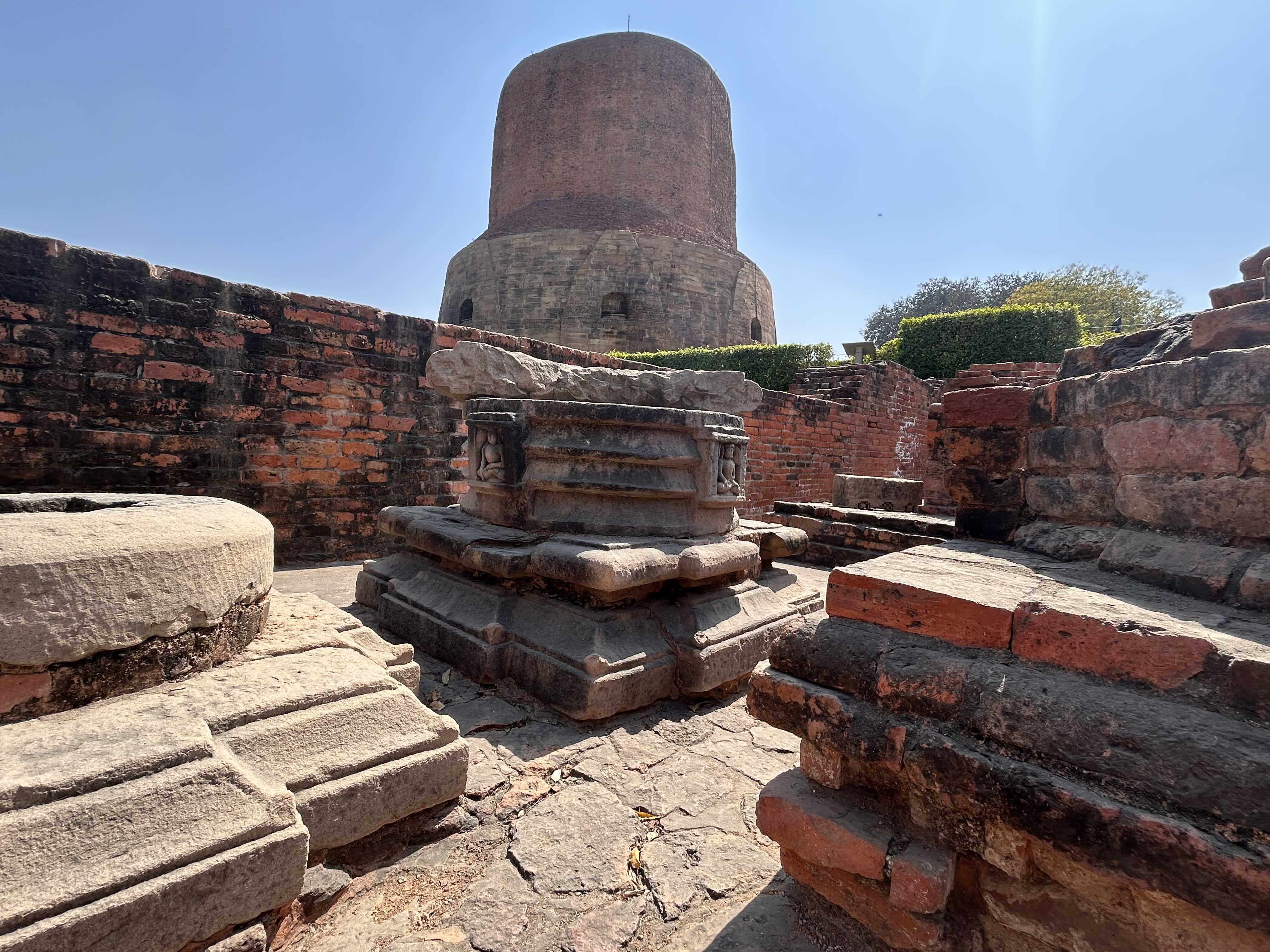
As I walked, memories of earlier visits to Buddhist sites in and around Mumbai returned to me. There is something about such places that alters one’s pace. One slows down instinctively. One begins to think not only of ruins, but of intention. I have always found it deeply ironic, and deeply human, that the Buddha, who is believed to have rejected the very idea of personal worship, became the centre of a sacred geography of stupas, relics, monasteries, and devotion. The viharas built over centuries, from the time of Ashoka in the third century BCE to those raised under later rulers, have not survived the violence of invasions and the slow erosion of time. Standing among their remains, I found myself seized by a familiar longing: the impossible wish to time travel, if only for a moment, to see these sites in their fullness, alive with monks, ritual, and learning.
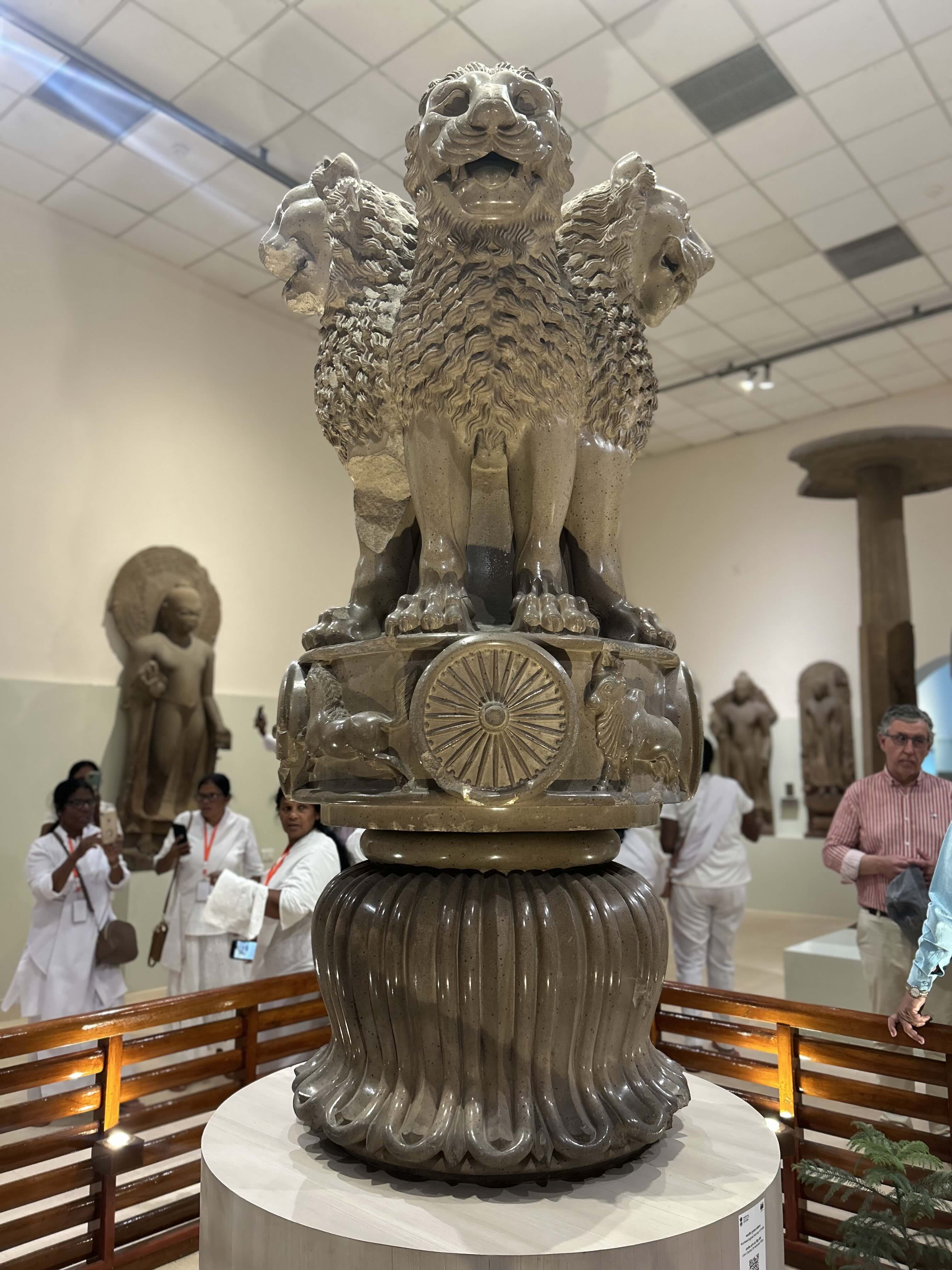
The Sarnath Museum was, as expected, indispensable. To stand before the Ashokan remains and other excavated finds is to understand how much of history survives in fragments, and yet how eloquent those fragments can be. Someone had told me that Sarnath is best experienced in the afternoon, when one can stay on till lamps are lit near the Dhamek Stupa. I, of course, could not do that. By then my visit was already drawing to a close. But perhaps every journey must leave something unfinished. It is the unchecked box, after all, that becomes an invitation to return.
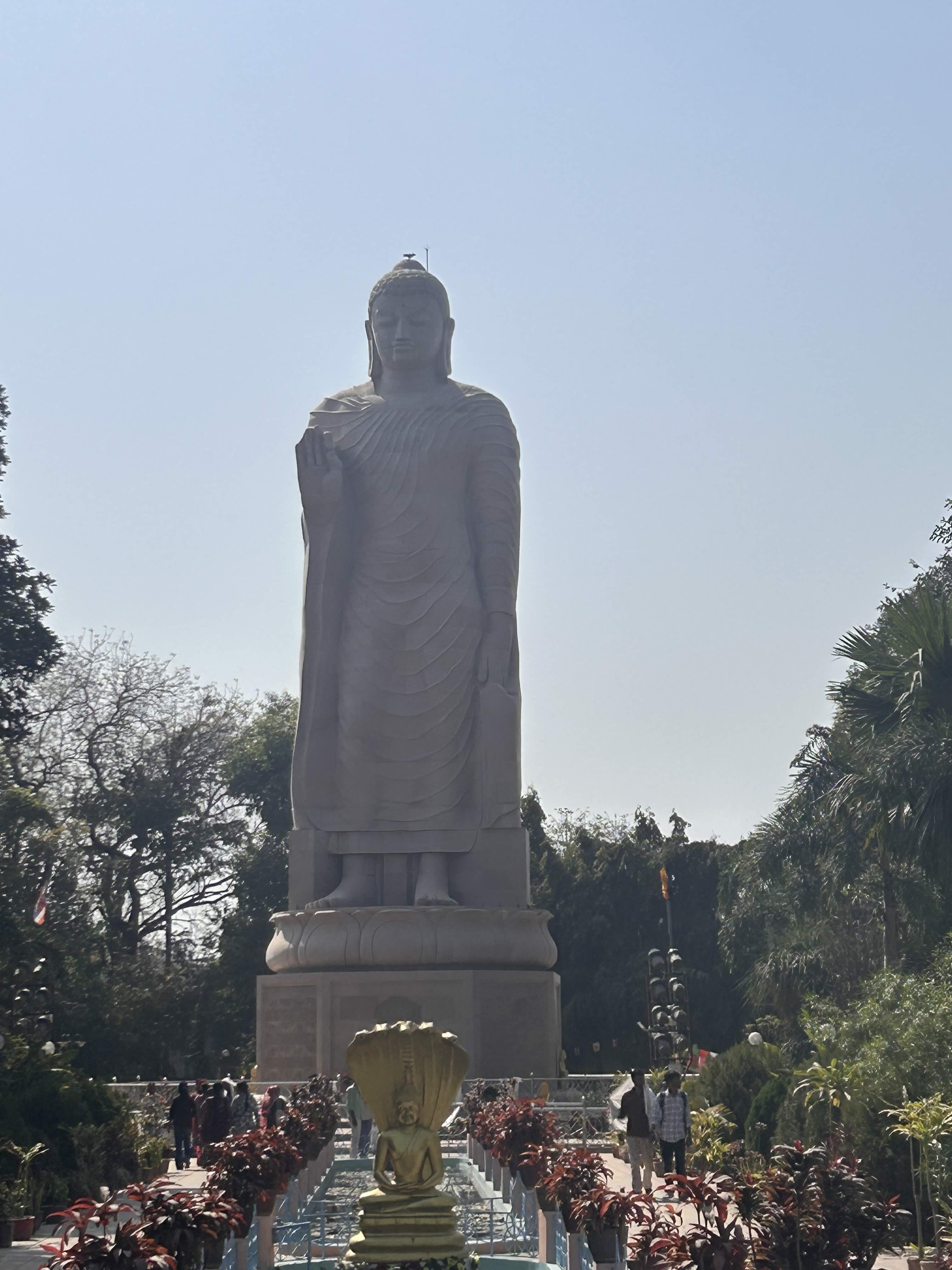
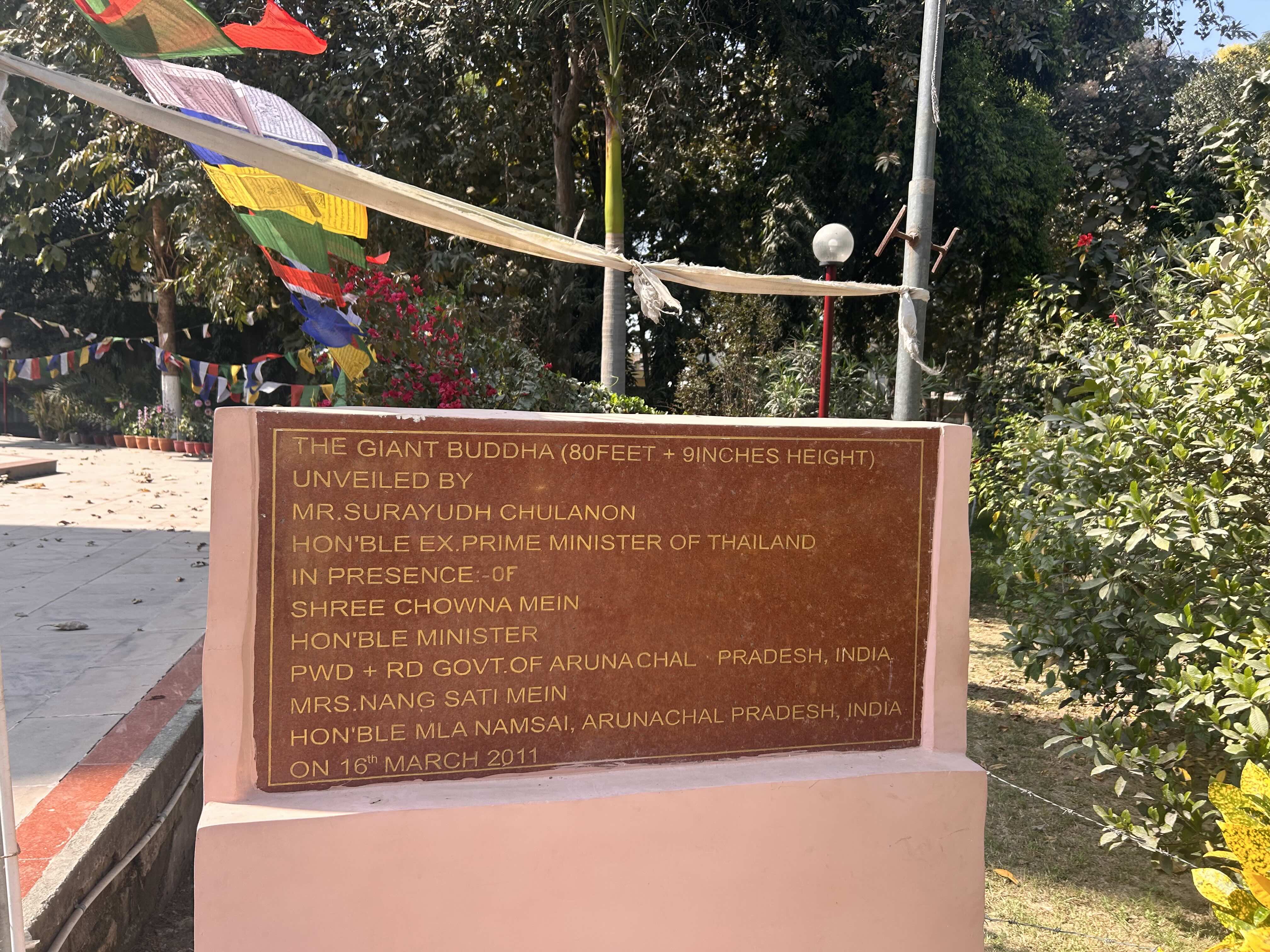
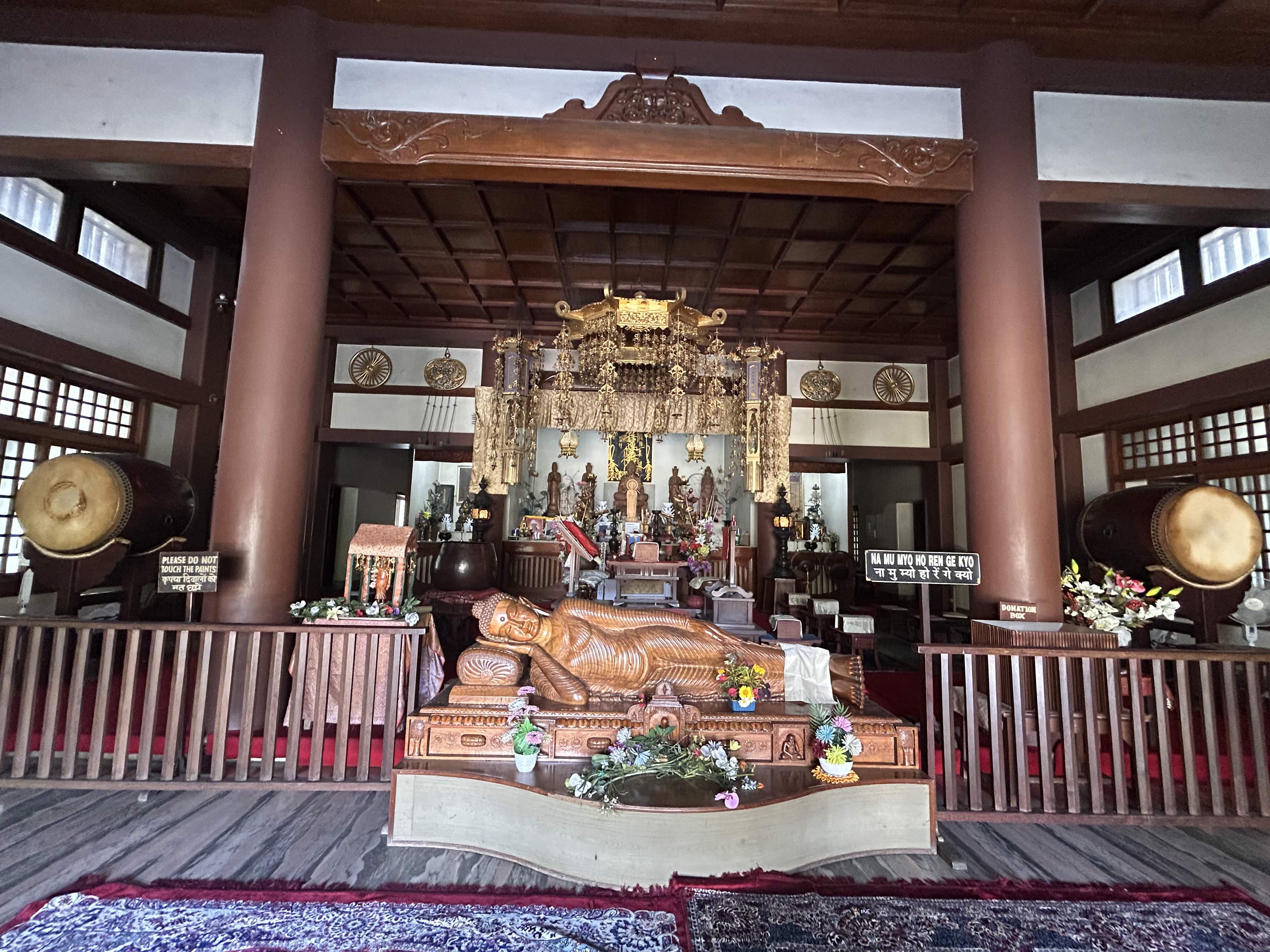
From Sarnath, I moved to the Giant Buddha statue and the Thai temple nearby. There, unexpectedly, I came across a reference to a minister from the Khampti tribe of Arunachal Pradesh. The Khamtis are a Theravada Buddhist community, and according to Samrat Choudhury in his book ‘The Braided River’, their language belongs to the same broad linguistic family as Thai. Suddenly, my mind travelled far from Sarnath to Namsai, where I had once stayed and from where I carry some especially fond memories. In that moment, standing in Uttar Pradesh and thinking of Arunachal Pradesh through a shared Buddhist thread, the world seemed to fold in on itself. It is always startling, and oddly comforting, to discover how small the world can be.
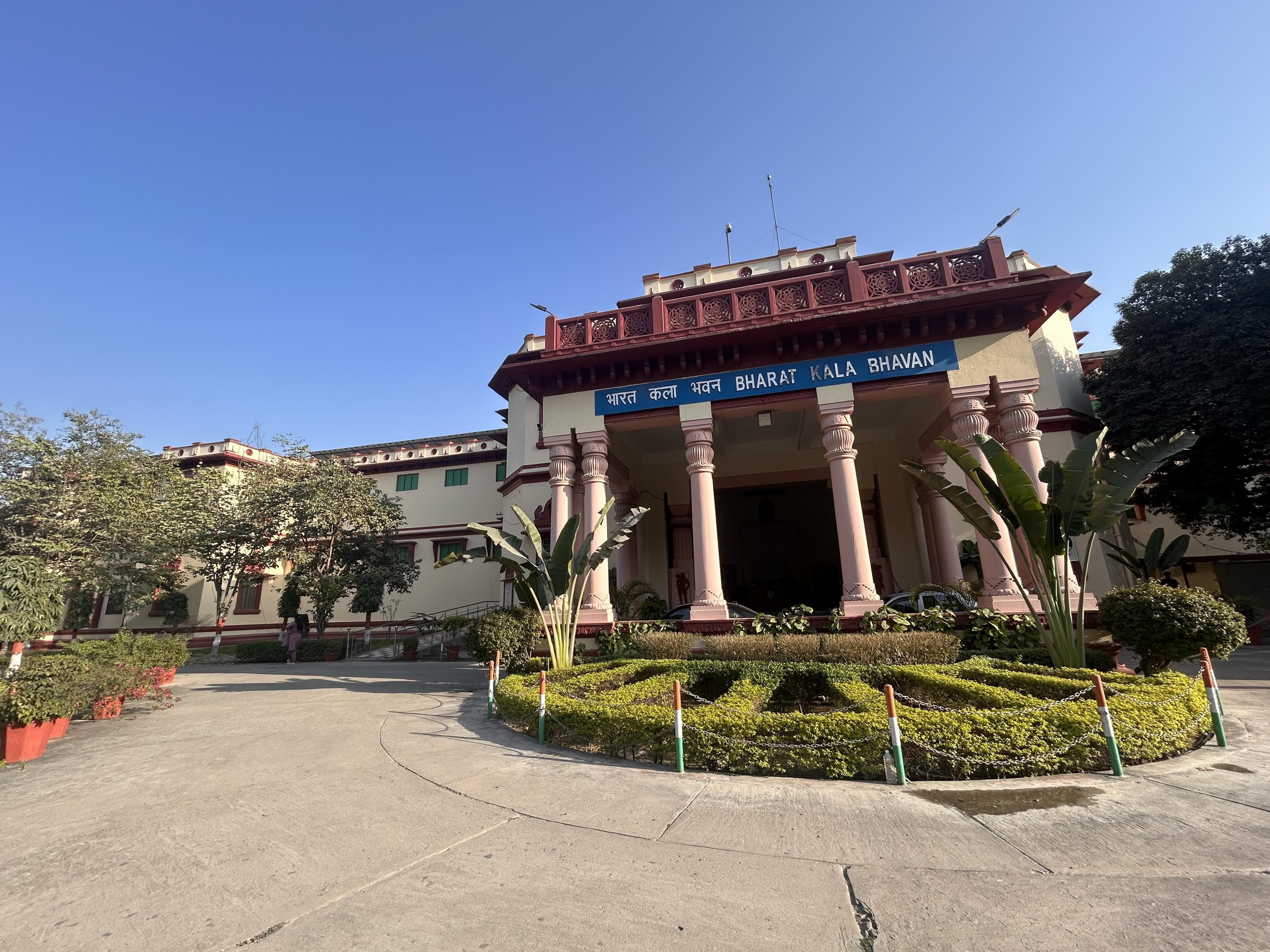
After Sarnath, I decided to go to BHU. I remembered that the Bharat Kala Bhavan Museum would close by 4.30, and we hurried to reach by three. If Sarnath carried the aura of ancient stillness, the BHU campus felt like something else entirely, an island of calm set apart from the city’s constant noise. The further one moved inside, the more Banaras seemed to lower its own volume. Inside the museum, time widened again. The artefacts ranged from the Harappan civilisation to later periods, and there was an odd pleasure in moving from age to age within a single afternoon. I found myself lingering before moulds from the Shunga period, and then pausing in surprise before a Mughal-style painting of the Exodus of Moses. Such juxtapositions always fascinate me; they remind me that Indian history is rarely linear and never simple. I had barely completed the final section when the museum announced closing time.
Outside, as I got into the car, Aftab, my driver for the visit, asked if I wished to return to the hotel.
I did not.
Instead, I asked to be taken to Assi Ghat.
I had no particular plan when I sat down on its steps. Perhaps I simply wanted to be near the river one last time. But then the foodie in me asserted itself, and memory led me to Kashi Chaat Bhandar. Google informed me that I could walk from the ghats towards Sonarpura, though part of the way would eventually shift to the road. So I began walking. It was nearly forty minutes, with the sun softening by degrees and the city entering that beautiful hour when evening begins to gather but daylight has not fully withdrawn. There was no hurry, no agenda, only the pleasure of moving through Banaras one last time.
At Kashi Chaat Bhandar, after the now familiar effort of negotiating the crowd, I ordered palak patta chaat and dahi puri. There are few satisfactions as complete as good street food after a long walk. Restored and slightly emboldened by my growing confidence in navigating the city, I took a rickshaw back till Sonarpura. From there, I wanted to return to the ghats on foot, one final walk beside the river, one final conversation with the city.
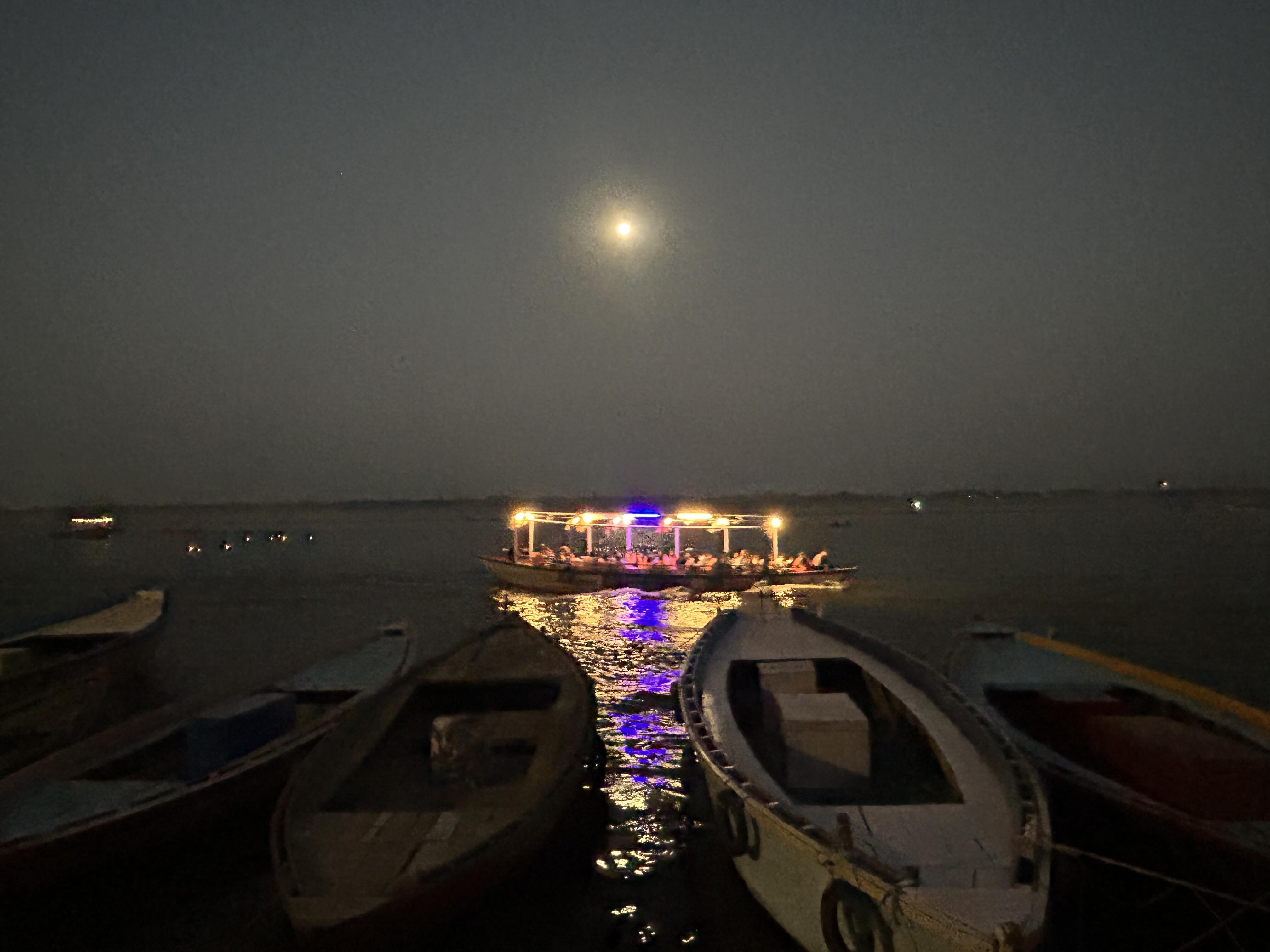
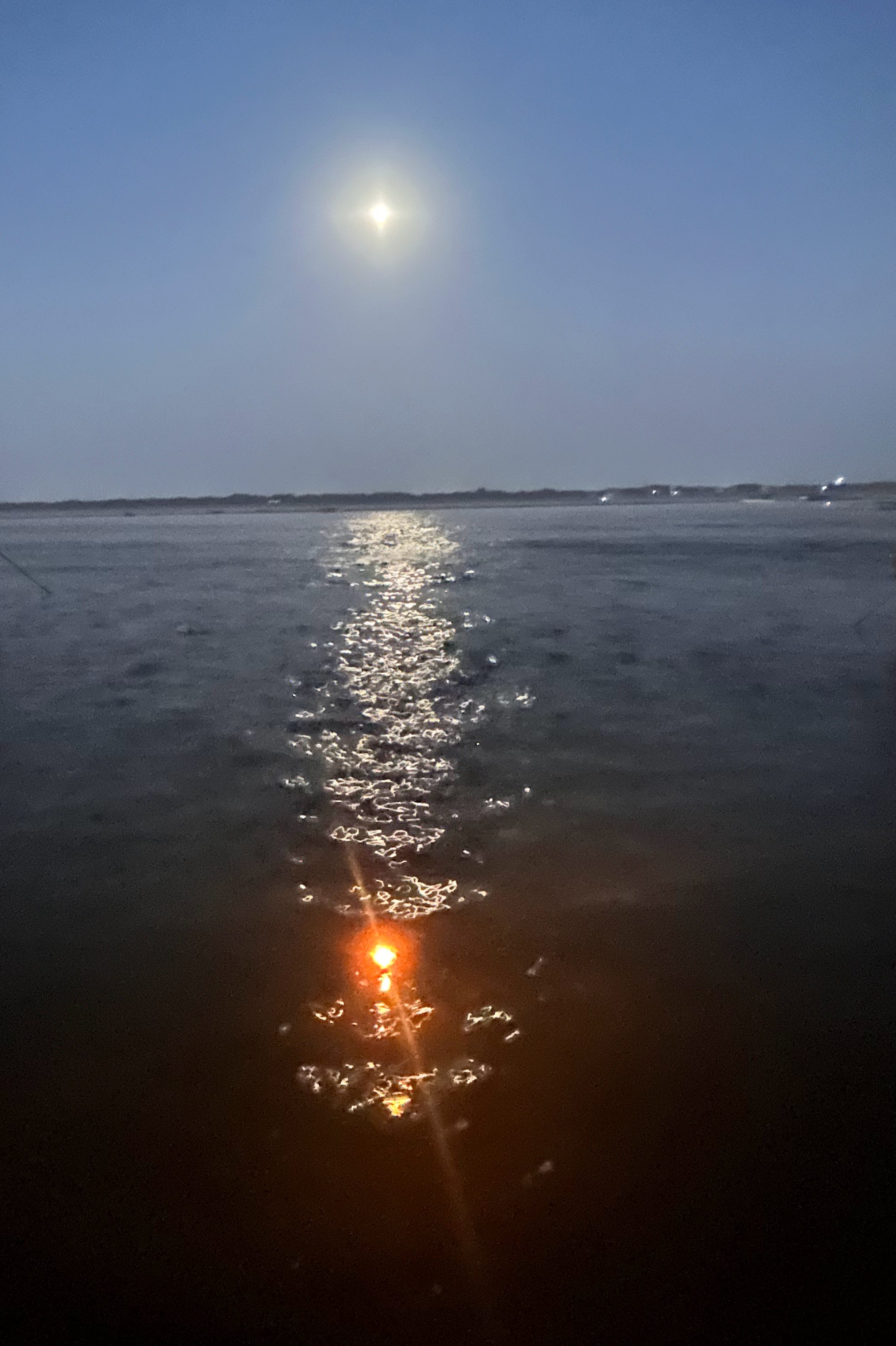
I arrived in time for the evening Ganga Aarti at Assi Ghat, though I soon realised that another aarti was underway at the neighbouring ghat as well. Sitting there among the crowd, watching the ritual unfold, I became aware once again of the invisible machinery behind devotion, the choreography, timing, discipline, and collective labour that makes such spectacle possible. Faith may appear spontaneous, but public ritual is almost always meticulously arranged.
Later, as I left the ghats, I stopped at Roma’s, a place Chandrali had recommended. It felt like the right final note: a small meal at the end of a long day, one last taste to carry away.
And so the journey ended.
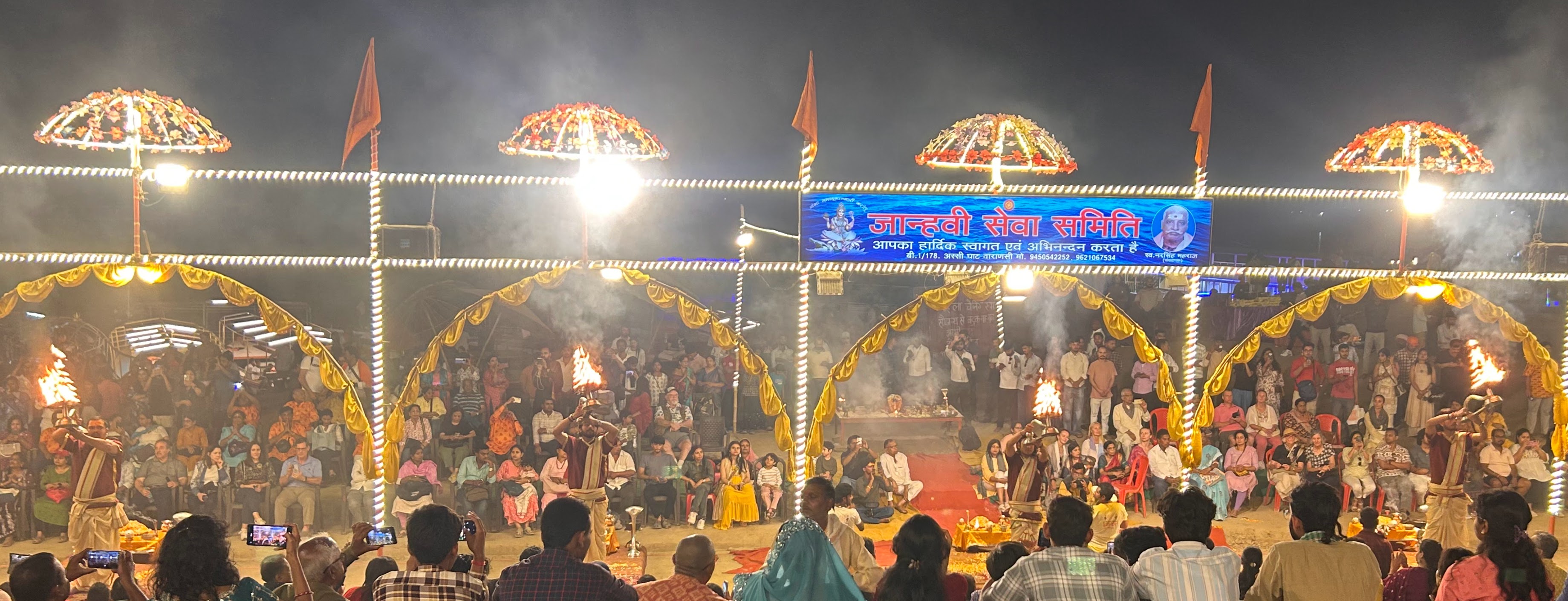
After walking more than eighteen thousand steps, after ticking as many boxes as I could and leaving a few unticked on purpose or by chance, I brought my Banaras trip to a close. But what remained with me was not merely a list of places seen. It was something less tangible and more enduring.
Banaras will stay with me as a city of paradoxes, exclusive and inclusive, ancient and modern, theatrical and intimate. A city where ordinary people carry their pride in the place with an ease that never feels performative. A city where crowds can exhaust, but where solitude appears unexpectedly, in a brief moment before a jyotirlinga, in a quiet temple off the tourist map, in a boatman’s recitation of poetry, in an evening walk back from a chaat shop, in a bowl of prasad placed wordlessly into one’s hands.
And perhaps that is what I will remember most.
That this crowd-averse traveller came to Banaras expecting to observe, and instead found herself drawn in, into darshan, into ritual, into history, into appetite, into the strange intimacy of a city that reveals itself not all at once, but in fleeting moments. Tiny, solitary moments. And each of them, somehow, deeply satisfying
 Jajabor