Tag Archives: art

An Evening of Craft, Cuisine, and Community at The Kunj

Growing up, there was a saying often used to describe a familiar irony: “When you stay next door to the station, you will miss the train.” It referred to situations in which, despite proximity, one keeps postponing a visit. That line came back to me on Saturday, when I finally managed to visit The Kunj—India’s first mall dedicated entirely to handloom and handicrafts.

Located within walking distance from my home, The Kunj has been on my mind since its opening in August 2025. And yet, like the proverbial train, I kept missing it.

As I stepped out of the lift, the first sight that greeted me was a loom and a vibrant seating area—an immediate signal that this was not just another retail space. Handicraft and handloom stores showcasing products from across the length and breadth of the country form the heart of The Kunj. What makes it even more special is the presence of artisans themselves—quietly, patiently creating their craft in full view. I found myself lingering near an elderly Madhubani artist, watching him draw with practiced ease. In that moment, I was reminded of the deep traditions and accumulated knowledge that form the foundation of India’s extraordinary craft heritage.

The credit for finally getting me to The Kunj, however, goes to Tales of India—a platform that seamlessly binds food, heritage, and community. When the mailer from Tales of the City landed in my inbox, I knew I didn’t want to miss an evening that promised good food paired with conversations on history and culture.

At the venue entrance, I was warmly greeted by Abu Sufiyan and Chef Sadaf Hussain. Conversation quickly turned to food walks—their routes, timings, and the inevitable request from a few of us for a walk dedicated solely to Nihari. Chef Sadaf countered with a challenge: Delhiites, he said, don’t like waking up early, which makes a traditional morning Nihari walk difficult. While we all confidently promised early mornings, only time will tell whether we manage to rise to the occasion.

Walking inside, I felt transported to the homes of my childhood—where the first room, the baithak, was a gathering space filled with knick-knacks collected over the years. It was heartening to hear Abu Sufiyan explain that the idea was to recreate the Bada Kamra—the room where everyone naturally came together.
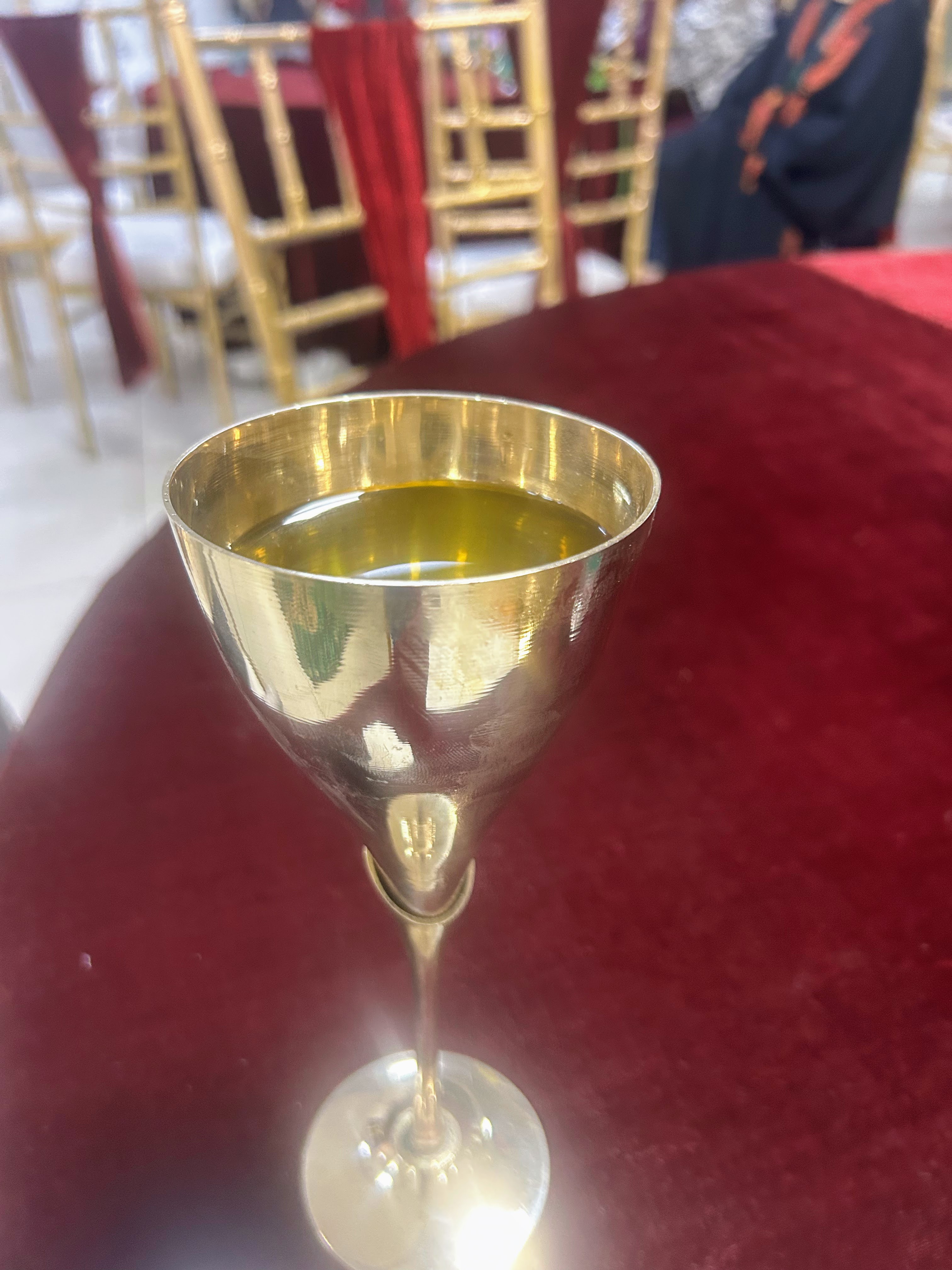
As stories and food memories began to flow, the first offering arrived: Khas Sherbet, served in an elegant brass glass. The conversation drifted towards community life—how there was once a time when we knew not just our next-door neighbours, but almost everyone on the lane. No one explicitly lamented how siloed life has become; it was simply understood. Perhaps the pace of life has changed, and gatherings like these are meant to be cherished when they happen.

Next came a Shami Kabab, delicately pounded on a sil batta, fibrous and soft. This was followed by Mutanjan, sweet rice garnished with almonds and sultanas, accompanied by the meat of teetar (quail). Chef Sadaf pointed out that in earlier times, “bird” almost always meant quail—never chicken. Chicken, he noted, became popular only after Partition.
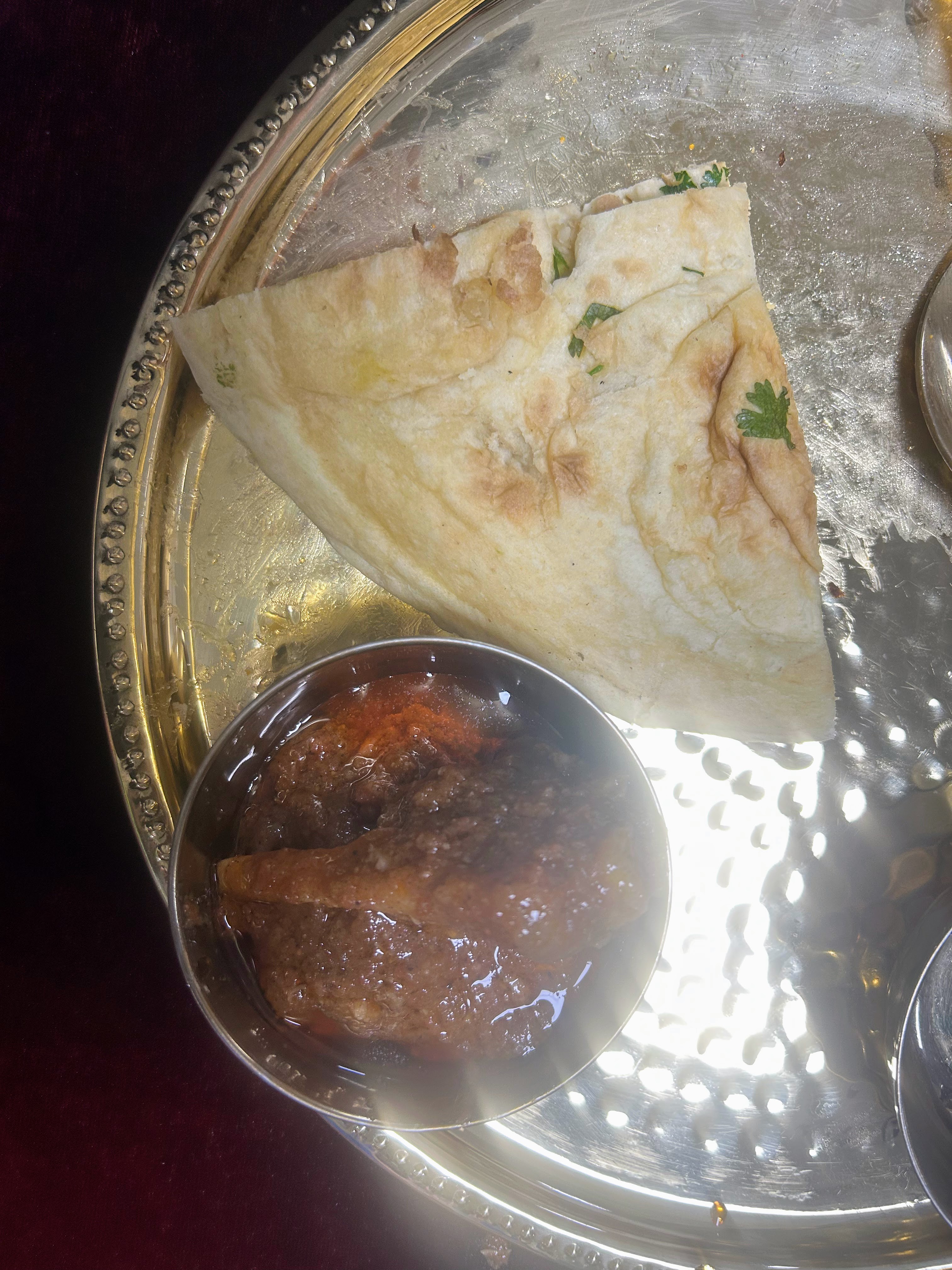
Then arrived the star of the evening: Nihari, served with Khamiri Roti—rich, slow-cooked, and deeply comforting. As we ate, memories surfaced of street vendors and their distinctive calls—jingles that once echoed through neighbourhoods. It wasn’t just food vendors; toy sellers, kulfiwalas, knife sharpeners, bangle sellers—all had their own sounds. With e-commerce and changing lifestyles, many of these have quietly faded away.

The next dish, Shab Deg—literally “cooked overnight”—arrived in beautiful brassware. Plates and bowls were wiped clean as we savoured yet another culinary tradition from Purani Dilli. Dessert followed: Mithi Roti with Kheer, the kheer cooked to a phirni-like consistency. Throughout, Chef Sadaf kept us enthralled—not just with flavours, but with stories of how dishes evolved and travelled through time.

The evening concluded with Meetha Paan, leading to a discussion on paan traditions across the country. While practices adapt to local tastes, we realised that their roots remain remarkably similar everywhere.

It was a near-perfect weekend—handicrafts, food, history, and a gathering of like-minded people. Sometimes, life introduces places to us in very specific ways. For me, The Kunj will always be associated with this evening—an experience that finally made missing the train worthwhile.

The Voice That Heralds Durga Puja: A Personal Journey Through Mahalaya

Conversations at Work and Cultural Crossroads

One of the joys of being in a diverse workplace is the daily discovery of traditions, rituals, and stories that colleagues carry with them. Over cups of tea or during lunch breaks, conversations turn into cultural exchanges — each person explaining their customs, sometimes teasing one another in their mother tongue, and often leaving everyone a little wiser.

A few weeks ago, I overheard a conversation between two colleagues — a Bengali and a Punjabi. The Bengali was explaining Mahalaya to the Punjabi. For most, Mahalaya simply marks the ending of Pitru Paksh across India. But for Bengalis, it means much more: it is the dawn that ushers in Durga Puja, the most awaited festival of the year.

The Unmistakable Voice of Tradition

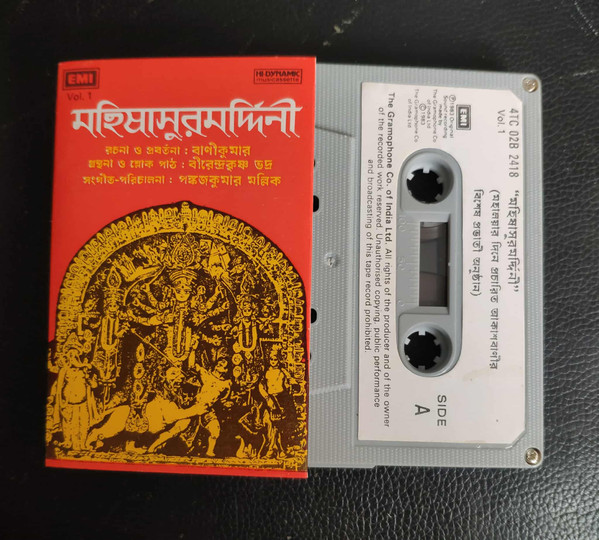
For anyone who is not Bengali — and has never heard Birendra Krishna Bhadra’s baritone narration — it is difficult to explain what makes Mahalaya so special. Since its first broadcast in 1931, All India Radio’s iconic programme Mahishasurmardini has become synonymous with the day. Scripted by Bani Kumar, set to music by Pankaj Mullick, and enriched with devotional songs by some of Bengal’s finest singers, the programme’s heart lies in Bhadra’s voice reciting the Chandi Path.

Generations of Bengalis have woken at dawn on Mahalaya to listen to this. The music, the chants, and above all, Bhadra’s voice signal that Durga Puja is just around the corner.

Childhood Rituals and the Magic of Radio

My own memories of Mahalaya go back to childhood. A day before, my father would carefully tune the radio to catch the AIR frequency and then place it by the bedside. An alarm was set for 4 a.m., and when it rang, I would awaken not to the sound of a bell but to Bhadra’s sonorous voice filling the room.

Later, when cassettes of Mahishasurmardini became available, families eagerly bought the two-cassette set. It meant one could listen anytime, without waking up before dawn. Yet, the cassettes never quite captured the magic. The ritual of rising in the pre-dawn darkness, with the crackle of the radio and the collective stillness, held its own irreplaceable charm.

When Change Met Resistance

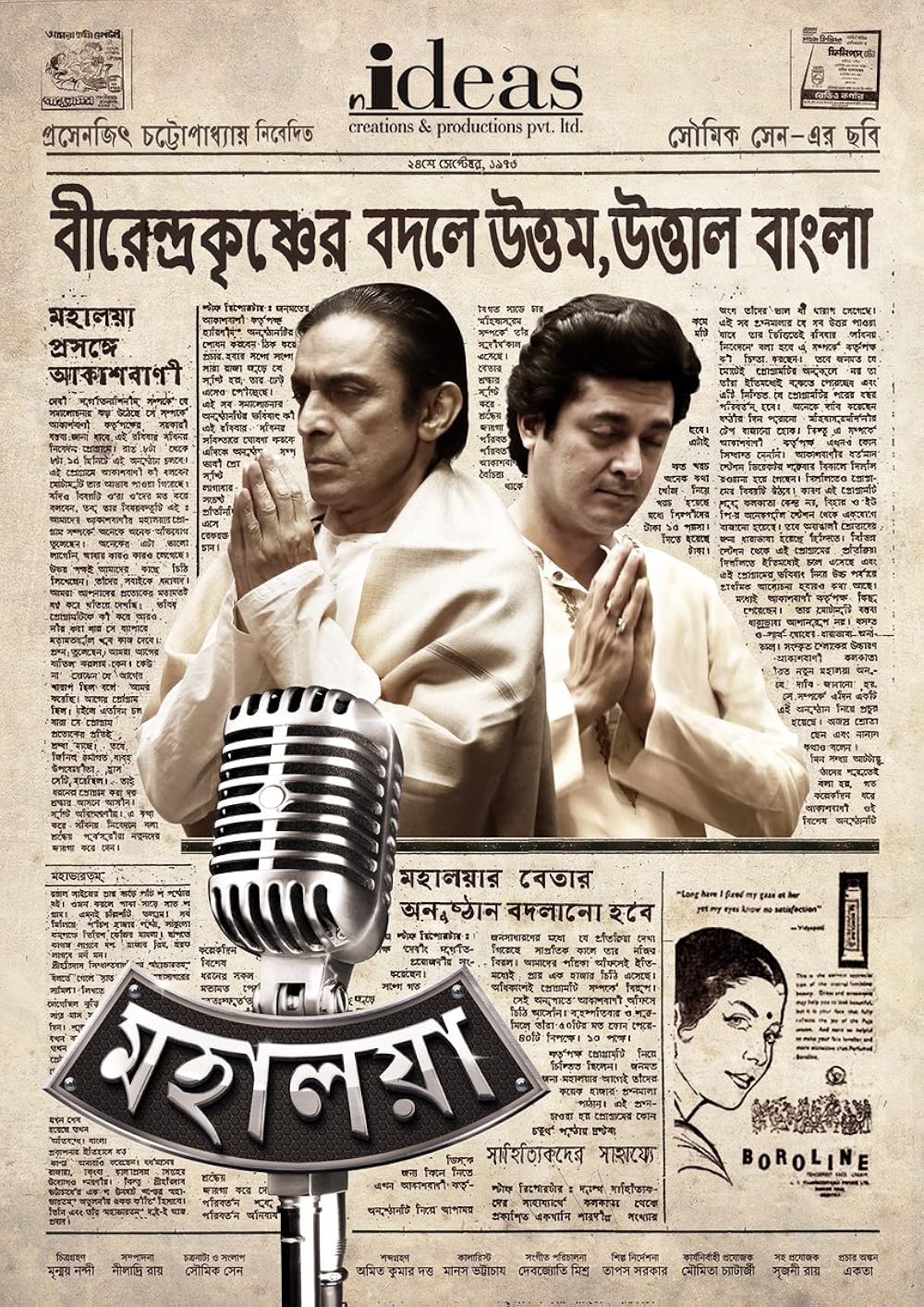
Technology wasn’t the only agent of change. In the late 1970s, when Uttam Kumar reigned as the Nayak of Bengali cinema, All India Radio attempted to recreate the programme. With narration by Uttam Kumar and music by Hemanta Mukherjee, the new version was expected to captivate audiences. Instead, it sparked a massive backlash. For listeners, replacing Bhadra’s voice felt like sacrilege. The experiment failed, and AIR never tampered with the original again.

For my family, this story carried its own humour. My mother, a devoted Uttam Kumar fan, was disappointed, while my father — who never cared much for Uttam’s acting — recounted the “failure” with a gleeful chuckle every year. Decades later, the controversy found its way onto the silver screen in the 2019 film Mahalaya.

Rituals in a Changing World

Today, the world is very different. Technology has transformed how we consume tradition. Yet, Puja is the anchor of a Bengali’s calendar. Yesterday, I went to CR Park, the hub of Bengalis in Delhi, and it was almost as if I had been transported. A book fair, a saree mela juxtaposed with cultural performances seemed to signal that Pujo had begun.

This morning, I found myself using the Spotify app at 4 a.m. and beginning my day with Bhadra’s immortal narration. The medium has changed, but the ritual remains.

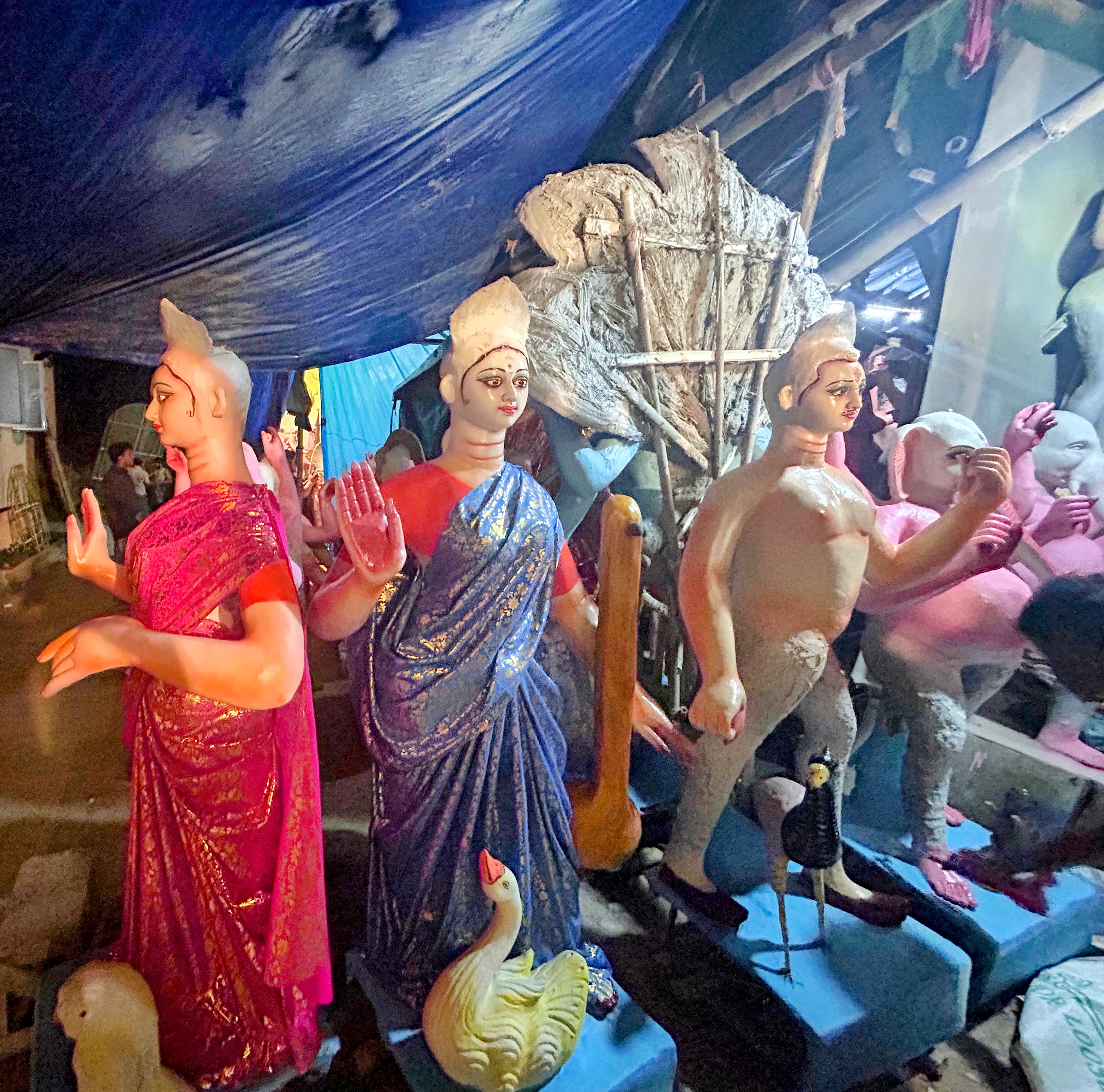
As Uttam Kumar’s character says in the film Mahalaya: “Birendra Krishna Bhadra’s voice is Durga Puja.” Indeed, for Bengalis everywhere, the festival begins not with the idol-making, not with the lights or the pandals, but with a voice — deep, resonant, and timeless — announcing that the Goddess is on her way.

‘Maa asche’

Walking Through Time: Mehrauli Archaeological Park

Delhi is often said to be a city of seven historical cities, each founded by different rulers and woven together to form the capital as we know it. Among them, Lal Kot or Qila Rai Pithora is believed to be the first city of Delhi, located in present-day Mehrauli.

This Sunday, I joined a walk by Enroute Indian History inside the Mehrauli Archaeological Park. Spread across undulating terrain, the park houses nearly 55 archaeological monuments—some documented, others fading into obscurity, their stories lost to time.


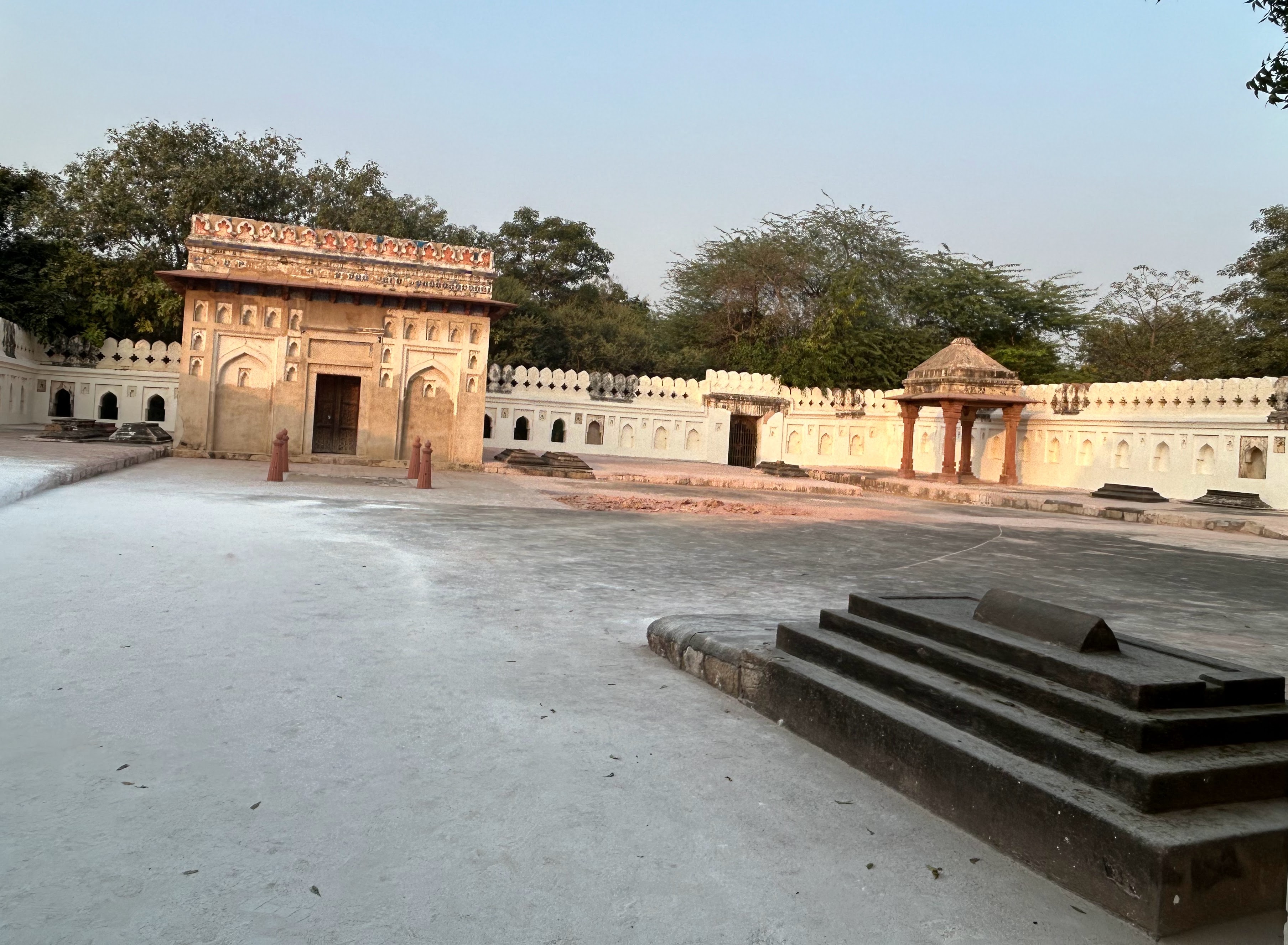
Jamali Kamali Mosque & Tomb

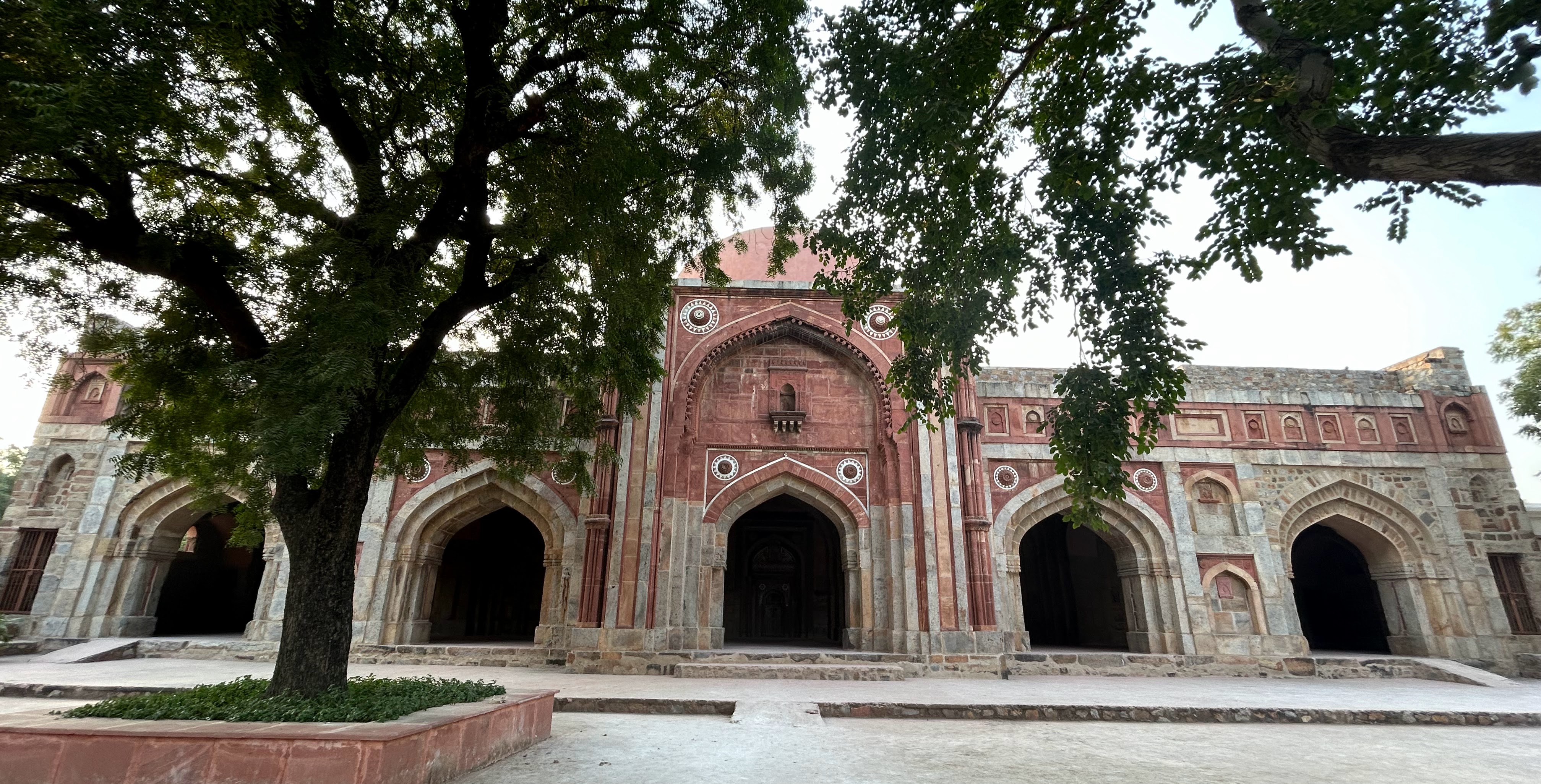
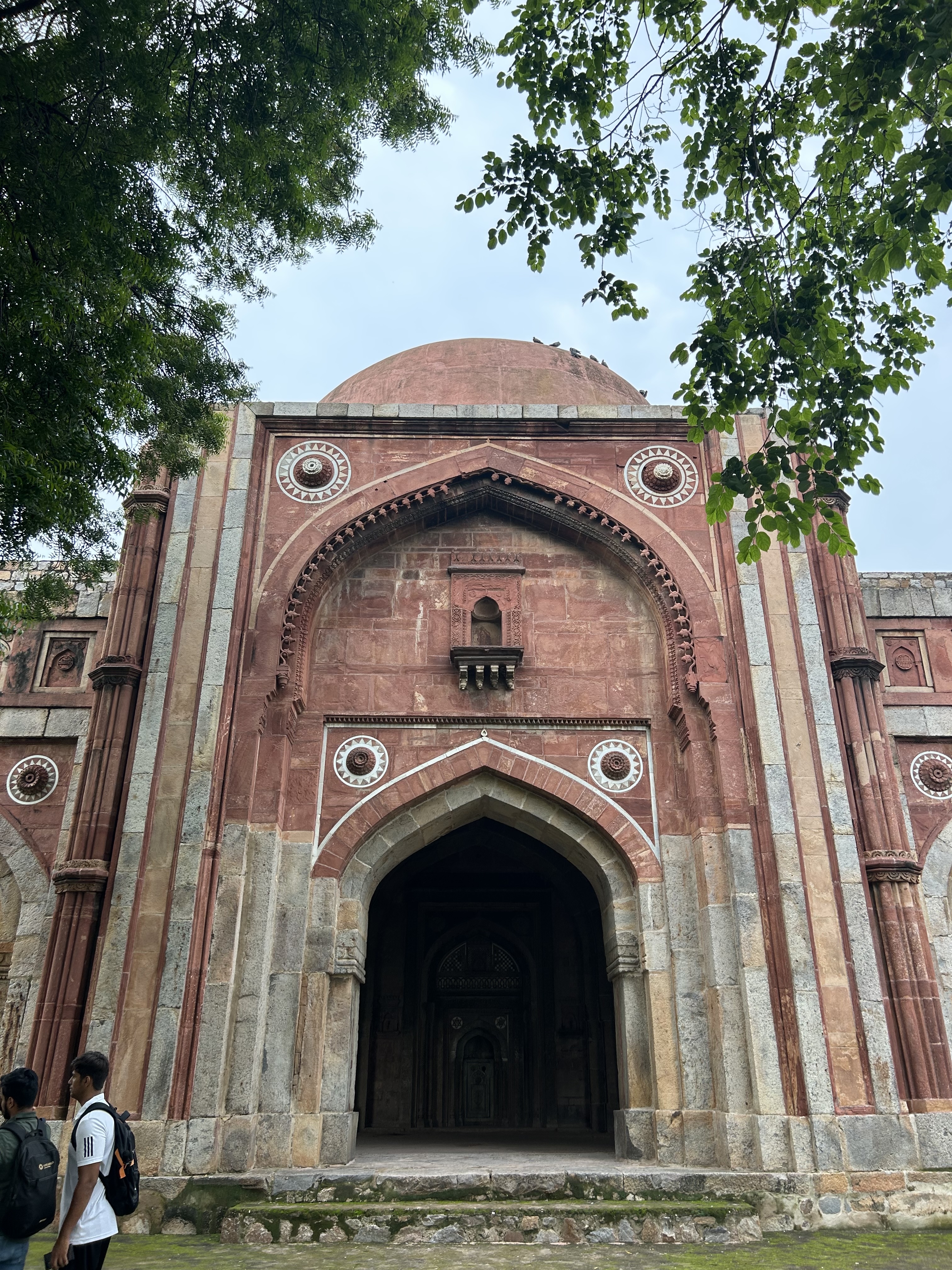
Our walk began at the Jamali Kamali mosque, dedicated to Shaikh Fazlullah, also known as Jamali—a courtier of Sikander Lodhi who later fought and died for Humayun.

Beside the mosque lies a locked chamber, believed to be the resting place of Jamali and Kamali. The identity of Kamali is cloaked in folklore; some accounts call him Jamali’s beloved. Both are said to be buried together in this compound, a rare tale of intimacy and companionship from medieval Delhi.

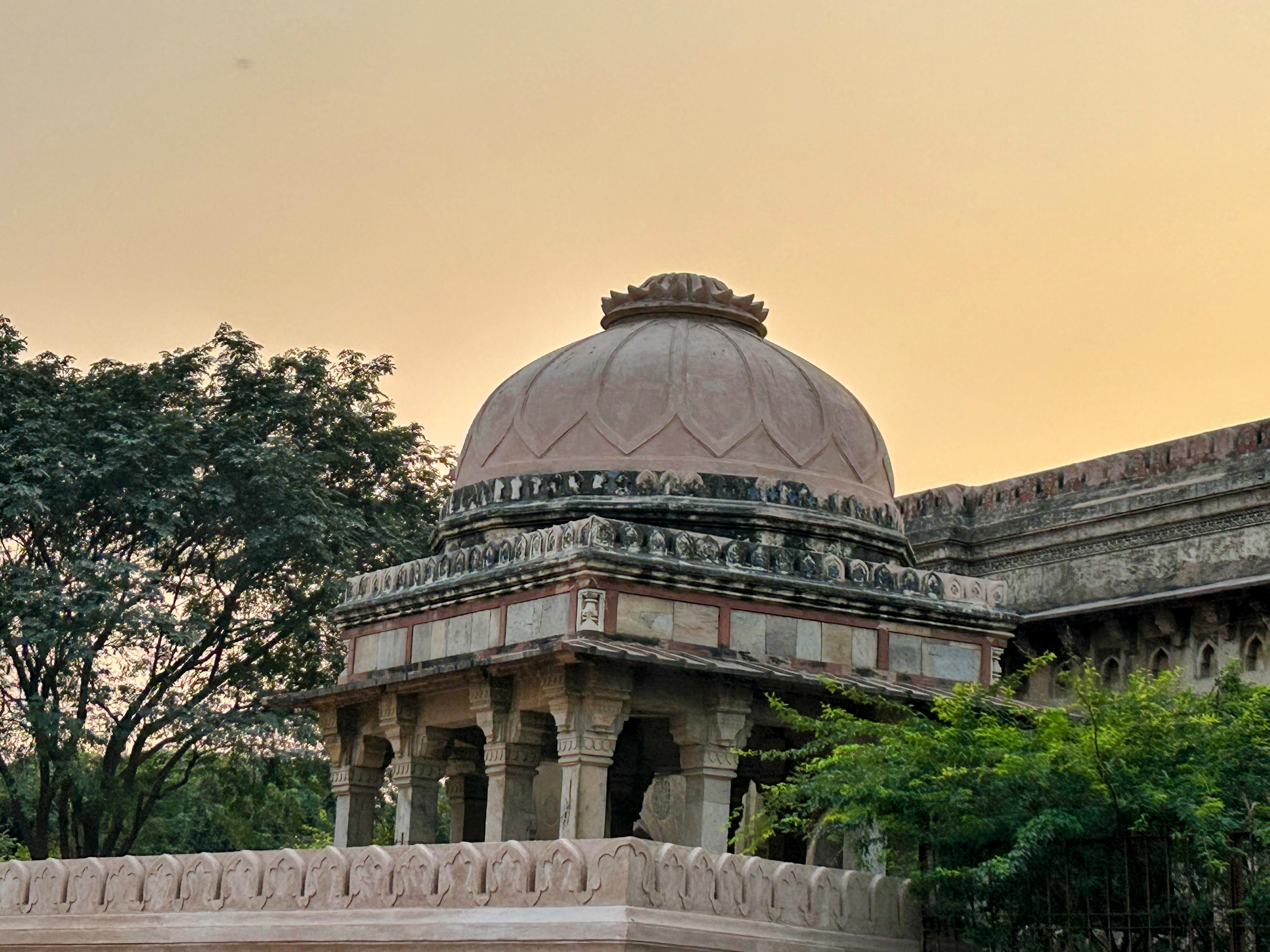
The land itself was a grant from Sikander Lodhi, and the mosque reflects syncretic architecture—kalash motifs, inverted lotuses, and temple-like details—likely owing to local craftsmen more used to building temples.


Rajon ki Baoli

Next, we descended into the quiet depths of Rajon ki Baoli, a stepwell built in 1510 by Daulat Khan, the military commander of Ibrahim Lodhi. History records that it was this very Daulat Khan who invited Babur to India, setting the stage for the Mughal dynasty.

The four-storey stepwell is flanked by rooms used for bathing and washing, fitted with terracotta pipe outlets that ensured fresh water circulation. Yet, curiously, the baoli is not remembered by its builder’s name. Instead, after Partition, it became home to raj mistris (masons), and so the name Rajon ki Baoli endured.


Dilkhusha: Metcalfe’s Retreat

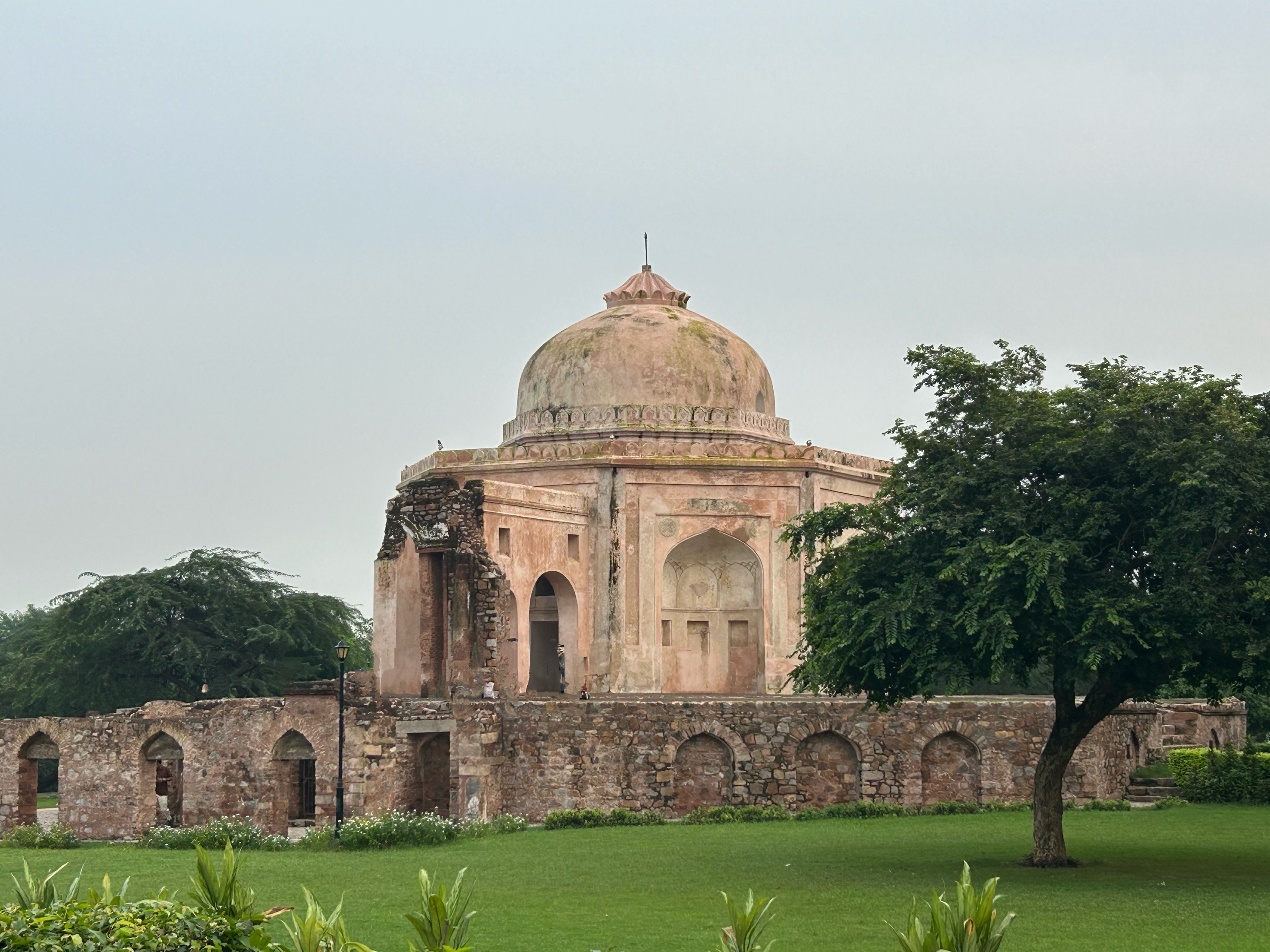
We then arrived at the picturesque ruins of Dilkhusha, once the country house of Sir Thomas Metcalfe, a civil servant of the East India Company and agent of the Governor General at Bahadur Shah Zafar’s court.

The first structure is a quaint boat house, curiously perched atop a Lodhi-era tomb. Though Metcalfe’s residence was later dismantled to restore the tomb, traces of its outer walls remain. From here, one can glimpse the soaring silhouette of the Qutub Minar.

The estate was built around the tomb of Muhammad Quli Khan, the foster brother of Emperor Akbar. Like many Mughal-era tombs, it was repurposed into a colonial residence, perhaps to establish distance between the ruling elite and the ordinary people.

The complex also houses what was once described as a “honeymoon suite”, complete with a fireplace and private pool. Today, it functions as a small museum, but in its day, it was rented out as a luxurious retreat.


Echoes of a Forgotten Past

Much of the park lies in decay, its walls slowly surrendering to time and nature. Yet a walk here feels like time travel—through the Sultanate, the Mughals, and the British Raj—when Mehrauli was alive with kings, saints, travelers, and storytellers.

It is a reminder that Delhi is not just a capital city but a palimpsest of civilizations, each layer shaping its destiny.