Monthly Archives: December 2025

A Medieval Icon, a Modern Nation

There is something about the Red Fort—maybe because every time I have seen photographs or a telecast of Independence Day or Republic Day, it is the Red Fort that comes into view: stately, majestic, almost like a witness to everything that has unfolded around it.

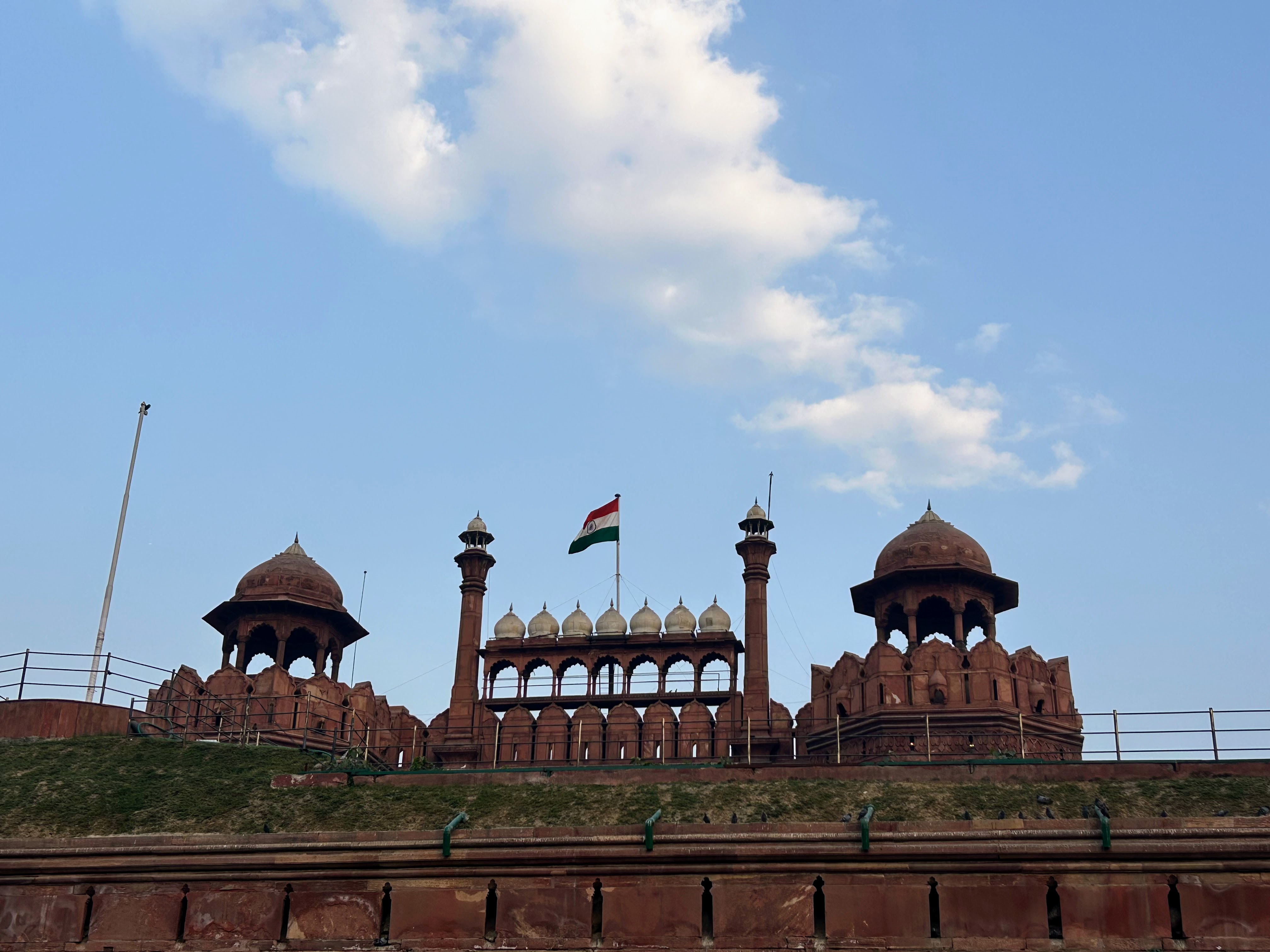
So when an INTACH email landed in my inbox about a heritage walk at the Red Fort this Sunday, I had to join. Delhi Metro is the best bet to reach anywhere on time. The crowd I encountered while changing trains at Kalkaji should have warned me of what was to come. At Lal Qila, I emerged from the gate and realised it was almost a sea of humanity. Somehow, manoeuvring through it, I made it to the entry near the Lahori Gate.
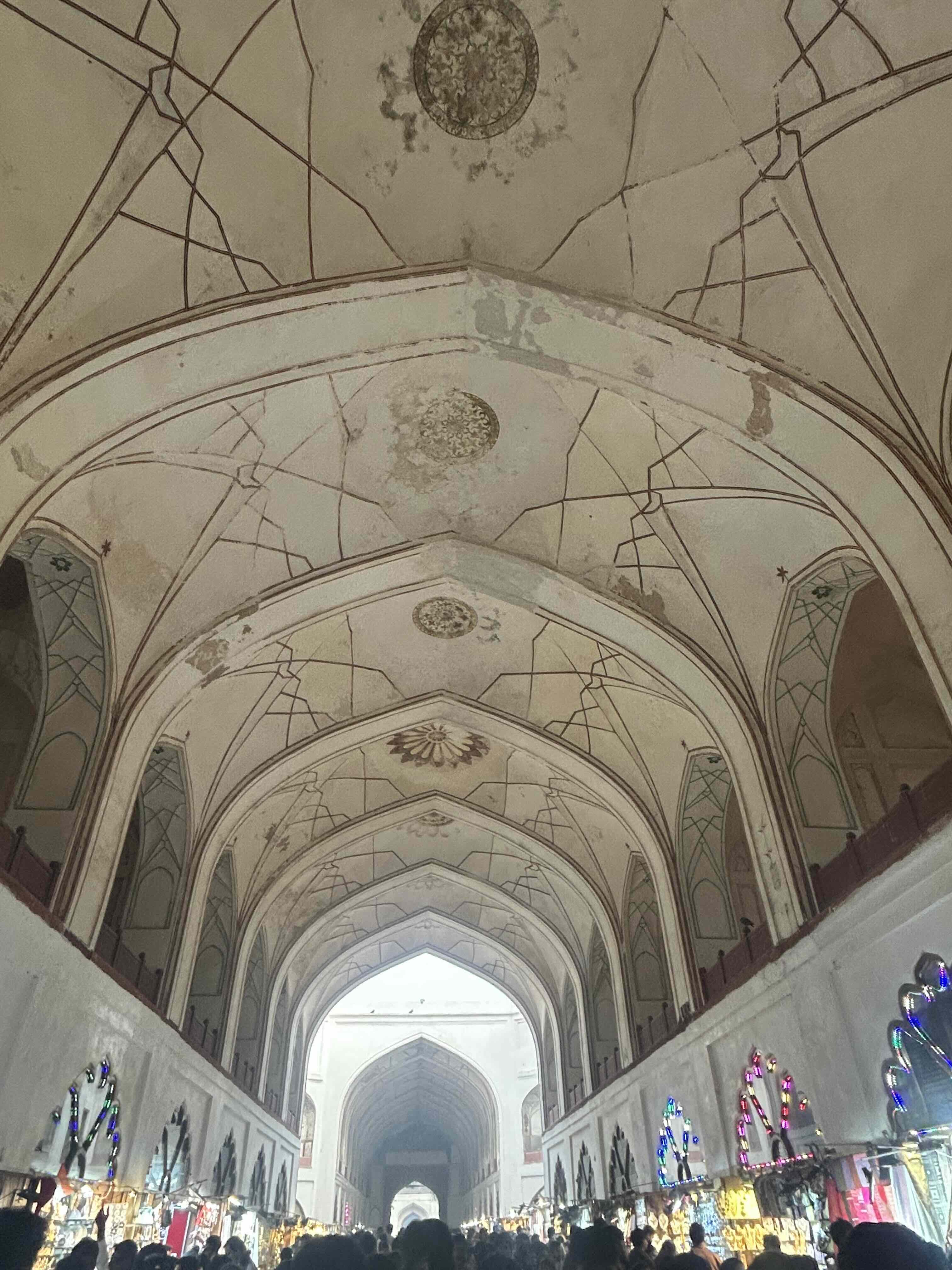
Our walk leader, Javeria, had to shout just to make herself audible. Unfazed, she led us through the crowded spaces, sharing insights not only about history but also about architecture. We entered through Chatta Chowk—one of the earliest covered markets of its time—crossed the Naqqar Khana, and reached the Diwan-i-Aam.
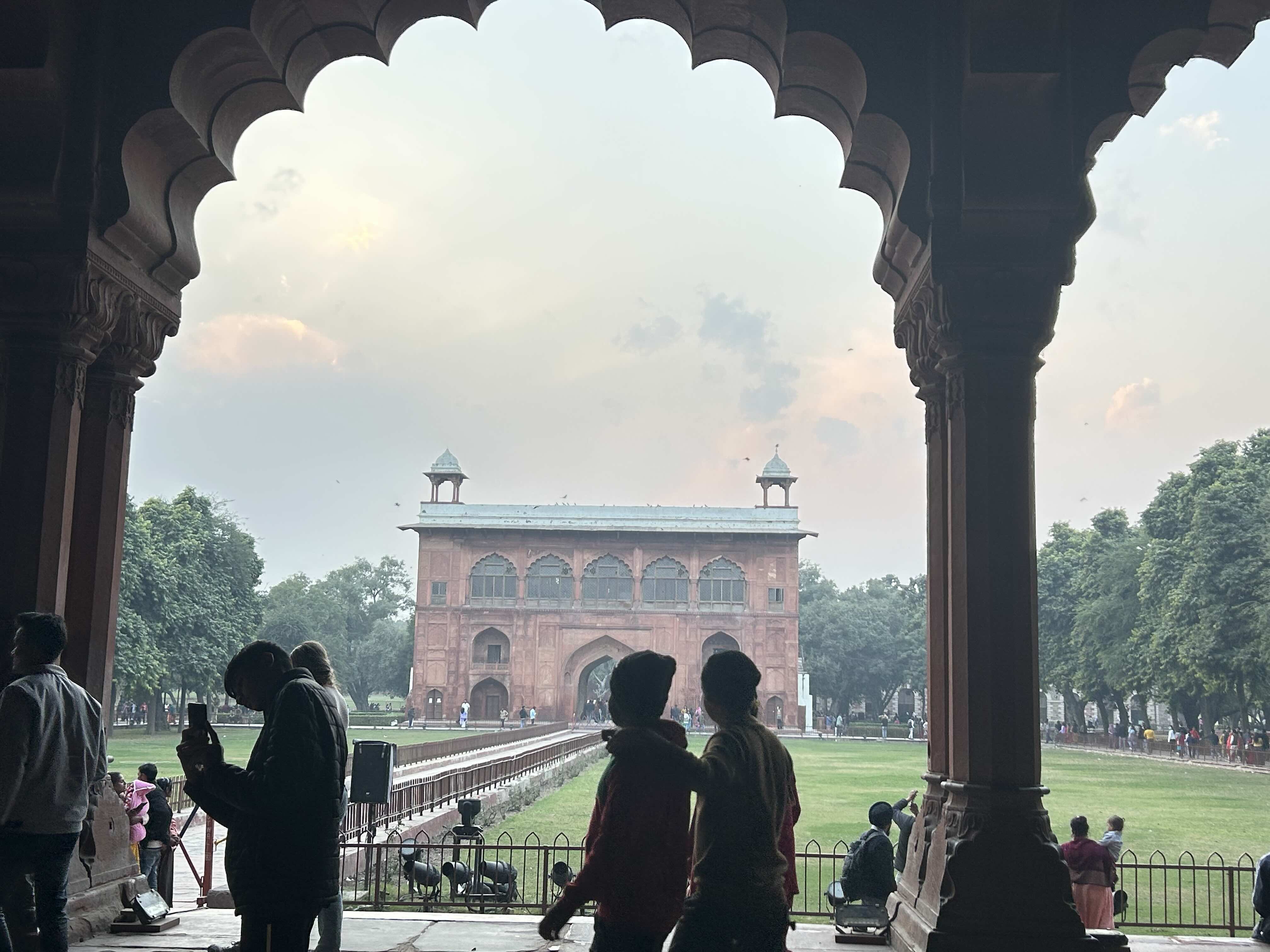
Whenever I visit forts, I find myself wondering how people lived there. How was each place used—really used, day after day? The Diwan-i-Aam is stately, and the contrast of red sandstone with the highly embellished throne stands out. But it was a small detail that shifted everything for me: hooks on the ceiling outside, used to hang curtains—muslin or velvet depending on the season. That single observation triggered my imagination more than any grand façade could.

As we paused at the corner of the Diwan-i-Aam, the fort’s hierarchy became visible in stone. The areas meant for nobles and royalty were built in Makrana marble. The fort is said to have been constructed at a cost of six lakh rupees—a princely sum, and a sizeable figure even today. But we are speaking of a period when the Indian economy was possibly booming in ways we rarely pause to remember.
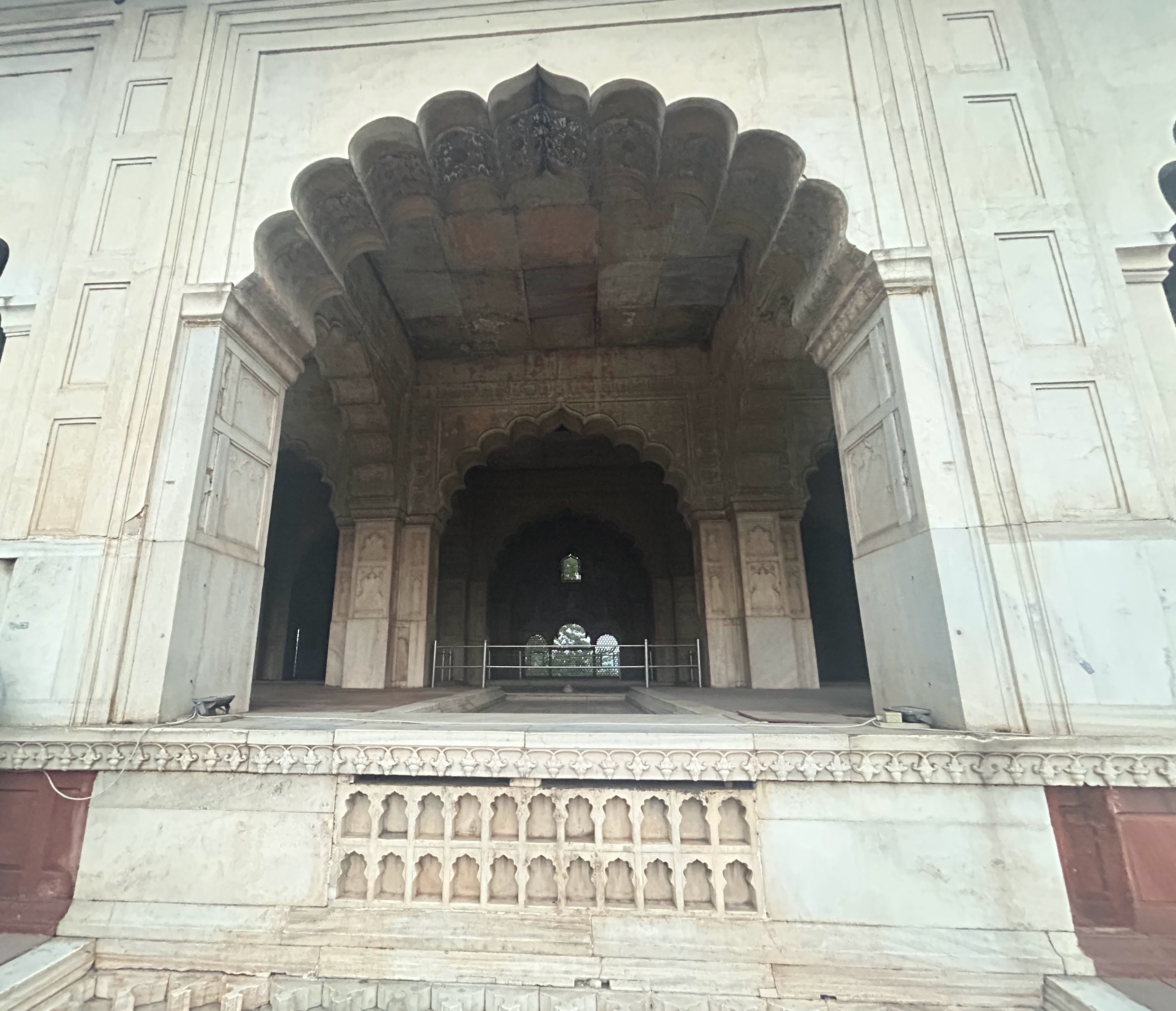
The first marble building we encountered was the Rang Mahal, a palace for the emperor’s concubines. An elaborate fountain system—run only by gravity—greets you there. I found myself wondering who the architect of the fort was. Imagine my surprise when Javeria mentioned it was the same architect associated with the Taj Mahal. And then the old story surfaced in my mind: wasn’t his hand chopped off so he could never build anything again? Apparently not. History, like memory, collects myths the way monuments collect dust.
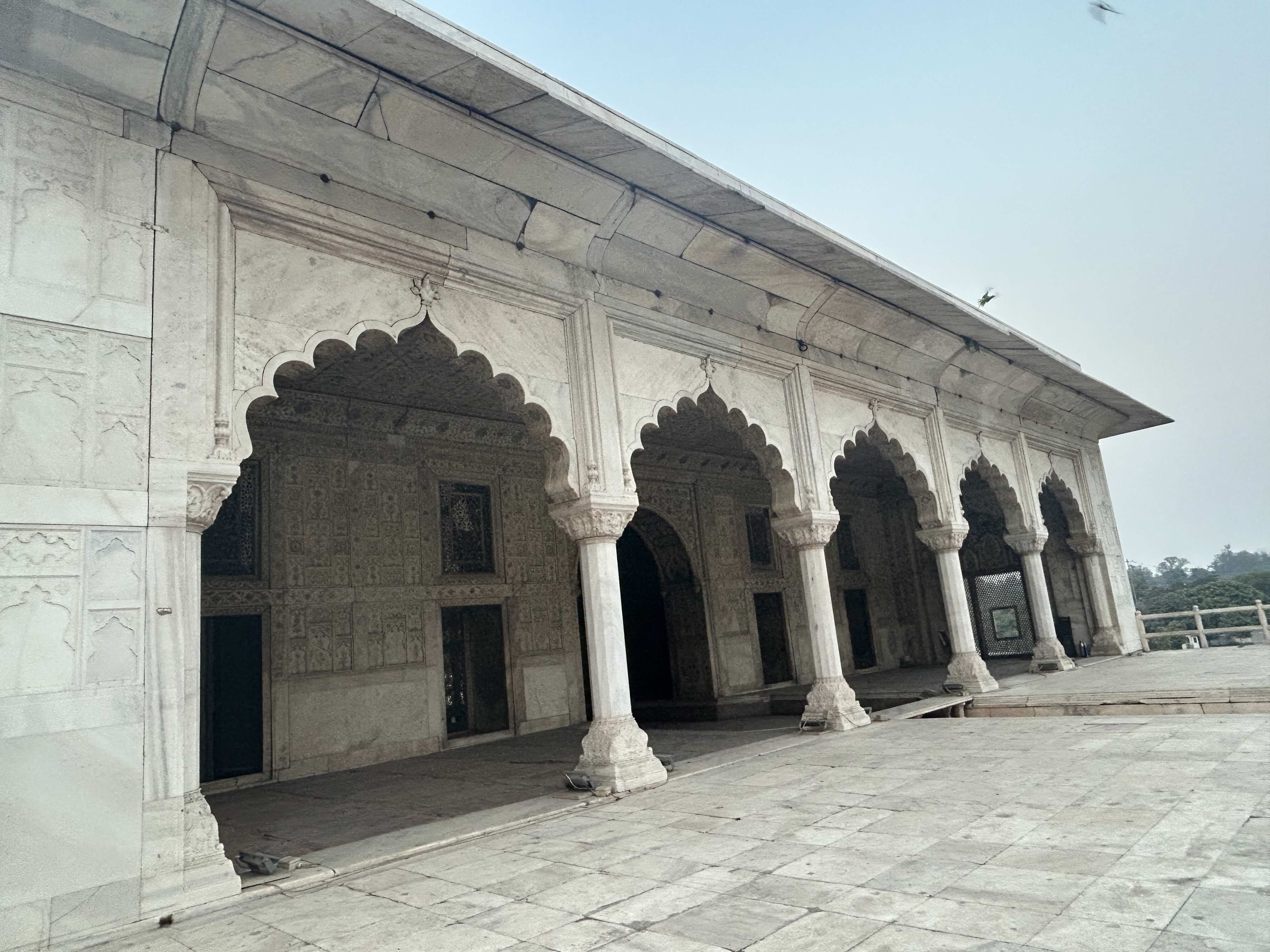
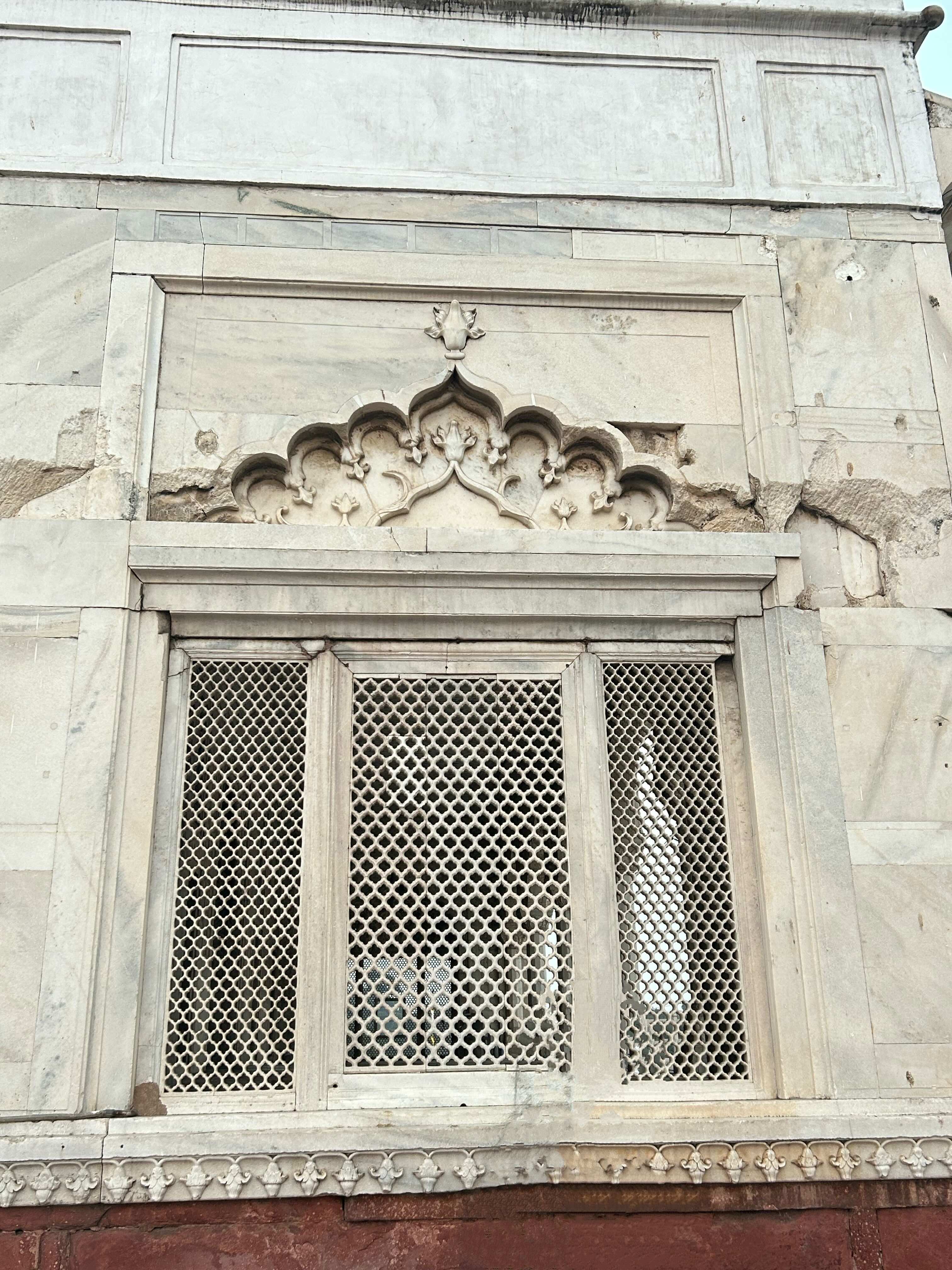
We moved on to the emperor’s sleeping quarters. There is a barricade on the steps so people don’t climb them now, but you can still see a depression where the marble has slowly worn down with regular use. These quarters were never meant for mass entry. Today, most of the marble spaces can only be seen from outside—beauty held at a distance.
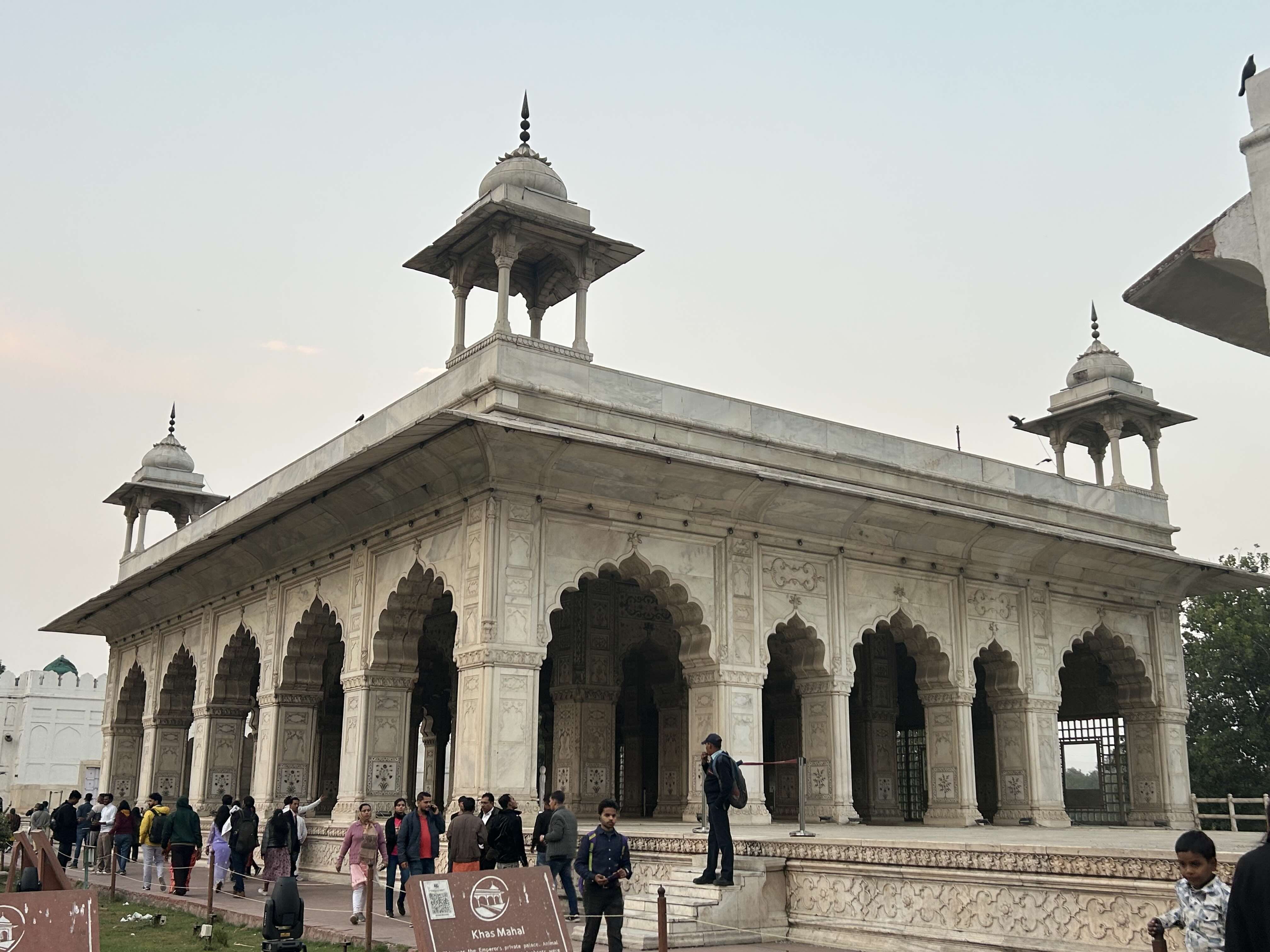
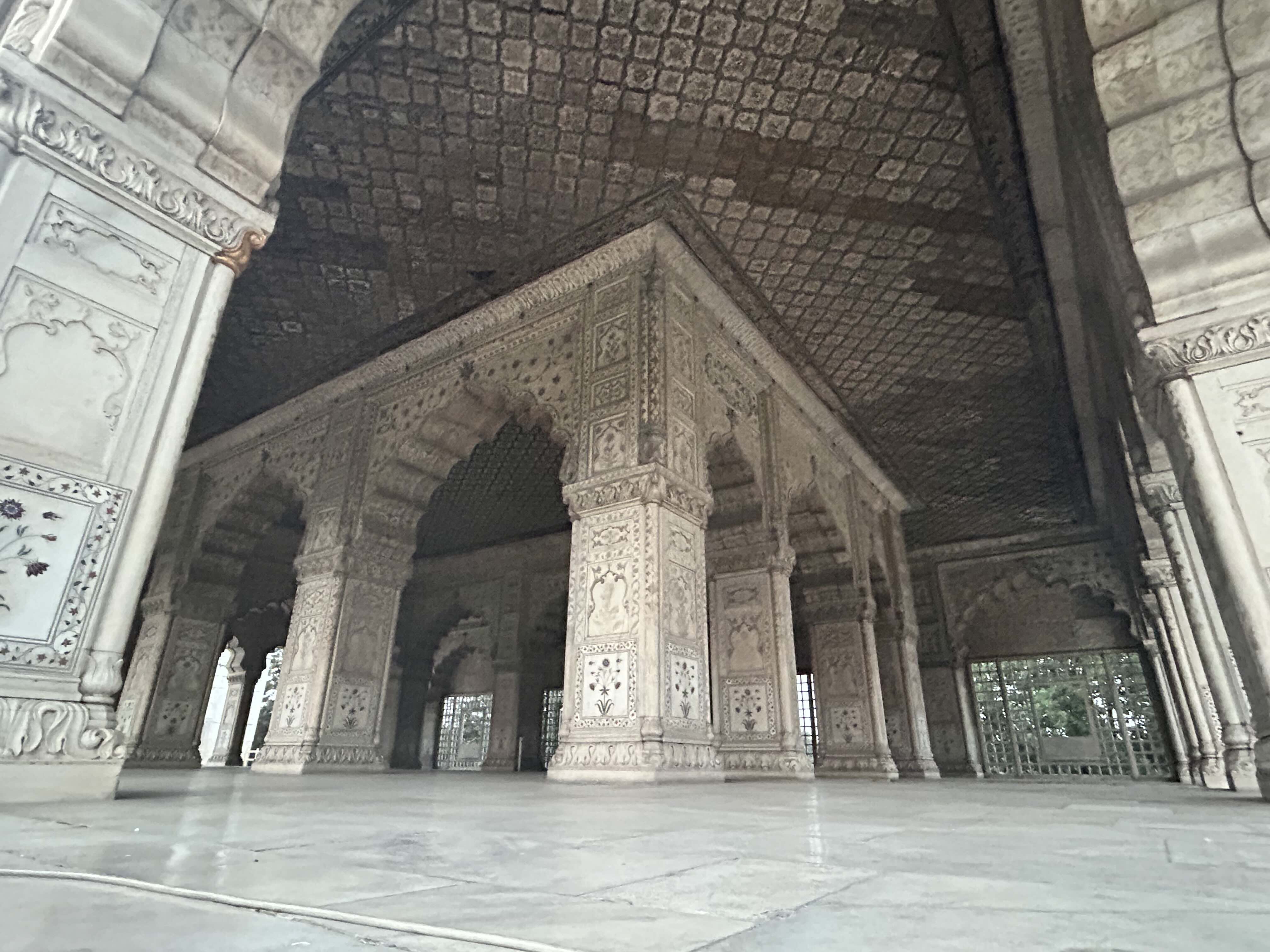
The lawns were being readied for an evening programme, ticketed. The security guards were almost shooing everyone out. But then, they underestimated our curiosity. We stopped near the pavilions to look at the Zafar Mahal: a red sandstone structure constructed by the last Mughal emperor, Bahadur Shah Zafar. It stands out for its bare, un-embellished walls—a quiet testimony to the loss of power of the Mughals.

On our way out we saw the barracks built by the British after 1857 to house soldiers. The question came automatically: where did soldiers stay earlier? Javeria pointed out that rooms within the fort walls were used for them. What struck me even more was another fact: only the emperor stayed in the fort. Even his sons and daughters were not allowed to live there. The power of intrigue, deceit, and politics—clearly—has existed in all times.

By the time we left, the crowd had thinned. For the first time that day, one could stand at the entrance and simply marvel at what the fort must have proclaimed in its heyday.
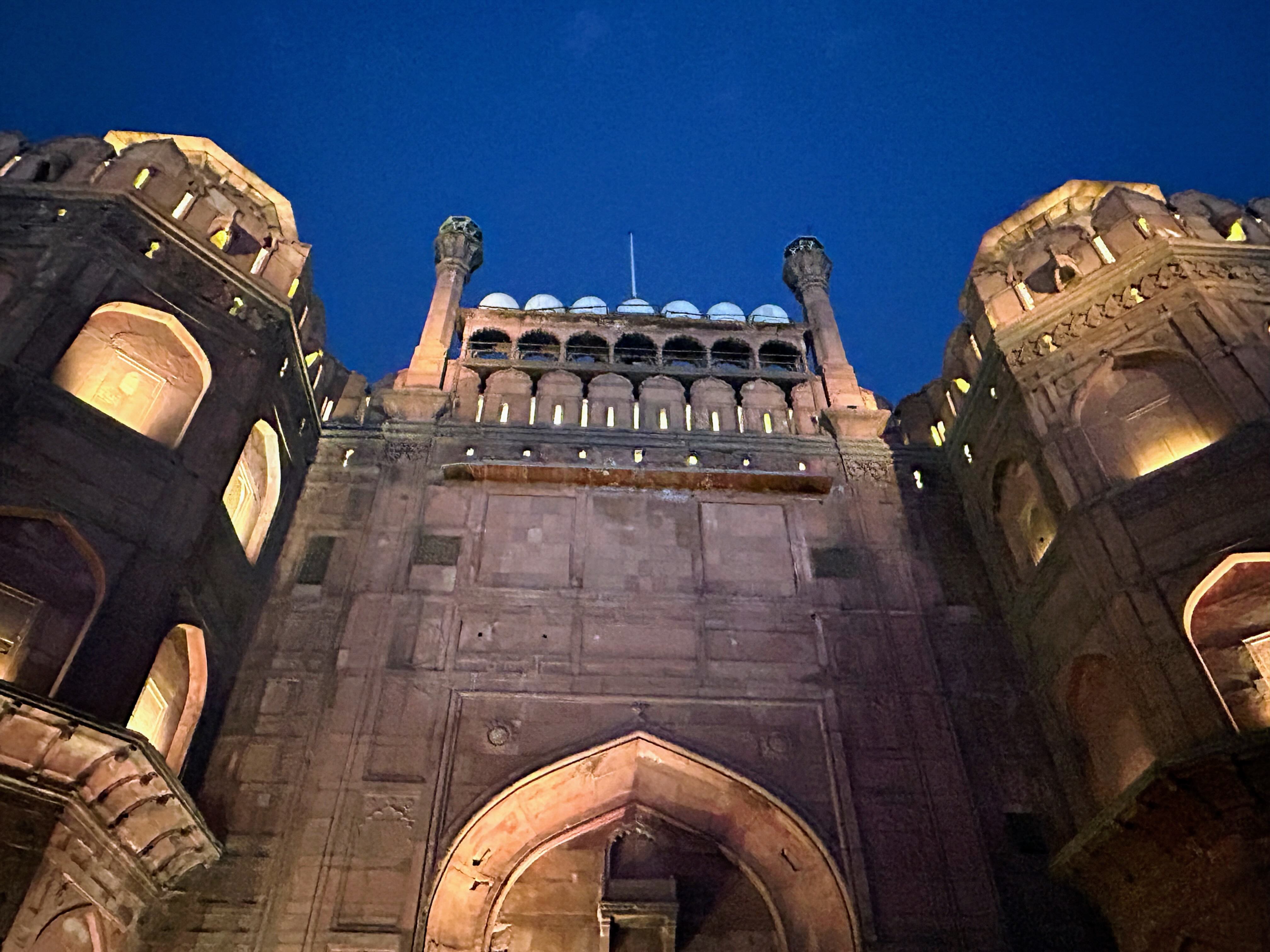
I looked up at the lit ramparts and realised the fort would pull me back again. The child who watched Republic Day parades on television, spellbound, is not yet satisfied. Until the next time, the Red Fort will remain what it has become for me: a medieval icon adopted by a modern nation.

No Plans, So I Time-Traveled

Christmas fell midweek, and I had no particular plans. After all, when one doesn’t have to go to church and pray, what does one do—eat and sleep?

As I was contemplating a lazy Thursday, an email from Tales of the City dropped in about a heritage walk around the churches of Purani Dilli. It felt like the universe was gently nudging me off the couch.

New Delhi may look like the diva, but it’s Purani Dilli that preserves the city’s soul. In Old Delhi, you can time-travel in a few steps—past a gate, around a corner, across a lane that pretends it has always been here. The walk began at St. James’ Church, and I found myself in a large group of walkers. Clearly, I wasn’t the only one with no plans for a midweek holiday.

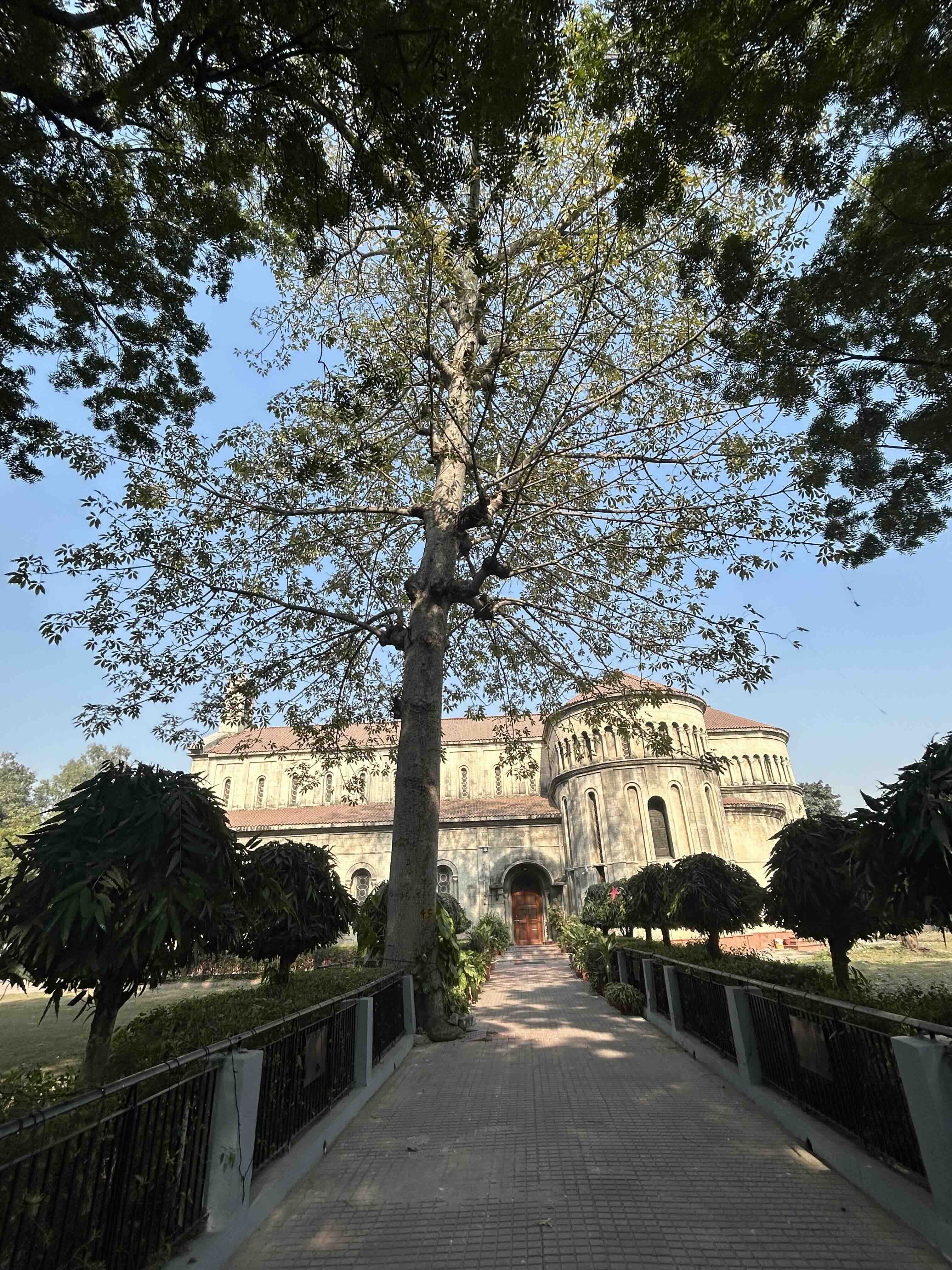
This was my second visit to the church. The last time I came, the compound was quiet, almost meditative. Today, it was full of cars. A service was underway, so we avoided going inside. Still, I have always been intrigued by this church—its location near Kashmere Gate, almost next door to Lothiyan cemetery, which was the city’s earliest Christian cemetery. There’s also the story of its origin: a church built as a vow (a very Indian thing to do) by a private individual, Colonel James Skinner—a man who struggled to fit into the British world due to his mixed parentage, and yet went on to build an institution that later became the church of the Viceroy of India.

The church compound holds more than a place of worship. It houses the private cemetery of the Skinner family, and, most importantly, the grave of William Fraser, Commissioner of Delhi. In fact, the grave pre-dates the church and may have influenced the choice of location. Next to Fraser’s grave stands a large cross erected by the British in memory of British families killed in 1857. That the memorial is part of narrative-building becomes evident when one notices engravings not only in English but also in Persian—the lingua franca of those days.

When we stepped out of the compound, we could see the old campus of St. Stephen’s, which today houses the office of the Chief Electoral Officer, Delhi. Purani Dilli does this effortlessly—lives history, then repurposes it as required. Led enthusiastically by Shreya Sahay and Karan Tekwani, our group moved along the busy lanes towards the next stop.

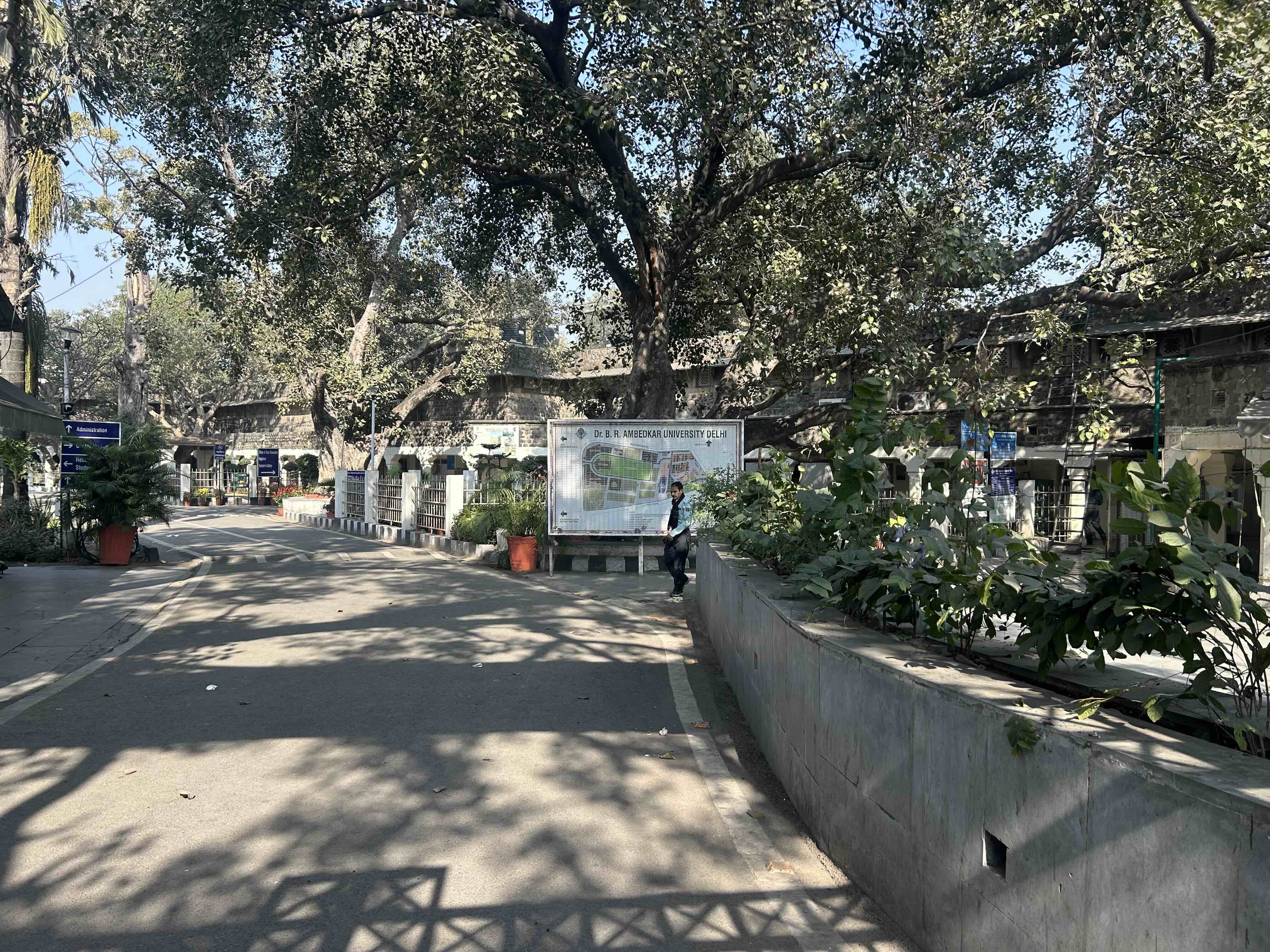
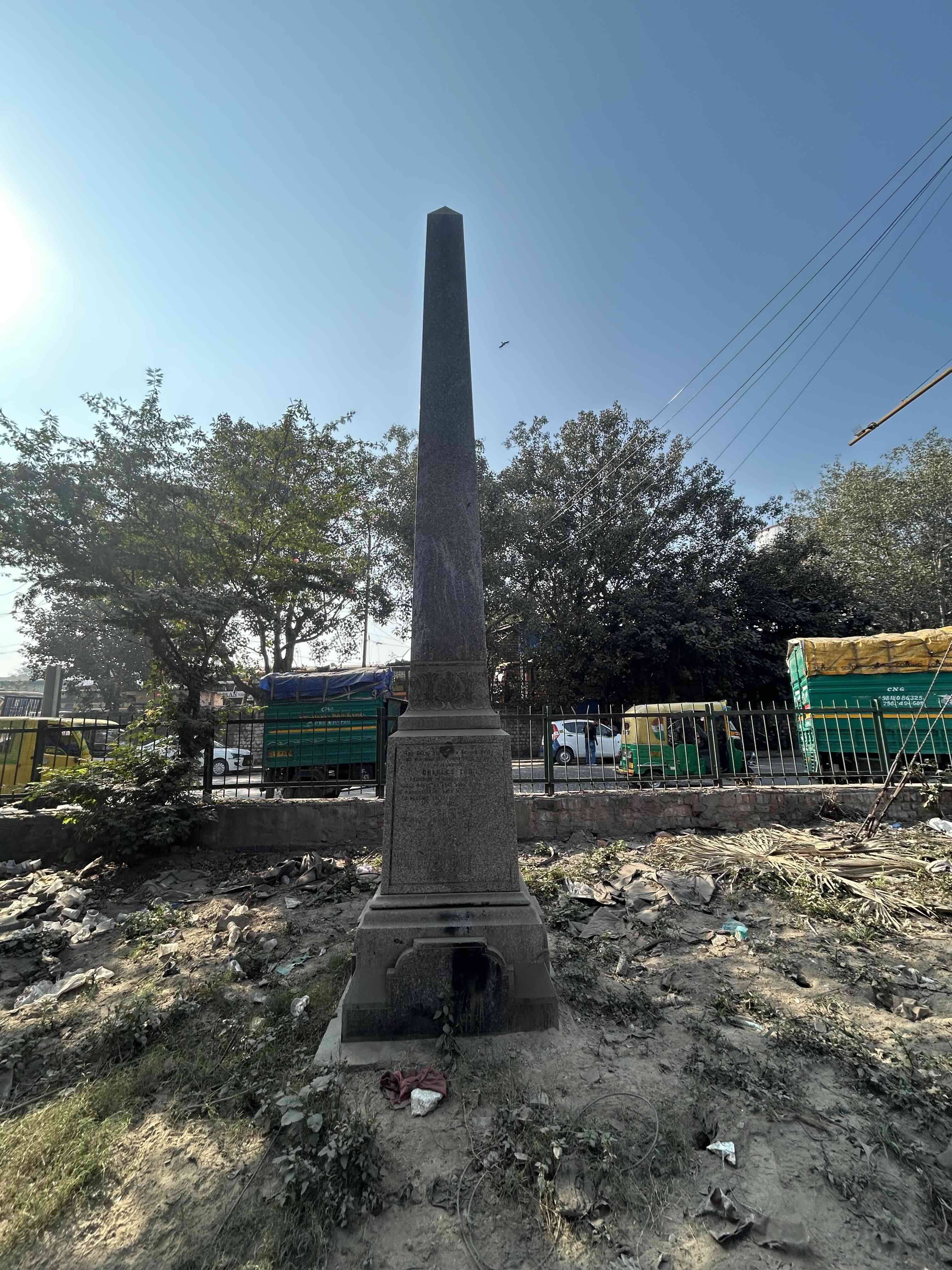
On the way, we passed Dr. B. R. Ambedkar University and an interesting signboard that claimed the building had once been the library of Dara Shikoh and was now better known as a Partition Museum. A few steps later, the walk leaders pointed to something easy to miss: a rather nondescript obelisk lying ignored at the corner of a road. Yet this quiet structure is the Mutiny Telegraph Memorial, erected by the British in honour of the telegraph staff who sent the warning of the 1857 uprising. Today, the words on its base can barely be read; construction material and a garage crowd around it. Did I ever pause to think there could be a link between the telegraph and 1857? No. And yet, apparently, a single message—sent at the right moment—could alter the course of history. It’s humbling how cities hide their turning points in plain sight.

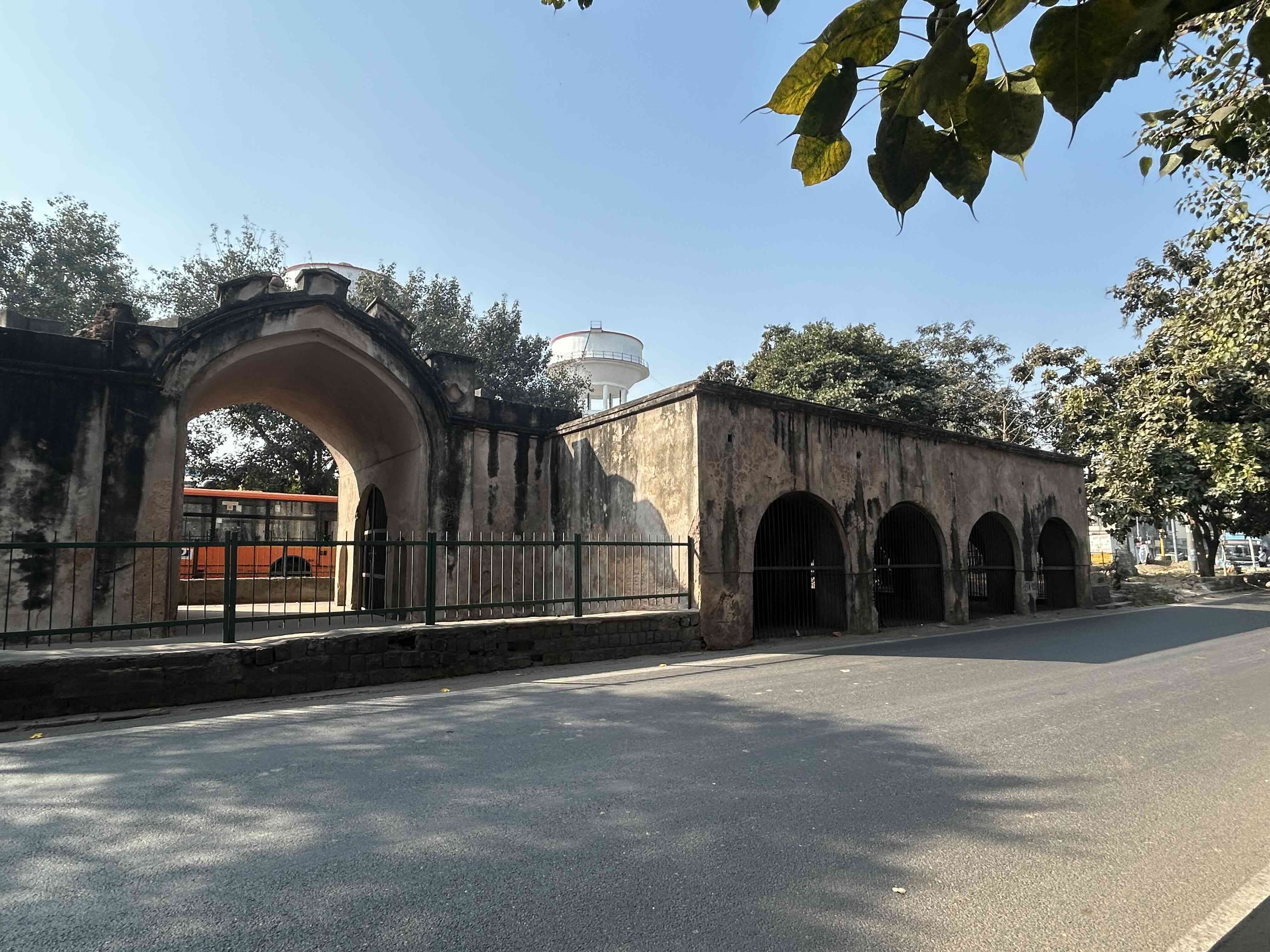
A little distance away stood another structure that draws almost no attention now: the British Magazine, constructed in the early 19th century near Kashmere Gate as a storage facility for gunpowder, arms, and explosives for the East India Company forces. In 1857, when the rebels reached Delhi, it became a target. When the British realised they couldn’t defend it, they blew it up. The ammunition is said to have burned for days, an image so dramatic it almost feels cinematic, and yet the building today sits quietly.

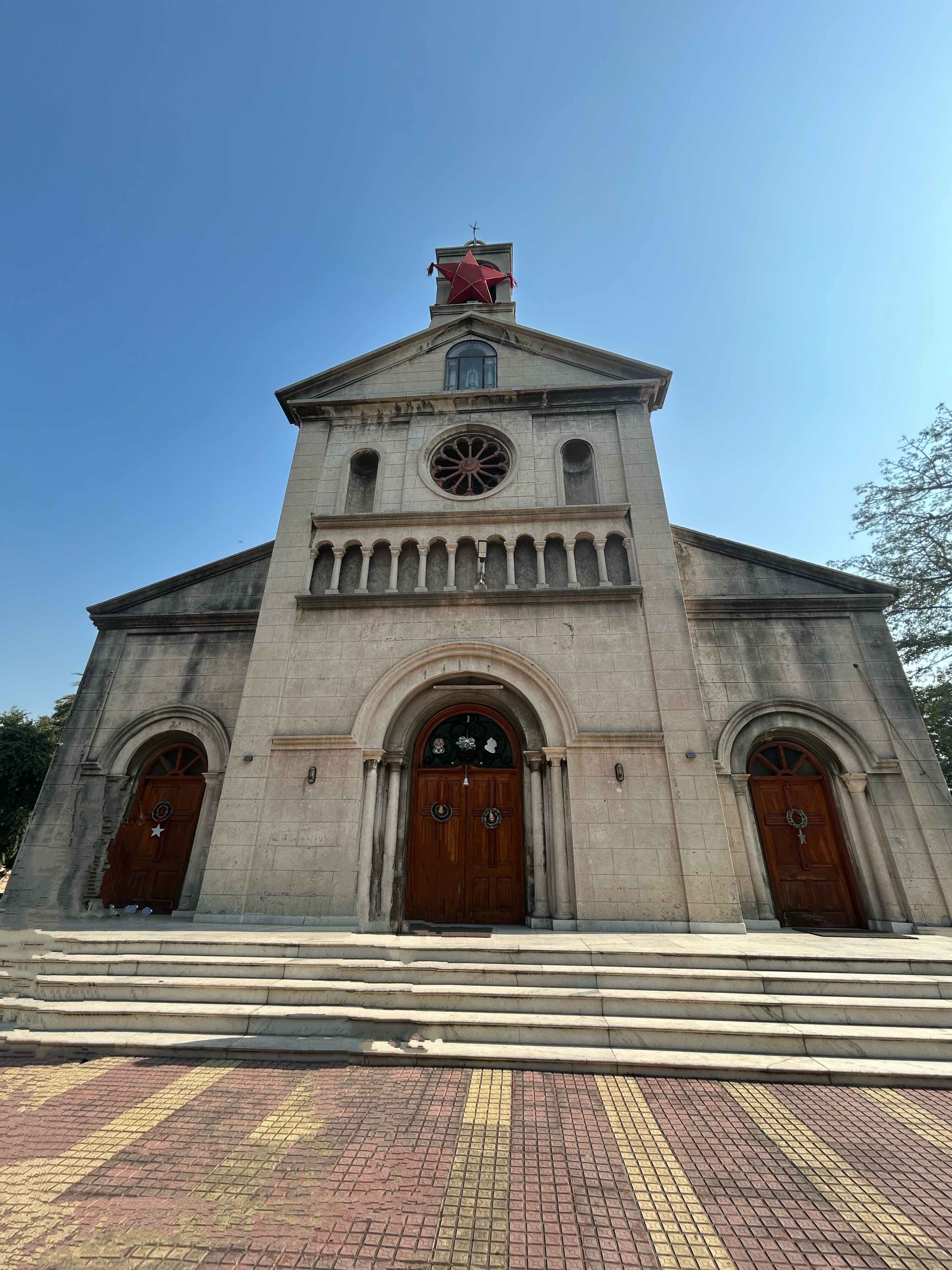
Our second church stop was St. Mary’s, near the Red Fort. Unfortunately, it was closed, and we could only admire the building from the outside. The walk leaders shared its layered history—how the site’s story moves through different phases of patronage and rebuilding, and how, once the later structure took shape, the church was frequented more by British officers stationed in the city. Even when a place begins with local connections, the city’s politics and power shifts can re-script who it belongs to.

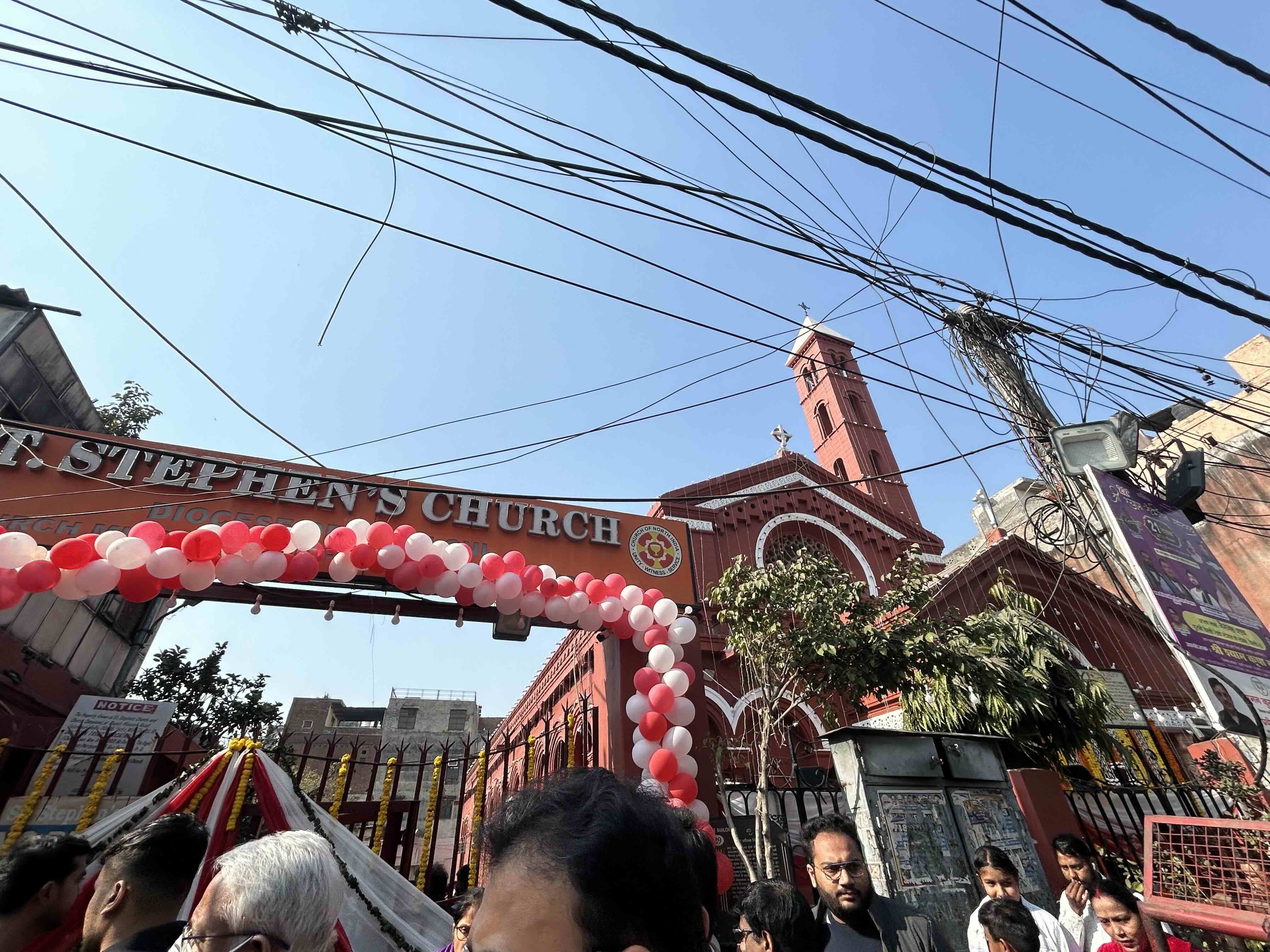
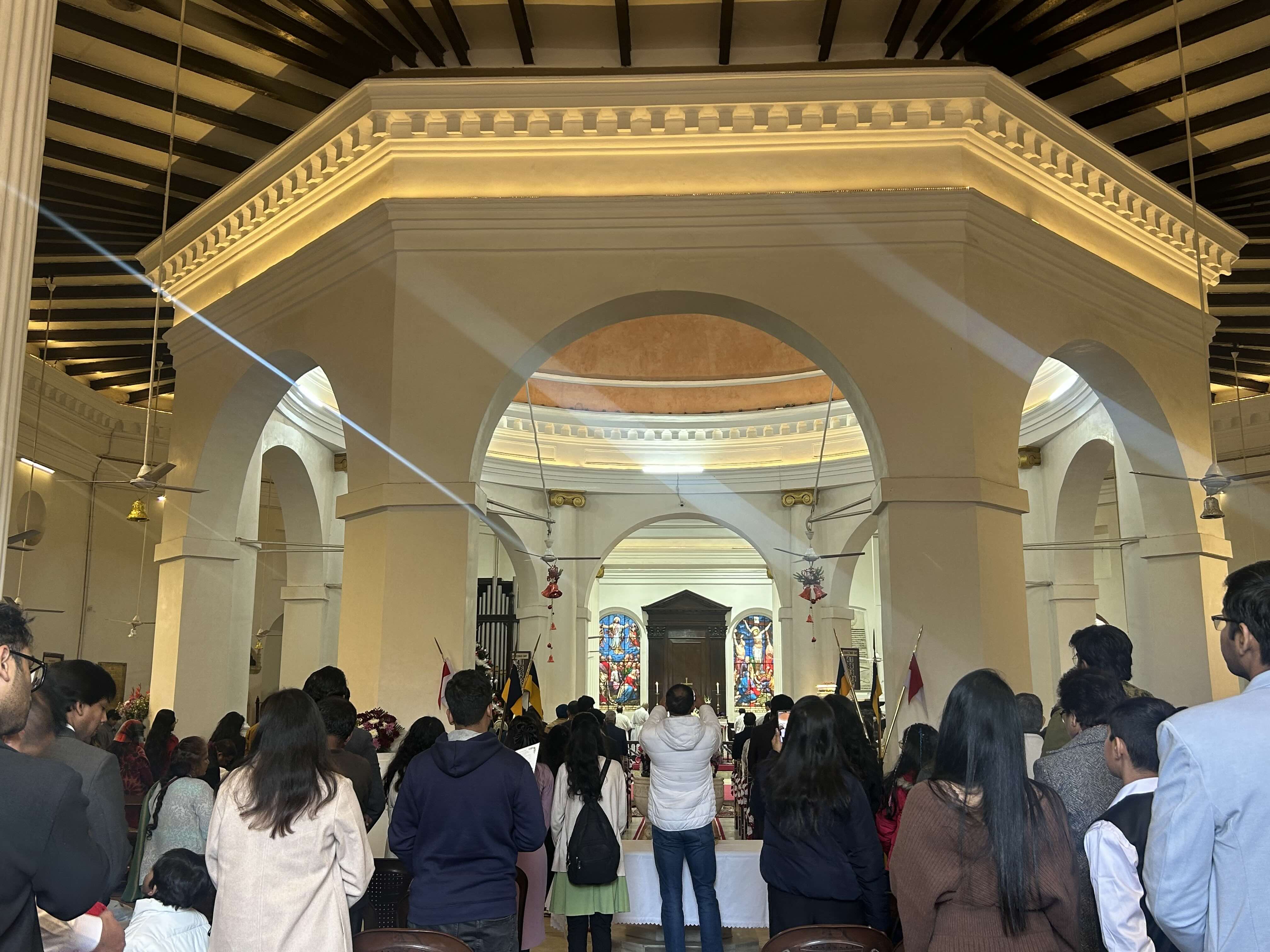
By noon, the final stop was about a kilometre away. We hopped onto e-rickshaws and landed at St. Stephen’s Church in the bustling marketplace of Church Mission Road. The service was almost over, and as we debated whether we should go in, a hymn floated out—praise for Jesus set to the tune of “Jai Jagdish Hare.” I froze for a second, smiling at the sheer ease with which India does this—borrows, blends, transforms, makes faith sound familiar without losing its meaning.

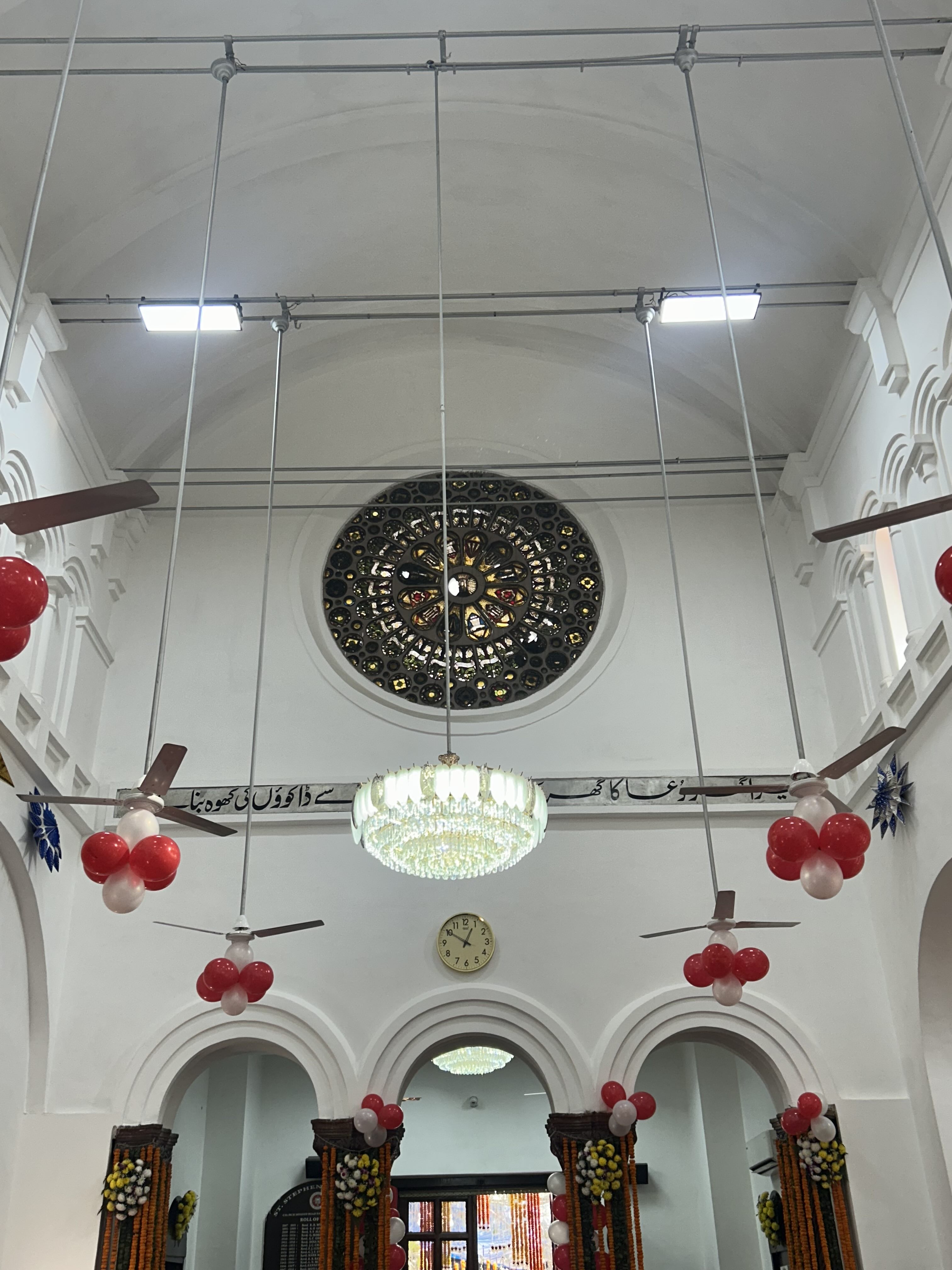
When the service ended, people streamed out and wished us Merry Christmas. Built by Anglican missionaries, the church was meant for the local population and carries inscriptions in Persian, again, a reminder of how languages travel, settle, and leave marks even in places you wouldn’t expect.

I have always enjoyed Christmas festivities, but I had never visited a church on Christmas Day. This turned out to be one of my most interesting Christmas holidays—not because it was loud or glittery, but because it gave me a glimpse into the rich tapestry of Purani Dilli.

Delhi is a palimpsest—not only of its rulers and its various capitals, but also of languages, religions, and everything that comes along with them. Spend time with the city, and it will open up its world to those who want to see it.

An Evening of Craft, Cuisine, and Community at The Kunj

Growing up, there was a saying often used to describe a familiar irony: “When you stay next door to the station, you will miss the train.” It referred to situations in which, despite proximity, one keeps postponing a visit. That line came back to me on Saturday, when I finally managed to visit The Kunj—India’s first mall dedicated entirely to handloom and handicrafts.

Located within walking distance from my home, The Kunj has been on my mind since its opening in August 2025. And yet, like the proverbial train, I kept missing it.

As I stepped out of the lift, the first sight that greeted me was a loom and a vibrant seating area—an immediate signal that this was not just another retail space. Handicraft and handloom stores showcasing products from across the length and breadth of the country form the heart of The Kunj. What makes it even more special is the presence of artisans themselves—quietly, patiently creating their craft in full view. I found myself lingering near an elderly Madhubani artist, watching him draw with practiced ease. In that moment, I was reminded of the deep traditions and accumulated knowledge that form the foundation of India’s extraordinary craft heritage.

The credit for finally getting me to The Kunj, however, goes to Tales of India—a platform that seamlessly binds food, heritage, and community. When the mailer from Tales of the City landed in my inbox, I knew I didn’t want to miss an evening that promised good food paired with conversations on history and culture.

At the venue entrance, I was warmly greeted by Abu Sufiyan and Chef Sadaf Hussain. Conversation quickly turned to food walks—their routes, timings, and the inevitable request from a few of us for a walk dedicated solely to Nihari. Chef Sadaf countered with a challenge: Delhiites, he said, don’t like waking up early, which makes a traditional morning Nihari walk difficult. While we all confidently promised early mornings, only time will tell whether we manage to rise to the occasion.

Walking inside, I felt transported to the homes of my childhood—where the first room, the baithak, was a gathering space filled with knick-knacks collected over the years. It was heartening to hear Abu Sufiyan explain that the idea was to recreate the Bada Kamra—the room where everyone naturally came together.

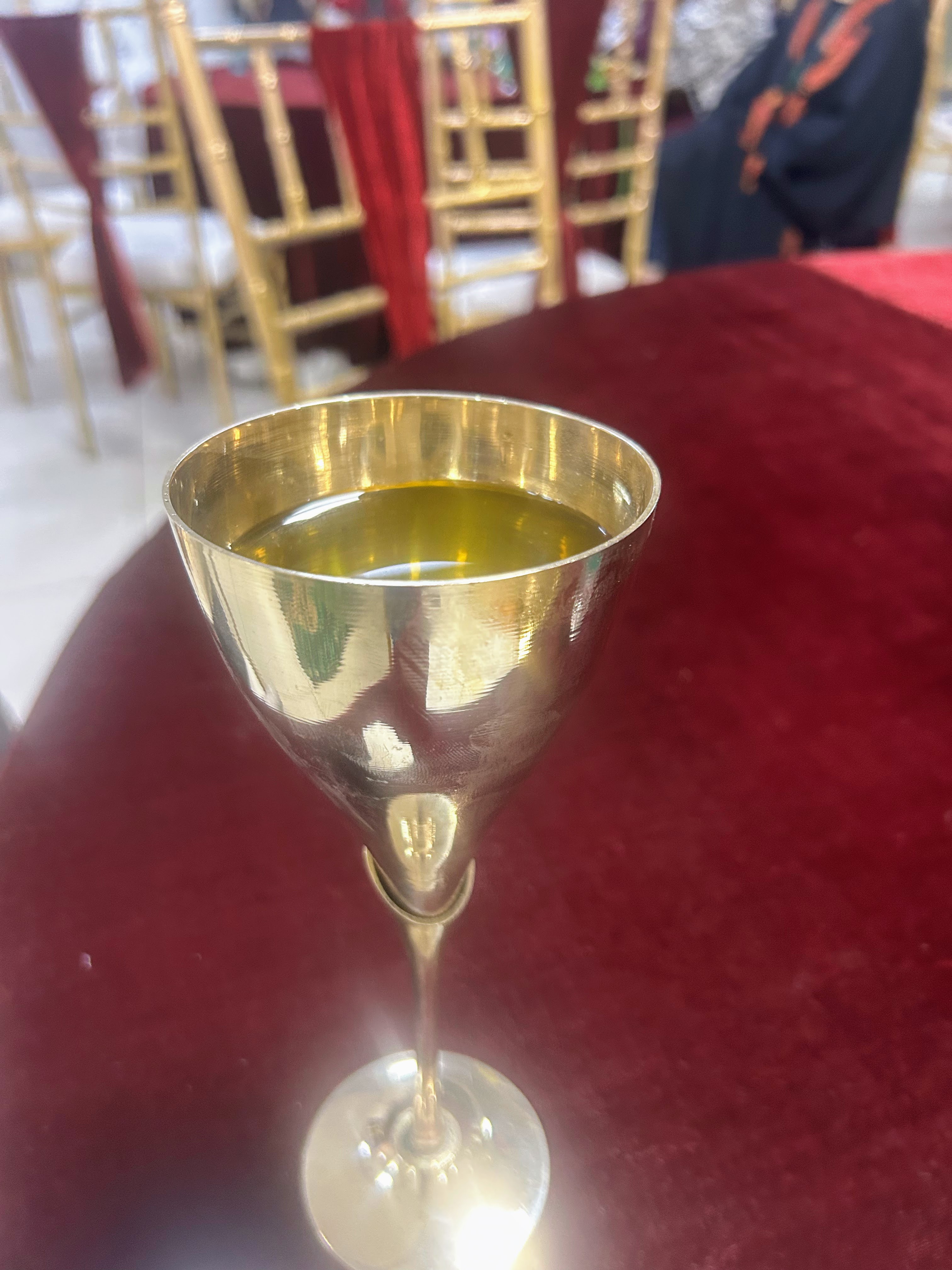
As stories and food memories began to flow, the first offering arrived: Khas Sherbet, served in an elegant brass glass. The conversation drifted towards community life—how there was once a time when we knew not just our next-door neighbours, but almost everyone on the lane. No one explicitly lamented how siloed life has become; it was simply understood. Perhaps the pace of life has changed, and gatherings like these are meant to be cherished when they happen.

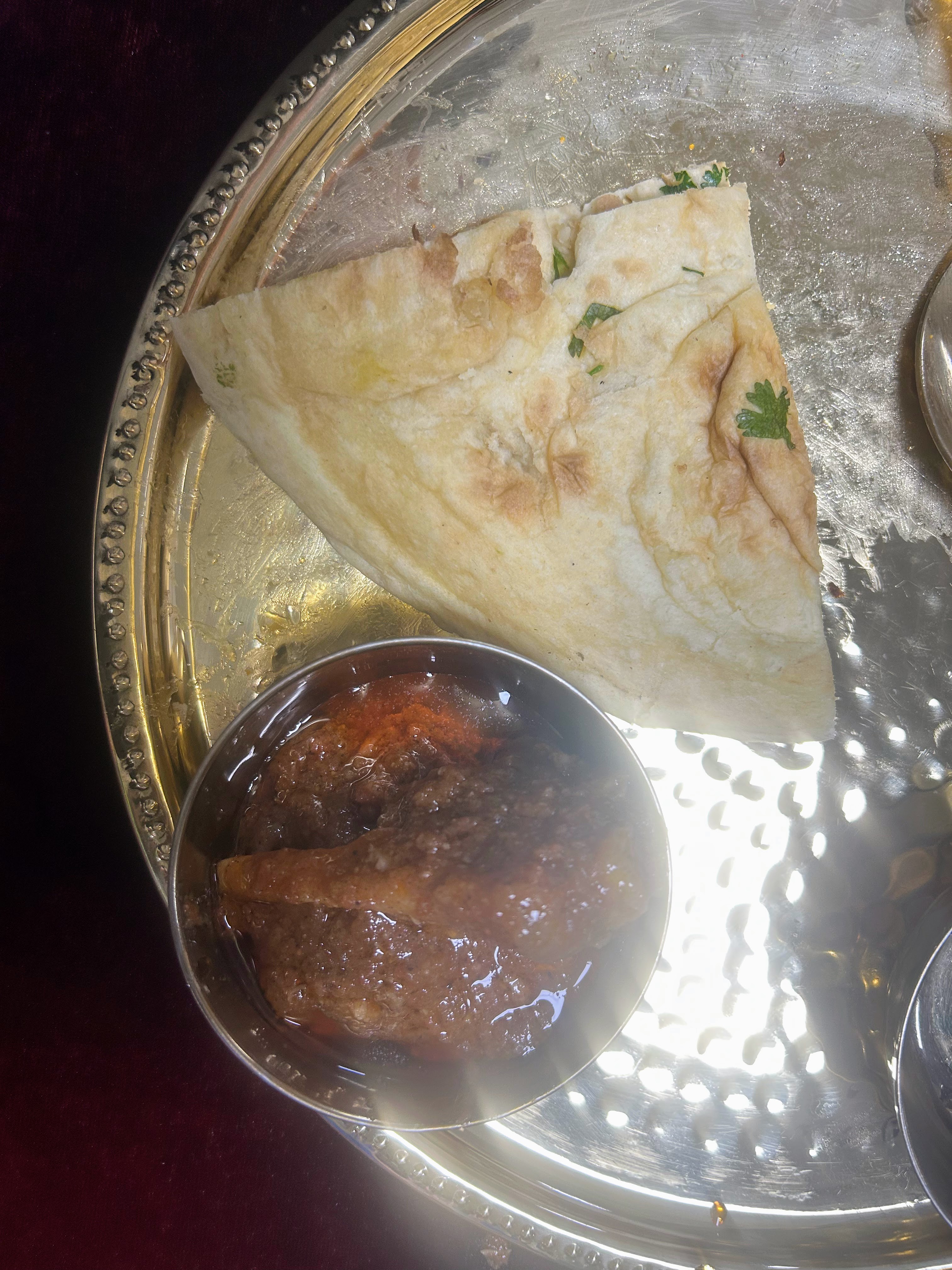
Next came a Shami Kabab, delicately pounded on a sil batta, fibrous and soft. This was followed by Mutanjan, sweet rice garnished with almonds and sultanas, accompanied by the meat of teetar (quail). Chef Sadaf pointed out that in earlier times, “bird” almost always meant quail—never chicken. Chicken, he noted, became popular only after Partition.

Then arrived the star of the evening: Nihari, served with Khamiri Roti—rich, slow-cooked, and deeply comforting. As we ate, memories surfaced of street vendors and their distinctive calls—jingles that once echoed through neighbourhoods. It wasn’t just food vendors; toy sellers, kulfiwalas, knife sharpeners, bangle sellers—all had their own sounds. With e-commerce and changing lifestyles, many of these have quietly faded away.

The next dish, Shab Deg—literally “cooked overnight”—arrived in beautiful brassware. Plates and bowls were wiped clean as we savoured yet another culinary tradition from Purani Dilli. Dessert followed: Mithi Roti with Kheer, the kheer cooked to a phirni-like consistency. Throughout, Chef Sadaf kept us enthralled—not just with flavours, but with stories of how dishes evolved and travelled through time.

The evening concluded with Meetha Paan, leading to a discussion on paan traditions across the country. While practices adapt to local tastes, we realised that their roots remain remarkably similar everywhere.

It was a near-perfect weekend—handicrafts, food, history, and a gathering of like-minded people. Sometimes, life introduces places to us in very specific ways. For me, The Kunj will always be associated with this evening—an experience that finally made missing the train worthwhile.

Guardians of Our Skies: Stories We Should Have Grown Up Knowing

We think we know what 21 looks like—restless energy, unfinished dreams, a horizon stretching endlessly ahead. I certainly believed that. But this Saturday, as I listened to the story of Flying Officer Nirmal Jit Singh Sekhon, I found myself quietly shaken. What does courage look like at 21? What does duty feel like when the cost is everything?

INTACH Delhi had announced a heritage walk at the Indian Air Force Museum, led by Retired Group Captain (Dr) Shajahan Avadi. It was curiosity that took me there. Only later did I realise how rare the opportunity was—the museum isn’t part of the usual tourist trail, and this was its very first heritage walk.

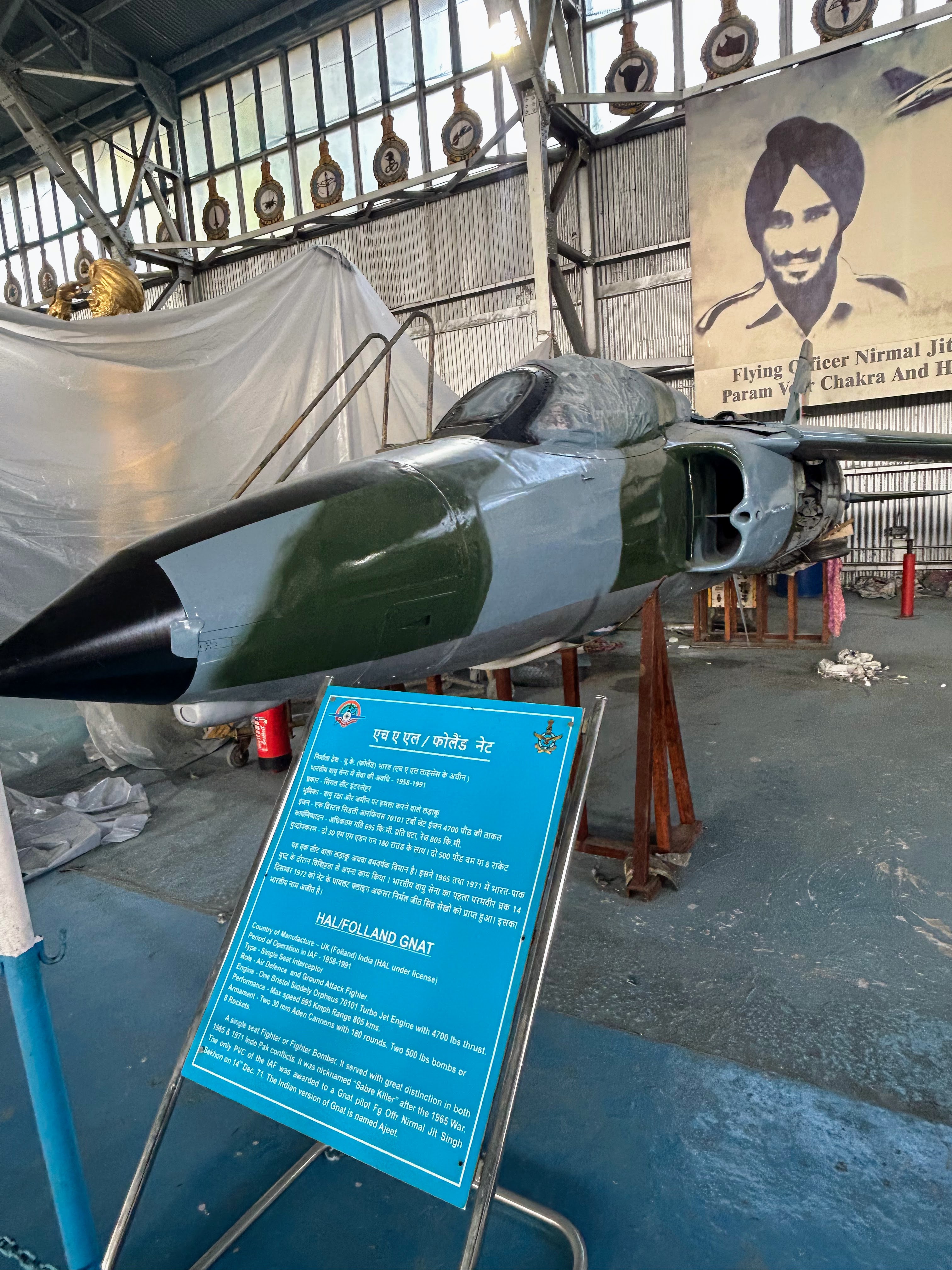
At the entrance, two things stood out. A crowd of schoolchildren—wide-eyed, excited—and at the gate, a real aircraft, standing like a guardian of memory. The walk leader began with a question: Why is a Gnat placed right at the entrance? Before we could think, an officer injured in service rolled past us in a wheelchair. The answer, perhaps, lay in the silence he left behind.

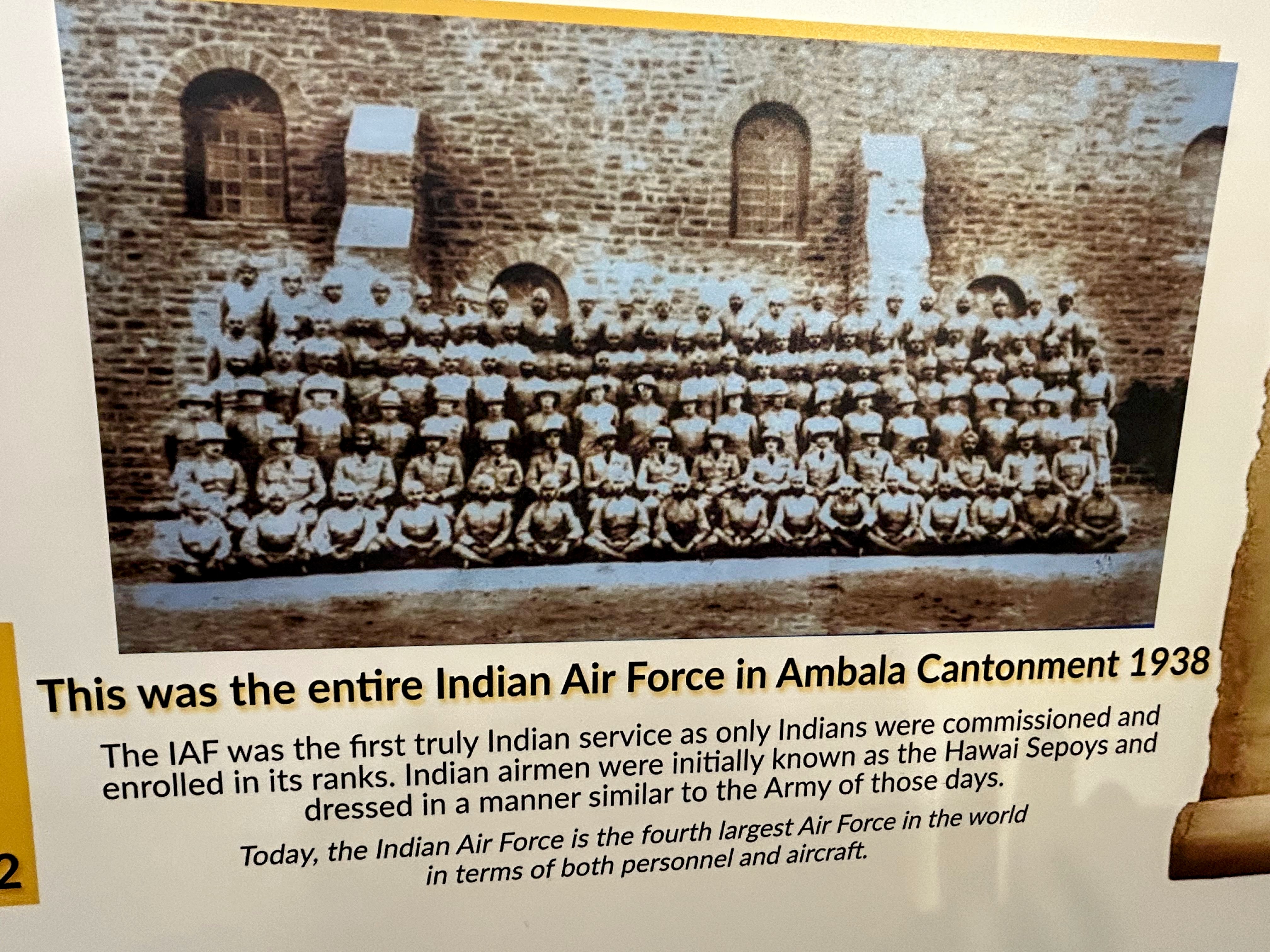
Inside, old photographs whispered forgotten stories. We heard of Indra Lal Roy, of “Jumbo” Mazumdar, of Sekhon—names that deserve far more space in our collective memory. The narrative unfolded like a tapestry: Dakotas landing in Srinagar in 1947, missions in 1965 and 1971, UN peacekeeping roles, and humanitarian operations during the Uttarakhand floods. These were not just stories of war—they were stories of service, endurance, and humanity.

Then came the aircraft displays. A Japanese kamikaze plane. A Pakistani Sabre shot down in 1971. And across from it, the small, almost fragile-looking Gnat. It was impossible not to imagine Sekhon climbing into it, fully aware that he may not return. The only Param Vir Chakra awardee of the Indian Air Force was just 21 years old.

For two hours, we walked, listened, absorbed. But more than the exhibits, it was the weight of the stories—the quiet bravery, the unspoken sacrifices—that stayed with me.

As I stepped out of the museum, a thought lingered: Why don’t we tell these stories more often? Why aren’t they part of every Indian child’s growing-up years? It was heartening to learn that the museum was in the process of moving to a larger building with more exhibits.

Maybe that morning didn’t just teach me history. Maybe it deepened my gratitude for the freedom I live so casually, so comfortably—freedom that someone, somewhere, once guarded with their life.